颠覆传统租赁模式的居家式体验设计:本项目成功地将私人住宅的温馨与亲密感融入到酒店式租赁服务的环境中,精准回应了客户对“居家氛围”的诉求,有效弥补了许多巴厘岛租赁别墅中常见的功能化、样板间式的疏离感。设计师通过对入口动线和功能布局的精心重塑——如用开放式厨房替代传统客厅——创造了一种立即可感知的人际互动和松弛感,这对于短期住宿体验而言是极高的价值提升。
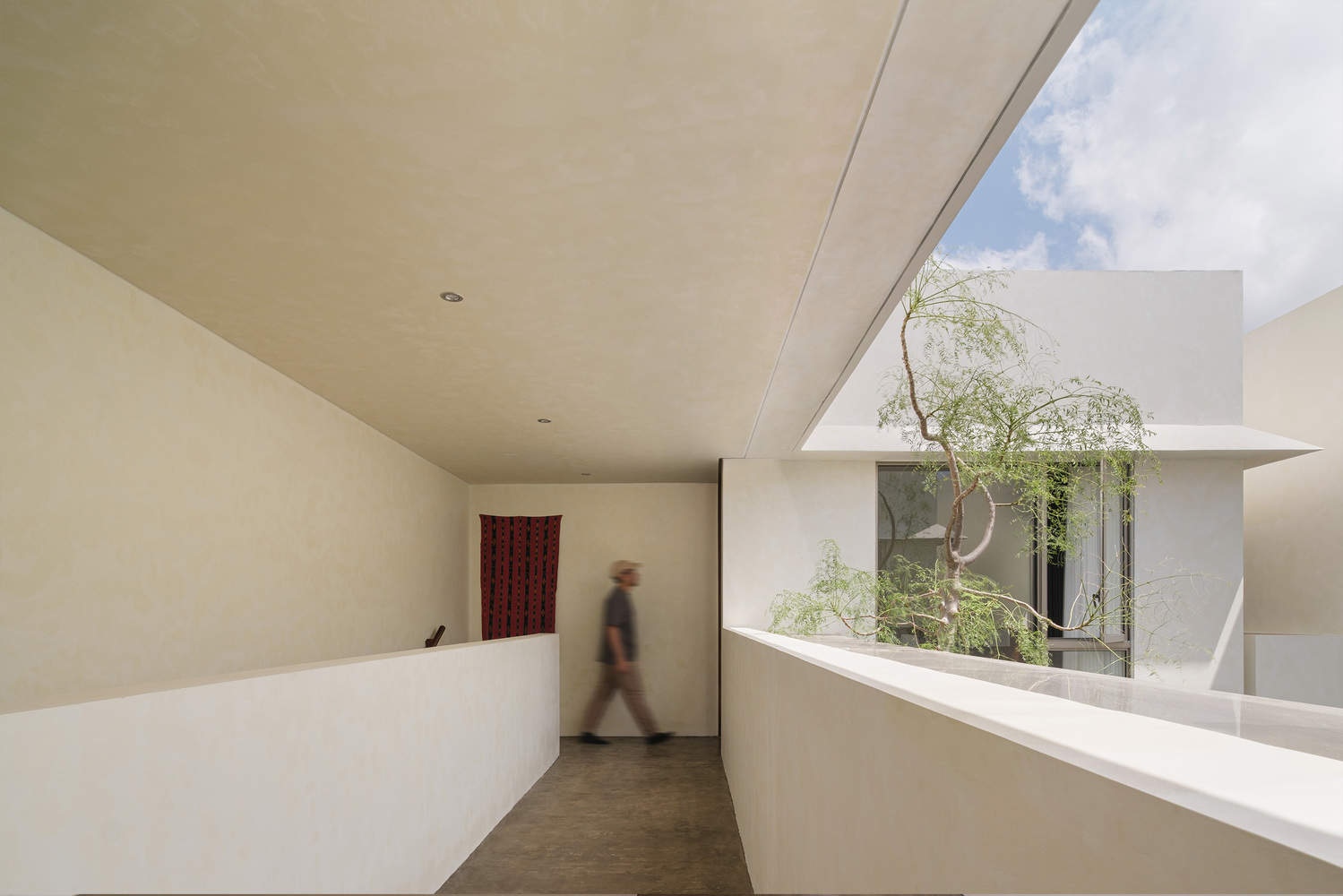
紧凑地块上的空间魔法与光影叙事:在仅150平方米的紧凑地块上,建筑师通过精妙的布局实现了公共与私密、开放与内聚的平衡。核心的内庭院/泳池区域扮演了空间和情感的锚点,有效地组织了垂直交通和水平流线。尤为出色的是对光线的处理,入口处利用玻璃砖引入自然光和雨水,营造出富有诗意的过渡空间;室内则利用半透明隔断模糊边界,确保了光线和空气的自由流通,使190平方米的体量在感官上得以延伸和丰富。
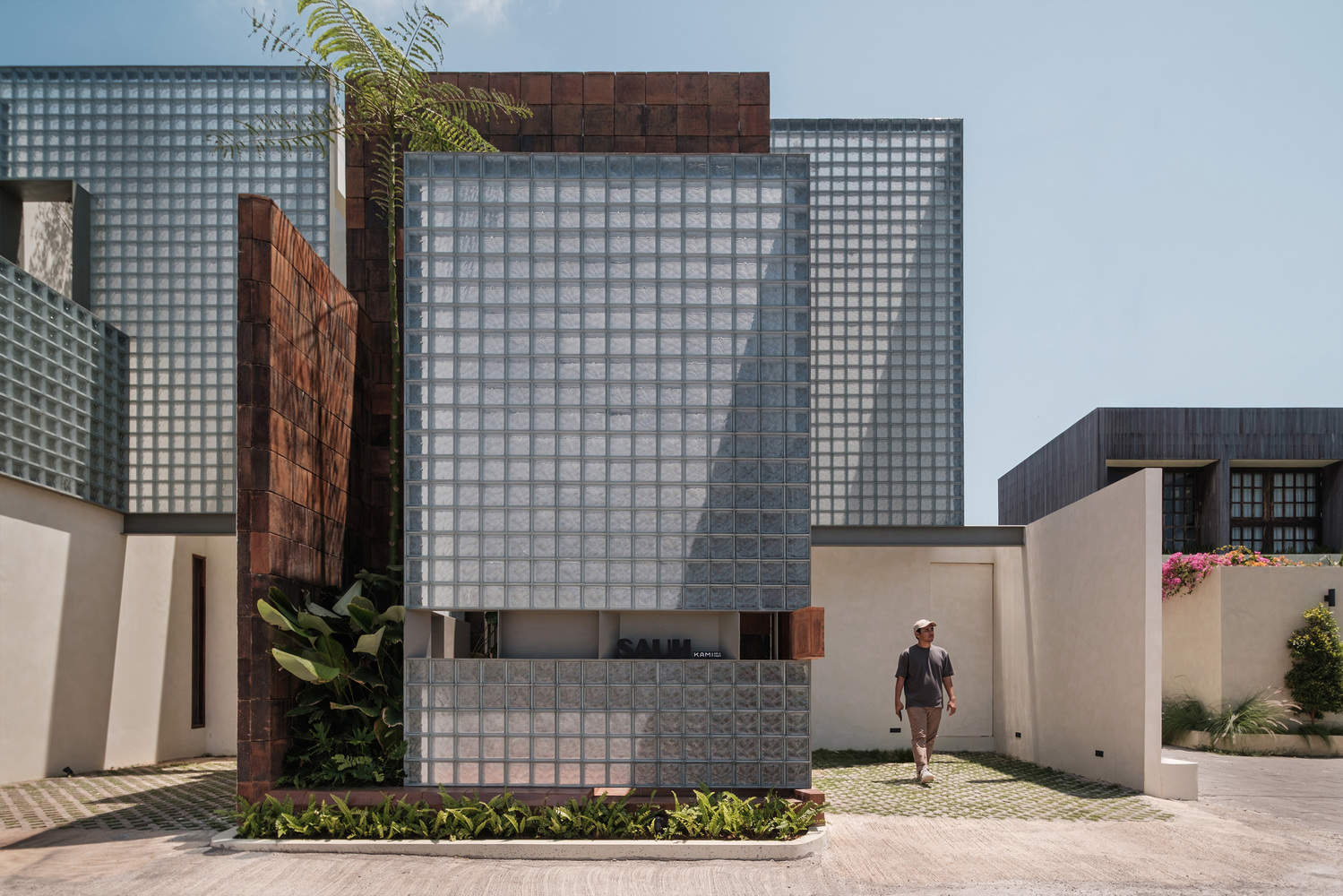
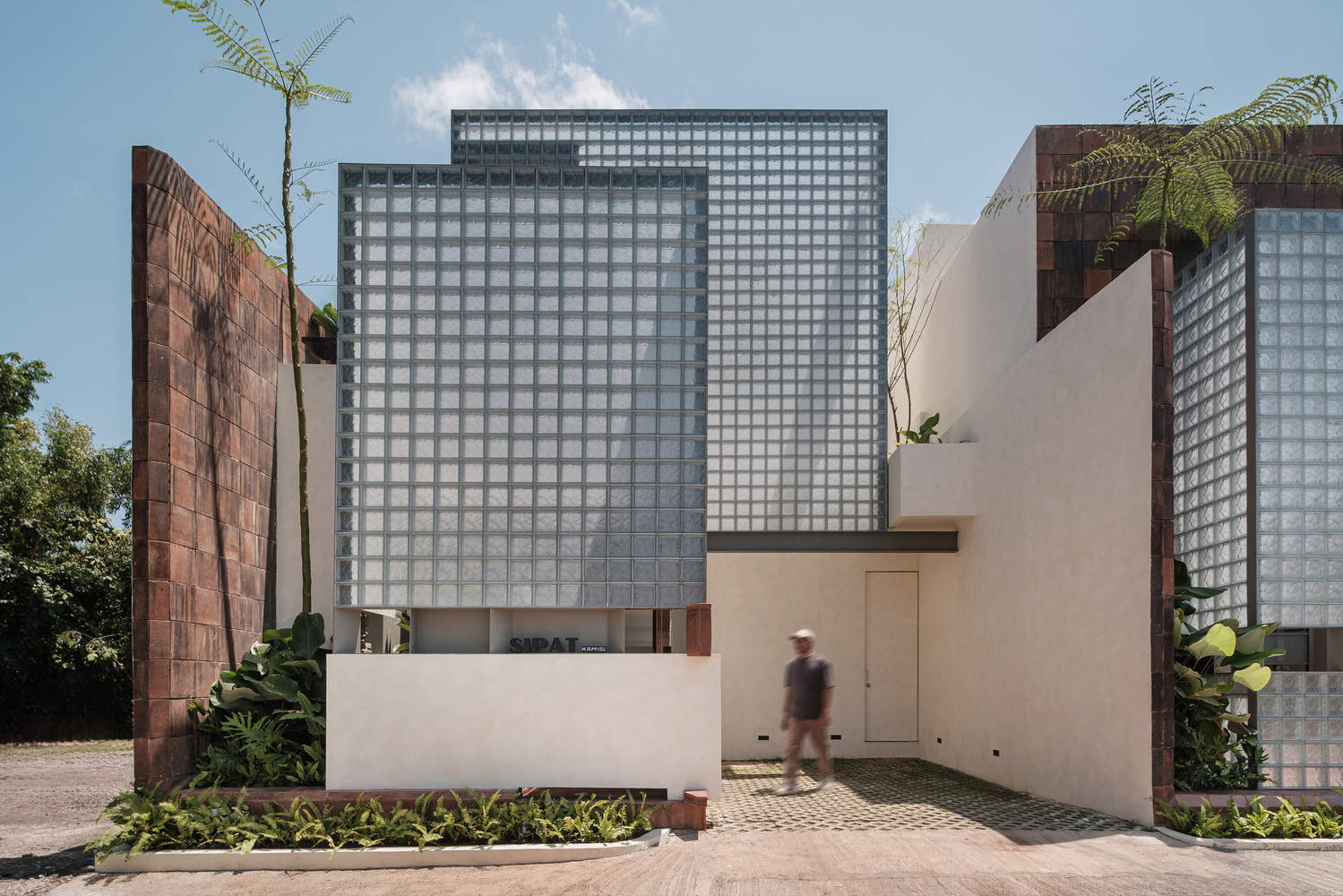
玻璃砖立面的克制美学与感官张力:该设计在外观上摈弃了典型的巴厘岛热带元素,转而采用几何造型和玻璃砖作为主要材料,形成了独特的建筑语言。玻璃砖的运用实现了对“遮蔽”与“暗示”的完美控制,既保护了居住者的隐私,又通过半透明性激发了外部的好奇心,赋予立面强烈的标志性和表现力。这种克制、质朴的材料选择,成就了一个安静的都市避世所,将建筑提升为一种注重质感、光影与生活节奏的沉浸式体验。
From the architect. Located in a vibrant neighborhood in Bali, Sipat & Sauh Villa redefines the concept of rental properties by integrating the warmth and intimacy of a private residence with a serviced environment. The client’s request was both simple and challenging: to design a pool villa that evokes a strong sense of homeliness while showcasing a distinct architectural character. The design process began by exploring elements often missing in most rental villas on the island: a sense of familiarity, softness, and spatial intimacy—the very elements that make a house feel lived-in rather than a deliberately staged model unit.
来自建筑师。Sipat & Sauh Villa 坐落于巴厘岛充满活力的街区,重新定义了租赁房产的概念,将私人住宅的温馨与私密融入到酒店式服务环境中。客户的要求既简单又具有挑战性:设计一栋既能营造浓郁的居家氛围,又能展现鲜明建筑特色的泳池别墅。设计之初,他们便着手探索岛上大多数租赁别墅所缺失的要素:那种熟悉感、柔和感和空间上的亲密感,正是这些元素让房屋充满生活气息,而非刻意营造的样板间。
© Thomas Irsyad
© Thomas Irsyad
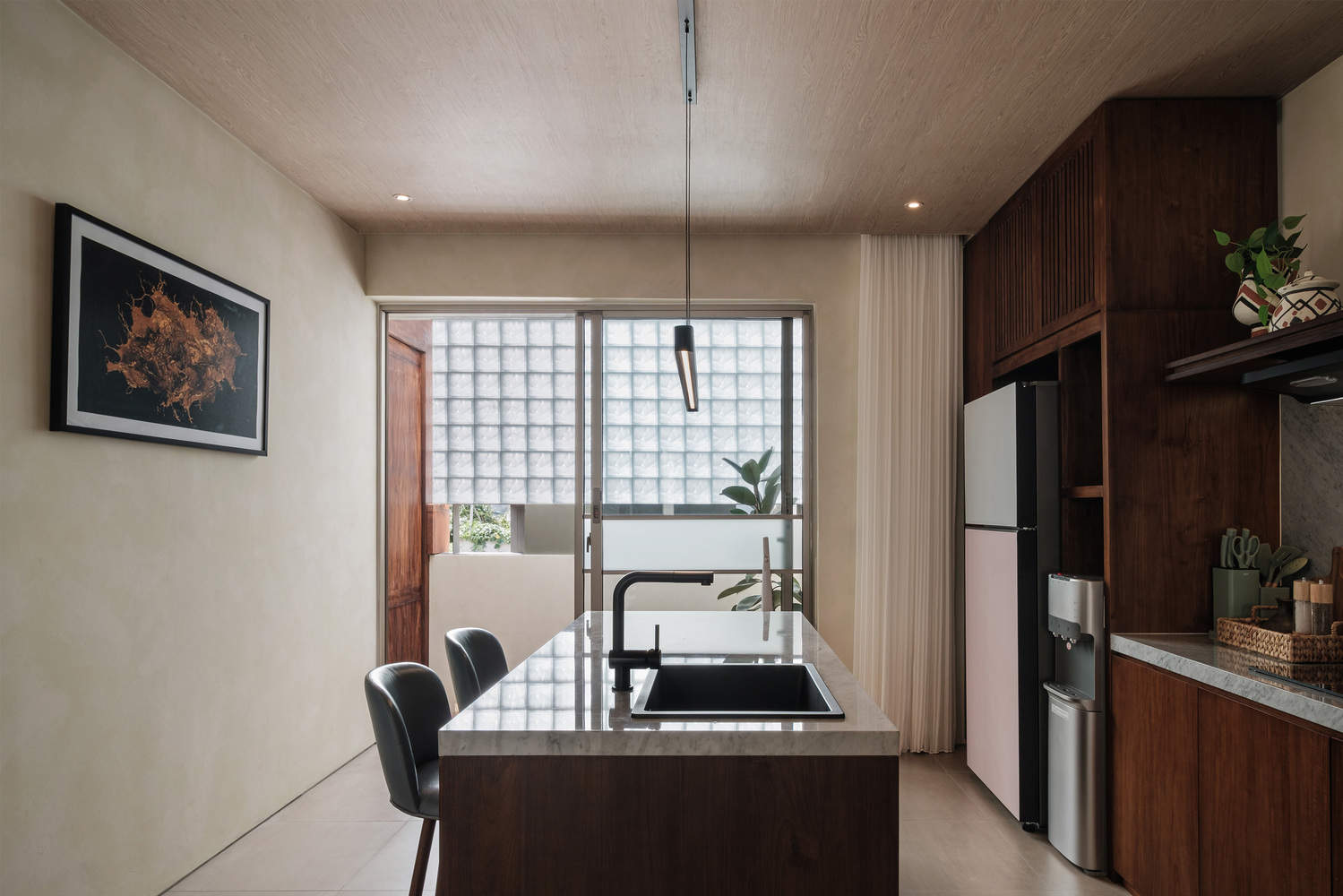
Situated on a compact plot of only 150 square meters, the two-story villa spans a total constructed area of 190 square meters. The spatial layout cleverly balances openness and privacy, function and emotion. The circulation path at the entrance sets the tone for the entire experience. Visitors are first greeted by a small foyer constructed of glass bricks, intentionally left open to the sky. During the day, sunlight streams through the glass bricks, and occasionally, rainwater seeps through, creating a tactile and poetic atmosphere before one formally enters the villa. Diverging from the typical living room found at the entrance of traditional Indonesian homes, this space immediately reveals a kitchen with a simple island—a thoughtful design choice that prioritizes familiarity over formality. This layout subtly promotes interaction, fostering a sense of home comfort rarely achieved in short-term stays.
别墅坐落于一块仅150平方米的紧凑地块上,共两层,总建筑面积190平方米。空间布局巧妙地平衡了开放与私密、功能与情感。入口处的动线奠定了整个体验的基调。访客首先映入眼帘的是一个由玻璃砖砌成的小型门厅,特意敞开,直面天空。白天,阳光透过玻璃砖洒入室内;偶尔,雨水渗入,在正式进入别墅之前,营造出一种触感丰富、充满诗意的氛围。与印尼传统住宅入口处常见的客厅不同,这里首先映入眼帘的是带有简洁岛台的厨房——这种别出心裁的设计以亲切感取代了正式感。这样的布局巧妙地促进了人与人之间的互动,营造出一种在短期住宿中难得一见的居家舒适感。
© Thomas Irsyad
© Thomas Irsyad
© Thomas Irsyad
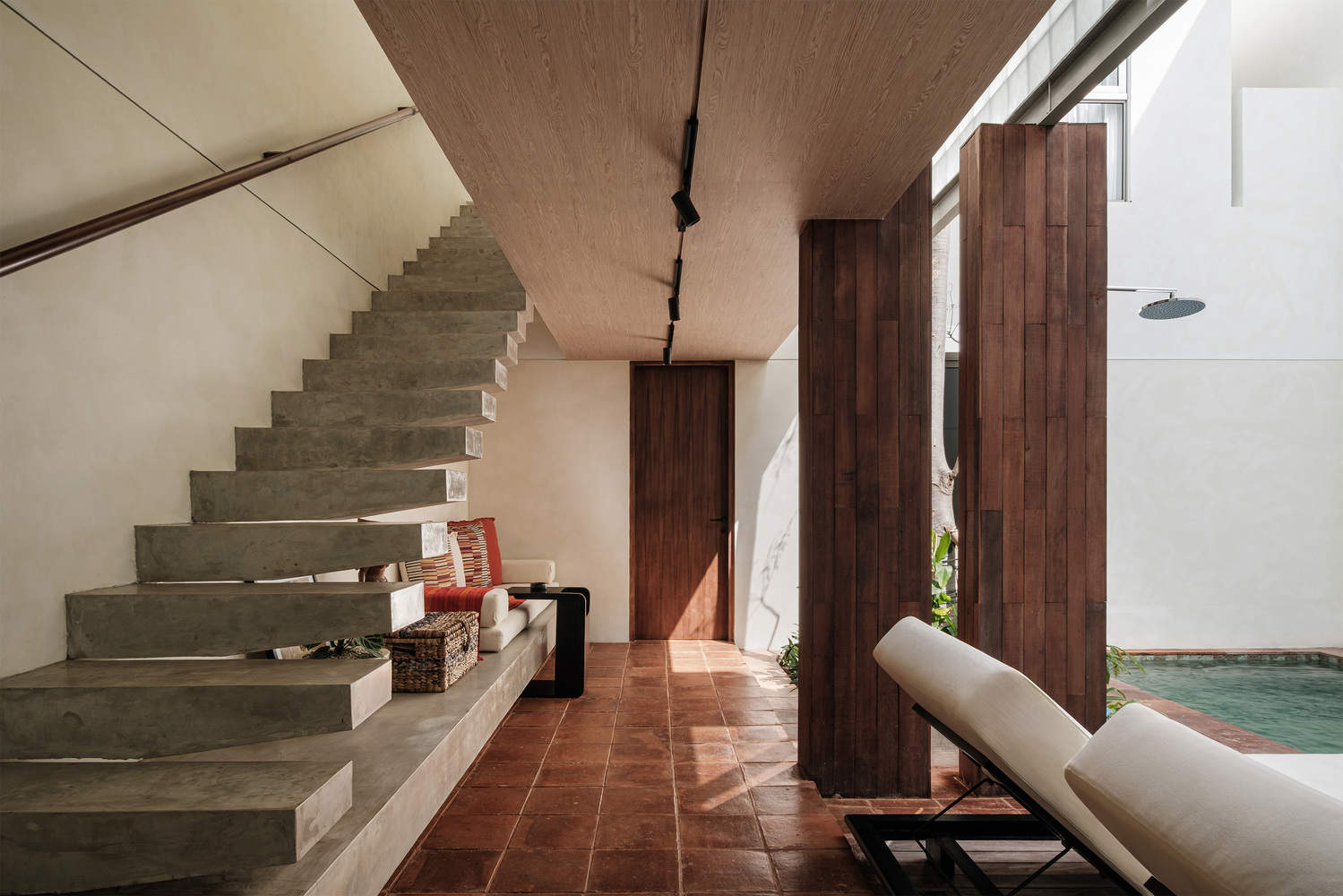
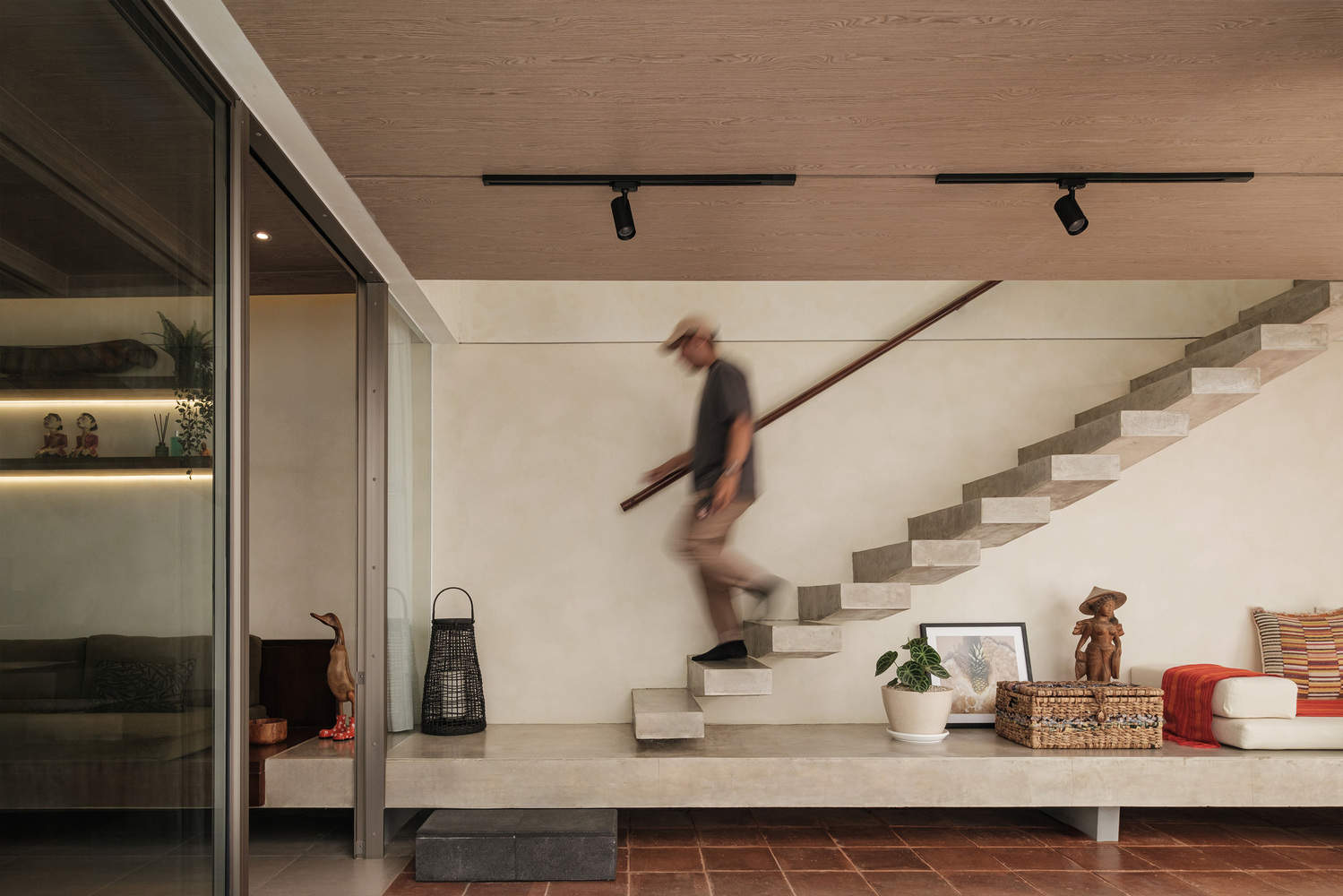
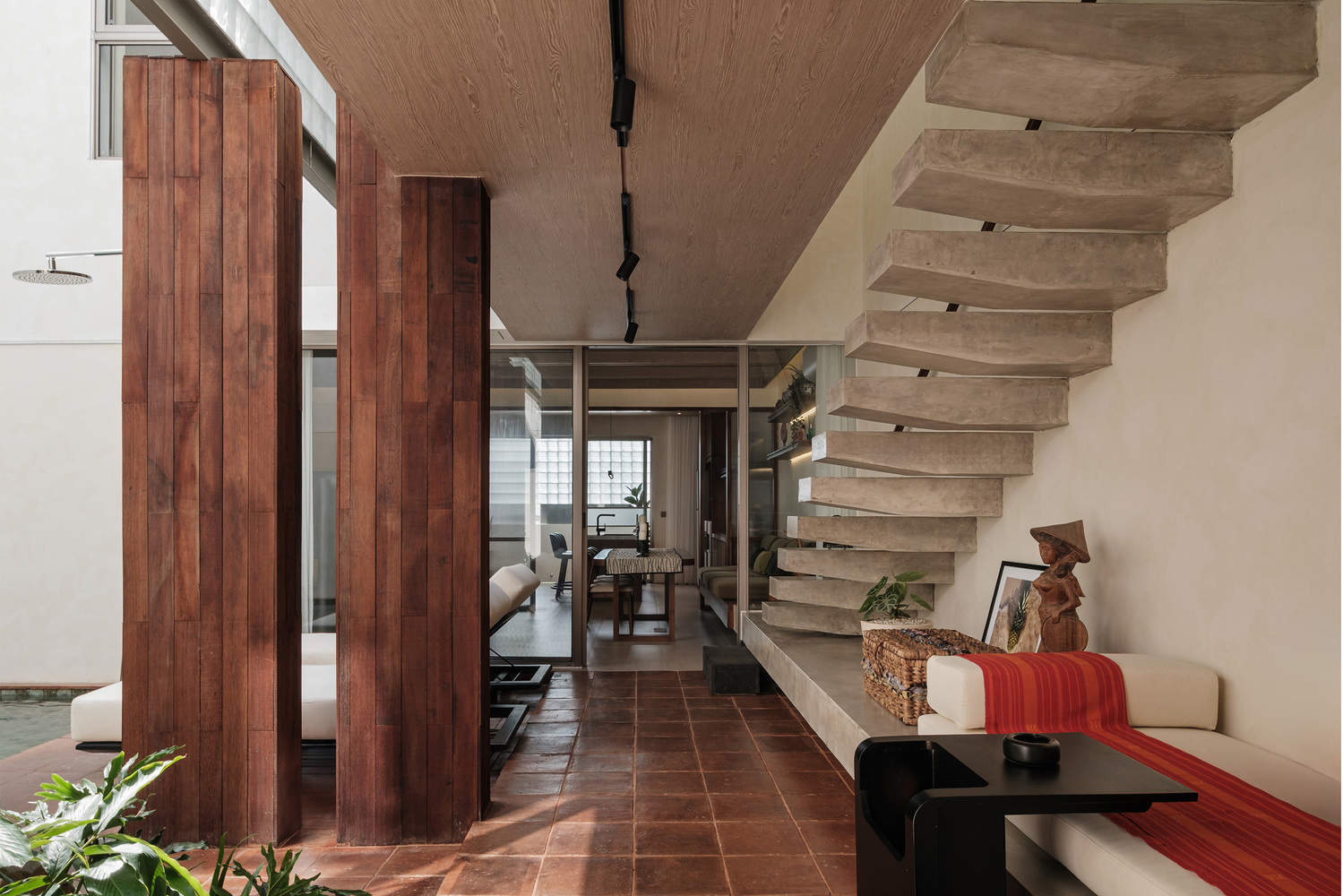
Beyond the kitchen, the dining and living areas follow in a continuous layout, separated by a translucent partition made of wood and grooved glass. These blurred boundaries define each space without severing visual and spatial connectivity, allowing light and air to flow freely. The heart of the villa is a central courtyard with a swimming pool—an open-air core that acts as both a functional and emotional anchor. This courtyard connects the public areas at the front with the private sleeping quarters at the rear and upstairs. A staircase alongside the pool provides vertical connection, reinforcing the concept that circulation should always merge with the exterior environment.
厨房之外,餐厅和起居室呈连续的布局,由一块由木材和凹槽玻璃制成的半透明隔断分隔开来。模糊的边界界定了每个房间,同时又不切断它们之间的视觉和空间联系,使光线和空气能够自由流通。别墅的中心是一个带游泳池的内庭院——一个露天核心区域,在功能和情感上都起到了锚定作用。这个庭院连接着前方的公共区域和后方及上层的私密睡眠区。泳池旁的楼梯提供了垂直方向的连接,同时也强化了室内动线应始终与室外环境相融合的理念。
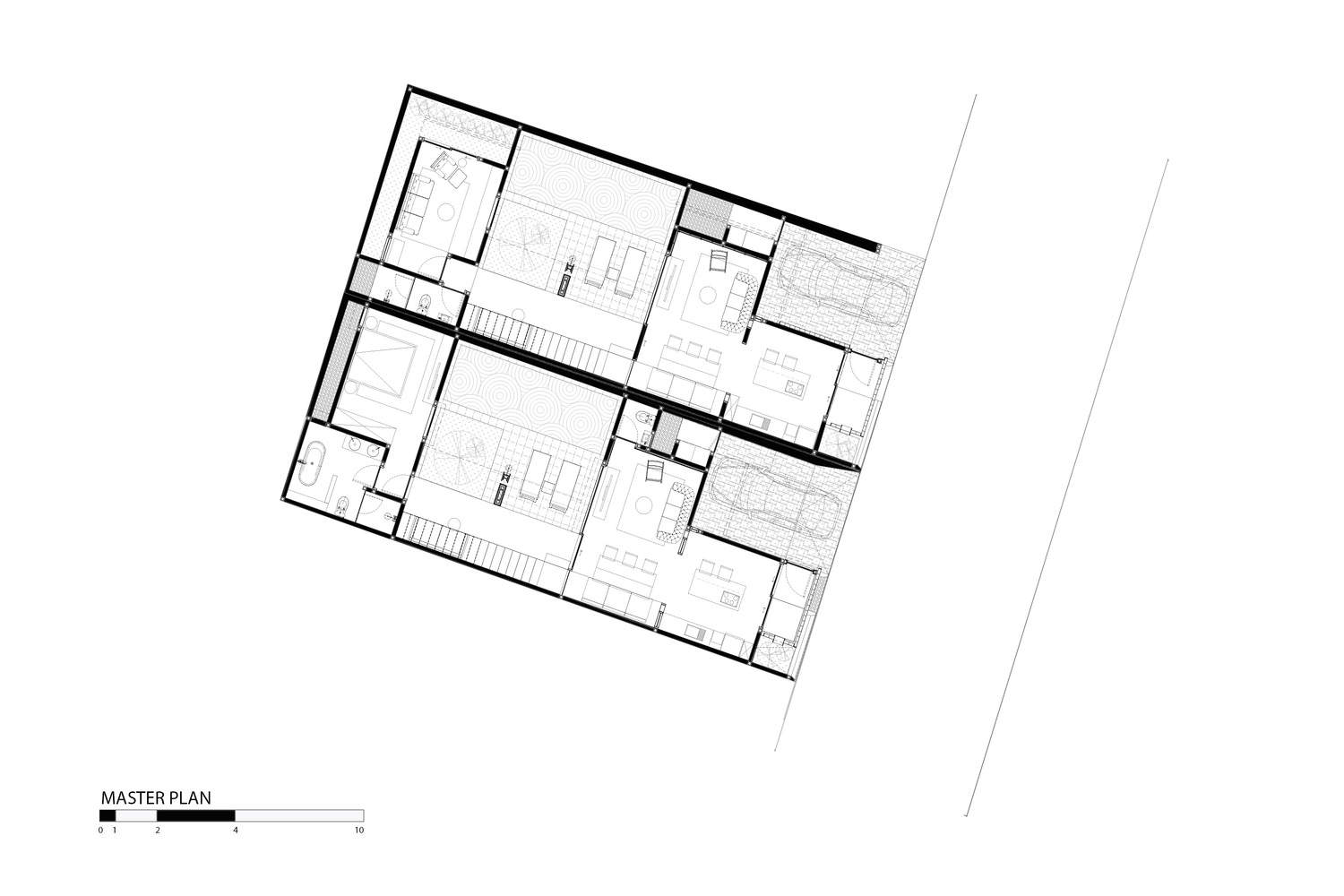
Master Plan
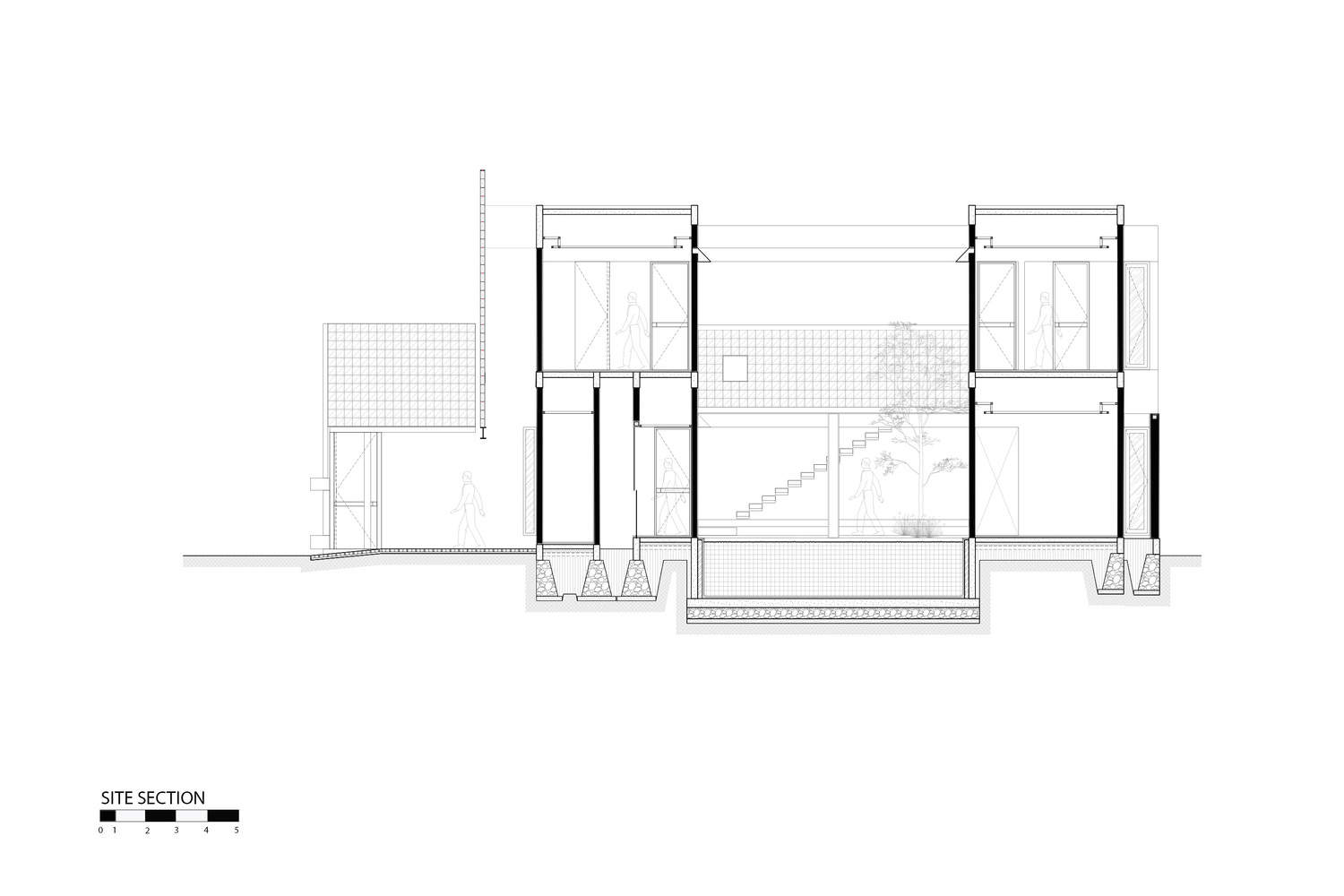
Section
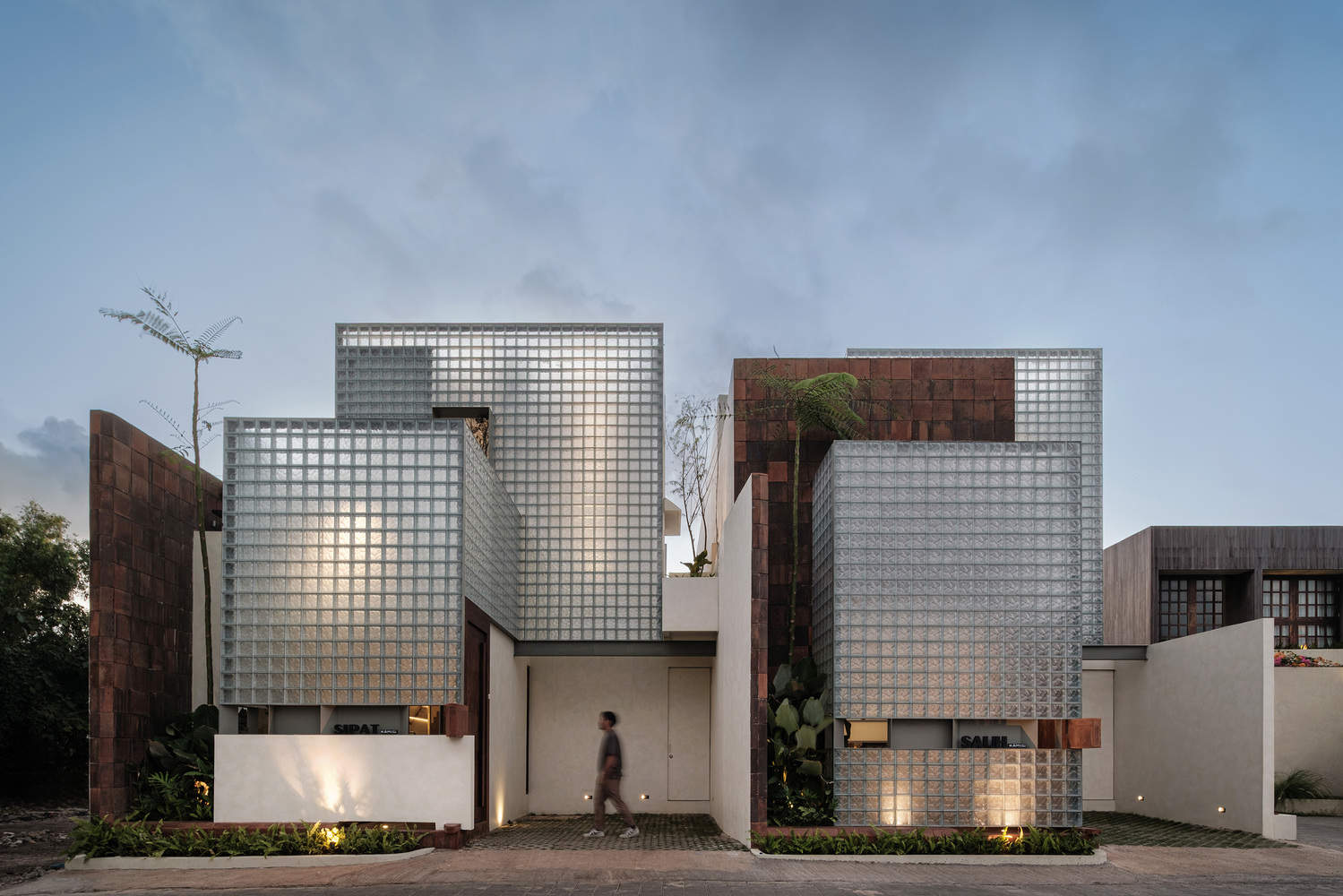
The charm of the architecture extends beyond its internal structure. The exterior features clear geometric forms, prominently utilizing glass bricks—a material that is both opaque and engaging. The glass surfaces both screen the interior spaces and subtly outline their contours, sparking external curiosity without compromising privacy. This clever juxtaposition of concealment and revelation becomes a hallmark of the architecture, rendering the facade both protective and expressive. The design deliberately eschews the traditional tropical aesthetics often seen in Balinese rental villas in favor of restraint and material sobriety.
建筑的魅力远不止于其内部结构。外观采用清晰的几何造型,并以玻璃砖为主要材料——这种材料既具有不透明性,又能引人入胜。玻璃表面既能遮蔽室内空间,又能隐约勾勒出内部轮廓,在不损害隐私的前提下,激发外界的好奇心。这种隐蔽与外露的巧妙结合成为建筑的标志性特征,使立面既具有保护性又富有表现力。该设计摒弃了巴厘岛出租别墅中常见的传统热带美学,转而追求克制和材料的质朴。
© Thomas Irsyad
© Thomas Irsyad
Every element of Sipat & Sauh Villa is designed to foster tranquility and a sense of belonging. Despite its small footprint, the house feels exceptionally spacious through vertical layering, filtered light, and visual connections to greenery and the sky. The final result is a compact urban sanctuary that transforms a typical rental property into a meaningful spatial experience—one focused not on extreme luxury, but on quiet comfort and a soothing rhythm of life lived in harmony with light, texture, and time.
Sipat & Sauh Villa 的每一个设计都旨在营造宁静与归属感。尽管占地面积不大,但通过垂直层次、光线过滤以及与绿植和天空的视觉连接,房屋显得格外开阔。最终呈现出的,是一处紧凑的都市静谧之所,它将普通的租赁房产转化为意义非凡的空间体验——并非追求极致奢华,而是注重静谧舒适,以及与光线、质感和时间和谐共处的舒缓生活节奏。
© Thomas Irsyad