场地策略与社区核心营造:该项目巧妙地利用了复杂路口地块的挑战性,通过建筑的战略性布局,成功地在喧嚣的城市环境中嵌入了一个宁静且社交导向的内部庭院。这不仅最大化了地块潜力,更确立了建筑作为社区互动的核心功能。设计将声学缓冲作为首要考虑,通过建筑形态与街道的背向处理,有效隔绝了交通噪音,使得庭院成为一个真正宜居和放松的“公共客厅”,体现了以人为本的城市设计精髓。
多维度的声景与材料的叙事性:建筑立面设计在功能与美学上实现了精妙平衡。朝向街道的垂直木格栅不仅提供了声学屏障,还兼作攀援植物的格架,实现了生态渗透。与庭院一侧温暖的米白色调形成对比,材料的选择直接服务于空间体验。更具匠心的是,中央喷泉的水声被策略性地整合进设计中,作为主动的声景元素,与被动的建筑隔音共同作用,共同消解了街道的干扰,创造出丰富的声学层次。
包容性与激活公共生活的空间层次:设计深度关注了公共空间的使用效率和包容性,通过清晰的功能分区(社区中心与图书馆)界定了建筑的身份。空间布局上,阶梯式露天剧场、棋桌区和阳光休息区等多样化的停留点,鼓励了跨代际的社交活动。从广场到建筑的无缝过渡,结合最高标准的无障碍设计,确保了空间的可达性。屋顶露台的设置进一步扩展了公共界面,使整个综合体成为一个连续、可达、充满活力的社区“容器”。
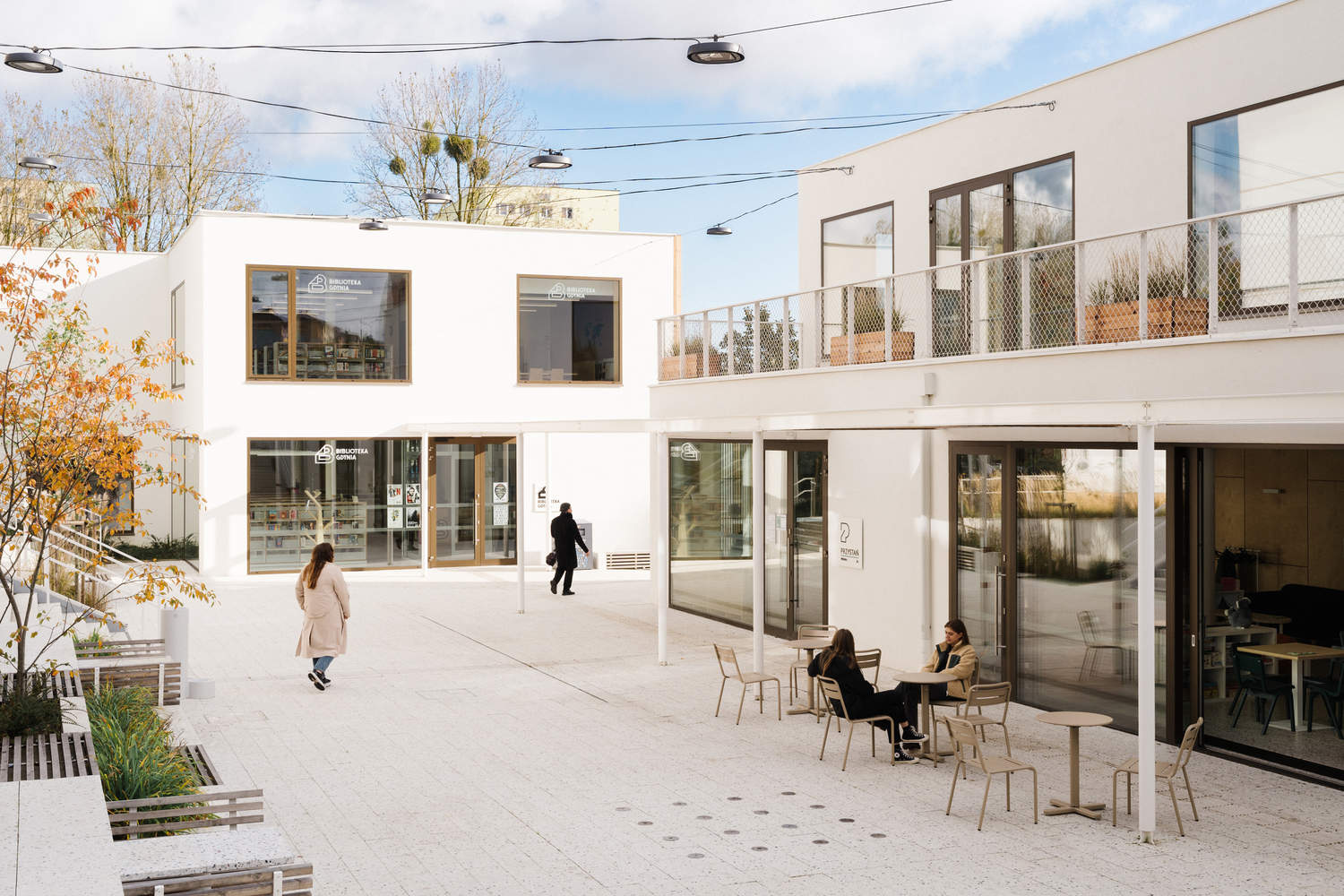
The main goal of this project was to create a modern public space that fosters social interaction, relaxation, and a sense of community belonging among local residents of different ages and backgrounds. A key element of this design concept was the creation of a welcoming and pleasant internal courtyard, made possible by the strategic placement of the new building on the site. Despite the challenging location at a major intersection in the area, this layout allowed the investor to fully exploit the potential of the plot.
该项目的主要目标是打造一个现代化的公共空间,以促进不同年龄层和背景的当地居民之间的社交互动、休闲放松,并增强社区归属感。该设计理念的一个关键要素是打造一个温馨宜人的内部庭院,这得益于新建筑在场地上的战略性布局。尽管该地块位于该区域一个主要路口,位置颇具挑战性,但这样的布局使投资者得以充分挖掘该地块的潜力。
© Nate Cook
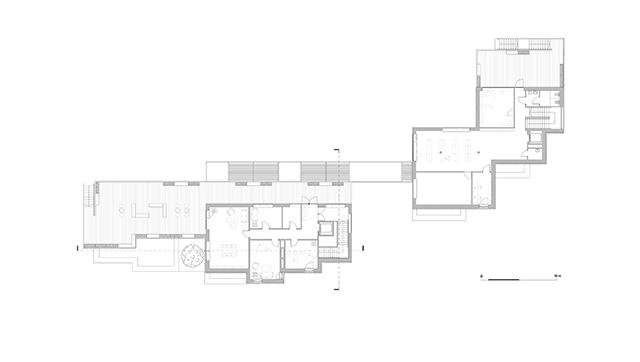
Ground floor plan
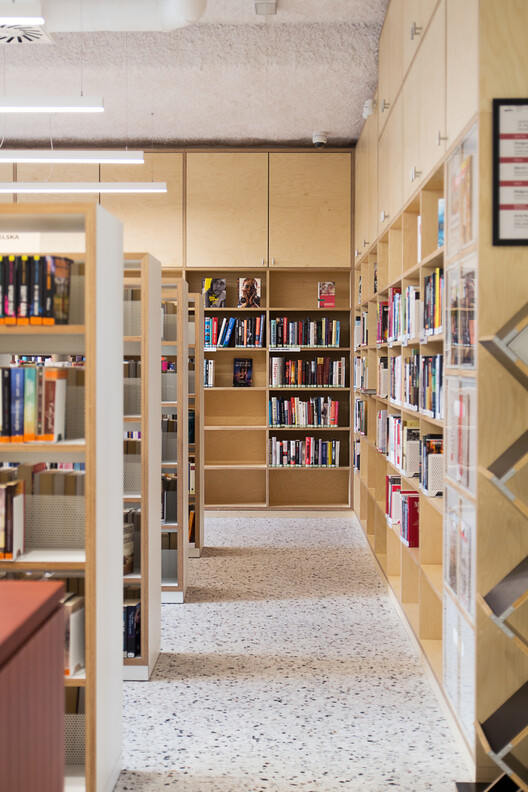
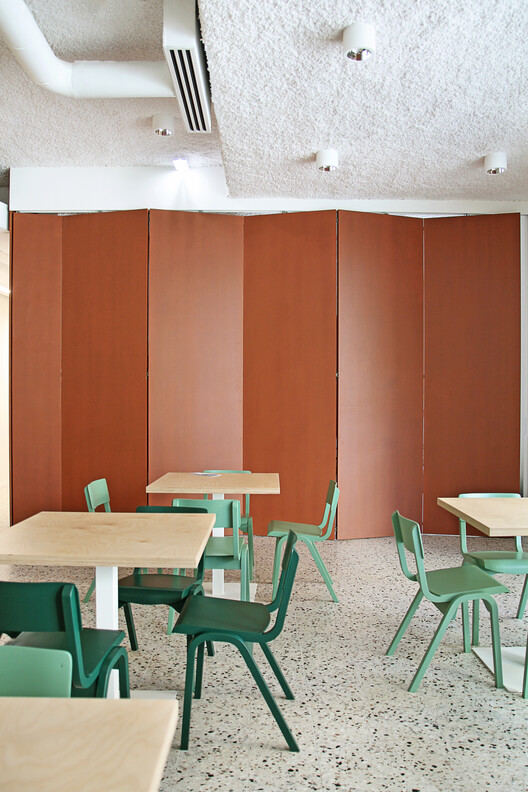
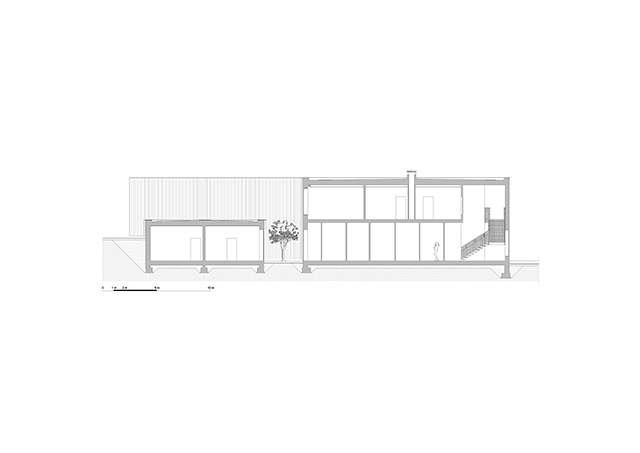
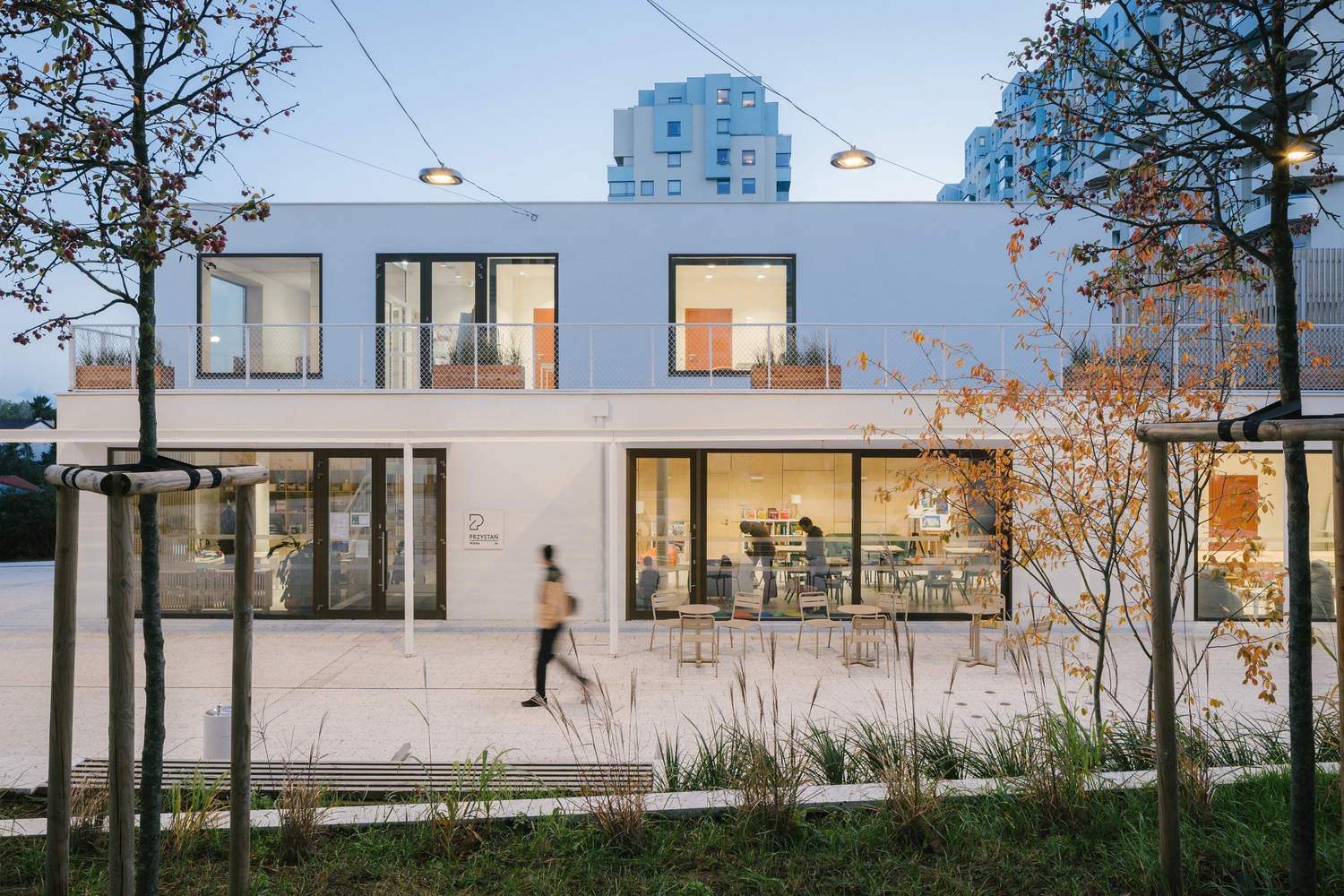
The building is designed to act as an acoustic buffer, turning its back to the busy street and opening up towards the internal courtyard. Its architectural form follows the topography and aligns with the existing building lines, featuring setbacks on the façade to help disperse and weaken street noise. The building volume is divided into two functional zones: a community center and a library. This division creates a visual entrance towards the residential area and the building complex itself, enhancing spatial recognizability and aligning the structure with existing pedestrian walkways and naturally formed paths.
该建筑的设计旨在充当声学缓冲空间,它背对繁忙的街道,朝向内部庭院敞开。其建筑形态顺应地形,并与现有建筑线保持一致,建筑立面设有退台,有助于分散和削弱街道噪音。建筑体量被划分为两个功能区:社区中心和图书馆。这种划分形成了一个通往住宅区和建筑综合体本身的视觉入口,增强了空间的可辨识度,并使建筑结构与现有的行人步道和人们自然形成的通行路径相契合。
© Nate Cook
© Jakub Piórkowski
© Jakub Piórkowski
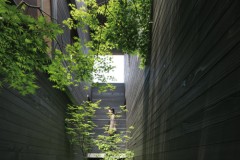
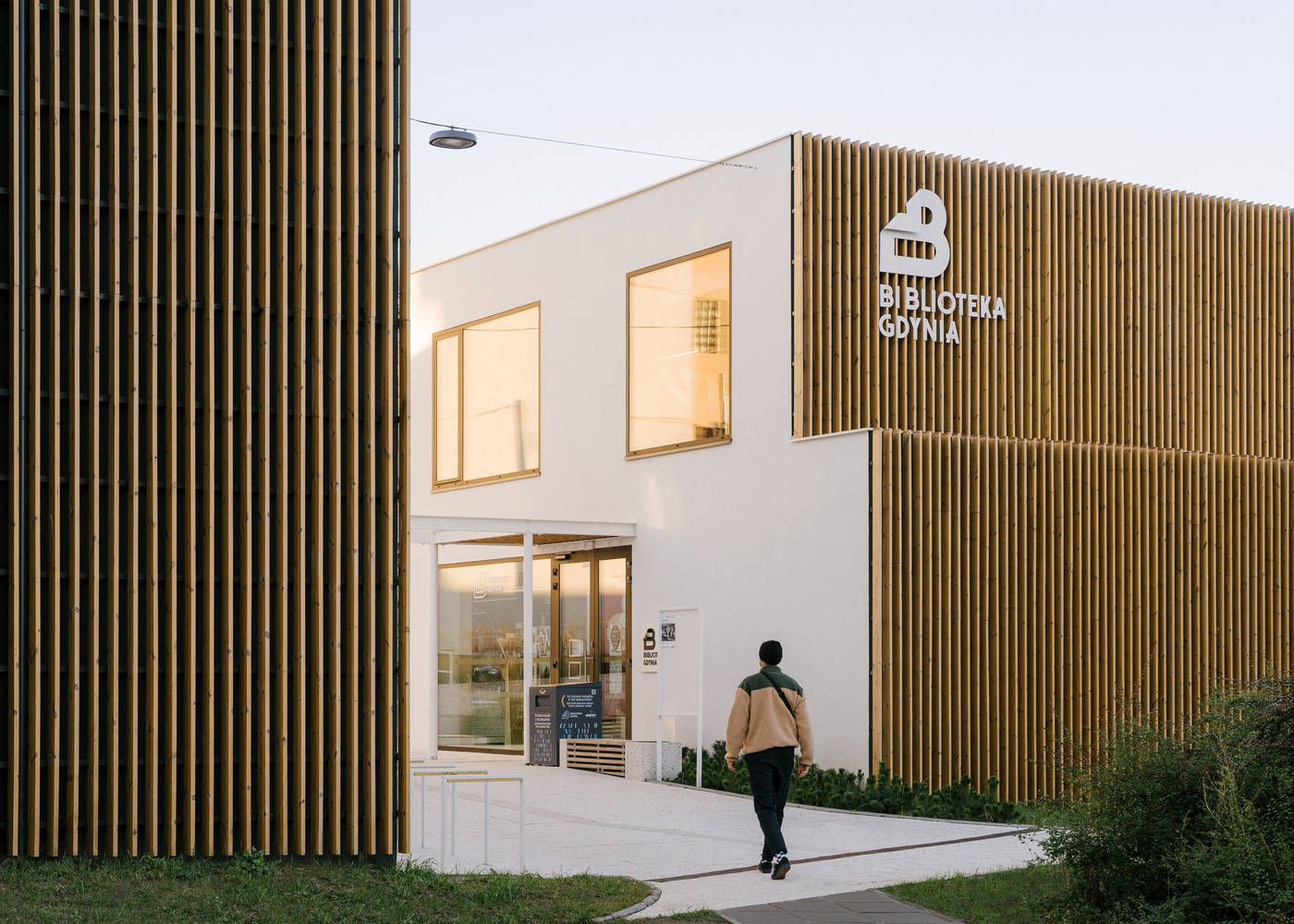
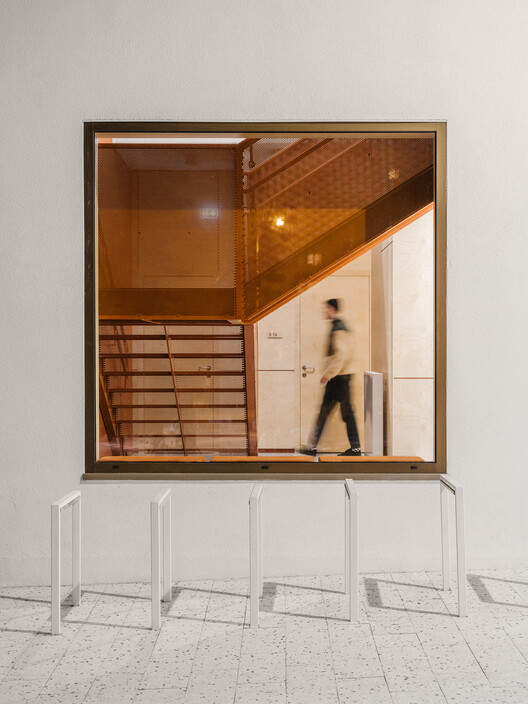
The façade facing the street is covered with vertical wooden slats, whose texture enhances the sound barrier's effectiveness and also serves as a trellis for climbing plants. Following the guidelines of the urban visual arts consultant, the façade facing the courtyard uses a warm off-white tone. These architectural elements, together with the courtyard and landscape features, create a harmonious combination of structure and materials. The terrazzo paving of the square smoothly connects with the interior spaces and transitions into tiered seating, visually and spatially integrating the building with its surroundings.
朝向街道的建筑立面覆盖着垂直的木质条板,这些条板的纹理增强了声屏障的效能,同时还可作为攀援植物的格架。依据城市视觉艺术顾问的指导方针,朝向庭院的建筑立面采用了温暖的米白色调。这些建筑与庭院及景观元素共同构成了一个和谐统一的建筑与材质组合。水磨石铺就的广场与建筑内部空间流畅衔接,并过渡为阶梯式座椅,在视觉和空间上将建筑与周边环境融为一体。
© Nate Cook
Section
© Nate Cook
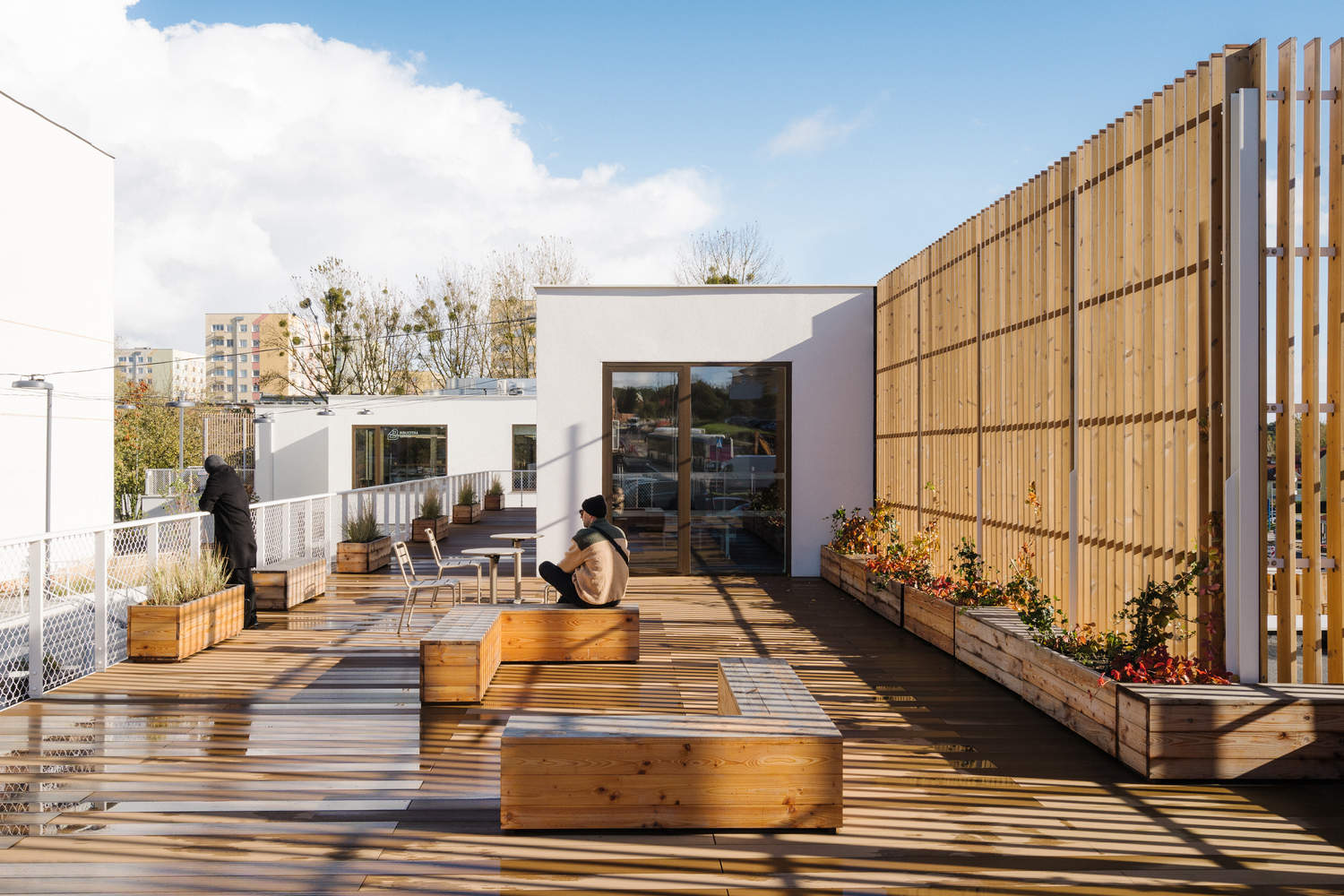
The amphitheater-like steps can accommodate outdoor events, workshops, and open-air film screenings, encouraging active community participation. A fountain is located in the center of the square, whose water flow further masks street noise, improving the space's comfort. Special attention was paid to the needs of elderly residents, with sunlit resting areas and chess tables set among greenery. Both buildings feature rooftop terraces accessible to the public, reachable both from inside the building and directly from the square. The entire complex adheres to a unified wayfinding system and meets the highest accessibility standards. The courtyard is planted with ornamental grasses and fruit trees, while the street perimeter features a line of trees and climbing plants, adding greenery and softening the harshness of the urban boundary.
阶梯式露天剧场般的台阶可容纳户外活动、工作坊以及露天电影放映,鼓励社区居民积极参与。广场中央设有一座喷泉,其水流声进一步掩盖了街道噪音,提升了空间的舒适度。设计特别关注老年居民的需求,在绿植环绕中设置了阳光充足的休息区和棋桌。两座建筑均设有可供公众使用的屋顶露台,既可从建筑内部抵达,也可从广场直接进入。整个建筑群遵循统一的导视系统,并符合最高的无障碍通行标准。庭院内种植了观赏草与果树,而沿街周边则种有一排树木和攀援植物,增添了绿意,并柔化了城市边界的生硬感。
© Nate Cook