历史遗存的现代激活与可持续叙事:该项目最精髓之处在于其对一座拥有 125 年历史的标志性工业建筑的成功“复兴”。OYO Architects 不仅是进行室内翻新,更是通过引入科技与文化中心的功能,为建筑注入了持久的生命力。设计的核心理念在于尊重并突显原有的工业特质(如结构和体量),同时通过温暖的材料、人性化的尺度和灵活的空间布局,使其适应现代知识经济的需求。这不仅是对既有建筑寿命的延长,更是通过回收材料和循环经济实践,确立了城市更新中可持续发展的典范,实现了文化遗产与当代城市活力的有机结合。
功能复合化与空间激发共创活力:项目成功地将一个单一功能的历史建筑(马戏团/车库)转化为一个高度复合的创新生态系统,涵盖了初创企业办公、多功能展览、会议活动及餐饮服务。核心的“竞技场”(Arena)作为灵活的中心枢纽,巧妙地连接了各个功能区,并以其工业遗产的特点成为活动的焦点。设计师通过色彩、材质和尺度上的精细调控,创造出既专业高效又富有人情味的“类马戏团”氛围,这种氛围旨在激发不同领域人群(企业家、研究人员、创意人士)之间的自发互动和思想碰撞,极大地提升了空间的社会和经济价值。
尺度策略与材料的触感叙事:建筑师在设计中表现出对“人体尺度”的高度敏感性,这在处理庞大历史体量时尤为关键。通过采用温暖的材料(木材、砖块)和适宜的家具尺度,OYO 成功地软化了工业建筑的刚硬感,使其显得“亲切且易于亲近”。工作空间的设计,如采光良好的大窗户和对比鲜明的色彩搭配,不仅优化了使用者的体验,也体现了对细节的关注。此外,对二手或回收材料家具的广泛应用,连同机器人技术和电子废弃物回收的实践,构成了项目“折衷主义”美学的基础,体现了设计的深度和对循环经济的承诺。
From the architect. OYO Architects, an architecture firm based in Ghent, Belgium, and Barcelona, Spain, launched the interior design project "Wintercircus," injecting new vitality into an iconic historical building of 4830 square meters in Ghent, Belgium. This 125-year-old behemoth, once a circus and later converted into a garage, has now been transformed into a vibrant technological and cultural center, not only extending the building's lifespan but also laying the foundation for the campus and urban sustainability. The building, constructed in 1885 in the city center of Ghent, has undergone multiple renovations, the latest in 2015, which preserved its original robust structure. Building on this, OYO renovated the interior of the "Wintercircus" to align with the vision of TENT (a consortium of local tech entrepreneurs and the city government) to make the building a catalyst for urban community, economic, and employment development. In the words of OYO Architects: “‘Wintercircus’ charm lies in its opportunity to foster innovation stemming from spontaneous interaction and idea exchange between entrepreneurs, researchers, students, digital creatives, and the public.”
来自建筑师。OYO Architects 是一家总部位于比利时根特和西班牙巴塞罗那的建筑设计事务所,他们推出了“冬季马戏团”(Wintercircus)这一室内设计项目,该项目占地 4830 平方米,为一座位于比利时根特的标志性历史建筑注入了新的活力。这座拥有 125 年历史的庞然大物,曾是一座马戏团,后来又改建为车库,如今已被改造成一个充满活力的科技与文化中心,不仅延长了建筑的使用寿命,还为校园和城市的可持续发展奠定了基础。这座 1885 年建成的建筑位于根特市中心,历经多次改造,最近一次是在 2015 年,当时保留了其原有的坚固结构。在此基础上,OYO 事务所对“冬季马戏团”的内部进行了翻新,以契合 TENT(一个由当地科技企业家和市政府组成的联盟)的愿景,即将这座建筑打造成为推动城市社区、经济和就业发展的催化剂。引用 OYO Architects 的话说:“‘冬季马戏团’的魅力在于它提供了一个促进创新的机会,这种创新源自企业家、研究人员、学生、数字创意人士和公众之间的自发互动和思想交流。”
© Karen Van der Biest
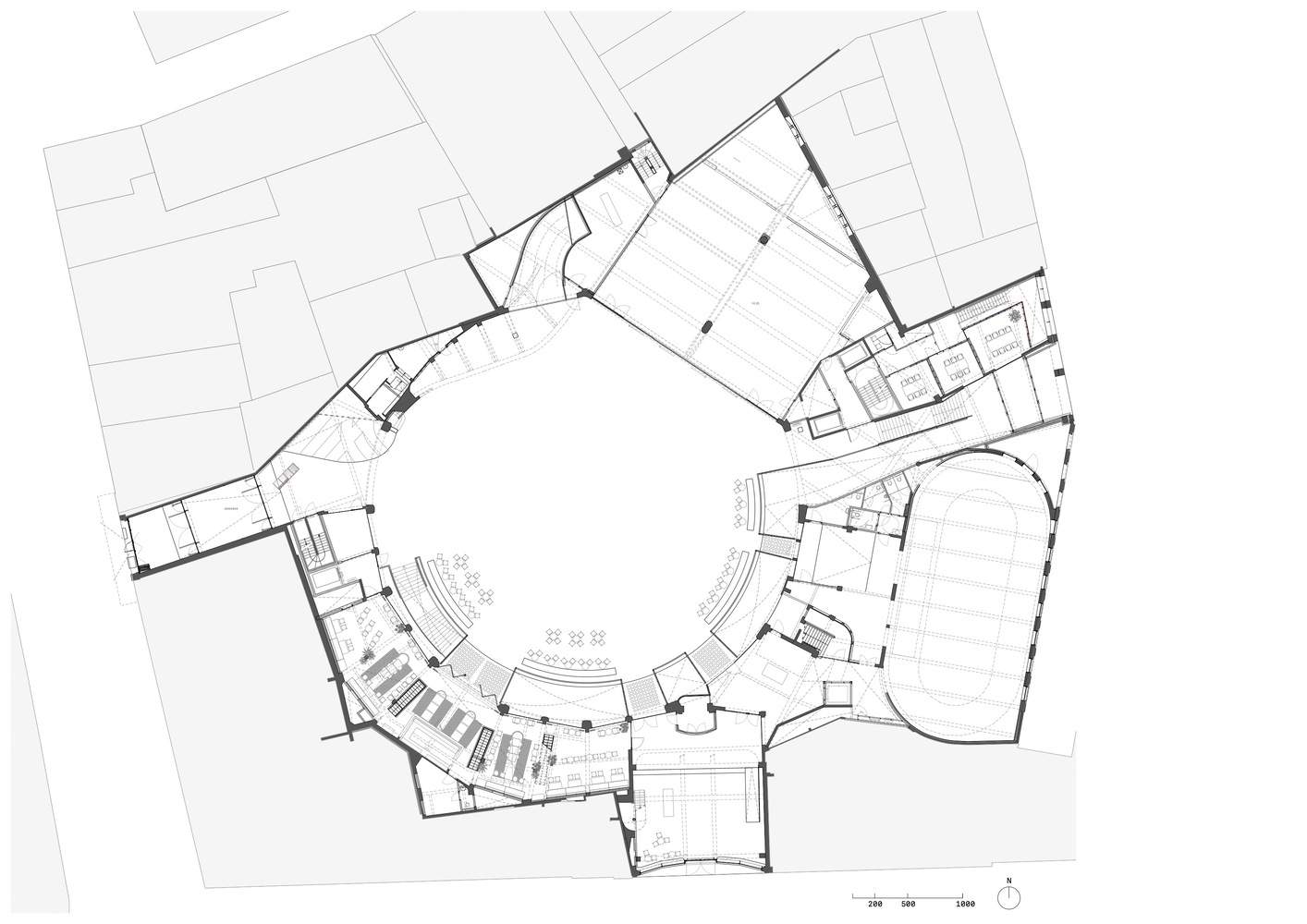
First floor plan
一层平面图
© Wintercircus Collective
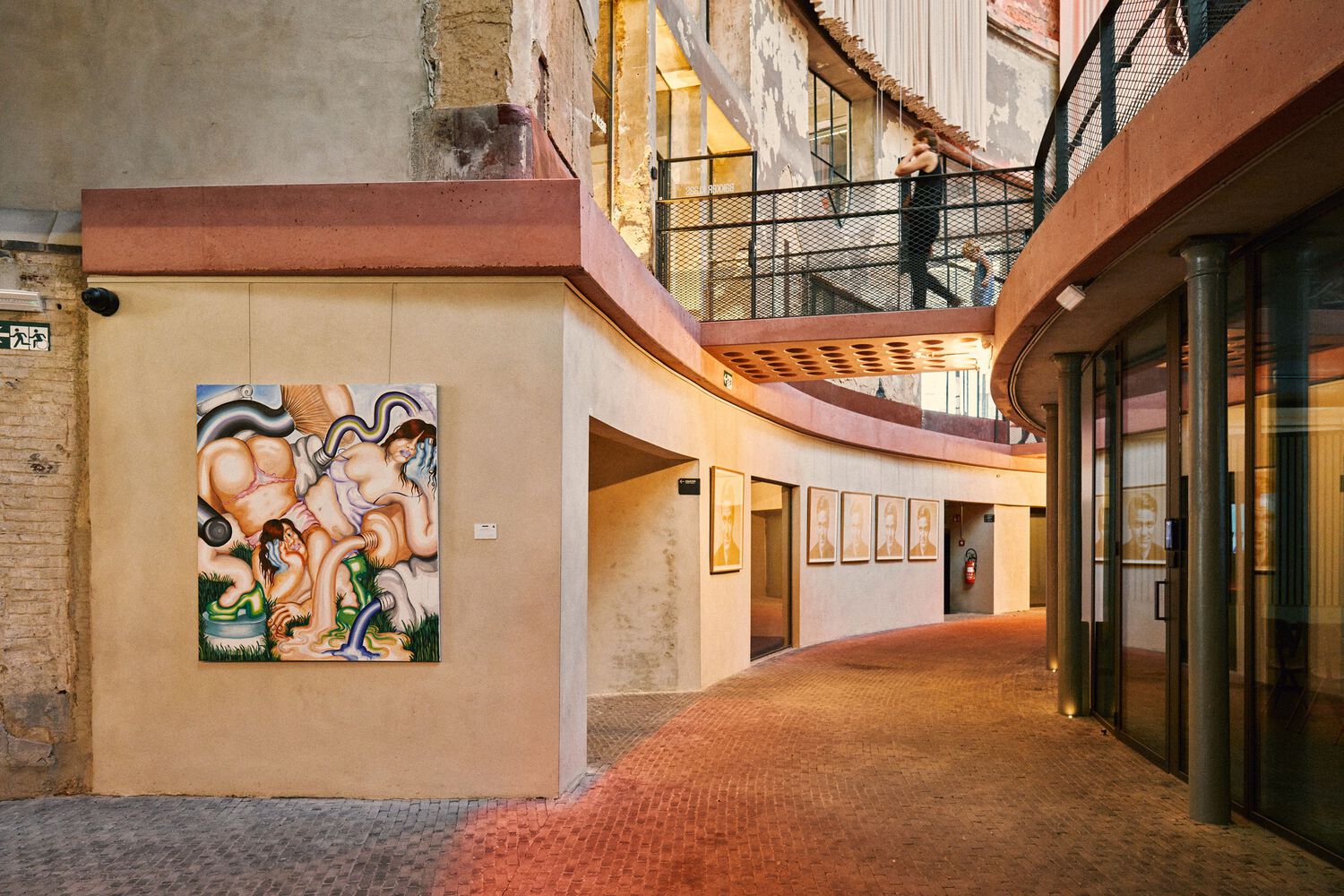
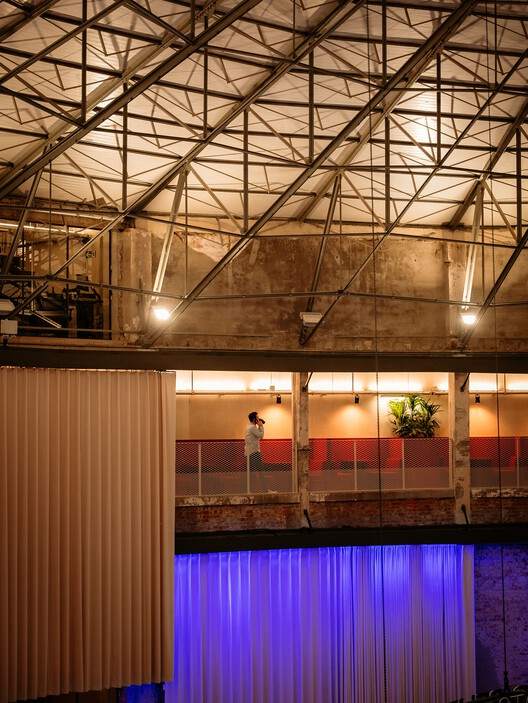
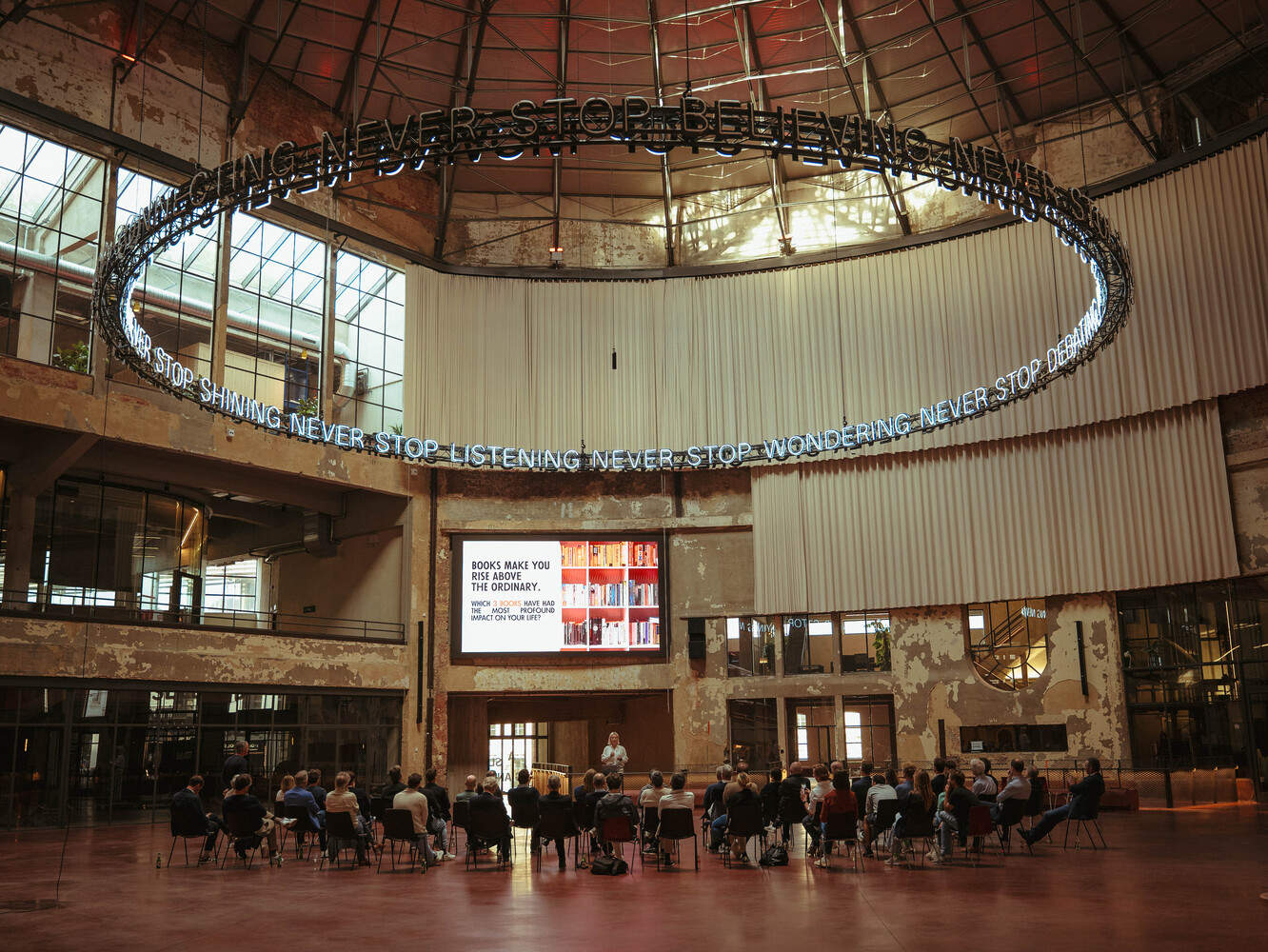
The team of architects designed the interior layout for over thirty workspaces for tech startups, as well as a large multi-functional hall, two spaces for exhibitions and conferences, and two gastronomic facilities. Thus, by using colors and materials that evoke the spirit of the circus, this renovation project provides event venues for an audience gathered by curiosity and entrepreneurial spirit. OYO Architects explained: "For us, it was important to fit the building to a human scale, using warm materials to make it feel intimate and approachable." The core area of the campus is the "Arena," a multifunctional space intended for various activities, from product presentations to art installations. Through this renovation, OYO highlighted the industrial character and iconic qualities of the site, prioritizing its adaptability. Furthermore, a set of movable neon light installations placed in the "sky" area of the site is particularly noteworthy.
这支建筑师团队为科技初创企业设计了三十余个工作空间的内部布局,还打造了一个大型多功能厅、两个用于展览和会议的空间,以及两个美食设施。因此,通过运用能唤起马戏团精神的色彩与材质,这一改造项目为各类因好奇心和创业精神而汇聚的受众提供了活动场所。OYO Architects 解释道:“对我们而言,重要的是让建筑契合人体尺度,采用温暖的材料,使其显得亲切且易于亲近。” 校园的核心区域是“竞技场”(Arena),这是一个多功能场地,旨在承办各类活动,从产品展示到艺术装置展均可胜任。通过此次改造,OYO 凸显了该场地的工业特色与标志性特质,并优先考虑了其适应性。此外,场地“天空”区域安装的一组可移动霓虹灯装置格外引人注目。
© Wintercircus Collective
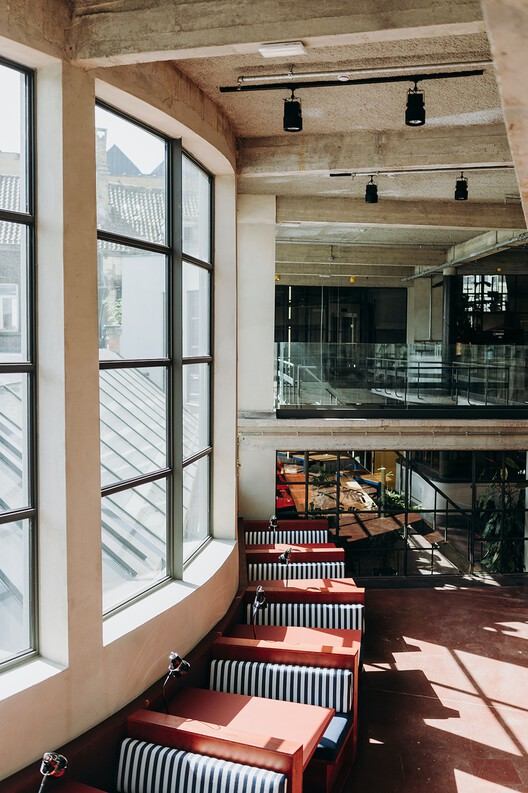
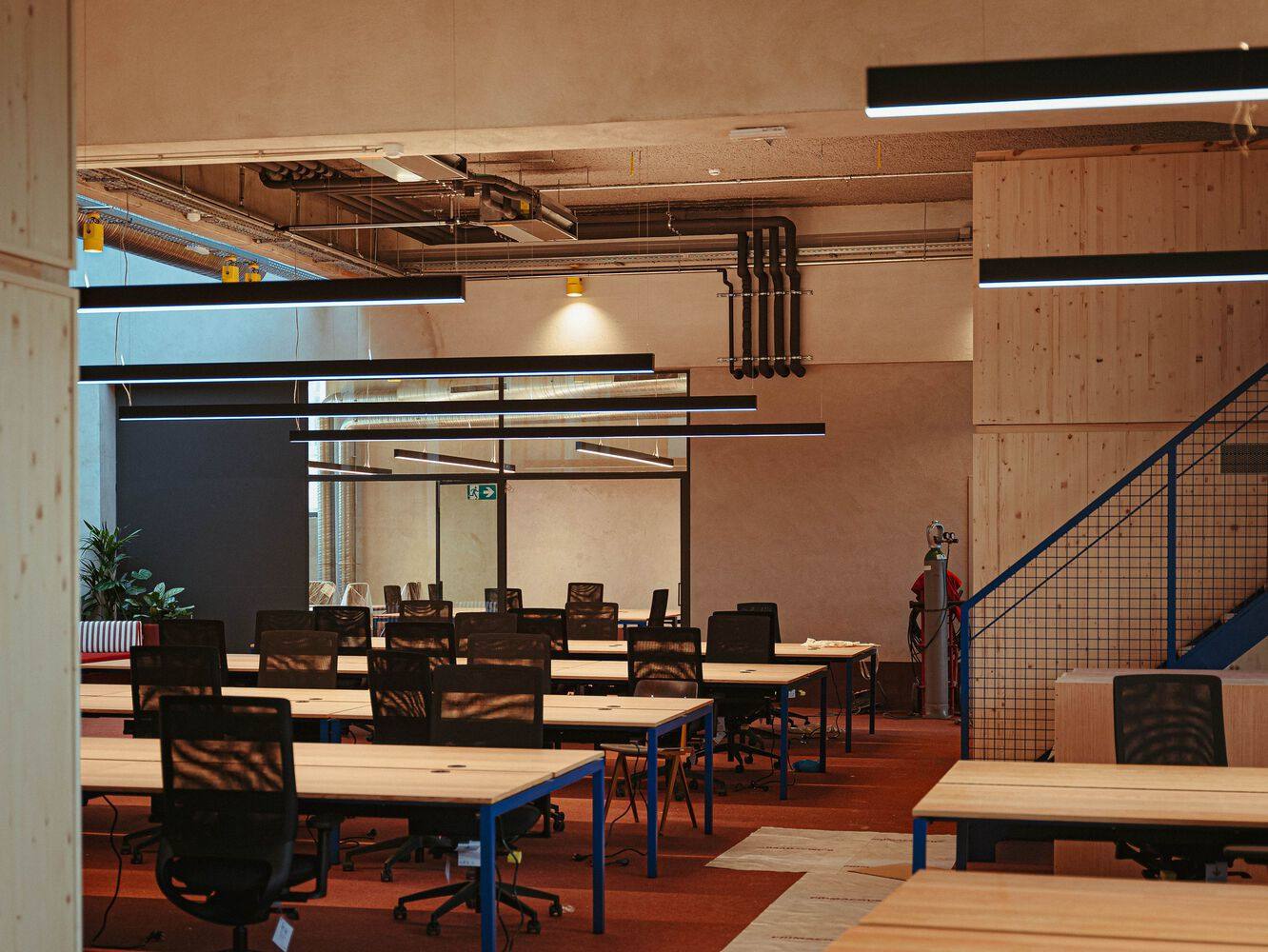
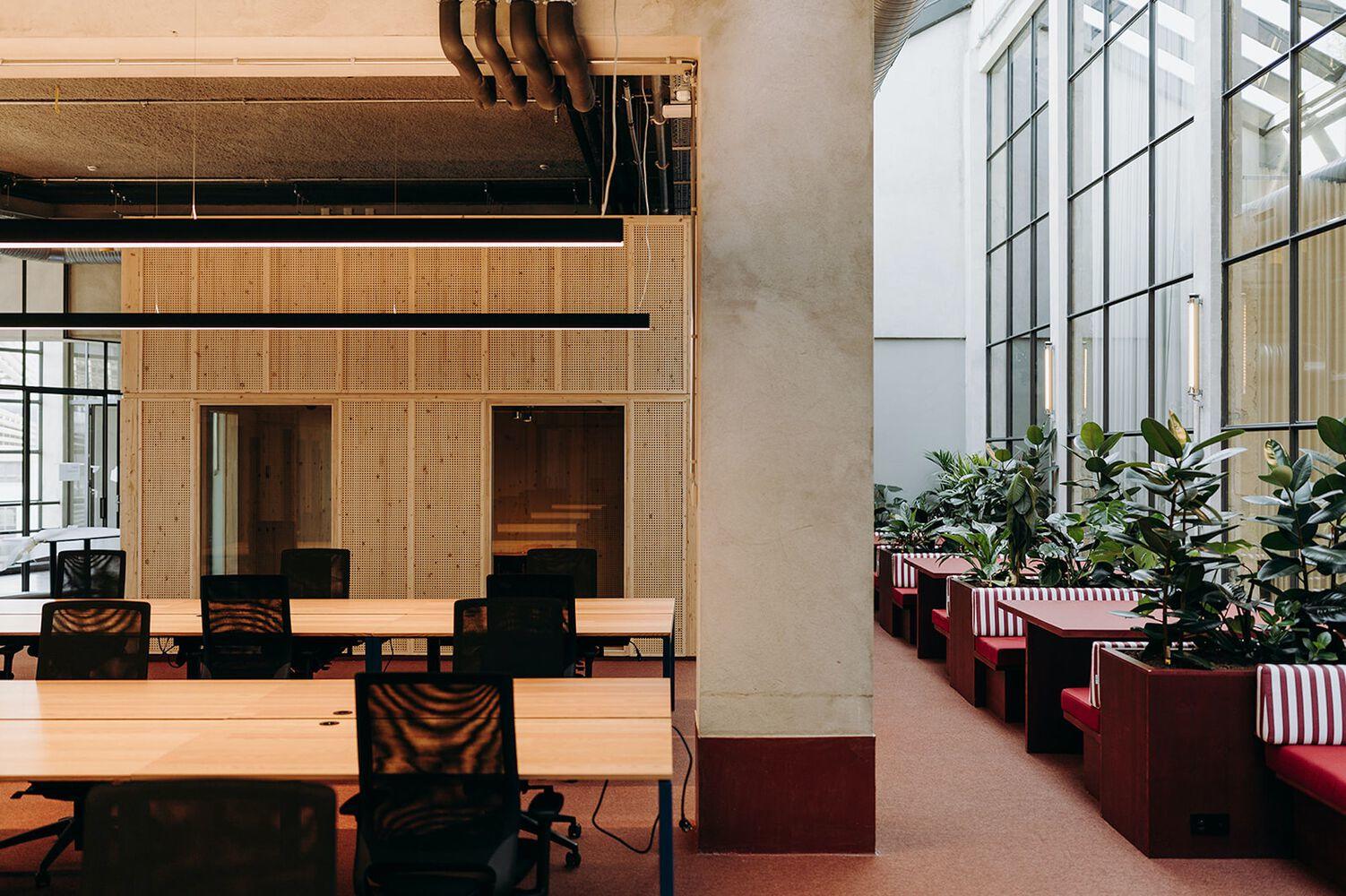
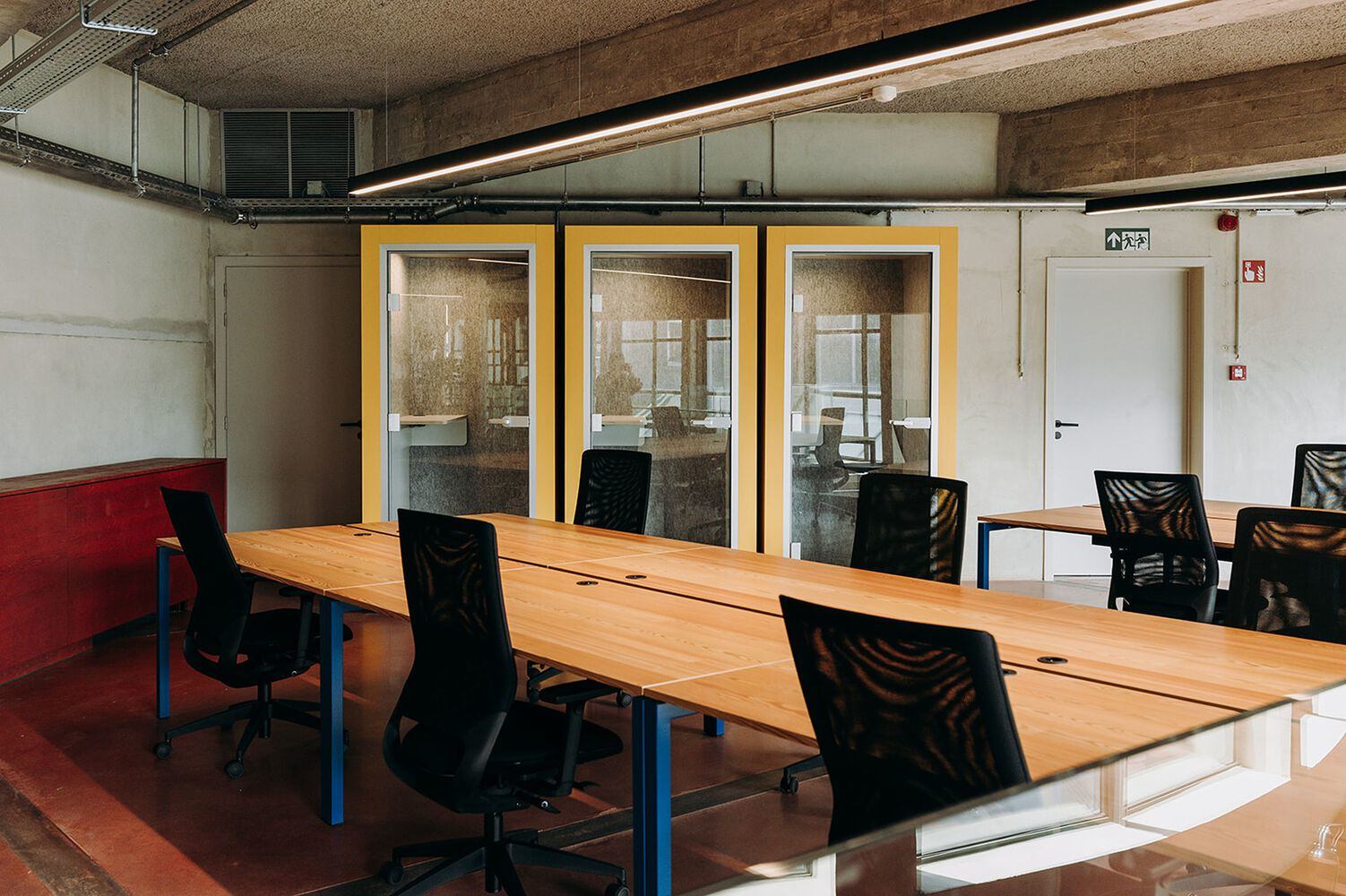
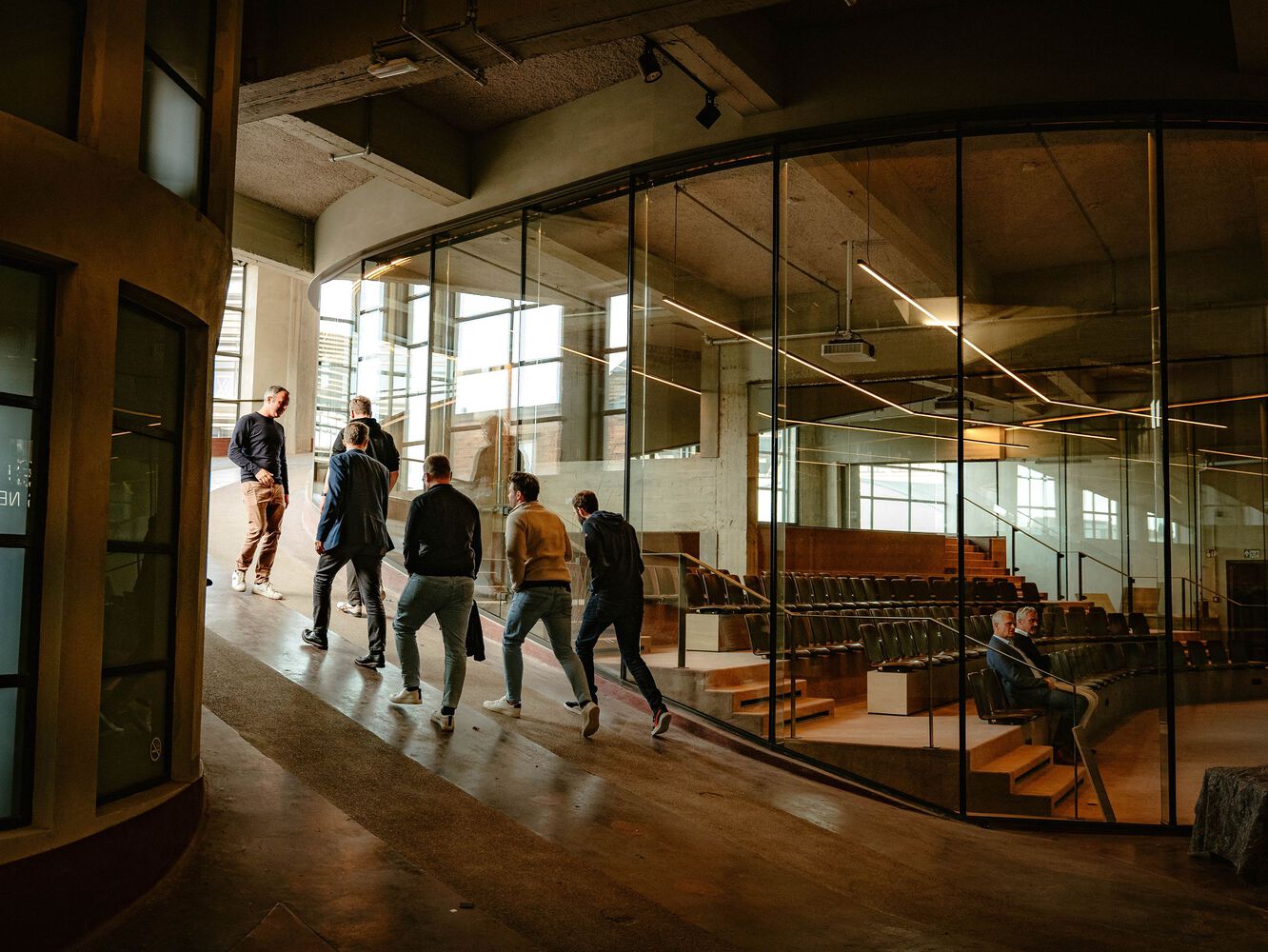
Surrounding the "Arena" is the Start-ups Campus, which brings together more than thirty tech startups distributed across the building's multiple floors. Unlike traditional offices, OYO designed warm workspaces that are well-lit, utilize warm materials, and feature spacious desks to promote collaboration among teams and small businesses. From meeting rooms to cubicles and break areas, the offices feature large windows and a color palette of green, yellow, and red, creating a harmonious contrast with the textures of wood and brick. Almost all furniture was either made from second-hand or recycled materials or carefully selected and sourced locally by OYO. On the ground floor is the Auditorium, overlooking the "Arena," distinguished by its surrounding glass walls. The studio designed it as an ideal venue for conferences and presentations, accommodating over a hundred people. Meanwhile, the Expo space on the first floor is a spacious, versatile, and highly adaptable venue intended for various activities ranging from art exhibitions to fitness classes.
环绕“竞技场”(Arena)的是初创企业园区(Start-ups Campus),这里汇聚了三十余家科技初创企业,它们分布在建筑的多个楼层。与传统的办公室不同,OYO 设计了充满温馨感的工作空间,这些空间采光良好,采用了温暖的材料,并配备了宽敞的办公桌,以促进团队和小型企业之间的协作。从会议室到隔间,再到休息区,办公室均设有大窗户,并采用了绿色、黄色和红色的色彩搭配,与木材和砖块的纹理形成和谐对比。几乎所有的家具要么是用二手或回收材料制成的,要么是由 OYO 在当地精心挑选采购的。一楼设有礼堂(Auditorium),它俯瞰着“竞技场”,其显著特点是四周被玻璃墙环绕。该工作室将其设计为举办会议和演讲的理想场所,可容纳一百多人。与此同时,位于一层的展览空间(Expo)则是一个宽敞、多功能且适应性极强的场地,旨在举办从艺术展览到健身课程等各种活动。
© Farah Lieten
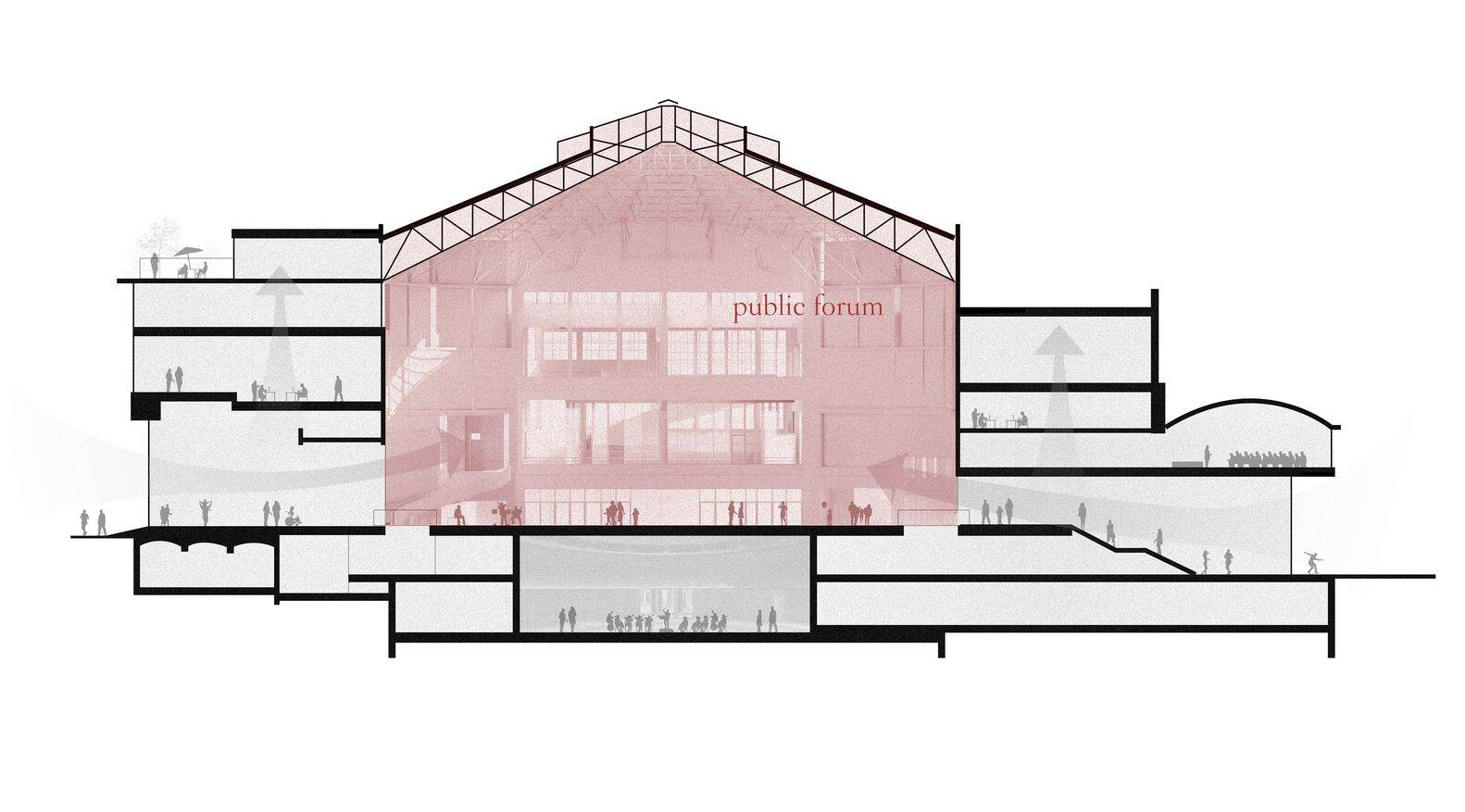
Section
剖面图
© Karen Van der Biest
© Karen Van der Biest
The team of architects also designed two gastronomic spaces: a sushi restaurant on the ground floor and a courtyard café opening onto the "Arena." The latter, named Bar Bougie, is located on the site of the former lubrication workshop of the garage, and its urban-modern design is impressive. The café strikes a perfect balance between a sense of modernity and a warm atmosphere by combining wood and warm lighting with the green steel and concrete of the building's structure. Adhering to the vision of the "Wintercircus" as a sustainable tech hub, OYO actively promotes innovation and the circular economy through this renovation. To this end, the studio utilized robotics in the construction process and recycled electronic waste and old urban elements to create new types of furniture. Consequently, the final spatial design presents an "eclectic" style, skillfully merging modern and historical elements within a building steeped in past history. This project by OYO Architects brings this historical building back to life, celebrating the vibrant interaction between past and present, where architectural heritage perfectly blends with contemporary design. The Wintercircus has become an indispensable space, gathering diverse residents, visitors, and varied programs, integrating innovation and culture, and injecting new vitality into Ghent's cultural and creative life.
这支建筑师团队还设计了两处美食空间:位于一楼的寿司餐厅以及面向“竞技场”开放的中庭咖啡馆。后者名为 Bar Bougie,坐落于原车库的润滑油车间旧址,其城市现代风格的设计令人印象深刻。该咖啡馆将木材与温馨的灯光同建筑结构中的绿色钢材和混凝土相结合,在现代感与温馨氛围之间找到了完美平衡。秉承“冬季马戏团”作为可持续科技中心的愿景,OYO 通过此次改造积极推动创新与循环经济的发展。为此,该工作室在建造过程中运用了机器人技术,并回收了电子废弃物和旧城市元素,用以打造新型家具。因此,这一空间设计的最终方案呈现出“折衷主义”风格,在一座承载着过往历史的建筑中,将现代元素与历史元素巧妙融合。OYO Architects 的这一项目使这座历史建筑重焕生机,颂扬了过去与现在的活力互动,在这里,建筑遗产与当代设计完美交融。冬季马戏团成为了一个不可或缺的空间,汇聚了不同的住户、访客和多样化的项目,将创新与文化融为一体,为根特的文化与创意生活注入了新的活力。
© Farah Lieten
History of the Wintercircus—The Wintercircus building was constructed in 1885, when the city of Ghent commissioned the architect Emile De Weerdt to build the “New Circus.” At the time, various circuses performed here, even in winter, which led the public to call the building the “Wintercircus.” In 1920, the building was almost completely destroyed by fire and rebuilt three years later. After the Second World War, Ghislain Mahy converted it into a car repair shop. The building was completely renovated, with all the original circus-style interior decorations gone. The repair shop operated until 1978, after which the Wintercircus was used to store classic cars. In 2005, a group of urban developers in Ghent—the Sogent Group—acquired the building, planning to renovate and repurpose it as part of the new De Krook urban district. The structural renovation of the building was designed by the architectural firms BARO and SUMproject. In 2009, Ghent was designated a UNESCO City of Music. In 2018, Ghent committed to becoming climate-neutral by 2050. In 2020, TENT leased the Wintercircus for a period of 75 years.
冬季马戏团的历史——冬季马戏团大楼始建于 1885 年,根特市按照建筑师埃米尔·德·维尔特(Emile De Weerdt)的规划建造了这座“新马戏团”。当时,多个马戏团在此演出,甚至在冬季也不例外,因此民众开始用“冬季马戏团”这个名字来称呼这座建筑。1920 年,该建筑几乎被大火完全烧毁,三年后得以重建。第二次世界大战后,吉斯兰·马希(Ghislain Mahy)将其改用作汽车修理厂。建筑进行了彻底改造,原有的马戏团风格内部装饰荡然无存。这家修理厂一直运营到 1978 年,此后冬季马戏团被用作经典汽车存放地。2005 年,根特市的一群城市开发商 —— Sogent 集团收购了这座建筑,计划对其进行翻新改造并重新规划用途,将其融入新的德克鲁克(De Krook)城市街区。建筑结构翻新工程由 BARO 和 SUMproject 两家建筑设计公司负责设计。2009 年,根特市被联合国教科文组织认定为音乐创意城市。2018 年,根特市承诺到 2050 年实现气候中和。2020 年,TENT 公司租下了冬季马戏团,租期为 75 年。
© Farah Lieten