极致的材料循环与价值重塑:本项目最核心的亮点在于其激进且务实的“建筑即材料库”理念。设计师将现有建筑(Thoravej 29)视为一个待解构和重组的资源池,通过系统的拆解和存储,实现了楼板、立面元素和配件等构件的自我循环利用。这种设计策略超越了传统的“再利用”范畴,将建筑解构视为一种原生的设计语言,例如将楼板转化为楼梯、配件转化为家具。这种对既有物质的尊重和创造性转化,不仅大幅降低了环境足迹,更赋予了旧有材料全新的功能和美学意义,是循环设计思维的典范。
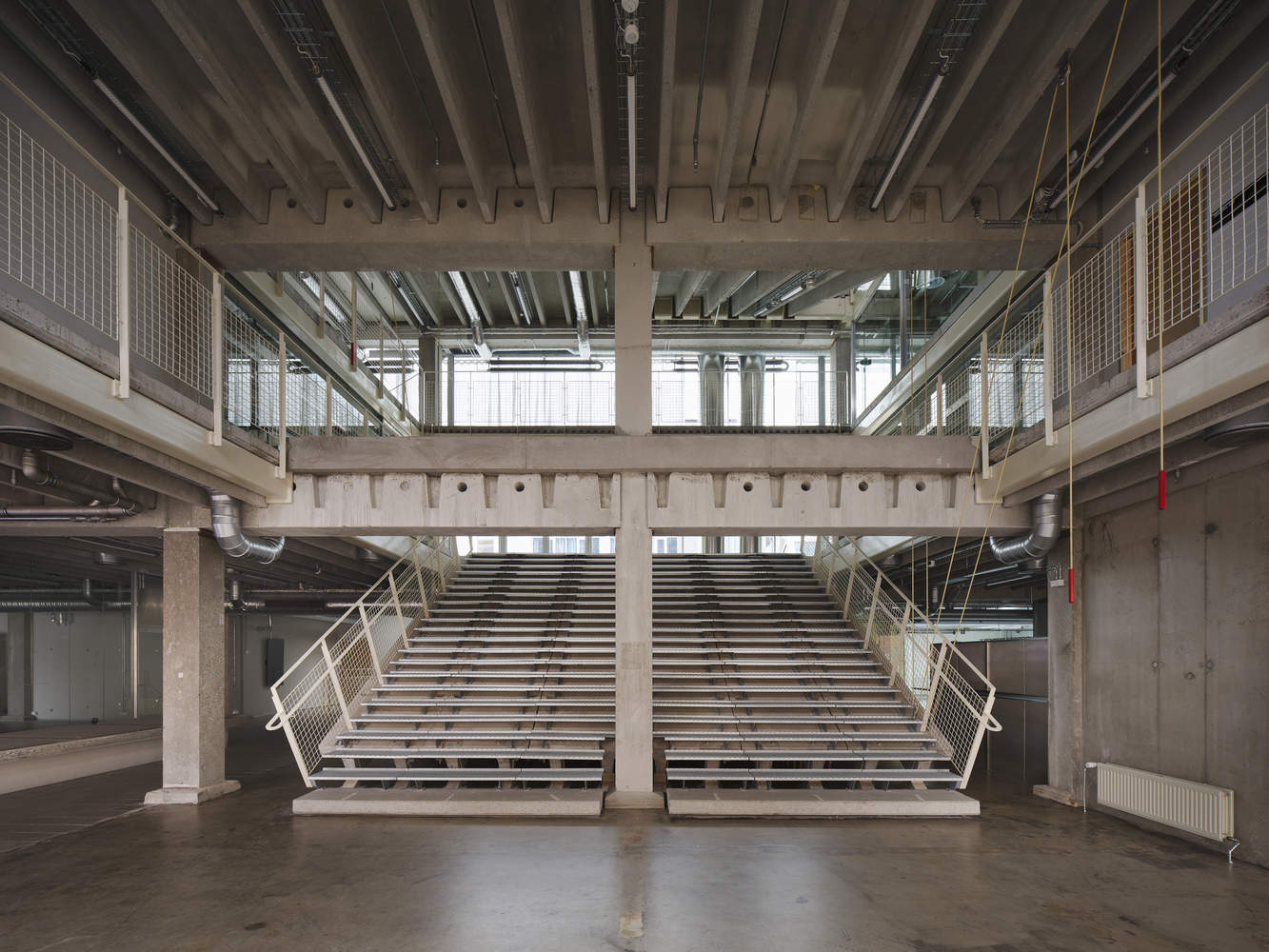
结构逻辑与空间语汇的颠覆性重构:该项目成功地通过对原有结构体系的深度干预,实现了功能需求的根本性转变。通过将承重TT型楼板转化为宽阔的公共楼梯和集成家具,建筑的水平布局被彻底激活和垂直连接,模糊了楼层之间的界限,创造出动态的空间序列。立面处理上,从封闭到开放的转变,使得建筑底层与城市肌理形成对话,保留上层工业特征的同时,底层通过透明化增强了公共互动性。这种对原有“工厂”结构逻辑的解构与重塑,体现了高超的空间策略和结构适应性。
卓越的绩效与多维度的认可:从建筑性能角度看,该改造项目取得了令人瞩目的环境效益,实现了高达95%(按重量计)的材料再利用率,碳排放量较新建项目减少88%,建筑垃圾减少90%。这不仅是材料层面的胜利,更是对可持续设计实践的有力证明。同时,项目在赢得比库本基金会竞赛一等奖后,收获了包括“2024年度建筑”、“2025年翻新奖”在内的多项重要行业奖项,这表明其在设计创新性、执行质量和文化影响力方面得到了建筑界的高度认可,成为当代城市更新和存量改造的标杆案例。
Floor slabs transform into stairs, facade elements become paving, and fittings turn into furniture — the renovation of Thoravej 29 achieves self-recycling through the building itself. This reflects a pragmatic attitude towards existing resources, re-evaluating the value of existing elements by viewing the building as its own material stock.
楼层楼板倾斜形成楼梯,立面元素改造成路面铺装,配件变身家具 —— 托拉维街 29 号(Thoravej 29)的改造让建筑实现了自我循环利用。这体现了一种对现有资源的务实态度,即通过将建筑视为自身的材料库,重新评估既有要素的价值。
© Hampus Berndtson
© Hampus Berndtson
© Hampus Berndtson
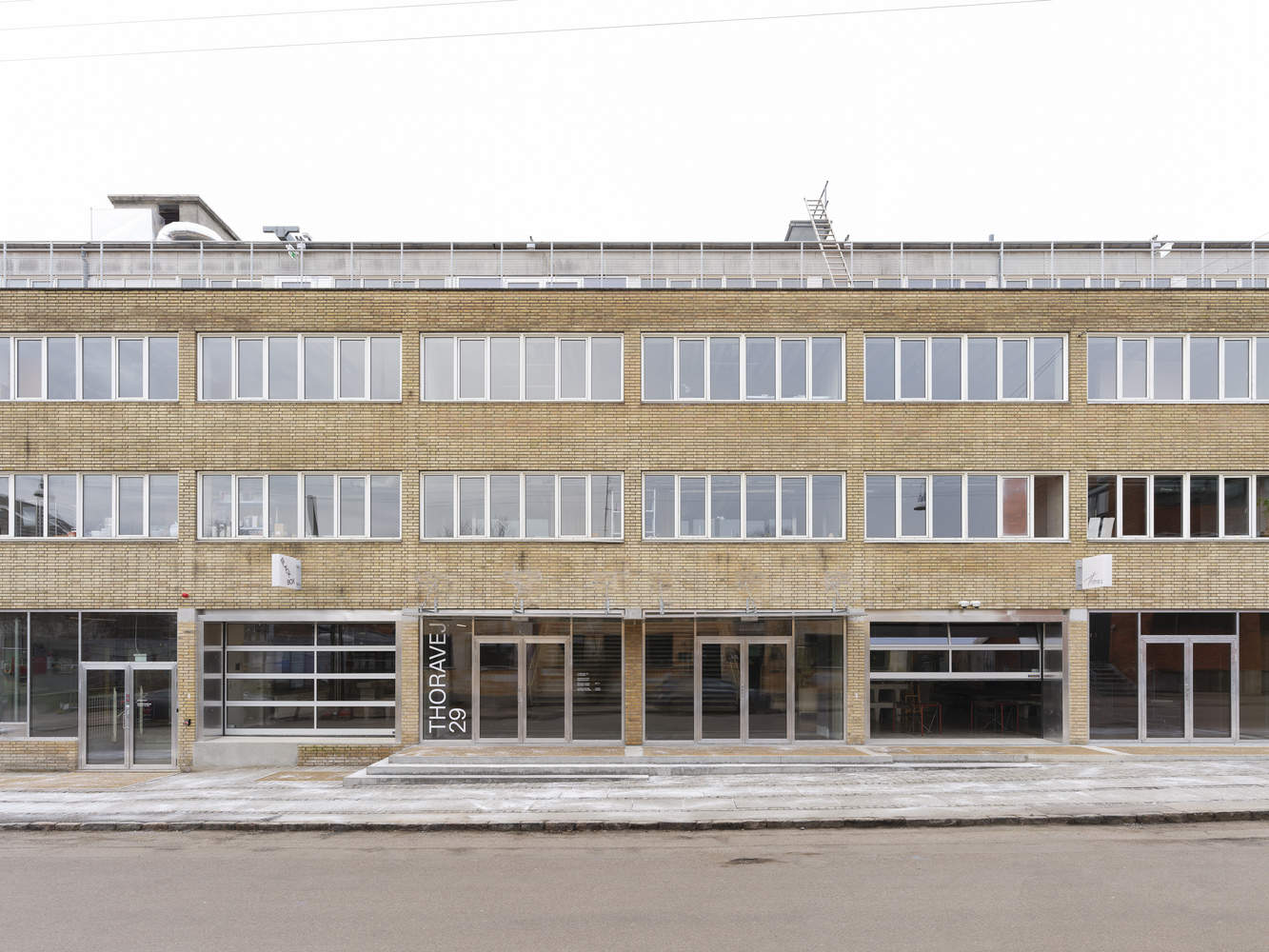
The former factory building was originally constructed by architect Erik Stengade in 1967 and most recently served as the municipal center for disabled persons for the City of Copenhagen. During the renovation, the building was stripped down to its core structure: a column and beam system composed of TT-slabs and a facade with horizontal window bands. New functional requirements necessitated fundamental changes to the building structure: lightweight walls and built-in furniture were removed, while other elements were repurposed. All materials from the dismantling process were carefully stored with the intention of reuse in the final project—even components typically considered insignificant were seen as potential resources for re-utilization.
这座前工厂建筑最初由建筑师埃里克·斯滕加德(Erik Stengade)于 1967 年建造,最近曾作为哥本哈根市的市政残障人士中心。改造过程中,建筑被剥离至核心结构:由TT型楼板和带有水平窗带的立面构成的柱梁体系。新功能需求对建筑结构提出了根本性改变:轻质墙体和内置家具被拆除,其他元素则被重新布局。拆解过程中的所有物料均被妥善存储,意图在最终项目中重新利用 —— 即便是通常被视为无关紧要的组件,也被视为潜在的再利用资源。
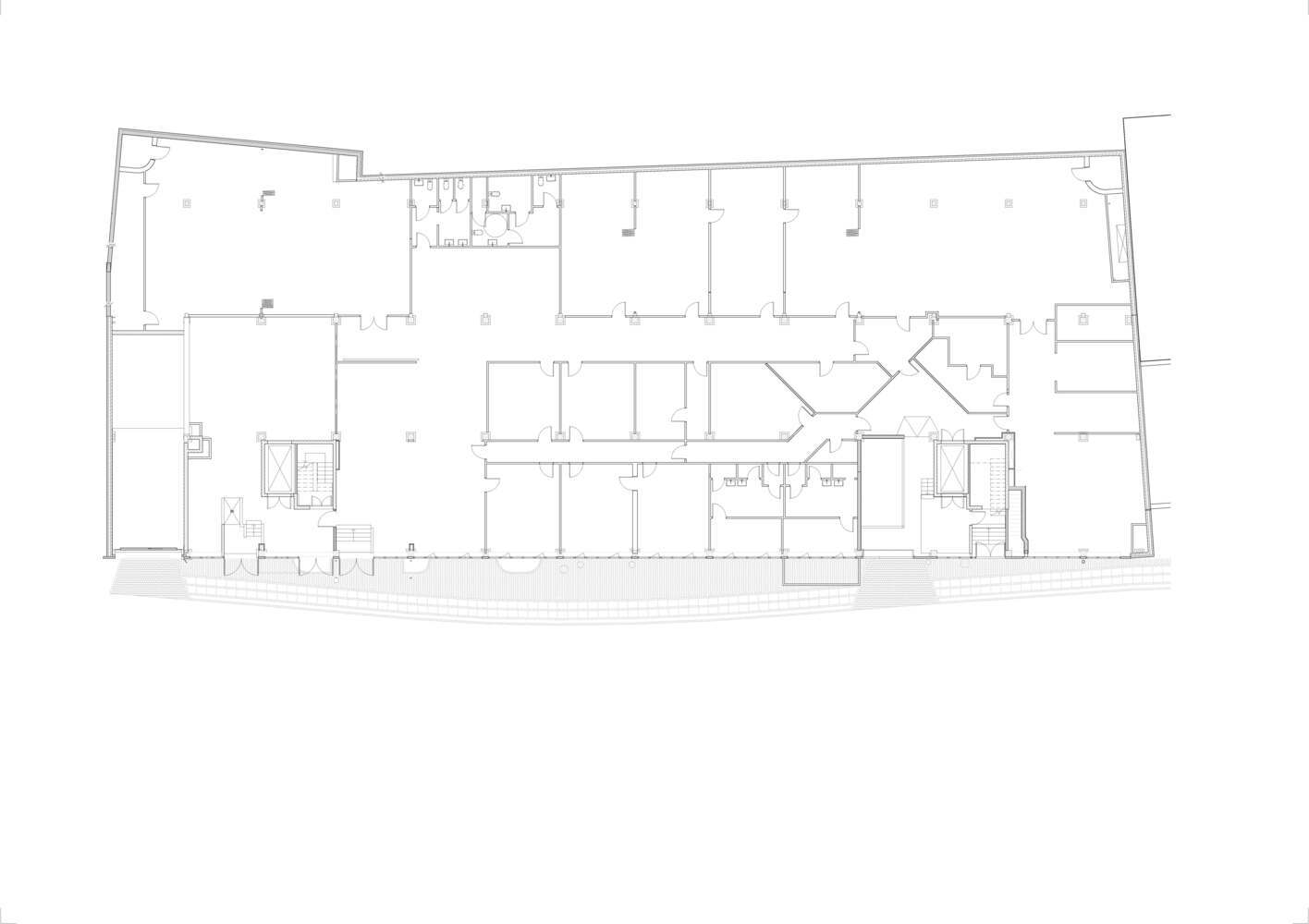
Ground floor plan - before transformation
一层平面图——改造前
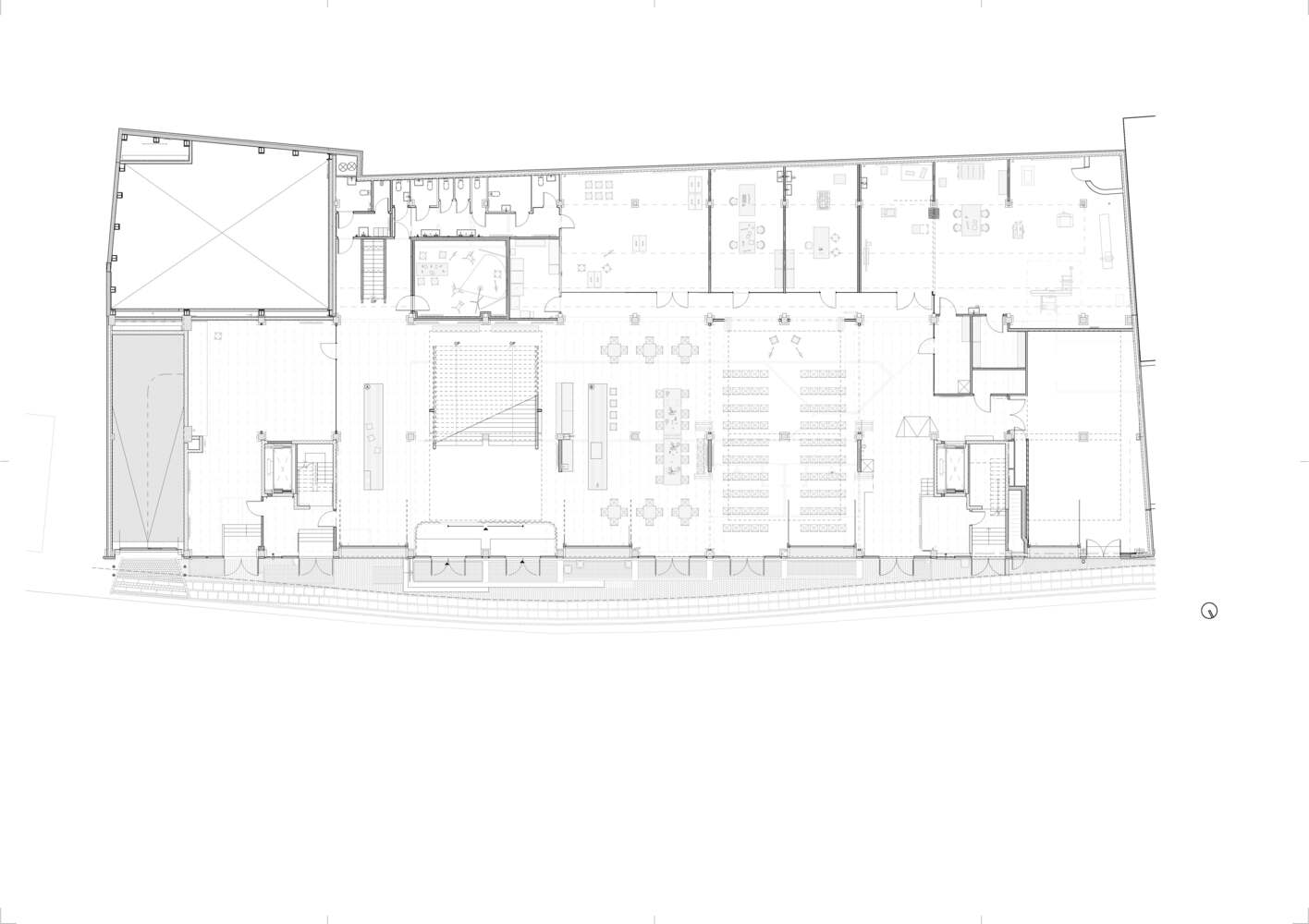
Ground floor plan
一层平面图
© Hampus Berndtson
© Hampus Berndtson
External analysis shows that the renovation achieved a reuse or recycling rate of 95% (by weight) of existing materials, reducing carbon emissions by up to 88% and construction waste by 90% compared to a new build. The process involved meticulous dismantling and reintegration of structural components, surfaces, and interior elements.
外部分析显示,此次改造实现了 95%(按重量计)的现有材料再利用或回收率,与新建项目相比,碳排放量减少了高达 88%,建筑垃圾减少了 90%。该过程涉及对结构构件、表面和内部组件的细致拆解与重新整合。
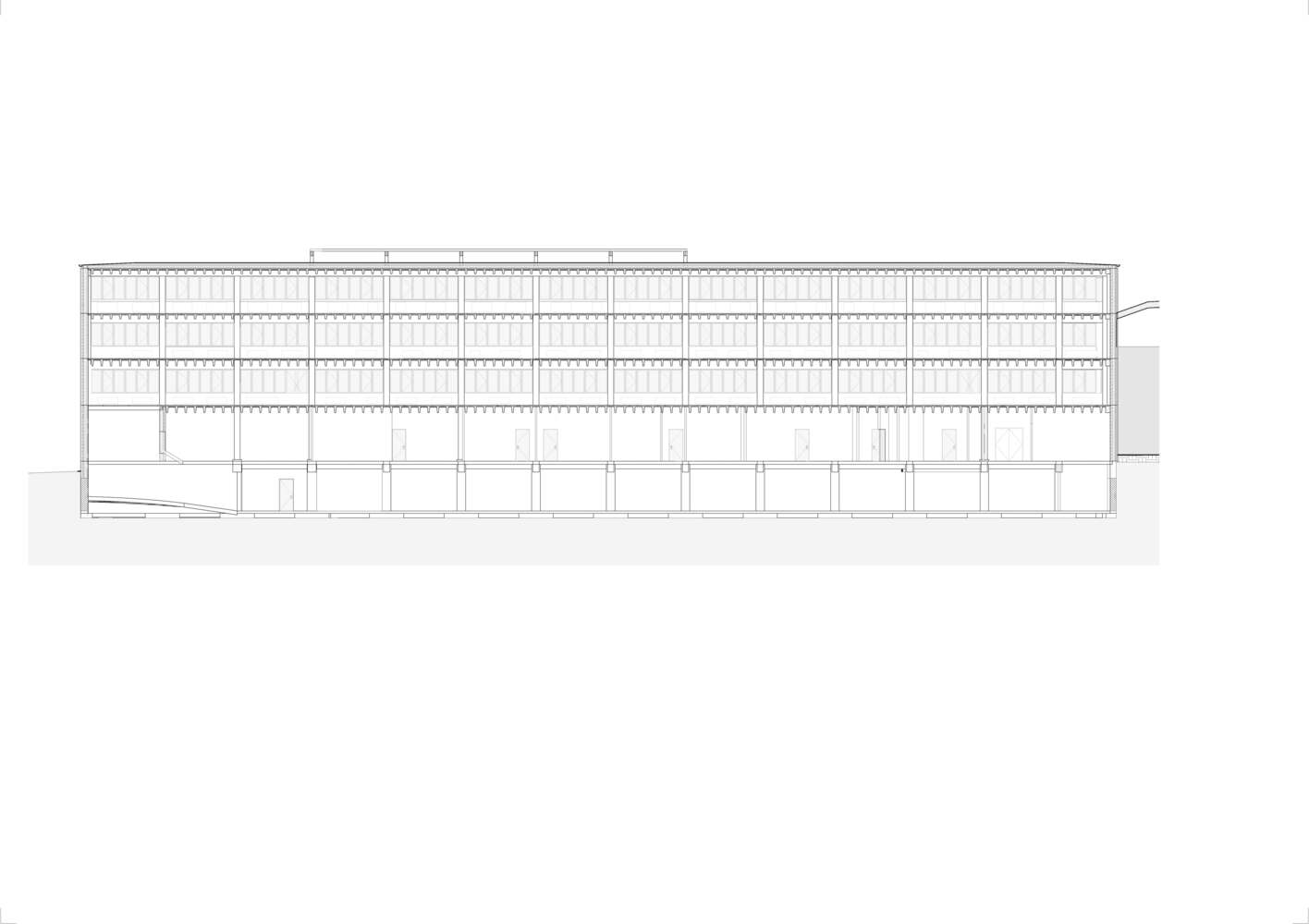
Longitudinal section - before transformation
剖面图——改造前
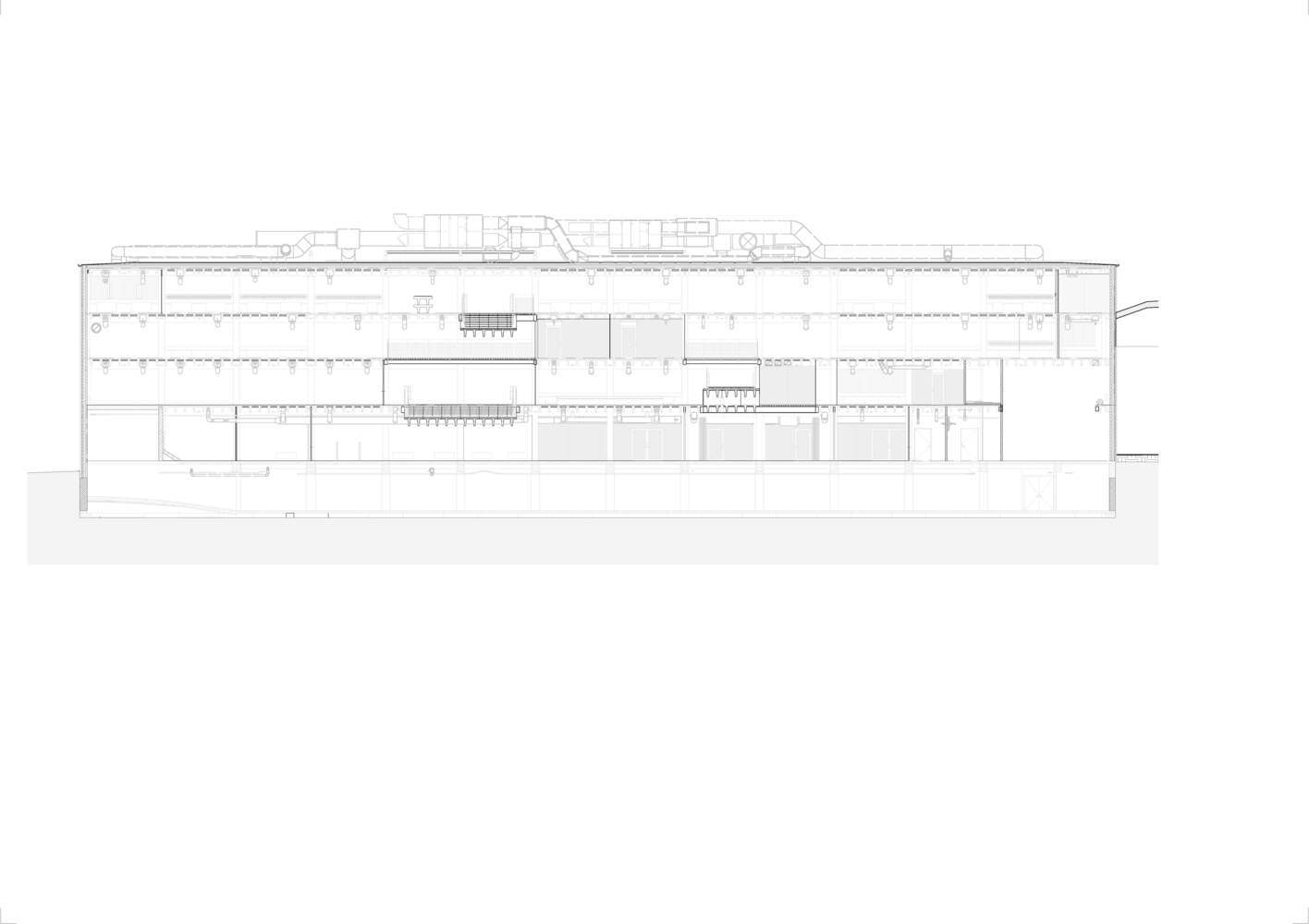
Longitudinal section
剖面图
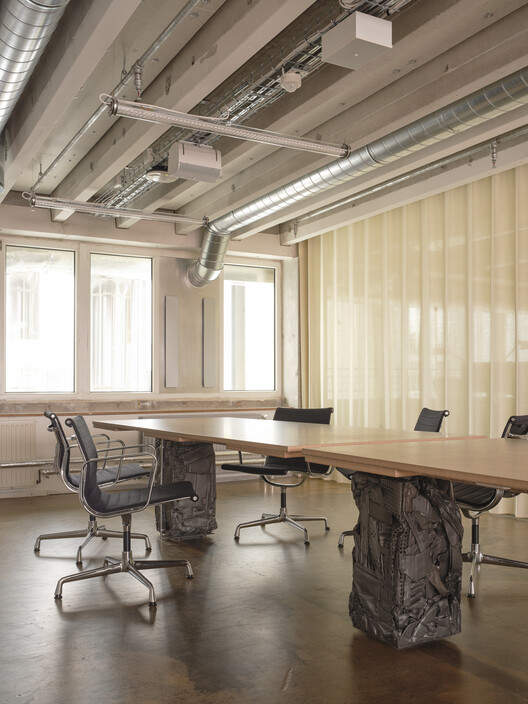
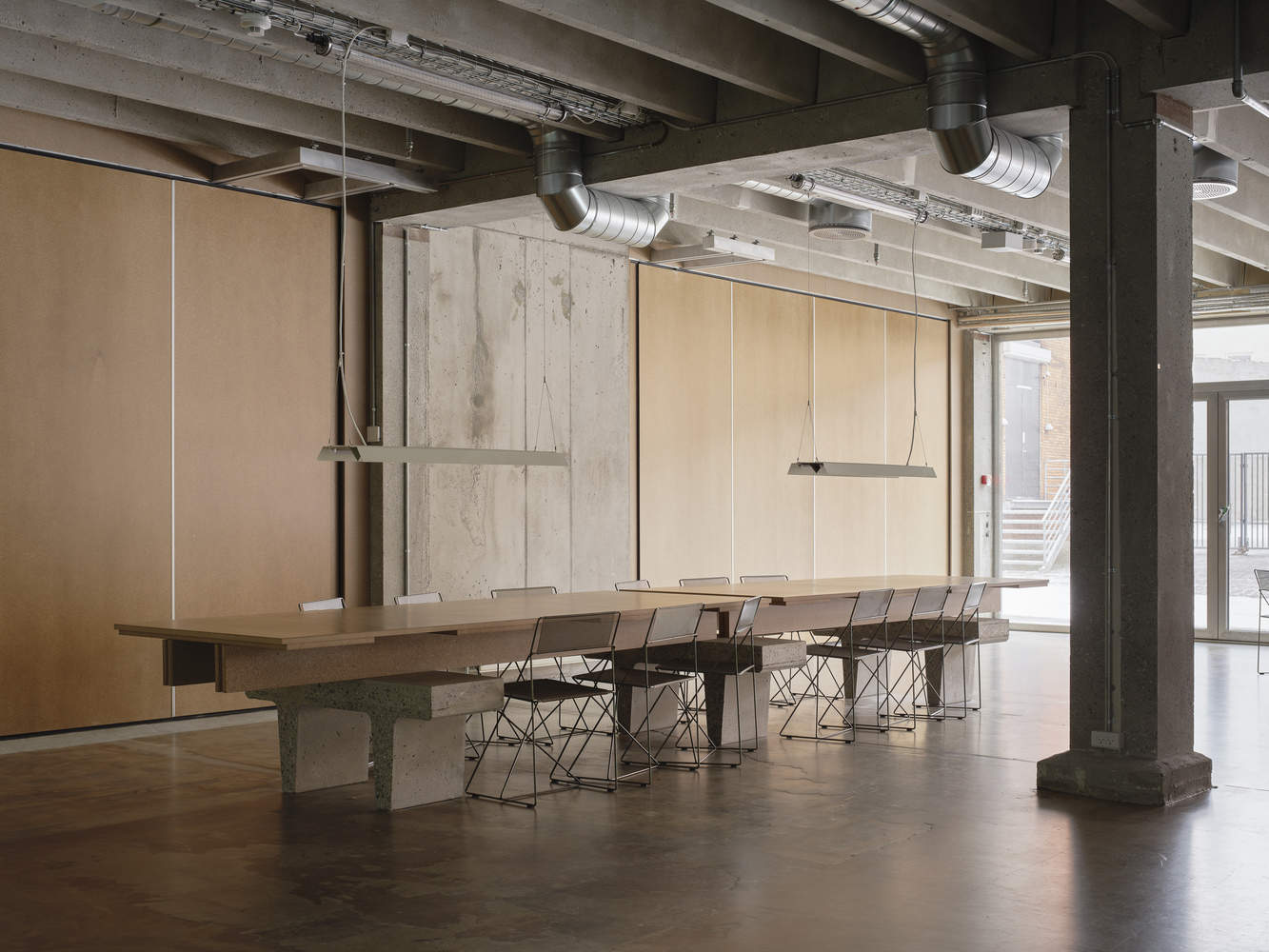
The logic of reuse extends beyond carbon metrics into the building's material expression and spatial configuration. Elements were treated differently—some remained as they were, while others were surfaced, ground, compressed, relocated, or reinstalled. The renovation was guided by the inherent physical properties of each component rather than its traditional or aesthetic value.
再利用逻辑不仅体现在碳指标上,更延伸至建筑的材料表达与空间配置。处理程度各异 —— 有些元素保持原样,有些则经过表面处理、粉碎、压缩、重新定位或重新安装。改造以各组件的固有物理属性为导向,而非其传统或美学价值。
© Hampus Berndtson
© Hampus Berndtson
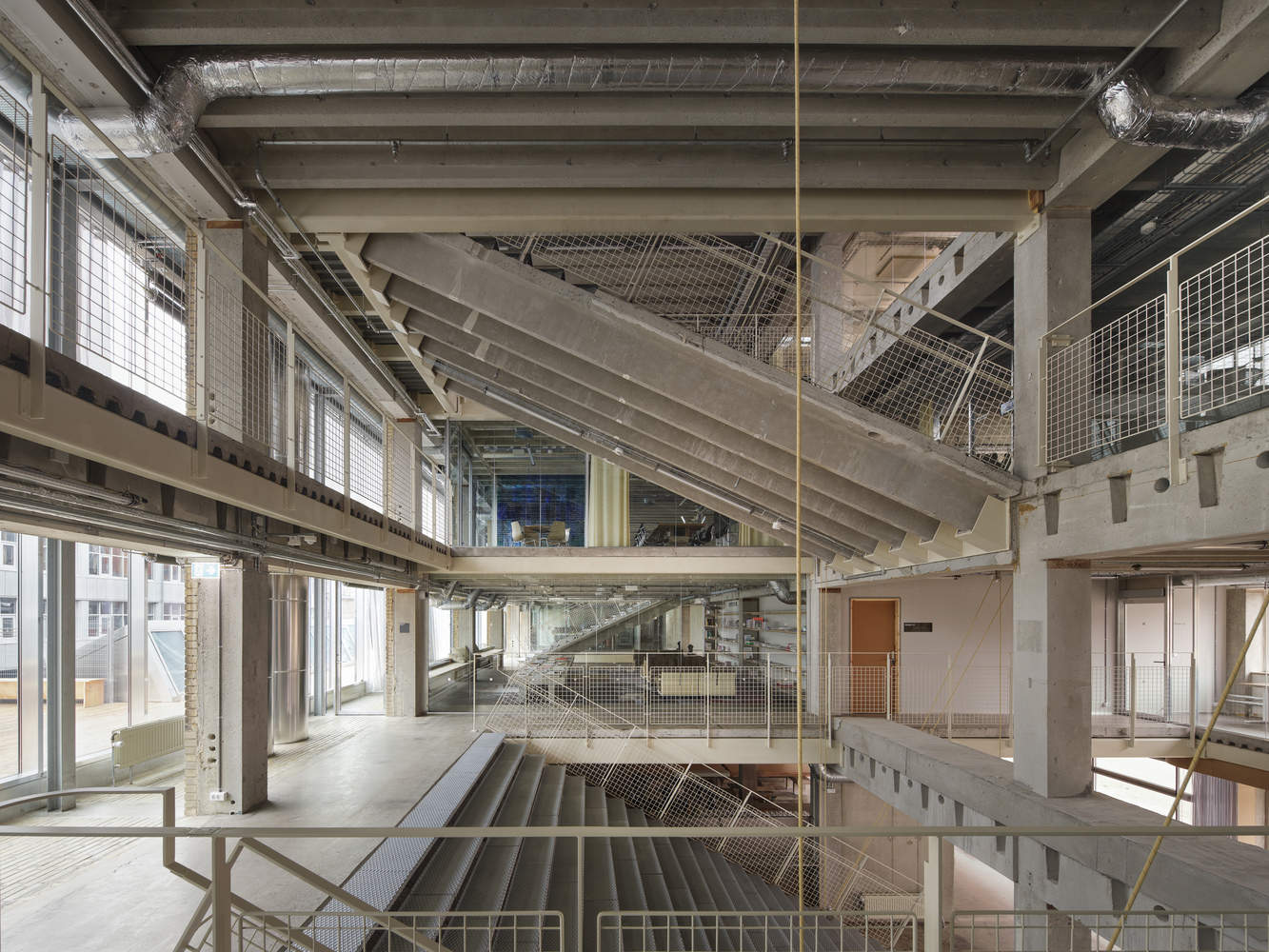
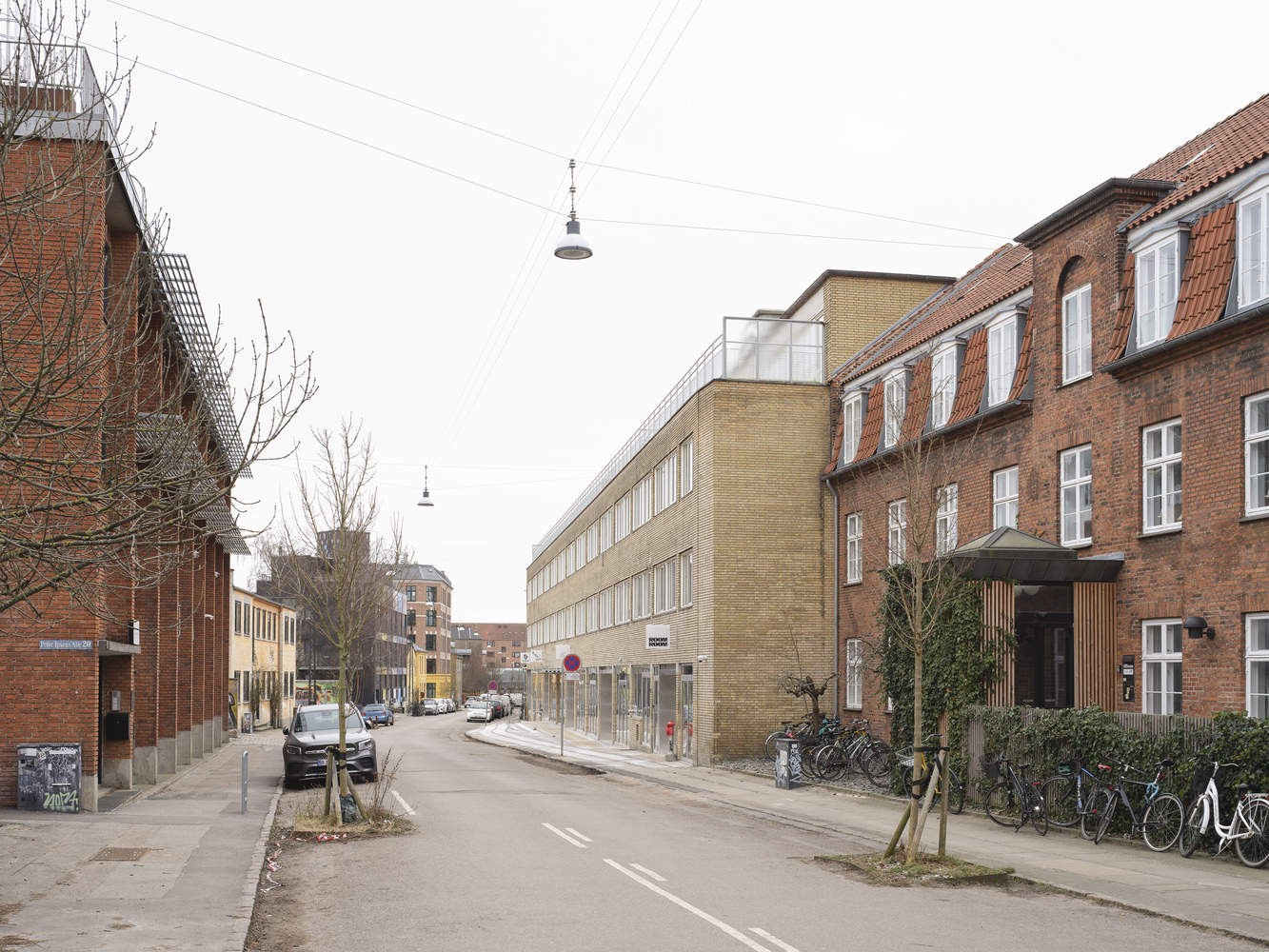
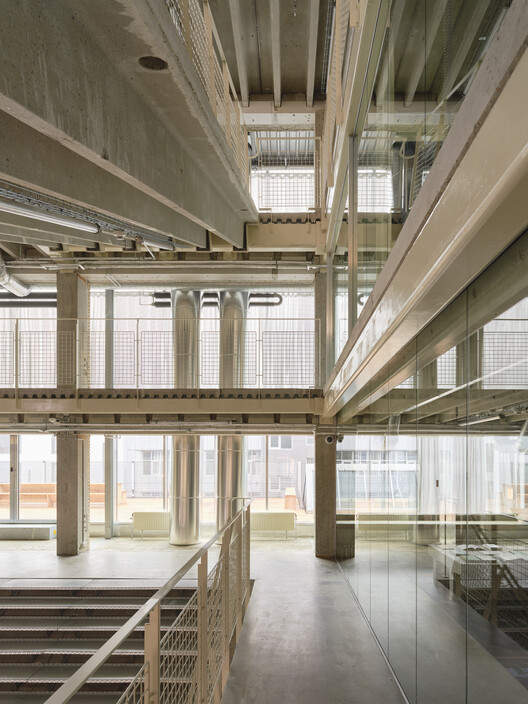
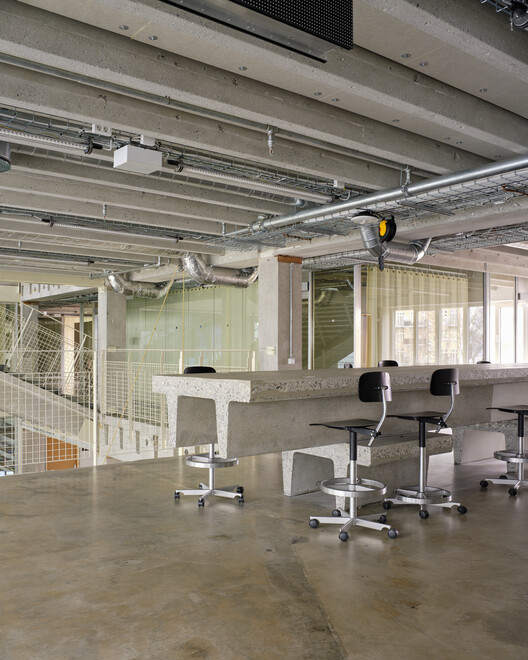
The building's original horizontal layout was reconfigured by transforming the load-bearing TT-slabs into generous stairs and integrated furniture. This intervention connects the floors, creating spatial variations and adjusting vertical boundaries. The formerly closed facade of Thoravej 29 is now open. The upper floor is preserved, maintaining the area's fading industrial character, while the ground floor connects with its surroundings. Large windows and transparent garage doors establish a direct link to the public realm, and the bricks removed during dismantling were reused for paving, integrating the building into the urban fabric.
建筑原有的水平布局通过将承重 TT 型楼板转化为宽阔楼梯和集成家具而重新配置。这一干预将各楼层串联起来,创造出空间变化并调整了垂直界限。原本封闭的托拉维街立面现已开放。上层得以保留,维持了该区域逐渐消失的工业特征,而底层则与周边环境相连。大型窗户和透明车库门建立了与公共领域的直接联系,拆解过程中移除的砖块则被重新用于铺装,使建筑融入城市肌理。
© Hampus Berndtson
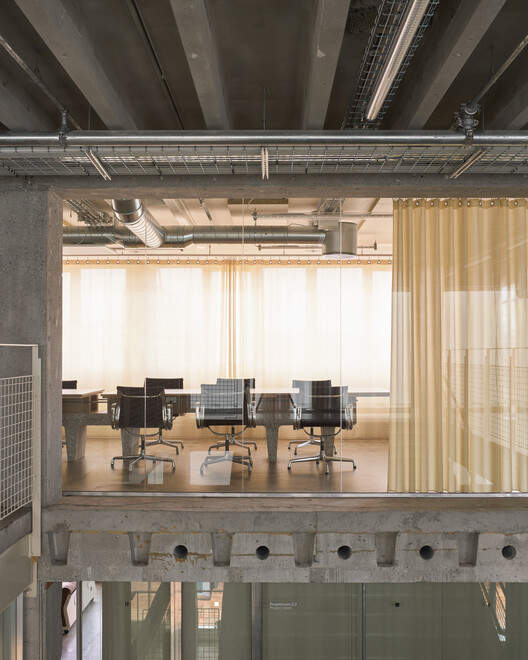
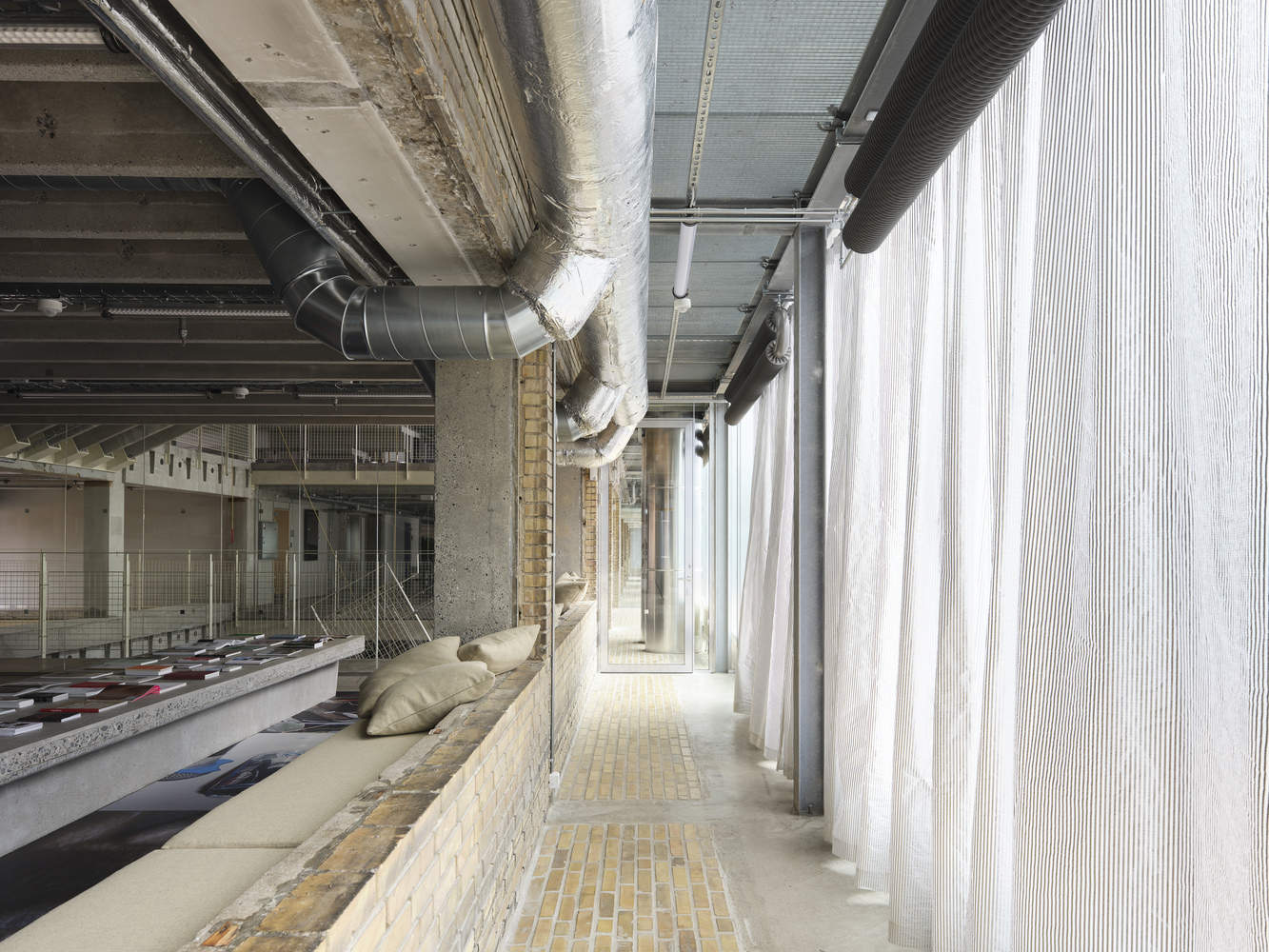
These material legacies are present everywhere, both directly and subtly, viewing the building's heritage as part of a circular system. Through the pragmatic reuse of materials, its history is not only preserved but reintegrated into the new space. The resulting informal architecture is characterized by subtraction and adaptation rather than addition.
这些材料遗存以直接或隐晦的方式遍布各处,将建筑遗产视为循环系统的一部分。通过材料的务实再利用,其历史不仅得以保存,更被重新整合到新空间中。由此形成的非正式建筑以减法和适配为特征,而非加法。
© Hampus Berndtson
© Hampus Berndtson
The project won first prize in the invited competition organized by The Bikuben Foundation in 2021. Today, Thoravej 29 houses 150 people from 30 different organizations, featuring stages, galleries, exhibition spaces, studios, workshops, offices, meeting rooms, a production kitchen, a canteen, and a café. The building has received the "Building of the Year 2024" award from Licitationen, an award in the Copenhagen Municipal Architecture Prize in 2025, Denmark's most important renovation award, the "Renoverprisen," in 2025, and was shortlisted for the Architectural Review's "New into Old" award and the Danish Design Award in 2025.
该项目在比库本基金会(The Bikuben Foundation)于 2021 年组织的邀请竞赛中荣获一等奖。如今,托拉维街 29 号设有舞台、画廊、展览空间、工作室、工坊、办公室、会议室、生产厨房、食堂和咖啡馆,是 30 个不同组织共 150 人的家园。该建筑荣获了利西塔森(Licitationen)颁发的 “2024 年度建筑” 奖,在 2025 年哥本哈根市建筑奖中获奖,于 2025 年获得丹麦最重要的翻新奖“翻新奖”(Renoverprisen),并入选 2025 年《建筑评论》“新融入旧”奖和 2025 年丹麦设计奖决赛。
© Hampus Berndtson