在地文化与现代设计的有机融合:巴莱生物展馆成功地将巴厘岛传统开放式集会场所“巴莱班贾”的形态和精神内核,与当代再生建筑理念进行了深度融合。建筑师以一种尊重和致敬的方式,将地方社区功能与轻型竹材结构相结合,创造了一个既熟悉又创新的空间。其抬高的开放式布局、对当地习俗的呼应,以及借鉴粮仓和造船传统的屋顶形态,展现了对地域文脉的深刻理解与巧妙转译,实现了建筑语言的在地化表达。
极致的材料循环与再生实践:该项目最核心的精髓在于其对“再生建筑环境”的坚定承诺和极致材料策略。展馆完全采用印度尼西亚本土获取和再生的材料,包括回收寺庙石材、小农种植的竹材、回收的硬木以及再生塑料等。这种近乎“零废弃”的材料采购与应用,不仅构建了创新的循环材料系统,更重要的是,生命周期评估显示其碳足迹相比传统建造方式降低了110%,实现了实质性的碳负排效果,为建筑业的可持续转型提供了可量化的、积极的范例。
协作、建造与社区赋能的典范:巴莱生物展馆不仅是建筑作品,更是一个多方协作、知识传承的平台。项目汇集了国际组织、本地机构、结构工程师乃至大学学生的力量,共同探索生物基材料的应用。预制螺栓连接系统实现了热带气候下的快速建造,而建造过程本身也成为对当地工匠进行新材料和组装技术培训的现场。展馆竣工后继续作为社区聚会和对话空间,完美地完成了从概念验证到社区催化剂的角色转换,体现了建筑在推动社会和环境效益方面的潜力。
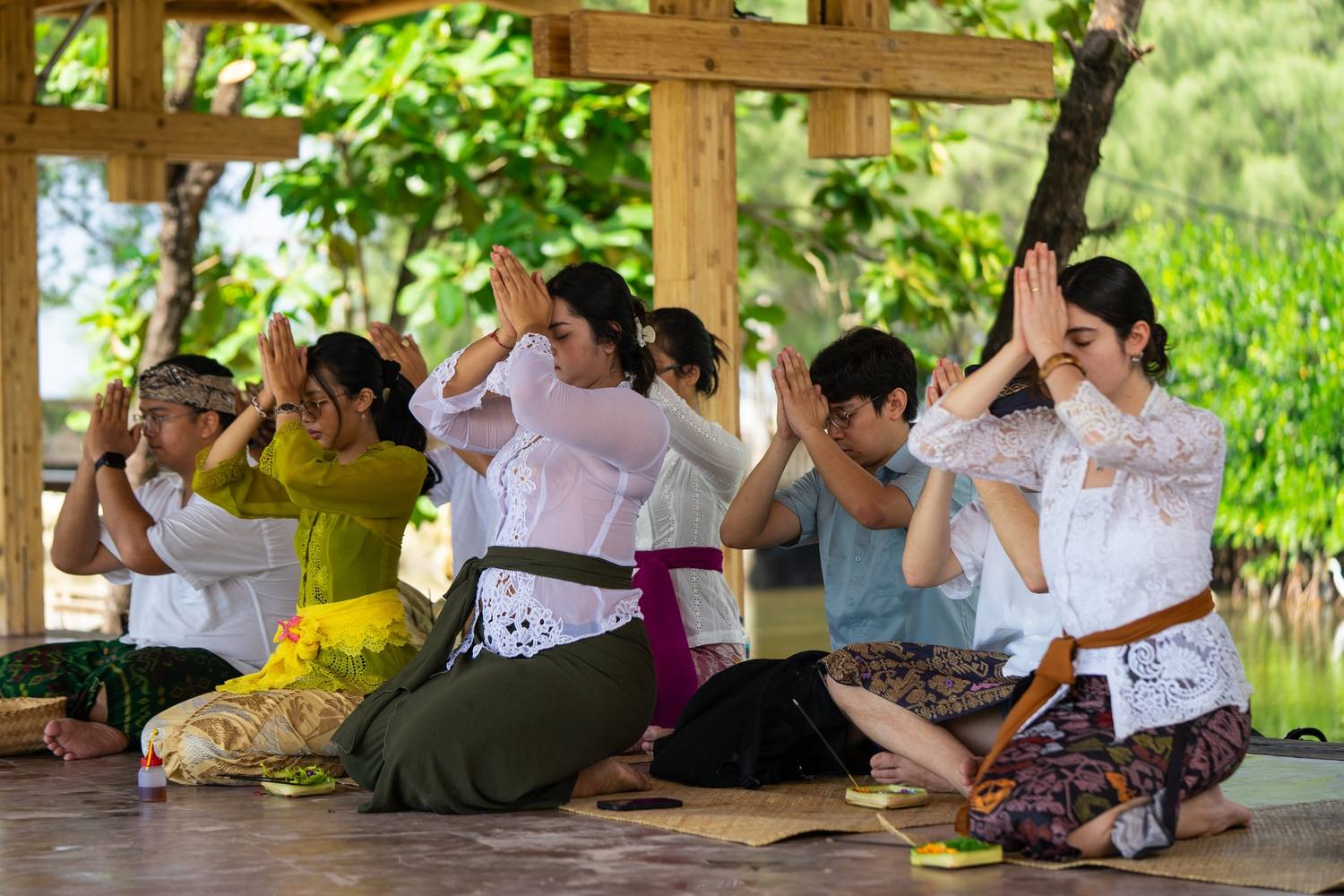
The Bale Bio Pavilion reinterprets the Bale Banjar, an indispensable open-air gathering hall in Balinese villages. This elevated, four-sided transparent structure has long served as a venue for Balinese people to hold ceremonies, play music, and conduct community discussions. At Mertasari Beach in Sanur, the Cave Urban design team transformed this familiar architectural typology into a lightweight pavilion constructed from bamboo and recycled materials, integrating local traditional architecture with the concept of regenerative design. "We are very interested in the Bale Banjar," said Jed Long, Director of Cave Urban, "It is a place everyone in Bali knows, a building that connects people and the community."
巴莱生物展馆(Bale Bio Pavilion)重新诠释了巴厘岛村落中不可或缺的开放式集会厅 —— 巴莱班贾(Bale Banjar)。这种离地而建、四面通透的建筑,长久以来都是巴厘岛人举行仪式、演奏音乐和开展社区讨论的场所。在萨努尔的梅尔塔萨里海滩(Mertasari Beach),Cave Urban 设计团队将这一熟悉的建筑形态转化为由竹材和回收材料构建的轻型展馆,将地方传统建筑类型与再生设计理念融为一体。“我们对巴莱班贾非常感兴趣,”Cave Urban 总监杰德·朗(Jed Long)表示,“它是每个巴厘岛人都熟知的场所,一座连接人与社区的建筑。”
© Bas Princen
Courtesy of Cave Urban
As part of Bauhaus Earth’s “ReBuilt Project,” the pavilion is an element of the research on “Pathways to a Regenerative Built Environment” across four locations: Berlin, Bhutan, South Africa, and Bali. “The ReBuilt Project focuses on how the built environment can transition to a regenerative future. ‘Regenerative’ here means our construction activities should have a positive impact rather than causing destruction.”
作为包豪斯地球(Bauhaus Earth)“重建计划”(ReBuilt Project)的一部分,该展馆是柏林、不丹、南非和巴厘岛四地“迈向再生建筑环境的转型路径”研究的组成部分。“重建计划关注的是建筑环境如何向再生未来转型。这里的‘再生’是指,我们的建造活动应带来积极影响,而非造成破坏。”
Courtesy of Cave Urban
Courtesy of Cave Urban
In collaboration with Bauhaus Earth, the Bamboo Village Trust, and Kota Kita, Cave Urban developed the project as part of the Bauhaus Earth ReBuilt program. These organizations have mapped urban typologies in Bali and explored innovative applications of bio-based building materials. Based on these findings, the team investigated how to combine local handicraft experiments with urban construction methods. "We found that there are many innovative practices using bio-based building materials in the tourism sector... but these innovations do not necessarily translate into solutions for urban construction areas."
作为包豪斯地球重建计划的一环,Cave Urban 与包豪斯地球、竹村信托(Bamboo Village Trust)和科塔基塔(Kota Kita)等机构展开合作。这些机构曾绘制巴厘岛城市图景,并探索生物基建筑材料的创新应用。基于这些成果,团队研究了如何将地方手工艺实验与城市建造方法相结合。“我们发现,旅游业中已存在大量生物基建筑材料的创新实践 …… 但这些创新未必能转化为城市建造领域的解决方案。”
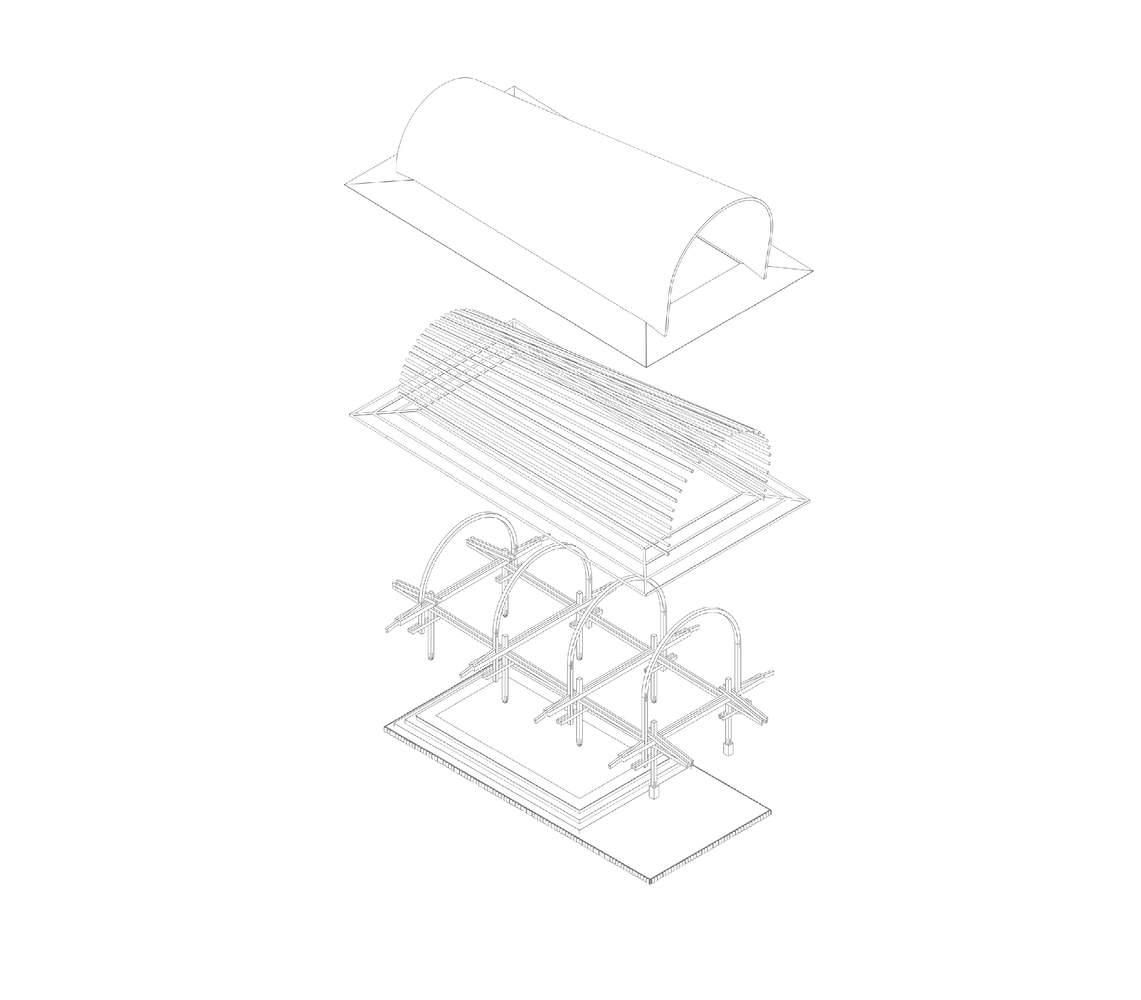
轴测图
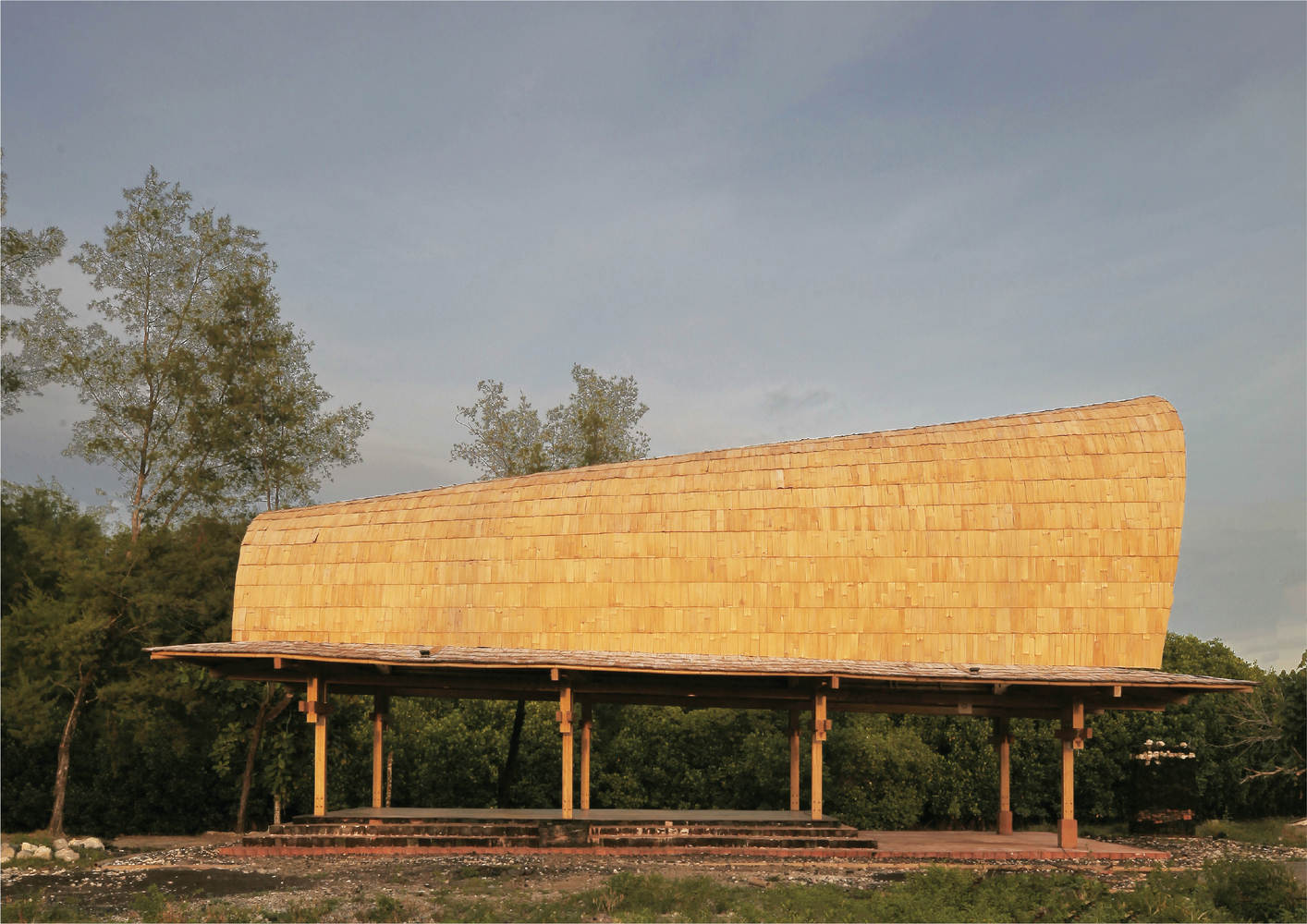
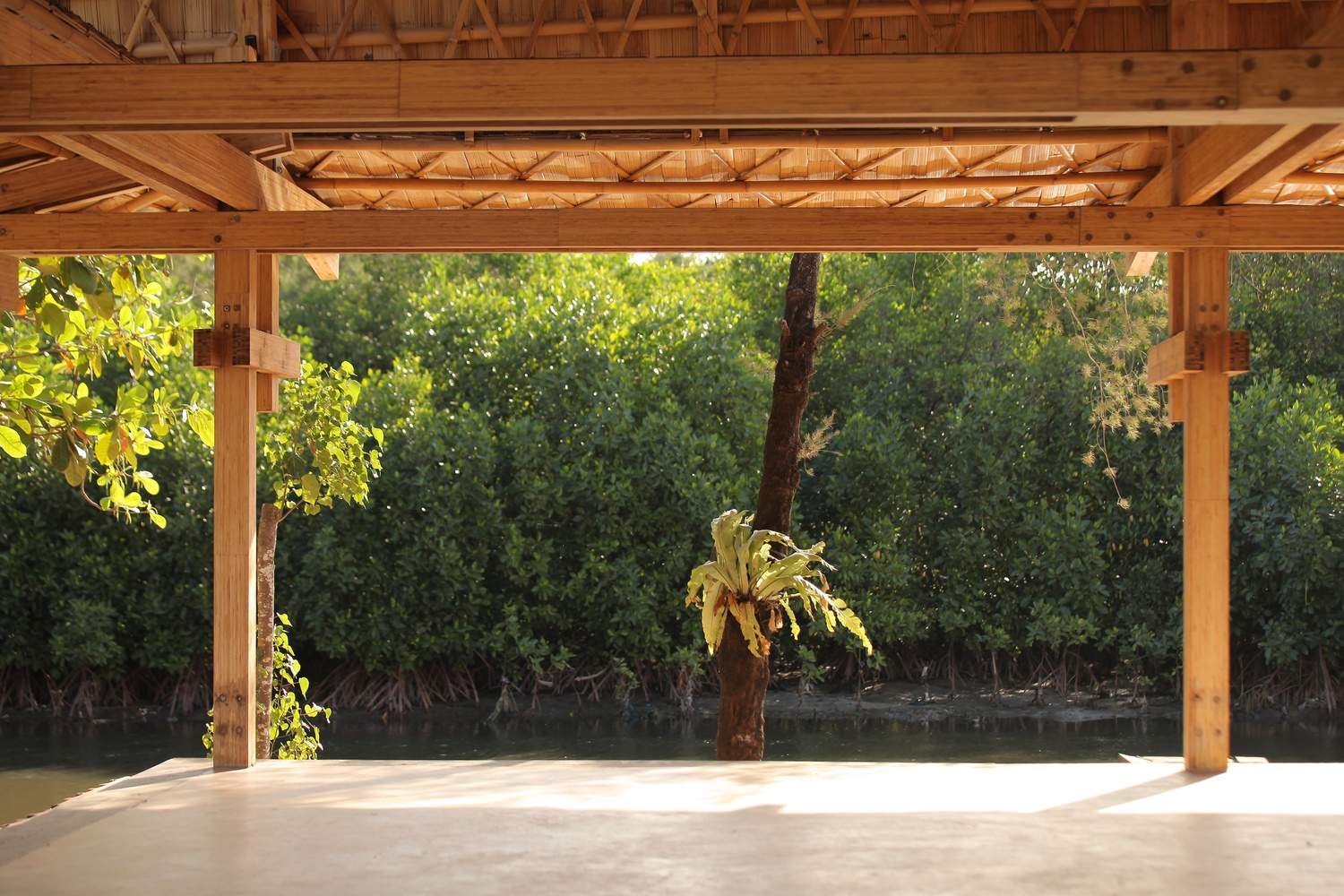
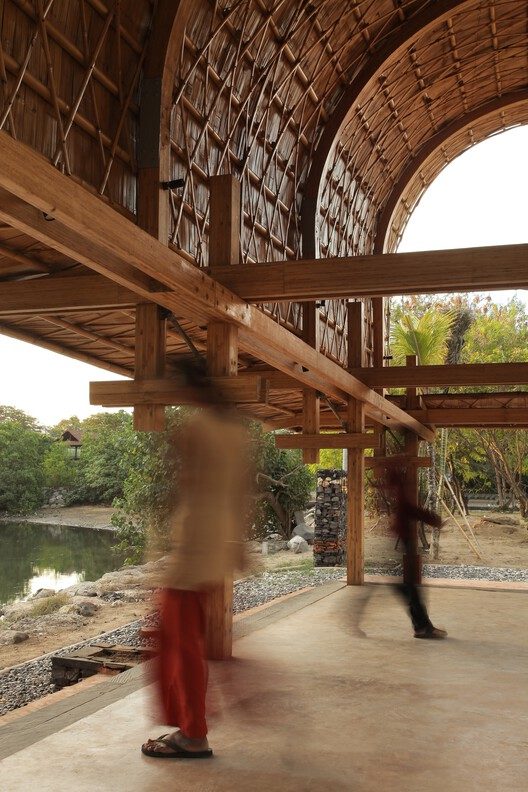
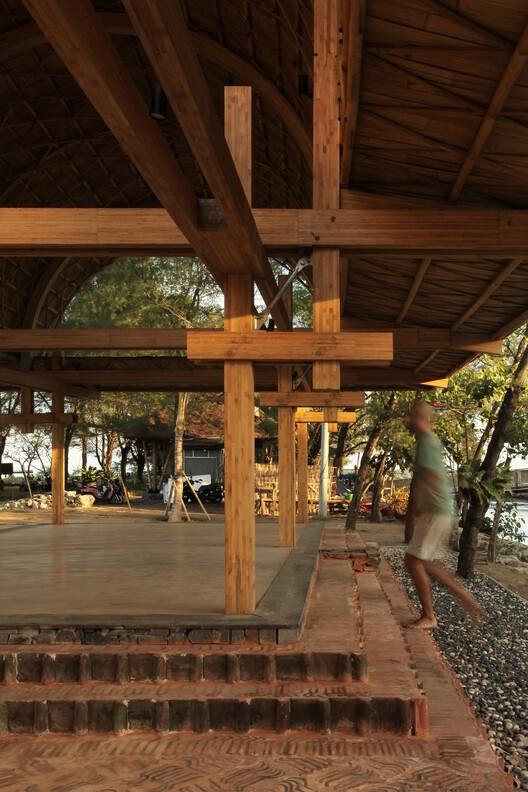
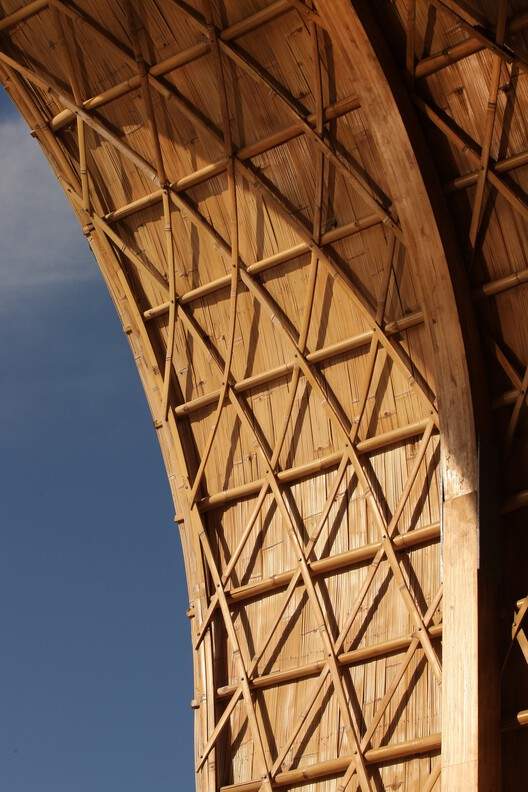
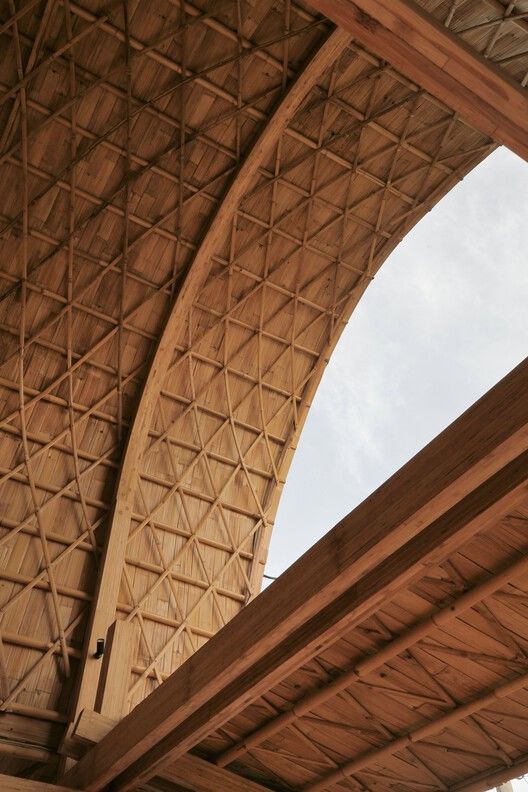
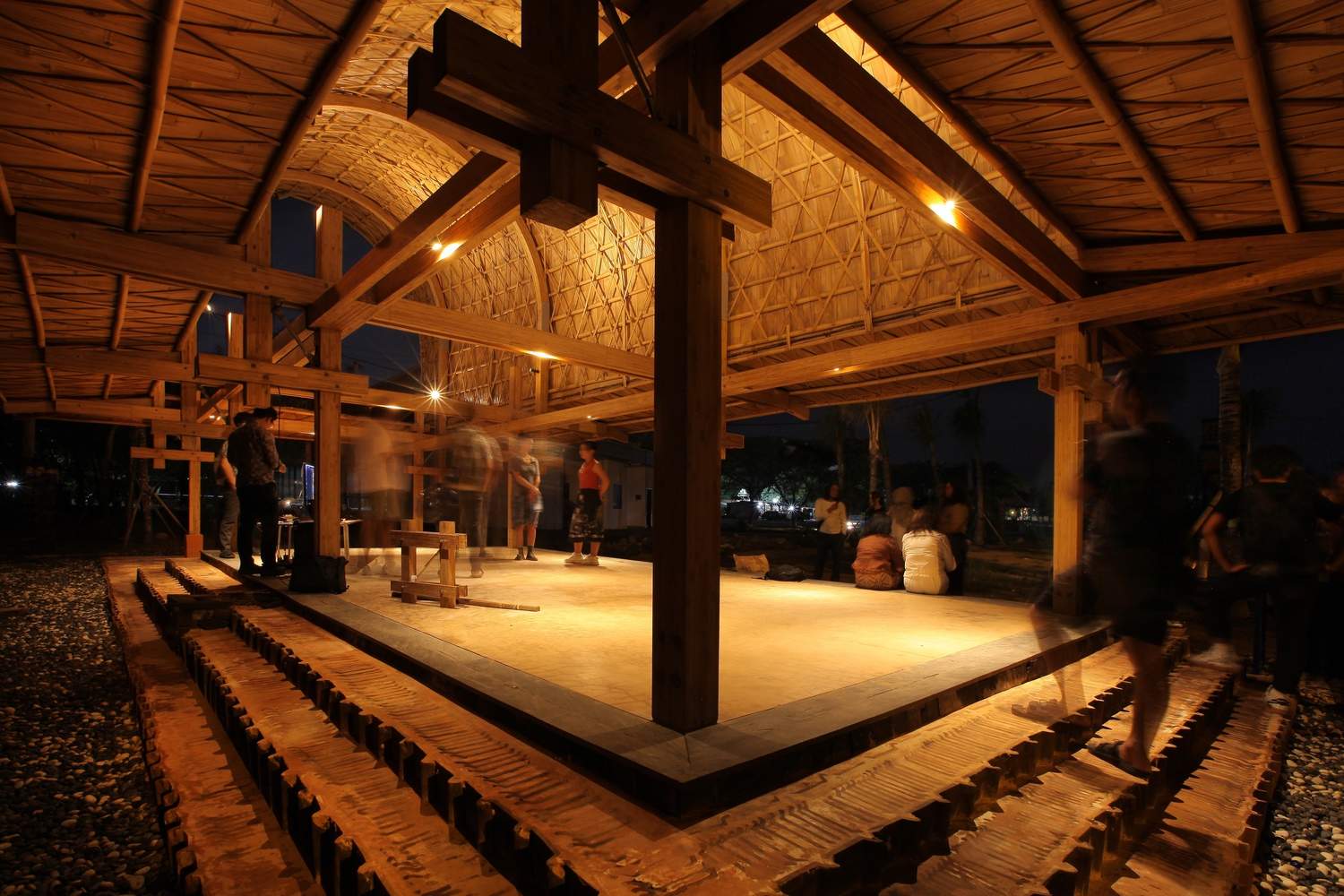
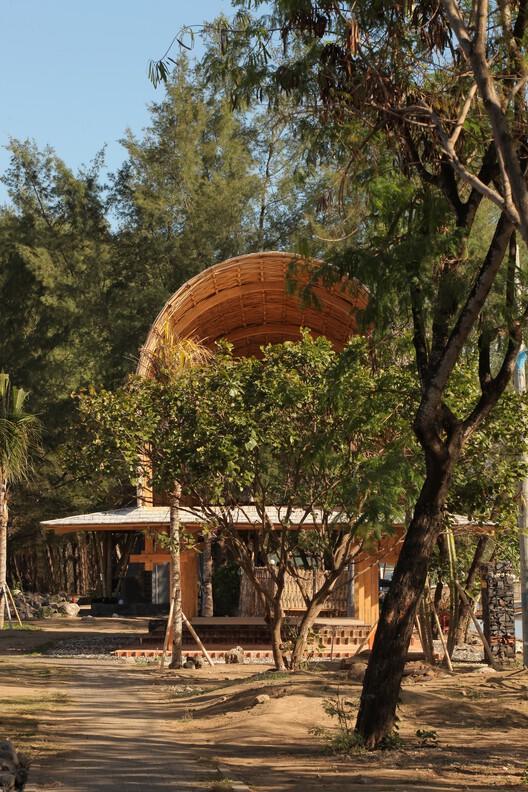
The pavilion is formed by three arched laminated bamboo trusses, each spanning 4 meters, rising to a height of 8.5 meters from a plinth constructed of recycled temple stone. The open, elevated floor plan continues the expansive character of the traditional Bale Banjar, while the prefabricated bolted connection system ensures rapid assembly and long-term stability in the tropical climate. The arched roof profile takes inspiration from the Lumbung (rice barn), paying homage to both agricultural architecture and coastal shipbuilding traditions, merging inland and marine vernaculars into one fluid structure.
展馆由三道弧形层压竹拱构成,每道跨度 4 米,整体结构从由回收寺庙石材搭建的基座上拔地而起,高达 8.5 米。开放式、抬高的平面布局延续了传统巴莱班贾的开阔特质,而预制螺栓连接系统则确保了热带气候下的快速组装与长期稳定性。屋顶的拱形轮廓借鉴了粮仓(Lumbung)的形态,向农耕建筑与沿海造船传统致敬,将内陆与海洋的本土建筑语言融于一脉流畅的结构之中。
Courtesy of Cave Urban
Courtesy of Cave Urban
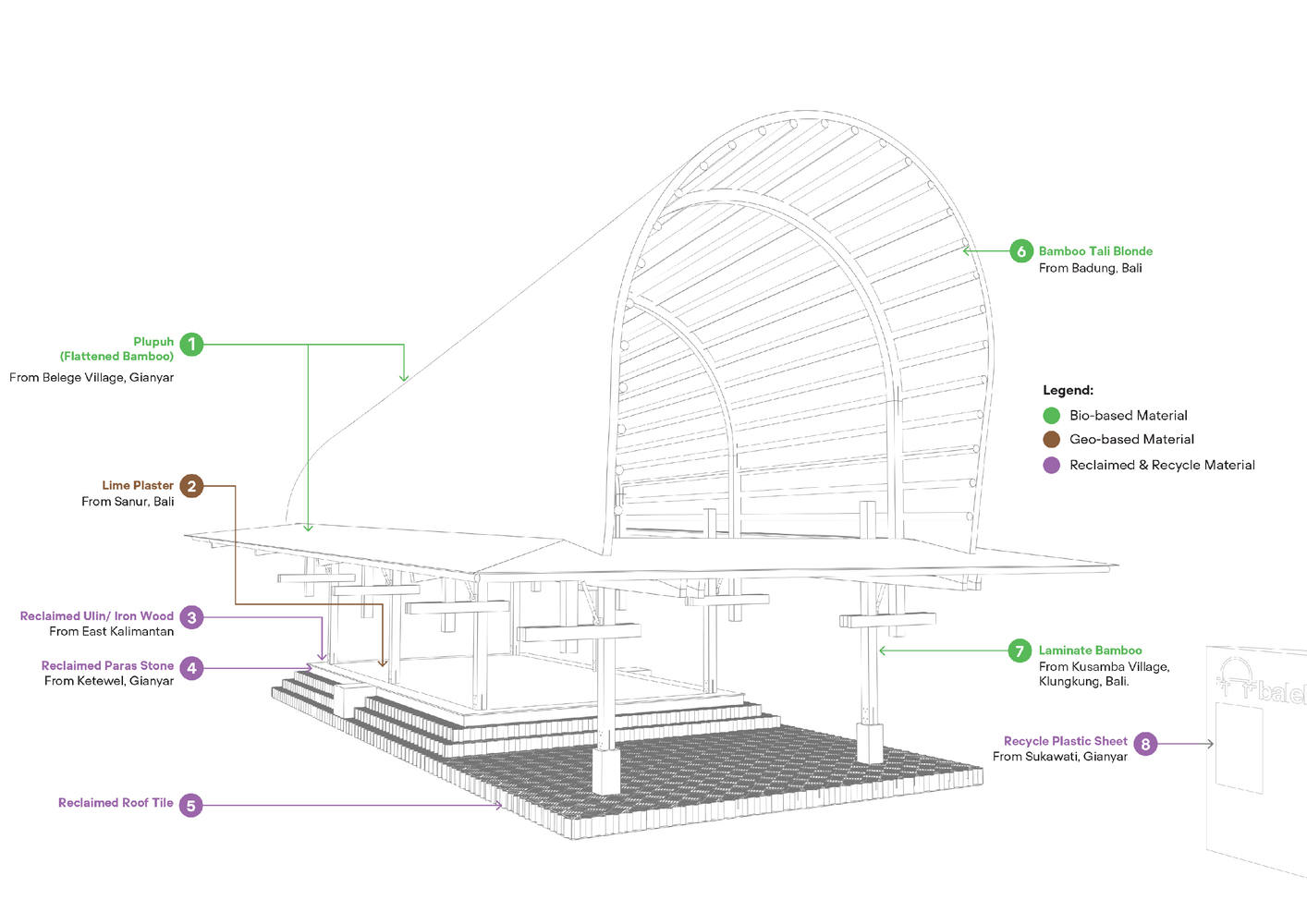
The Bale Bio Pavilion is constructed entirely from locally sourced and regenerated materials in Indonesia.
巴莱生物展馆完全采用印度尼西亚本土获取与再生的材料。
Laminated Bamboo: Giant bamboo (Dendrocalamus asper) cultivated by smallholders on Flores Island, processed by Indo Bamboo in Bali.
Paras Stone: Waste material from temple carving workshops, repurposed into gabion walls forming the pavilion's plinth.
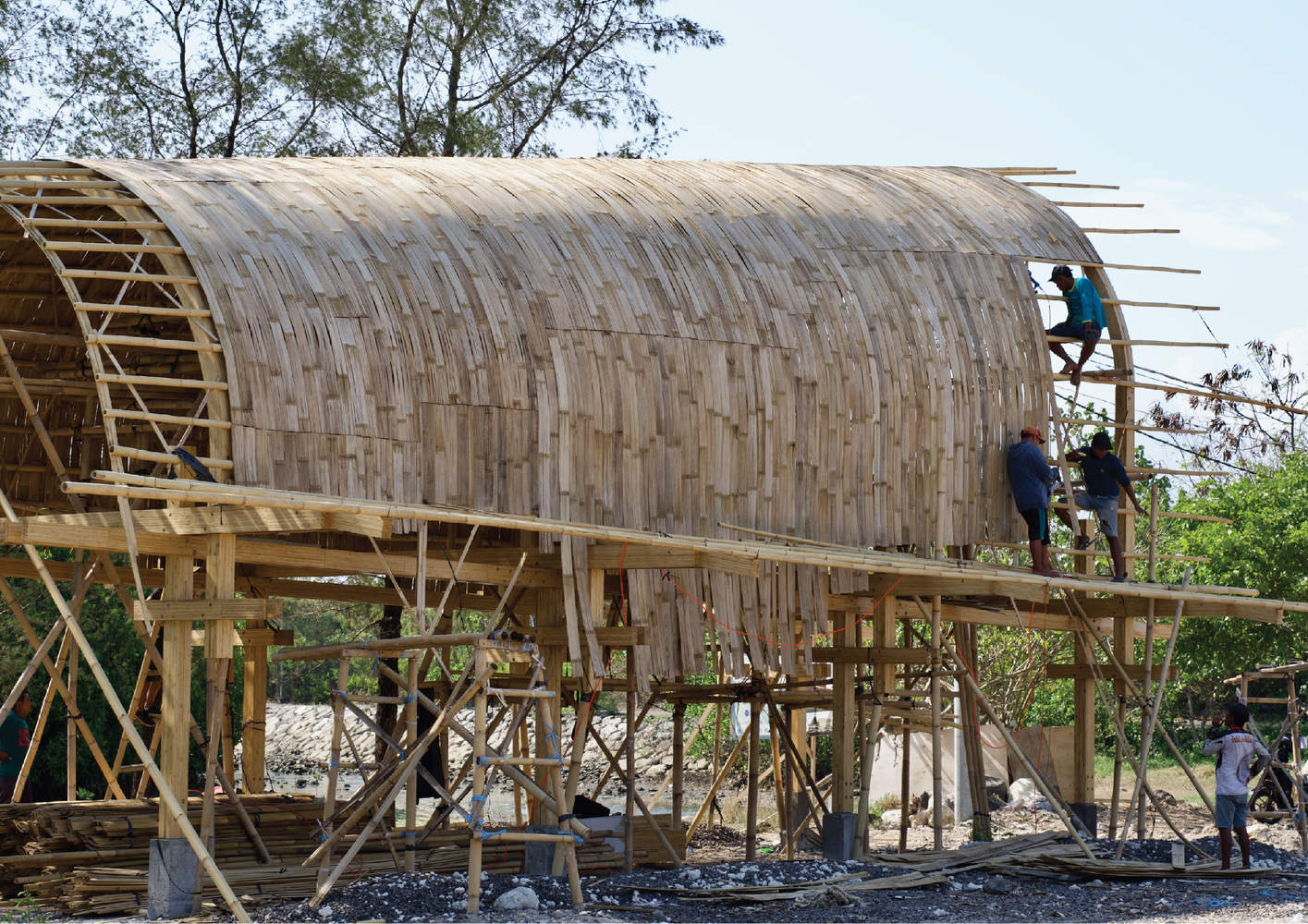
Prupuk Bamboo Slabs (Split Bamboo): Hand-split bamboo used for the roof, continuing Bali's long tradition of bamboo artistry.
Recycled Ironwood (Ulin): Hardwood salvaged from disused houses and bridges in Kalimantan, used for plinth edge detailing.
Terracotta Tiles and Lime Plaster: Finishes created from recycled materials, providing a cool, earthy texture indoors.
Recycled Plastic Sheets: Discarded polymers pressed into durable signage and inscription panels.
层压竹材:选用弗洛雷斯岛小农种植的巨竹(Dendrocalamus asper),由巴厘岛的Indo Bamboo公司加工处理。
帕拉斯石:取自寺庙雕刻工坊的边角余料,经重新利用后砌筑成展馆基座的格宾石笼墙。
普鲁普竹板(压平竹材):屋顶采用手工劈制的竹板,延续巴厘岛悠久的竹艺传统。
再生铁木(乌林木):从加里曼丹闲置房屋和桥梁中回收的硬木,用于基座边缘装饰。
陶土瓦与石灰抹灰:回收材料打造的饰面,为室内空间带来清凉与质朴感。
再生塑料板:将废弃聚合物压制成耐用的标识牌与铭文面板。
© Bas Princen
© Bas Princen
These material components collectively form a circular material system, seamlessly integrating local craftsmanship with engineering precision. “The entire ground section is built using geologically derived materials… we sourced stone waste from local temple fabricators… to build gabion walls that lift the building’s plinth off the ground.”
这些材料组件共同构成了一个循环材料系统,将本土工艺与工程精度完美融合。“整个地面部分均采用地质基材料打造……我们从当地寺庙制造商处获取石材废料……用它们砌筑格宾石笼墙,将建筑基座抬离地面。”
© Bas Princen
© Bas Princen
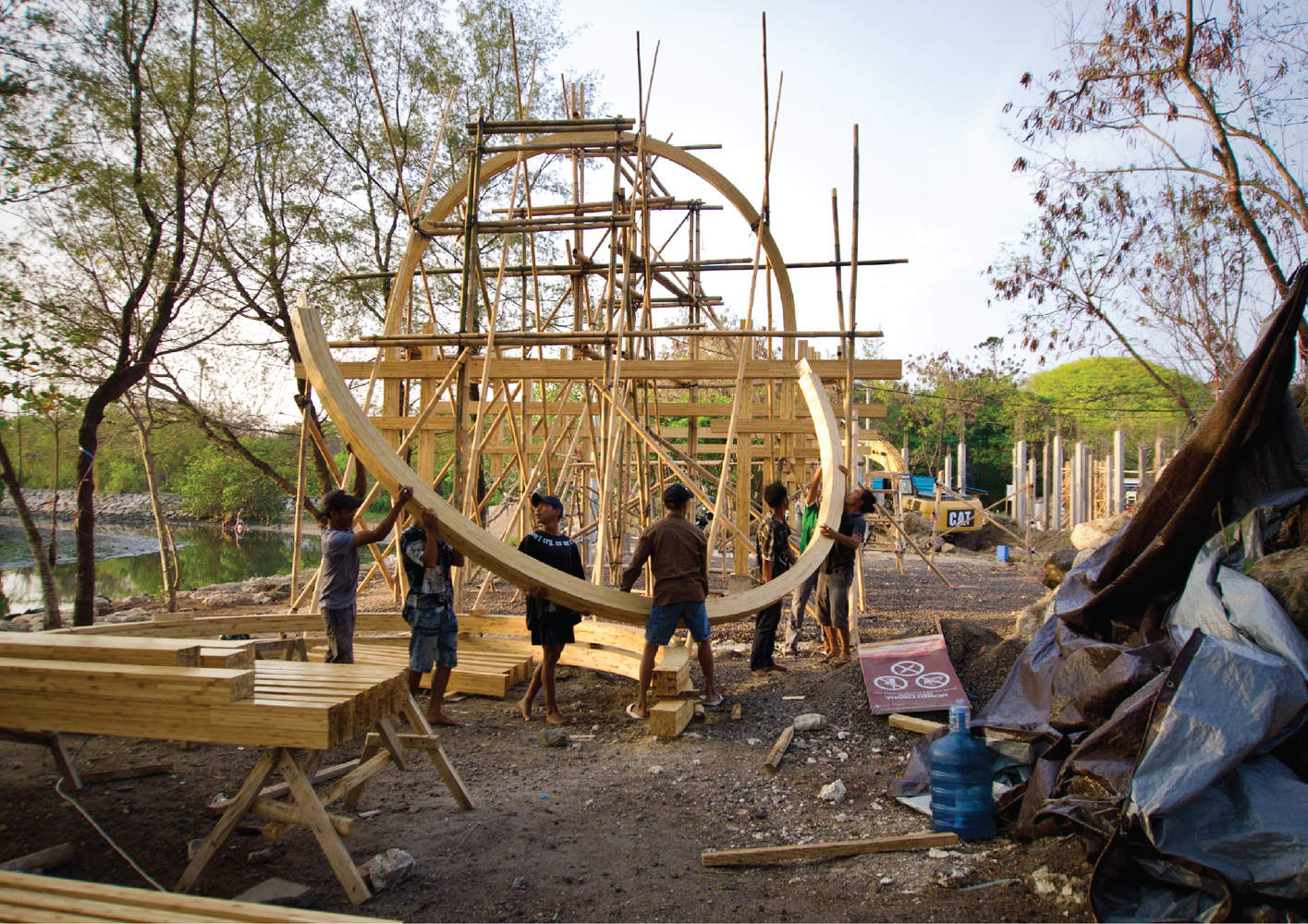
The pavilion was realized through the collaboration of Cave Urban, Bauhaus Earth, Bamboo Village Trust, Atelier One structural engineers, Eco Mantra, Kota Kita, Indobamboo, and students from the University of Warmadewa, with participation from local artisans. Prefabricated components were transported to the site and bolted together, showcasing a rapid, low-impact construction methodology. "It was astonishing to see the pavilion rise in just a few days using a construction method similar to engineered timber framing."
该展馆由 Cave Urban、包豪斯地球(Bauhaus Earth)、竹村信托(Bamboo Village Trust)、Atelier One 结构工程事务所、生态曼陀罗(Eco Mantra)、科塔基塔(Kota Kita)、印尼竹材公司(Indobamboo)以及瓦玛德瓦大学(University of Warmadewa)的学生共同协作完成,并得到当地工匠的参与。预制构件被运送至现场后通过螺栓拼接成型,展现了快速、低环境影响的建造模式。“短短数日内,展馆便以近似工程木构的建造方法拔地而起,这一过程着实令人惊叹。”
大样图
Prior to construction, the team consulted with local architects to ensure the design adhered to three principles: use natural materials, cause no environmental harm, and serve the community. Both the foundation-laying and completion phases were blessed with Meruak ceremonies. The construction process also served as a training ground, where workers learned to assemble the laminated bamboo structure, integrating new material knowledge with local craft traditions for intergenerational transfer.
动工前,团队与当地建筑师展开磋商,确保设计贯彻三项原则:使用天然材料、不损害环境、服务社区。项目在奠基与竣工阶段均通过梅鲁阿克(Meruak)仪式祈福。建造过程亦成为培训现场,工人们学习组装层压竹结构,将新材料知识融入本土工艺传统并代代相传。
Courtesy of Cave Urban
The Bale Bio Pavilion serves as both a prototype demonstration and a catalyst, showcasing a viable path for regenerative construction in Indonesia through a carbon-negative approach. A Life Cycle Assessment conducted by Eco Mantra revealed that the pavilion has a "110% reduction in embodied carbon (A1-A3) compared to conventional construction methods." The pavilion avoided over 53 tons of CO2 emissions (equivalent to planting over 2,400 trees) and acts as a continuous carbon sink through its natural materials. "The building we created is not only carbon negative but also supports social and environmental initiatives across its entire value chain."
巴莱生物展馆(Bale Bio)兼具原型示范与催化效应,以碳负排模式展现了印度尼西亚再生建造的可行路径。生态曼陀罗(Eco Mantra)开展的生命周期评估显示,该展馆“较传统常规建造方式,A 阶段碳足迹减少 110%”。展馆避免了超过 53 吨的二氧化碳排放(相当于种植 2400 余棵树),且通过天然材料持续主动吸收碳汇。“我们打造的这座建筑不仅实现碳负排,更可追溯至价值链全环节的社会与环境倡议。”
Courtesy of Cave Urban
The pavilion employs a deconstructable design, allowing its components to be disassembled and reused, embedding the circular economy principle throughout its lifecycle. "The pavilion has been incredibly successful, not only because it demonstrates a viable path for regenerative construction in Bali, but also because it acts as a catalyst, a proof-of-concept model." Since its completion, the Bale Bio Pavilion has continuously hosted community gatherings, workshops, and multi-stakeholder dialogues, becoming a vibrant space for conversation on the transition to regenerative design in Bali.
展馆采用可拆卸设计,部件可拆解并重复利用,将循环理念贯穿于全生命周期。“展馆大获成功,不仅因为它展示了巴厘岛践行再生建造的可行路径,更因其发挥了催化作用,成为概念验证的典范。” 自落成以来,巴莱生物展馆(Bale Bio)持续承办社区聚会、工作坊及多方利益相关者对话,成为巴厘岛向再生设计转型的鲜活对话空间。
Courtesy of Cave Urban