创新的可逆化模块化改造策略:本项目最核心的亮点在于其“坯房插件家”这一预制化模块系统,它为景德镇典型坯房的更新提供了一种革命性的、可逆化的改造方法。设计师巧妙地在原有的复杂屋架结构中植入功能模块,实现了对历史建筑的最小干预,同时满足了现代空间的使用需求。这种“置入而非颠覆”的策略,既保留了历史肌理的完整性,又通过轻质模块的快速安装与拆除,确保了改造的完全可逆性,这对于受保护的历史街区更新而言,是极其高明且负责任的建筑手法。
复杂空间适应性的精妙平衡:项目成功地在标准化(产品化)与灵活性之间找到了完美的平衡点。鉴于坯房形状(特别是平行四边形等不规则形态)的多变性,插件家系统通过灵活的腾挪躲闪、架高或平置,最大化地适应了复杂的内部空间,确保了保温密闭的生活空间与丰富多样的半室外工作空间的形成。斜顶设计对坡屋面的充分利用,以及基于统一模数下的局部定制,展现了设计团队对既有建筑物理条件的深刻理解,并将规模化设计的经济性与应对复杂性的灵活性完美结合。
功能迭代与社群活化的有机融合:此次改造不仅仅是物理空间的修复,更是历史街区功能迭代和社群活化的催化剂。通过植入卧室、办公、会客、厨房和卫浴等标准/定制化模块,项目为大量需要新业态进驻的坯房提升了基础设施和使用舒适度。无论是针对多艺术家共享的C34院落,还是为游学团体提供灵活住宿的杨华弄,插件家系统都展示出强大的适应性,使得老旧的坯房能够迅速转变为适应当代艺术、办公和居住需求的高效复合空间,激活了陶阳里历史街区的生命力。
The "Porcelain Studios Plugin Revival" is a prefabricated modular system adopted by People's Architecture Office (PAO) for the renovation of typical kiln-house structures in Jingdezhen. By inserting various functional modules into the complex roof trusses of the kiln houses, new courtyard spaces are formed, representing a reversible method of transformation.
“坯房插件家”是众建筑面对景德镇典型的坯房建筑更新所采用的一种预制化模块系统,通过在坯房的复杂屋架中置入多种功能模块,来形成新的院落空间,是一种可逆化的改造方法。
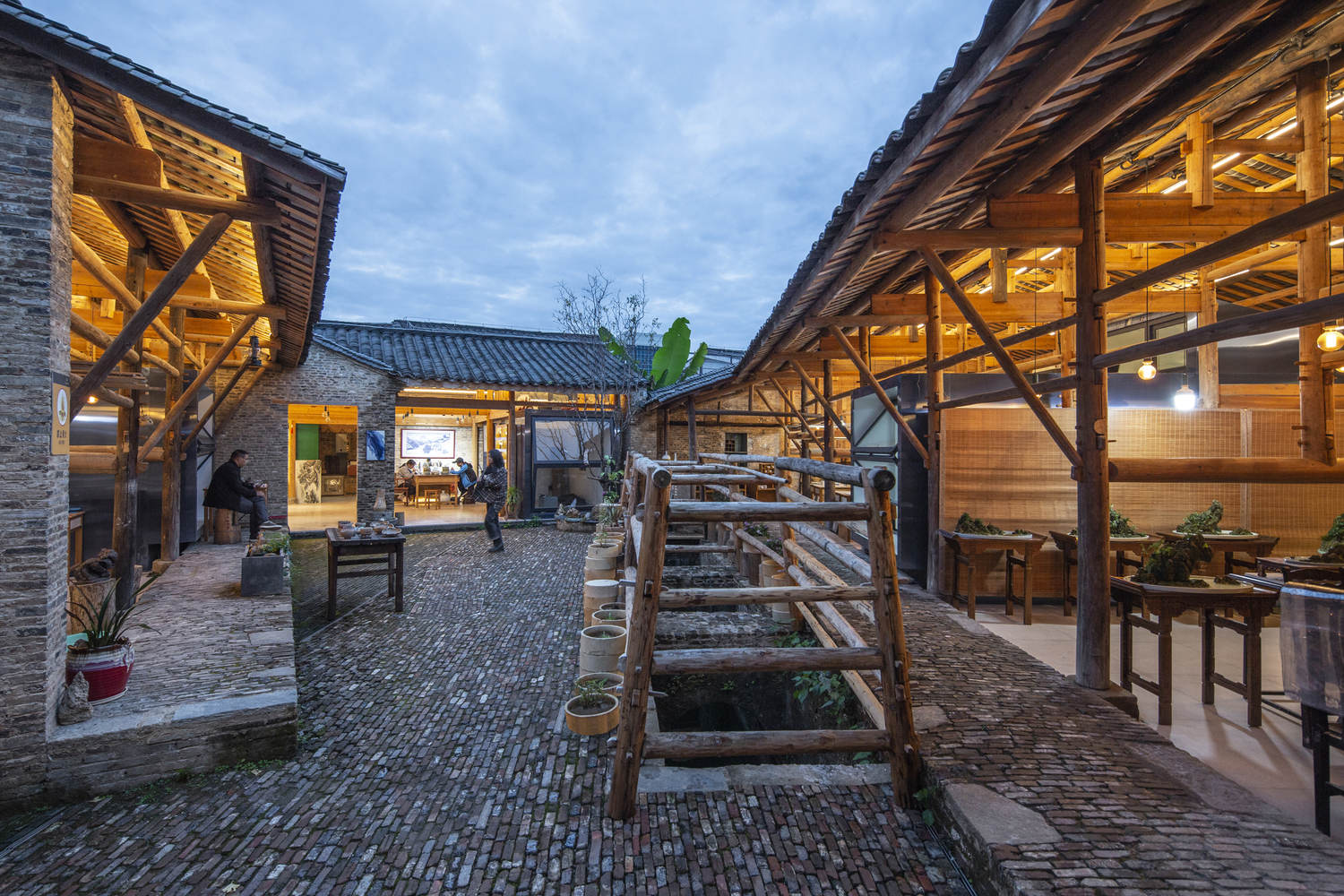
The site is located in the Taoyangli Historical District of Jingdezhen, centered around the Ming and Qing Dynasty Imperial Kiln site. Historically, this area was the royal kiln, and the urban pattern of "official kilns built alongside private kilns" gradually formed during the Ming and Qing dynasties, with numerous private kilns surrounding the imperial kilns. Kiln houses and preparation rooms were densely packed, typically with about ten preparation rooms built around one or two kilns; "one kiln, ten preparations" is an important characteristic of the historical fabric of this area. The currently preserved historical districts are mainly located on the east and west sides of the Imperial Kiln site, which have undergone overall planning for renewal and repair. The plugin houses in this renovation are scattered across different courtyards within the district.
© 朱雨蒙
© 朱雨蒙
Courtesy of 众建筑
Courtesy of 众建筑
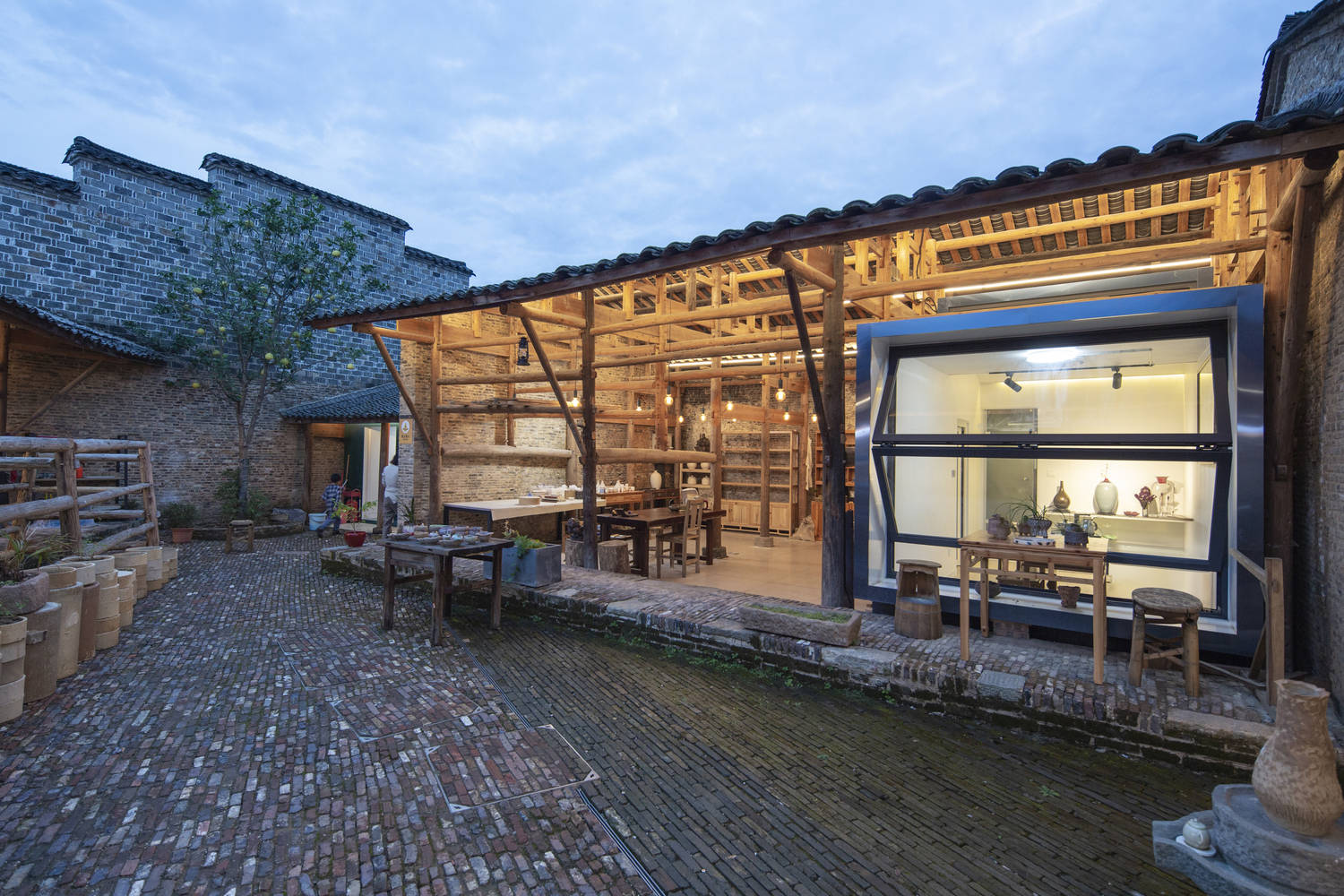
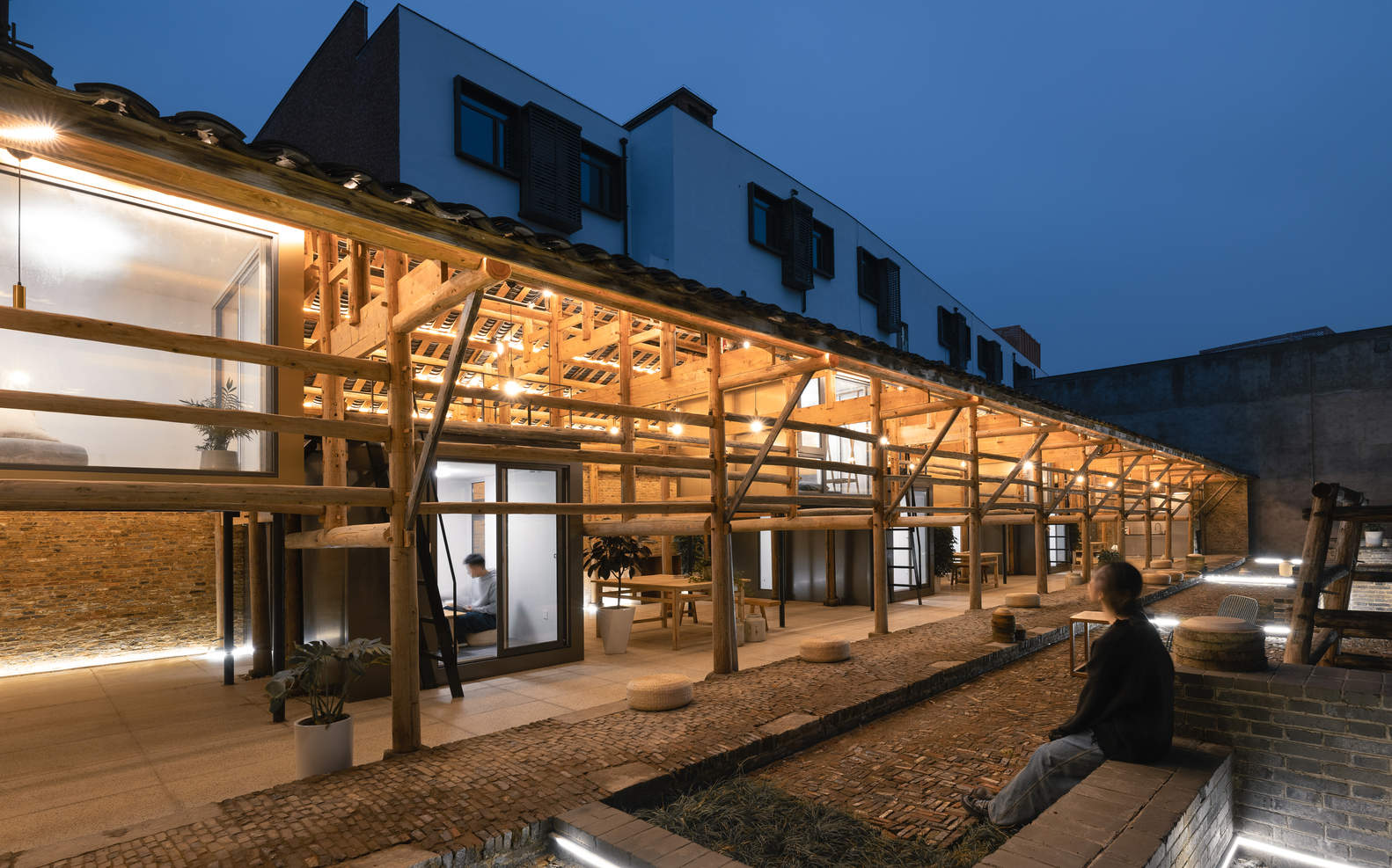
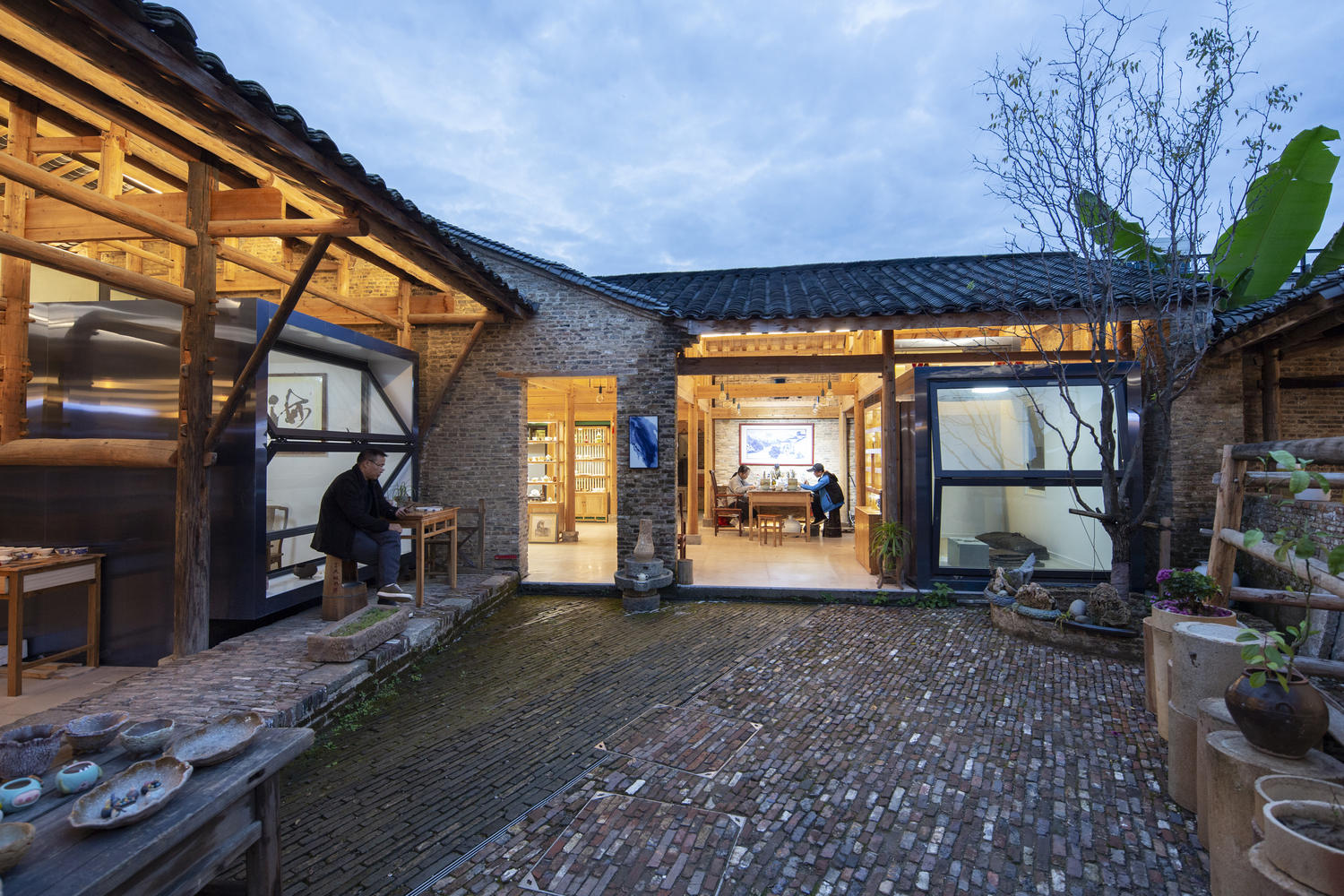
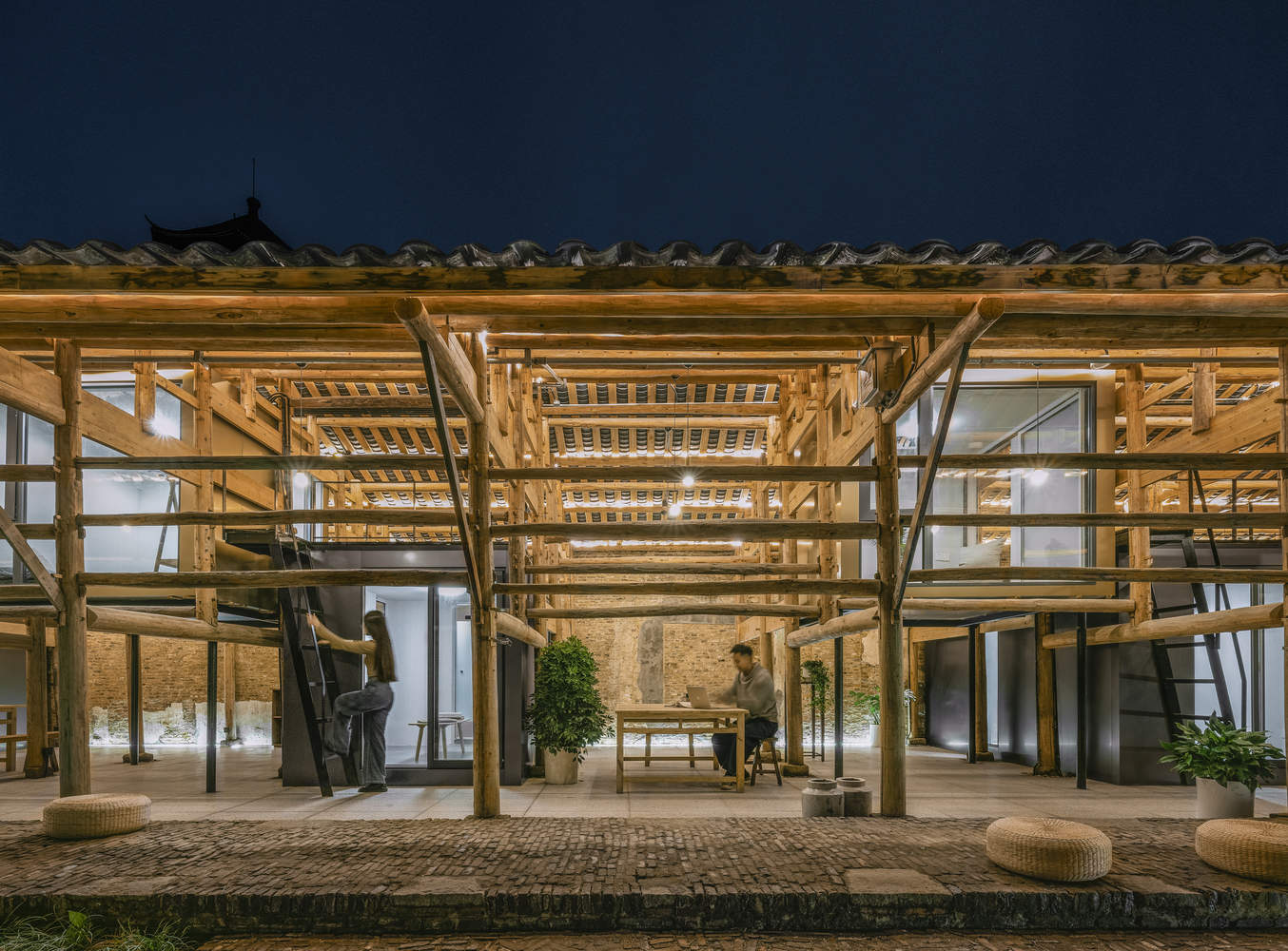
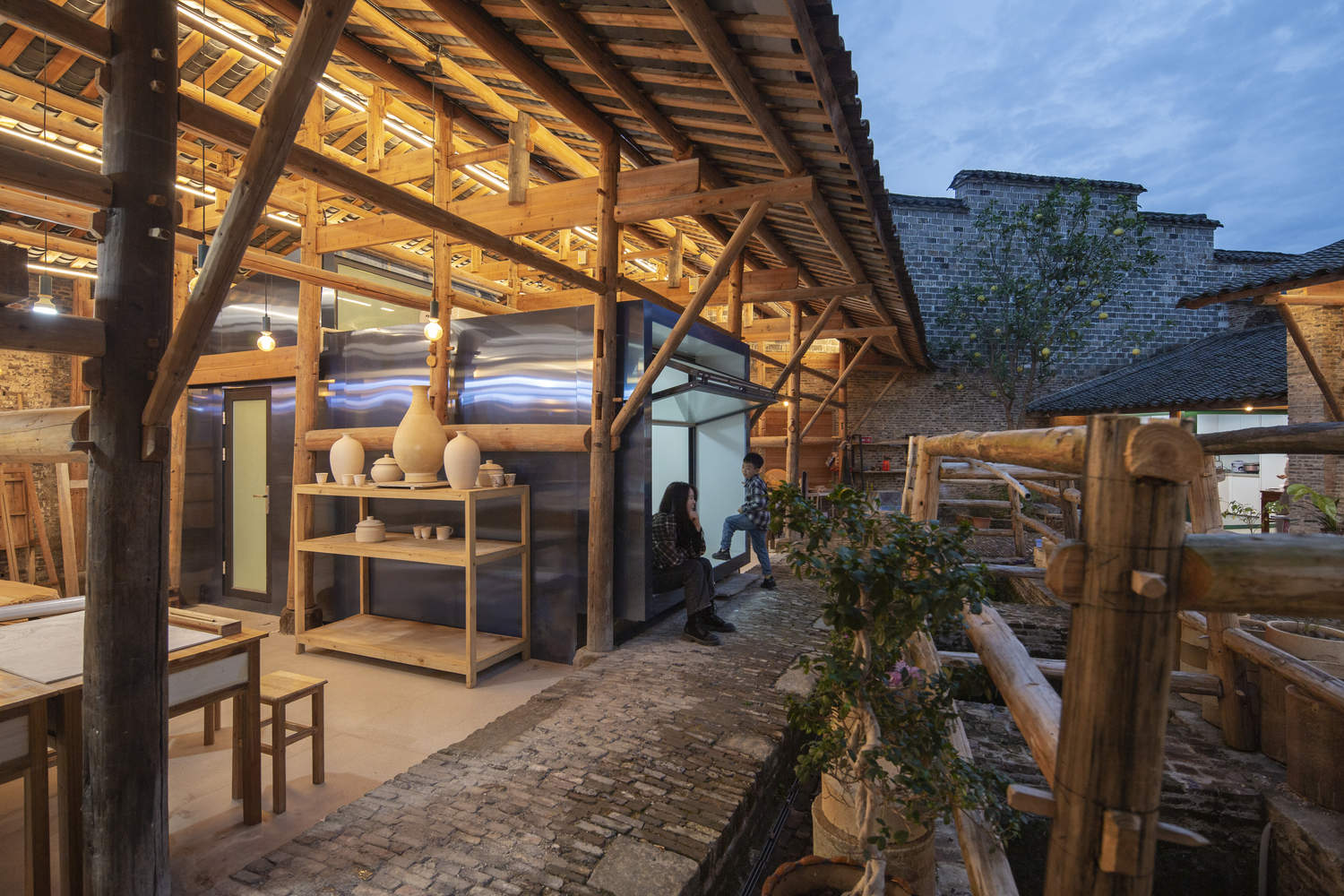
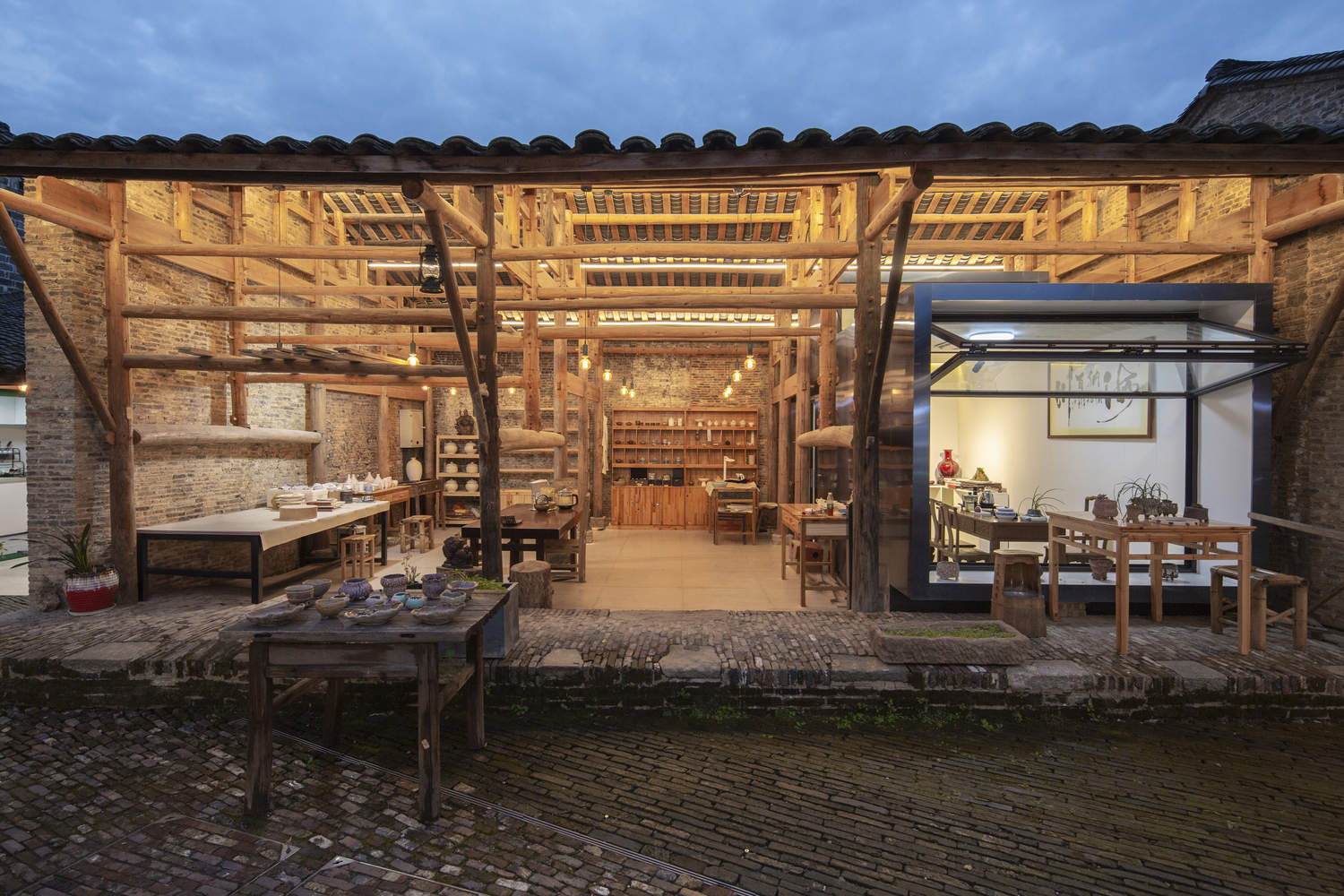
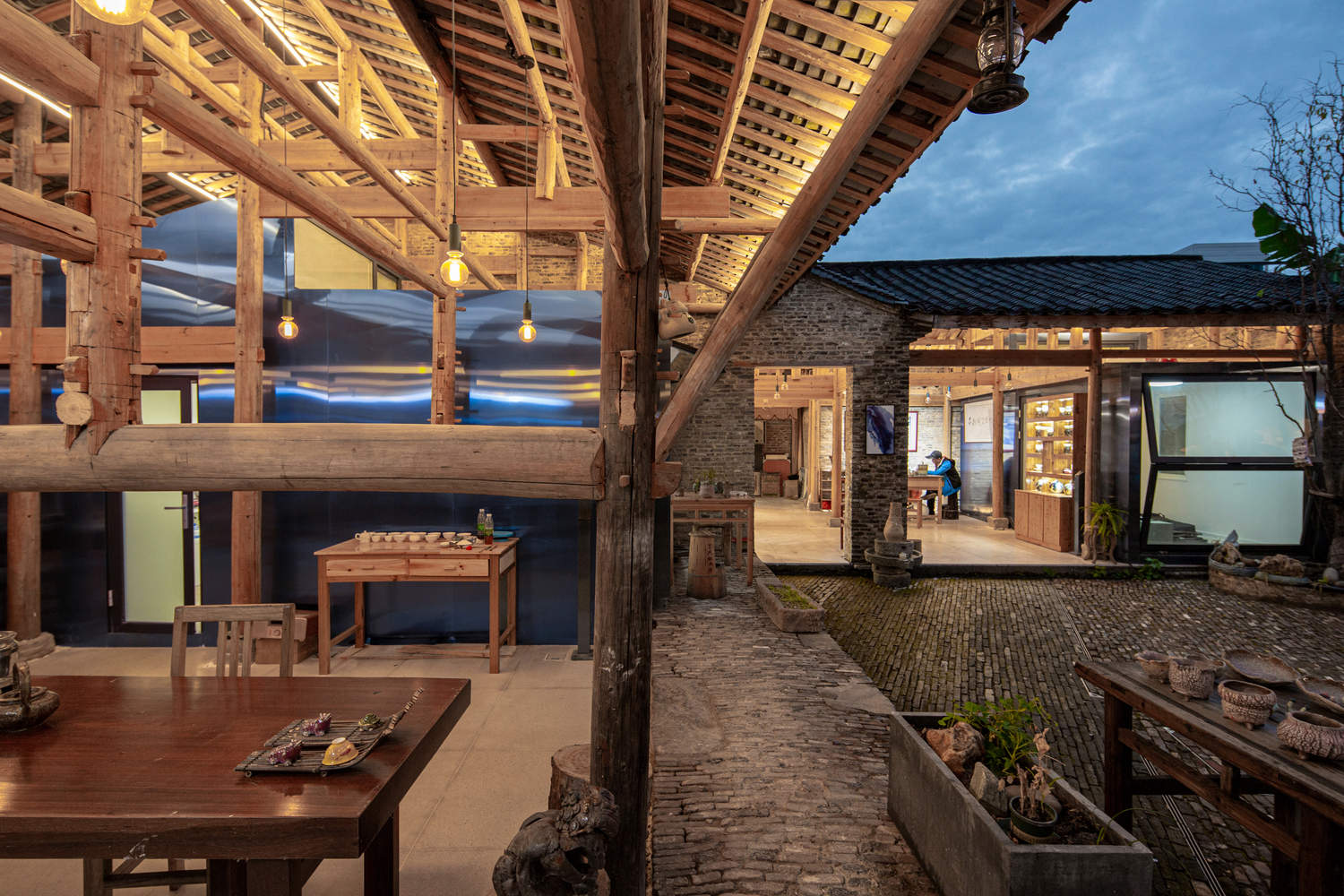
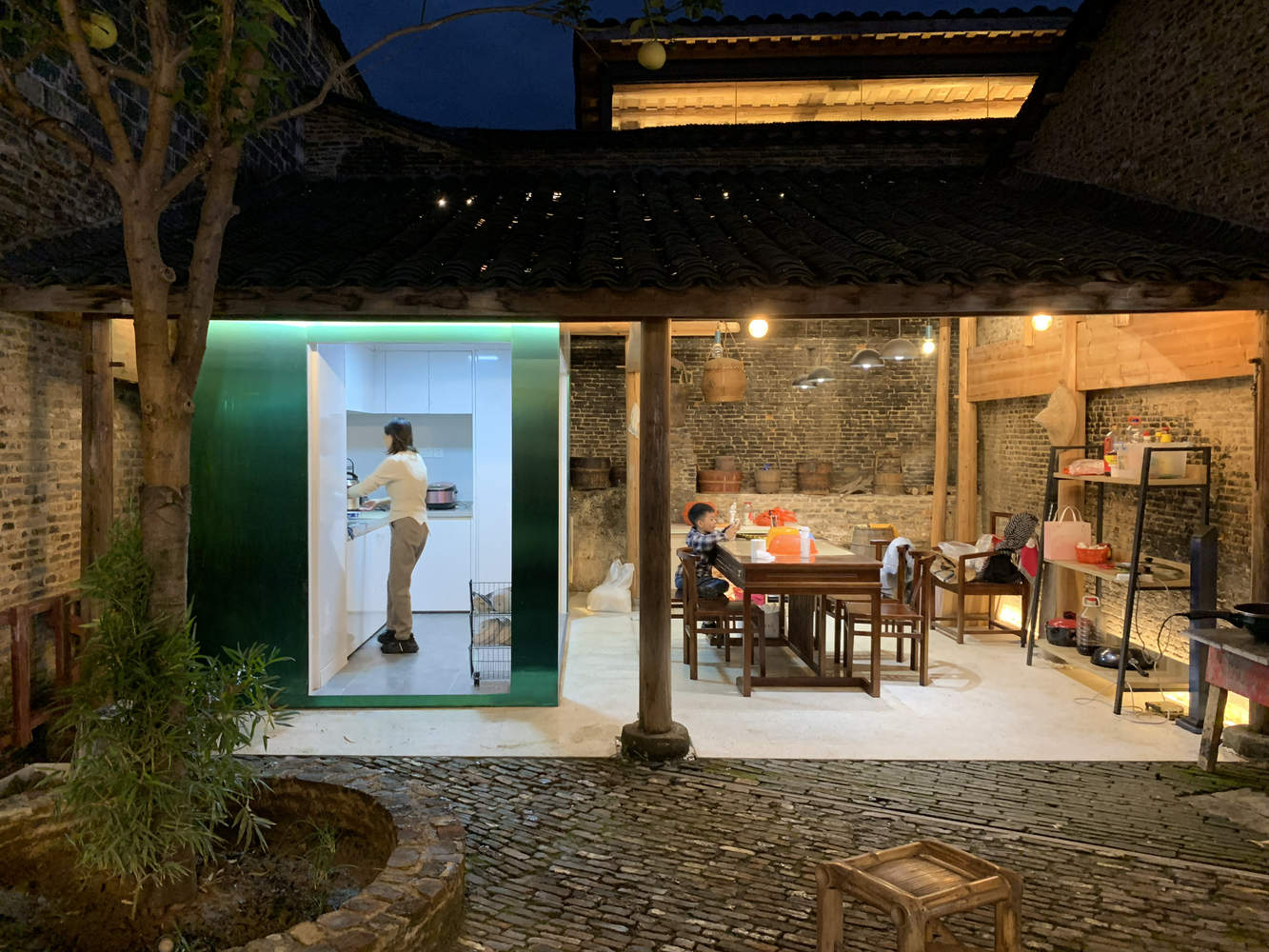
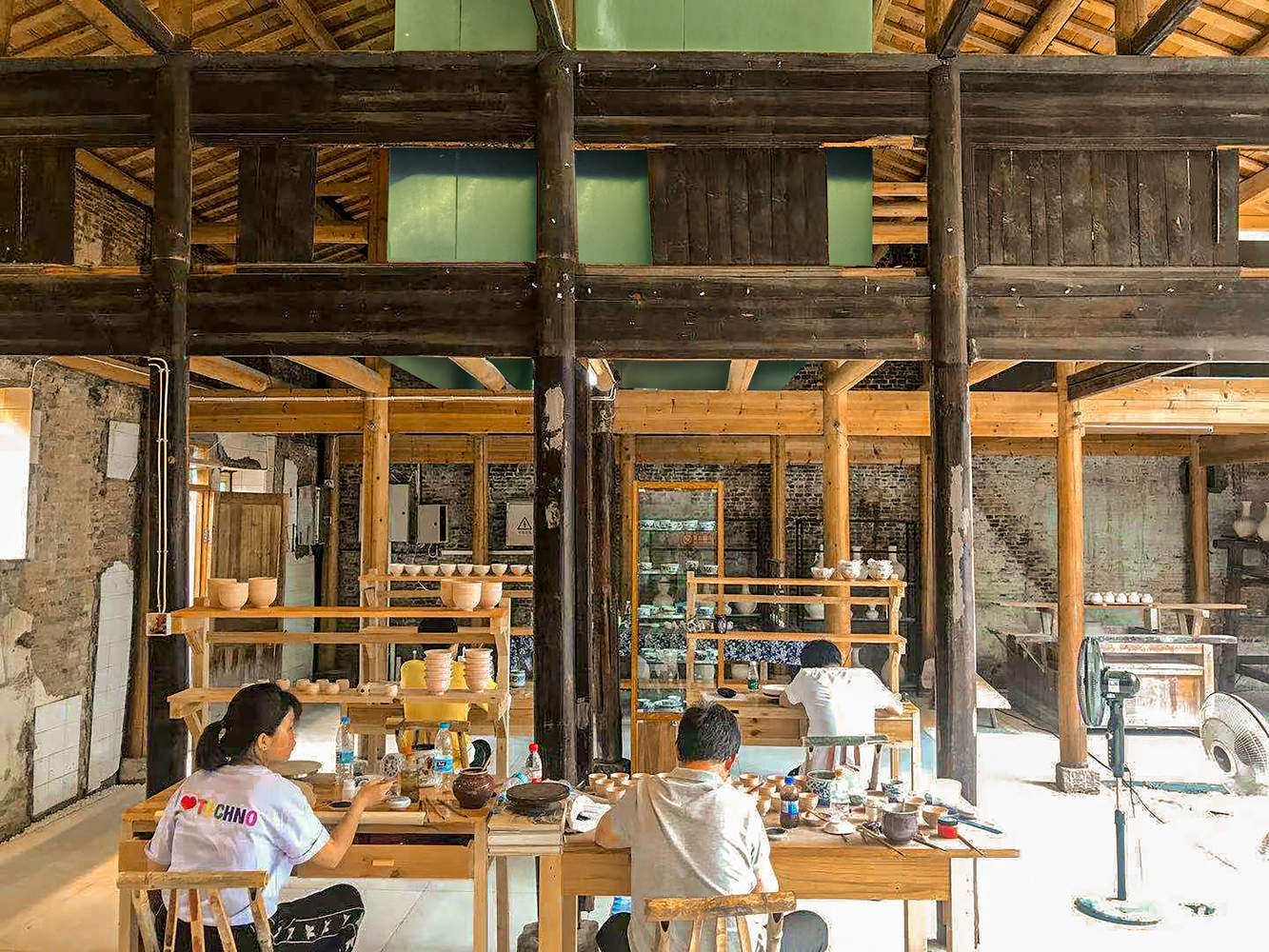
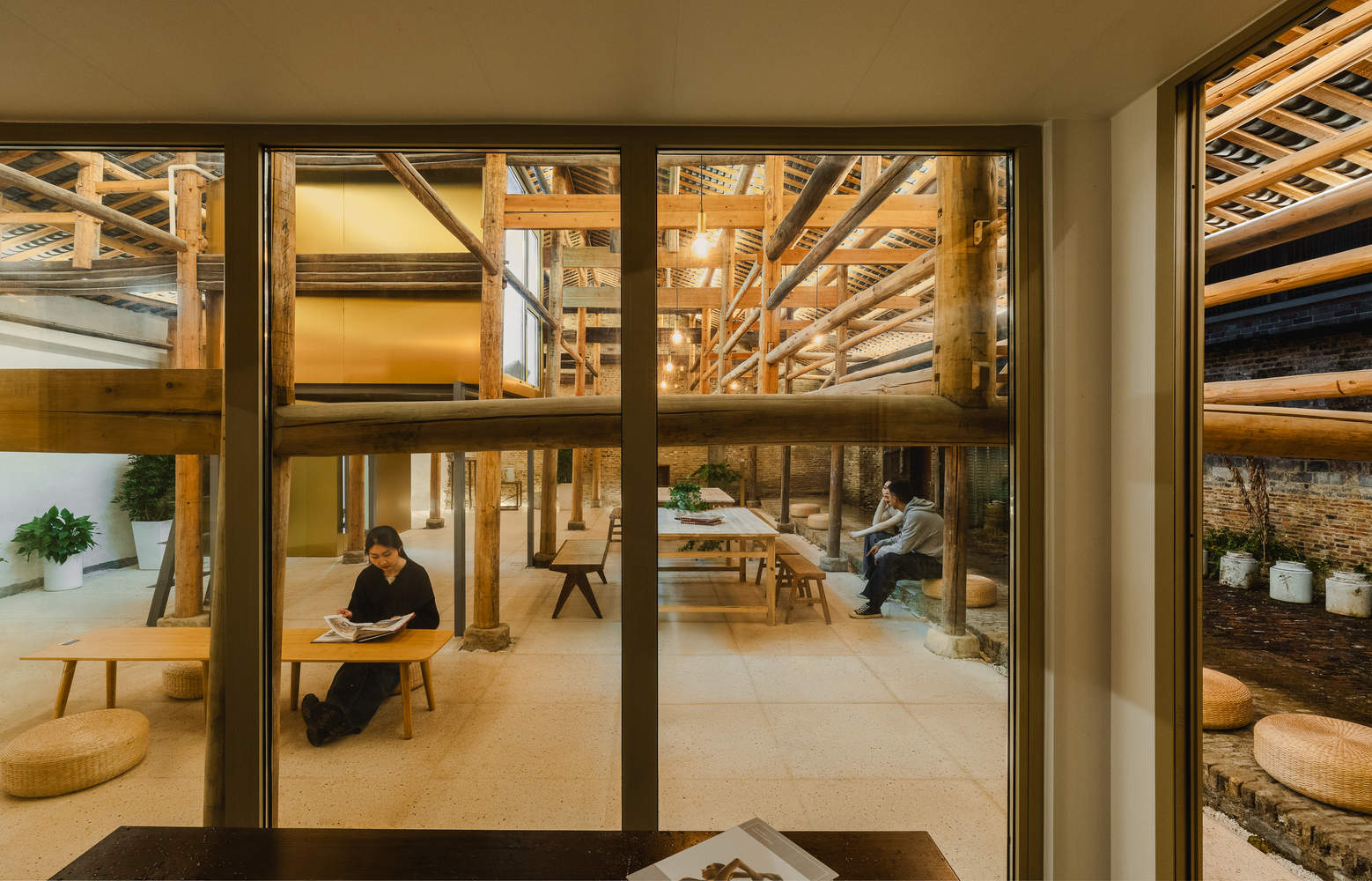
The flexibility of the plugin houses is evident due to the highly irregular shapes of the kiln frames. They maneuver around and dodge within the frames, either raised or placed flat, to form living spaces with better insulation and sealing performance. The remaining semi-outdoor spaces are transformed into rich and diverse workspaces. The space is reversibly renovated without damaging the original buildings. The Imperial Kiln area belongs to the Taoyangli Historical District, where old buildings like kiln houses adopt protective repair measures. Repairs must not damage the original main structure, and modifications must be reversible, allowing the dismantled section to be removed to restore the old building to its original state if necessary. The plugin house renovation retains most of the semi-outdoor space as open work areas, with no changes made to the original building components, only inserting a small number of modular plugins in local areas. The modular plugins provide indoor spaces with good sealing and thermal insulation, such as for living and meeting. The plugin houses are a lightweight, modular prefabricated system placed directly on the indoor floor, allowing for quick installation and rapid removal, which is a completely reversible method.
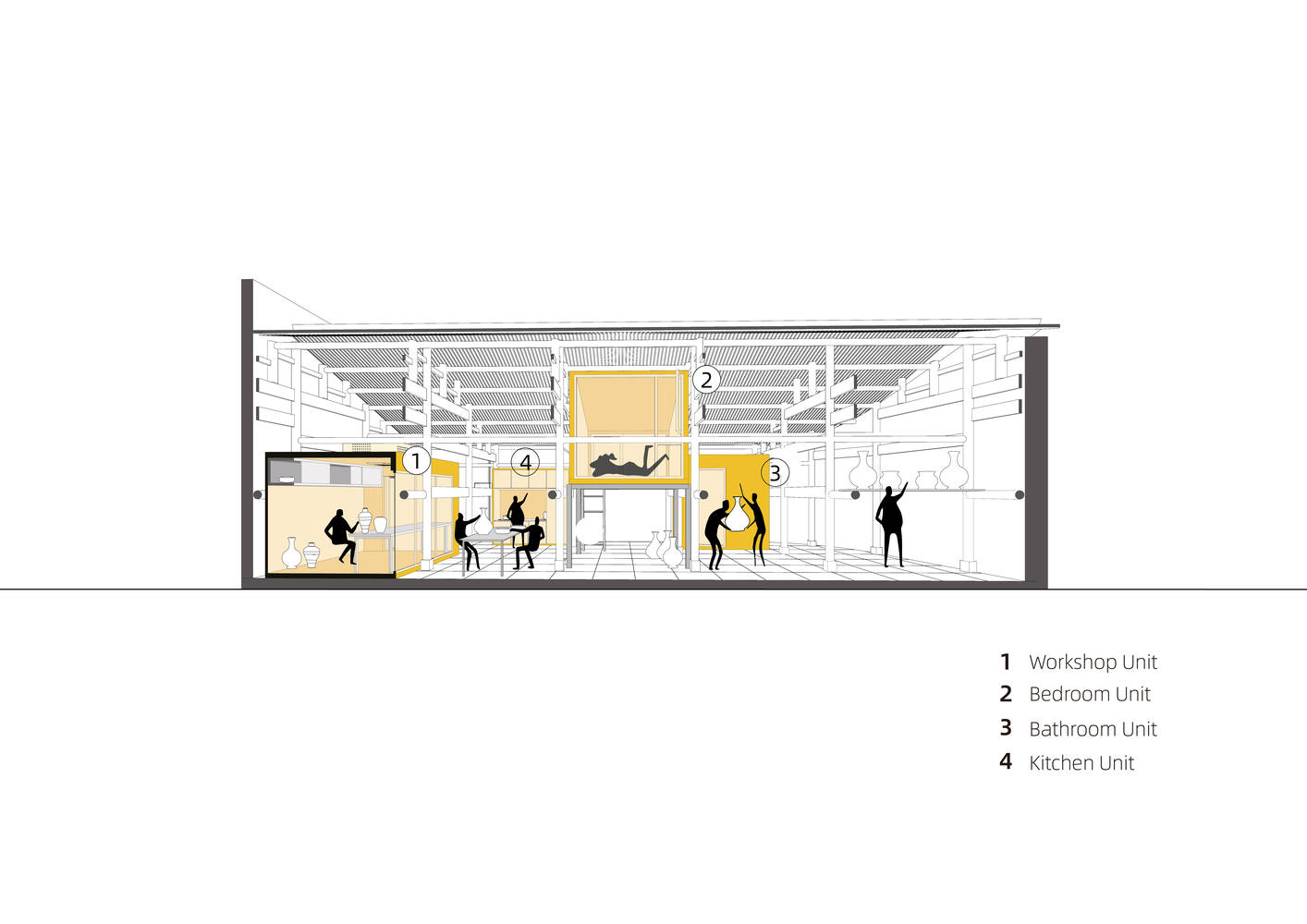
There are many kiln houses in the Imperial Kiln area, all requiring new functions to be introduced for use renewal, and the basic infrastructure and spatial comfort of the courtyards need to be improved. Therefore, the overall renovation has the conditions and demand for scaling. The plugin house system has productized characteristics, being modularly processed in the factory and then prefabricated and installed on-site after flat transportation. Bathroom and kitchen modules, with built-in sanitary facilities integrated with the plugin building system, realize a certain degree of scaled design, scaled production, and installation, thus achieving higher quality completion at a lower cost. The plugin house is a modular prefabricated system; the assembled panels have a unified module, which can be scaled in design according to the range of dimensions of the kiln house bays and depths, and adaptability to any kiln house size can be achieved by customizing the size of one panel in one direction. The sloped roof design also ensures fuller utilization of the space under the pitched roof of the kiln houses. While modular, the plugin house system possesses sufficient flexibility to deal with complex spaces. While providing standardized modules, the plugin house system also offers customized different plugins. Work/meeting, bedroom, kitchen, and bathroom modules are relatively standardized module spaces, but they can adapt to the different usage needs of various users through exterior surface materials and colors, personalized doors and windows, and facade furniture, forming a diverse product range.
© 朱雨蒙
轴测图
Courtesy of 众建筑
Courtyard C34 is composed of two kiln houses and two residential buildings, one of which is a parallelogram. The courtyard has a triangular plan with an existing sun-drying rack in the middle. The courtyard space is relatively complex and diverse. The renovation is based on the model of three artists moving in; the smaller residential building has a kitchen plugin module to meet the shared kitchen needs of the three families. The two kiln houses and the larger residential building are each used by one artist, with the plugin modules integrating bedroom, office, and bathroom functions. The modules in the residential building are divided into a bedroom + bathroom module and an office module. The bedroom module has a deeper depth and adopts a flat-sloping roof combination to introduce more natural light. Both the bedroom and office modules are equipped with integrated car air conditioners (indoor and outdoor units combined) to ensure a relatively comfortable indoor environment during extreme weather in winter and summer.
Courtesy of 众建筑
Courtesy of 众建筑
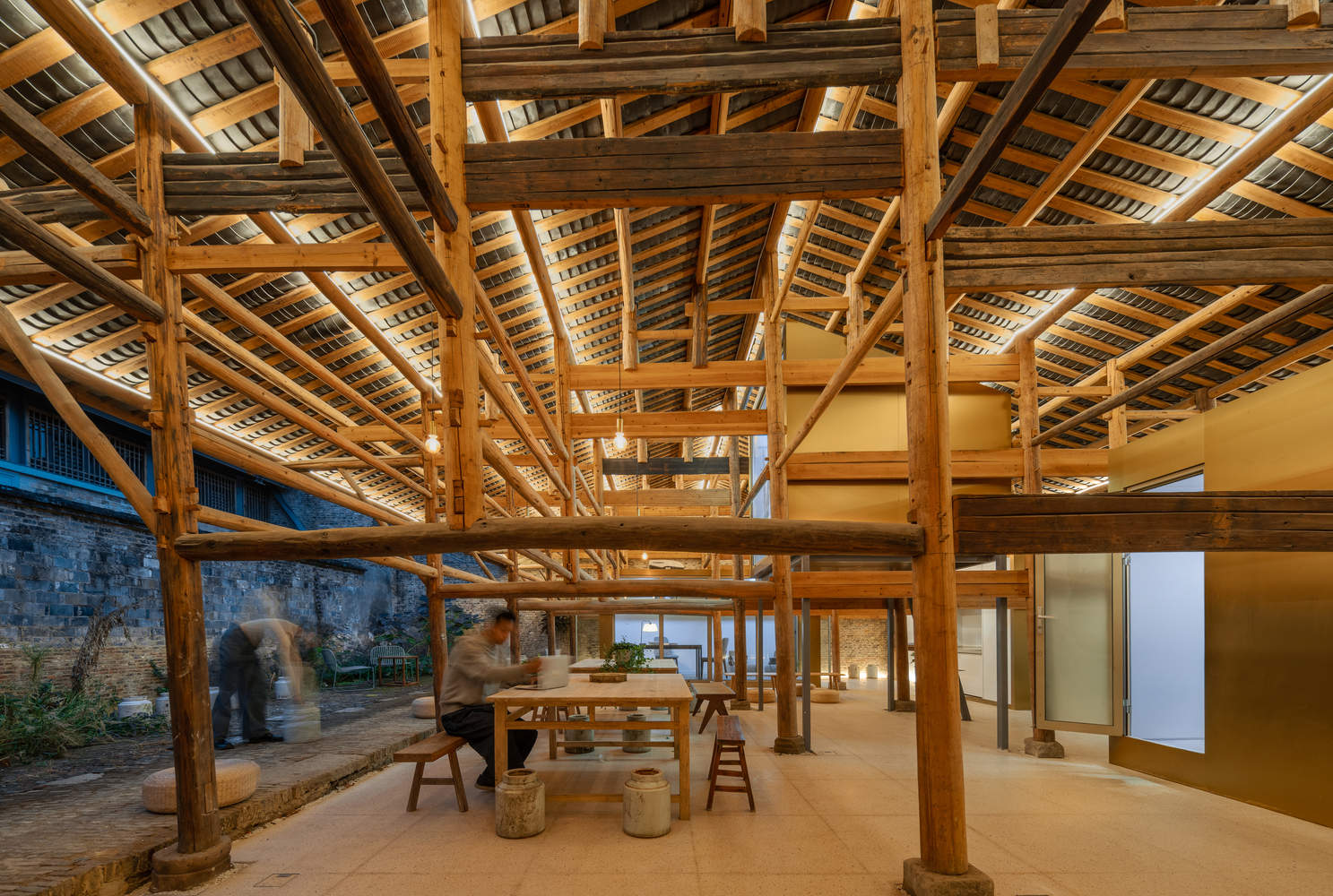
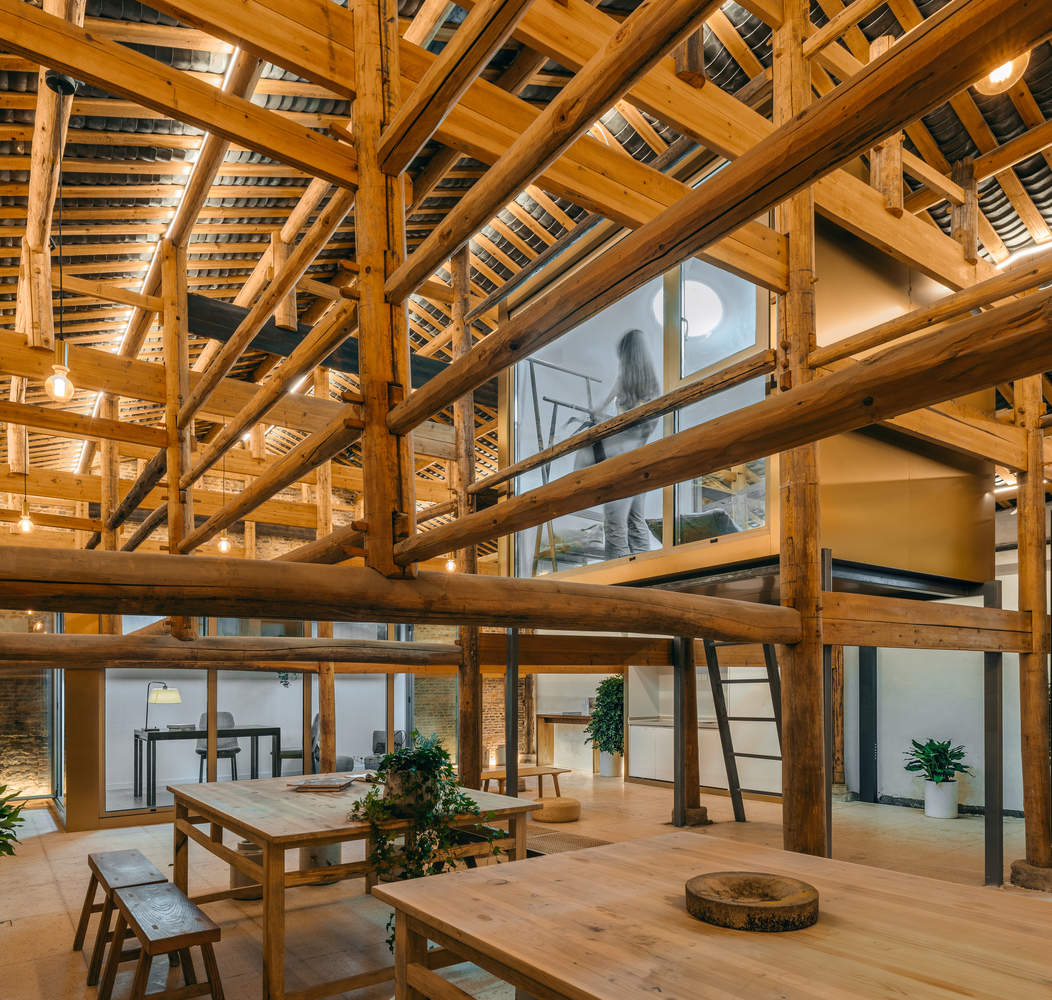
Courtyard H20 is smaller, consisting of one kiln house with a large depth and a narrow courtyard, making it a relatively typical small courtyard with an independent kiln house. Because the depth of the kiln house is large, the ridge height is relatively high. Courtyard H20 is used by a single artist. The inserted plugins include office, living, bathroom, and kitchen modules. The bedroom module adopts a raised mezzanine method to use the kiln house space more efficiently. The facade of the office module facing the interior and the courtyard can be fully opened to gain greater spatial openness and flexibility. Courtyard P58 is composed of a longer kiln house and a residential building. The kiln house originally had an entrance in the northeast corner, which was a typical Jingdezhen folk house "eight-character" main gate. The current courtyard entrance has been moved to the northwest corner. Courtyard P58 is designed for 3 artists to share. The exterior of the residential building is designed as a public exhibition hall space. The east side of the kiln house is a public kitchen and dining area, featuring one kitchen plugin module. The west side of the kiln house houses three sets of plugin modules combining office and bedroom functions for the artists: the ground floor is for office space, and the second-floor mezzanine is for bedrooms. The two modules are staggered in height, and the platform above the office module can be used as a tea room. A portion of the courtyard is sectioned off for the public area of the main entrance and exhibition hall, and the remaining part is divided equally among the three artists through a sawtooth division.
© 朱雨蒙
分析图
© 朱雨蒙
Yanghualong Courtyard is composed of three kiln houses and an L-shaped residential building, with a newly built chimney café enclosed in the middle. The kiln house courtyard has a one-story height difference from the Chimney Square. Each building is an independent unit. Each of the three kiln house buildings has two bedroom modules placed on the mezzanine, as well as office, bathroom, and kitchen modules on the ground floor. The residential building is more unique; due to its higher height, 6 living modules are placed on the mezzanine to accommodate the need for more living functions required for activities such as study tours.
Courtesy of 众建筑
Courtesy of 众建筑
The Taoyangli Historical District in Jingdezhen is facing a functional iteration under the overall renewal plan, with new user groups and new business formats gradually entering. The "Plugin House" provides a renovation method that can cope with new usage patterns; it allows for the partial insertion of various functional modules while preserving the original kiln houses, enhancing usability comfort while flexibly responding to different functional business formats.
© 朱雨蒙
Courtesy of 众建筑