历史遗址的当代激活与精妙保护:该项目成功应对了毗邻市中心的历史遗址所面临的保护与活化挑战。设计通过引入灵活的参观路径和信息系统,实现了对历史价值的尊重与现代公众体验的融合。其精髓在于将古老的文化遗产转化为一个对游客、研究人员和历史爱好者都充满吸引力的现代文化地标,平衡了保护的严肃性与展示的吸引力。
“生命之花”主题的结构性转译:项目最巧妙之处在于其建筑理念的灵感源泉——地拉那马赛克中发现的“生命之花”符号。这一符号被创造性地转化为保护性遮棚的“花瓣”状结构,实现了从文化符号到建筑形态的有机转换。这种结构不仅提供了必要的遮光和环境控制,其轻质框架和织物网罩的设计也最大程度地降低了对遗址的视觉干扰,体现了对文保项目的深刻理解。
功能集成与技术赋能的复合空间:设计成功地将保护、研究、展览和行政办公等多元功能集成于一个两层的新型建筑中。特别是将主体建筑作为遮棚的配重装置,有效“隐藏”了保护结构的视觉体量。同时,项目融入了虚拟导览等数字互动技术,使得遗址的保护不再是静态的,而是通过技术增强了游客的沉浸式体验,是传统文保与未来展示策略的典范结合。
The Tirana Mosaic is an important part of Albania's cultural heritage, providing a window into the ancient history of the country. Located near the city center, the site faces challenges from urban development pressures and is in urgent need of protection and revitalization.
地拉那马赛克是阿尔巴尼亚文化遗产的重要组成部分,为人们窥探这个国家的古老历史提供了窗口。该遗址毗邻市中心,但面临着城市发展压力带来的挑战,同时亟待保护与活化。
© Besart Cani
© Besart Cani
The proposed project aims to transform this historical site into an attractive space for tourists, researchers, and history enthusiasts alike. Through the introduction of flexible visiting routes, the project allows visitors the option to directly admire the mosaic ruins or delve deeper into the historical stories behind them with carefully curated information.
该拟议项目旨在将这一历史遗址打造成对游客、研究人员和历史爱好者均具吸引力的空间。项目通过引入灵活的参观路线,让游客既可选择直接观赏马赛克遗址,也能借助精心策划的资讯信息深入了解其背后的历史故事。
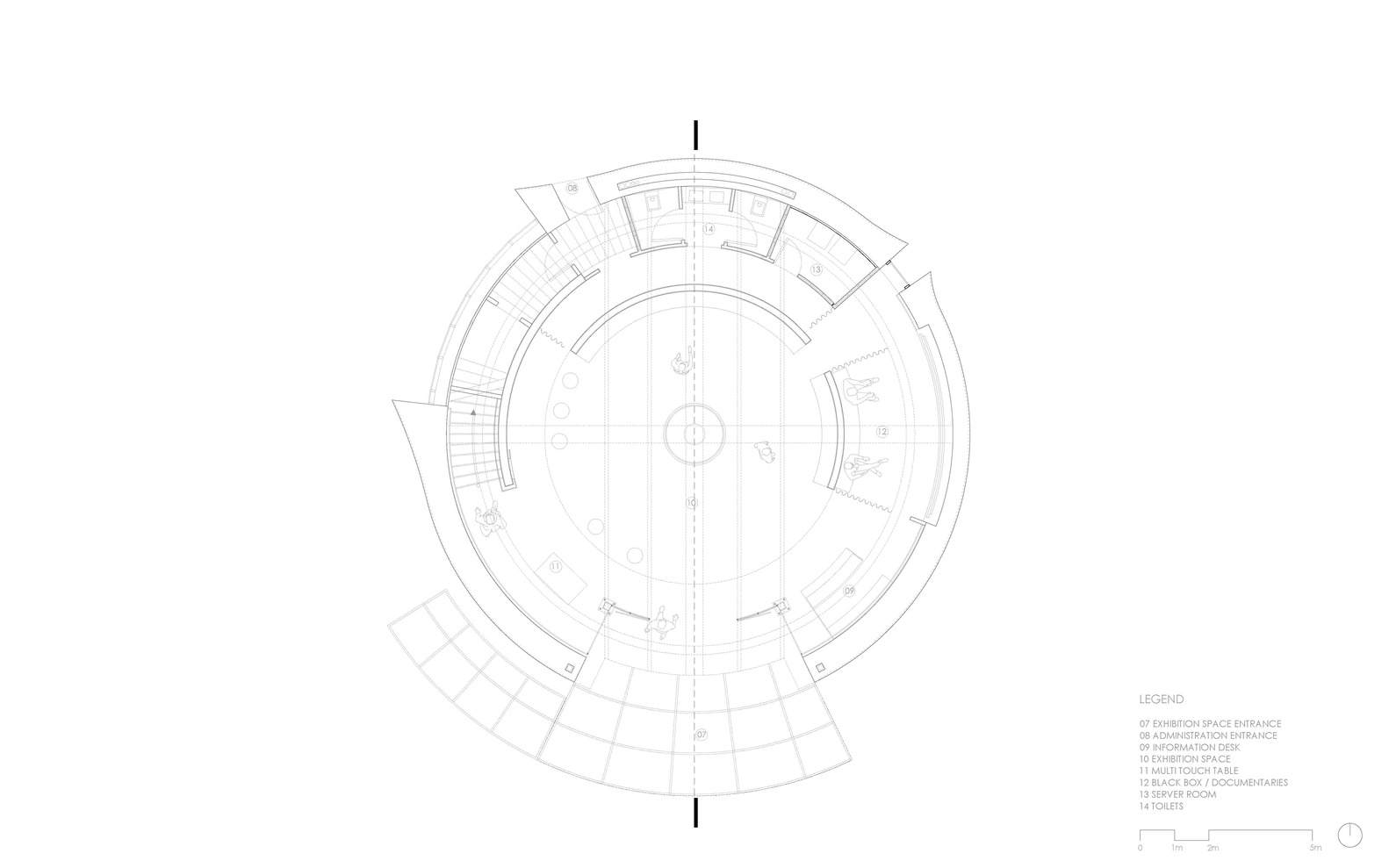
Ground Floor Plan
The visit begins at the entrance plaza, where the ticket office and surrounding facilities are designed to reflect local character while incorporating symbolic elements from the site itself.
参观之旅始于入口广场,这里的售票亭及周边设施设计既体现了当地地域特色,又融入了遗址内的象征性元素。
© Besart Cani
© Besart Cani
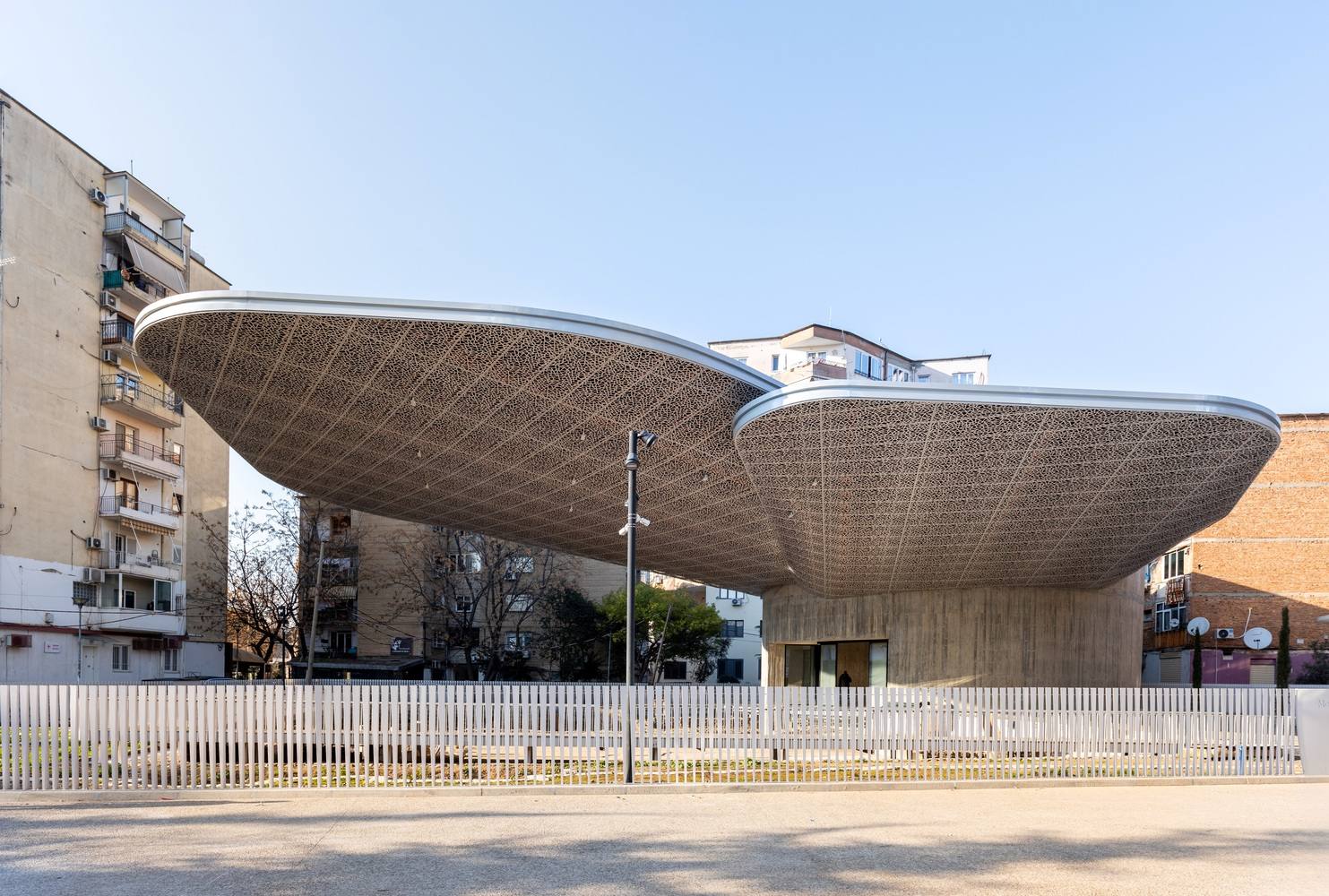
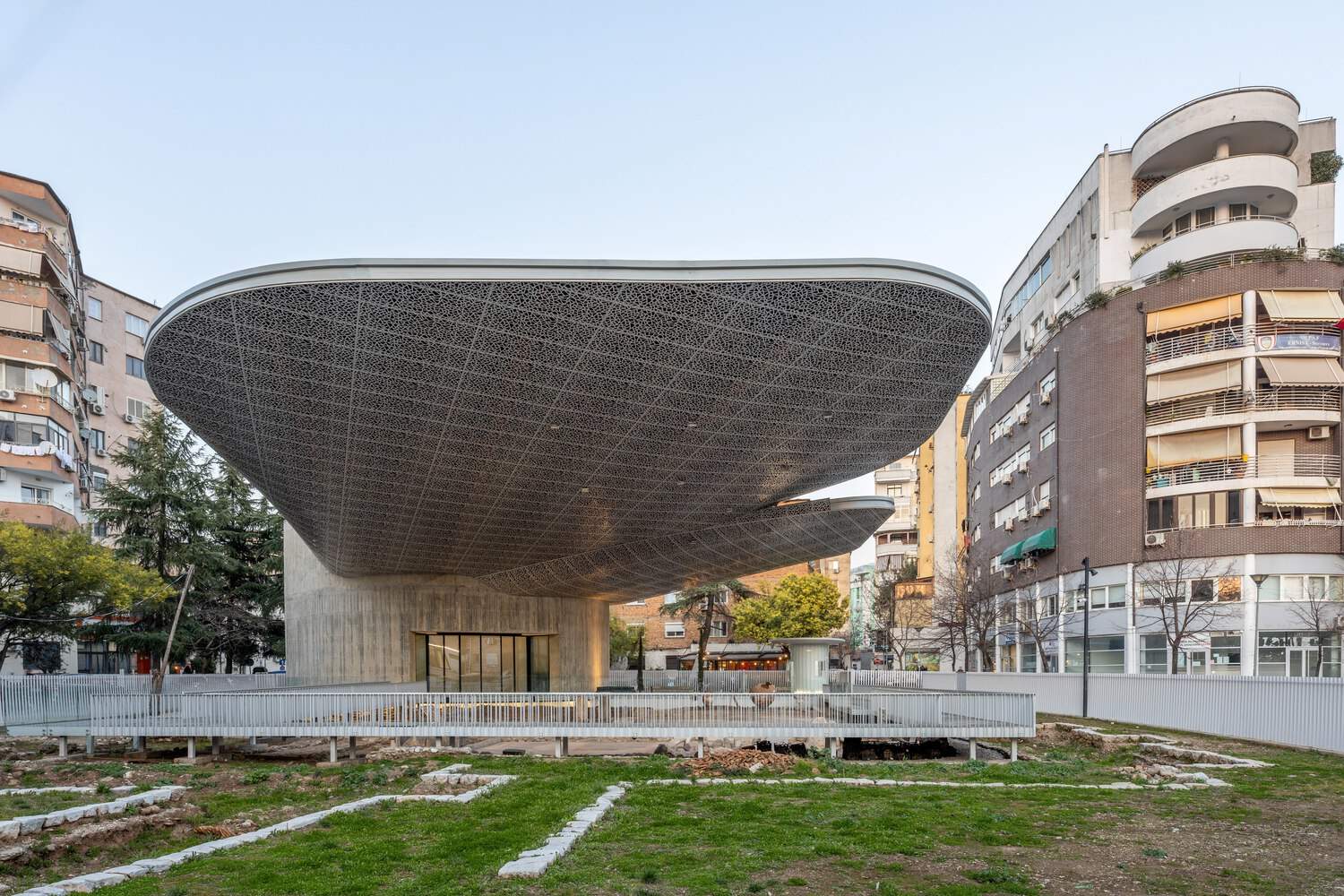
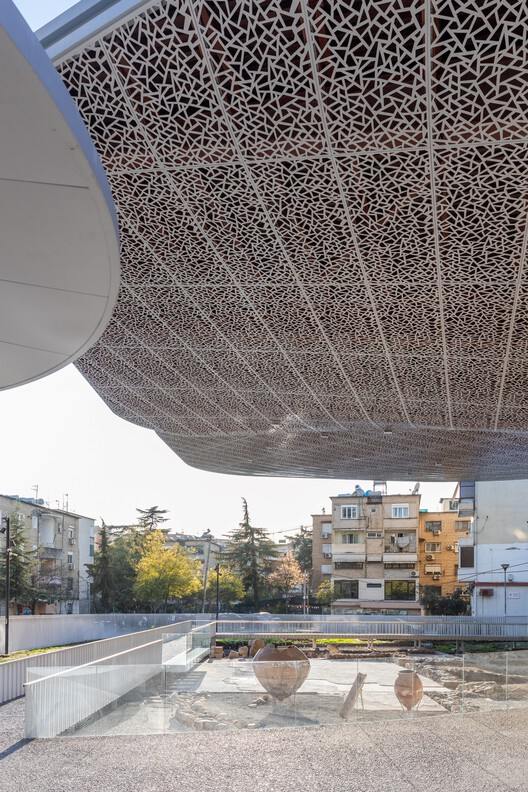
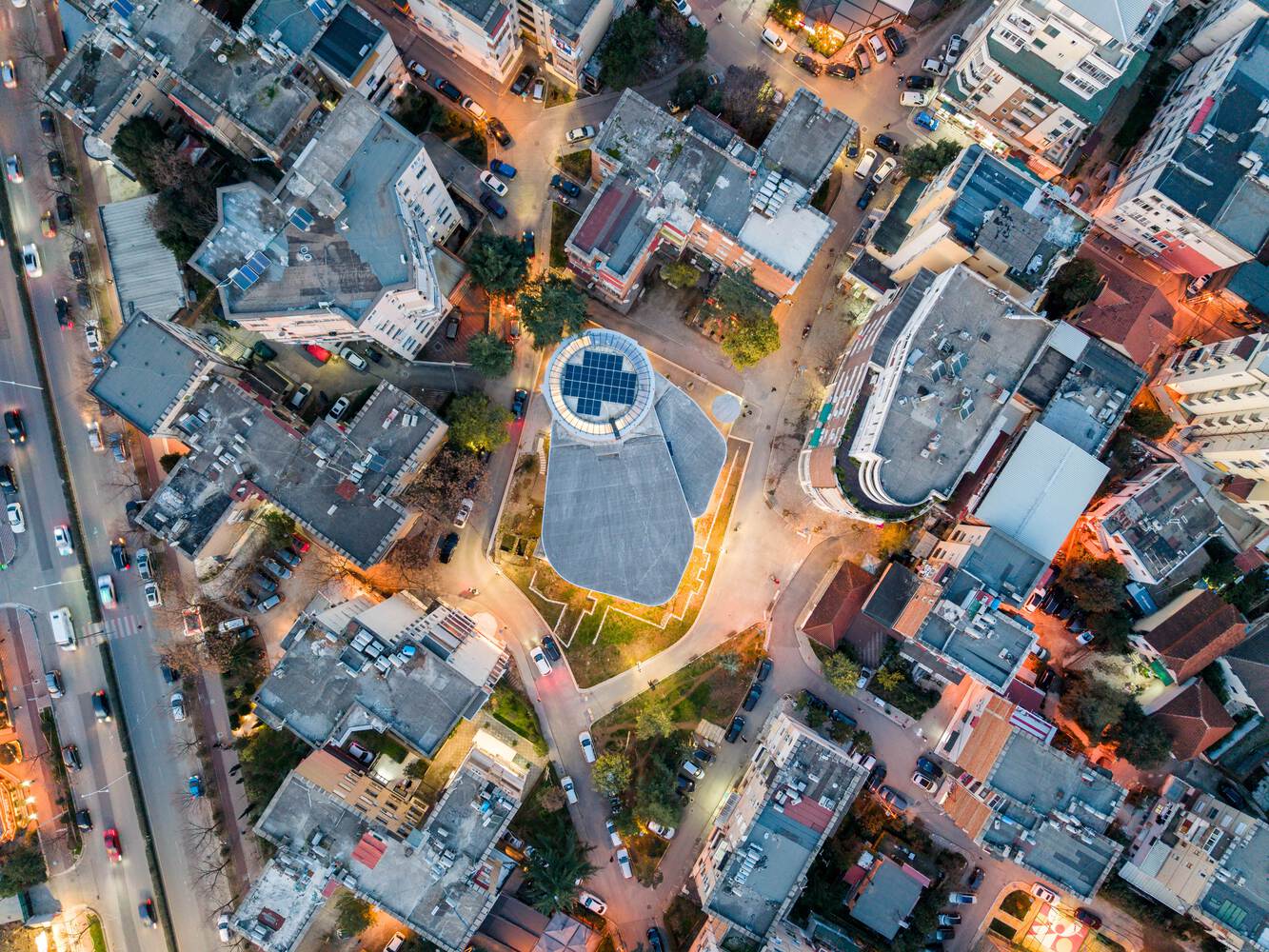
The intervention consists of three core components: the entrance ticket office, a protective canopy, and a new two-story building housing laboratories, exhibition spaces, and administrative offices. The architectural concept derives from the Tirana Mosaic itself, particularly the ancient "Flower of Life" symbol found on the site. This pattern is reinterpreted in the design, taking the form of the "petal-shaped" canopy structure that shelters the mosaic.
该干预项目由三大核心部分构成:入口售票亭、保护性遮棚,以及一座集实验室、展览空间与行政办公于一体的新型两层建筑。其建筑理念源自地拉那马赛克本身,尤其是遗址现场发现的古老“生命之花”符号。这一图案在设计中被重新诠释,化作遮护马赛克的“花瓣”状遮棚结构。
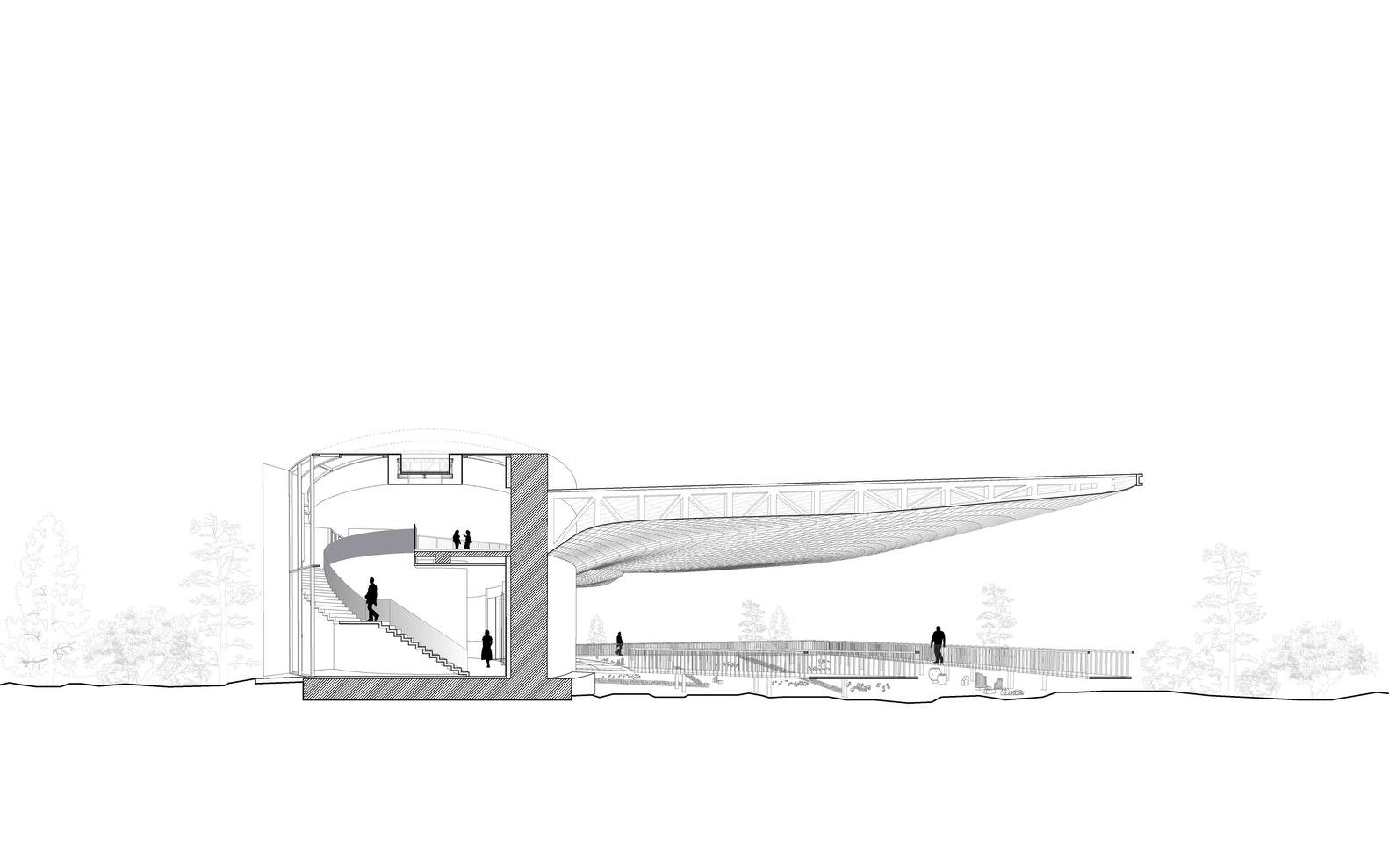
Section
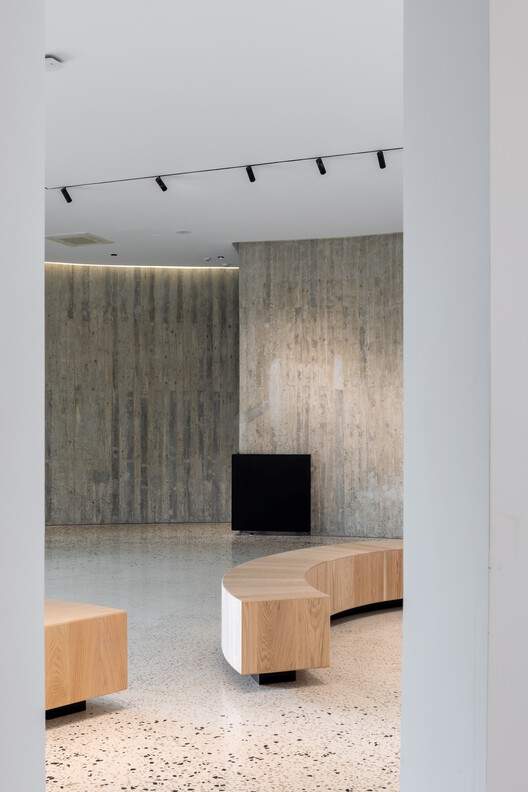
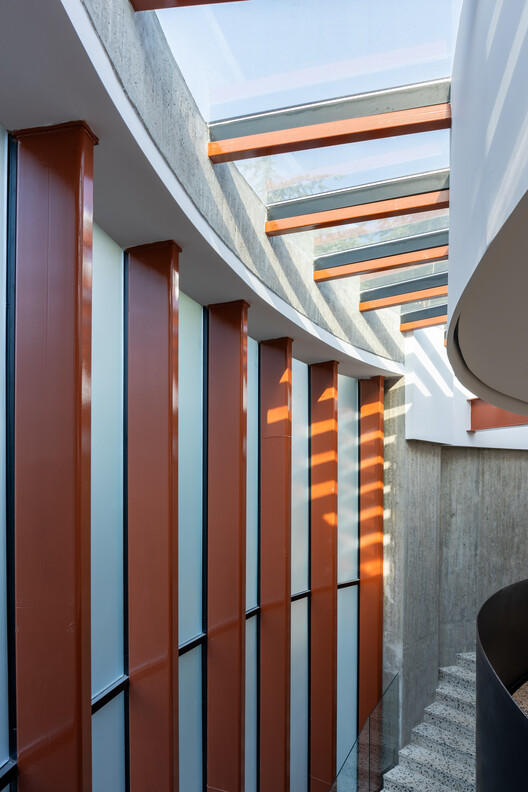
The ground floor layout focuses on core public functions, with the main exhibition space and supporting technical rooms located on the northeast side. A radial staircase leads to the second floor, which houses office areas and open laboratories.
首层布局以核心公共功能为主,东北侧设置主展览空间及配套技术用房。一座放射状楼梯通达二层,此处分布着办公区域与开放式实验室。
© Besart Cani
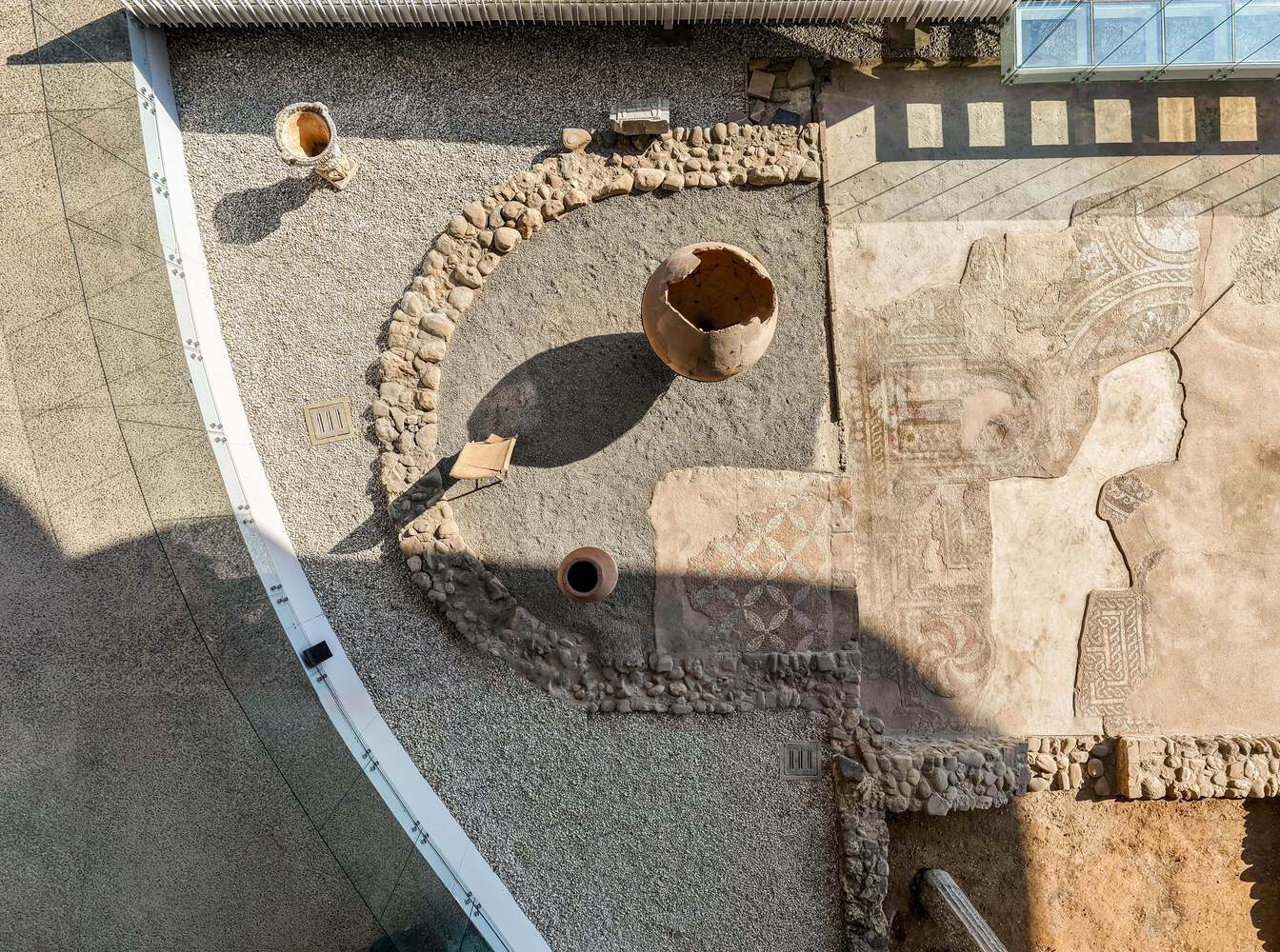
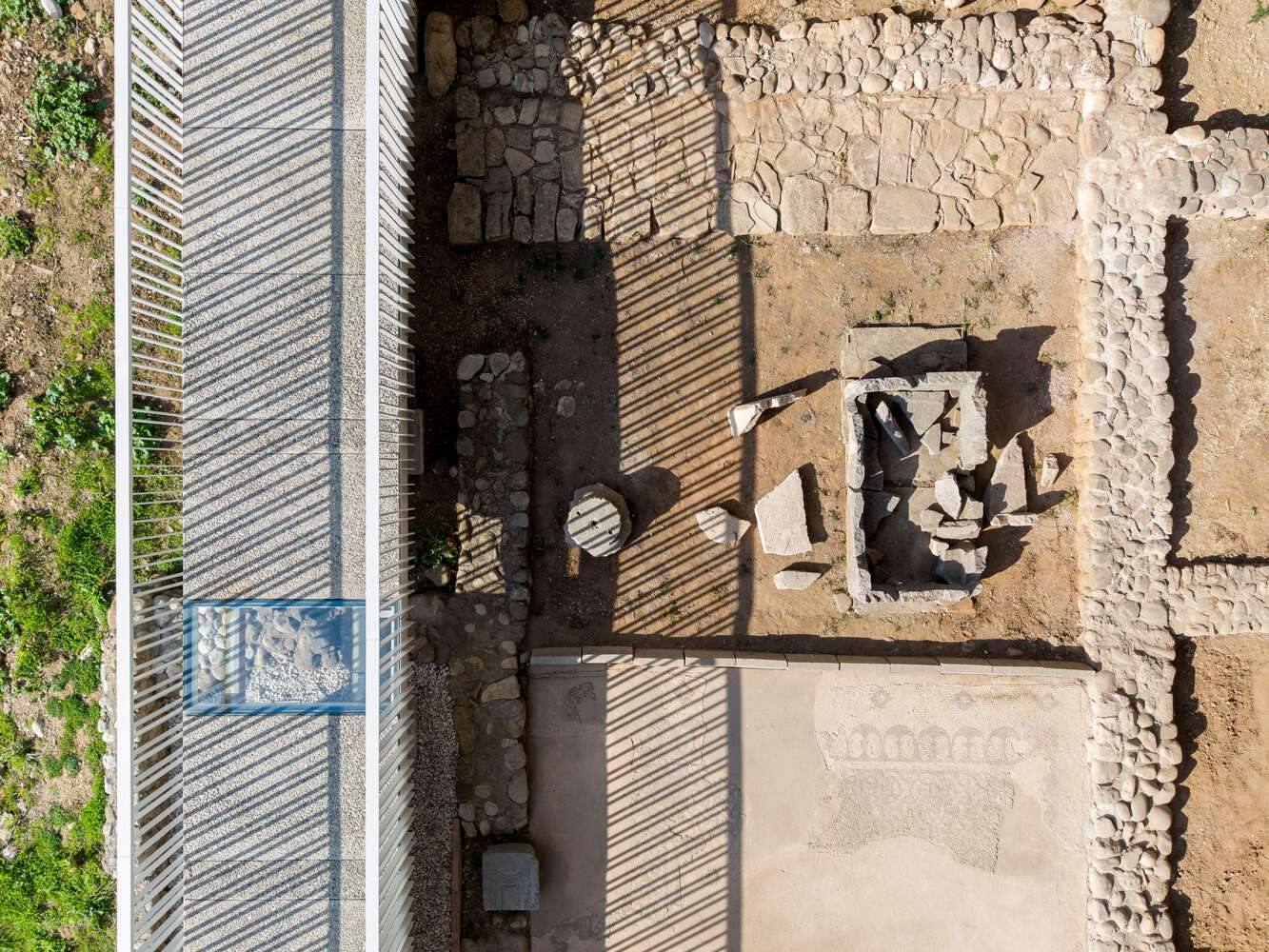
This monolithic structure not only accommodates the aforementioned functions but also serves as the counterweight system for the protective canopy, minimizing its visual presence. The canopy itself is constructed with a lightweight metal frame covered with a fabric mesh, which filters light and casts dynamic shadows that shift with the changing sunlight on the ruin's surface.
这一整体式结构不仅承载了上述功能,还作为保护性遮棚的配重装置,最大程度降低了其视觉存在感。遮棚本身采用轻质金属框架搭建,外覆织物网罩,既能过滤光线,又可在遗址表面投射出随光线变幻的灵动光影效果。
© Besart Cani
© Besart Cani
In addition to physical protection, the project incorporates digital interactive elements, such as virtual tours and technologically enhanced experiences, to deepen visitors' interaction with the historical layers of the site. This effort ensures that the Tirana Mosaic is properly preserved while also reshaping it into an accessible and immersive cultural landmark.
除实体保护外,该项目还融入数字互动元素,如虚拟导览与技术增强体验,以深化游客与遗址历史层积的互动。这一举措不仅确保了地拉那马赛克得到妥善保护,更将其重塑为一座可亲近、可沉浸的文化地标。
© Besart Cani