场地适应性与最小化干扰的智慧整合:该项目在学校整体规划的框架下,巧妙地解决了扩建中对现有教学活动的干扰问题。设计师将新建筑置于现有高地上,并采取了在停车场设立临时“马戏团”帐篷的策略,确保了施工期间体育教学的连续性,这体现了对校园运营的充分尊重和高度的工程协调能力。这种对场地条件的敏感性设计,是优秀校园建筑实践的基石。
多功能集成与空间效率最大化:卡斯塔涅拉斯体育馆成功在一个相对集中的区域内,集成了包括多功能运动场、辅助球场、食堂(每日为700人供餐)、艺术/音乐/戏剧教室以及剧场等复杂功能。2100平方米的遮蔽空间内实现了功能的复合布局,特别是上层设置了艺术与影院教室,实现了空间资源的高效利用和功能流线的合理组织,满足了学校对多种教学和活动需求的一站式供给。
环境响应式的围护结构与舒适性营造:建筑在围护设计上展现了对自然采光、通风和热工性能的精细考量。通过优化屋顶形状引入自然光,并设置向南天窗,实现了室内环境的明亮。立面采用离地2.3米的开放设计和具有穿孔的隔热砖(内填岩棉),创造了良好的自然通风和声学舒适度。这种材料和几何的结合,确保了体育馆在不依赖过多机械设备的情况下,维持了优越的热舒适性和声学性能,体现了可持续设计的精髓。
In 2018, Andrade Morettin Architects developed the master plan for Escola Castanheiras, guiding the school's growth over the next five years. In the first phase of expansion, the school sought to incorporate a multi-purpose sports arena, a canteen designed to serve 700 people daily, and rooms for art, music, and drama classes within a defined space.
2018年,Andrade Morettin事务所打造了卡斯塔涅拉斯学校(Escola Castanheiras)的总体规划,并引导了这所学校在未来五年的成长。而在扩建的第一阶段,学校则希望可以在一定空间内放入一个多功能体育球场、一个旨在每日为 700 人供应餐食的食堂、以及为艺术、音乐及戏剧课程设置的房间。
© André Scarpa
© André Scarpa
During the expansion, the school stipulated that the new building should be established on existing high ground, minimizing disruption to the school's operations.
在扩建中,学校规定新建筑应该建立在现有的高地上,并尽量减少工程对学校运作的干扰。
© André Scarpa
© André Scarpa
First Floor Plan
Longitudinal Section
© André Scarpa
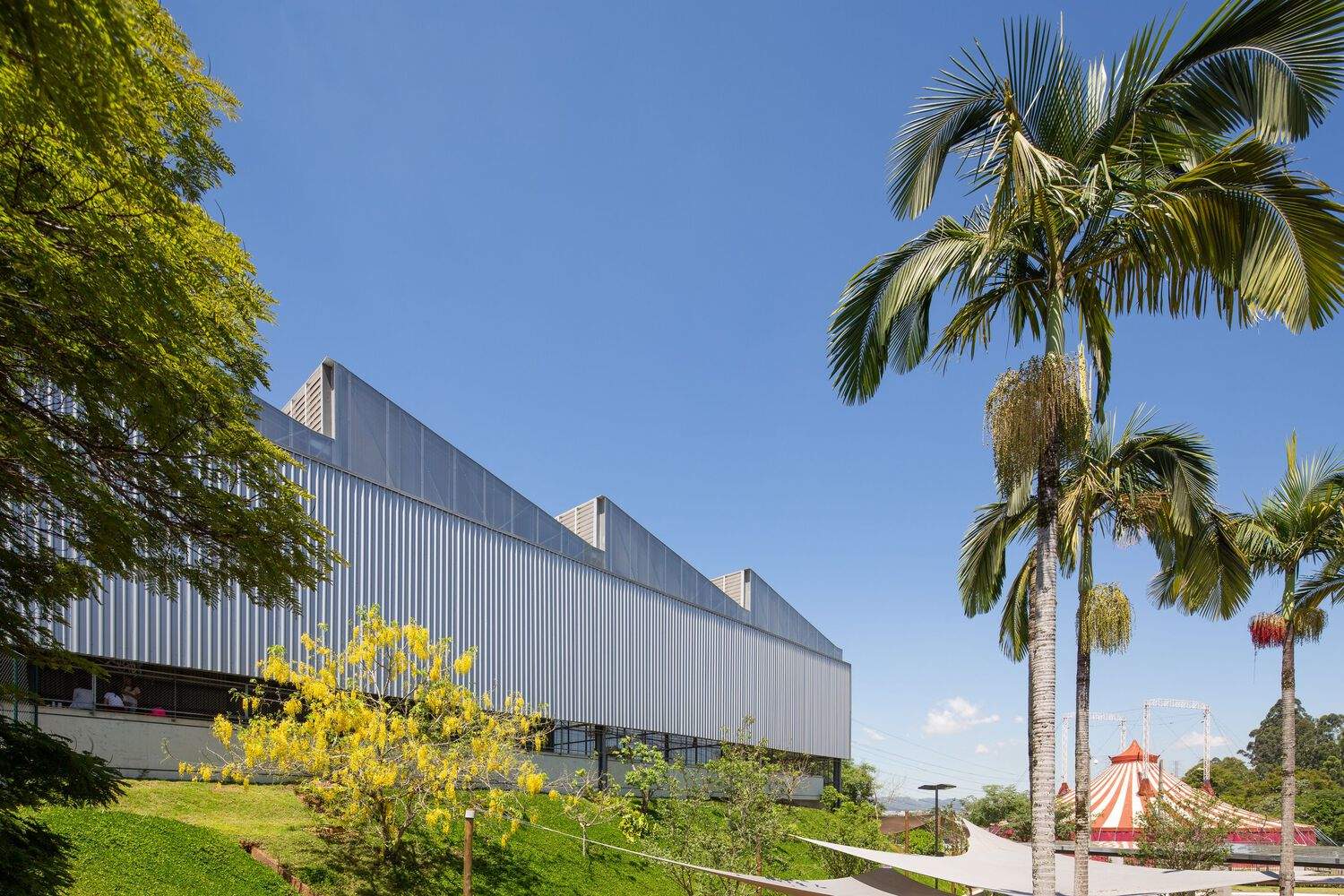
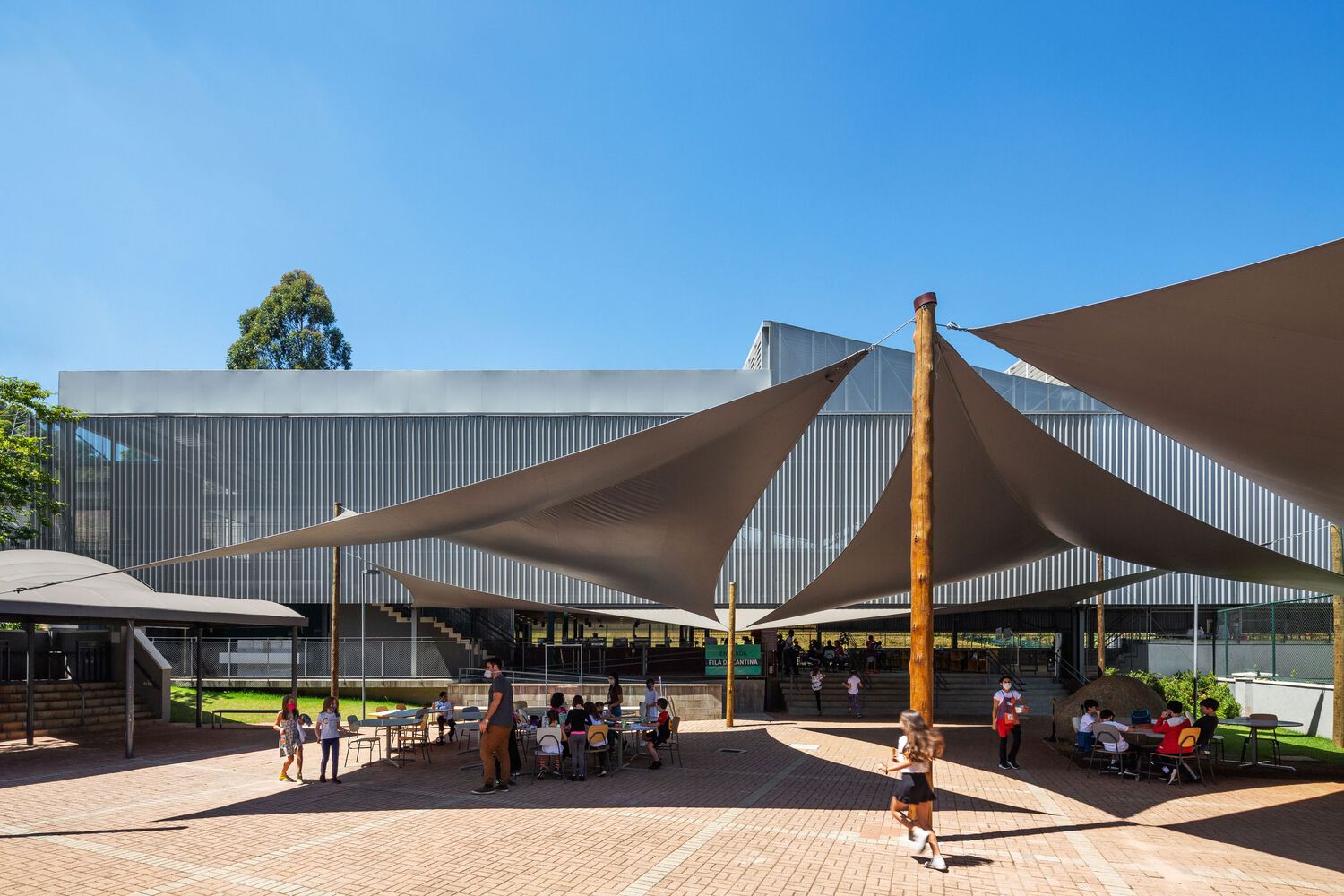
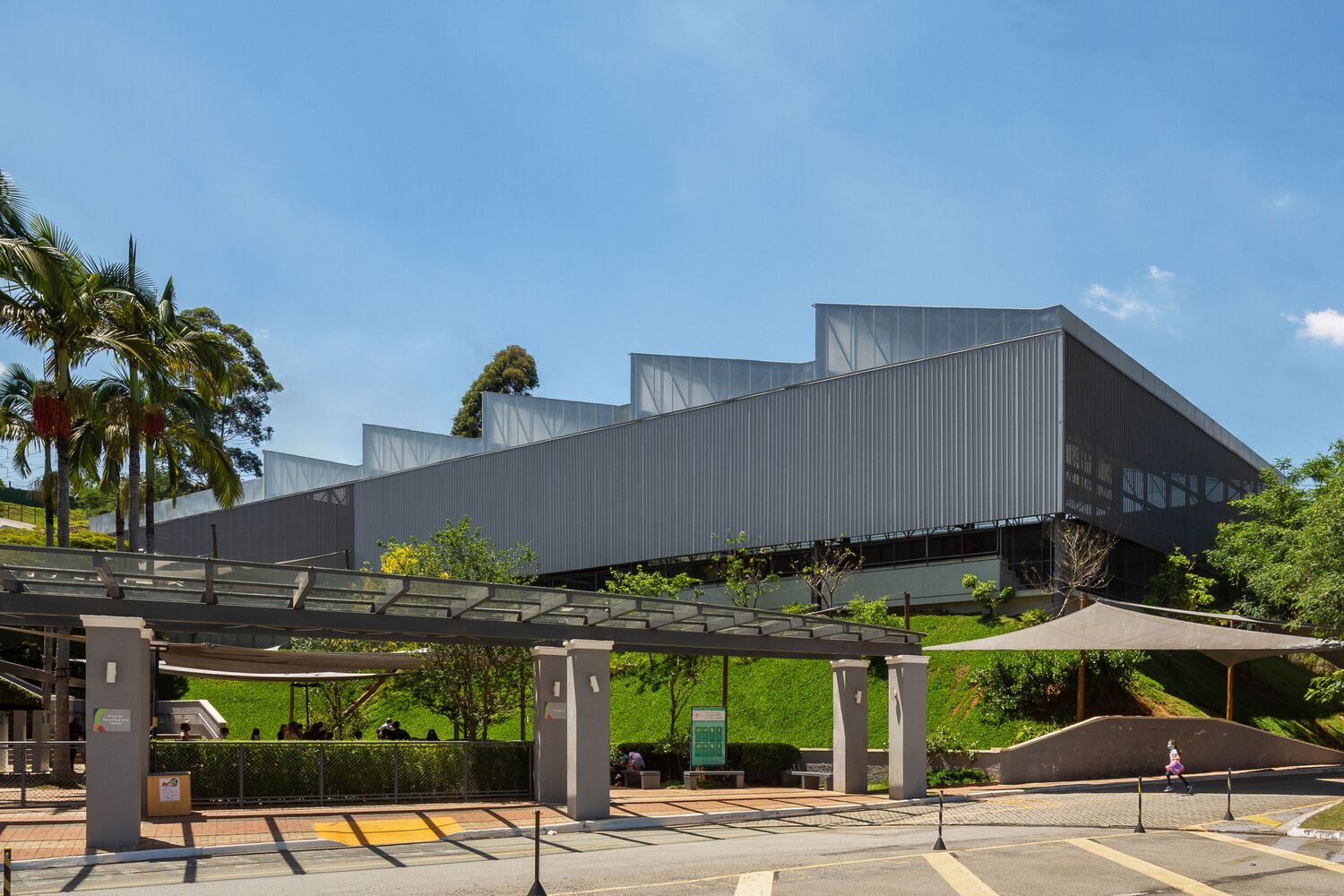
The new building, named Castanheiras Arena, is located in the area previously used for soccer fields, small volleyball courts, and a circular gymnasium. Since students could not afford to lose their sports venue during construction, the school installed a large "circus" canvas tent in the parking lot area as a temporary gymnasium.
新建筑名为卡斯塔涅拉斯体育馆,其位于先前用作足球场、小排球场及圆形体育馆的区域。由于学生无法接受在施工期间失去体育课场地,因此学校在停车场区域安装了大型“马戏团”帆布帐篷作为临时体育馆。
© André Scarpa
© André Scarpa
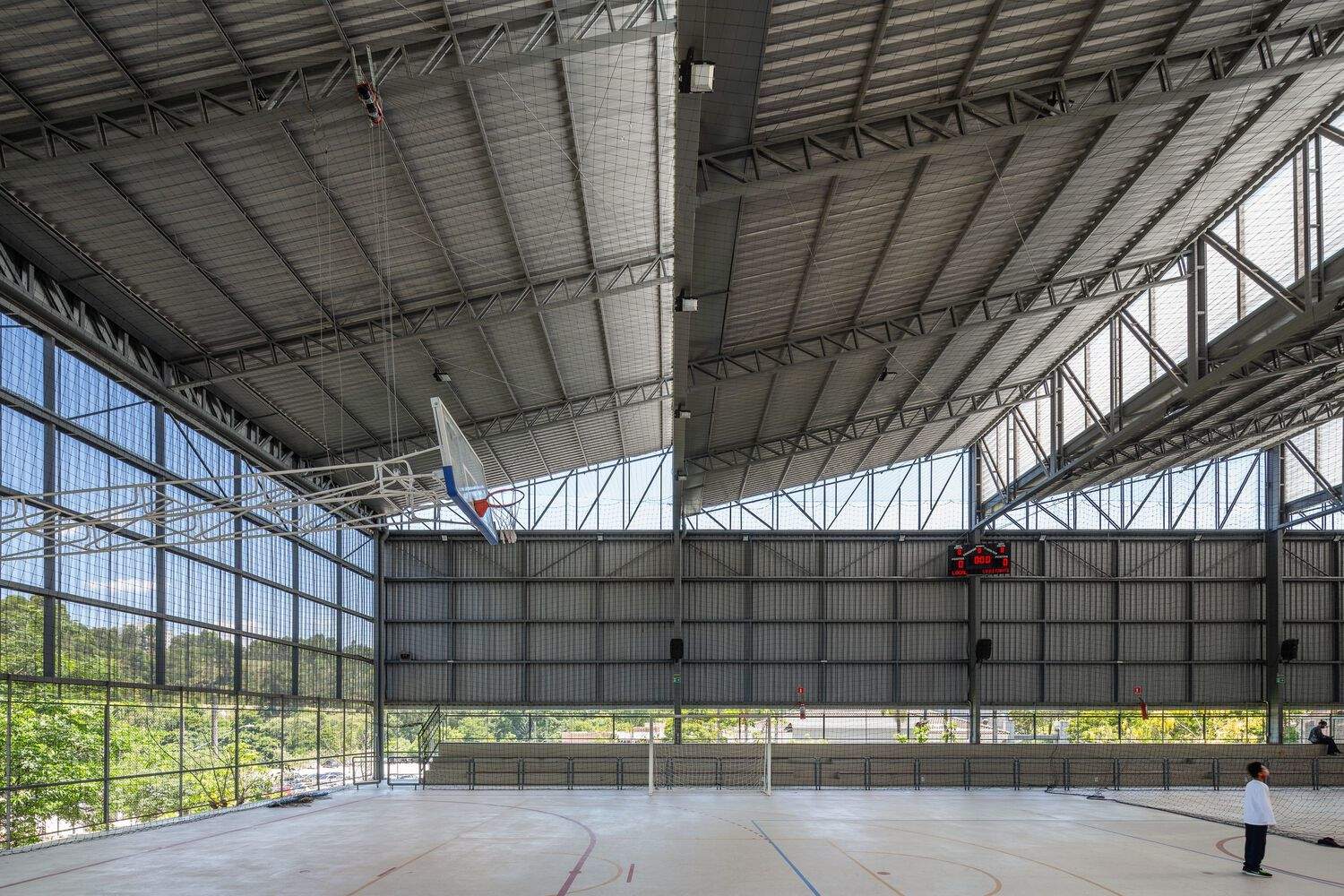
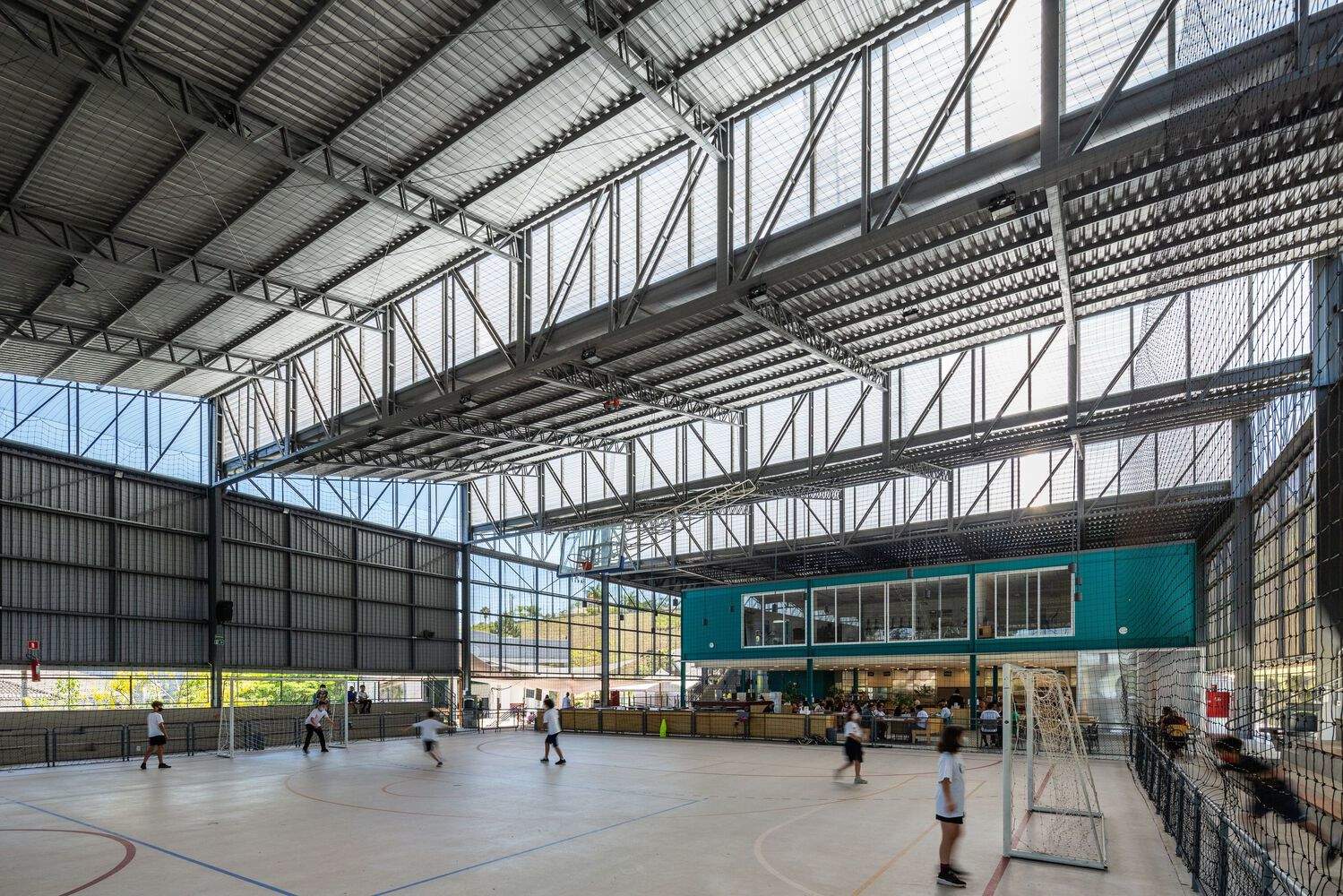
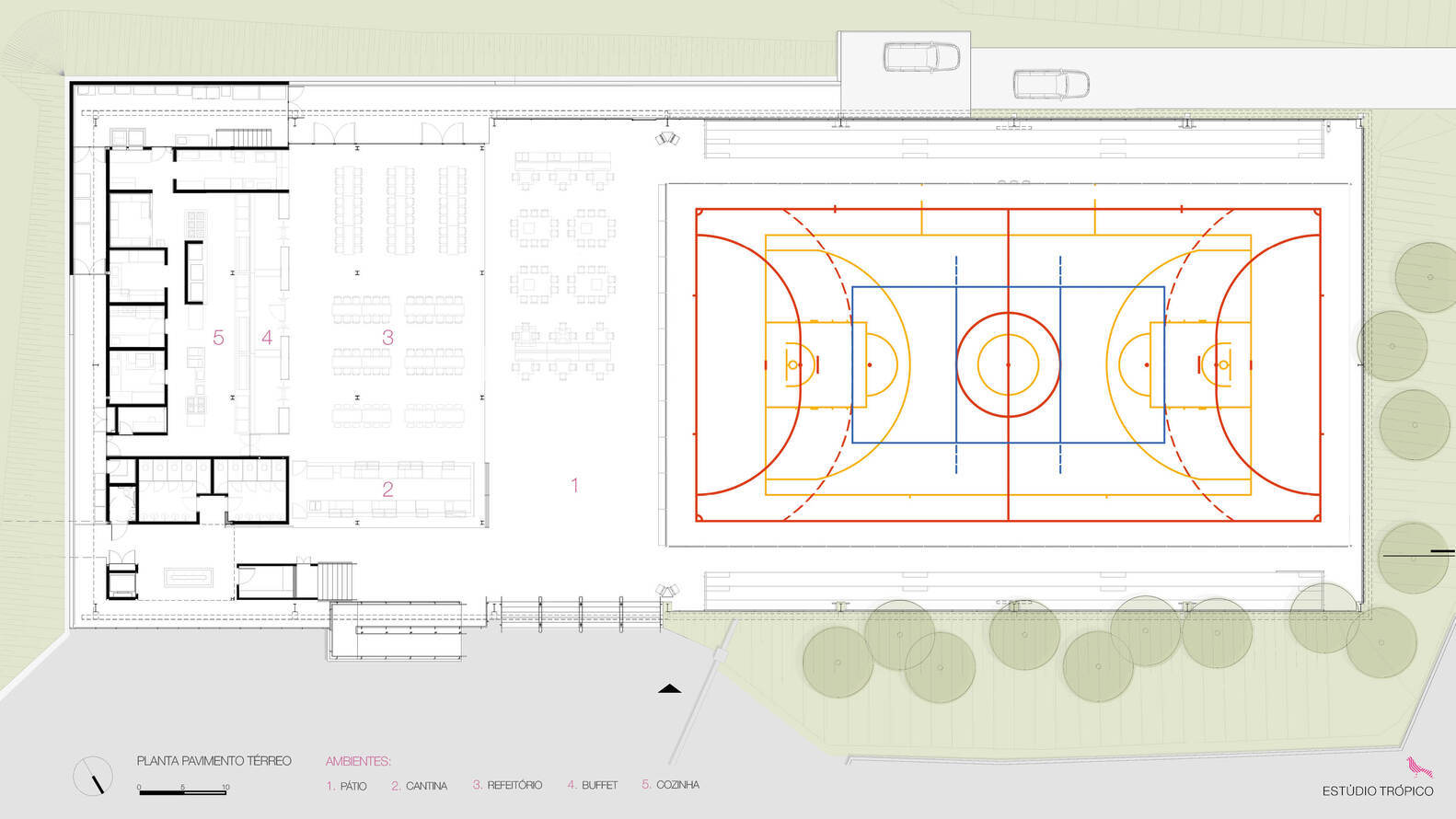
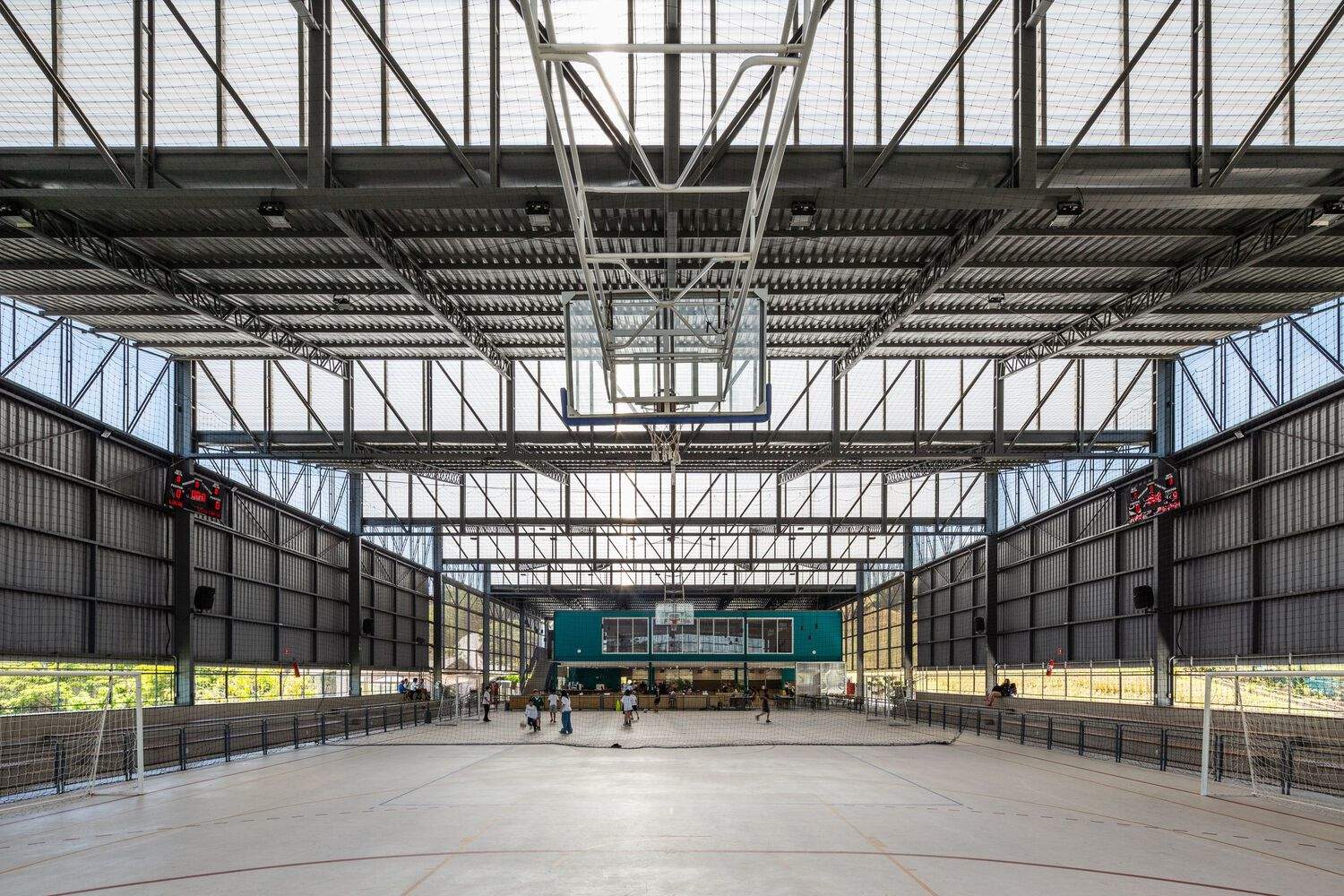
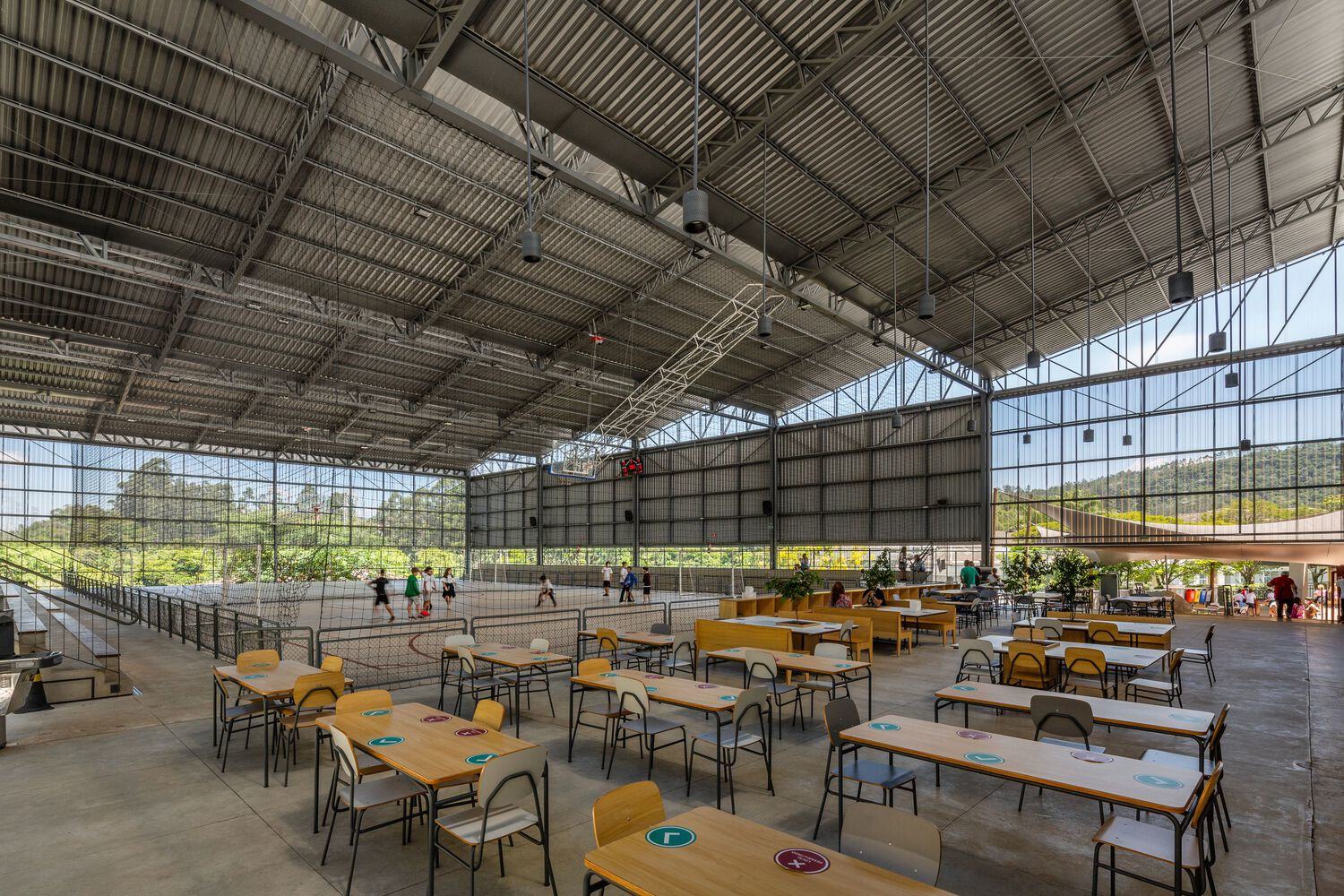
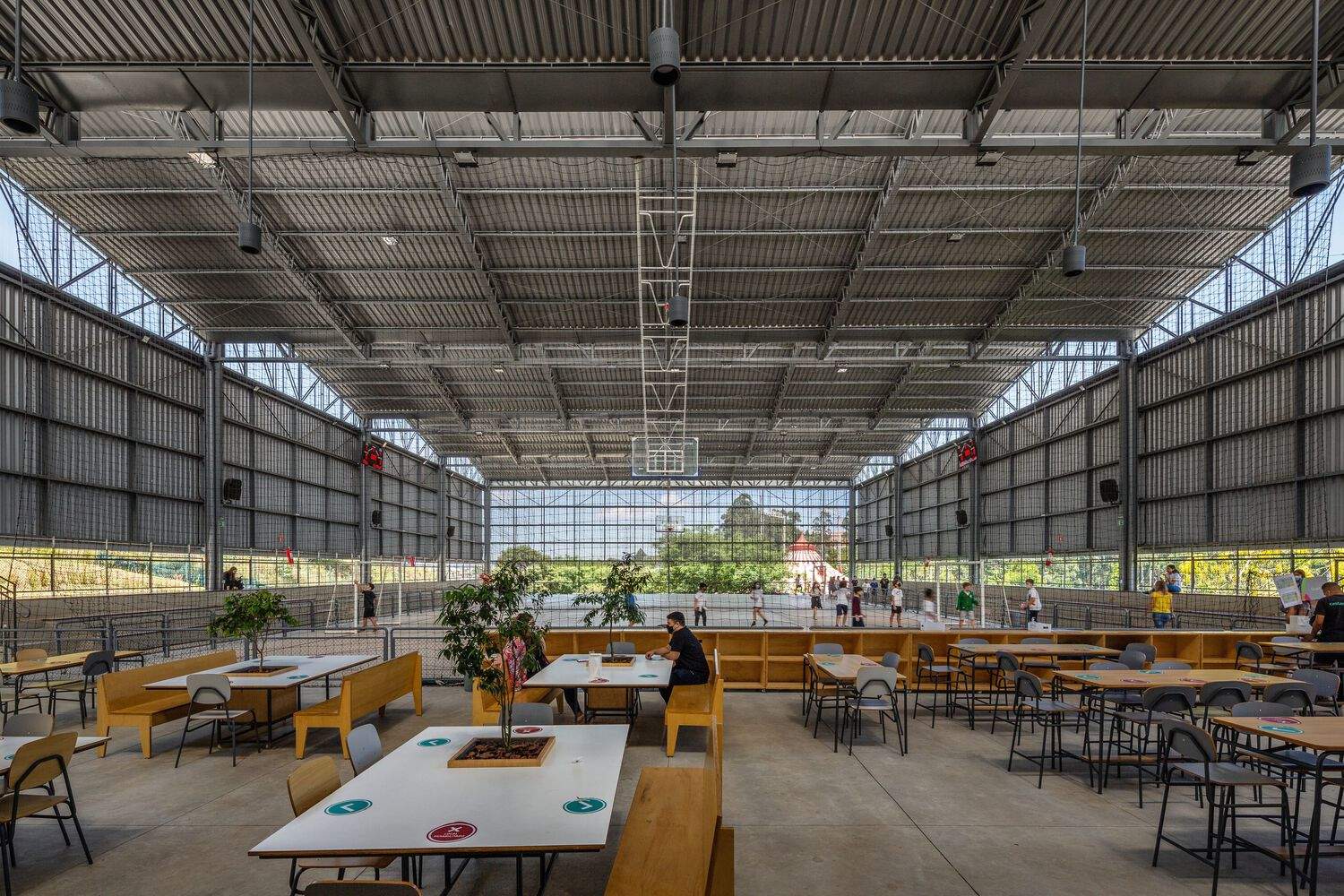
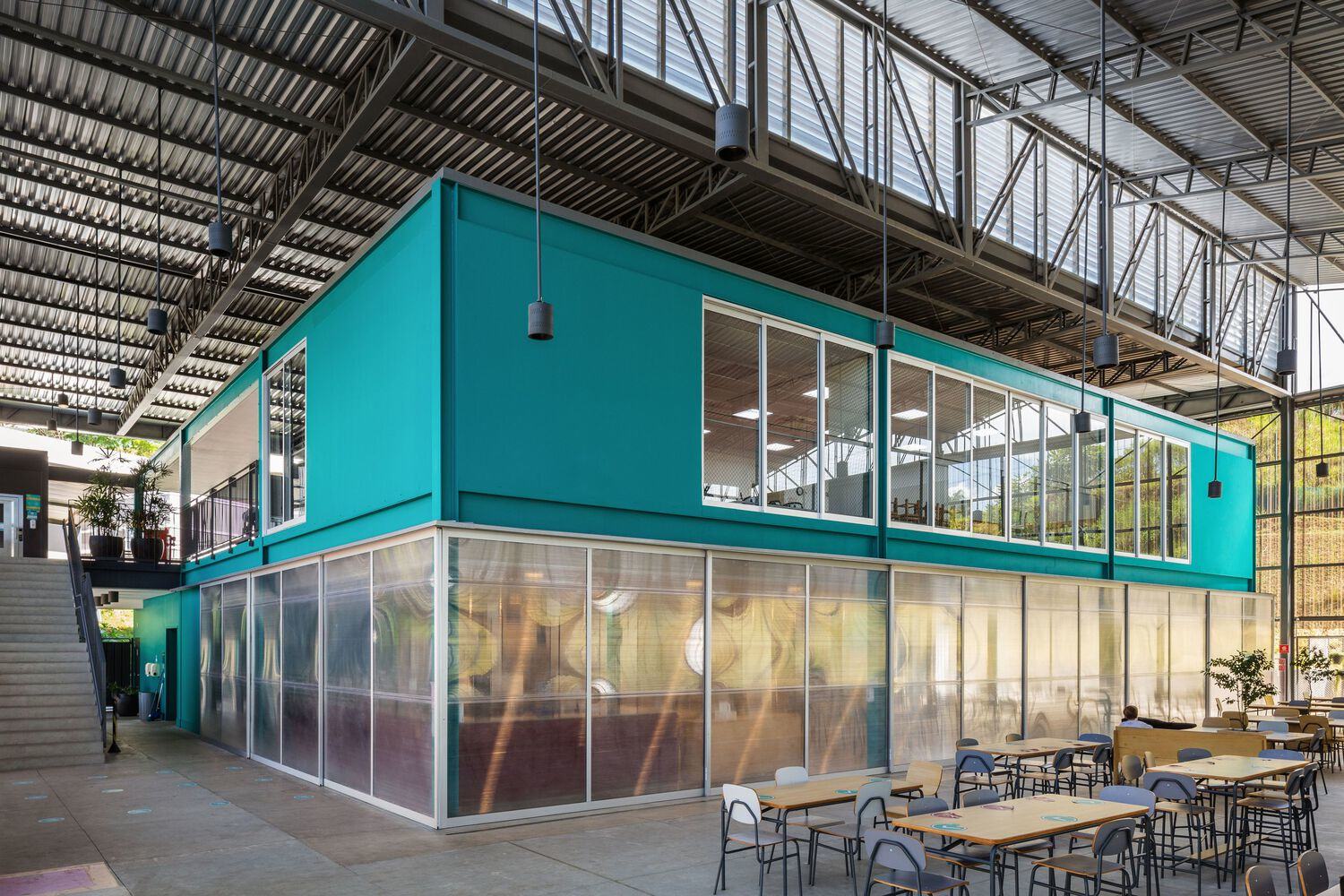
The Castanheiras Arena encompasses 2100 square meters of covered space, including a multi-purpose sports court, an inner court, and a double-layered internal space.
卡斯塔涅拉斯体育馆中共有 2100 平方米的遮蔽空间,其中囊括了一个多用途运动场、一个靠内球场、以及一个双层铺地的内部空间。
© André Scarpa
© André Scarpa
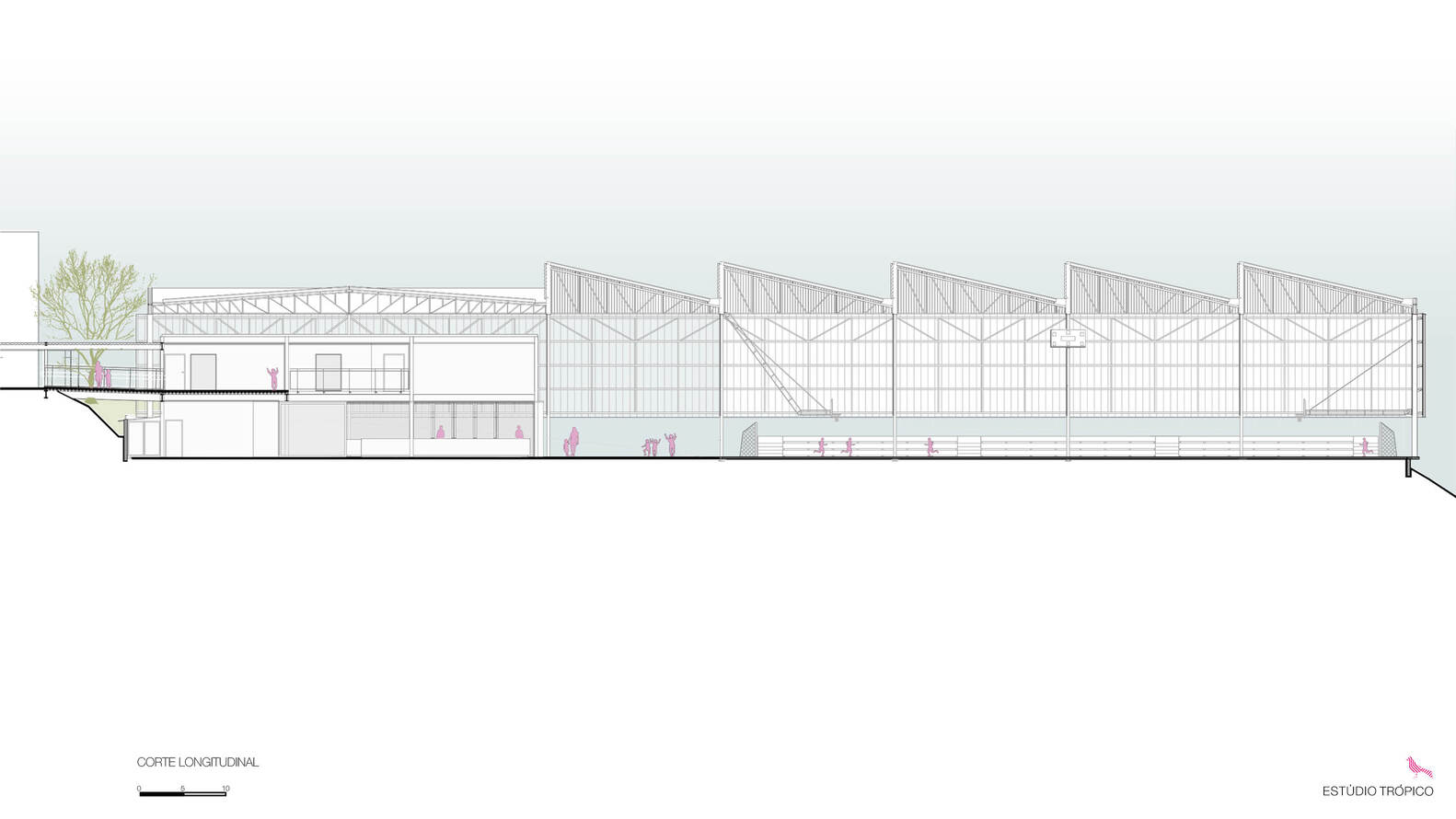
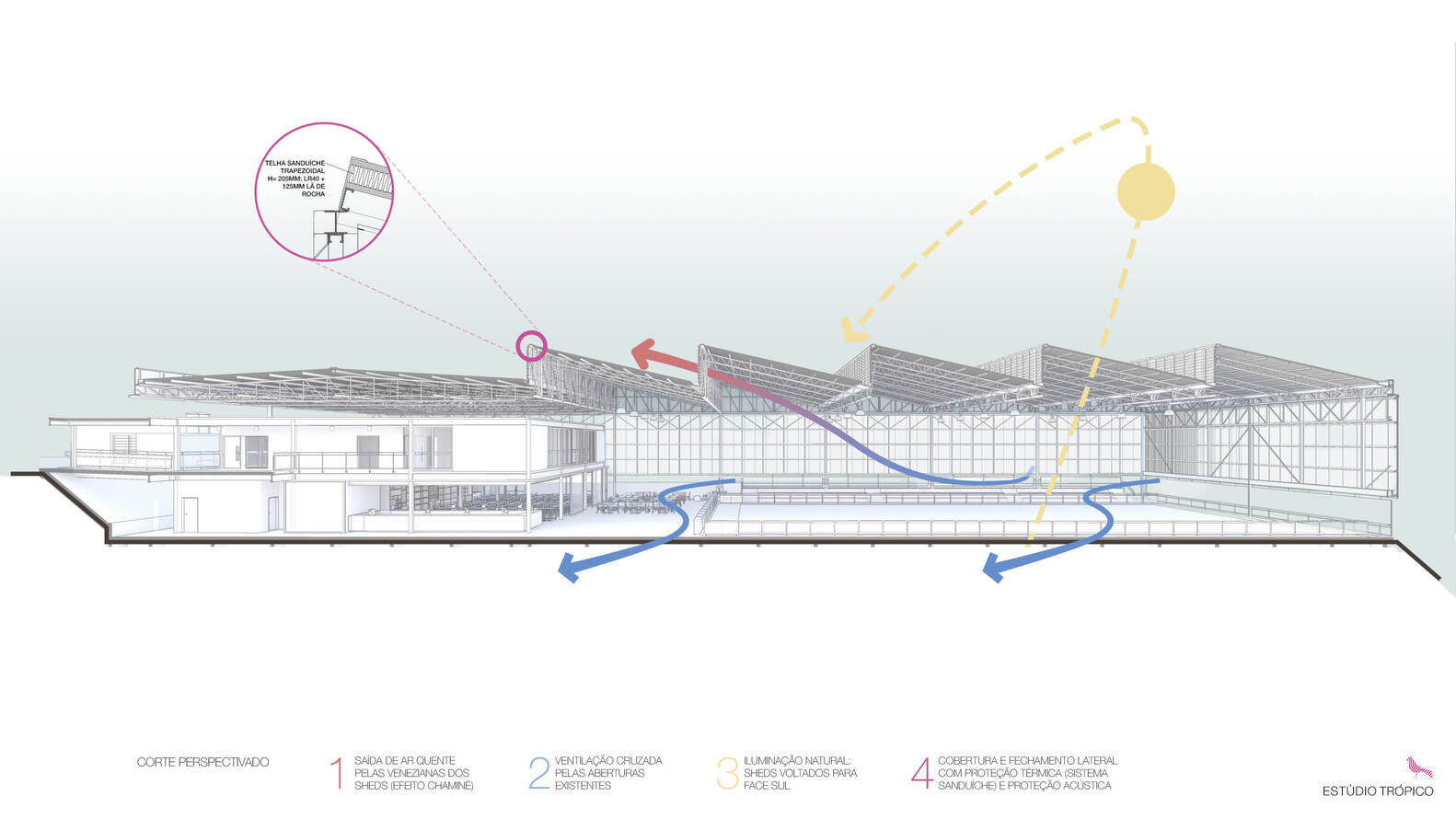
The roof of the arena was originally planned to be made of glulam, but steel was chosen for the final construction. The roof's shape was also optimized to allow for maximum natural light and air inflow, creating a south-facing skylight. The building's geometry and the insulating panels covering it and the sides provide good thermal and acoustic comfort to the space.
体育馆的屋顶最初预计由胶合层压木打造,但是最后落成时选择了钢材。体育馆的屋顶形状也被优化以允许最大量的自然光及空气流入,并打造了向南的天窗。建筑的几何形体以及覆盖在其上和侧面的隔热板则为空间打造了良好的热舒适度和声学舒适度。
Perspective Section
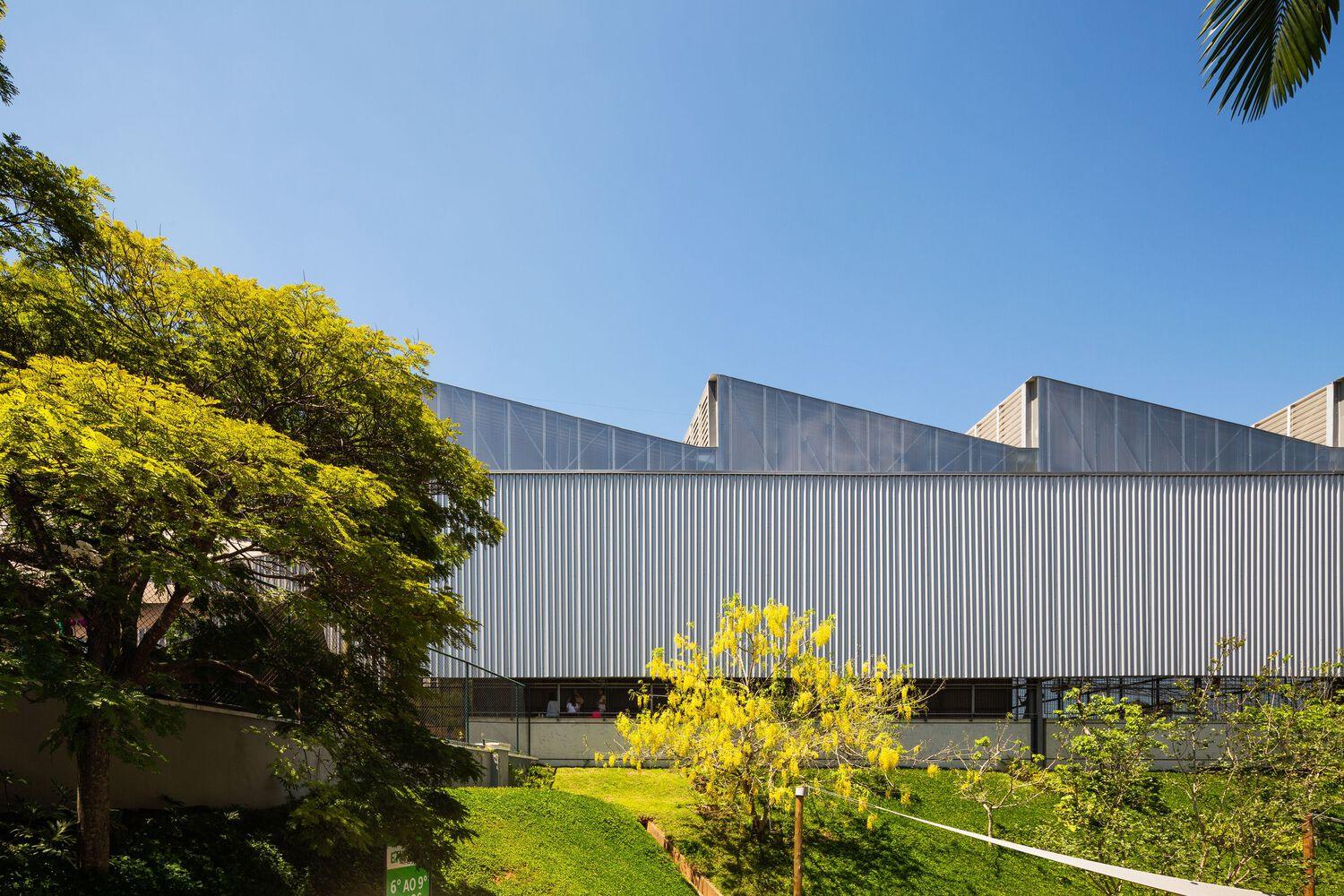
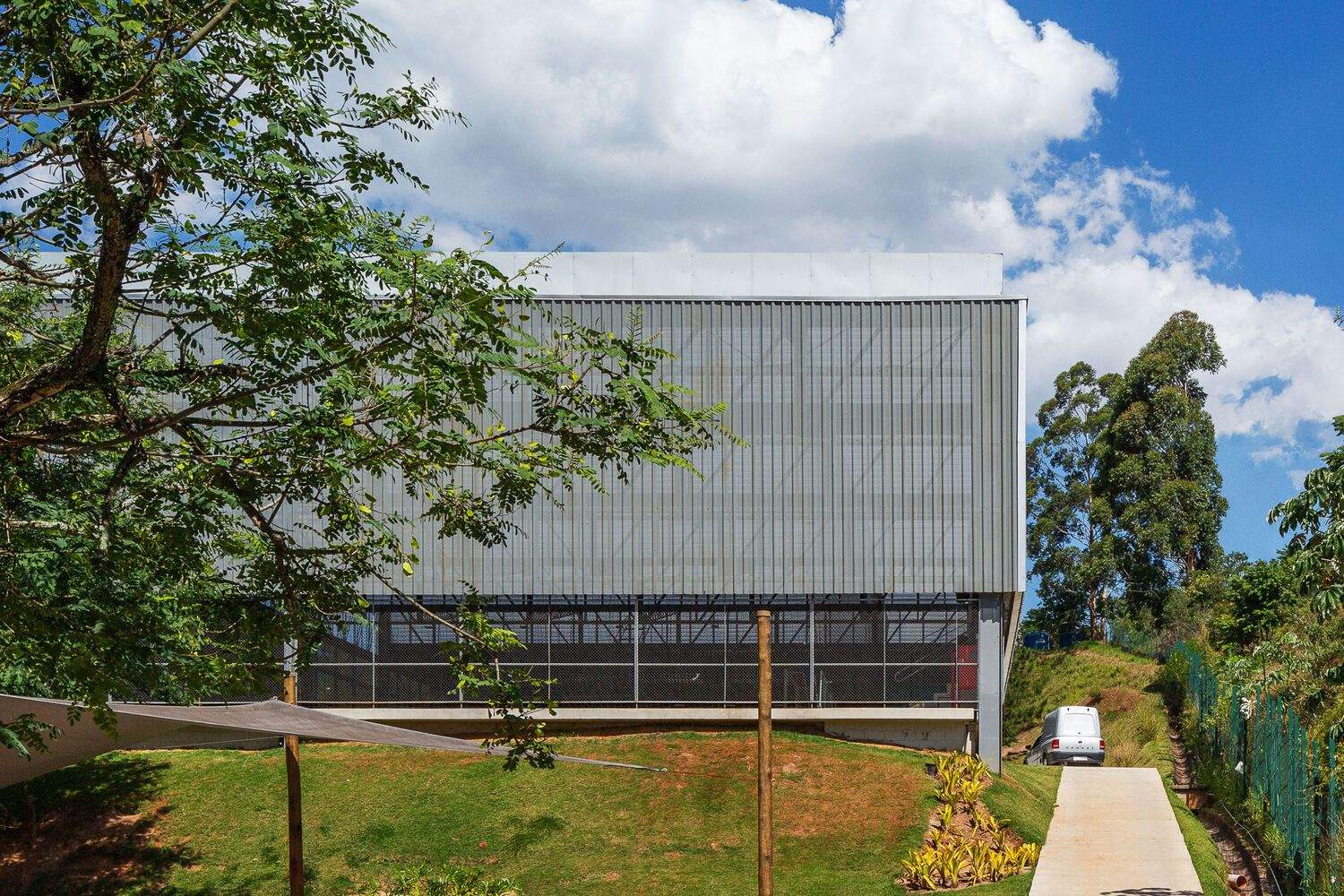
The building sides are not fully enclosed; their curtain walls are set 2.3 meters off the ground, ensuring adequate natural ventilation and visual permeability. These openings on the façade are made of aluminum trapezoidal bricks, achieving up to 31% openness in localized areas, thus allowing visual connection between the interior and exterior. Façades in other areas use 10 cm laminated bricks, perforated on the inside and filled with rock wool, providing thermal insulation and acoustic protection for the entire building.
建筑两侧并不封闭,其幕墙离地 2.3 米,以此确保了适量的自然通风及视线通透性。这种立面上的开合部分由铝制梯形砖打造,并且在局部区域达到了 31%的开放度,因此让建筑室内外视线得以联通。其他区域的立面则使用 10 厘米的层压砖打造,这些材料内侧带有穿孔并填充了岩棉,从而为整体建筑提供了隔热及隔音保护。
© André Scarpa
The same material is used for the openings in the roof and the sides of the building. As these areas are most strongly exposed to direct sunlight, the façade thickness reaches 20 centimeters.
屋顶与建筑侧面的开口使用了同样的材料。由于这些区域会受到太阳光线强烈照射的最强影响,因此其立面厚度达到了20厘米。
© André Scarpa
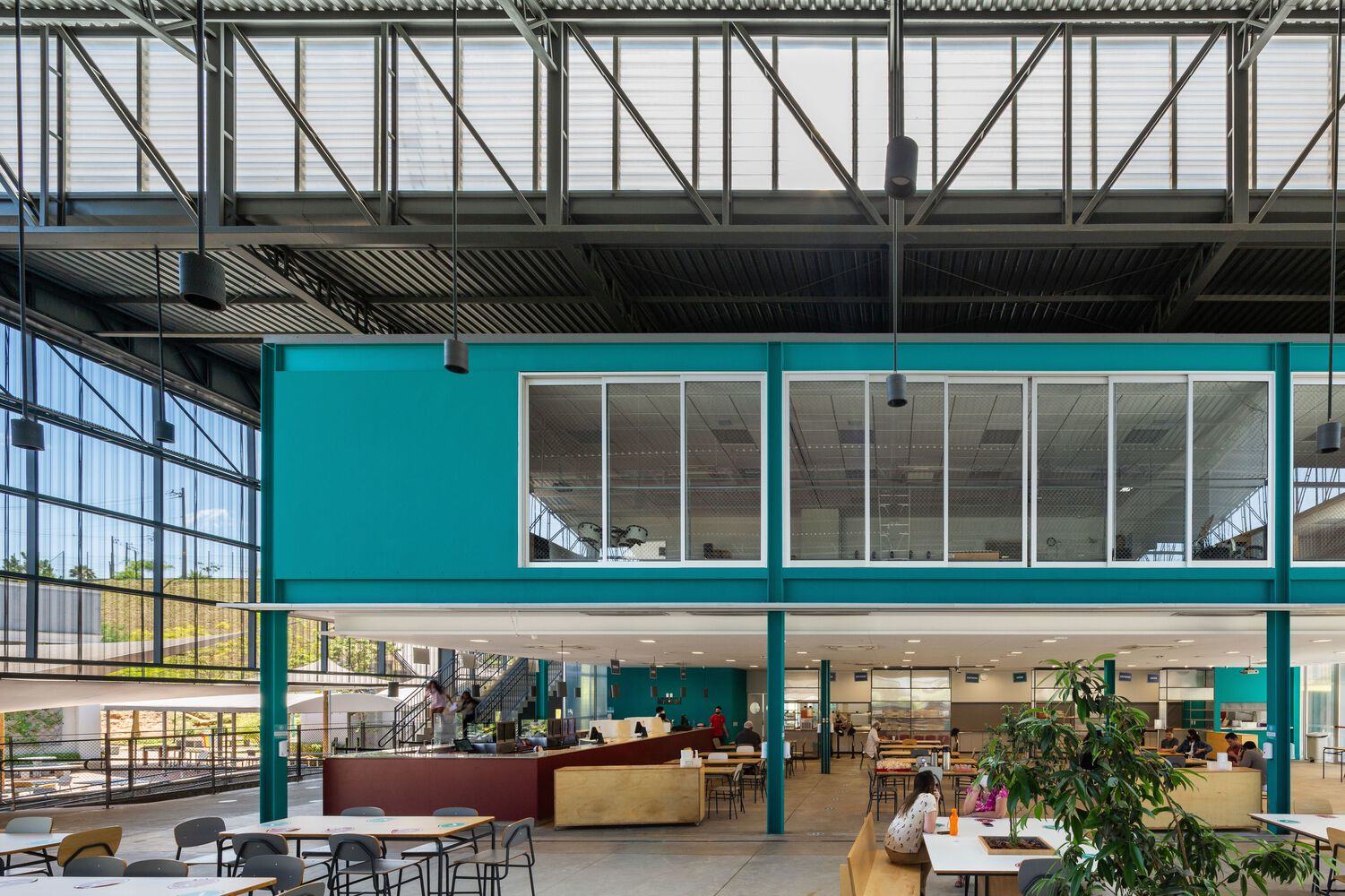
The canopy roof in front of the building is made of honeycomb polycarbonate panels, which, combined with polycarbonate blinds, form a good ventilation system. Furthermore, the internal space of the Castanheiras Arena is mainly composed of a metal structure and a steel deck slab, allowing it to better adapt to the microclimate of the surrounding environment. The arena's floor plans also include restrooms, a restaurant, and a kitchen, with the top floor housing art and cinema classrooms, as well as a theater.
建筑前的亭子棚顶则由蜂窝状聚碳酸酯面板打造,这些面板与聚碳酸酯百叶窗结合形成了良好的通风系统。此外,卡斯塔涅拉斯体育馆内部空间主要由金属结构及钢制甲板型楼板构成,由此让其更好地适应周围环境的微气候。同时,体育场的各层平面还包括了卫生间、餐厅及厨房,最上层还囊括了艺术与影院教室,以及一个剧场。
© André Scarpa