地质构造的象征与生态过渡:该接待亭的设计核心在于其作为城市污染区域与清晰生态景观之间的“过渡通道”的独特角色。建筑形态被概念化为一个动态的“地质构造圆环”,暗示着自然力量的涌入和访客的沉浸式体验,成功地将沉重的现实感与富有想象力的形态相结合。这种将建筑本身视为自然过程一部分的理念,是其概念上的精髓所在。
空间策略与环境敏感性整合:为解决大型停车场可能造成的环境隔阂,设计巧妙地将方形体量旋转 45°,最大化了与周边山水环境的视觉和空间连通性。通过悬浮的混凝土屋顶和透明玻璃幕墙,建筑实现了室内外界限的模糊化,形成了流动的开放系统,确保了自然通风和低能耗。这种将功能需求(如员工效率)与生态敏感性(如景观融合)深度整合的空间策略是项目的一大亮点。
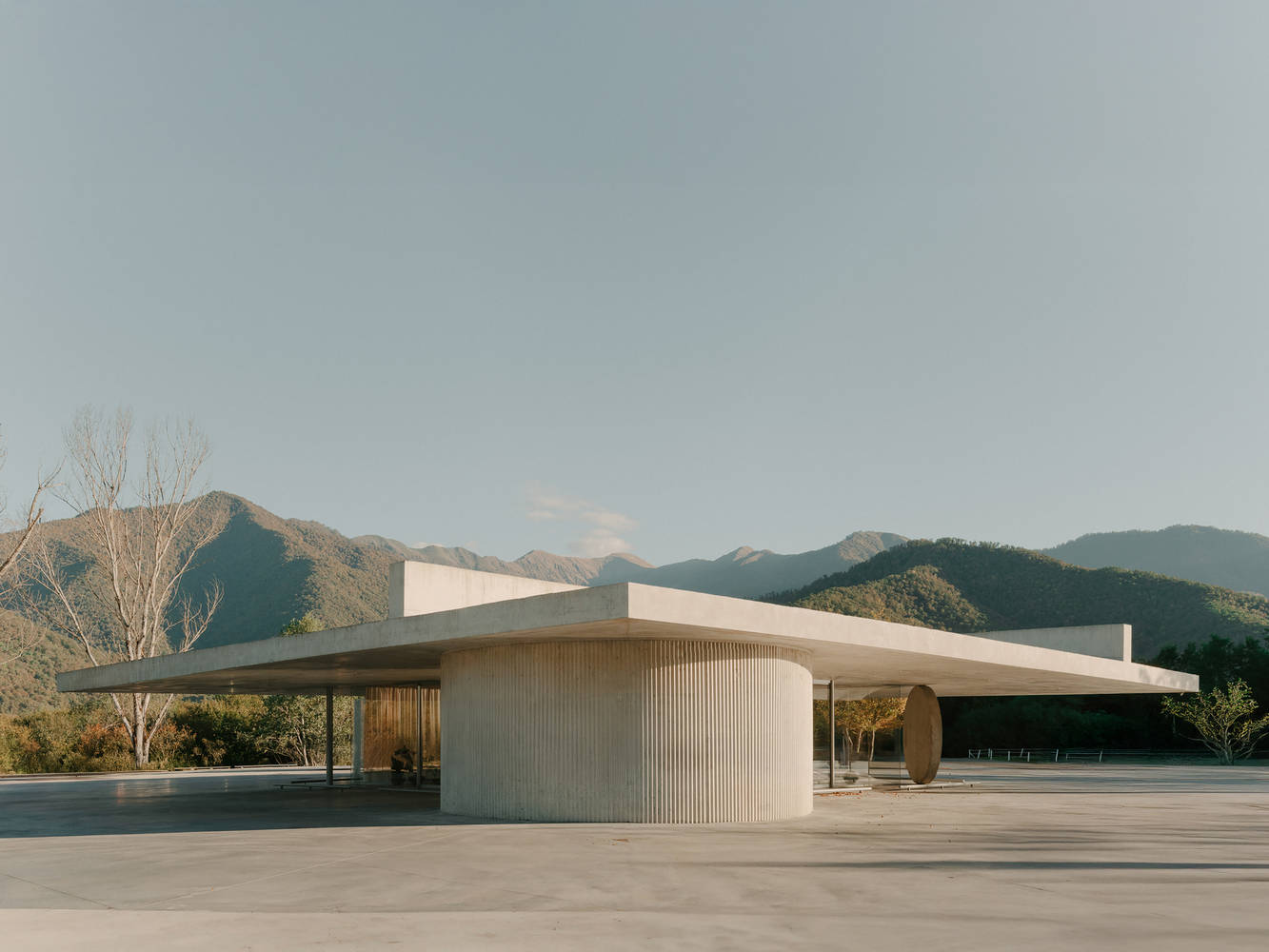
结构表现主义与材料的持久性:建筑的结构逻辑清晰而富有张力。一个漂浮的方形钢筋混凝土屋顶由两个核心服务体量(圆形和方形混凝土实墙)和两根细柱支撑,创造出轻盈感。长达 6 米的悬挑和内部梁的动态布局展示了结构的美学表现力。混凝土与玻璃的组合不仅提供了持久性和低维护性,也为建筑的开放式设计提供了稳固而极简的框架,体现了结构与美学的高度统一。
The reception pavilion is conceived as a transition corridor from the polluted urban area to the ecologically clear landscape. Dynamic, imaginative, yet rooted in reality: a moving geological structure ring through which nature pours in from all sides, and into which the visitor merges.
接待亭被构想为一个从污染严重的城市领域通往生态明晰景观的过渡通道。它既扎根于现实,又充满想象,富有动感:是一个正在运动的地质构造圆环,自然从四面八方涌入,访客也融入其中。
© Grigory Sokolinsky
© Grigory Sokolinsky
© Grigory Sokolinsky
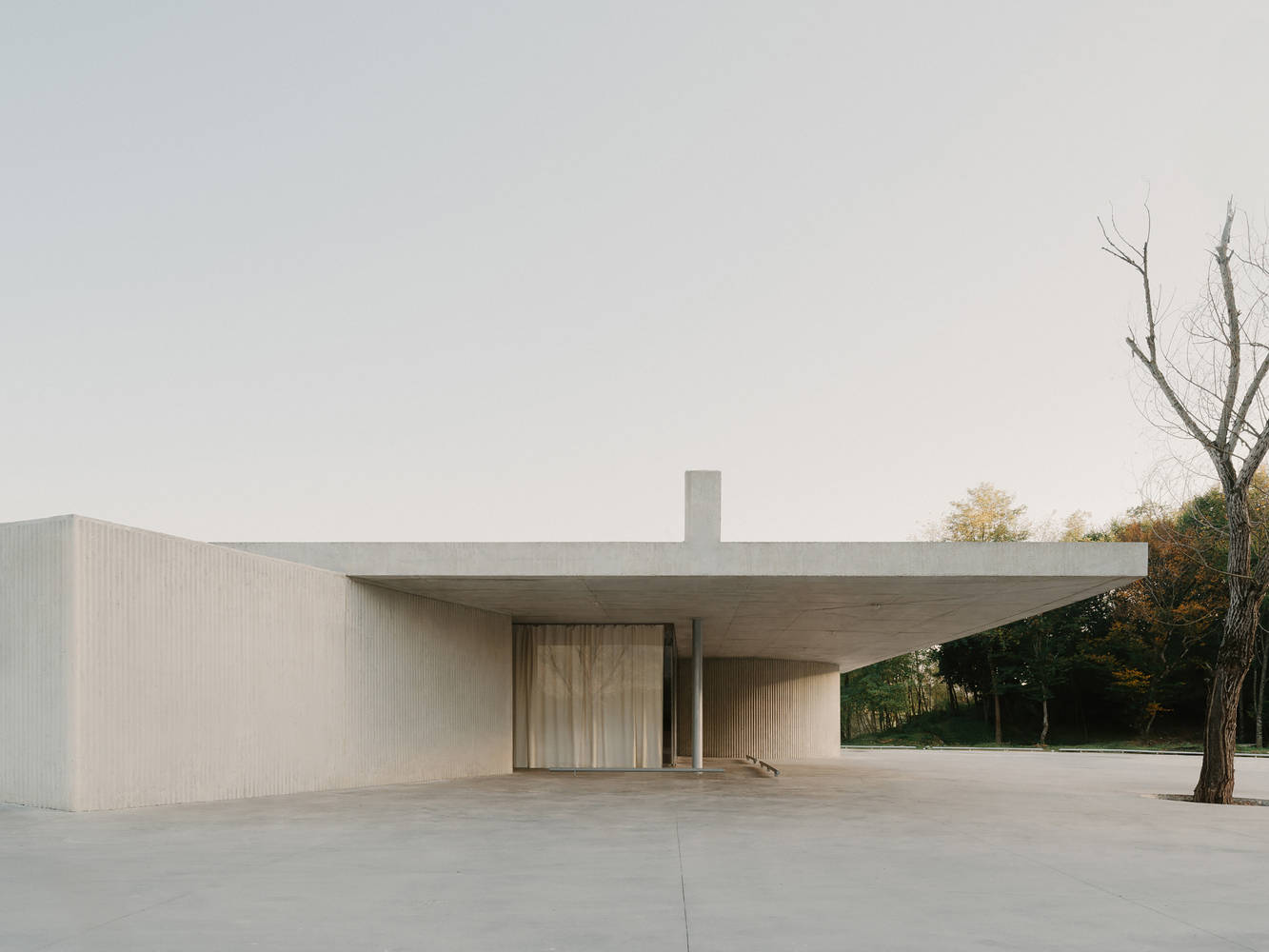
© Grigory Sokolinsky
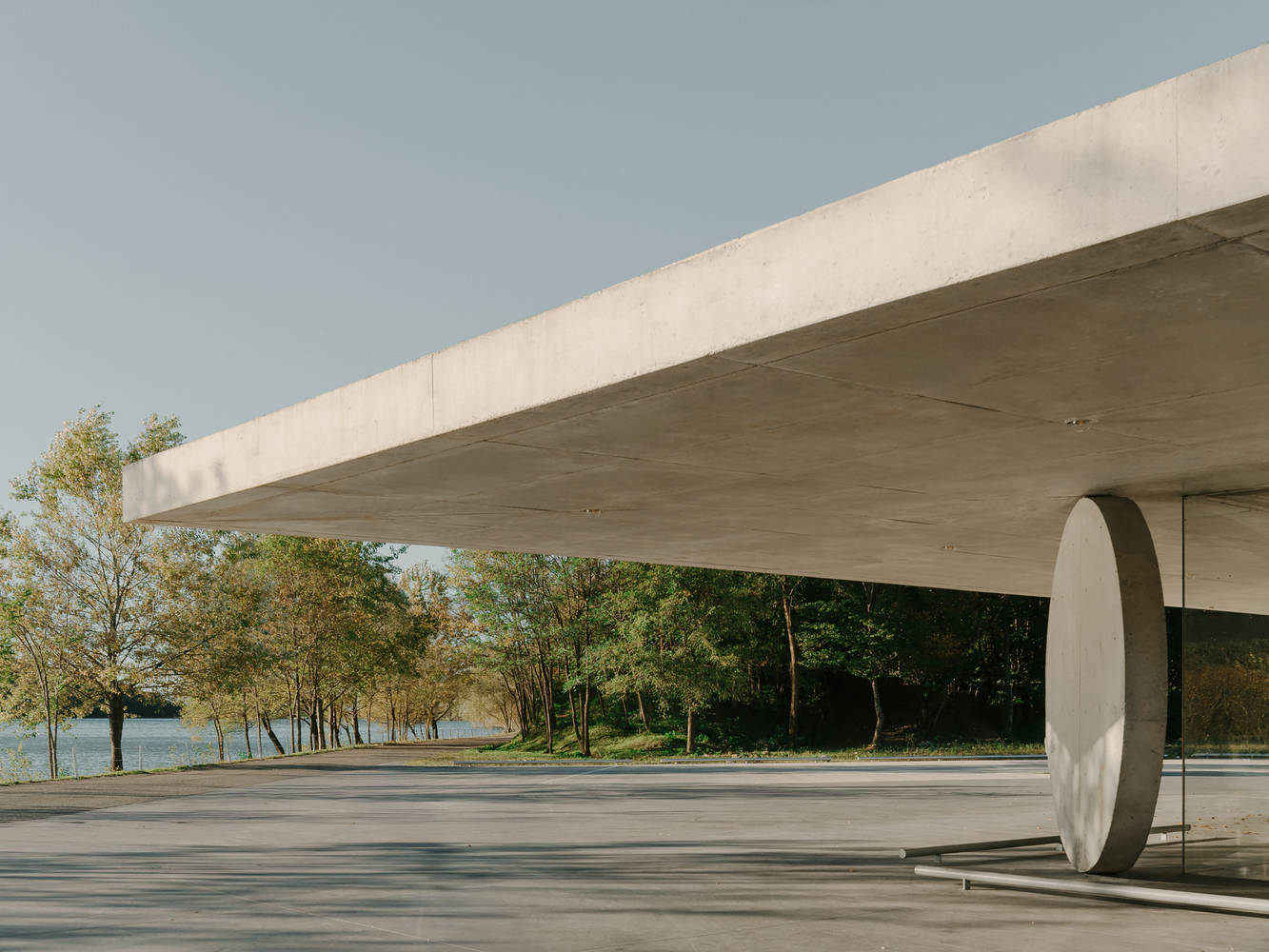
© Grigory Sokolinsky
The reception pavilion is located in Kakheti, Eastern Georgia, adjacent to Kvareli Lake—a natural basin surrounded by mountains, marking the boundary between forest and water. It is the reception building for a resort: guests park their cars upon arrival and then transfer to ecological transport to reach the hotel. The building mediates between the tranquility of the lake and the density of the forest.
接待亭位于格鲁吉亚东部的卡赫季(Kakheti)地区,毗邻克瓦雷利湖(Kvareli Lake)—— 一个被群山环抱的天然盆地,标志着森林与水域的交汇线。它是某度假村的接待建筑:宾客抵达后,停放车辆,然后换乘生态交通工具前往酒店。该建筑在湖水的宁静与森林的茂密之间起到了调和作用。
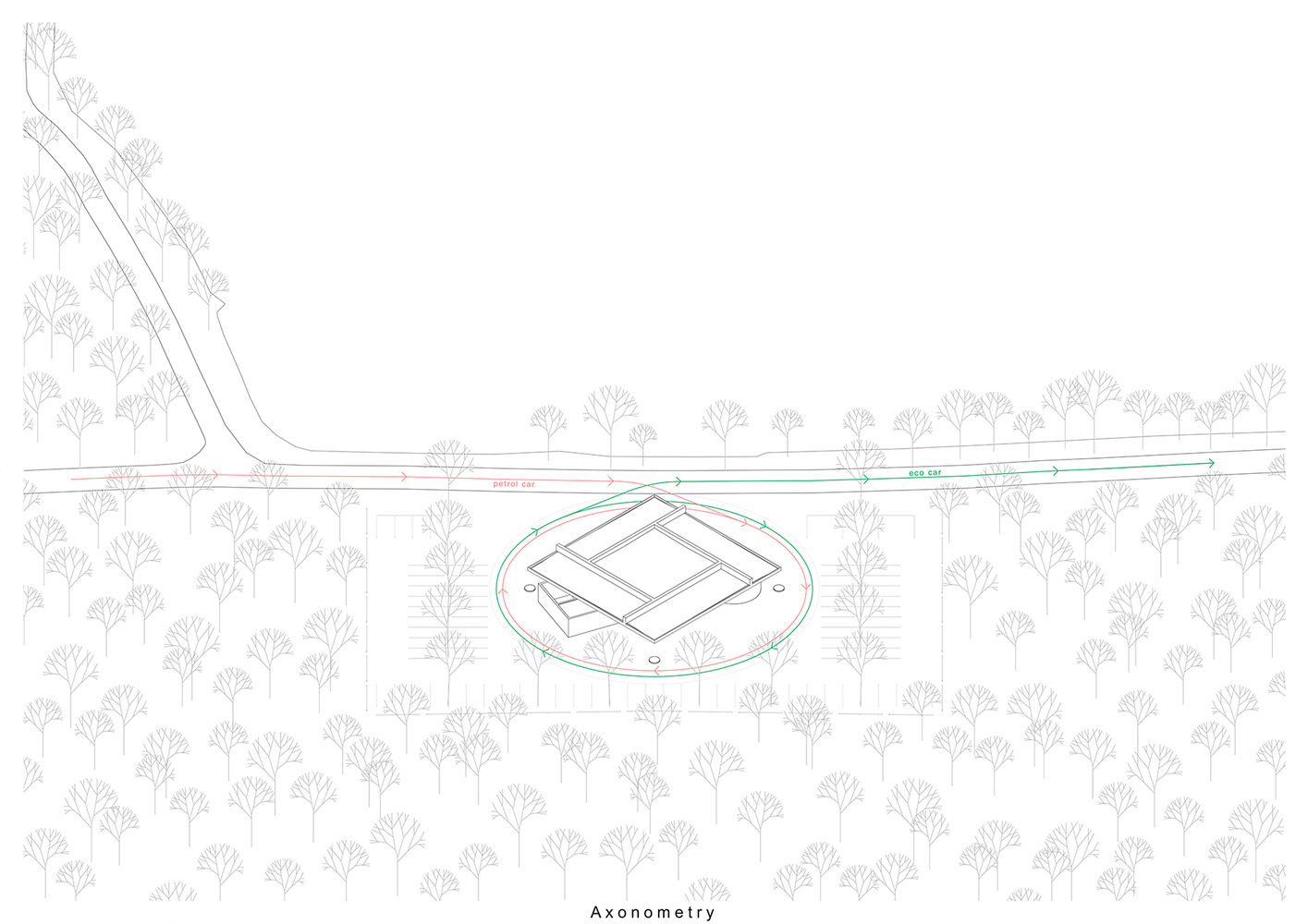
Axonometric view
The design challenge was to create a reception space that would be comfortable for guests, efficient for staff, and environmentally sensitive. A large parking area for 75 cars could have isolated the building from nature, so we rotated the square building volume by 45° to open up visual and spatial connections in all directions.
设计面临的挑战在于打造一个既能让宾客感到舒适、又能提高员工效率,同时兼具环境敏感性的接待空间。一个可停放 75 辆汽车的大型停车区可能会使建筑与自然隔绝,因此,我们将方形建筑体量旋转了 45°,以在各个方向上打开视觉和空间连接。
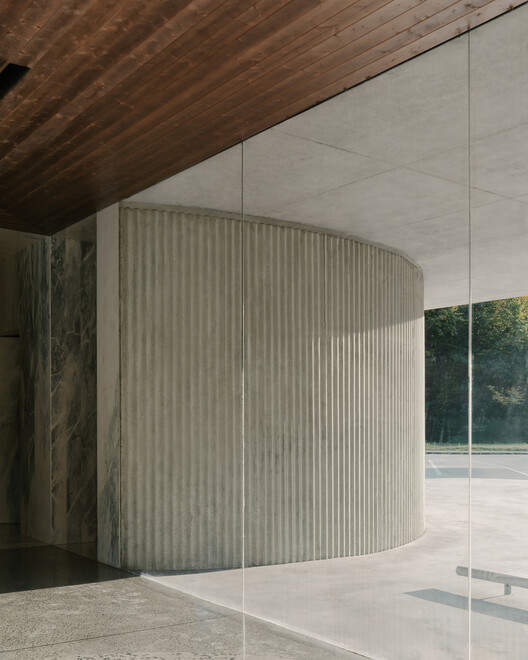
© Grigory Sokolinsky
© Grigory Sokolinsky
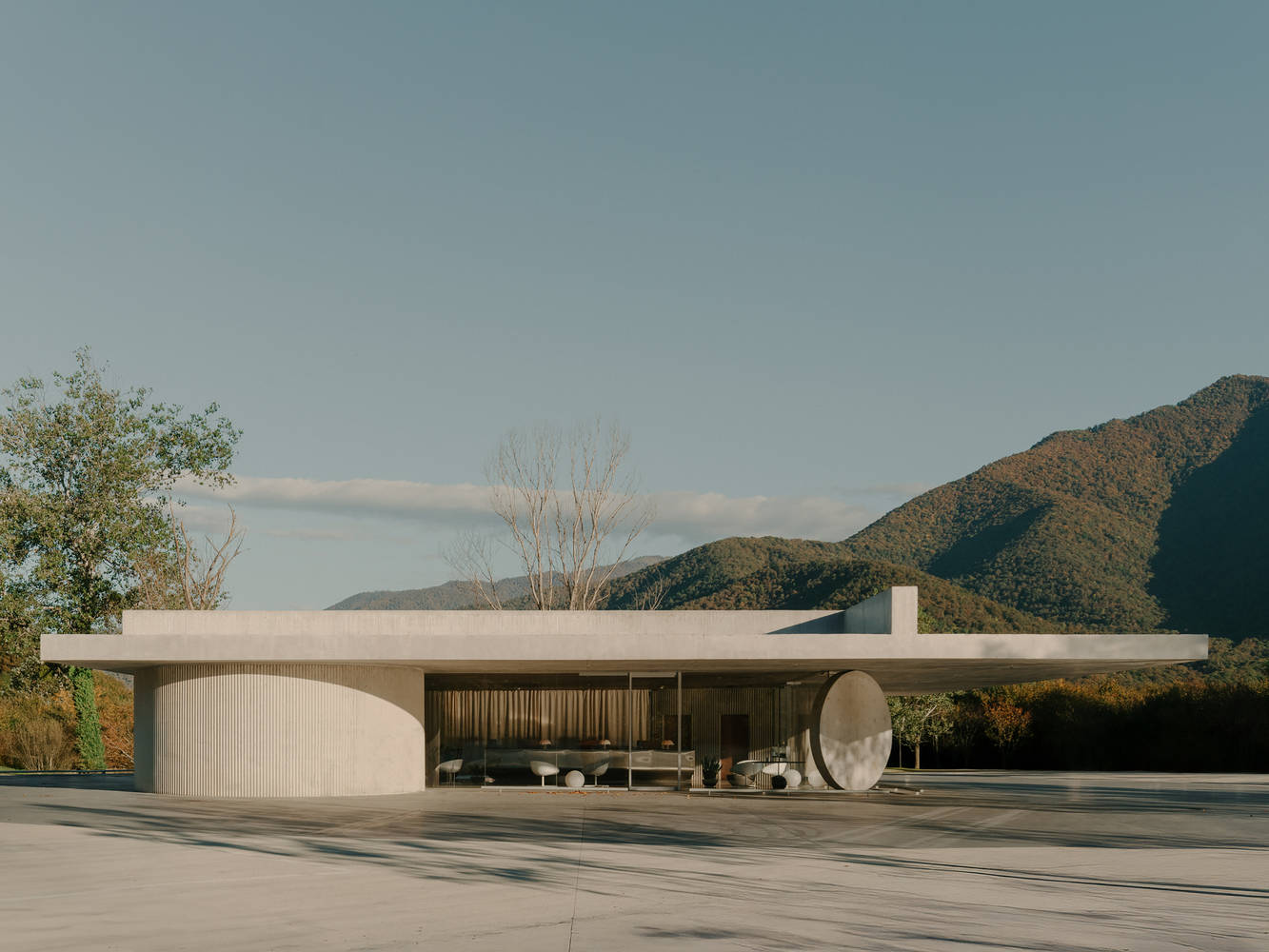
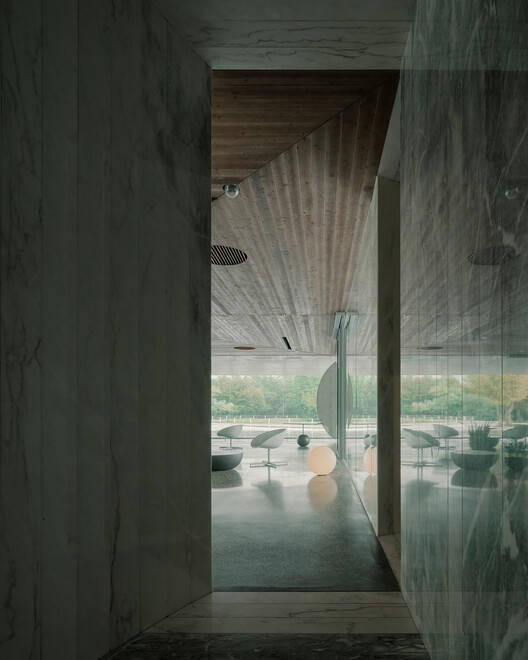
The boundaries between inside and outside gradually dissolve; the reception pavilion breathes as one with its landscape. Under the floating concrete roof, open and covered areas merge into a flowing system that allows for natural air circulation. The reception area, guest restrooms, service spaces, and back-of-house offices—cleverly separated—are located under the roof to ensure operational efficiency and a tranquil environment for visitors.
室内与室外的界限逐渐消融;接待亭与其景观融为一体,共同呼吸。在悬浮的混凝土屋顶下,开放区域与遮蔽区域融合成一个流动的系统,允许自然空气流通。屋顶下方设有接待区、宾客洗手间、服务空间和后台办公室 —— 后者被巧妙地分隔开来,以确保运营效率和为访客提供宁静的环境。
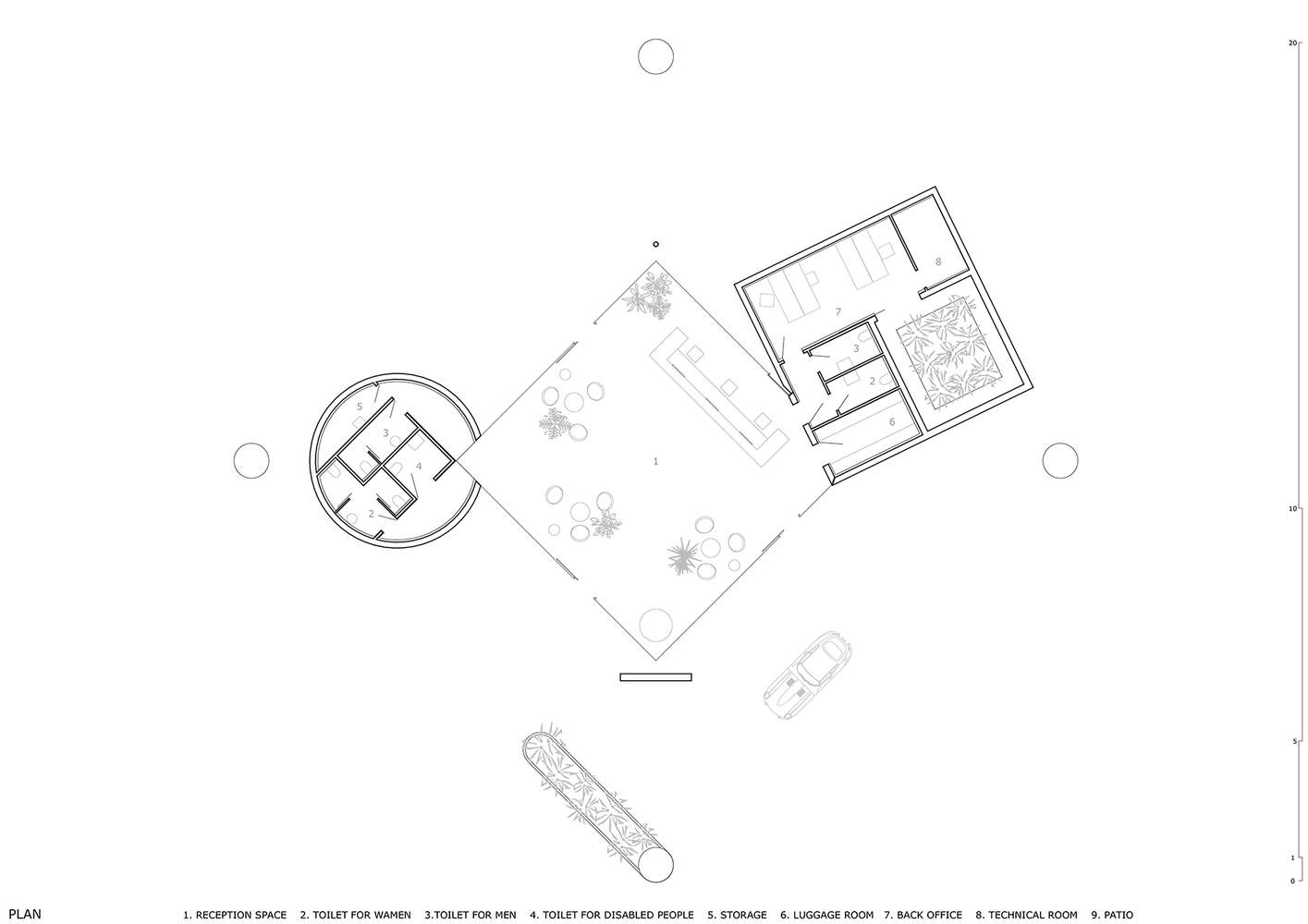
First Floor Plan
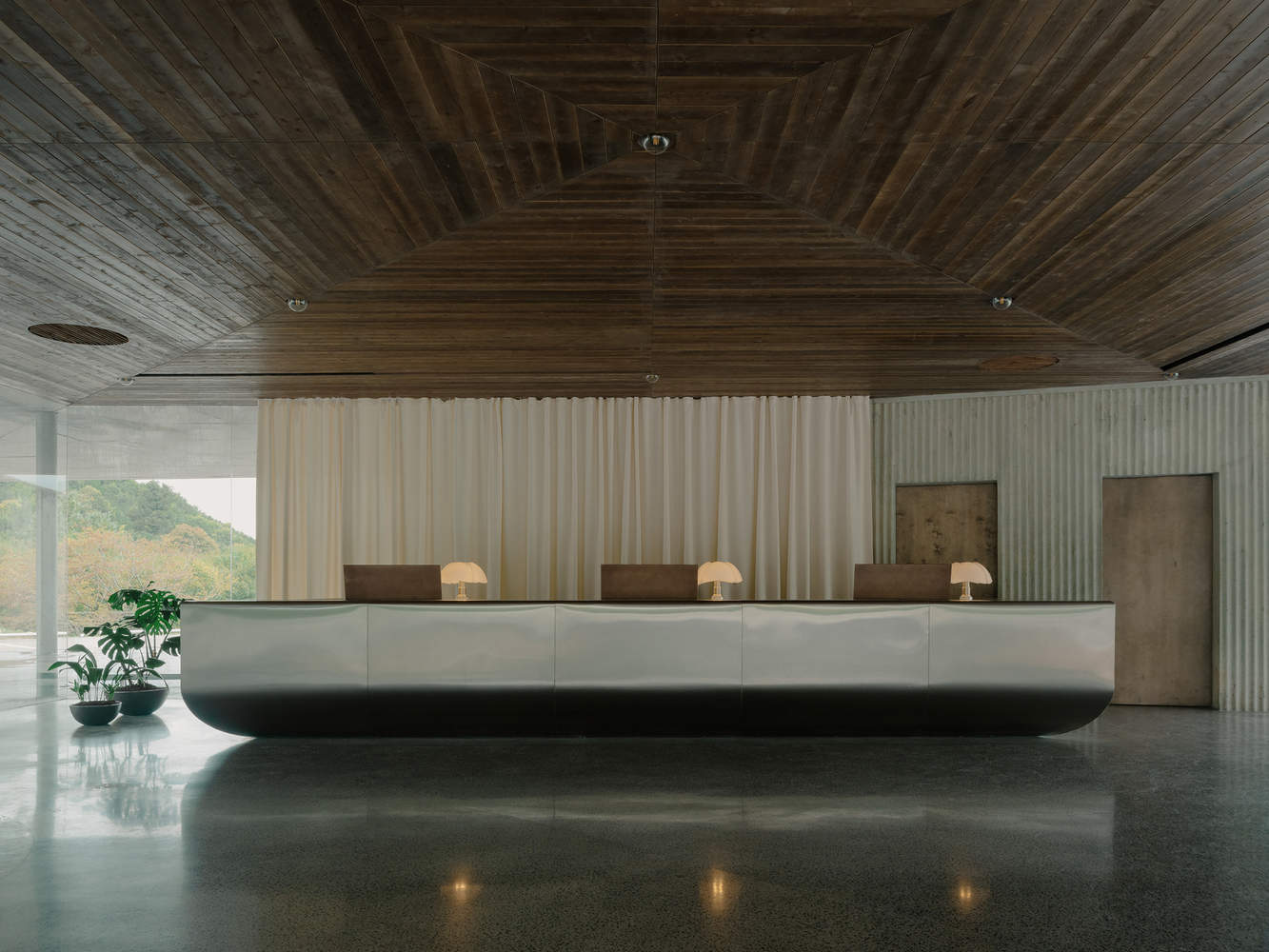
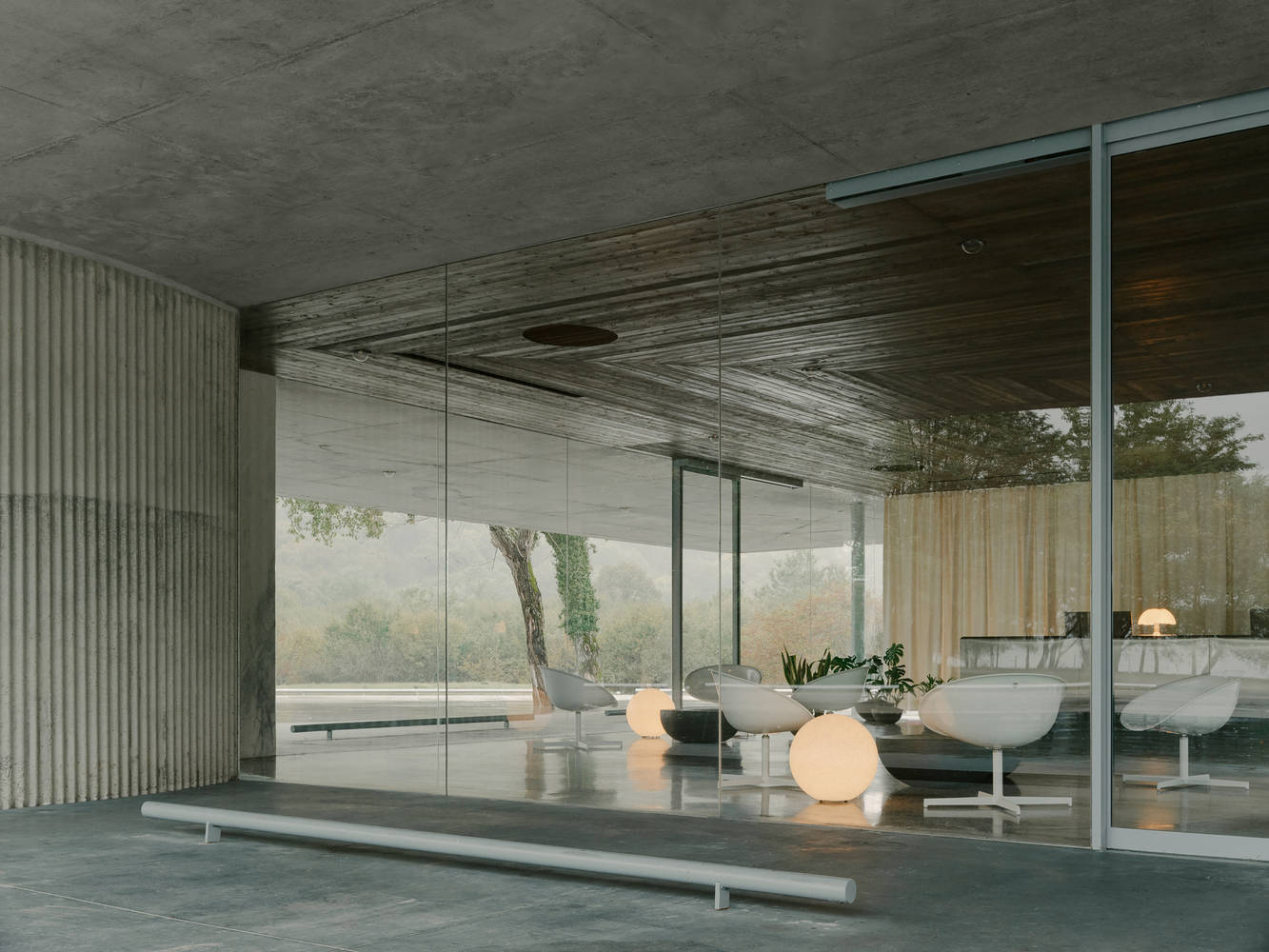
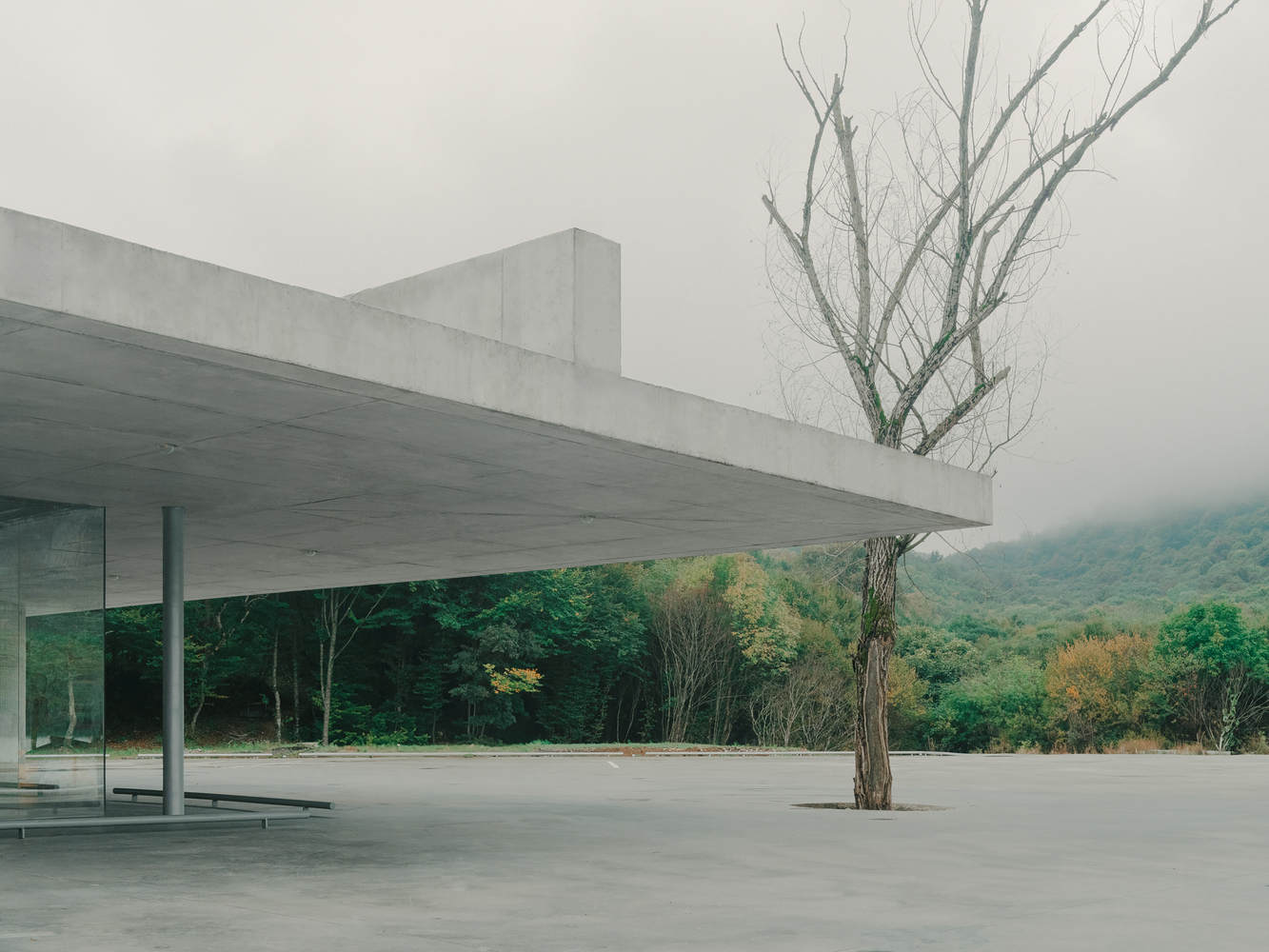
The building construction consists of a square reinforced concrete roof supported by four points: two closed concrete volumes: a circular one for the restrooms and a square one for the back-of-house offices, and two slender columns. In between these supports, transparent glass curtain walls create a 360-degree open main space.
建筑构造由一个方形钢筋混凝土屋顶构成,该屋顶由四个支撑点支撑:两个封闭的混凝土体量 :一个圆形体量用于洗手间,一个方形体量用于后台办公室,以及两根细长的柱子。在这些支撑点之间,透明玻璃幕墙创造了一个 360 度开放的主空间。
© Grigory Sokolinsky
© Grigory Sokolinsky
The roof extends with a 6-meter cantilever, whose rigidity is ensured by a dynamic pattern of four beams. The minimalist design of concrete and glass ensures durability and minimal maintenance, while the openness of the structure allows for passive air circulation and reduces energy use—providing a solid framework for a lightweight architectural expression.
屋顶延伸出 6 米长的悬臂,其刚性由四根梁的动态图案确保。混凝土与玻璃的简洁设计确保了耐久性和最低的维护需求,而结构的开放性则允许被动空气流通并减少能源使用 —— 为轻盈的建筑风格提供了一个稳固的框架。
© Grigory Sokolinsky