Built by embracing trees, Wellington Parent Child Center/AOA Christopher Peck
抱树而建,Wellington 亲子中心 / AOA Christopher Peck
设计理念的精妙:这个项目最引人入胜之处在于其对场地环境的深刻理解与回应。设计师巧妙地将场地内的桉树作为建筑的核心,并围绕其展开扇形布局,这种设计不仅保留了珍贵的自然元素,更赋予了建筑独特的生命力。通过对原有建筑的改造与整合,设计团队成功地激活了街角空间,并创造了建筑与景观之间的互动。曲线走廊的设计则巧妙地连接了两翼,形成了一个“溢出”区域,增强了空间的流通性和开放性,体现了对儿童活动需求的深刻理解。材料的选择也与设计理念相呼应,木质覆板、抹灰混凝土等材料的使用,营造出温暖、亲和的氛围,与儿童中心的定位完美契合。
空间设计的匠心独运:在空间设计方面,该项目展现出卓越的创造力。平面弧形的设计和坡屋顶的变化,营造出舒适、敞亮的玩耍空间,满足了儿童对活动空间的需求。室内细节设计更是充满了童趣,巨大的舷窗、六边形图案的地毯,无不激发着孩子们的想象力。设计师不仅考虑了局部尺度,更注重整个建筑的视线贯通,保证了空间的通透性。阅读区的折线形书架设计,既是休闲区,也构成了入口空间序列的一部分,展现了设计师对空间组织和功能布局的巧妙把控。建筑与景观的融合更是点睛之笔,孩子们可以在建筑内外自由穿梭,充分体验探索的乐趣,体现了对儿童身心发展的关怀。
对场地文脉的尊重与创新:项目不仅关注建筑本身,更注重对场地文脉的尊重和创新。设计师将原有建筑的历史痕迹与现代设计理念相结合,赋予了场地新的生命力。通过对公共道路的重新整合,确保了项目的完整性和可识别性。建筑材料的选择,以及对自然光的巧妙运用,都体现了设计师对可持续发展的思考。项目更重要的是,它创造了一个充满活力和趣味性的环境,鼓励孩子们在其中自由探索和学习,满足了年轻父母与孩子在室内玩耍的需求。这种设计理念,体现了建筑师对社区和未来儿童教育的深刻理解,以及对建筑与环境和谐共生的美好愿景。
© Veeral Patel
© Veeral Patel
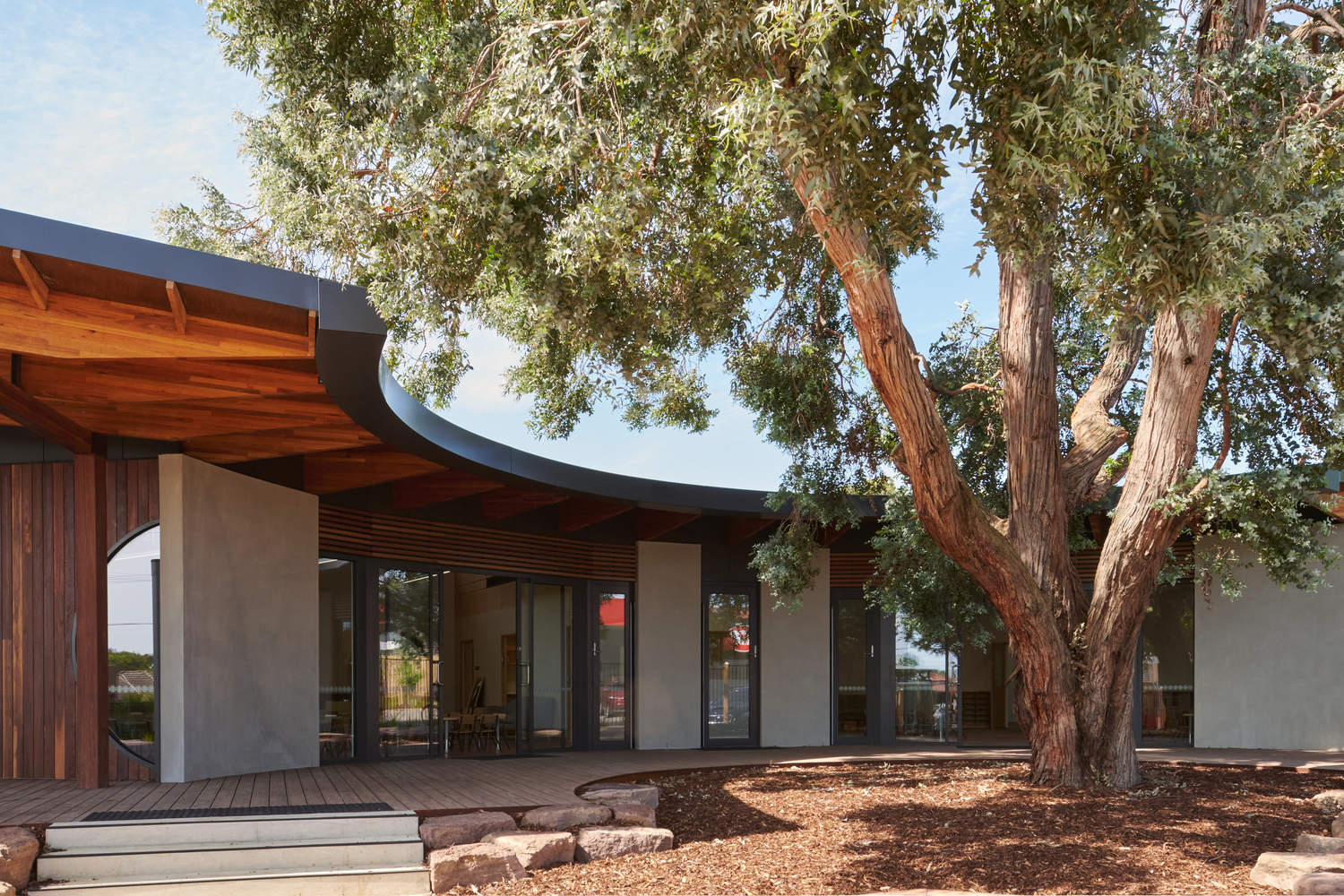
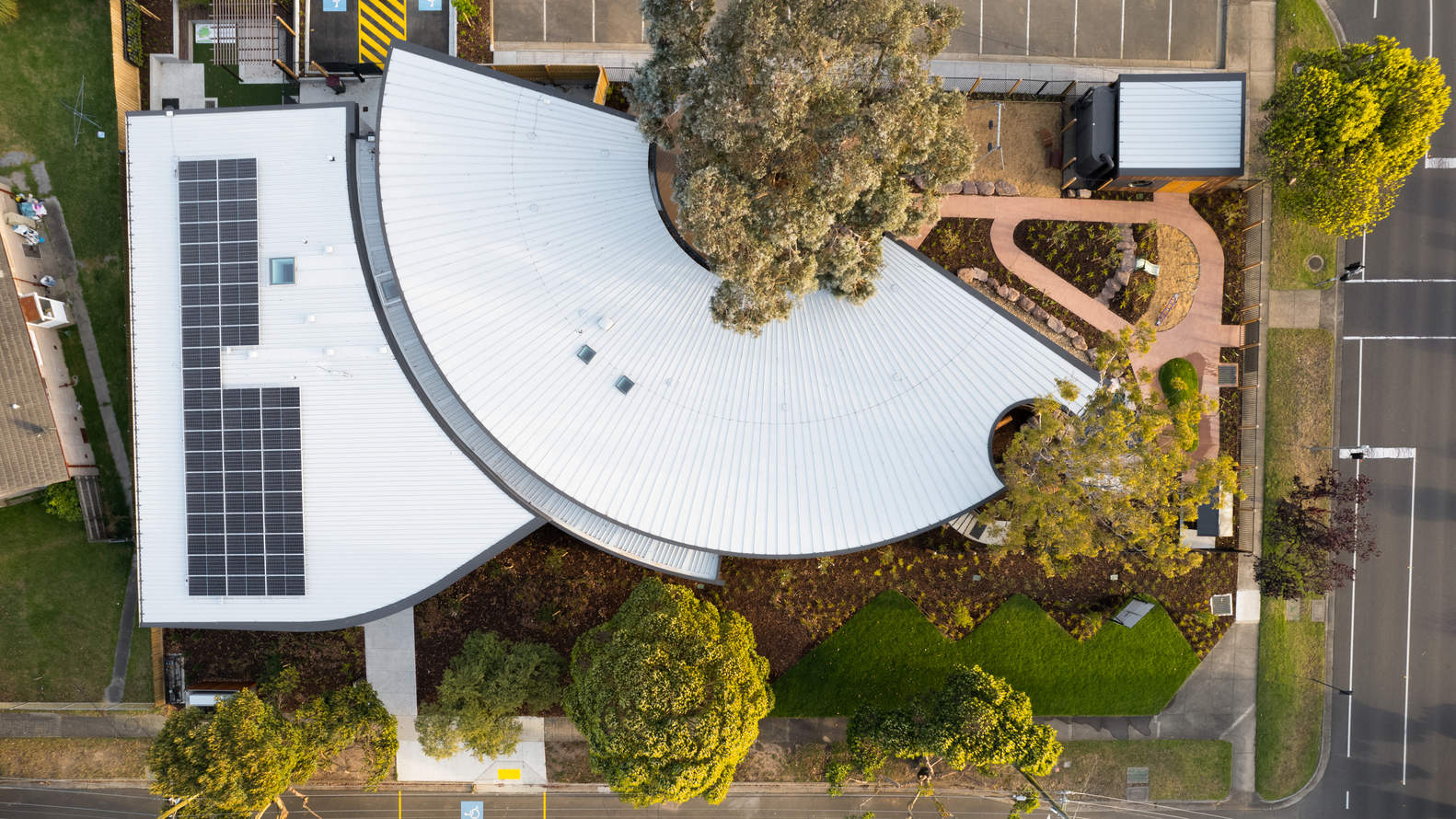
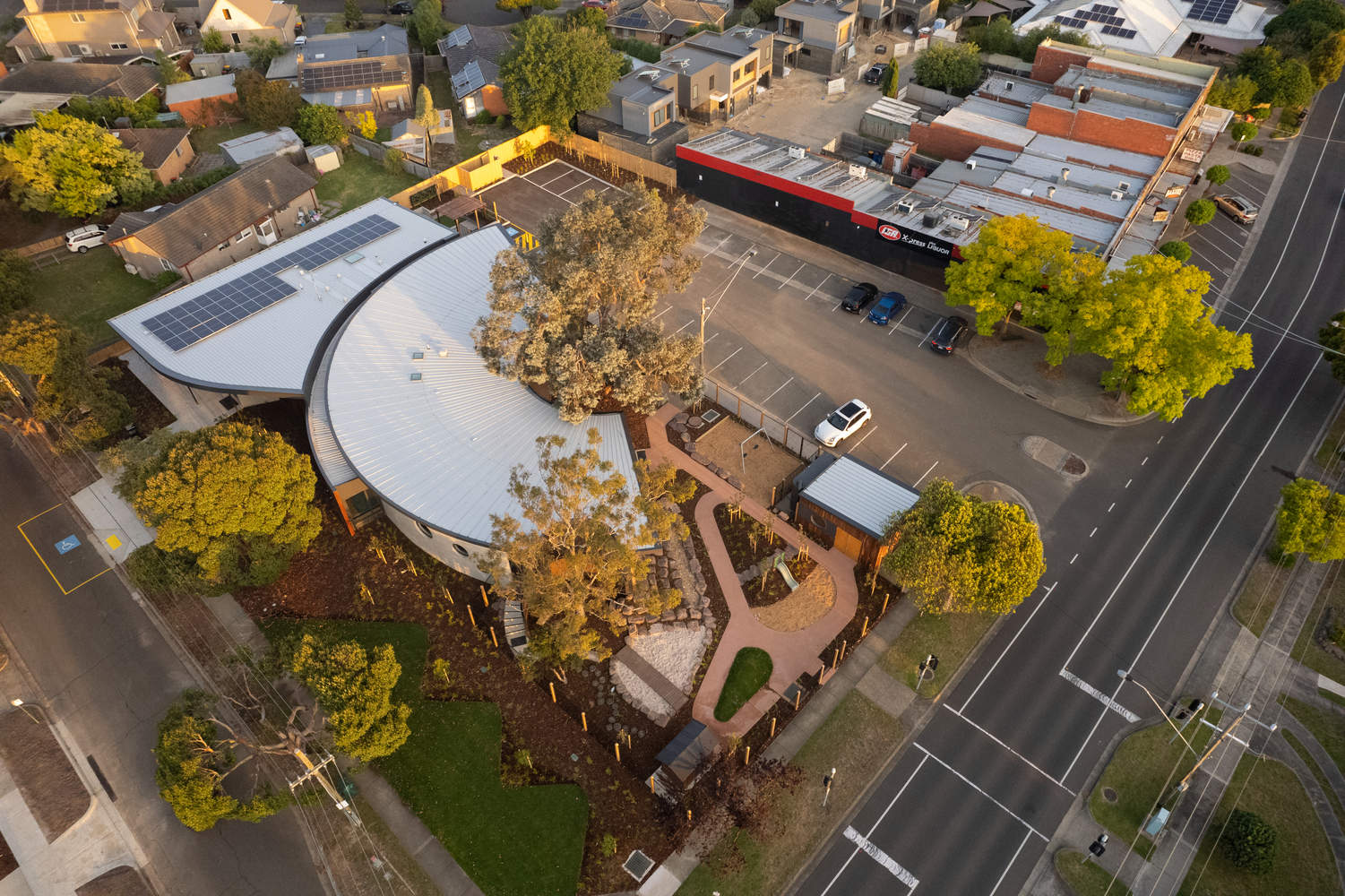
Before the completion of this new parent-child center, the original two old buildings had been standing in Mulgrave, Melbourne for decades. One of them was built in the 1960s for preschool children (3-4 years old), and the other was built in the 1930s as an independent building providing maternal health services. But as more and more new families move nearby with their children, Monash City gradually realizes that it's time to look to the future. The new parent-child center designed by AOA Christopher Peck not only activates this street corner space, but also responds to the two eucalyptus trees on the site, one of which has now become the core of the building.
在这个新的亲子中心落成之前,原有的两个老建筑已经在墨尔本 Mulgrave 矗立了数十年。其中一个建造于 1960 年代,供学龄前儿童(3-4岁)使用,另一幢建造于 1930 年代,是提供孕妇健康服务的独立建筑。但是随着越来越多新家庭带着孩子搬到附近,莫纳什市逐渐认识到,是时候展望未来了。由 AOA Christopher Peck 设计的新亲子中心不仅激活了这块街角空间,同时回应了场地内的两棵桉树,其中一棵现已成为建筑的核心。
© Veeral Patel
首层平面图
© Veeral Patel
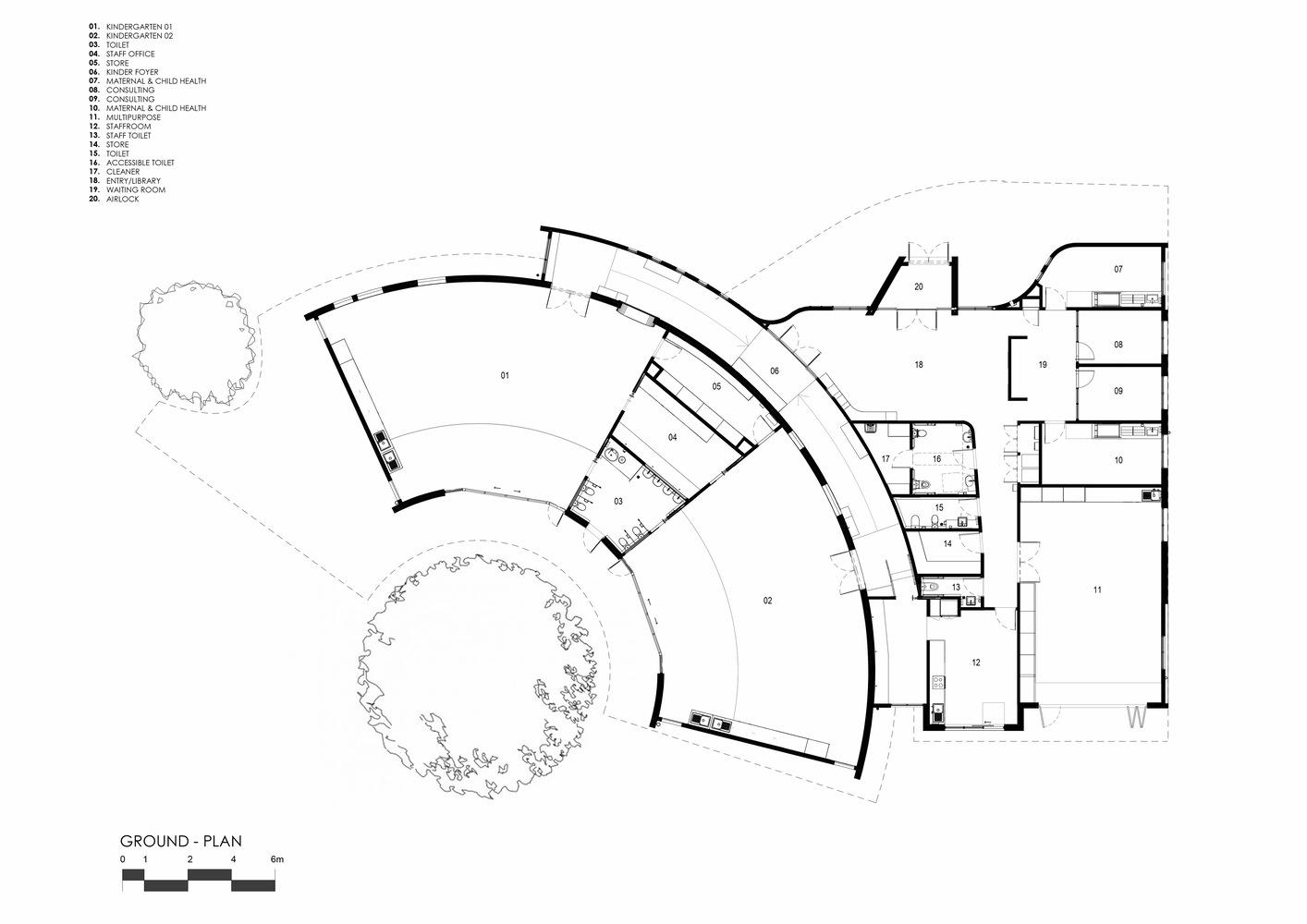
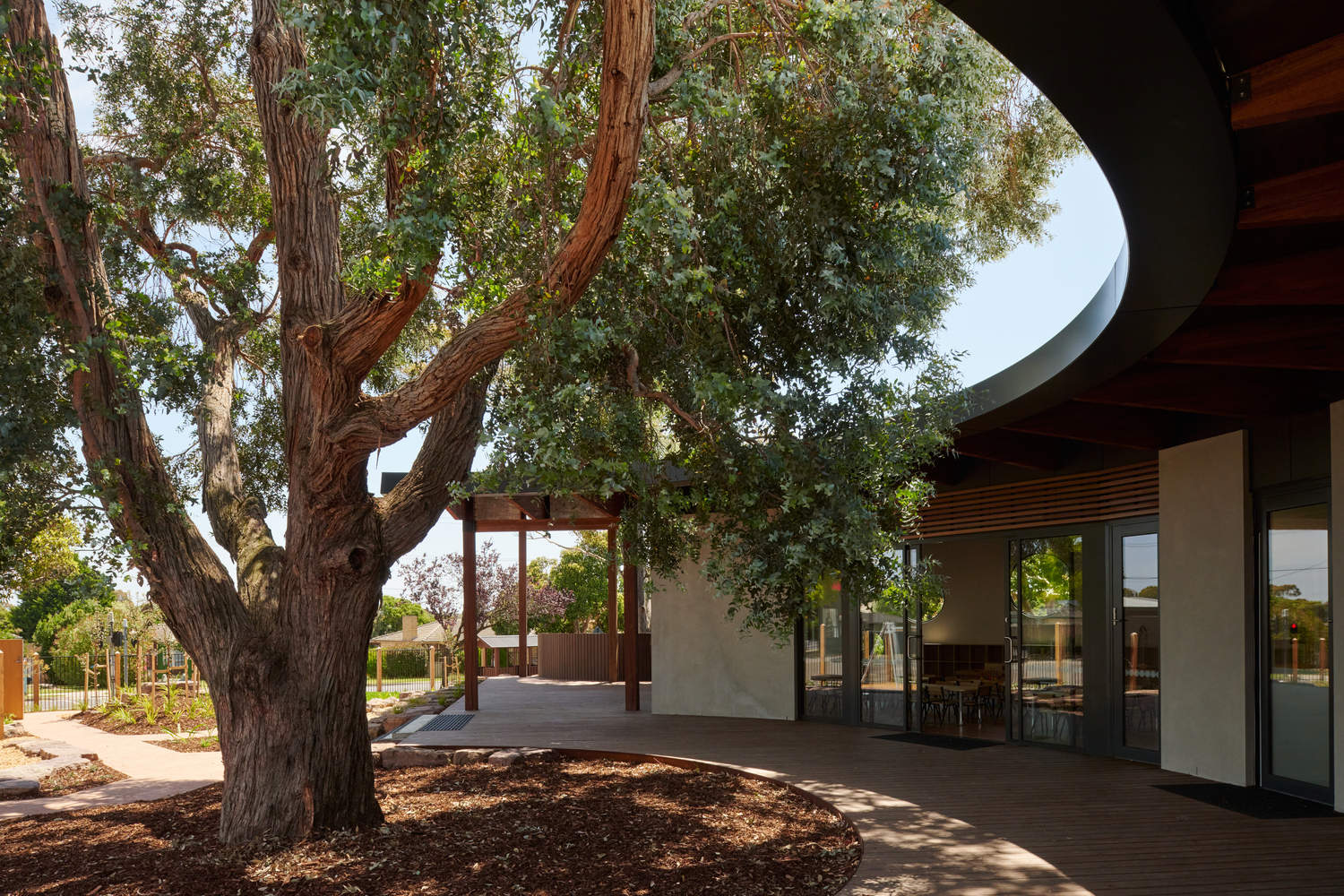
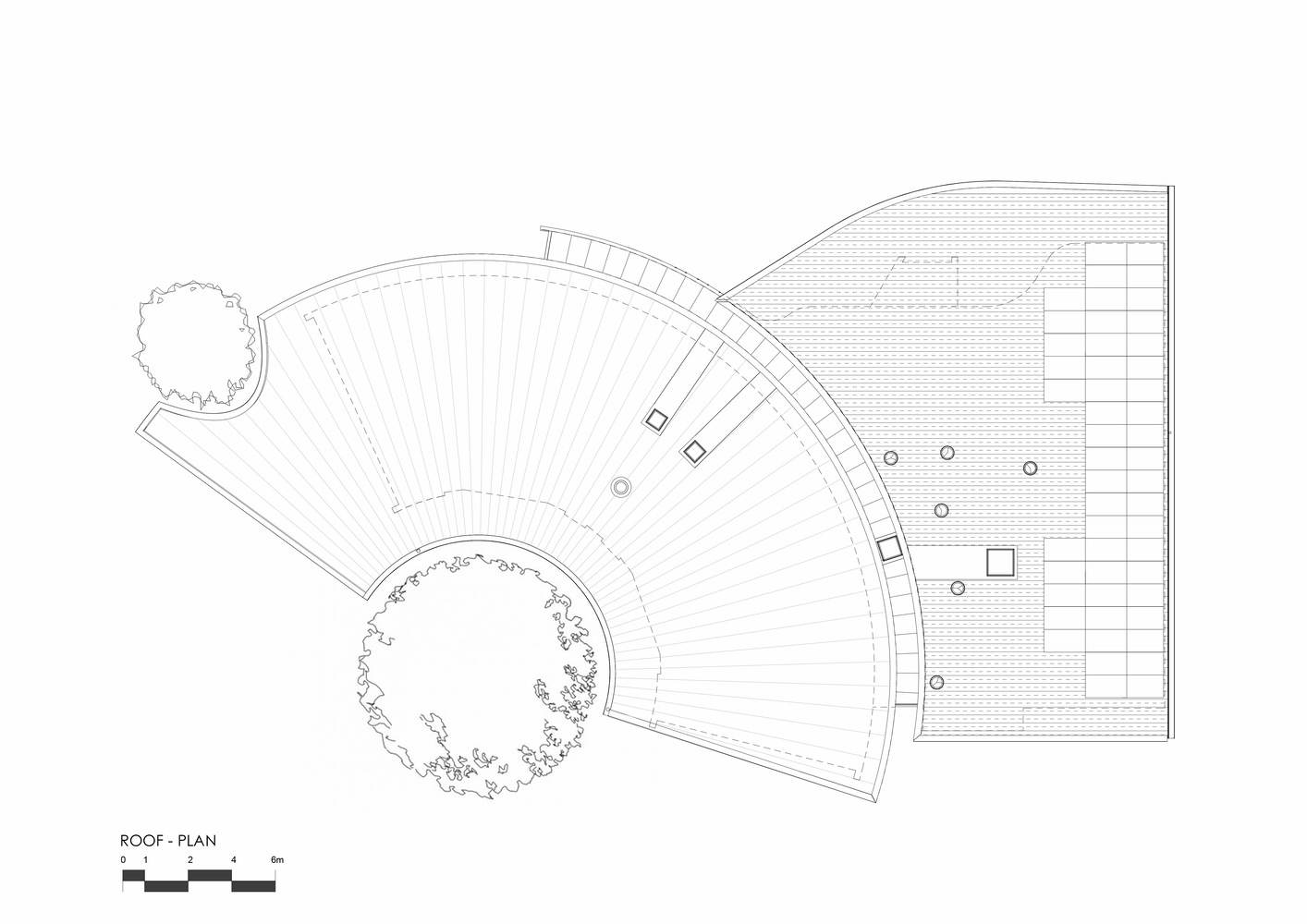
Unlike the original site where the buildings from the two periods were separate camps, the new plan (approximately 600 square meters) features a fan-shaped theme surrounding the central eucalyptus tree, creating interaction with the external landscape. In addition, the original public road divides the site into two parts, and many locals will take shortcuts through it. 3 Acres will re stitch the site in the subsequent landscape design to ensure the integrity and recognizability of the project. The new parent-child center is constructed with painted wooden cladding, plastered concrete, aluminum eaves, and exposed wooden beams. The two wings are separated by spacious curved corridors, which can also serve as an extension of the classroom. We want to combine the two wings together, and this corridor connecting the two sides is an 'overflow' area, "the architect explained. From the beginning, we considered the importance of eucalyptus trees, "they added.
不同于原有场地中两个时期建筑各自为营的状态,新方案(大约 600 平方米)采用扇形主题环绕中央桉树,由此和外部景观产生互动。此外,原有的公共道路将场地一分为二,许多当地人都会通过它抄近道,3 Acres 在后续景观设计中将场地重新缝合,以保证项目的完整性和可识别性。新亲子中心由上过漆的企口木覆板,抹灰混凝土,铝制檐口,和外露的木梁建造而成,两翼被宽敞的曲线走廊分隔,该空间还可作为教室的延伸。“我们想把两翼结合到一起,而这个连接双方的走廊就是一个‘溢出’区域,”建筑师解释说。“从一开始,我们就考虑到了桉树的重要性,”他们补充道。
© Veeral Patel
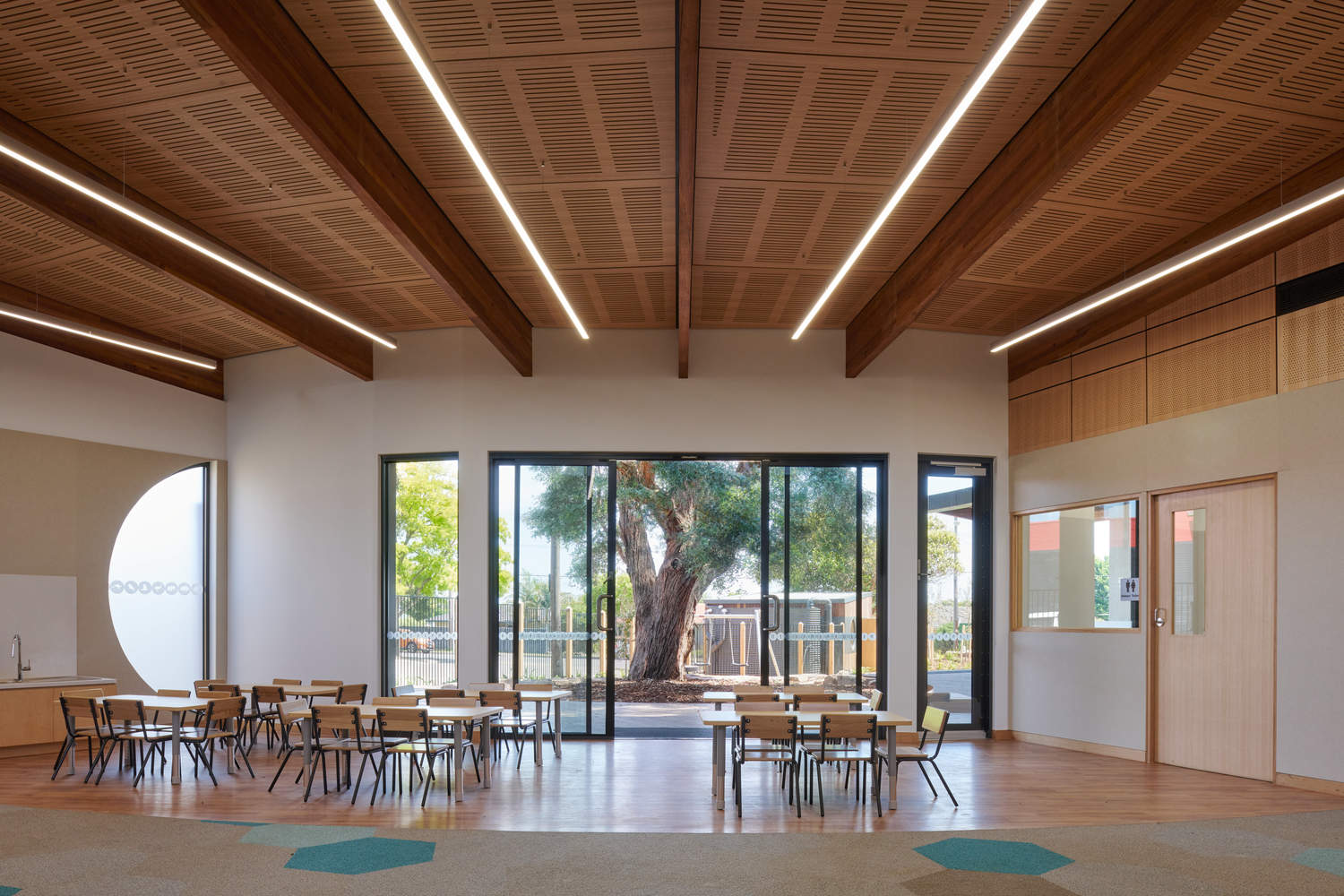
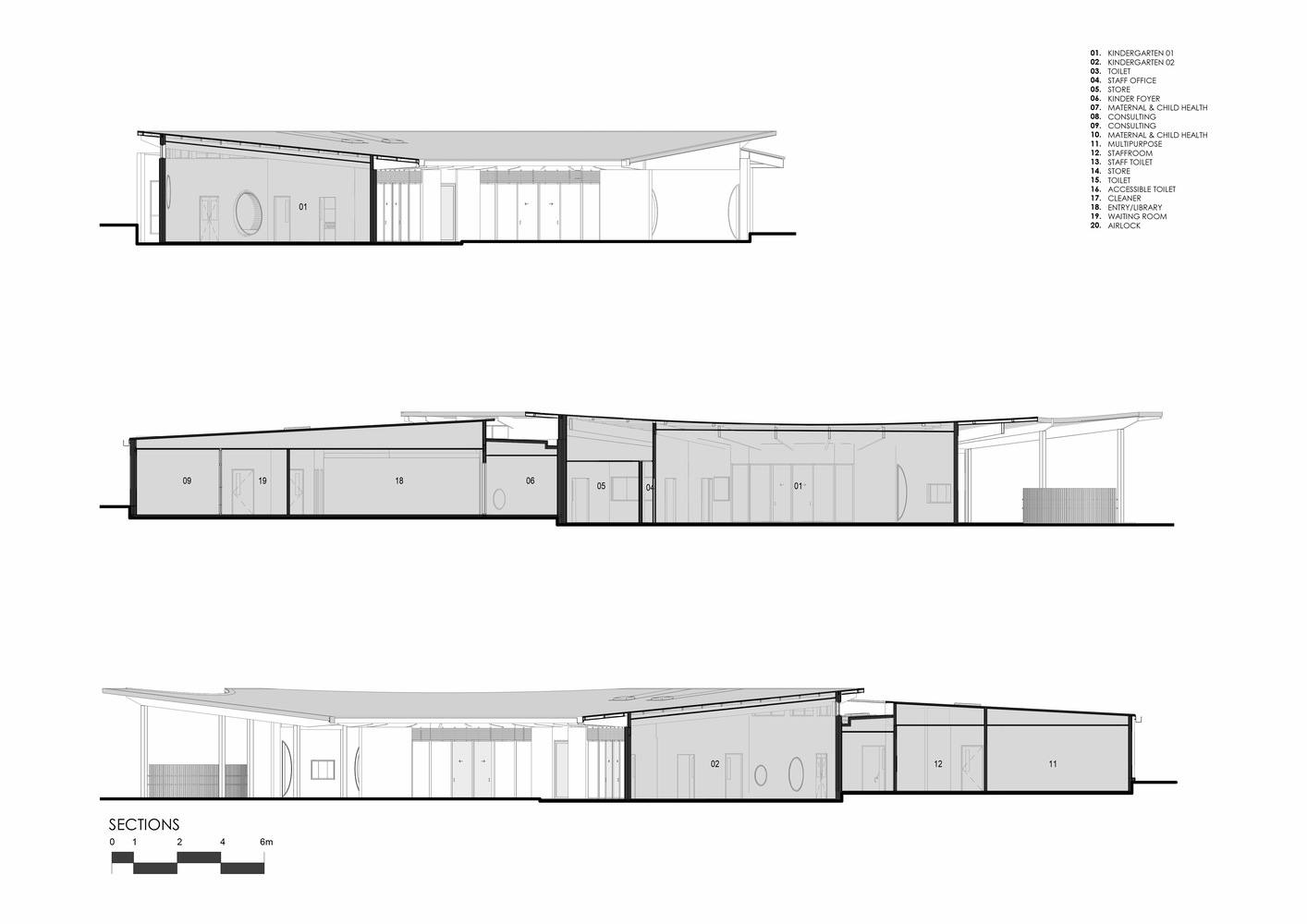
The building presents an arc on the plane, while the sloping roof creates changes in volume on the section. This deliberately crafted subtle change creates a comfortable and spacious playing space. On the side of the parent-child center facing the yard, there are two separate rooms for children aged 3 and 4, with a bathroom, office space, and storage room sandwiched between them.
建筑在平面上呈现出弧形,而带有坡度的屋顶则在剖面上创造体量的变化。这种刻意营造的微妙变化成就了舒适、敞亮的玩耍空间。在亲子中心面向院子的一侧,是两个独立的房间,分别供 3 岁和 4 岁的孩子使用,夹在两者之间的是浴室、办公用房和储藏室。
© Veeral Patel
屋顶平面图
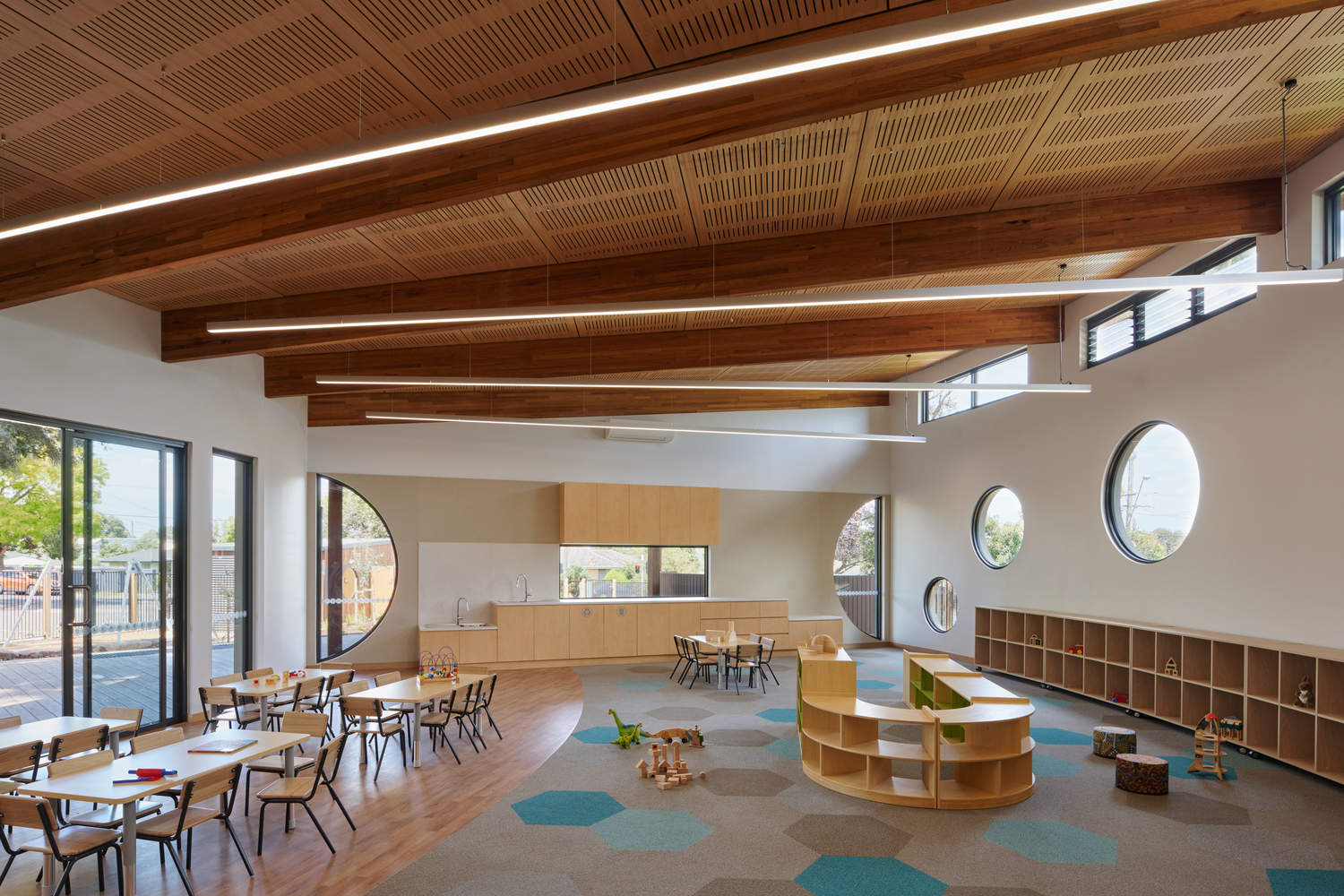
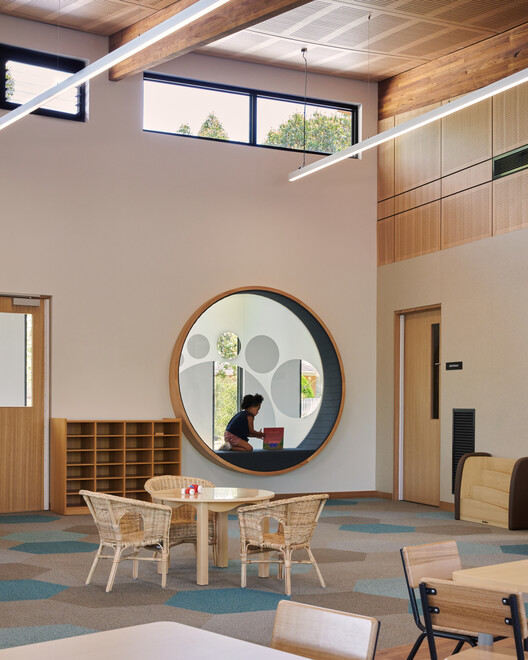
Considering the characteristics of young children, the classroom design is full of childlike fun. The huge portholes remind people of a submarine, and blue or blue hexagonal strange patterns occasionally appear on the soft carpet, allowing children to relax and play games on them. The design not only considers local special dimensions (such as the position of windows and the height of fixed furniture), but also consciously ensures the visibility throughout the entire building. AOA has also designed line shaped fixed bookshelves in the reading area as a leisure area for visitors, which also form part of the spatial sequence of the entrance area of the parent-child center. The corner space composed of curved wood is a response to the natural form of trees, just like the stacked wooden beams in the classroom.
考虑到幼儿的特性,教室设计充满童趣。巨大的舷窗让人联想起一艘潜水艇,柔软的地毯上间或出现蓝色或青色的六边形奇异图案,小朋友可以放松地在上面做游戏。设计不仅考虑了局部的特殊尺度(如窗户的位置和固定家具的高度),而且有意识地保证整个建筑内的视线贯通。AOA 还在阅览区设计了折线形固定书架作为访客的休闲区,它们也构成了亲子中心入口区空间序列的一部分。曲面木材构成的角落空间与教室里的叠层木梁一样,都是对自然树木形态的回应。
剖面图
© Veeral Patel
The center now satisfies the desire of young parents to play indoors with their children by opening up a portion of the pregnant women's health area as a playground (which would be perfect if you happen to be waiting for a counselor here). Once, architecture and landscape were two separate entities isolated from each other, but now children can shuttle between the two buildings, climb on stones, and explore in spatial gaps.
该中心现在还满足了年轻父母想和孩子一起在室内玩耍的的愿望,开放了一部分孕妇保健区域的空间作为游戏场地(如果刚好要在这等待咨询师,那就再合适不过了)。曾经,建筑和景观是两个相互隔绝的独立实体,而现在,孩子们可以在两个建筑中穿梭,在石头上攀爬,在空间缝隙中探索。
文字描述由建筑师提供
翻译:凌前