Coconut Health Garden/RAD+ar (Research Artistic Design+Architecture)
椰子康养花园 / RAD+ar (Research Artistic Design + architecture)
设计理念的精妙:项目的核心在于其对自然环境的尊重与巧妙融入。建筑师并非简单地建造一座建筑,而是力图创造一个与自然和谐共生的场所。这体现在材料的选择上,如现场夯土、木材和天然石灰石等,均取自当地,最大程度地减少了对环境的干扰,并赋予建筑独特的地域特色。同时,设计通过对光影的巧妙运用,尤其是圆形建筑外墙上光影的交织变幻,营造出一种动态、统一且富有诗意的空间体验,使访客能够沉浸在与自然互动的氛围之中。这种设计理念不仅体现了可持续发展的原则,更提升了建筑的艺术价值。
空间布局的创新:项目在空间规划上展现出独特的智慧。圆形平面的运用,尤其是内切式波浪形墙体的设计,为冥想和康养活动创造了理想的场所。这种布局策略兼顾了私密性和开放性,既保障了使用者内心的宁静,又未牺牲与外部环境的联系。此外,灵活的内部布局也值得称道,室内隔断以轻松随性的方式布置,营造出流畅的、与自然无缝衔接的流动空间。这种设计不仅提升了空间的使用效率,也为使用者提供了多样化的体验。同时,项目还巧妙地将结构、家具和空间融为一体,体现了对建筑功能性的深刻理解和对空间美学的极致追求。
结构与材料的巧妙运用:项目在结构和材料的选择上,充分体现了可持续发展的理念和对传统建筑智慧的尊重。例如,采用当地树木打造叠层大截面立柱,支撑8米长的斜向屋顶悬挑结构,这种设计不仅体现了建筑的力学之美,也展现了对当地材料的巧妙运用。屋顶的木瓦和藤编天花更增添了建筑的自然气息。同时,建筑兼具家具功能与结构支撑的双重属性,如本地泥土与石材构筑的墙体,与经过处理的椰树木材的结合,在减少碳足迹的同时,也创造了独特的视觉和触觉体验。这种设计方式不仅节约了材料和空间,更将建筑的结构、功能与美学完美地融合在一起。
© William Sutanto
© William Sutanto
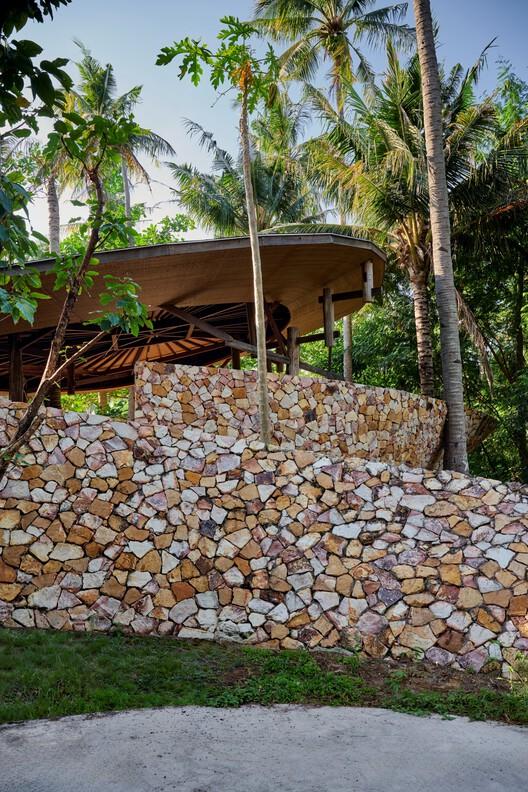
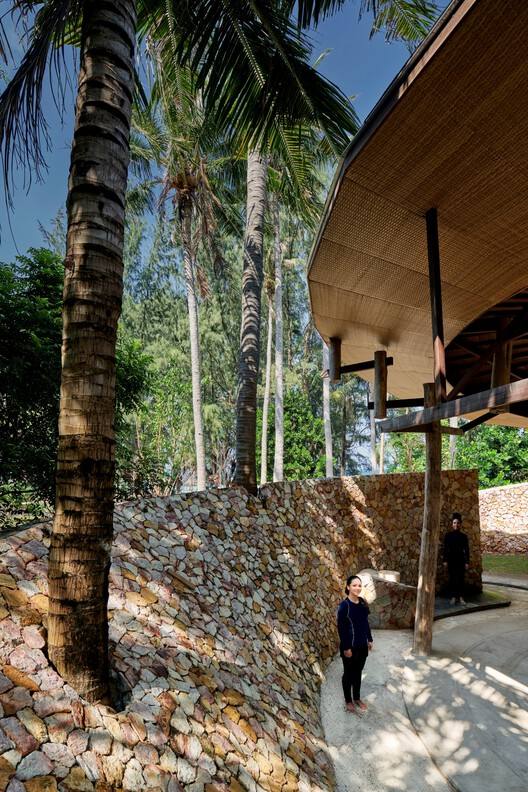
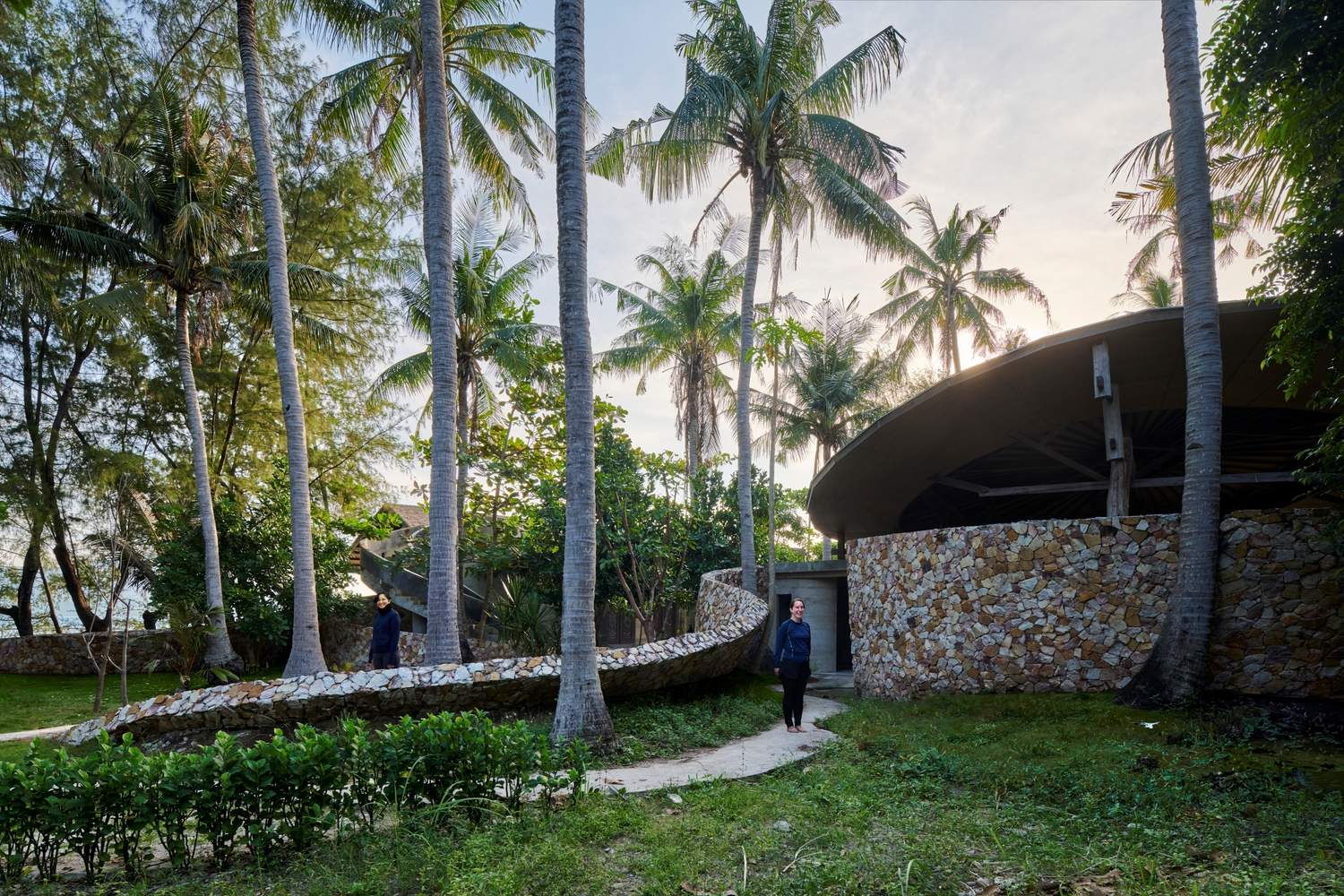
The mission of Coconut Health Garden is to create a unique yoga center that can evoke people's emotions and experiences while adhering to fair usage standards. The venue stands out with its serene atmosphere and natural material combination, and its unique charm is further highlighted by its minimalist and elegant construction techniques. To provide users with an unforgettable tactile experience, the project adopts unconventional techniques and utilizes materials that reflect the aesthetics and atmosphere of the island, such as on-site reinforced rammed earth, wood, and locally sourced natural limestone, which complement the serene beauty of the existing landscape.
椰子康养花园的使命是打造一座独具特色的瑜伽中心,该中心既能唤起人们的情感与体验,又能遵循公平使用的标准。场地以其静谧的氛围和天然的材质搭配脱颖而出,简约优雅的极简主义建造技法更显其独特魅力。为给使用者带来难忘的触觉体验,项目采用非常规手法,运用了反映岛屿美学与氛围的材质,如现场加固的夯土、木材及本地取材的天然石灰石,这些材料与现有景观的宁静之美相得益彰。
© William Sutanto
© William Sutanto
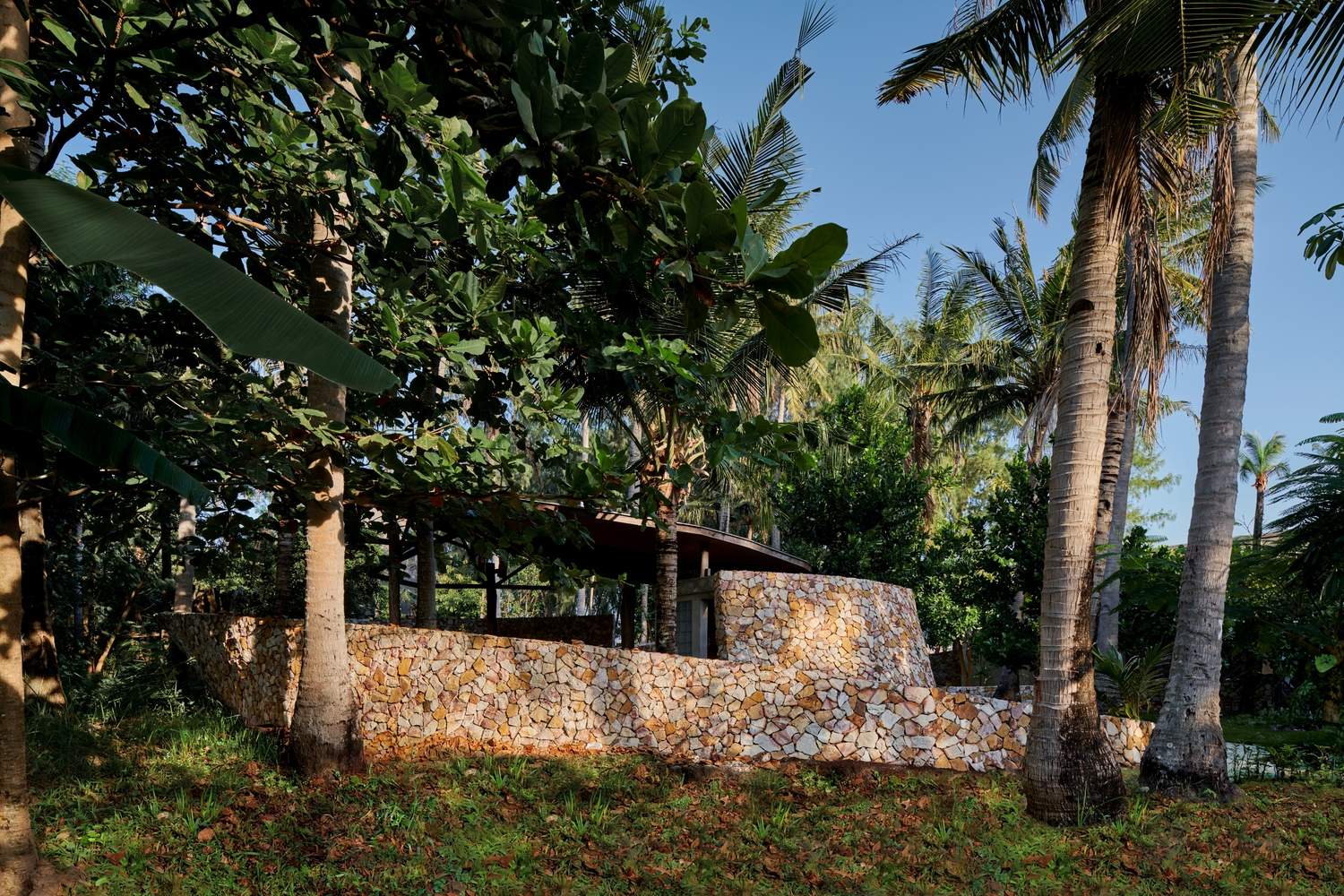
This garden is located on a private island in the Karimun Java Islands of Indonesia. Its design aims to create a pure and flawless destination, emphasizing the authenticity of spaces carved by nature rather than any deliberately constructed buildings. In the future, the island will also provide a diverse range of high-quality services, making it an ideal place to relax and rejuvenate. The yoga garden is one of the facilities that enhances the natural landscape, where sunlight continuously projects light and shadow changes on the carefully carved natural stone surface, creating a unique visual experience.
这座花园坐落于印度尼西亚卡里穆恩爪哇群岛的一座私人岛屿上,其设计旨在打造一处纯净无瑕的目的地,更强调由大自然雕琢的空间之原真性,而非任何刻意堆砌的建筑。未来,该岛还将提供一系列多元化的高品质服务,使其成为放松身心、恢复活力的理想之地。瑜伽花园便是其中一处提升自然景观的设施,阳光在精心雕琢的天然石材表面不断投射出光影变幻,营造出独特的视觉体验。
© William Sutanto
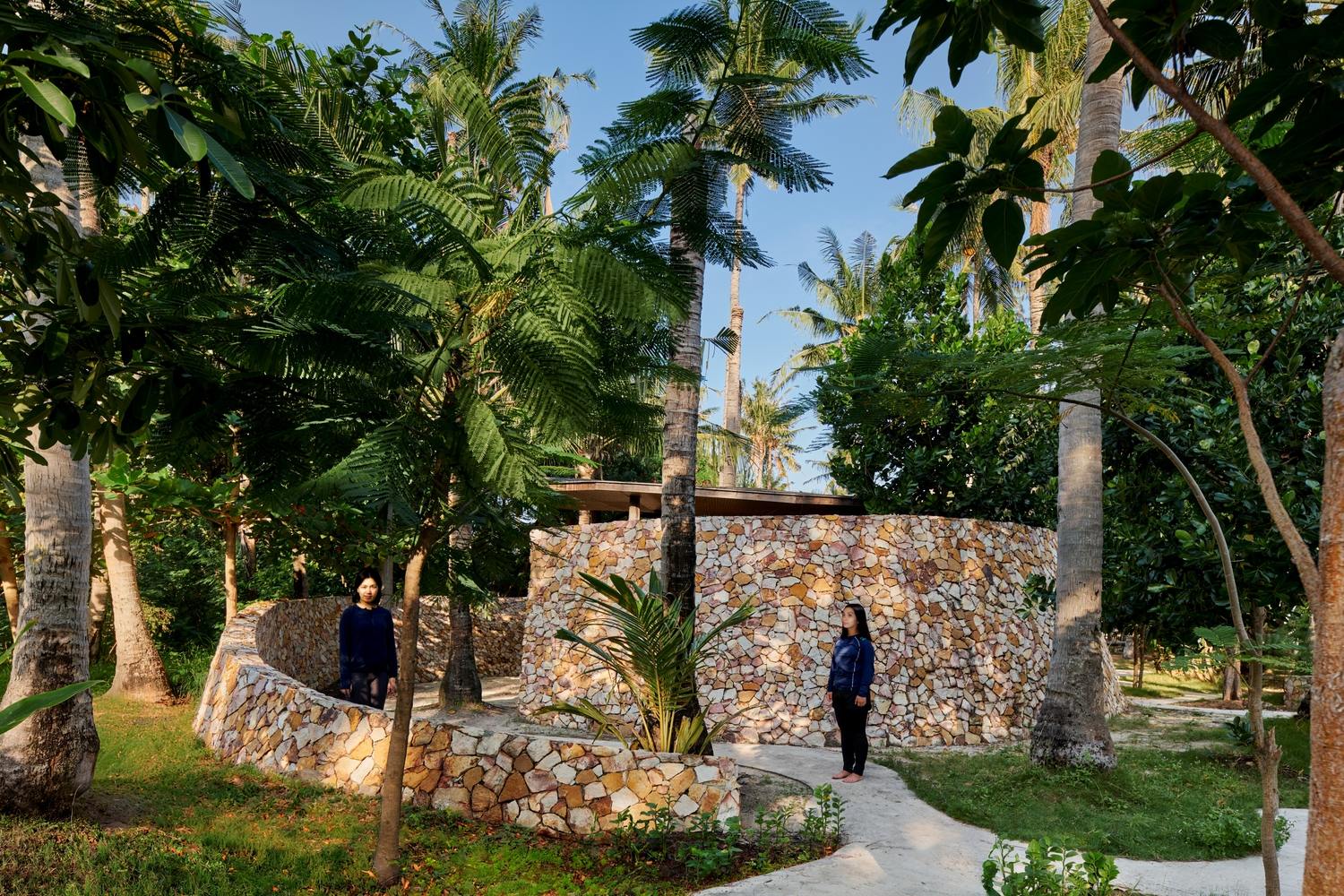
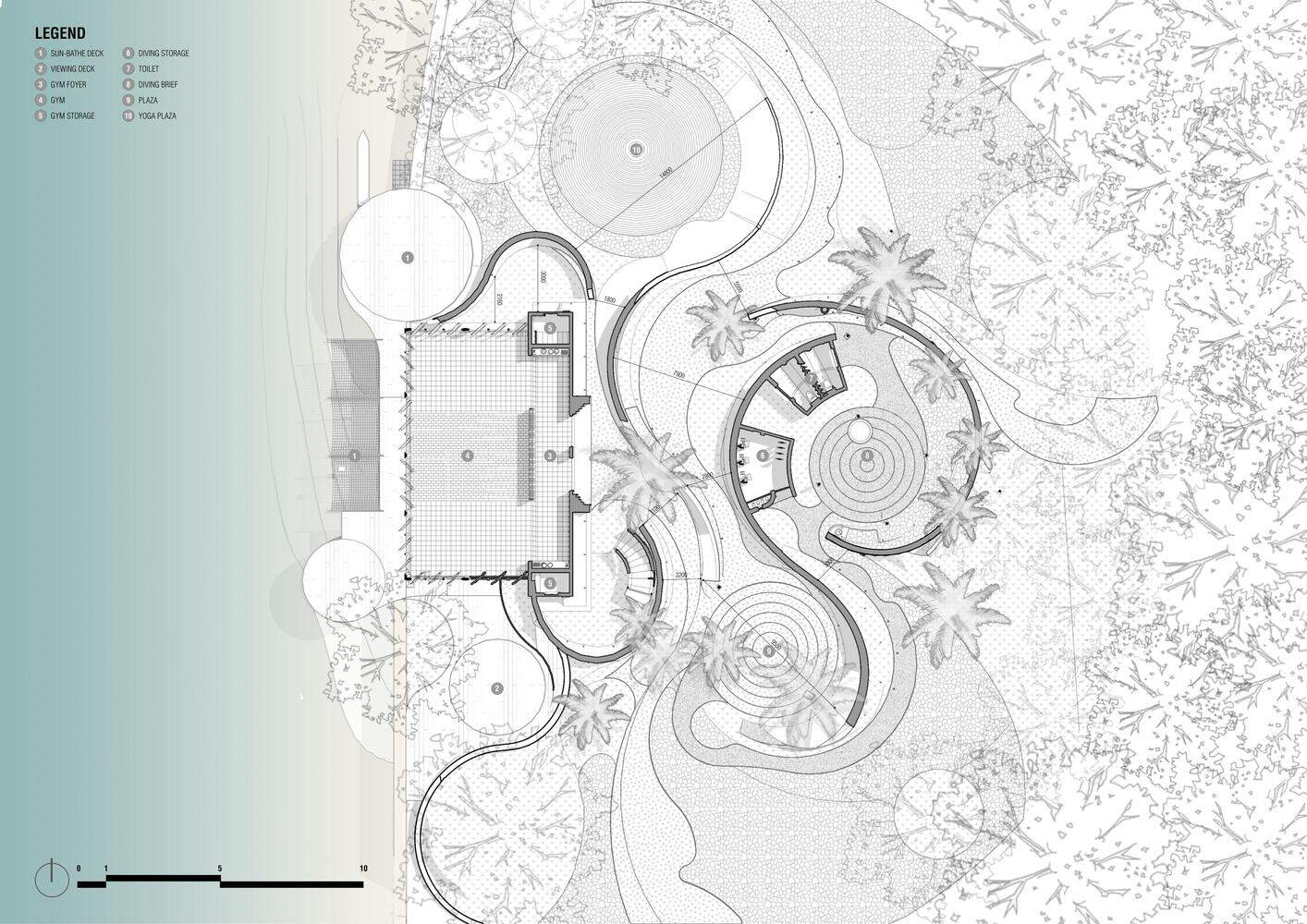
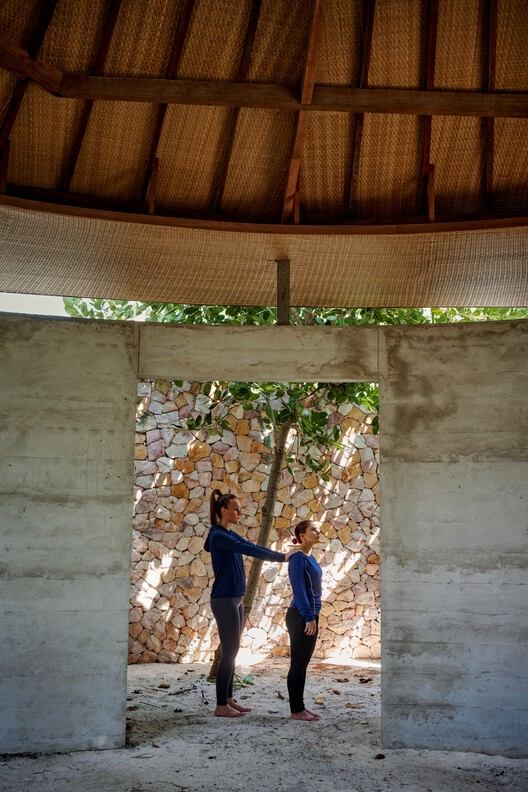
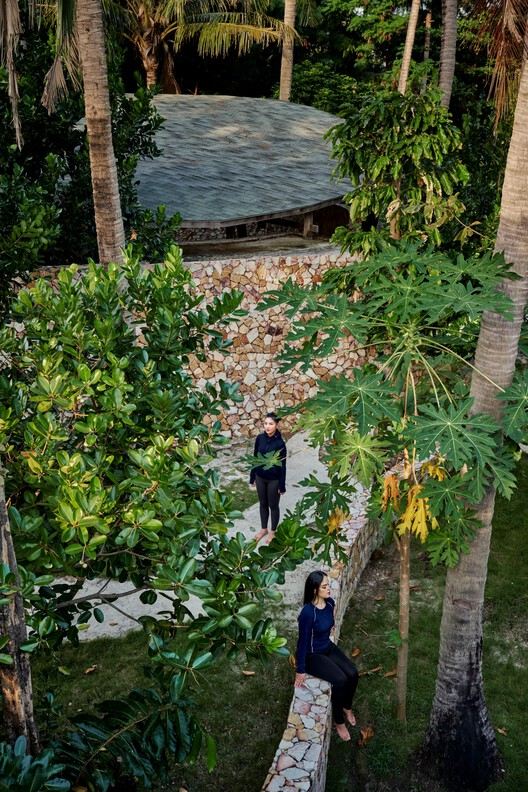
From the outside, the interweaving and changing of light and shadow on the circular building creates a delicate, unified, and constantly changing experience for visitors. The diverse and uneven coconut trees in the existing space determine that the interior and exterior walls of the building need to be designed with smooth curves. The indoor partitions are arranged in a relaxed and casual manner, wrapping and hiding all irregularities, forming a flowing space that seamlessly connects with nature. The rammed earth walls reinforced with limestone naturally extend from the interior to the exterior of the building, while visually dividing the garden into four areas: yoga square, fitness area, indoor diving classroom, and sunset viewing platform.
从外部看,光影在圆形建筑上的交织变幻,为访客营造出一种细腻、统一且不断变化的体验。现有空间中形态各异、参差不齐的椰子树,决定了建筑内外墙需采用流畅的曲线设计。室内隔断以轻松随性的方式布置,包裹并隐藏了所有不规则之处,形成了一个与自然无缝衔接的流动空间。石灰石加固的夯土墙从建筑内部自然延伸至外部,同时在视觉上将花园划分为四个区域:瑜伽广场、健身区、室内潜水教室和日落观景平台。
平面图
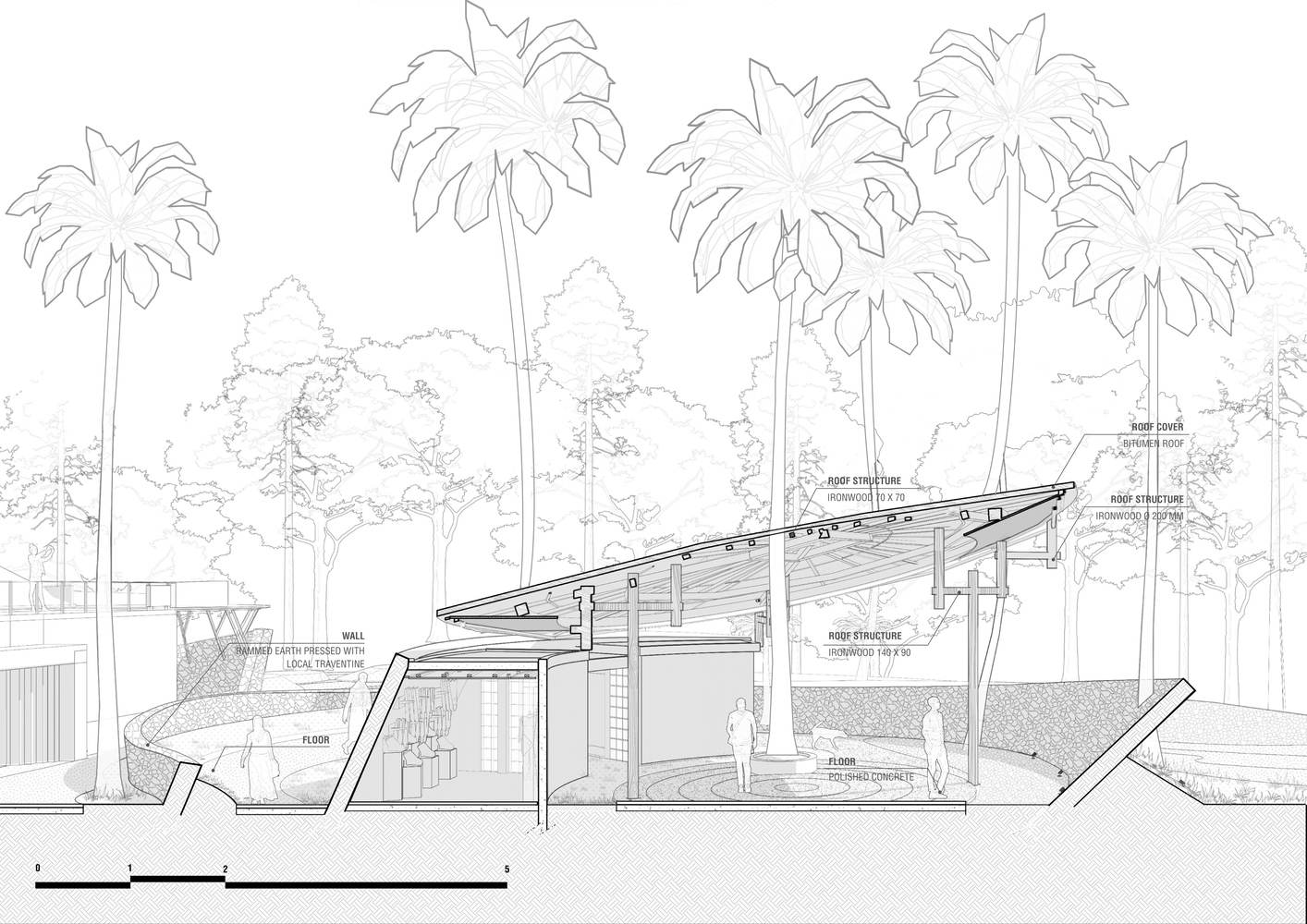
剖面图
The circular plane with central asymmetry but overall symmetry is very suitable for the needs of meditation space. The planning of visitor flow is a key consideration factor in the internal layout of the wellness hall. It is necessary to ensure that the logical arrangement of the route is clear and avoid overlapping or detours. The project adopts a nearly circular planar layout, forming an inscribed wave shaped wall, enclosing a circular space with a diameter of 30 meters. The surrounding area of this inscribed circle serves as a pathway for visitors. This layout strategy can effectively create private spaces without sacrificing outdoor experience. If a health lecture needs to be held to accommodate a large audience, the indoor walls can be converted into a tilted seating layout.
中央不对称却整体对称的圆形平面,十分契合冥想空间的需求。访客的动线规划是康养大厅内部布局的关键考量因素。必须确保动线安排逻辑清晰,避免出现路线重叠或绕行情况。该项目采用近乎圆形的平面布局,形成内切式波浪形墙体,围合出一个直径达 30 米的圆形空间。这个内切圆的周边区域作为访客的动线通道。这种布局策略既能有效营造私密空间,又不会牺牲户外体验。若需举办康养讲座以容纳大量听众,室内墙体可转换为倾斜式座椅布局。
© William Sutanto
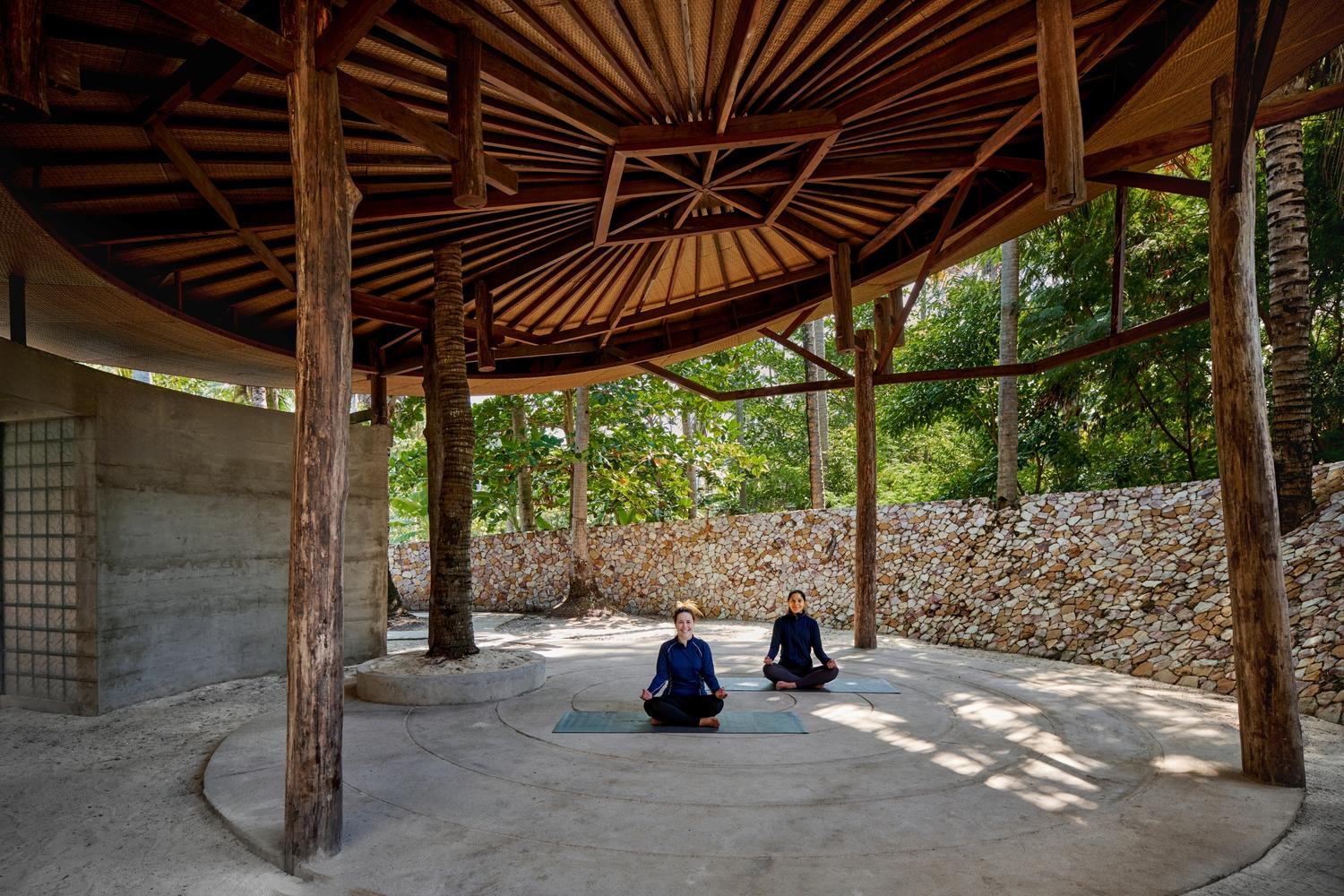
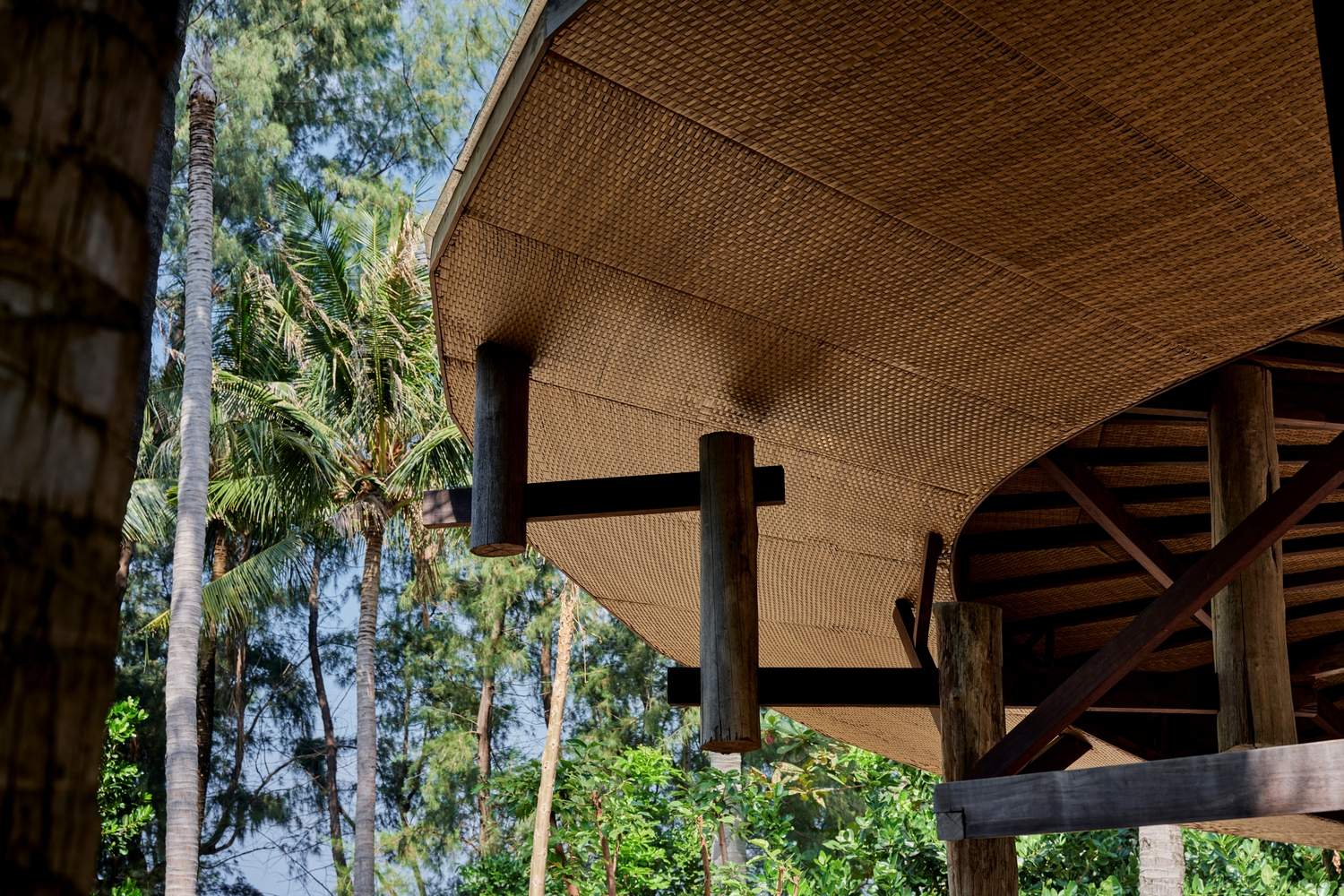
This project draws on traditional architectural wisdom and uses local trees to create stacked large section columns to support an 8-meter-long diagonal roof overhanging structure. These columns are arranged in a criss crossing manner to secure secondary small wooden beams. The roof is paved with wooden tiles, and the ceiling is decorated with rattan. The overall elliptical suspended roof slopes to the east, allowing natural light in the morning to penetrate and bring brightness to yoga practitioners and diving enthusiasts who are starting their day.
该项目借鉴传统建筑智慧,采用本地树木打造叠层大截面立柱,以支撑起 8 米长的斜向屋顶悬挑结构。这些立柱以纵横交错的方式排列,用以固定次级小型木梁。屋顶铺设木质瓦片,天花采用藤编装饰,整体呈椭圆形的悬浮屋顶向东侧倾斜,让清晨的自然光线能够穿透进来,为开始新一天练习的瑜伽修行者与潜水爱好者带来光明。
© William Sutanto
© William Sutanto
The sustainable concept embodied in traditional wooden architecture is of great value. Given that the site is located on a private island, it is crucial to minimize the transportation of imported materials by boat as this will result in a very high carbon footprint. This concept is specifically reflected in the dual attributes of architecture, which combines furniture functionality and structural support. A typical example is the use of local soil and stone to construct walls, while using treated coconut tree wood as an independent base for the roof structure. This type of building adopts local wooden frame as the structural system, with mortises chiseled on the columns to embed small wooden beams, and partition boards set on top of them. This approach not only reflects the local architectural wisdom, but also aligns with the concept of resource conservation. It not only saves materials and space, but also integrates structure, furniture, and space into a harmonious and unified whole.
传统木构建筑所蕴含的可持续理念颇具价值。鉴于场地坐落于私人岛屿之上,尽量减少通过船只运输进口材料至关重要,因为这将造成极高的碳足迹。这一理念具体体现在建筑兼具家具功能与结构支撑的双重属性中。一个典型例证是采用本地泥土与石材构筑墙体,同时以经过处理的椰树木材作为屋顶结构的独立基座。此类建筑采用本地木构架作为结构体系,立柱上凿有榫眼以嵌入小型木梁,其上再设置隔断板。这种做法既体现了当地的建筑智慧,又与资源节约的理念相契合。它不仅节省了材料和空间,还将结构、家具与空间融为一体,形成一个和谐统一的整体。
© William Sutanto