AirBubble Rehabilitation Space/ecoLogicStudio
AirBubble 康复空间 / ecoLogicStudio
设计理念与创新:AirBubble康复空间的核心在于其将生物科技与建筑设计完美融合的创新理念。它不仅是一个物理上的康复空间,更是一个生态友好的、多感官的体验场所。项目首次将空气净化藻类培养与药用植物结合,构建了独特的“生物技术健康花园”。这种设计颠覆了传统建筑设计对单一功能的追求,转而关注工作、心理健康、身体健康、放松和社交互动等多维度的平衡。这种“AirCampus”理念,旨在创造一个从室内到室外、从身体到心理的全面健康与福祉环境,展现了未来工作场所设计的发展方向。
技术与可持续性:项目在技术层面体现出高度的创新性,例如使用了ecoLogicStudio开发的PhotoSyntheticaTM技术。通过36个大型玻璃生物反应器,AirBubble每分钟可以过滤150升受污染的空气,并释放新鲜氧气。设计采用可持续的材料和建造方法,如ETFE膜、软木座椅以及无损于环境的结构固定方式。同时,通过种植当地植物、收集雨水等措施,最大程度地减少了对自然资源的依赖,体现了建筑设计对环境保护的责任感。此外,该项目采用的监测系统,可以测量多种污染物的空气质量,从而实现对环境的实时监测,为用户提供更加健康的环境。
空间体验与社会意义:AirBubble康复空间的设计着重于提供多感官的体验。通过藻类园艺系统的声音、新鲜草药和花朵的香气,创造了一个宁静、舒缓的氛围,有助于缓解身心压力。整个空间设计旨在营造一种与自然的亲密关系,鼓励人们在工作之余享受身心的放松与康复。此外,该项目也具有重要的社会意义,它不仅仅是一个建筑作品,更是一个提高人们对空气污染影响认识的平台。通过将这一设计理念推广到不同的应用场景,如游乐场、展览等,AirBubble旨在为社会带来积极的改变,倡导更健康、更可持续的生活方式。
© Pepe Fotografia
© Pepe Fotografia
This design innovation company headquartered in London and Turin has completed the third iteration of its AirBubble design concept, marking a new development in their long-term research on urban well-being. This rehabilitation space designed for a Swiss consumer health company establishes a new symbiotic relationship between humans and nature. AirBubble Rehabilitation Space is the world's first biotechnology health garden that combines air purifying algae cultivation with medicinal plants. This project has pioneered a new spatial concept that balances work, mental health, physical health, relaxation, and interaction among employees from different departments. In addition, it provides a multi sensory experience enhanced by bubbling oxygen and the aroma of fresh herbs and flowers.
这家总部位于伦敦和都灵的设计创新公司完成了其 AirBubble 设计概念的第三次迭代,标志着他们在城市福祉长期研究中的新发展。这个为瑞士一家消费者健康公司设计的康复空间,在人与自然之间建立了新的共生关系。AirBubble 康复空间是世界上首个生物技术健康花园,它将净化空气的藻类培养与药用植物相结合。该项目开创了一种新的空间概念,平衡了工作、心理健康、身体健康、放松以及不同部门员工之间的互动。此外,它还提供了一种多感官体验,通过冒泡的氧气以及新鲜草药和花朵的香气来增强这种体验。
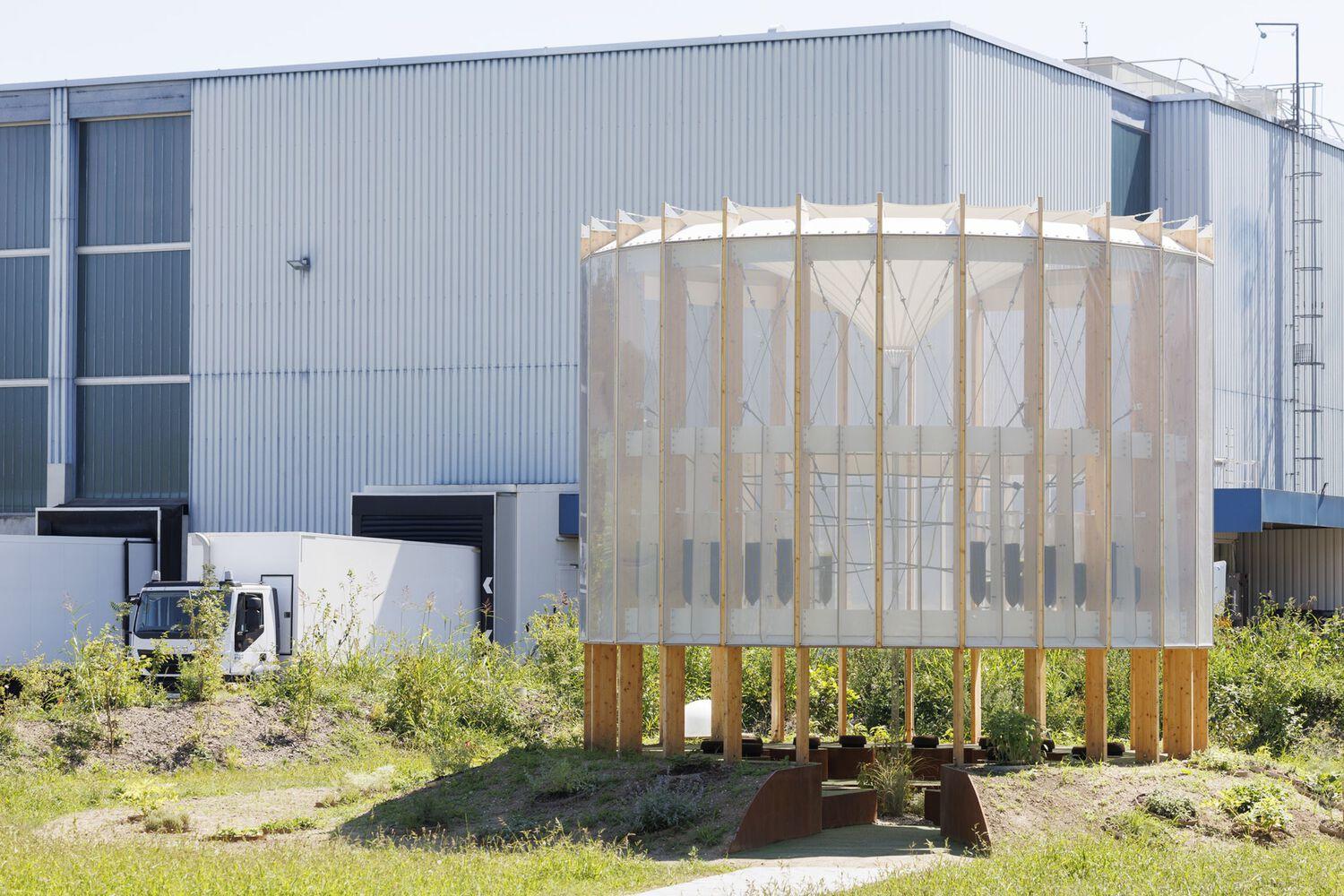
© Pepe Fotografia
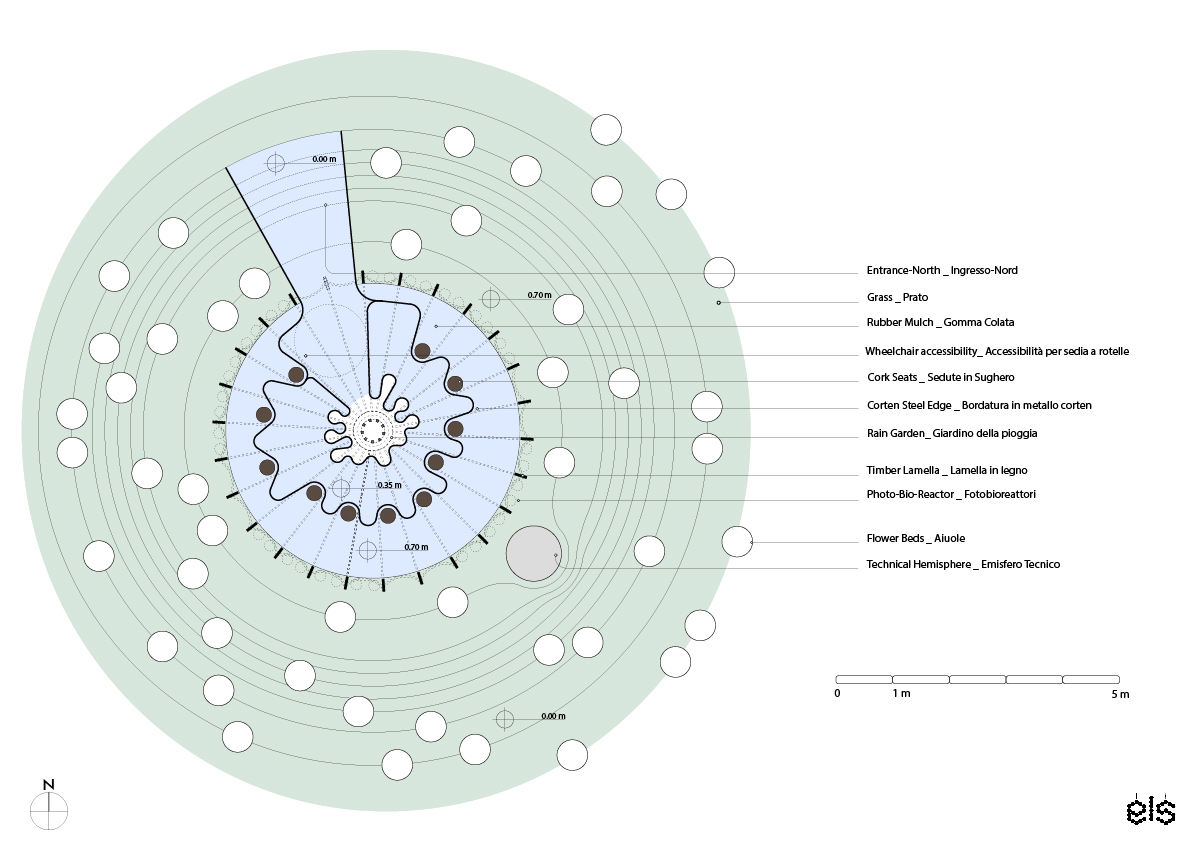
空间平面图
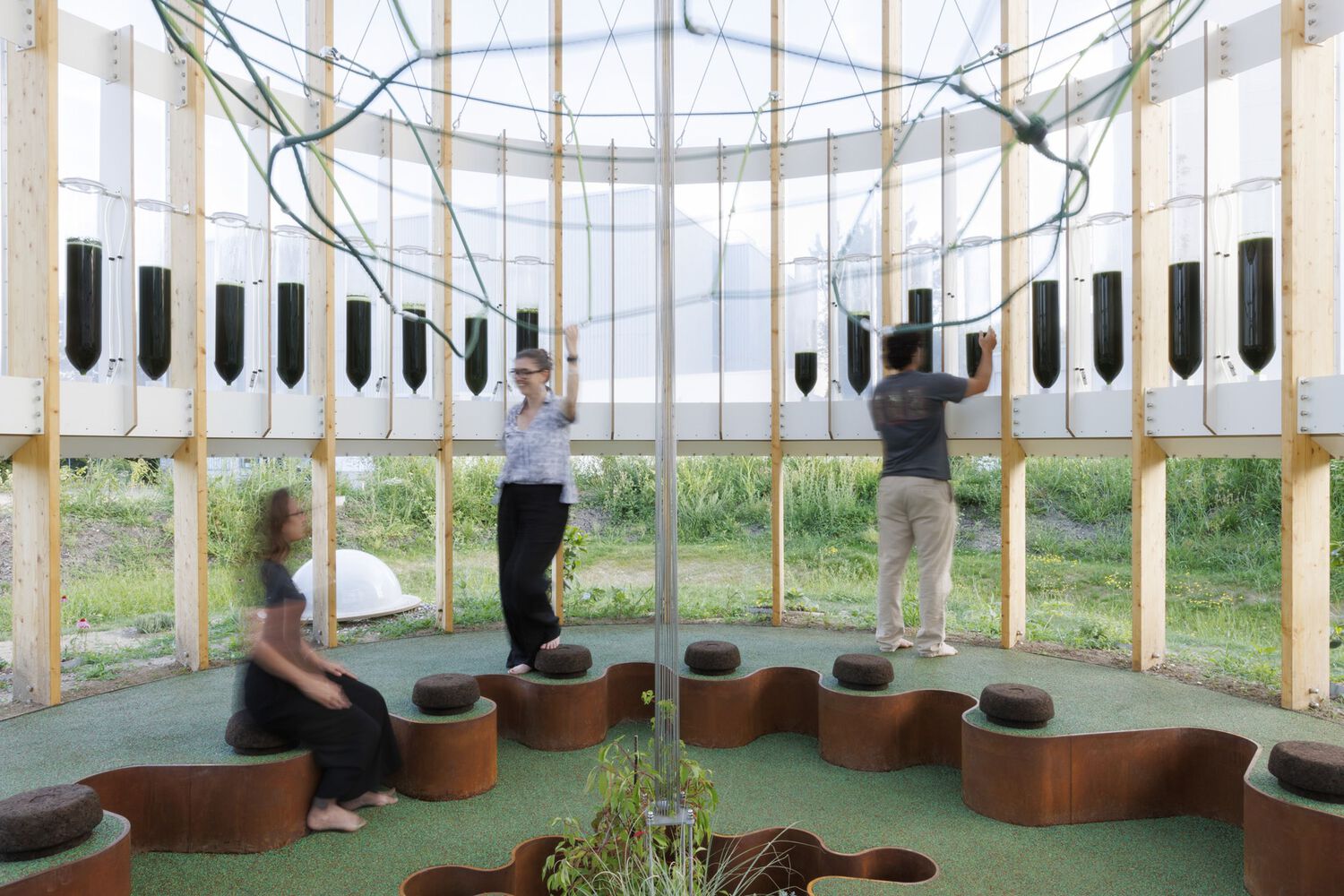
© Pepe Fotografia
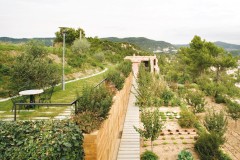
The project is located in the green space around the factory in Nyon, Switzerland, and is part of the broader vision of 'AirCampus'. It includes a new AirBubble rehabilitation space, AirOffice (a symbiotic indoor workspace that combines advanced gardening with air filtration), and the recently launched AIReactor (a biotechnology desktop air purifier). AirCampus is envisioned as a groundbreaking architectural solution aimed at promoting comprehensive health and well-being in the workplace, from indoor to outdoor, from physical to mental health. As a bio design innovation project, AirBubble Rehabilitation Space is a replicable and scalable building system that can be installed in any work environment worldwide.
该项目位于瑞士尼翁的工厂周围的绿地中,是更广泛愿景“AirCampus”的一部分。它包括新的 AirBubble 康复空间、AirOffice(一个将先进园艺与空气过滤相结合的共生室内工作空间)以及最近推出的 AIReactor(生物技术桌面空气净化器)。AirCampus 被构想为一种开创性的建筑解决方案,旨在促进工作场所从室内到室外、从身体健康到心理健康的全面健康和福祉。作为生物设计创新项目,AirBubble 康复空间是一个可复制且可扩展的建筑系统,可以安装在全球任何工作环境中。
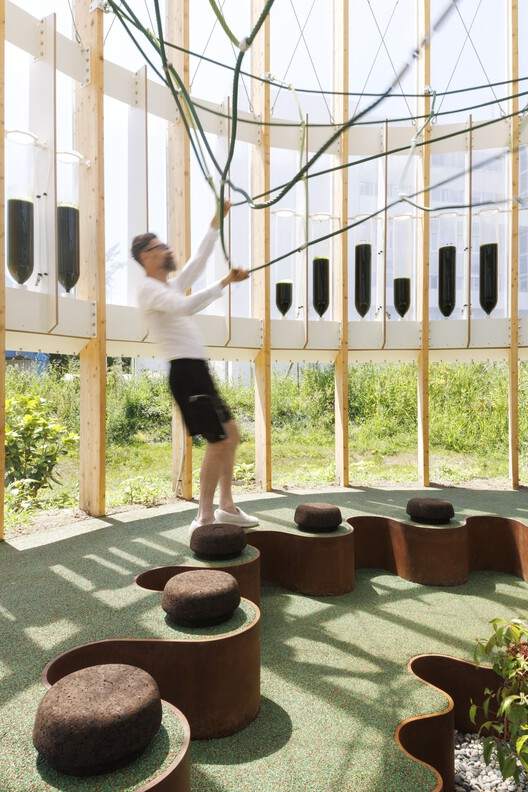
© Pepe Fotografia
This project brings a new perspective on the relationship between workplace and landscape design to Nyon by redesigning the pre industrial era botanical garden model and surpassing the current medical industry model. "We explored the origin of the pharmaceutical industry by studying the medicinal garden in Padova, Italy, where the medicinal essence and plants were planted as part of the community park. Then, we transformed this concept into the bio digital era and cultivated these substances again in the public domain." - Marco Poletto, co-founder of ecoLogic Studio, said.
该项目通过重新设计前工业时代植物园的模式并超越当今医疗行业的模式,为尼翁带来了关于工作场所与景观设计之间关系的新视角。“我们通过研究意大利帕多瓦的药用花园,探索了制药业的起源,那里的药用精华和植物是作为社区公园的一部分而种植的。然后,我们将这一概念转化为生物数字时代,在公共领域再次培育这些物质。”——ecoLogicStudio联合创始人Marco Poletto说道。
© Pepe Fotografia
剖面图
© Pepe Fotografia
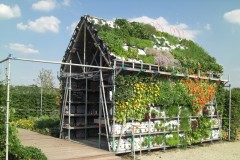
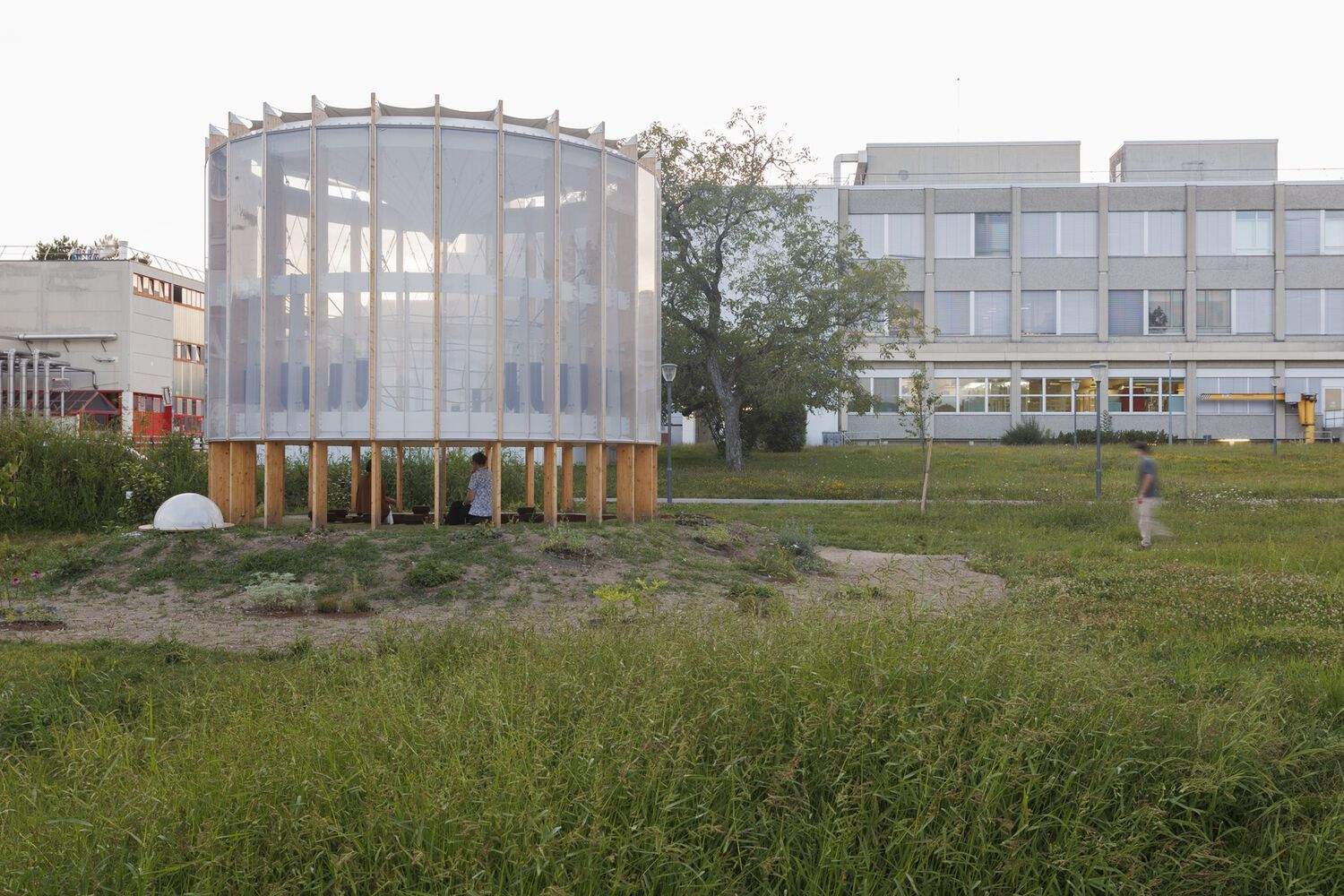
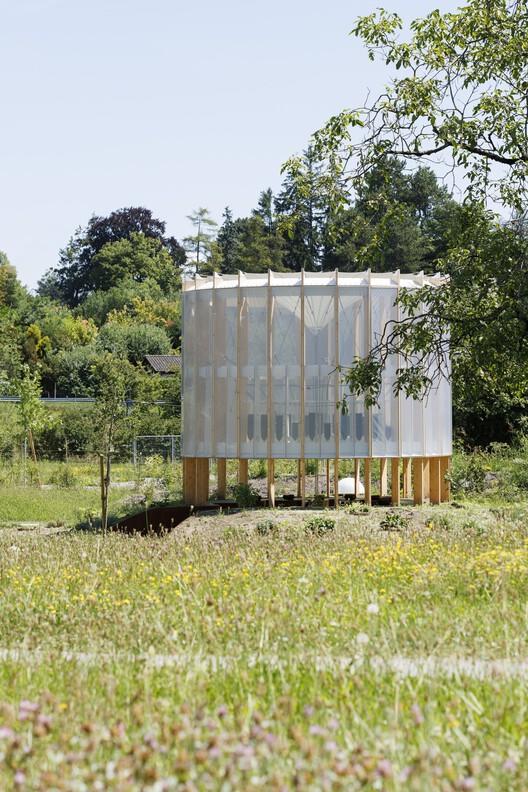
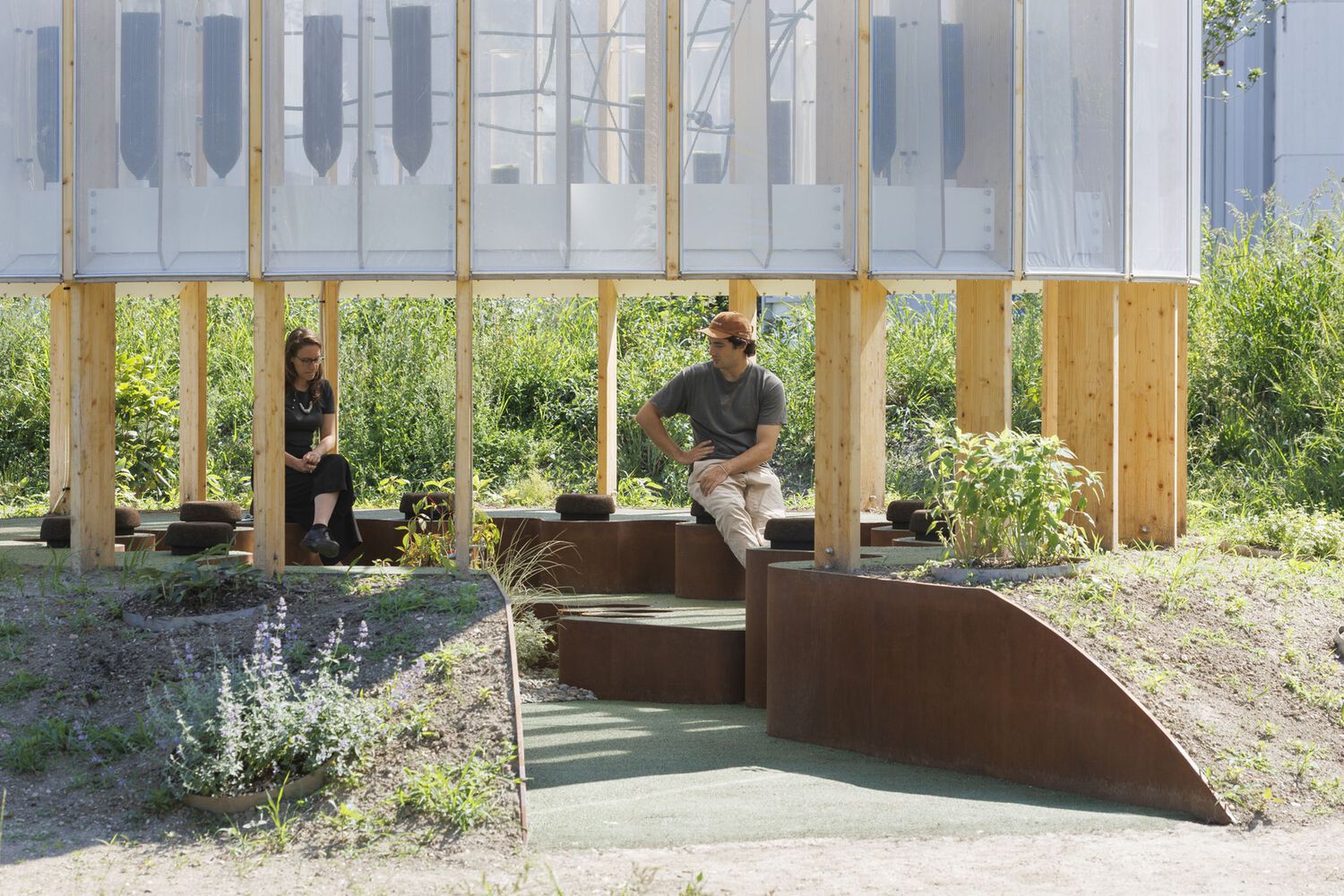
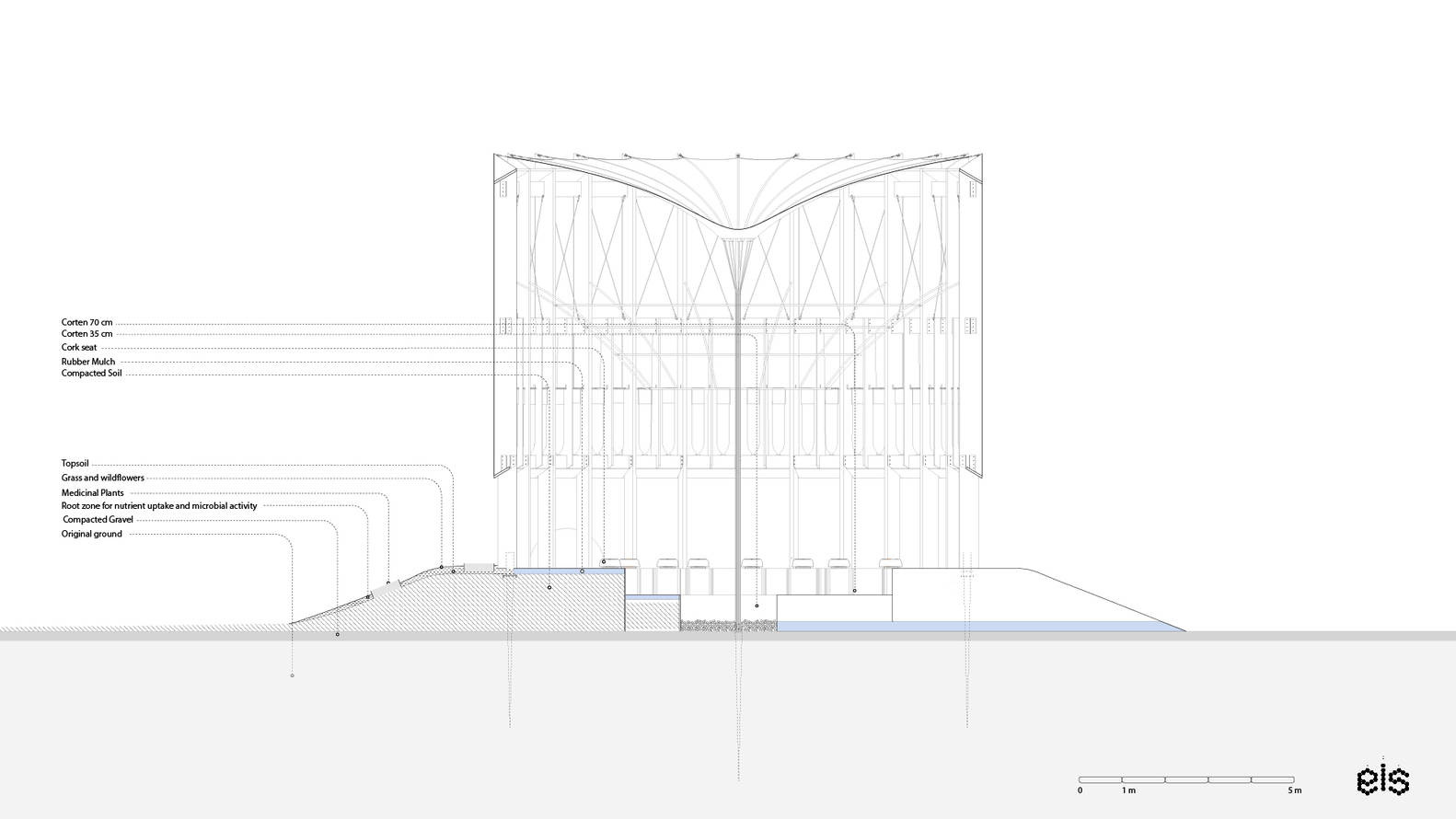
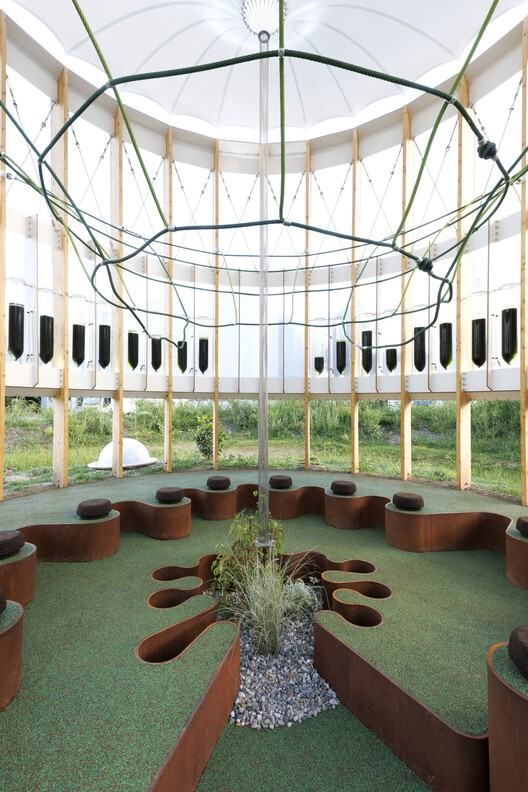
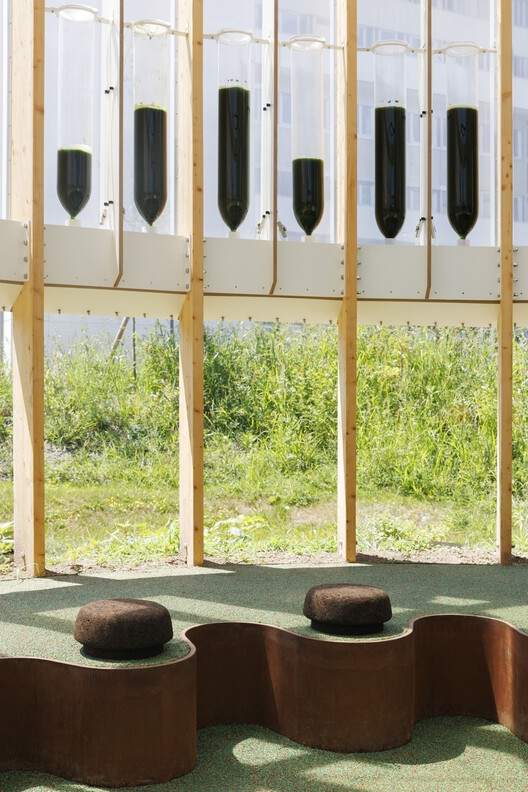
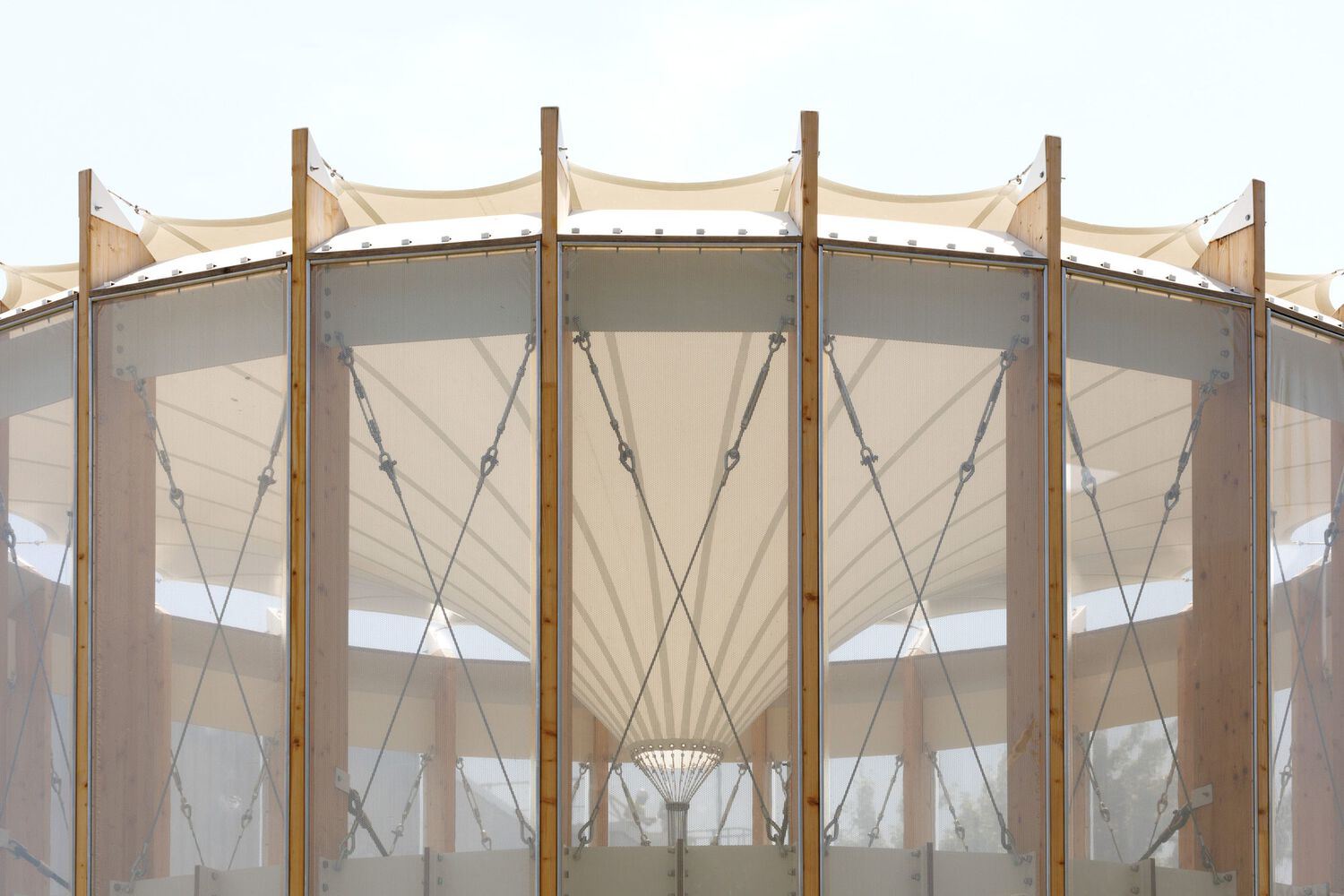
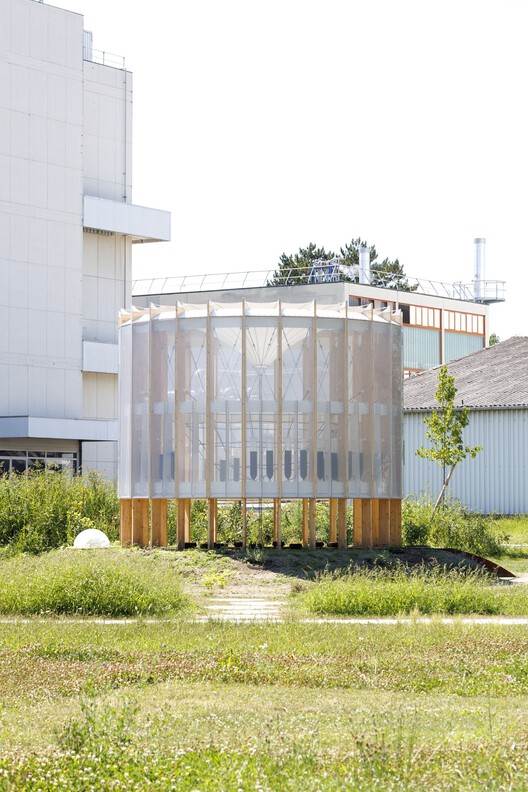
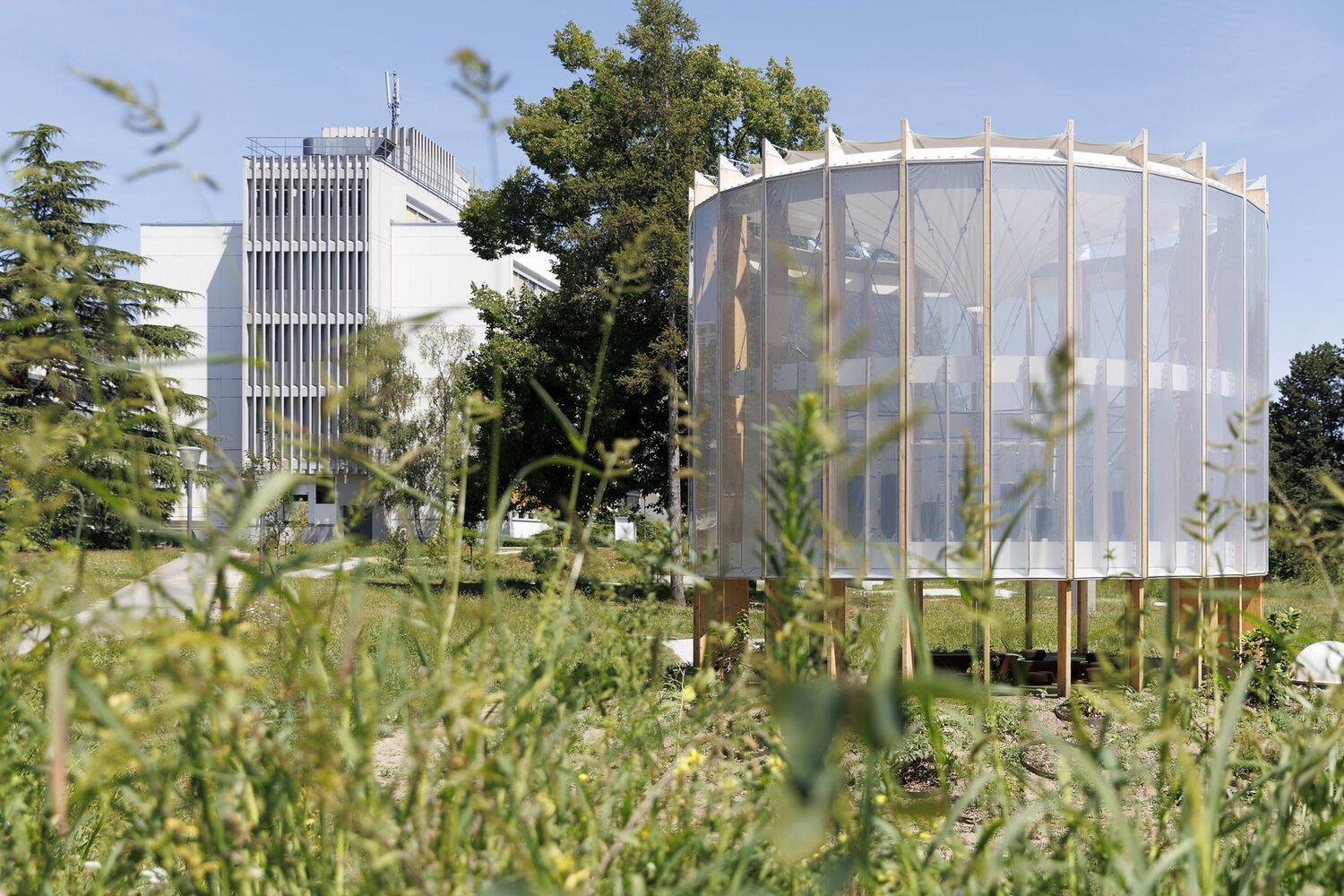
The AirBubble rehabilitation space integrates PhotoSyntheticaTM technology developed by ecoLogicStudio in the same named academic alliance since 2018. Starting from 2021, ecoLogicStudio has been exploring how to integrate biotechnology systems into architecture, interior, and landscape design. Its goal is to involve users in different stages of the air purification process, emphasizing its benefits for personal and workplace human health and well-being, and creating new green areas within the factory production area. The AirBubble rehabilitation space consists of a 6-meter-high cylindrical wooden structure that is interconnected on three levels, wrapped in ETFE film, and situated on top of a landscaped mound. The middle part of the wooden structure is equipped with 36 large borosilicate glass bioreactors, containing 350 liters of live green algae culture, which can filter 150 liters of polluted air per minute. While cleaning particles in liquid media, algae also actively engulf pollutants and carbon dioxide, releasing fresh and clean oxygen. The architectural form of AirBubble rehabilitation space enhances the filtration process: the inverted conical roof membrane further promotes air recirculation and natural ventilation. The white bubbling sound of the algae gardening system masks the noise of the truck loading and unloading area, creating an ideal peaceful atmosphere that helps relieve physical and mental stress. In addition, the harvested biomass can be added to the cafeteria menu, made into algae drinks and vegetable protein bread, or used as fertilizer for wild grasslands and 47 medicinal plants arranged concentric around the central seating area.
AirBubble 康复空间集成了 ecoLogicStudio 自2018年以来在同名学术联盟中开发的 PhotoSyntheticaTM 技术。从2021年开始,ecoLogicStudio 开始探索如何将生物技术系统融入建筑、室内和景观设计中。其目标是让用户参与到空气净化过程的不同阶段中,强调其对个人和工作空间内人类健康和福祉的益处,并在工厂生产区域内创造新的绿色区域。AirBubble 康复空间由一个6米高的圆柱形木结构组成,该结构在三个层次上相互连接,被ETFE膜包裹,坐落在一个景观化的土堆顶部。木结构的中间部分设有36个大型硼硅酸盐玻璃生物反应器,内含350升活的绿色小球藻藻类培养物,这些藻类能够每分钟过滤150升受污染的空气。在液体介质清洗颗粒物的同时,藻类还会主动吞噬污染分子和二氧化碳,然后释放出新鲜清洁的氧气。AirBubble 康复空间的建筑形态增强了过滤过程:倒置的圆锥形屋顶膜进一步促进了空气再循环和自然通风。藻类园艺系统的白色冒泡声掩盖了卡车装卸区的噪音,营造出一种理想的宁静氛围,有助于缓解身心压力。此外,收获的生物质可以加入食堂菜单,制作成藻类饮料和蔬菜蛋白面包,或作为野生草地和围绕中心座位区同心排列的47种药用植物的肥料。
© Pepe Fotografia
© Pepe Fotografia
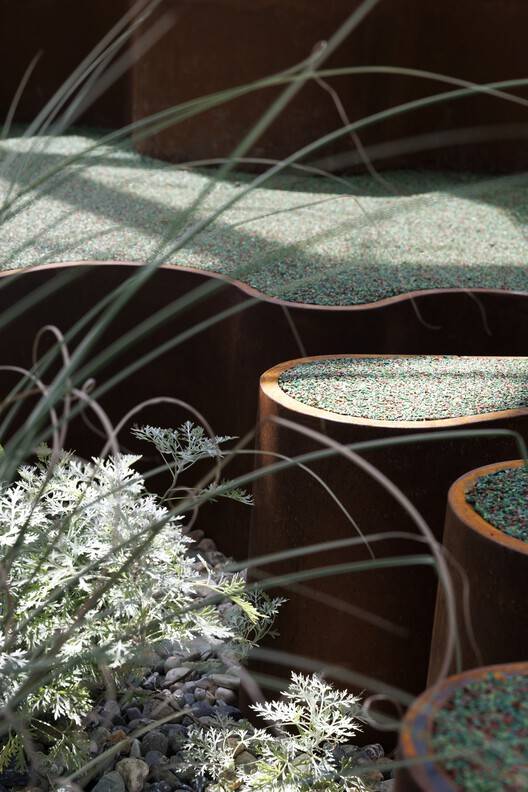
Tourists step into a rubber surface made of a mixture of dark green and brown particles, leading to a spacious two-story seating area. The architect chose two winding Cotton steel plates due to their weather resistance, creating a central petal shaped sculpture where the roof membrane converges into a small rain garden. There are 11 cork seats fixed on the rubber surface on the periphery. These seats are made of cork sheets that have been moistened to release natural resin, forming several dark brown cork blocks that are then CNC cut into softer shapes. In order to minimize the impact on the ground, the wooden structure is fixed with 26 anchor bolts. By avoiding the use of concrete piles or piers, this structural solution does not damage the landscape and is completely reversible. In addition, by planting local plants that grow with the seasons and collecting rainwater, AirBubble rehabilitation space does not require irrigation water, thus protecting natural resources.
游客步入一个由深浅绿色以及棕色颗粒混合而成的橡胶表面,通向一个宽敞的两层座位区。建筑师选择了两块蜿蜒的考顿钢板,因其具有耐候性,从而创造了一个中央花瓣状的雕塑——屋顶膜在这里汇聚成一个小型雨水花园。外围有11个软木座位固定在橡胶表面上。这些座位由软木片制成,经过湿润处理以释放天然树脂,形成几个深棕色的软木块,然后通过数控切割成更柔软的形态。为了尽量减少对地面的影响,木结构通过26个地脚螺栓固定。通过避免使用混凝土桩或墩块,这种结构解决方案不会破坏景观,且完全可逆。此外,通过种植随季节生长的当地植物以及收集雨水,AirBubble 康复空间无需使用灌溉水,从而保护了自然资源。
© Pepe Fotografia
The AirBubble rehabilitation space is surrounded by a medicinal garden consisting of 47 planting pots. The four autumn and winter flowering plants closest to the main structure are common marigold, evergreen rock cabbage, camellia, and Japanese silver lotus. Far away from the center, there are 16 types of plants that bloom in spring and summer, including common medicinal plants such as sage, common thyme, lemongrass, and peppermint, as well as plants with more specific properties such as medicinal lung grass, traditionally used to treat respiratory system related diseases, or catnip, which has medicinal properties related to mental health and stress reduction. The project is equipped with a monitoring system that integrates urban air pollution sensors and measures the air quality index of six major pollutants: fine particulate matter PM2.5 and PM10, ground level ozone (O3), nitrogen dioxide (NO2), sulfur dioxide (SO2), and carbon monoxide (CO). AirBubble can absorb 97% of nitrogen and 75% of particulate matter in the air.
AirBubble 康复空间被一个由47个种植盆组成的药用花园环绕。最接近主体结构的是四种秋冬开花植物:普通金盏花、常绿岩白菜、山茶和日本银莲花。远离中心处,分布着16种春夏开花的植物,包括常见的药用植物如药用鼠尾草、普通百里香、柠檬香蜂草和胡椒薄荷,以及具有更特定属性的植物,如药用肺草,传统上用于治疗与呼吸系统相关的疾病,或猫薄荷,具有与心理健康和减压相关的药用特性。该项目配备了一个监测系统,集成了城市空气污染传感器,并测量六种主要污染物的空气质量指数:细颗粒物PM2.5和PM10、地面臭氧(O3)、二氧化氮(NO2)、二氧化硫(SO2)和一氧化碳(CO)。AirBubble 能够吸收空气中97%的氮和75%的颗粒物。
© Pepe Fotografia
AirBubble Rehabilitation Space is part of a broader project aimed at raising awareness about the impact of air pollution on human health. The previous chapters of this project included the AirBubble amusement park in Warsaw, the AirBubble inflatable air purification ecological machine installed at COP26, COP27, and the Saudi Design Festival, and the AirLab showcased in London.
AirBubble 康复空间是一个更广泛项目的一部分,该项目旨在提高人们对空气污染对人类健康影响的认识。此项目的先前章节包括华沙的 AirBubble 游乐场、在 COP26、COP27 和沙特设计节上安装的 AirBubble 充气空气净化生态机器,以及在伦敦展示的 AirLab。
© Pepe Fotografia