Emergency Comprehensive Building of Shandong University Qilu Hospital/Meng Jianmin Team
山东大学齐鲁医院急诊综合楼 / 孟建民团队
项目亮点:山东大学齐鲁医院急诊综合楼的设计巧妙地应对了紧张的建设用地和复杂的周边环境。双塔式布局和流线型裙房的结合,在有限的空间内实现了功能的最大化和与城市环境的和谐共生。设计师通过对地块的合理利用,创造了独特的城市街角形象,并利用高差设计双首层到达系统,提升了交通效率和空间体验。这种设计策略不仅满足了医院的功能需求,还建立了友好的城市界面,体现了设计师对城市文脉的尊重和对公共空间的关注。
项目精髓:该项目的精髓在于其对“院城共生”理念的深度诠释。设计师通过一系列设计手法,将大型医疗综合体融入城市公共生活。例如,在双塔间设计视线通廊,避免了对原有建筑的视觉干扰;设置空中连廊,实现了新旧院区的无缝连接,加强了医疗功能的整合。此外,项目还注重人文关怀,通过阳光花园和景观庭院的设计,为医患创造了疗愈空间。这些举措体现了设计团队对城市、环境和使用者的全方位考虑。
设计理念:在功能布局上,项目展现了高效和人性化的设计理念。急诊急救楼的便捷交通设计、介入中心的中控室设置、以及住院部与医技区域的紧密联系,都体现了对医疗流程优化的深入思考。同时,设计团队通过设置双护理单元和共享交流厅,既满足了不同科室的需求,又促进了科研人员的交流。这些细节设计无不体现了设计师在满足医疗功能的同时,兼顾了患者、医护人员和科研人员的需求,创造一个开放、高效、体现人文关怀的医疗环境。
© 方方的田
© 方方的田
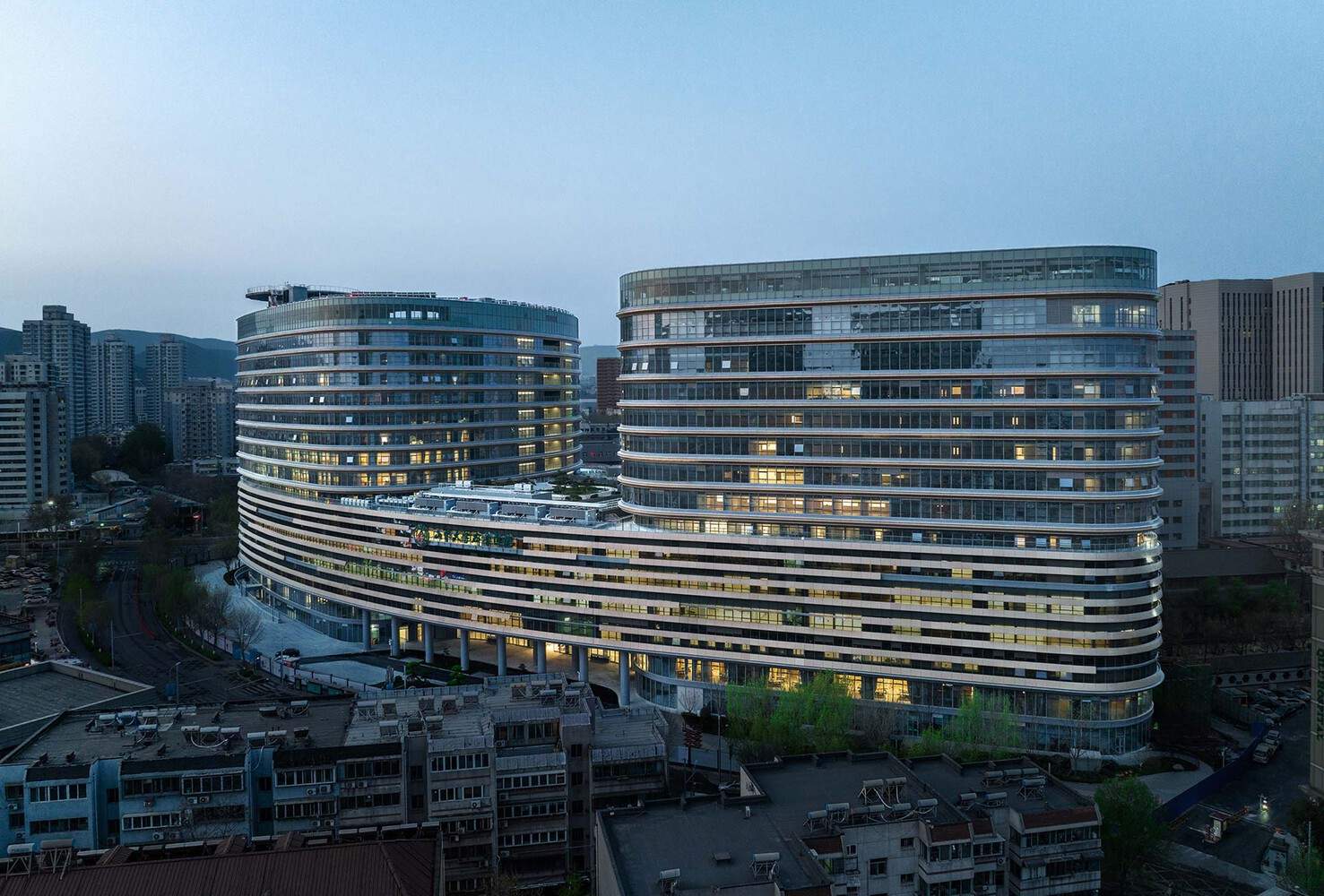
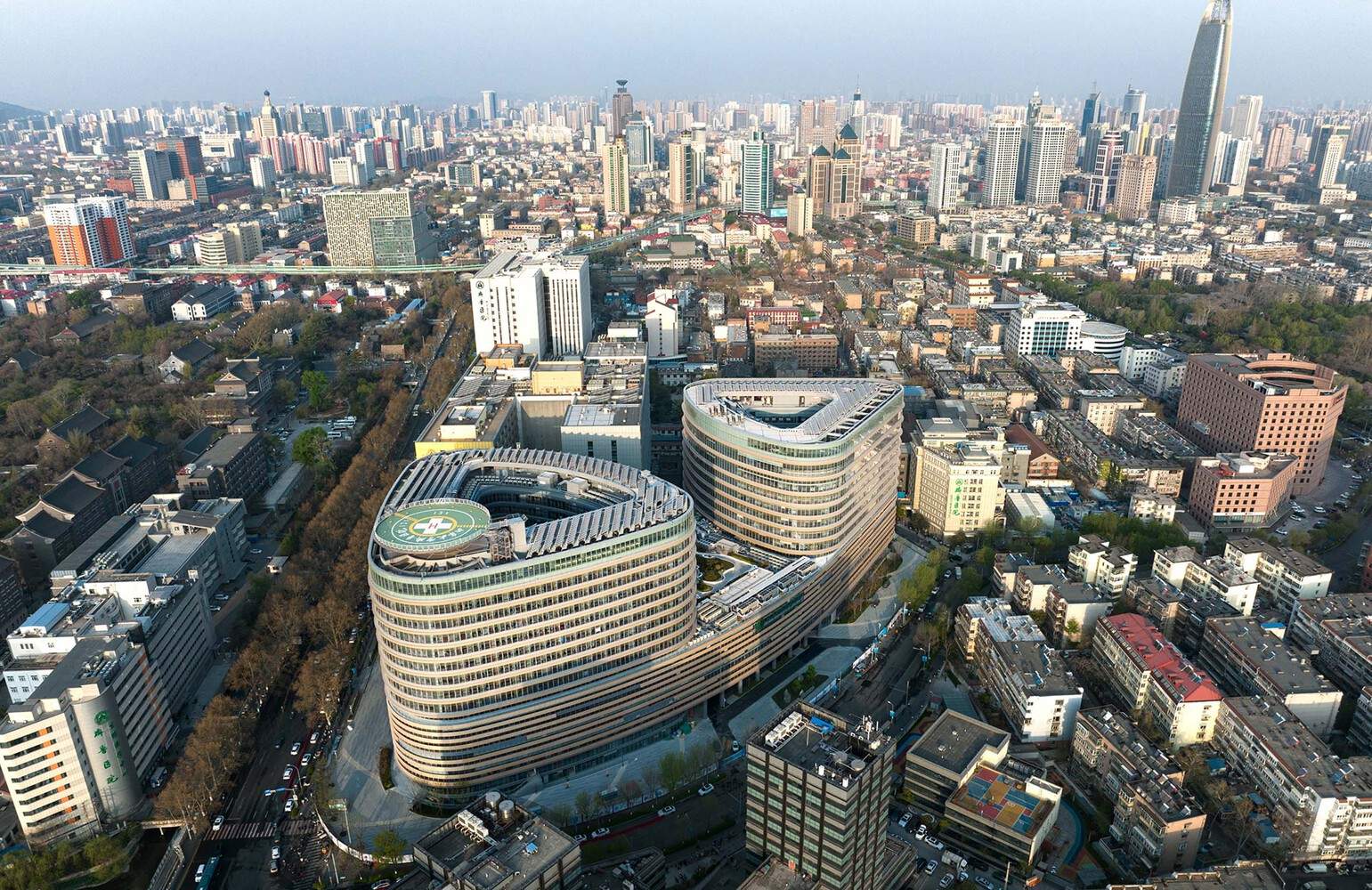
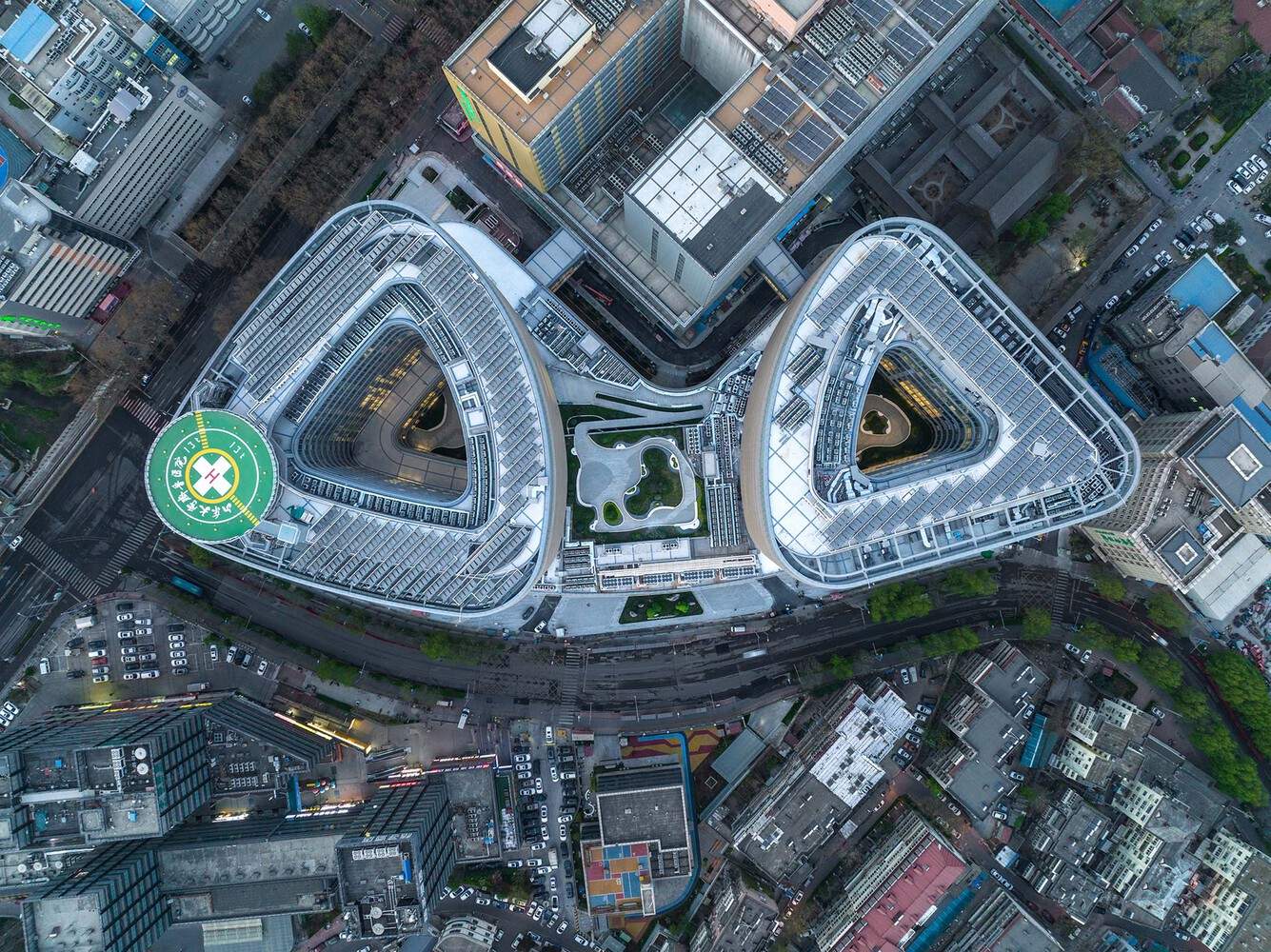
Shandong University Qilu Hospital is a tertiary Grade A comprehensive hospital under the jurisdiction of the National Health Commission. It is the leading and main construction unit of the first batch of national regional medical centers jointly built by the commission and the province. The project was founded in 1890 and is located in the Lixia Ancient City Protection Zone of Jinan City. As both the affiliated hospital and teaching hospital of Shandong University, the original planning and layout can no longer meet the multiple needs of current medical, teaching, scientific research, and other aspects. Based on this background, the emergency comprehensive building of Shandong University Qilu Hospital started its design in 2020. The project covers functions such as emergency first aid, internal medicine diagnosis and treatment, imaging center, scientific research and teaching, and medical laboratory. It is a medical complex that integrates medicine, education, and research, with a total of 800 beds. The building is arranged in a twin tower style, with the north tower serving as the administrative and research area; South Tower serves as a treatment ward; The podium is used for demonstration teaching, cafeteria, emergency first aid, imaging, intensive care unit (ICU), operating room, etc; The basement is used as a garage and ancillary equipment room. After the completion of the project, it will further promote the integrated development of medicine, education, and research at Shandong University Qilu Hospital, becoming a model for fully building a national regional medical center. The project construction land is tight and the terrain is complex, with high plot ratio and density. At the same time, it involves hospital renovation and expansion projects, which combine multiple repetitions, complexities, and contradictions. Therefore, how to bridge the gap between large hospitals and urban environments through design, establish a friendly and harmonious urban interface, and integrate the huge medical complex of Shandong University Qilu Hospital into urban public life is the difficulty and challenge of this design. The design team always adheres to one design goal: to create a hospital that coexists with the city, is open, efficient, and embodies humanistic care.
山东大学齐鲁医院是国家卫生健康委员会委属(管)的三级甲等综合医院,是首批委省共建国家区域医疗中心的牵头方和主体建设单位。项目始建于1890年,位于济南市历下古城保护区,同时作为山东大学附属医院与教学医院,原有的规划布局早已无法满足当下医疗、教学、科研等方面的多重需求。基于这一背景,山东大学齐鲁医院急诊综合楼于2020年启动设计。项目涵盖了急诊急救、内科诊疗、影像中心、科研教学及医学实验室等功能,是实现医、教、研融合的医学综合体,总床位数为800张。建筑呈双塔式布局,其中北塔是行政、科研区;南塔作为治疗病区;裙房为示范教学、食堂、急诊急救、影像、重症监护病房(ICU)、手术室等;地下室为车库及附属设备用房。项目建成后将进一步推动山东大学齐鲁医院医、教、研的融合发展,成为全力打造国家区域医疗中心的样板。项目建设用地紧张且地形复杂,容积率高、密度高,同时涉及医院改扩建工程,集多重复杂性与矛盾性于一体。因此,如何通过设计缝补大型医院与城市环境之间的断层,建立友好、和谐的城市界面,使山东大学齐鲁医院这个庞大的医疗综合体融入城市公共生活,是本次设计的难点与挑战。设计团队始终坚持一个设计目标:创造一个与城市共生,且开放、高效、体现人文关怀的医院。
© 方方的田
总平面图
© 方方的田
Campus City: Symbiosis and Balance
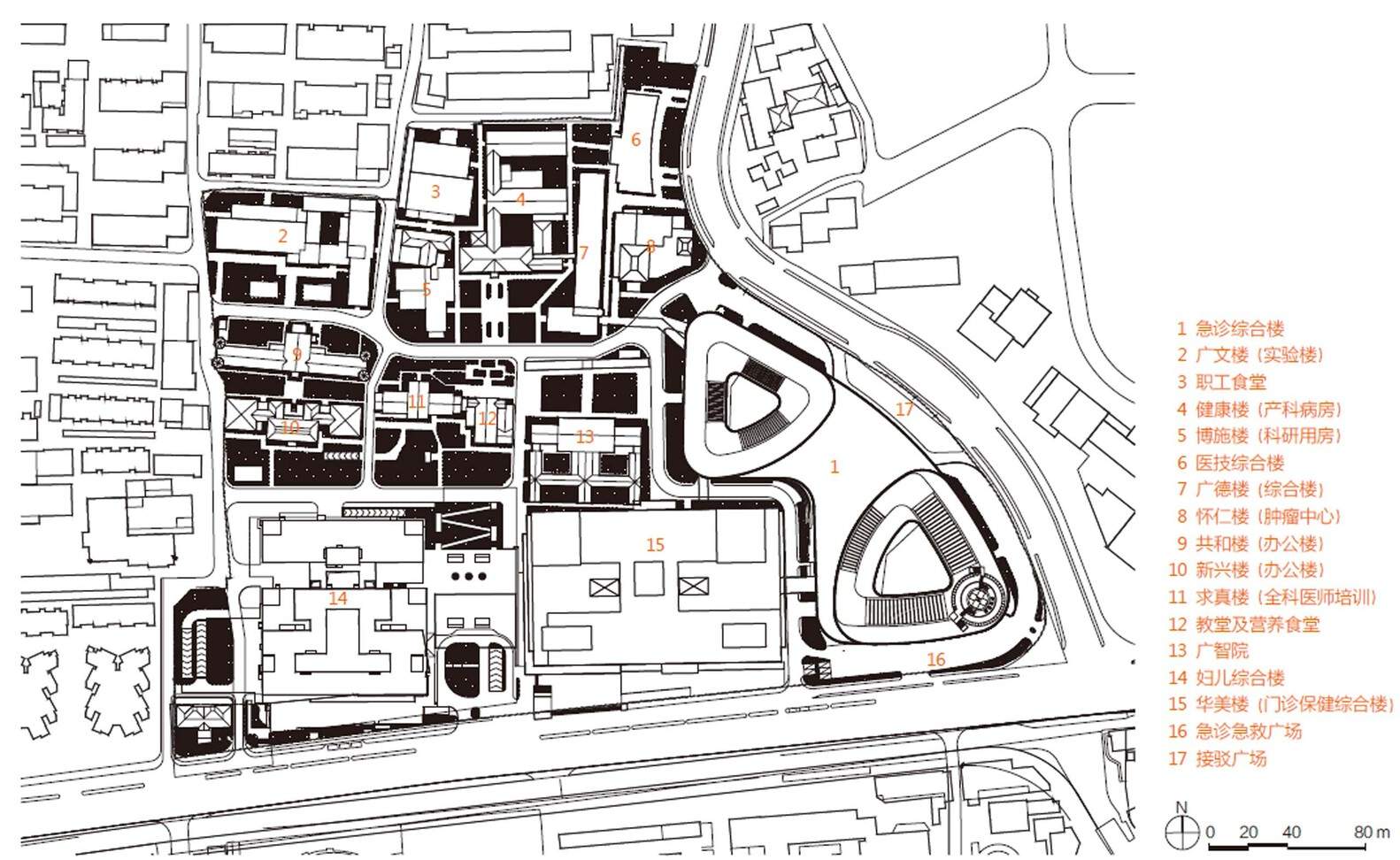
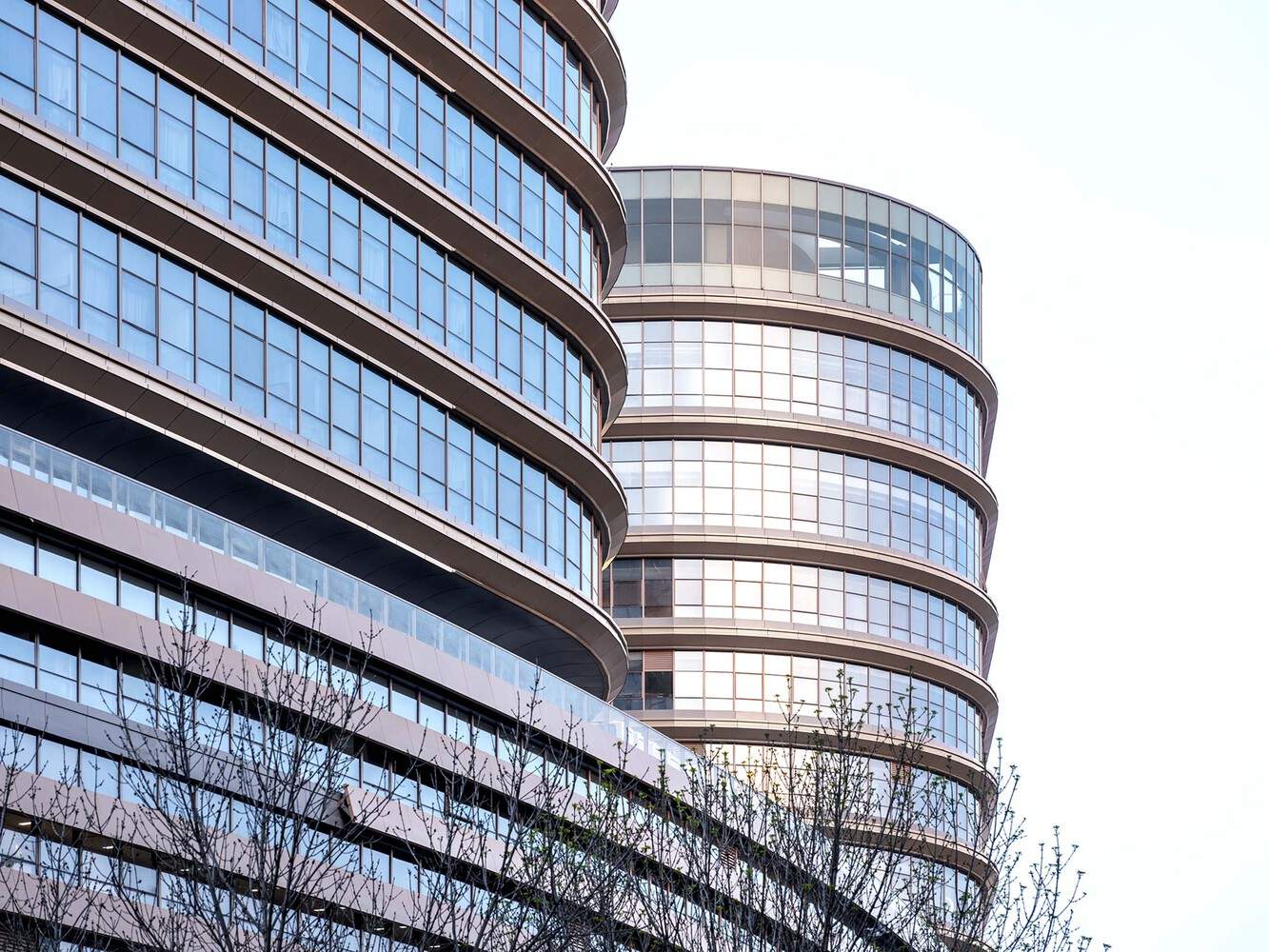
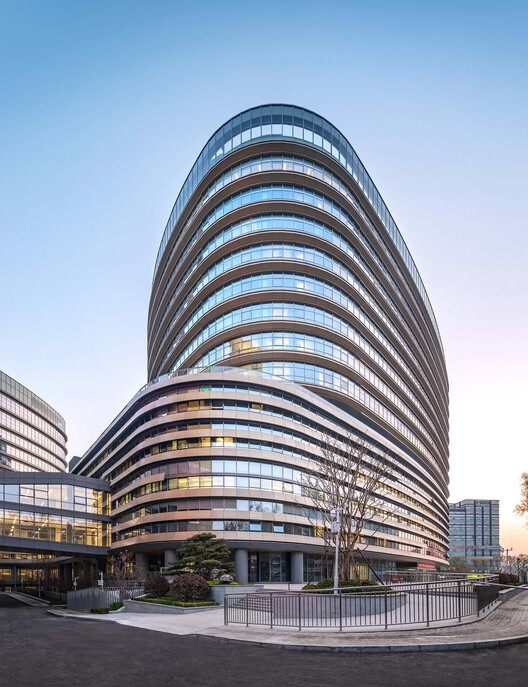
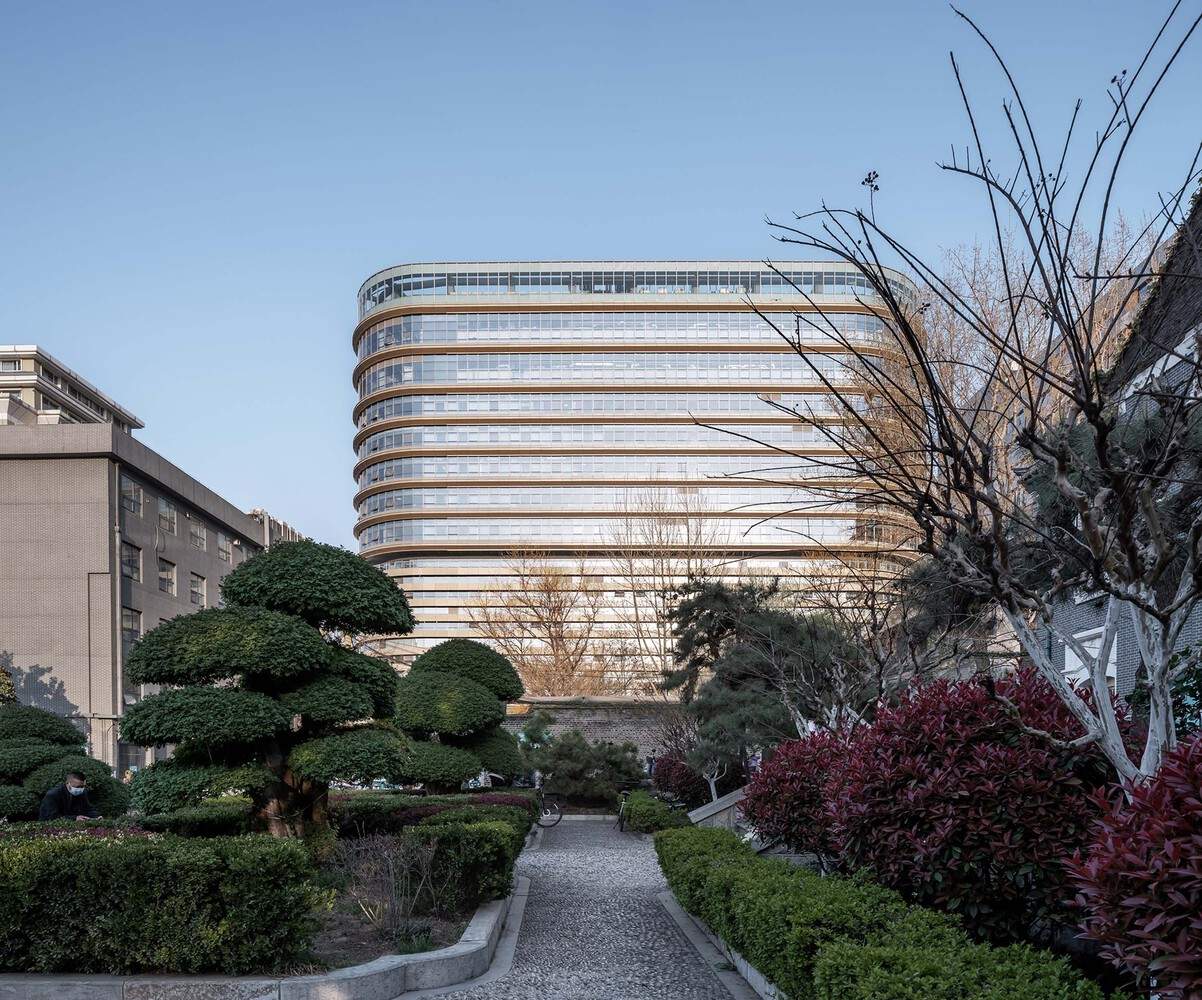
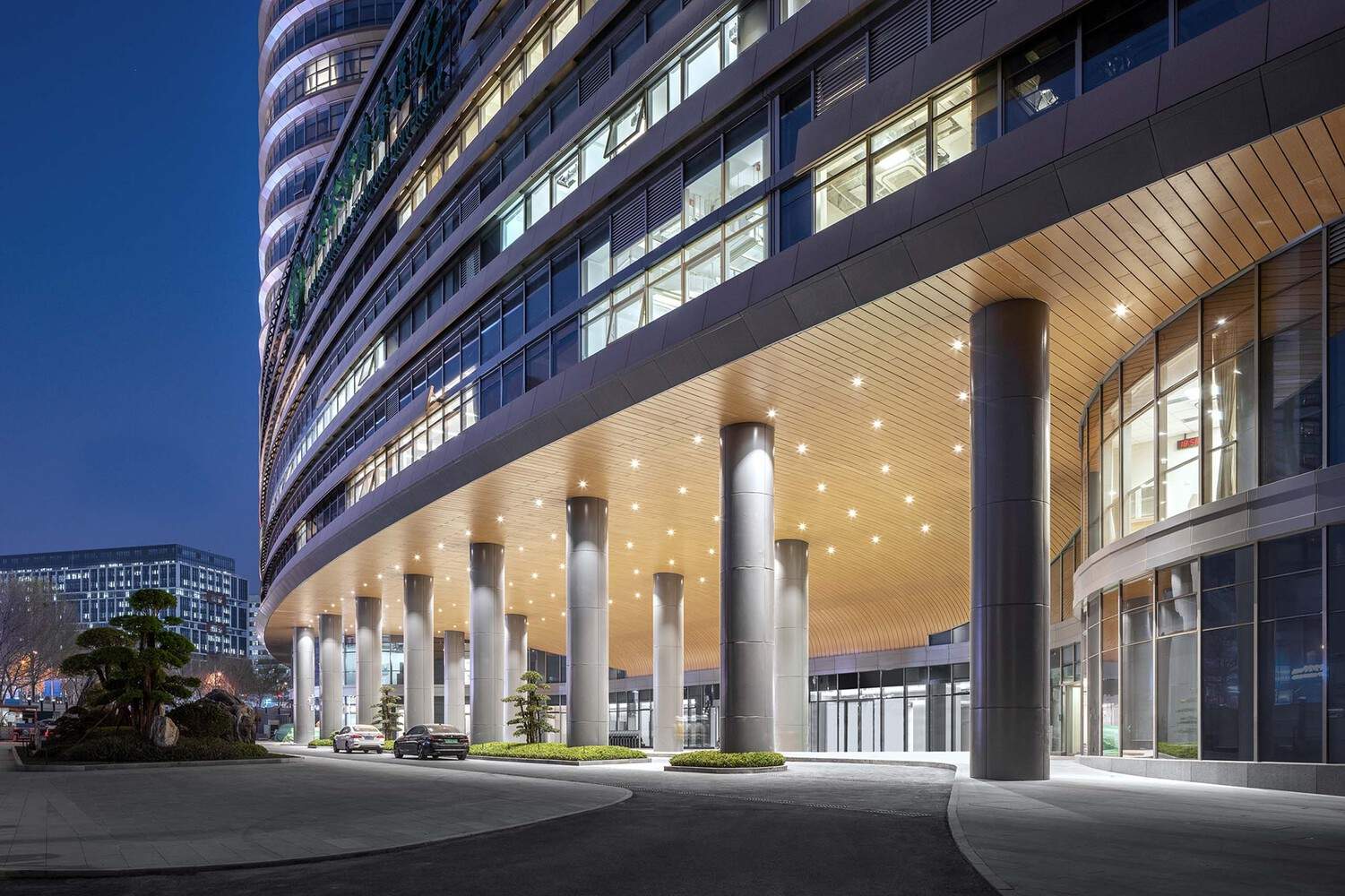
The shape of the project site is approximately a triangular shape with a gap. It is adjacent to the Baotu Spring Campus of Shandong University on the south side and Baotu Spring Park and Quancheng Square on the north side. It is an important historical and cultural spatial node in Jinan City.. The construction land area is about 23800 square meters, with a height difference of about 6 meters between the south and north sides, and a building height limit of 60 meters. In addition, the project is located in the convergence area of Baotu Spring, and the underground excavation depth is limited. In the case of high plot ratio, low height limit, and low depth limit, this project adopts a streamlined triangular twin tower layout strategy through layer by layer logical deduction, tailored to local conditions, and forms a visual corridor between the twin towers, cleverly avoiding its visual interference with the old inpatient building. The streamlined skirt style is agile, smooth, concise, and varied, with strong horizontal extensibility, forming a unique urban street corner image. The first floor is partially elevated, creating a friendly and natural spatial sequence, making the block relationships in the area more natural and harmonious, effectively alleviating the sense of oppression at a nearby scale. The project has achieved a balance between medical functions and urban relationships.
院城:共生与平衡
该项目用地形状近似一个有缺口的三角形,南侧紧邻山东大学趵突泉校区,北侧靠近趵突泉公园和泉城广场,是济南市重要的历史文化空间节点。建设用地面积约为23,800 ㎡,南、北两侧用地的高差约为6 m,建筑限高60 m。另外,项目处于趵突泉泉域汇集区,地下开挖深度受限。在高容积率、低限高、低限深的情况下,本项目通过层层逻辑推导,因地制宜,采用流线型三角形双塔楼布局策略,在双塔之间形成视线通廊,巧妙地避免其对老住院楼造成视线干扰。流线型裙房造型灵动流畅、简洁而富有变化,具有强烈的水平延展性,形成独特的城市街角形象。首层局部架空,营造出亲和、自然的空间序列,使区域内的街区关系更加自然和谐,有效缓解近人尺度的压迫感。项目实现了医疗功能与城市关系的平衡。
© 方方的田
Function: Treatment and Efficiency
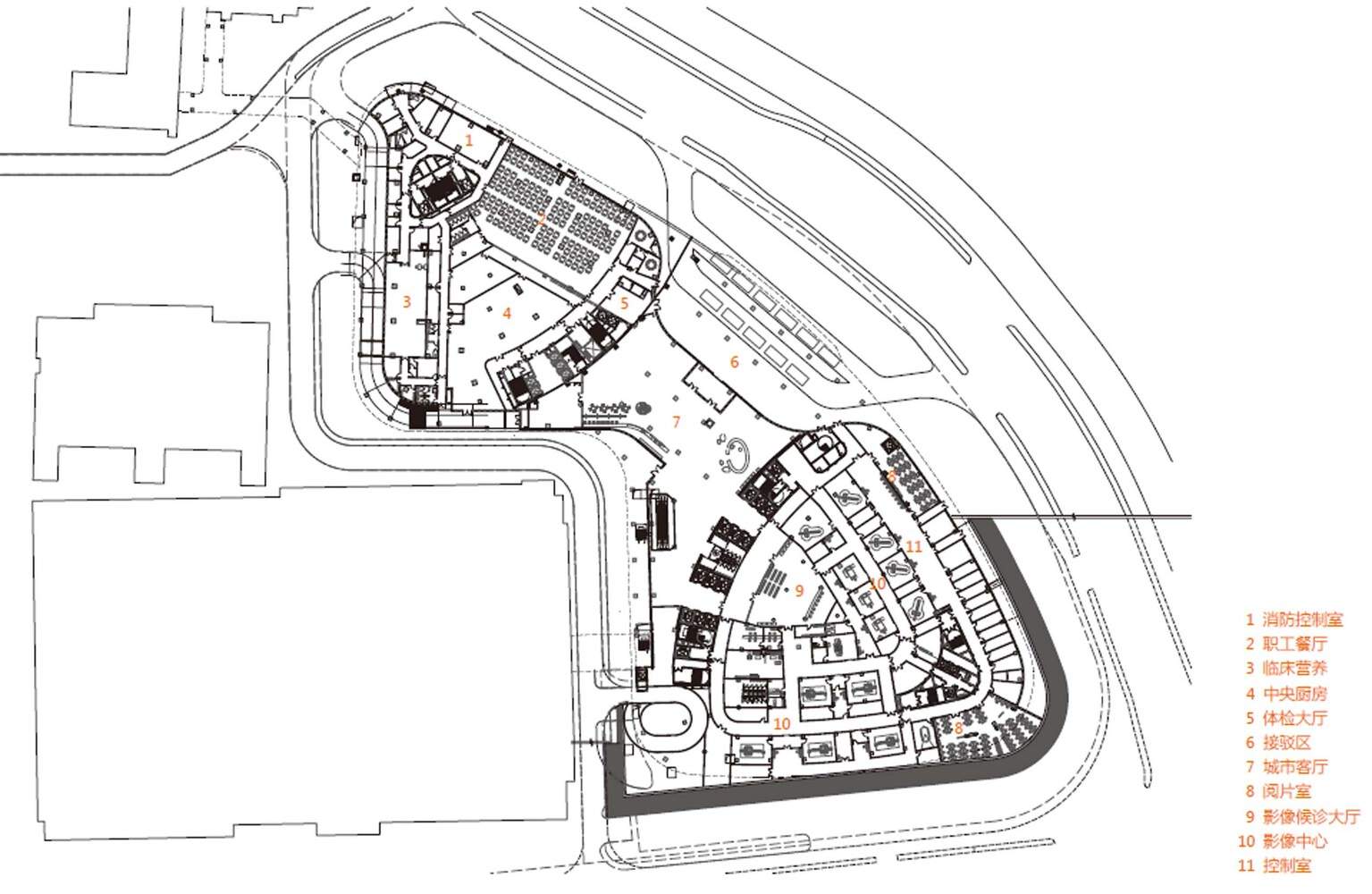
The Emergency Comprehensive Building is a regional emergency center that integrates pre hospital first aid, in-hospital rescue, emergency surgery, and intensive care units.. The emergency and first aid building is adjacent to Wenhua West Road, making it convenient for ambulances to directly reach through the emergency entrance. The roof is equipped with a helicopter landing pad, vertically connecting the emergency center, rescue room, surgical center, ICU and other departments to ensure the integration of land and air rescue, thus building a fast, efficient and fully covered emergency and critical care medical treatment system. Unlike the traditional concept of "shared interventional diagnosis and treatment center", the design of the interventional center creates an intensive central island control room, with digital subtraction angiography (DSA) operating rooms on both sides, ensuring that medical staff can see all surgical procedures in the catheterization room from the central control room. Medical staff can discuss and support each other here to ensure patient safety. This design saves labor and time costs, truly achieving sharing, intensification, and efficiency. The inpatient department is located at the upper part of the medical technology podium, with a direct medical ladder that connects the nursing unit with the medical technology and emergency departments. The inpatient department can efficiently reach medical technology areas such as the imaging center and surgical area, with shorter distances, higher efficiency, and stronger overall functionality between related functions. The establishment of dual nursing units allows wards to be relatively independent and share human and equipment resources, meeting the requirements of setting wards according to disease types. Centralized arrangement of medical elevators can improve space utilization.
功能:救治与效率
急诊综合楼是集院前急救、院中抢救、急诊手术和重症监护病房于一体的区域性急救中心。急诊急救楼紧邻文化西路,便于救护车通过急救专用入口直接抵达,屋顶设直升机停机坪,垂直串联急救中心、抢救室、手术中心、ICU等科室,保障陆空救援一体化,从而构建快速、高效、全覆盖的急危重症医疗救治体系。不同以往的“共享式介入诊疗中心”理念,介入中心设计通过打造集约式中央岛控制室,将数字减影血管造影(DSA)手术室分列两侧,确保医护人员在中控室就可以看到所有导管室内手术的情况。医护人员可以在此共同讨论和相互支援,确保患者安全。该设计节约了人力成本和时间成本,真正做到了共享、集约、高效。住院部位于医技裙房上部,内设上下直达的医梯,使护理单元与医技板块、急诊板块紧密联系。住院部可高效直达影像中心、手术区等医技区,相关功能间距离更短、效率更高、整体性更强。双护理单元的设置使病区可相对独立,也可共享人力、设备资源,满足按病种设置病房的要求。医梯集中布置,可提高空间使用率。
© 方方的田
Circulation: Order and Integration
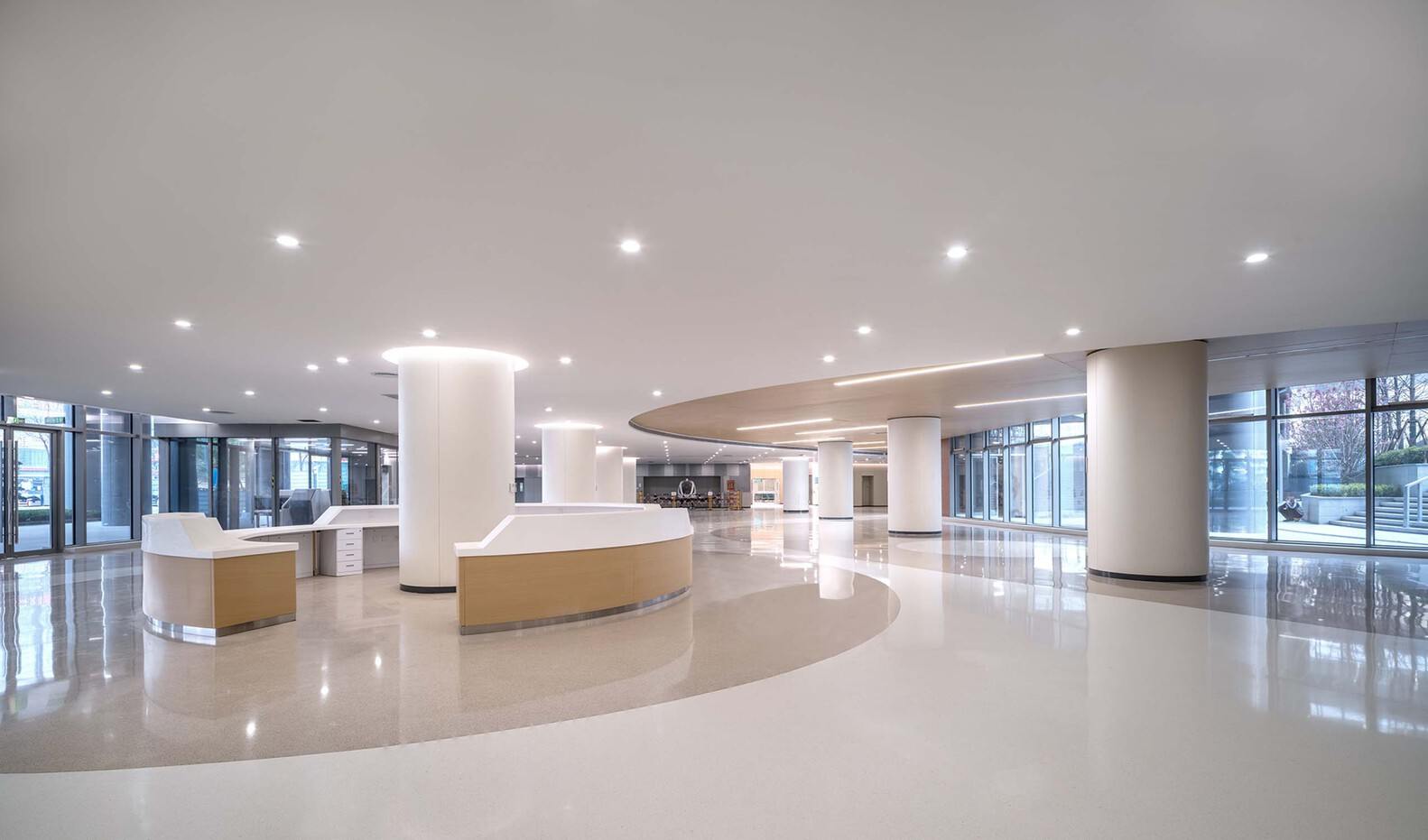
The project fully utilizes the height difference of the site to create a dual first floor arrival system.. The Emergency and First Aid Plaza is located on one side of Wenhua West Road, facing the main urban road, with high recognition and convenient transportation. On the lower side of Baotu Spring South Road, the project combines architectural design to form a bay style taxi drop off and transfer area, which organizes and guides traffic flow in an orderly manner. It not only creates a wind and rain free transfer environment for medical staff, patients, visitors and other users, but also provides buffer space for stop and go vehicles, relieving traffic pressure in surrounding cities. The design follows the concept of "urban living room", which serves as the circulation center of this project. The "urban living room" is connected to the connecting area on a flat level, and connects various functional areas in the south and north directions. By extending multiple aerial corridors, it seamlessly connects with the outpatient complex building, women's and children's building, tumor center and other buildings in the old and new hospital areas, ensuring close connection between medical functions in the new and old hospital areas. The Guangzhi Hospital complex, Nanguan Church, library and other areas in the old campus are great places for medical staff and patients to relax and unwind. The aerial corridor has to some extent re empowered the cultural space of this campus.
流通:秩序与融合
项目充分利用场地高差,创造了一个双首层的到达体系。急诊急救广场位于场地较高的文化西路一侧,面向城市主干道,识别度高,交通便利。在场地较低的趵突泉南路一侧,项目结合建筑造型,内凹形成港湾式出租车落客接驳区,有序地组织、引导车流,不仅为医护人员、患者、访客等使用者创造了无风雨的接驳环境,还为即停即走的车辆提供了缓冲空间,缓解周边城市交通压力。设计沿承“城市客厅”的理念,“城市客厅”作为本项目的流通中枢,平层连接接驳区,南、北向串联各部分功能区域,并通过延伸多个空中连廊的方式,与老院区门诊综合楼、妇儿楼、肿瘤中心等建筑无缝衔接,确保新、老院区医疗功能的紧密联系。老院区的广智院建筑群、南关教堂、图书馆等区域,是医护人员和患者休闲放松的好去处,其中空中连廊在某种程度上重新赋能了这一院区的文化空间。
© 方方的田
Healing: Air and Sunshine
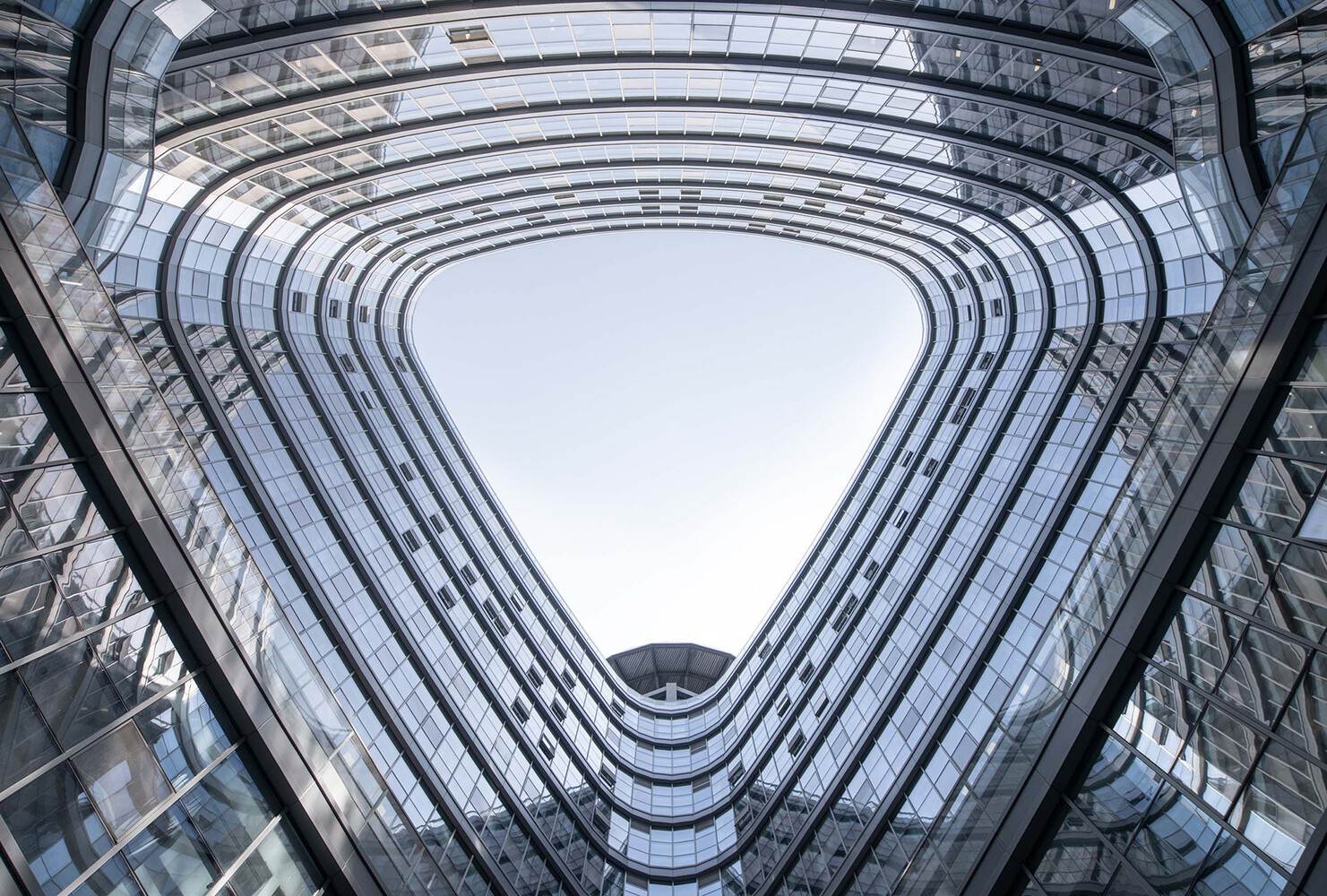
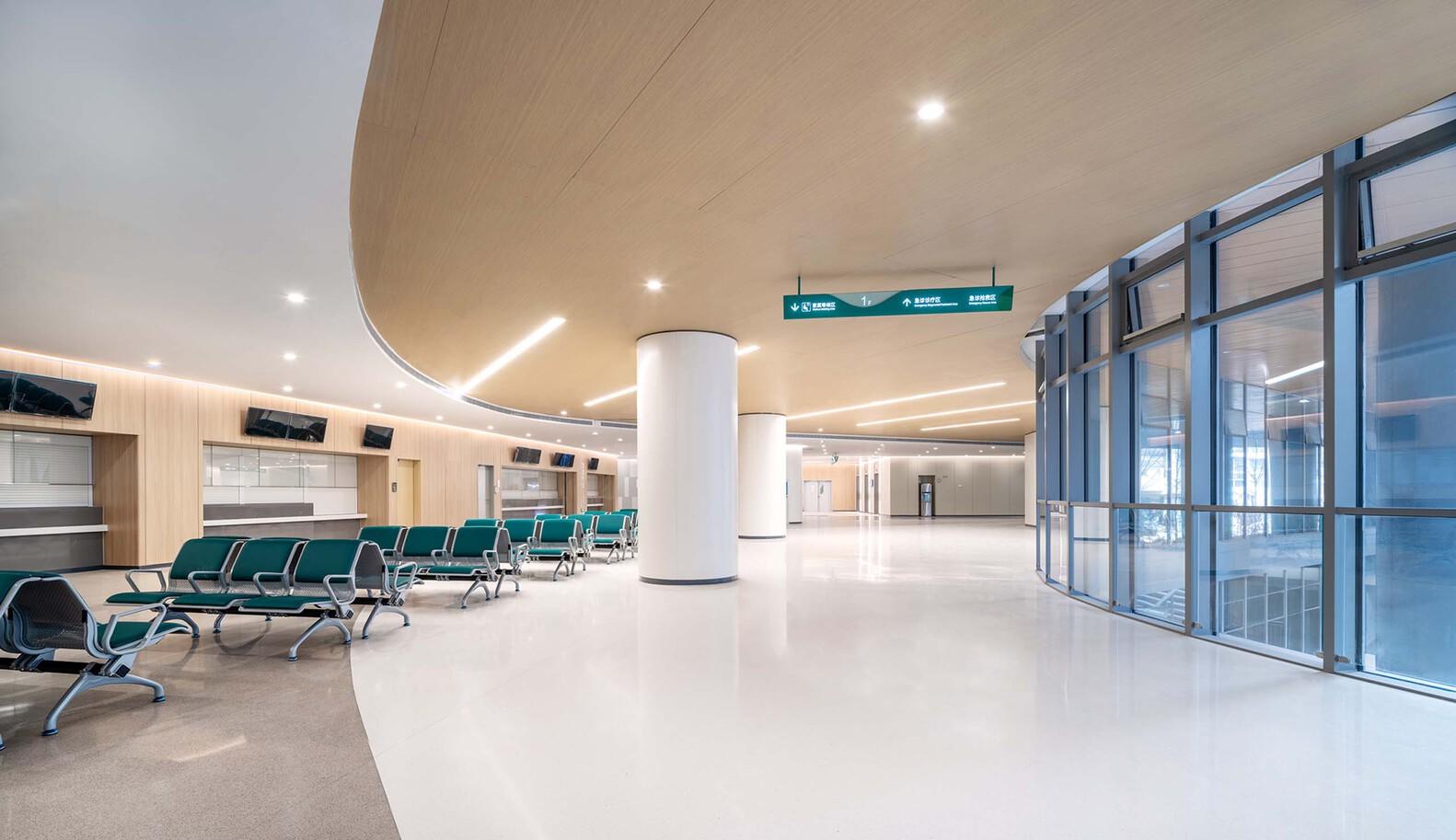
The plan establishes a vertical ecosystem, creating multi-dimensional healing spaces for doctors and patients.. The Sunshine Garden formed between the South and North Twin Towers, as well as the two landscape courtyards inside the tower, have increased the green visibility of patients and medical staff, and have had a positive impact on relieving stress and promoting patient recovery. This has comprehensively improved the spatial quality and humanistic care of the hospital. The streamlined triangular standard plane maximizes the use of orientation, where the South Tower standard ward is arranged with wards facing south and northeast along the outer side of the triangle, and medical staff offices are arranged along the inner side (courtyard) of the triangle to ensure that patients, caregivers, medical staff, and other groups can enjoy natural lighting, have a wide field of view, and have a positive spatial experience during medical treatment, care, and work; Each floor of the North Tower Science and Education Zone is equipped with a shared communication hall, providing a place for researchers to relax and engage in activities, effectively promoting the development of hospital research technology.
疗愈:空气与阳光
方案建立了一个垂直生态体系,为医患创造多向度的疗愈空间。南、北双塔之间形成的阳光花园,以及塔内部的两个景观庭院,提高了患者和医护视野范围的绿视率,在医护人员舒缓压力及患者康复身体等方面,均产生积极影响,全方位提升医院的空间品质与人文关怀。流线型三角形标准平面最大限度利用朝向,其中:南塔标准病区沿三角形外侧朝南向和东北向布置病房,沿着三角形内侧(庭院)布置医护人员的办公室,保证患者、陪护人员、医护人员等人群在就医、陪护、工作时均能享受到自然采光,拥有开阔的视野,并获得积极的空间使用体验;北塔科教区每层均设置共享交流厅,为科研人员提供休憩活动场所,有效促进医院科研技术的发展。
© 方方的田
地下一层平面图
© 方方的田
Conclusion
The Emergency Comprehensive Building of Shandong University Qilu Hospital creates a healing garden with a low and humble posture (like two valleys).. In the future, with urban renewal and changes in population structure, Shandong University Qilu Hospital, as a regional medical center, will undergo a flexible and dynamic renovation process within its medical complex. The newly built emergency comprehensive building will integrate into urban public life in an open and harmonious manner while meeting medical needs.
结语
山东大学齐鲁医院急诊综合楼以低矮谦逊的姿态(犹如两个山谷),创造出一个治愈花园。未来,随着城市更新和人口结构的变化,山东大学齐鲁医院作为区域医疗中心,其医疗综合体的内部必将经历灵活、动态的改建过程。新建的急诊综合楼将在满足医疗需求的基础上,以开放、和谐的姿态融入城市公共生活。
© 方方的田