Harvard University David Rubinstein Treehouse/Studio Gang
哈佛大学大卫·鲁宾斯坦树屋/ Studio Gang
设计理念与建筑语言:哈佛大学大卫·鲁宾斯坦树屋项目,其核心在于对“树屋”概念的精准诠释。设计师Studio Gang巧妙地运用了重型木结构,不仅赋予了建筑独特的视觉语言,更在空间体验上营造出一种与自然亲近的氛围。倾斜的木结构立柱宛如树枝,支撑着悬挑楼板,形成内外空间的互动,强化了建筑的开放性和包容性。中庭和门廊的设计,创造出室内外流畅衔接的公共空间,使建筑成为连接哈佛校园与周边社区的纽带。中央楼梯的设计更是呼应了“树屋”的主题,引导访客进入充满探索趣味的空间,整体设计体现出对人性化体验的深刻理解。
可持续性与材料创新:该项目最引人注目的亮点在于其对可持续性的全面实践。作为哈佛校园首座采用重型木结构的建筑,鲁宾斯坦树屋以其低碳环保的姿态,树立了可持续建筑的典范。项目大量使用负责任采购的木材以及由回收玻璃制成的材料,大幅减少了建筑的碳排放。同时,建筑在能源利用方面也采取了积极措施,例如现场零化石燃料燃烧、自然采光与自遮阳设计、太阳能板等。更值得称道的是,项目还关注室内空气质量与使用者健康,选用不含对人体有害化学物质的材料,充分展现了对环境保护和人类健康的双重关注。
功能与空间布局: 鲁宾斯坦树屋的功能设计体现了对创新与协作精神的深刻理解。作为哈佛大学的聚会交流中心,建筑内部空间灵活多样,既能满足大型会议的需求,又能提供非正式的交流场所。建筑师在空间布局上巧妙运用了不同尺度的空间,以满足不同使用者的需求。同时,建筑与外部环境的互动也得到了充分考虑,露天露台、生态草沟等设计,使得建筑与周边环境融为一体。这种注重功能性与空间体验的设计,使得鲁宾斯坦树屋不仅是一个建筑实体,更是一个促进交流、激发创新的场所,完美契合了哈佛大学的企业研究园区的定位。
© Jason O Rear
© Jason O Rear
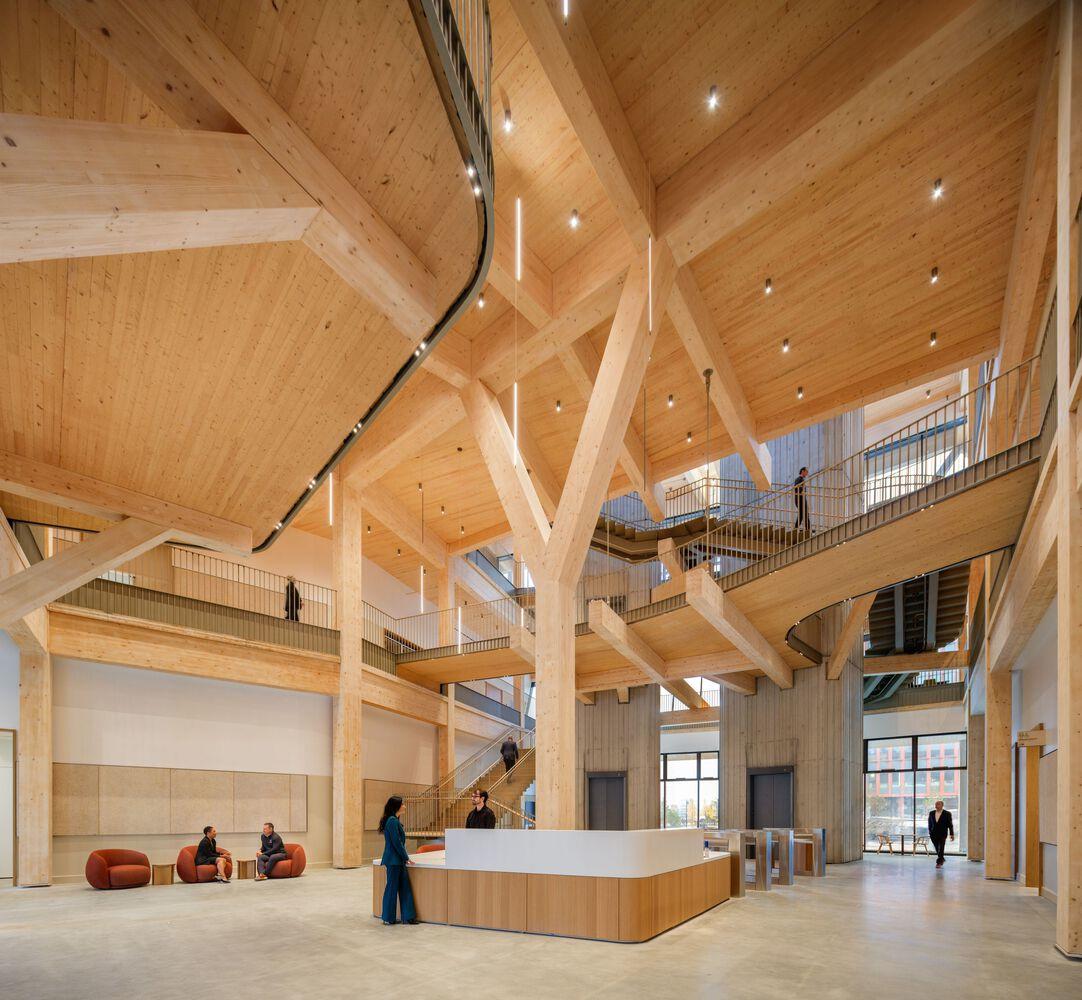
International architectural and urban design firm Studio Gang, led by Jeanne Gang, announced that the David Rubenstein Treehouse at Harvard University has been completed. As the first campus wide gathering and exchange center at Harvard University, this building is located in the core area of the newly built Enterprise Research Campus (ERC) in Allston, dedicated to promoting innovation and collaboration. The Rubinstein treehouse is also the first building on the Harvard campus to adopt a heavy timber structure, setting an example of overall sustainability for institutions in Boston and around the world.
由 Jeanne Gang 领衔的国际建筑与城市设计事务所 Studio Gang 宣布,哈佛大学内的“大卫·鲁宾斯坦树屋”(David Rubenstein Treehouse)已竣工落成。该建筑作为哈佛大学首个全校范围的聚会交流中心,坐落于奥尔斯顿(Allston)全新打造的企业研究园区(Enterprise Research Campus, ERC)核心地带,致力于推动创新与协作。鲁宾斯坦树屋也是哈佛校园内首座采用重型木结构(mass timber)的建筑,为波士顿乃至全球机构树立了整体可持续性建筑的典范。
© Jason O Rear
As a Harvard alumnus and faculty member, I am honored and fulfilled to have the opportunity to help open a new chapter on the Harvard campus, "said Jeanne Gang, founding partner of Studio Gang and professor of Kashima Architecture Practice at the Harvard Graduate School of Design." The Rubinstein treehouse is an open and inclusive building that embraces everyone and serves as the visual and functional core of the Enterprise Research Park (ERC). The exposed heavy wooden structure demonstrates Harvard's firm commitment to moving towards a more sustainable future
“作为哈佛校友兼教职人员,能有机会助力哈佛校园开启全新篇章,我深感荣幸与满足,”Studio Gang 创始合伙人、哈佛大学设计研究生院(Harvard Graduate School of Design)鹿岛建筑实践教授 Jeanne Gang 表示,“鲁宾斯坦树屋是一座开放包容的建筑,它向所有人敞开怀抱,并成为企业研究园区(ERC)的视觉与功能核心。其外露的重型木结构彰显了哈佛对迈向更可持续未来的坚定承诺。”
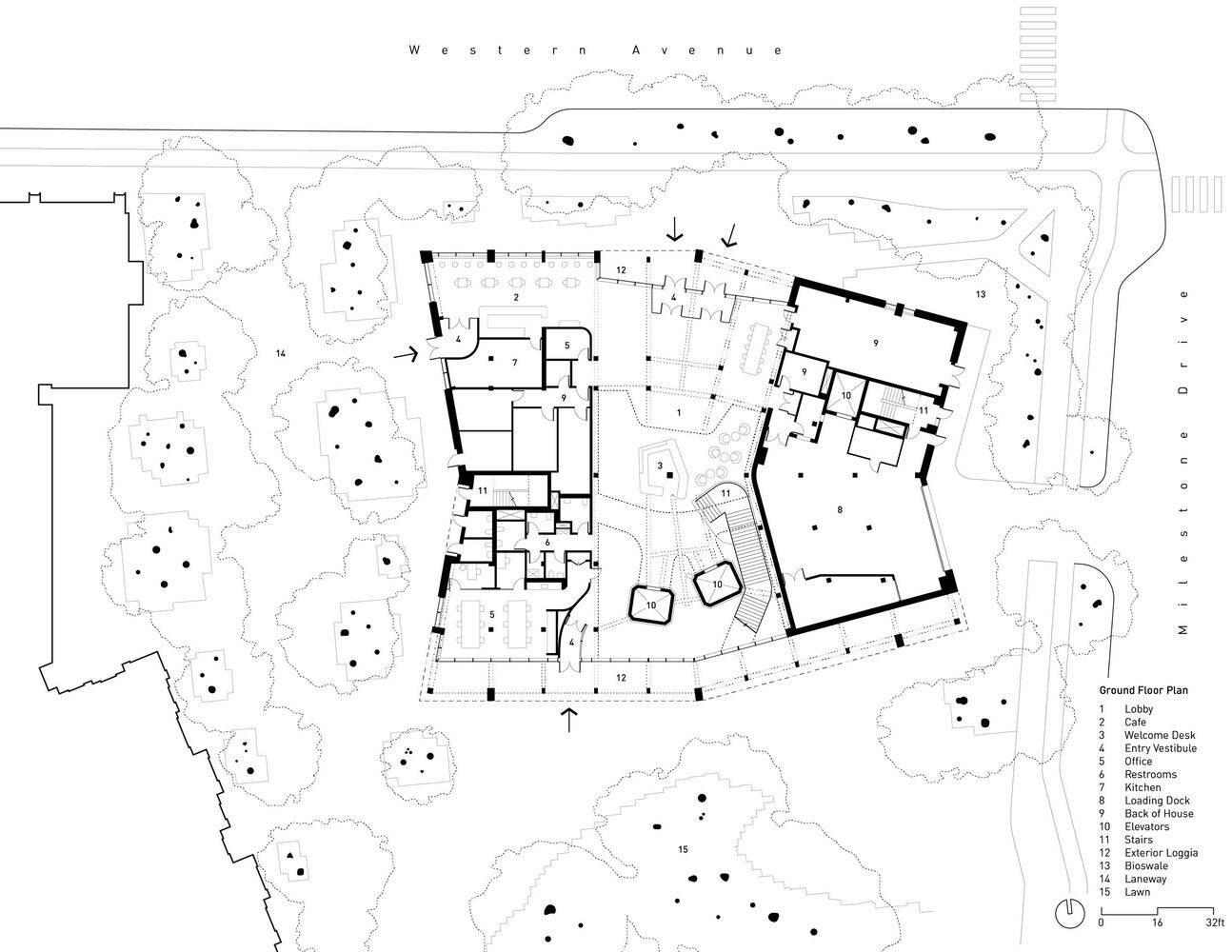
一层平面图
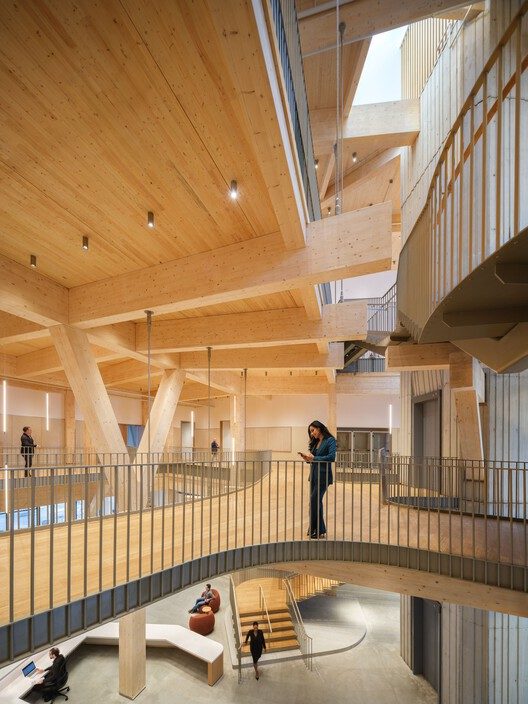
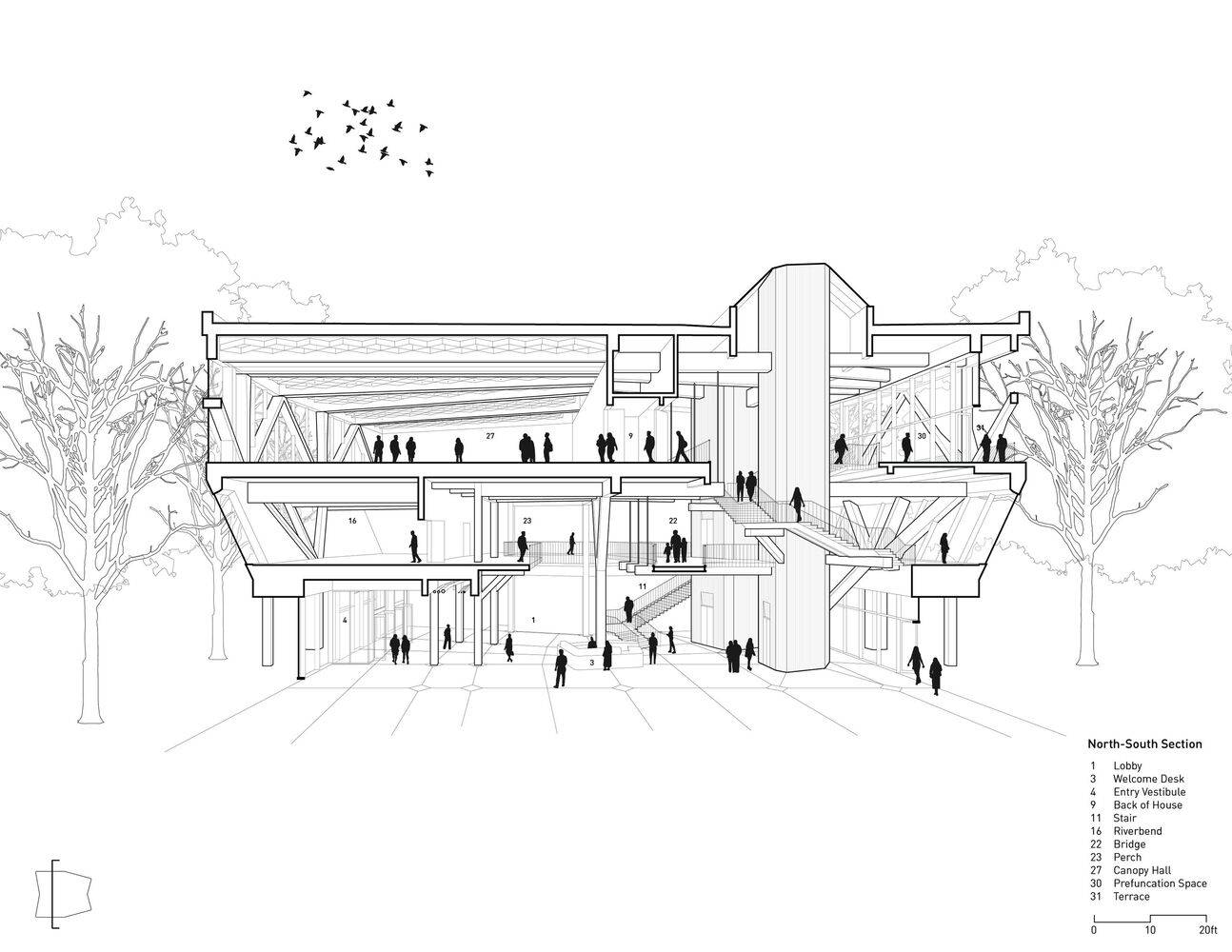
This 55000 square foot building provides exclusive event space and conference facilities for Harvard University personnel, local communities, academics, and global business leaders. The first floor of the building has three entrances leading to a two-story high atrium, which warmly welcomes visitors and allows them to smoothly navigate through the building and reach the surrounding campus area. The atrium also extends outward with two covered porticos, creating an outdoor gathering place for year-round use.
这座占地 55,000 平方英尺的建筑,为哈佛大学相关人员、当地社区、学术界人士以及全球工商界领袖提供了专属的活动空间和会议设施。建筑首层设有三个入口,通向一个双层挑高的中庭,既热情迎接访客到来,又让他们能顺畅穿行建筑,直达周边校园区域。中庭还向外延伸出两个有顶棚的门廊,打造出可供全年使用的户外聚会场所。
© Jason O Rear
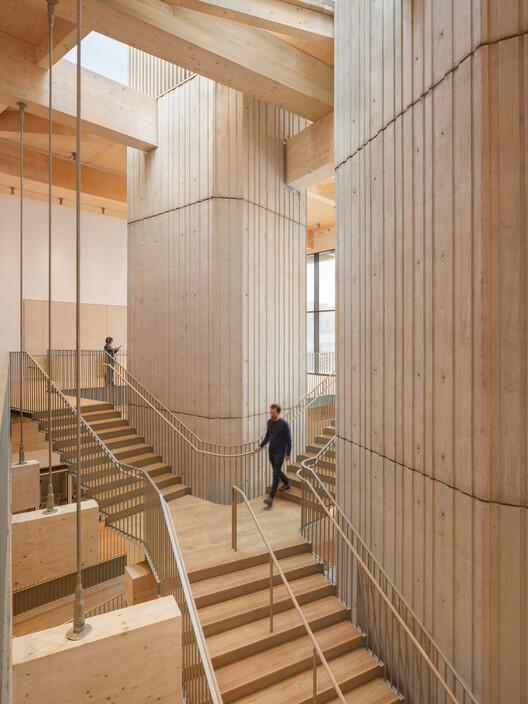
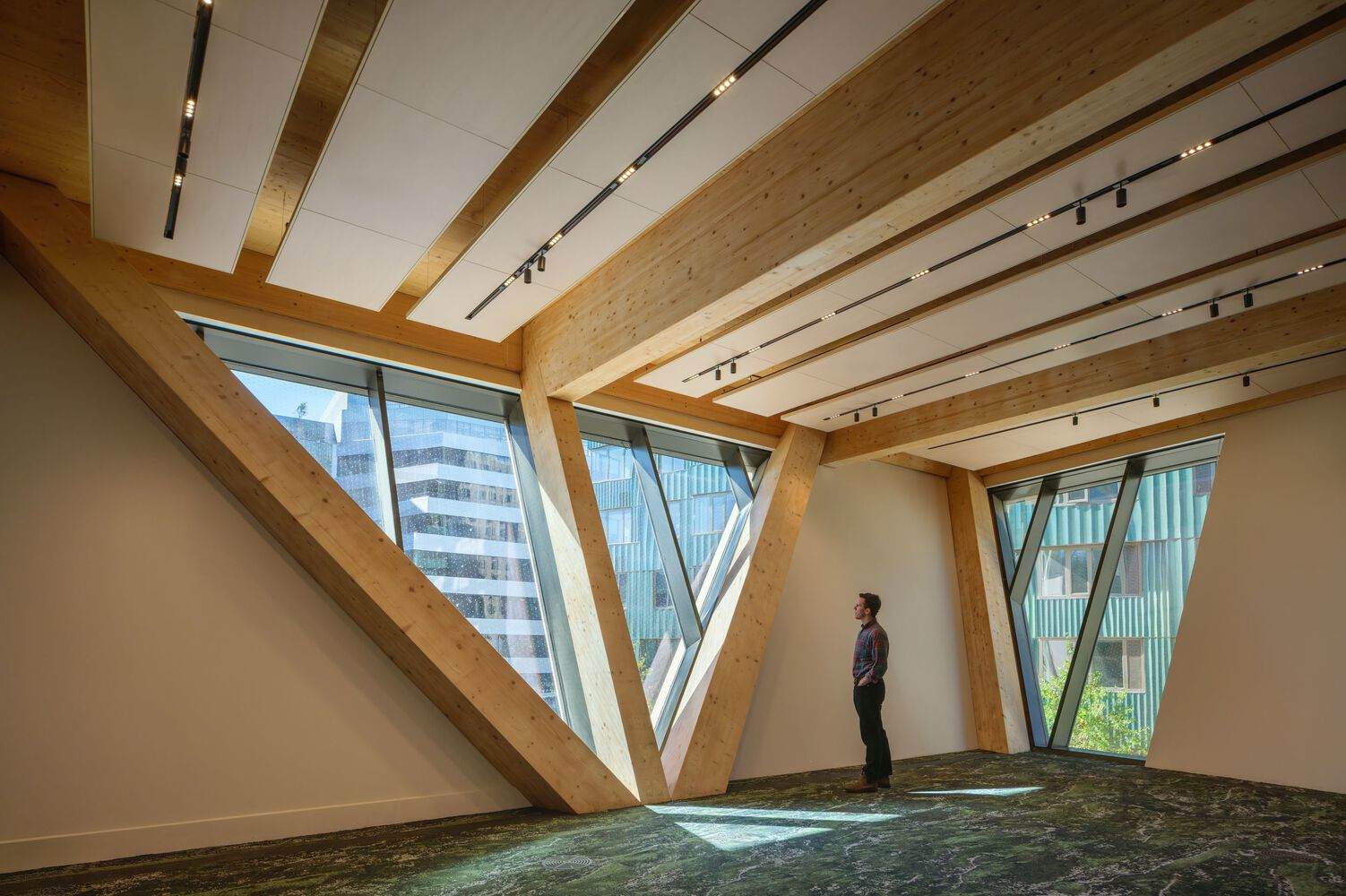
Entering the building, a central staircase evokes the wonder and excitement of climbing a treehouse. The natural light from the skylight above the staircase immerses visitors in the natural warmth emanating from the heavy wooden structure of the building. The upper space meets the diverse needs of conferences and events through a series of venues of varying sizes and flexible functions. The main space of the building, Canopy Hall, features a connected outdoor terrace that offers a panoramic view of the city through the framework of wooden columns. In addition, each floor is equipped with distinctive spaces that promote informal gatherings and interactions.
步入建筑,一条中央楼梯令人联想起攀爬树屋时的奇妙与兴奋,楼梯上方天窗洒下的自然光线,让访客沉浸于建筑重型木结构所散发的自然温润之中。上层空间通过一系列大小各异、功能灵活的场地,满足会议与活动的多元需求。建筑主空间“树冠厅”(Canopy Hall)设有相连的露天露台,透过木结构立柱的框架,可尽览城市壮阔景致。此外,每层均设有促进非正式聚会与互动的特色空间。
© Jason O Rear
© Jason O Rear
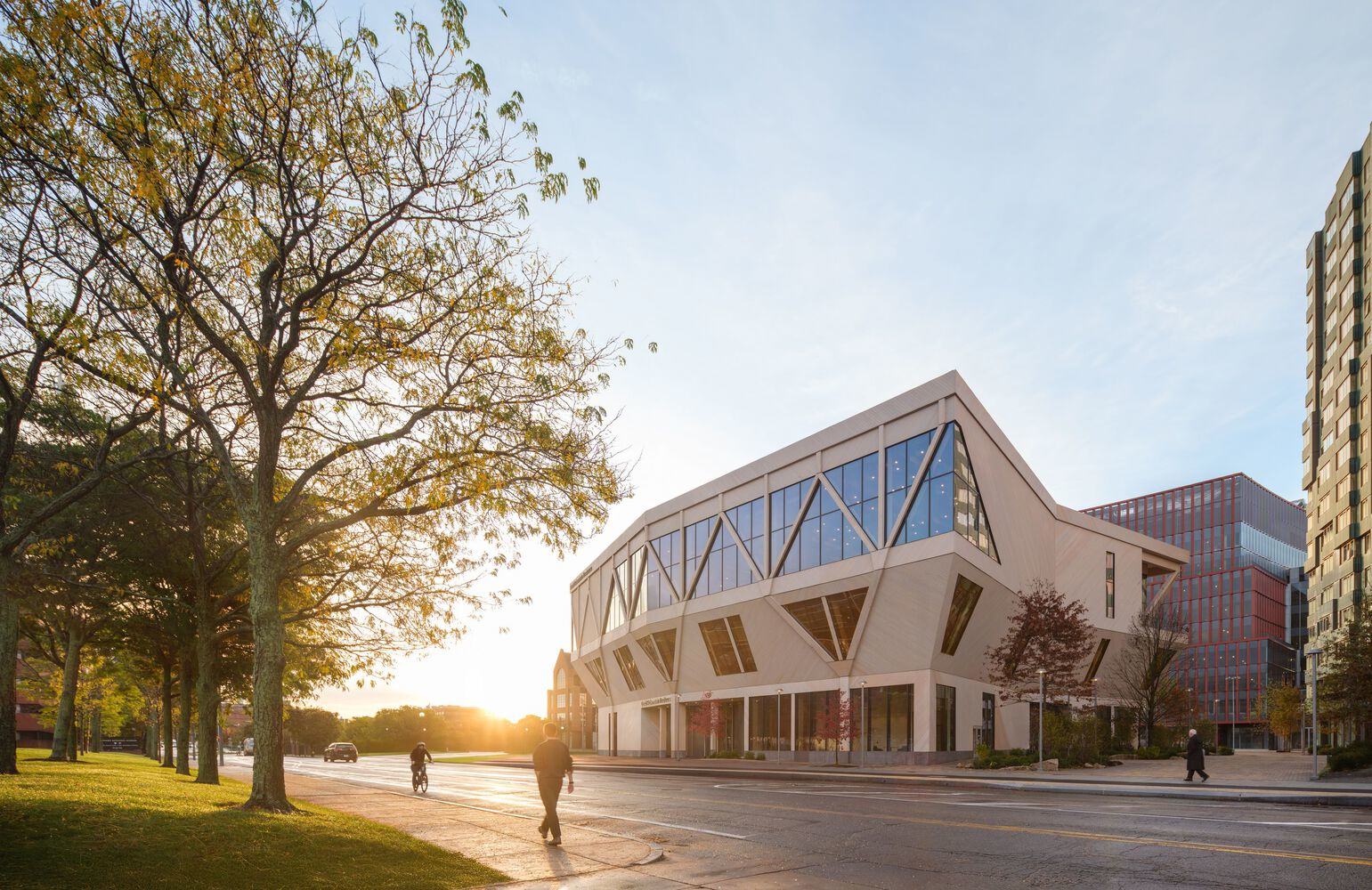
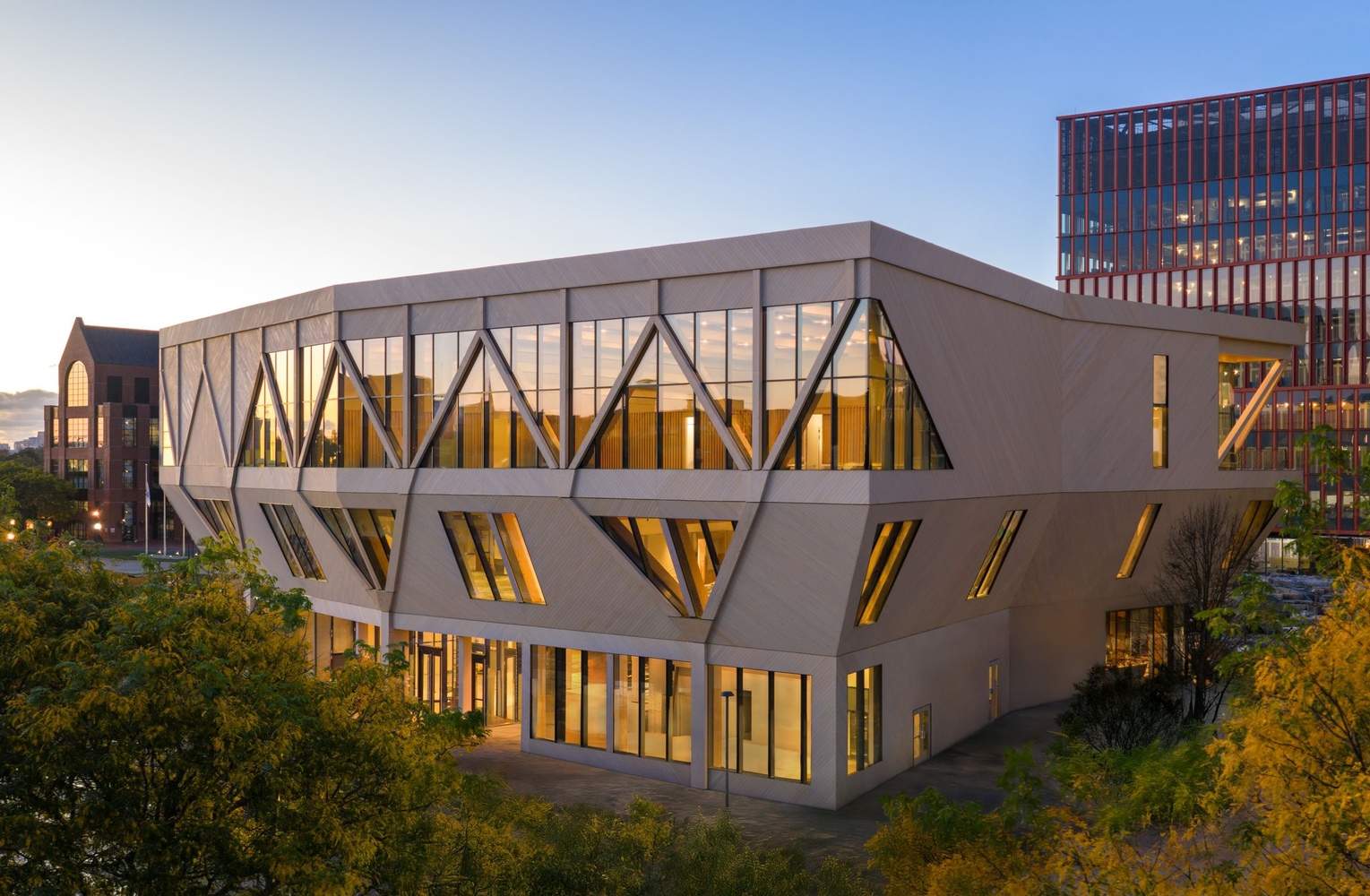
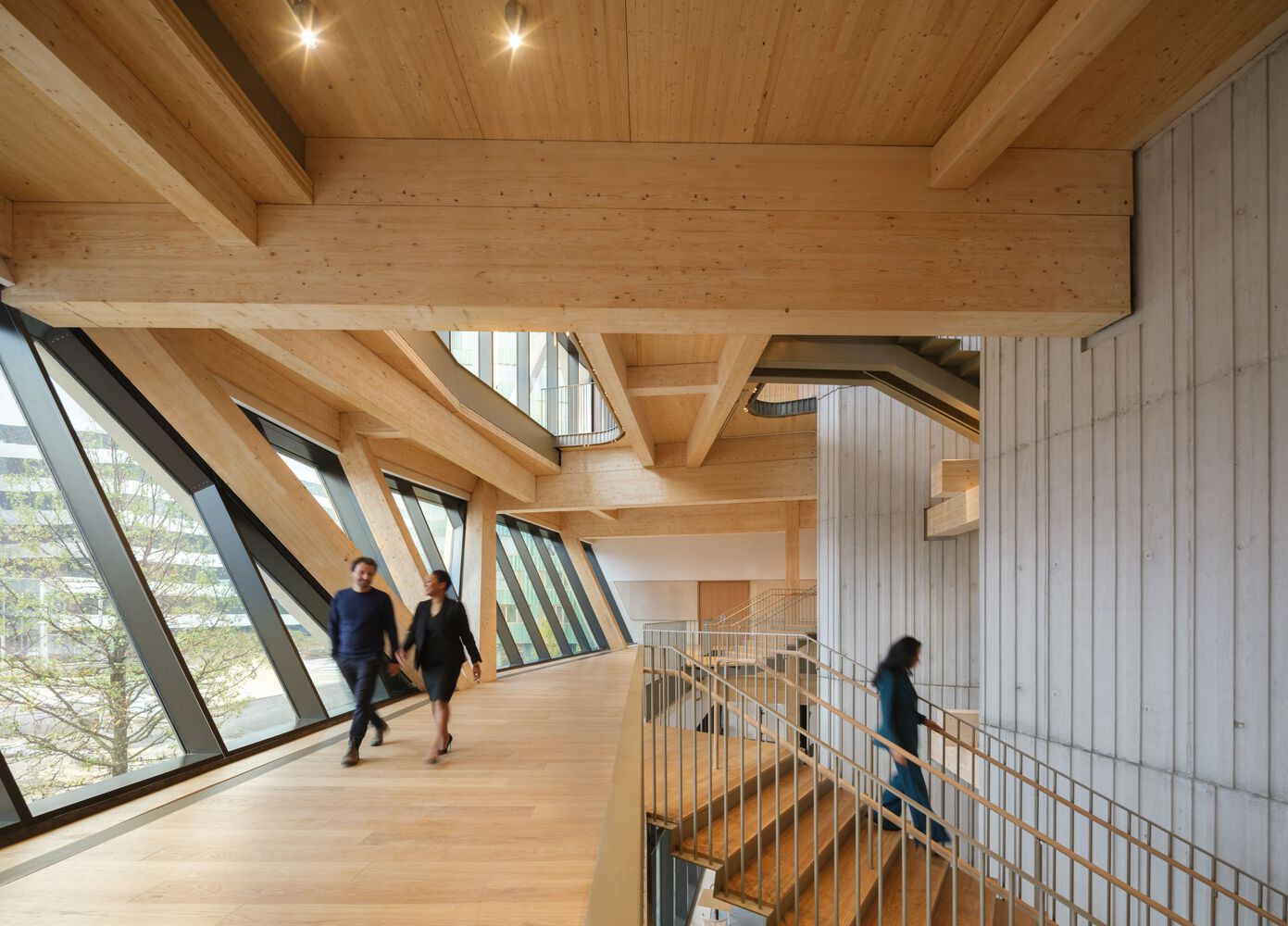
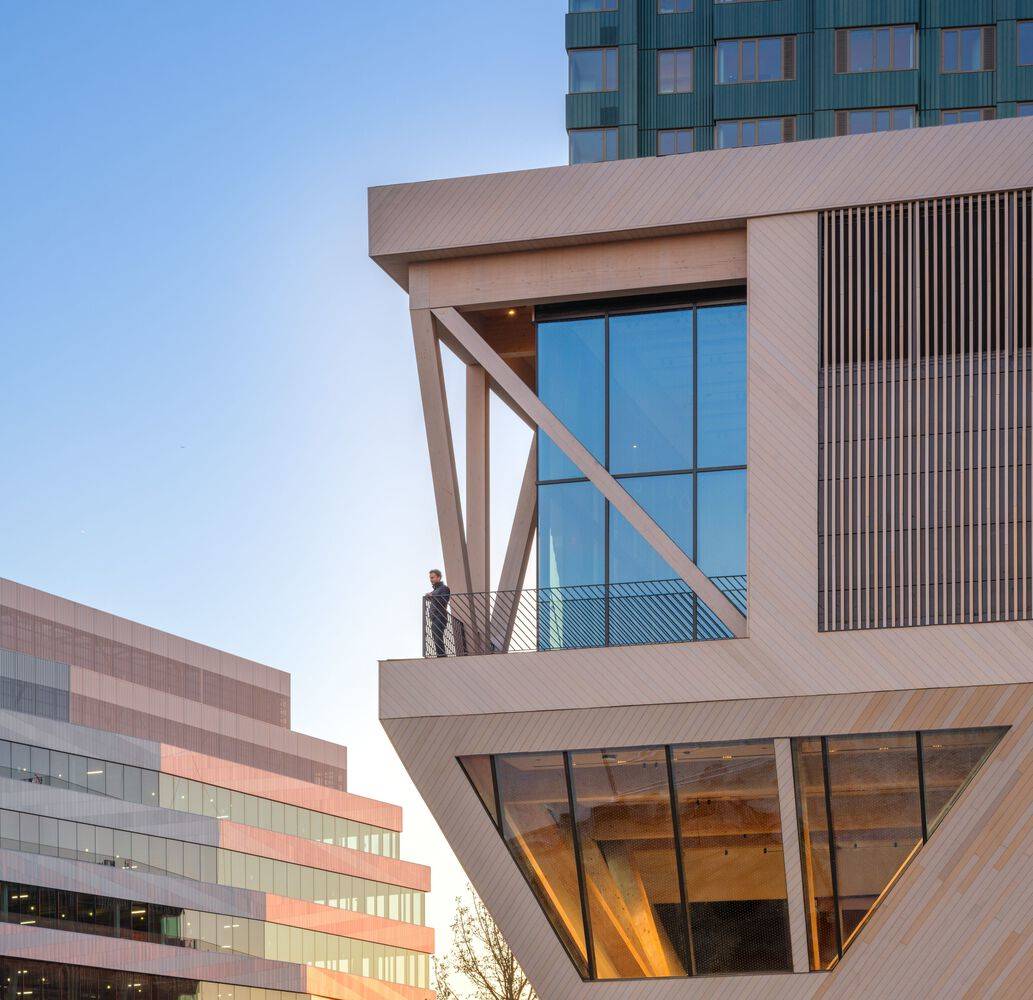
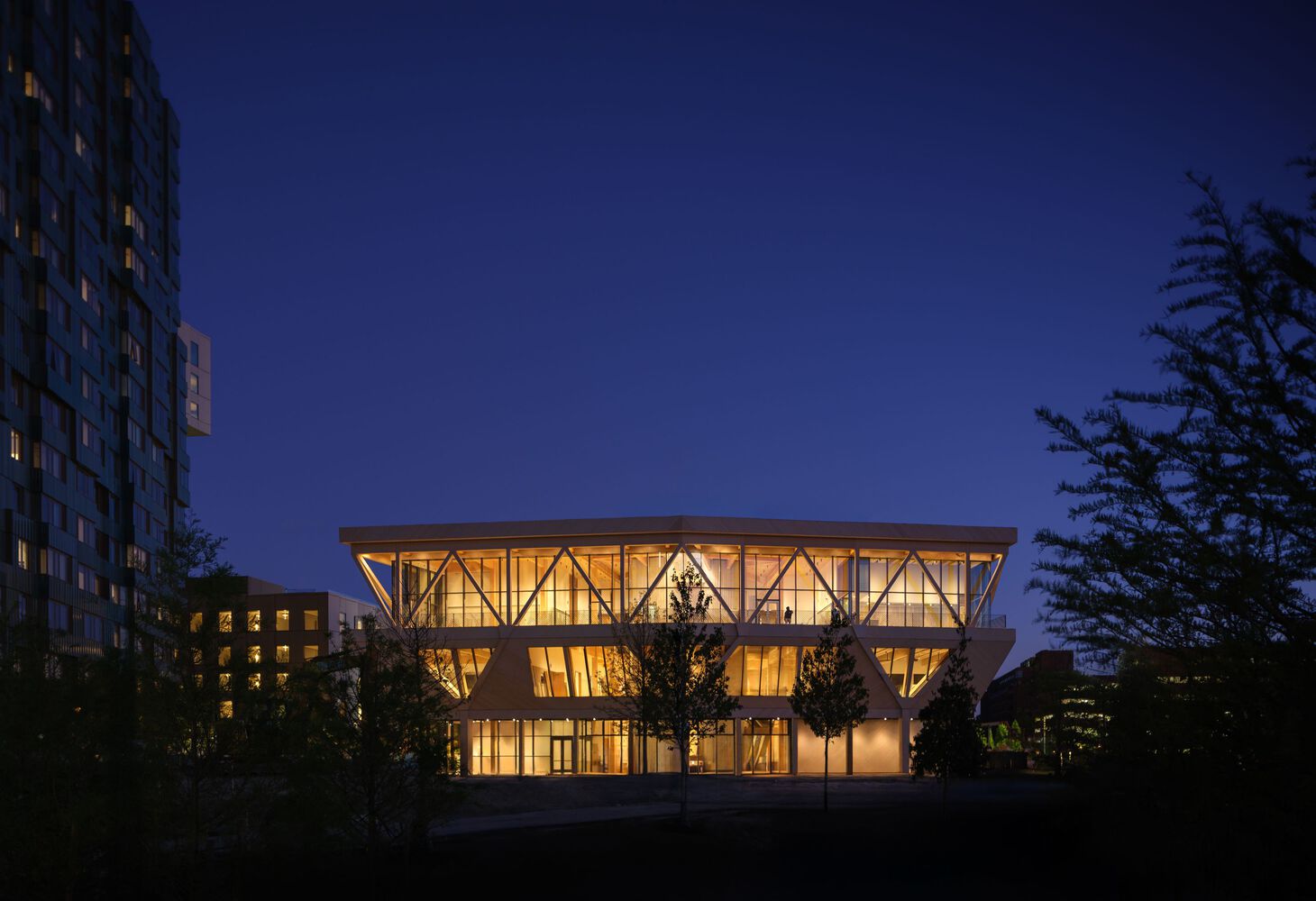
The exposed heavy wooden structure of this building shapes its unique architectural style and strengthens its positioning as an innovative destination. On the exterior facade of the building, inclined wooden columns extend outward like branches, supporting the cantilevered upper floor slabs. Each facade of the building has been carefully designed to correspond to the outdoor environment and surrounding community. The north and south facades of the building extend outward, guiding the flow of people to converge at multiple entrances; The east and west facades converge inward, widening the pedestrian traffic space.
这座建筑外露的重型木结构塑造了其独特的建筑风貌,也强化了其作为创新目的地的定位。建筑外立面上,倾斜的木结构立柱如树枝般向外延展,支撑起悬挑的上层楼板。建筑每个立面均经过精心设计,以呼应室外环境及周边社区。建筑南北立面向外展开,引导人流汇聚至多个入口;而东西立面则向内收拢,拓宽了行人通行空间。
© Jason O Rear
This design incorporates multiple sustainability strategies and comprehensively optimizes the environmental performance of the Rubinstein treehouse. The building adopts healthier and low-carbon materials, reducing the embodied carbon in its structure by 55% compared to similar buildings that use traditional materials. These materials include responsibly purchased wood and ground glass pozzolan made from post consumer glass containers instead of concrete made from cement. In addition, the building achieves on-site zero fossil fuel combustion and significantly reduces energy consumption through natural lighting and self shading design, rooftop solar panels, adjustable indoor environments and elevated floors that conceal the main building systems, as well as access to Harvard University's regional energy facilities (providing heating, cooling, and electricity for the building).
该设计融入了多项可持续性策略,全方位优化了鲁宾斯坦树屋的环保性能。建筑采用更健康、低碳的材料,使其结构隐含碳( embodied carbon)较使用传统材料的同类建筑降低 55%,这些材料包括负责任采购的木材,以及由消费后玻璃容器制成的玻璃粉(ground glass pozzolan)替代水泥制成的混凝土。此外,建筑通过自然采光与自遮阳设计、屋顶太阳能板、可调节室内环境并隐藏主要建筑系统的架空地板,以及接入哈佛大学区域能源设施(为建筑提供供暖、制冷和电力),实现了现场零化石燃料燃烧,并大幅降低了能源消耗。
剖面图
The building adopts healthier indoor materials, furniture, and finishes that do not contain harmful chemicals such as perfluorinated and polyfluoroalkyl substances (PFAS), effectively improving indoor air quality and user health. This biodiversity rich landscape not only creates a vibrant space that is suitable for all seasons and provides habitat for wildlife, but its ecological grass ditch also works in synergy with the roof rainwater collection system to achieve rainwater retention and reuse. While achieving the goals of Harvard University's School of Health Architecture, the building is also striving to obtain the Living Building Challenge (LBC) core certification and LBC petal certification.
建筑采用不含全氟和多氟烷基物质(PFAS)等有害化学物质类别的更健康室内材料、家具和饰面,有效改善了室内空气质量与使用者健康。这片生物多样性丰富的景观不仅营造出四季皆宜的活力空间,为野生动物提供了栖息地,其生态草沟还与屋顶雨水收集系统协同作用,实现了雨水的滞留与再利用。该建筑在达成哈佛大学“健康建筑学院”目标的同时,还正力争获得“活态建筑挑战”(Living Building Challenge, LBC)核心认证及 LBC 花瓣认证。
© Jason O Rear
The Rubinstein treehouse is one of the first buildings to be put into use in Harvard University's Enterprise Research Campus. The park is located in the Allston community of Boston and is an emerging mixed use area that transforms large areas of original industrial and idle land into a vibrant and business friendly place, focusing on scientific research, enterprise, and innovative development. The overall planning and design of the enterprise research park is jointly led by Studio Gang and Henning Larsen, the landscape design is handled by SCAPE Landscape Firm, and urban planning and local consulting services are provided by Utele Company.
鲁宾斯坦树屋是哈佛大学企业研究园区(Enterprise Research Campus)首批启用的建筑之一。该园区位于波士顿奥尔斯顿(Allston)社区,是一个新兴的混合用途区域,将大片原工业用地和闲置土地改造为一个充满活力、宜人宜业的场所,聚焦于科研、企业与创新发展。企业研究园区的总体规划设计由 Studio Gang 与 Henning Larsen 联合主导,景观设计由 SCAPE 景观事务所操刀,城市规划与本地顾问服务则由 Utile 公司提供。
© Jason O Rear