Infinite Village/G8A Architecture&Urban Planning
无限村 / G8A Architecture & Urban Planning
概念与可持续性的完美结合:“无限村”项目最引人注目的特质在于其对可持续发展理念的深刻诠释。它不仅仅是简单的建筑设计,更像是一个持续生长的有机体,随着时间的推移不断演化。这种设计理念体现在几个方面:首先,项目采用了水平方向的密集布局,避免了垂直解决方案的局限性,保证了未来的可扩展性。其次,通过较低的楼层高度和曲线轮廓设计,实现了建筑与环境的和谐共生。最后,对办公空间进行优化设计,充分利用“高效空间”,满足了软件公司灵活的业务需求。这种设计理念的创新性与实用性完美结合,赋予了项目独特的生命力。
空间设计的巧妙之处:该项目在空间设计方面展现了卓越的创造力。两个相互咬合的不对称环形结构,创造出丰富而充满活力的空间,尤其值得称道。底层公共活动区域的设置以及“云庭”景观的设计,营造了一个宜人的公共空间。此外,全玻璃幕墙的曲线形建筑与外部自然环境的视觉连通,打破了室内外的界限,将建筑与环境融为一体。建筑的核心功能区域被设置在庭院之中,赋予建筑全新的身份,同时,外部环形走廊的设计,也创造了一个气候调节的公共社区空间,为使用者提供了舒适的使用体验,反映出设计师对环境和人的深刻理解。
对热带气候的独特回应:“无限村”项目在应对热带气候方面,展现了与众不同的设计思维。它并非简单地模仿欧洲应对寒冷气候的设计,而是致力于在炎热的外部环境下,营造凉爽舒适的内部空间。这种设计理念体现在对中间空间的设计以及外部环形走廊的巧妙运用上。通过这些设计,项目不仅解决了实际的物理环境问题,也创造了独特的空间体验,为使用者提供了更加舒适的生活和工作环境。这种对气候的深刻理解和创新性的回应,是该项目在建筑设计领域的重要贡献,也为其他类似气候环境下的建筑设计提供了宝贵的参考。
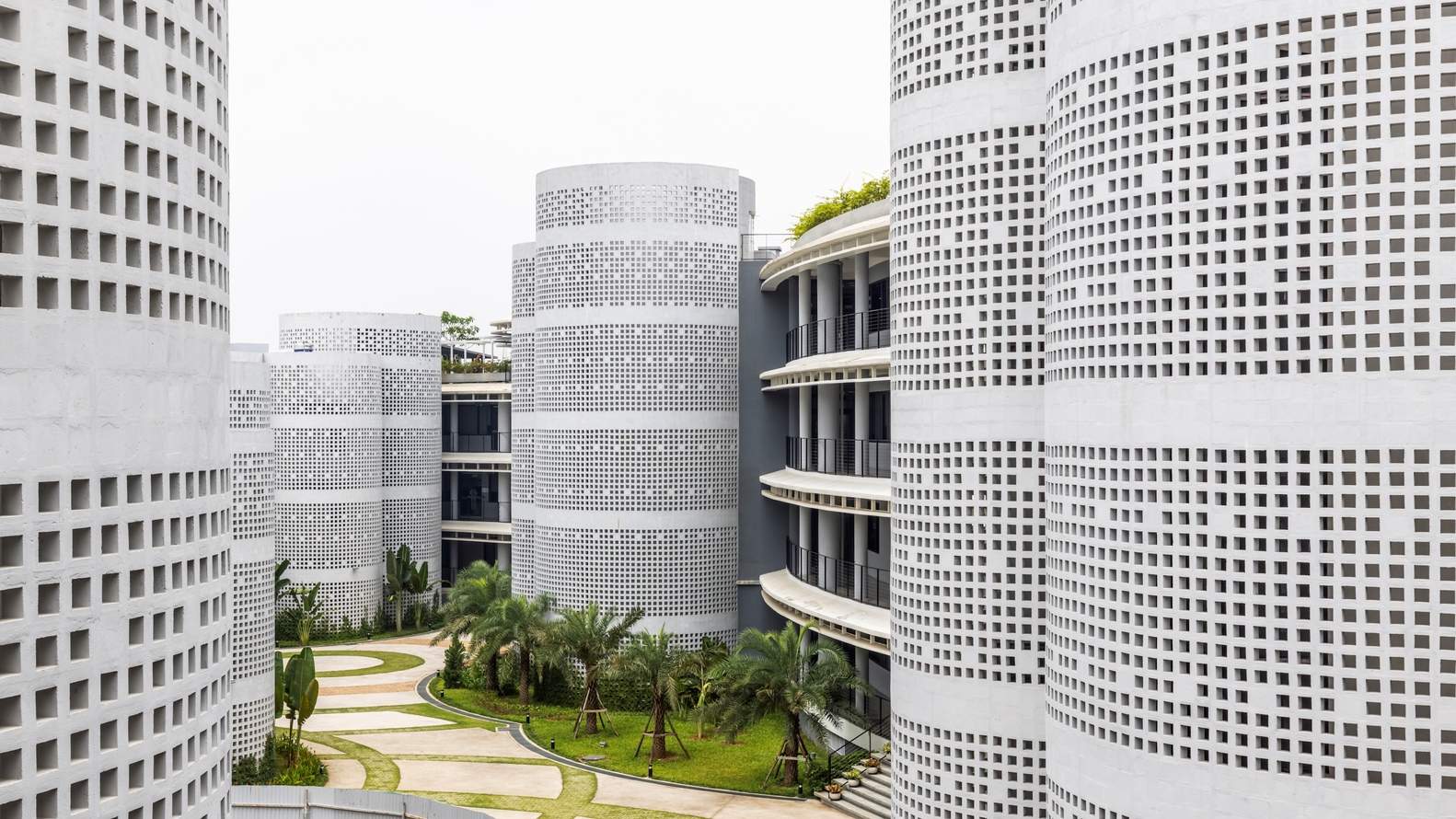
© Hiroyuki Oki
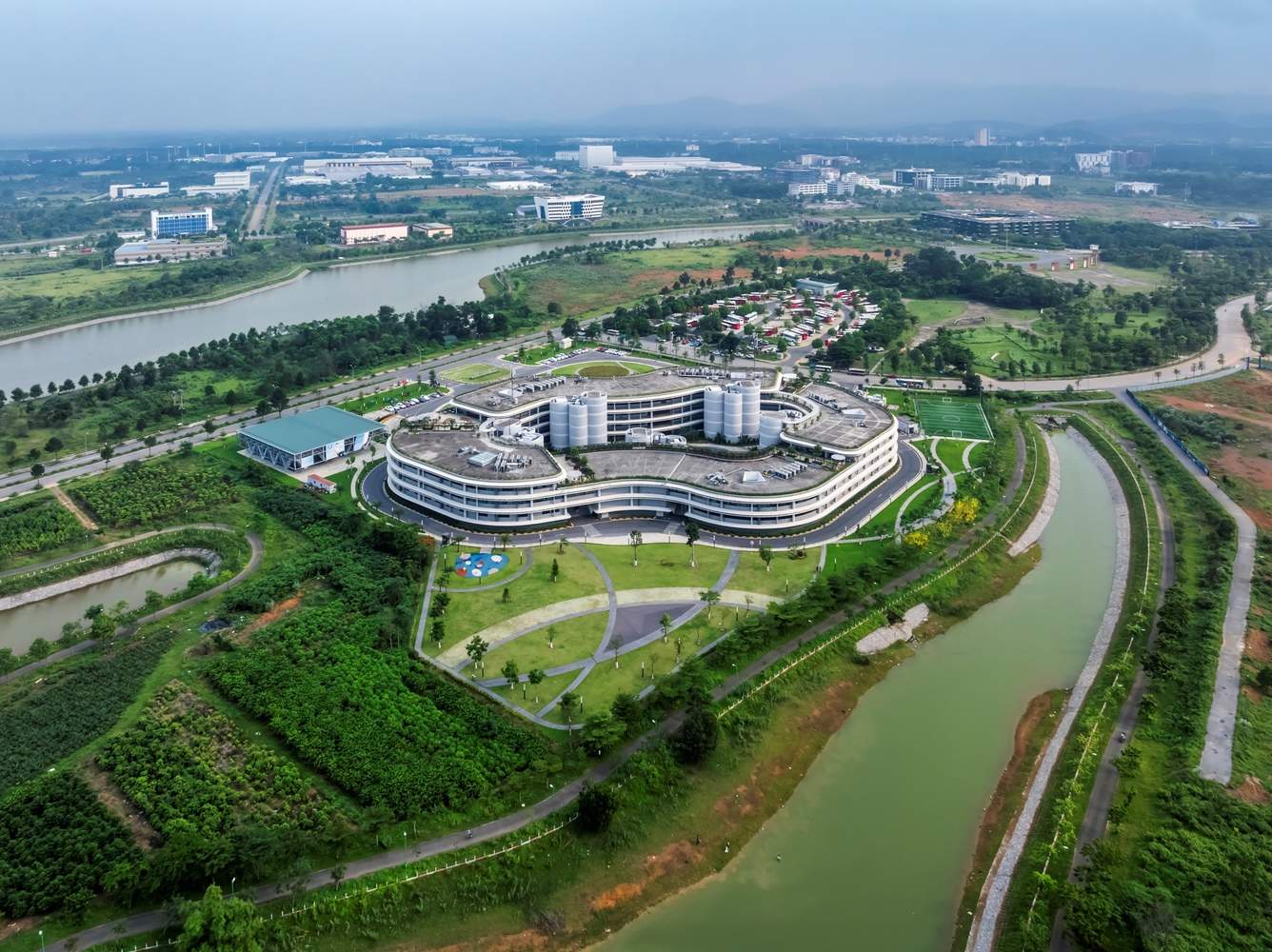
© Hiroyuki Oki
Infinity Village is located in the "Silicon Valley" area of northern Vietnam, 40 kilometers from the center of Hanoi, and is part of the Hoa Lac High tech Development Zone. The global master plan consists of a series of "villages" distributed around the central park. Since its launch in 2007, G8A has completed three projects, namely "High Tech Landscape," "Concrete Lace," and "The Gardens. As each project progresses, Infinite Village is like a rapidly growing organism, carefully crafted by G8A from its inception and designed as a continuously evolving conceptual development project.
“无限村”(Infinity Village)坐落于越南北部的“硅谷”地区,距河内市中心 40 公里,是 Hoa Lac 高科技开发区的组成部分。该全球总体规划由围绕中央公园分布的一系列“村落”构成。自 2007 年启动以来,G8A 公司已完成了三个项目,分别是“高科技景观”(High Tech Landscape)、“混凝土花边”(Concrete Lace)和 “花园”(The Gardens)。随着每个项目的推进,无限村如同一个快速生长的有机体,从诞生之初便由 G8A 精心打造,并被设计为一个持续演进的概念性开发项目。
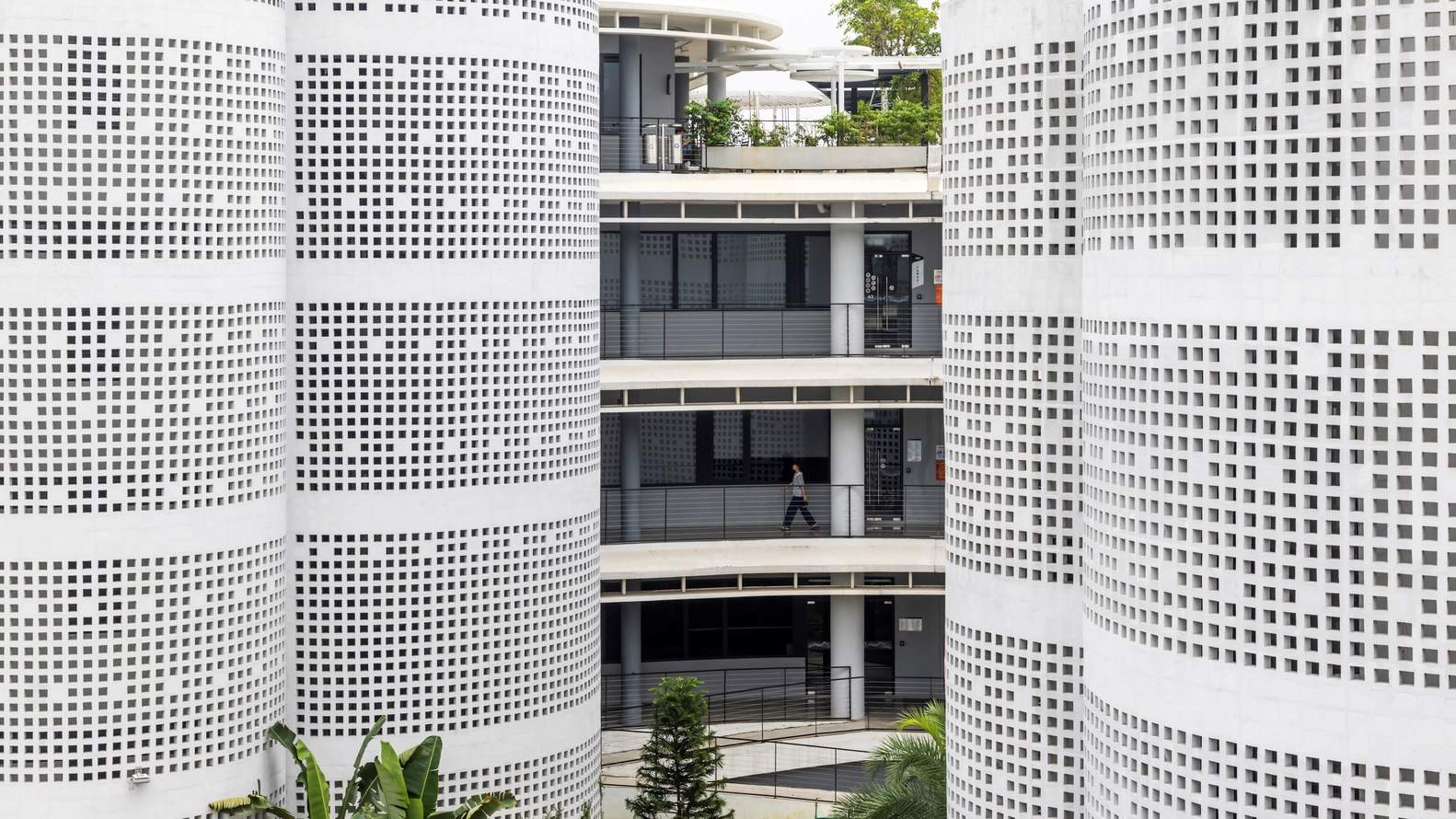
© Hiroyuki Oki
© Nguyen Duy Thanh
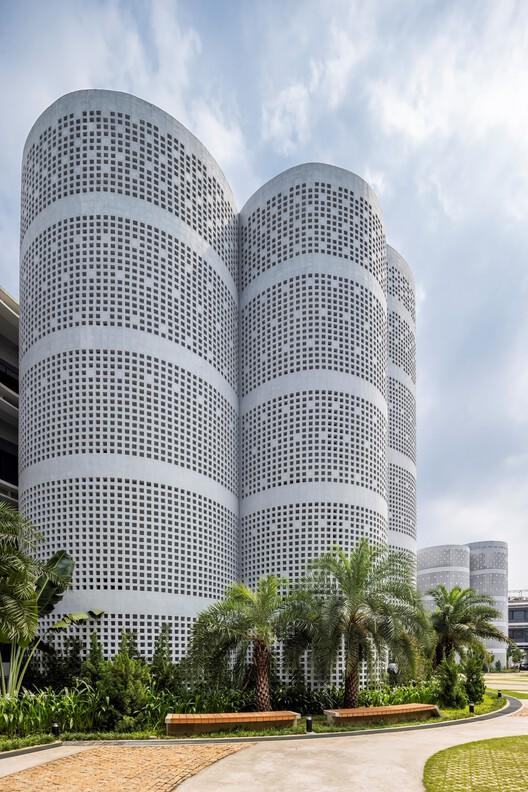
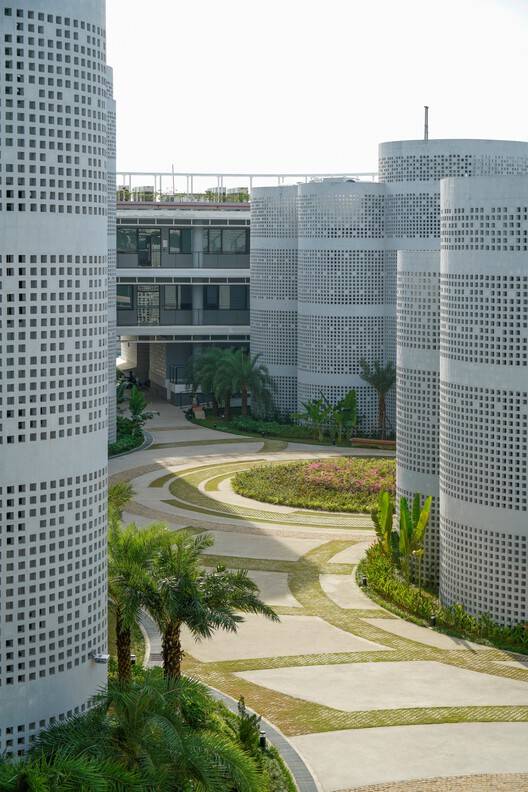
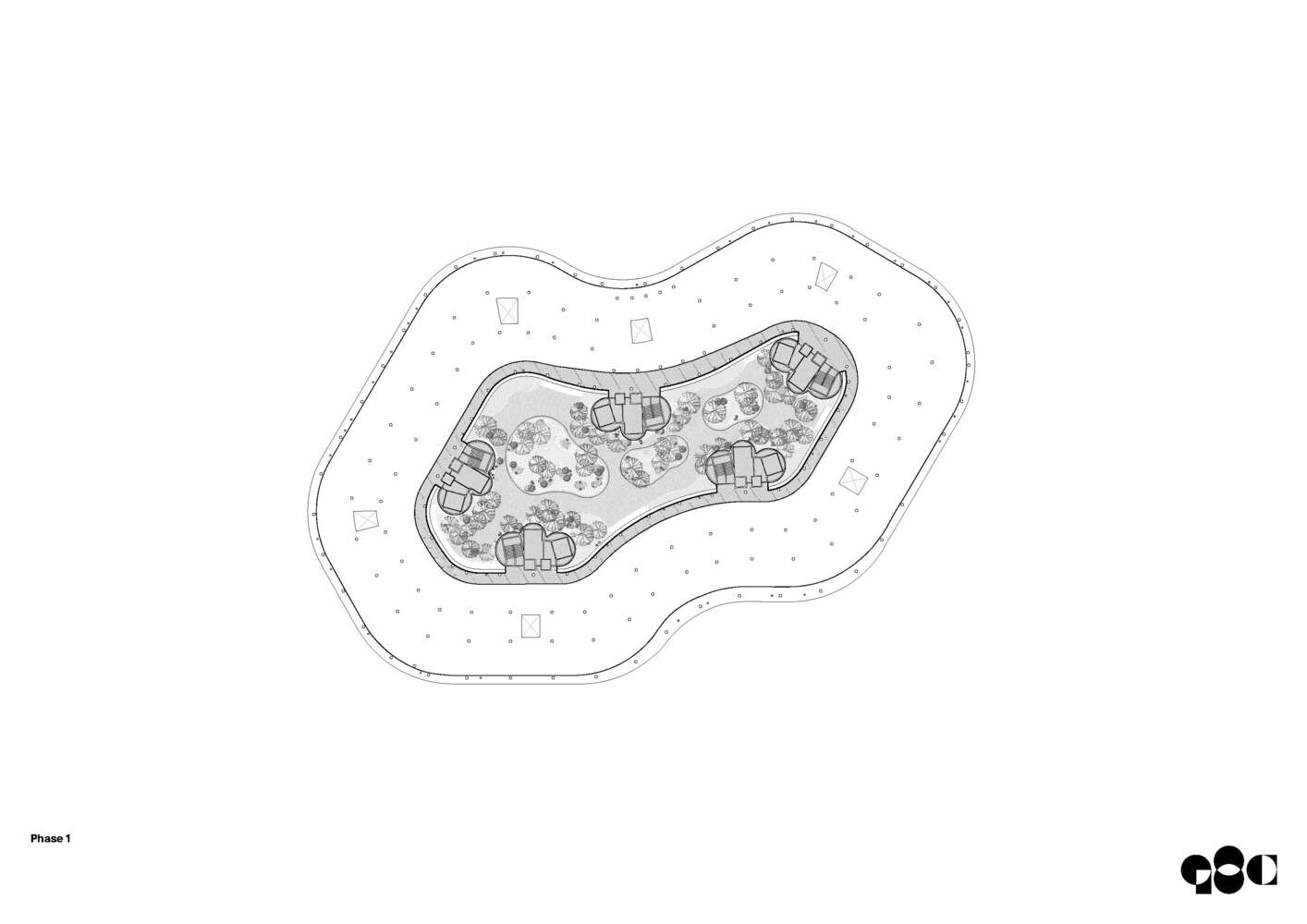
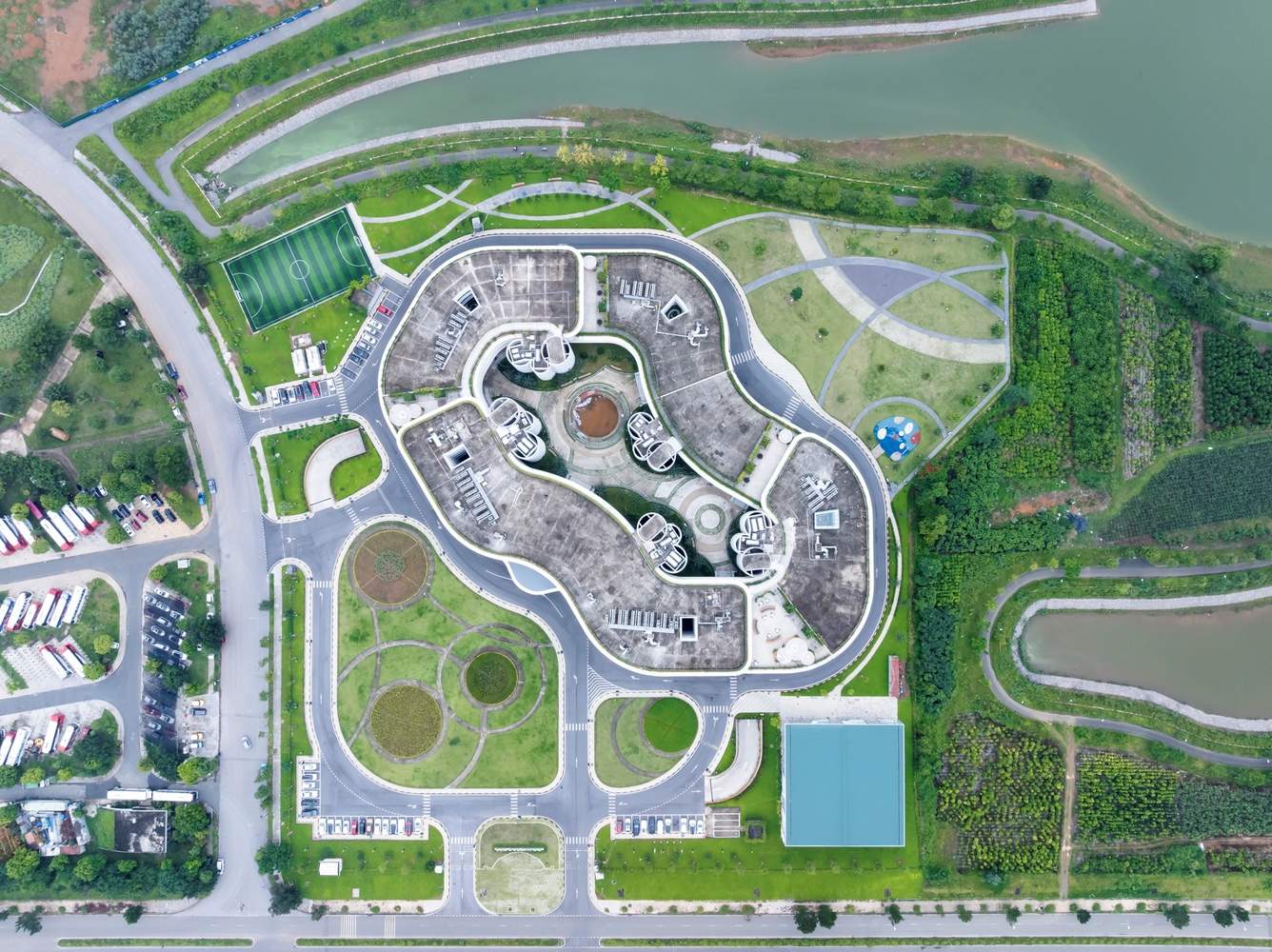
The project consists of two asymmetric circular structures that interlock with each other, creating a rich and vibrant space of 35000 square meters at each construction stage. In the first phase of the project, a dedicated public activity area was set up on the ground floor, accompanied by a unique "cloud courtyard" landscape design. The entire area is surrounded by a large and highly transparent building structure.
该项目由两个相互咬合的不对称环形结构组成,每一建设阶段均打造出 35000 平方米的丰富且充满活力的空间。在首期工程中,底层专设公共活动区域,并配有独具特色的“云庭”景观设计,整个区域被一个庞大且通透性极强的建筑结构所环绕。
© Hiroyuki Oki
© Nguyen Duy Thanh
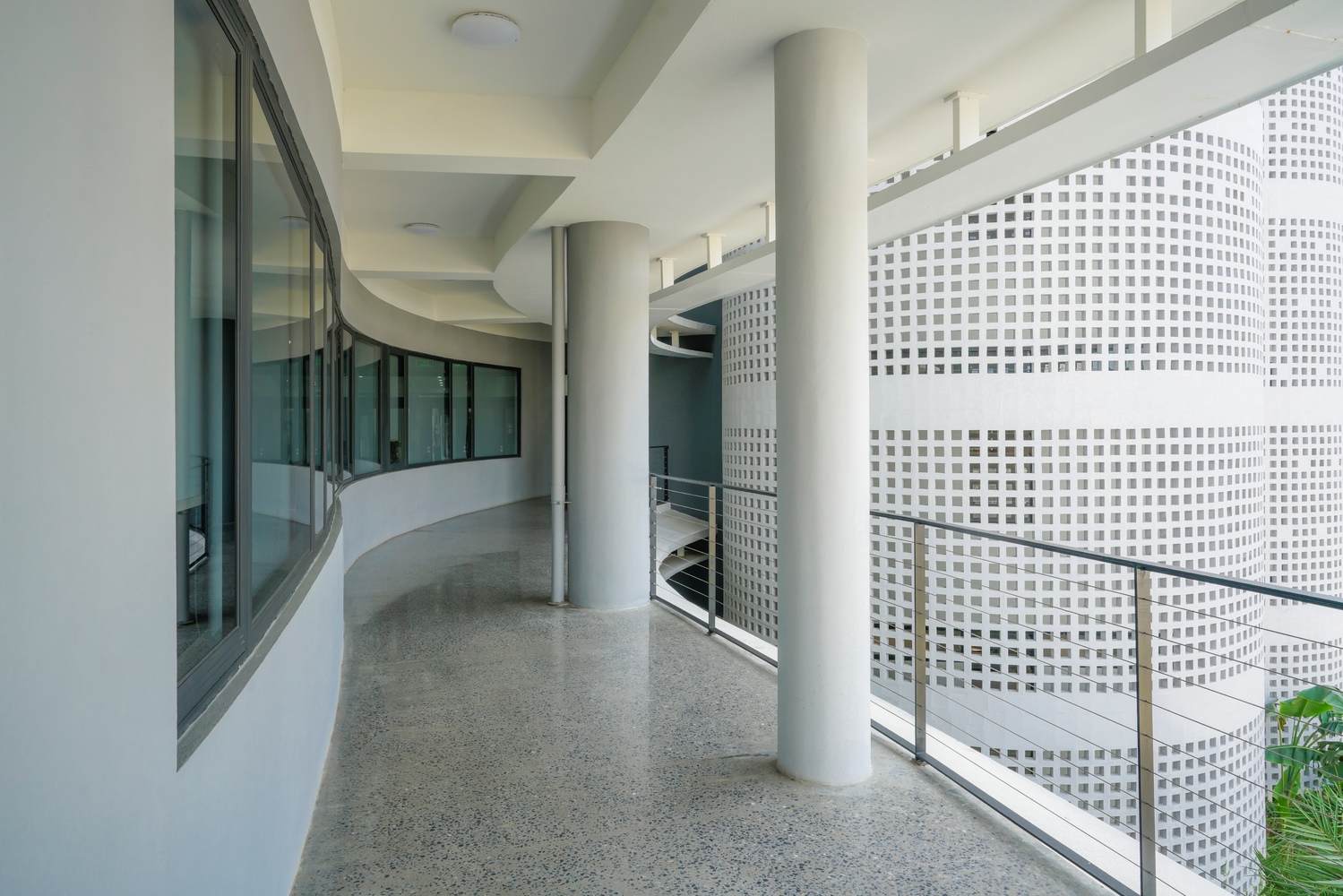
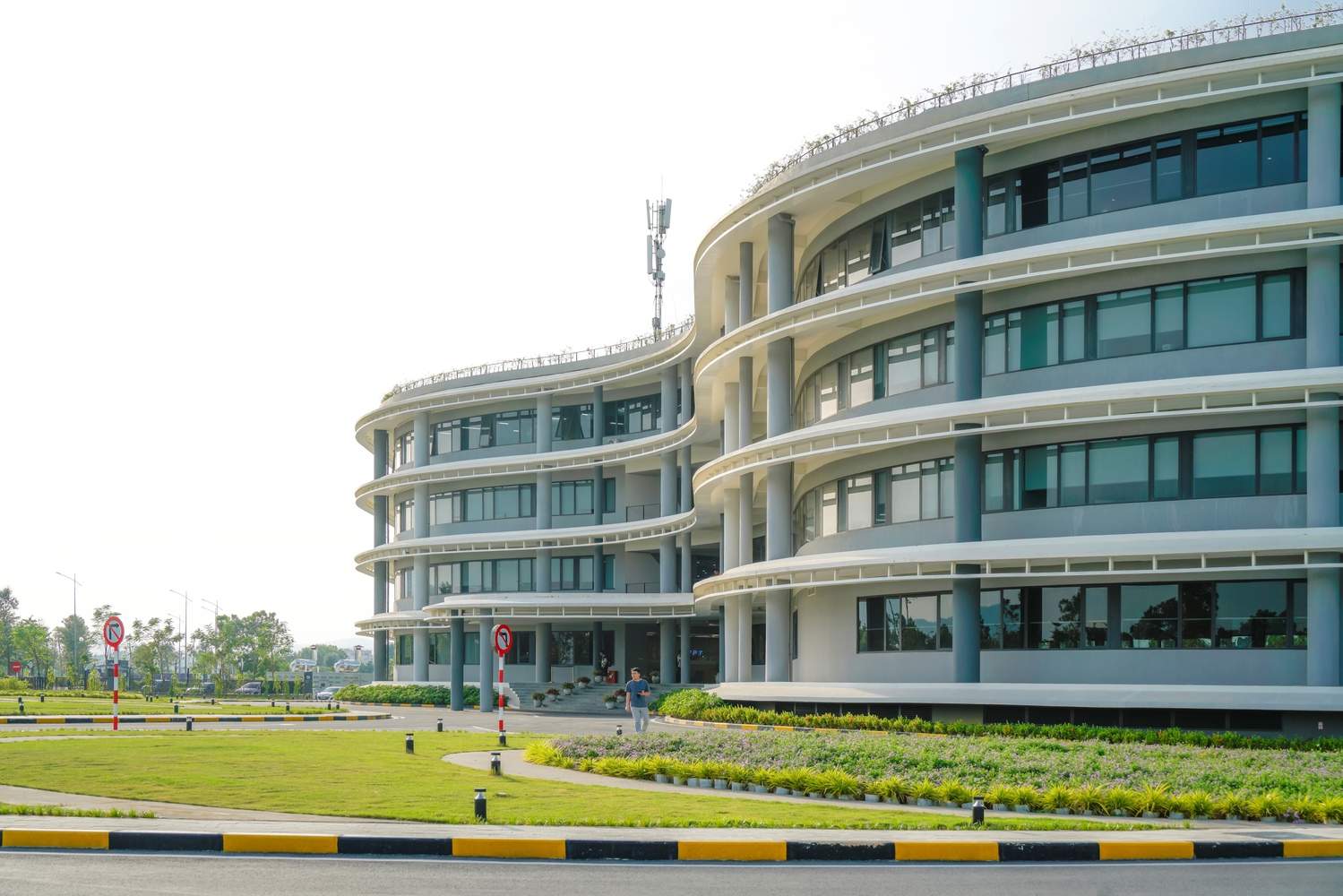
As the corridor extends along the contour line of the floor plan, this curved building with all glass curtain walls achieves a strong visual connection with the external natural environment. The core functional area of the building is set in the courtyard, giving this ordinary entity a new identity and elevating the exterior structure of the building to a tree like illusion.
随着走廊沿着平面图的轮廓线延伸,这座全玻璃幕墙的曲线形建筑实现了与外部自然环境的强烈视觉连通。建筑的核心功能区域被设置在庭院之中,为这一平凡的实体赋予了全新的身份,并将建筑的外立面结构升华为宛如树木幻影般的存在。
平面图
This project explores the design of the middle space in the context of a hot external climate, striving to create a cool and comfortable environment inside, which is in sharp contrast to many European designs that deal with opposite climate scenarios (i.e. cold external, warm internal). The external circular corridor serves as an auxiliary passage, designed to create a climate regulated public community space.
该项目在外部气候炎热的背景下,探索了中间空间的设计,力求在内部营造凉爽舒适的环境,这与许多处理相反气候情境(即外部寒冷、内部需保暖)的欧洲设计形成鲜明对比。外部环形走廊作为辅助通道,其设计旨在打造一个经过气候调节的公共社区空间。
© Nguyen Duy Thanh
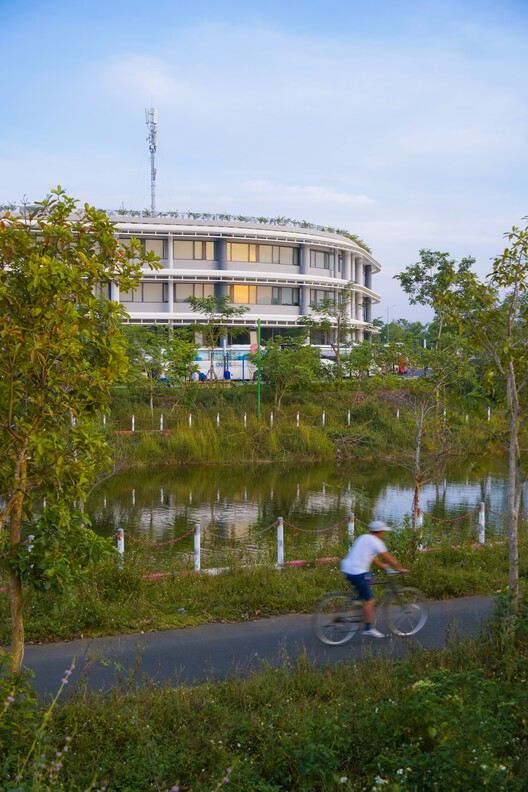
This plan advocates for a dense layout in the horizontal direction, rather than the expected vertical solution that would be limited once built. Sustainable growth has been achieved by keeping the floors at a lower height and adopting a curved contour design. Just as cells continue to divide and subdivide, and their numbers continue to increase, Infinite Village will also expand in a continuous organic form that blends with the poetic landscape.
该方案主张采用水平方向上的密集化布局,而非预期中一旦建成便受限的垂直解决方案。通过将楼层保持在较低高度并采用曲线轮廓设计,实现了可持续增长。正如细胞不断分裂与再细分,数量持续增加一样,无限村也将以一种与景观诗意交融的连续有机形态不断拓展。
© Nguyen Duy Thanh
The evolution of this architectural typology has given rise to an optimized standard floor design that is entirely used for office spaces. This research stems from the demand to remove inefficient "core" spaces and optimize layouts to maximize the benefits of "efficient spaces". This design enables this software company, which holds highly sensitive and confidential information, to flexibly allocate office space according to constantly changing business needs.
这种建筑类型学的演变催生了一种最优化的标准楼层设计,该设计完全用于办公空间。此项研究源于去除低效“核心”空间、优化布局以最大化“高效空间”效益的诉求。这一设计使得这家掌握高度敏感且机密信息的软件公司,能够根据不断变化的业务需求灵活划分办公空间。
© Hiroyuki Oki