Green House/Aoki Zhen Research Laboratory
Green House / 青木真研究室
© Shota Hiyoshi
© Shota Hiyoshi
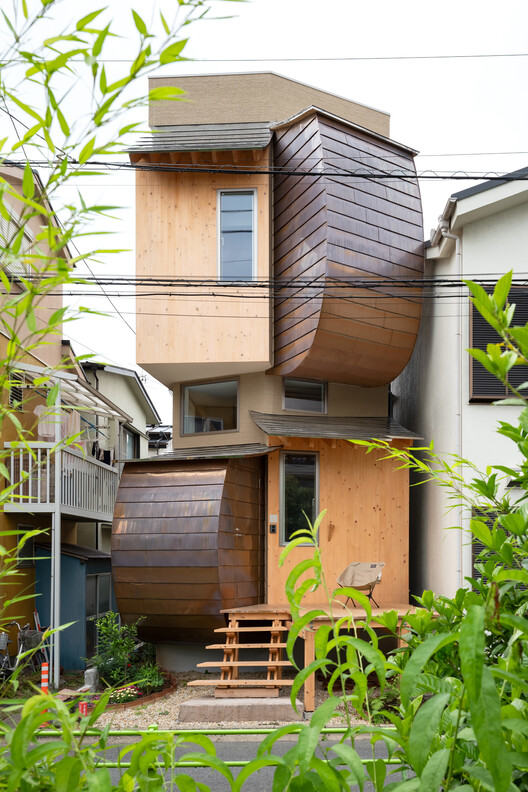
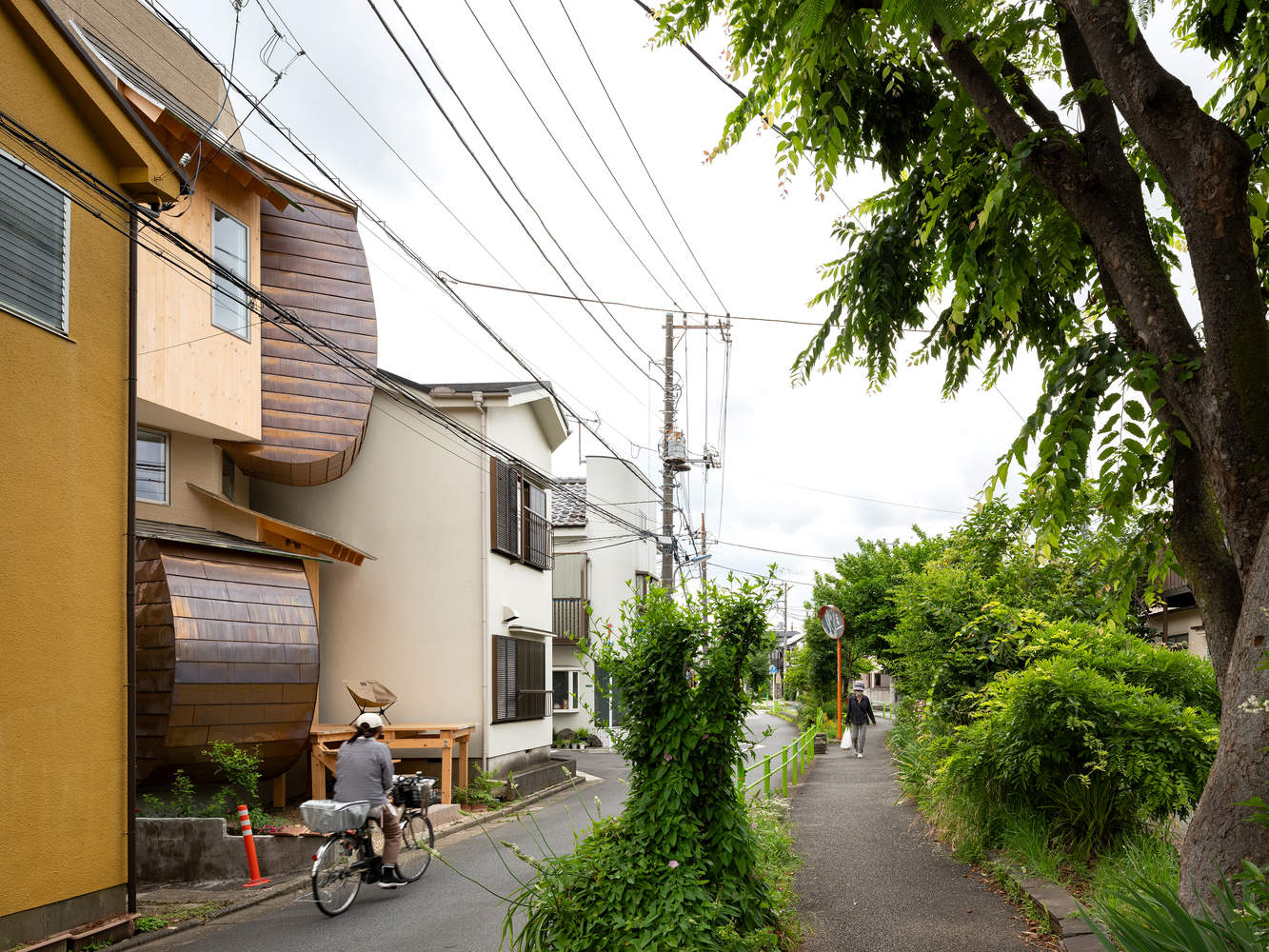
This residence is located next to a lush pedestrian greenway in the Ryoma district of Tokyo, and is closely connected to the daily landscape of the surrounding community. Here, residents plant flowers and fruit trees, and also take daily walks along this path. This project is not simply opposed to this linear environment, but integrates a brand new spatial scene into it - a scene that can attract people to interact and gradually integrate into the local ecology.
这座住宅坐落于东京练马区一条绿意盎然的步行绿道旁,它与周边社区的日常景观紧密相连。在这里,居民们种植花卉与果树,还会沿着这条小路进行日常散步。该项目并未只是简单地与这一线性环境相对而立,而是向其中融入了一个全新的空间场景——一个能吸引人们互动,并逐渐融入当地生态的场景。
© Shota Hiyoshi
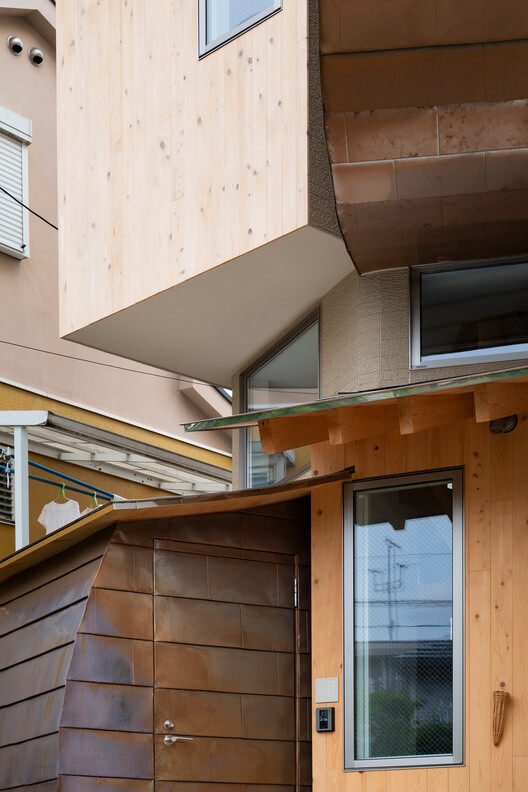
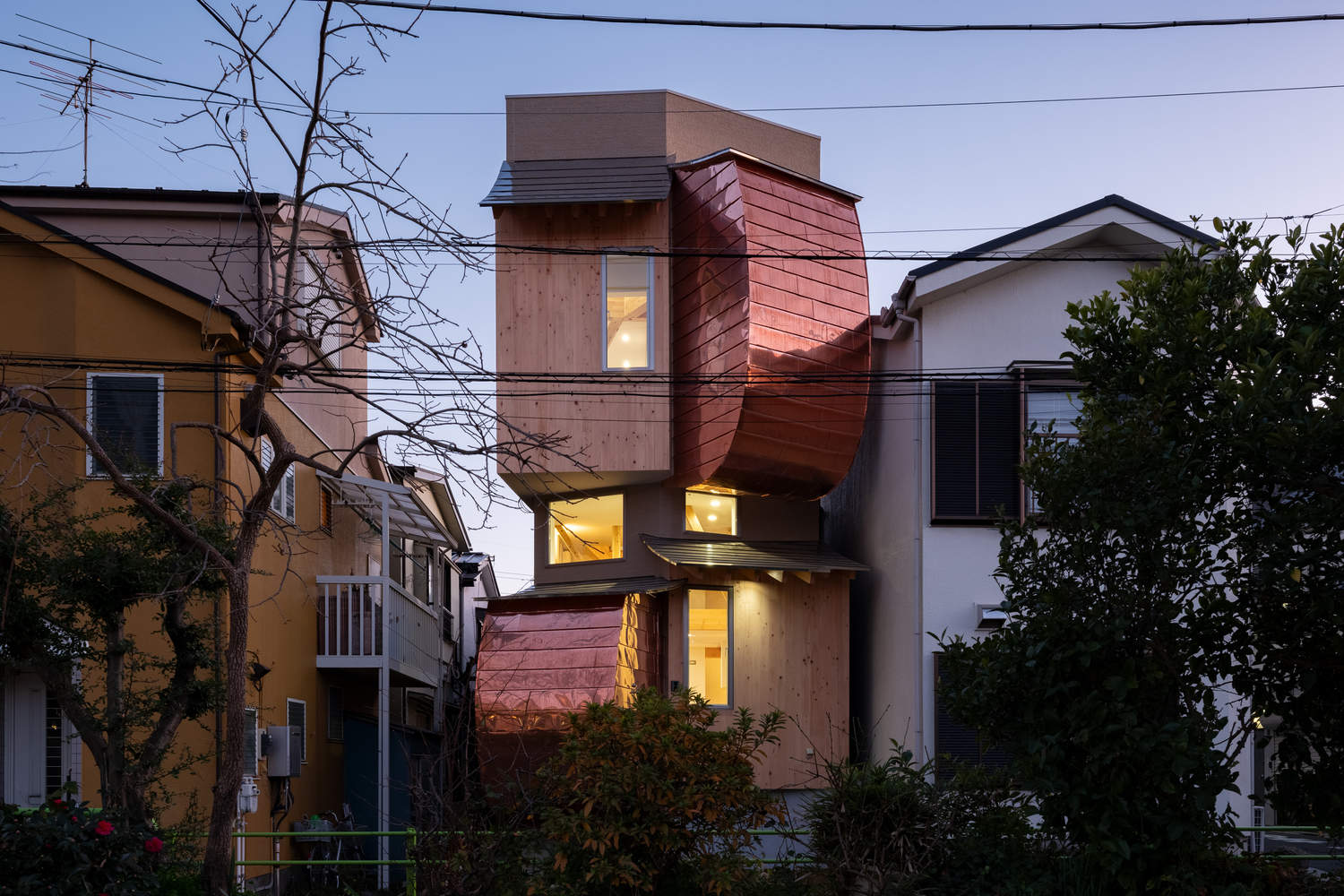
Unlike the continuous rows of houses built close to the edge of the street, this building deliberately retreats backwards to create a terrace and a small front garden. The design of the terrace aims to meet the daily DIY activity needs of residents, while the area of the garden is just right, allowing residents to gradually take care of plants in their daily routine activities. Over time, these outdoor spaces will become extensions of greenways, adding bricks and tiles to the overall landscape of the community. At the entrance, a bamboo vase fixed with traditional Japanese wooden nails can be used to display seasonal flowers and convey a warm signal to the street.
与紧贴街道边缘建造的连续成排的房屋不同,这栋建筑特意向后退让,打造出一处露台和一个小型前花园。露台的设计旨在满足居民日常随性的 DIY 活动需求,而花园的面积则恰到好处,让居民能在每日的常规活动中,循序渐进地照料植物。随着时间推移,这些户外空间将成为绿道的延伸,为社区的整体景观添砖加瓦。在入口处,一个用传统日本木钉固定的竹制花瓶,可用来展示当季花卉,以此向街道传递一份温馨的示意。
© Shota Hiyoshi
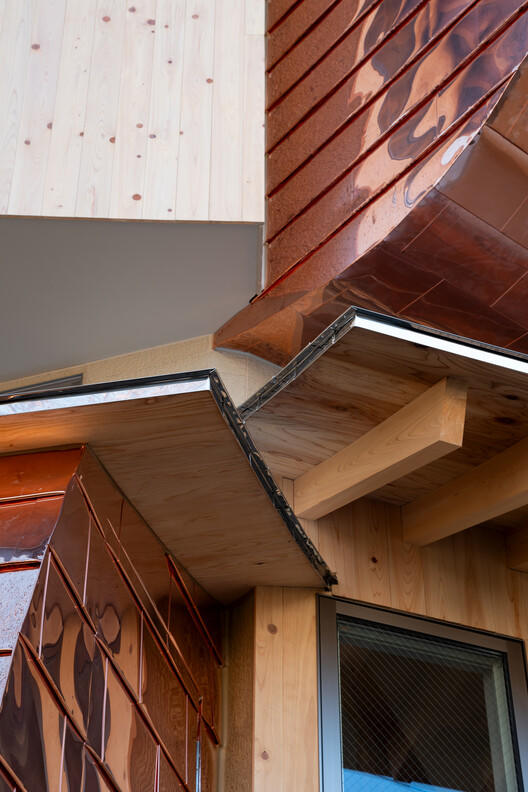
The exterior facade of the building echoes the staggered curves and vertical forms of the surrounding trees, cleverly integrating flat and curved elements, and using materials that change over time - copper and Japanese cypress. Copper plates are laid out in the traditional "Ichimonji buki" pattern, while Japanese cypress wood is used as vertical cladding in different orientations. A stainless steel curved roof unifies the overall shape. The design intention is not to impose a single dominant expression, nor to create a visual collage, but to shape an outward open appearance, stimulate imagination, contain ambiguity, and allow change to occur.
建筑外立面与周边树木错落有致的曲线和垂直形态相呼应,巧妙融合了平面与曲面元素,并选用随时间流转而发生变化的材质——铜与日本桧木。铜板以传统的“一字敷”(ichimonji - buki)图案铺陈,而日本桧木则以不同朝向作为垂直覆层使用。一座不锈钢曲面屋顶将整体形态统一起来。设计意图并非要强加一种单一的、占据主导地位的表达方式,也不是要打造一幅视觉拼贴画,而是塑造一种向外开放的外观,激发想象,蕴含模糊性,并允许变化发生。
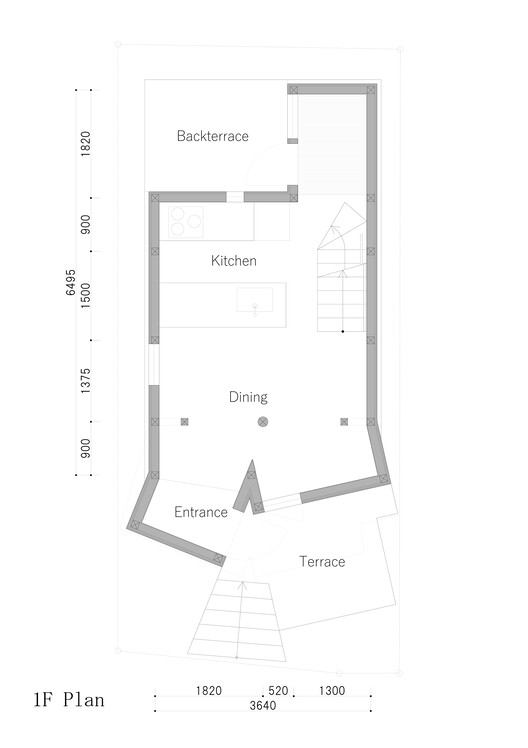
一层平面图
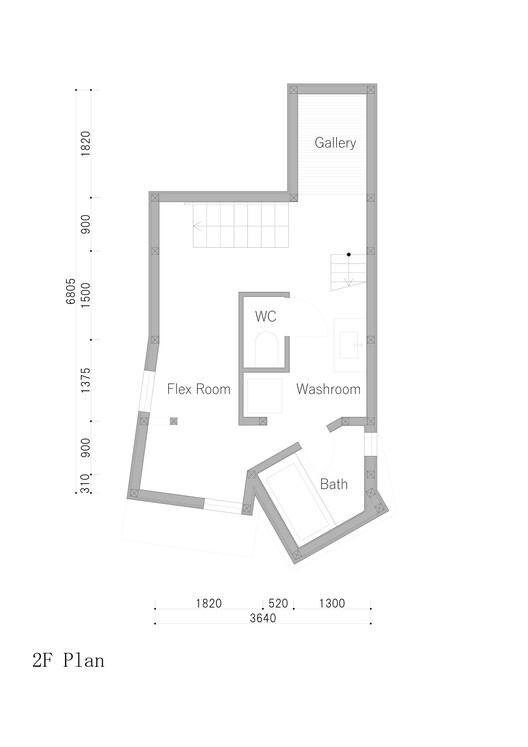
二层平面图
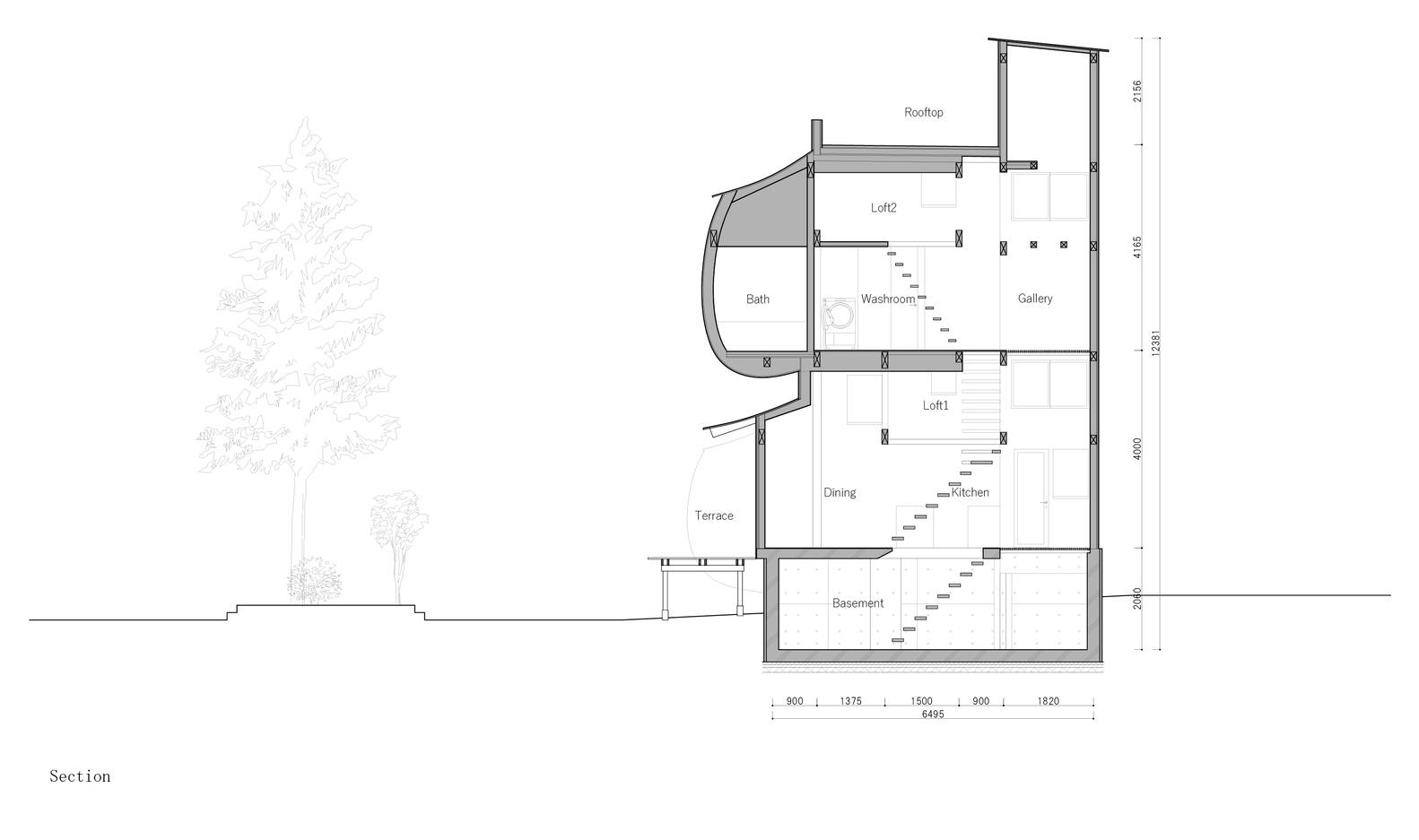
剖面图
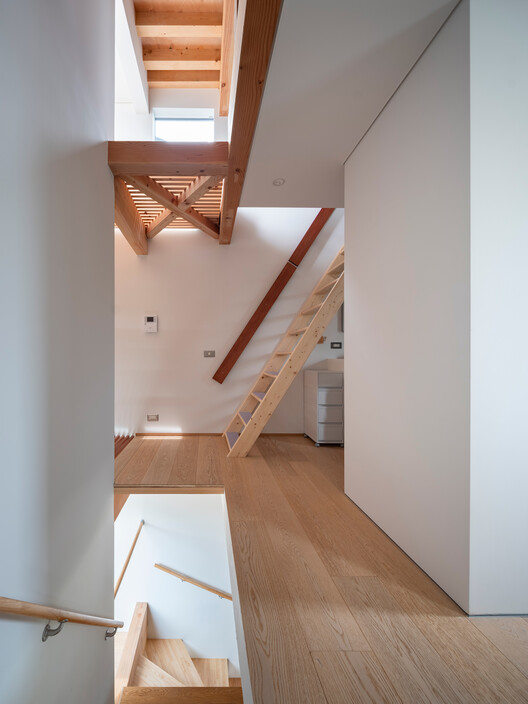
Although the plot only covers an area of 49 square meters, the legally mandated 12 meter street width creates ample vertical space for buildings. The interior design is conceived as a vertical single room space, consisting of layered floors and interwoven niches, creating a continuous three-dimensional living environment.
尽管该地块面积仅有 49 平方米,但法律规定的 12 米街道宽度为建筑创造了充裕的垂直空间。室内设计被构思为一个垂直的单间空间,由层层叠叠的地板和相互交织的壁龛组成,营造出一个连续的三维生活环境。
© Shota Hiyoshi
© Shota Hiyoshi
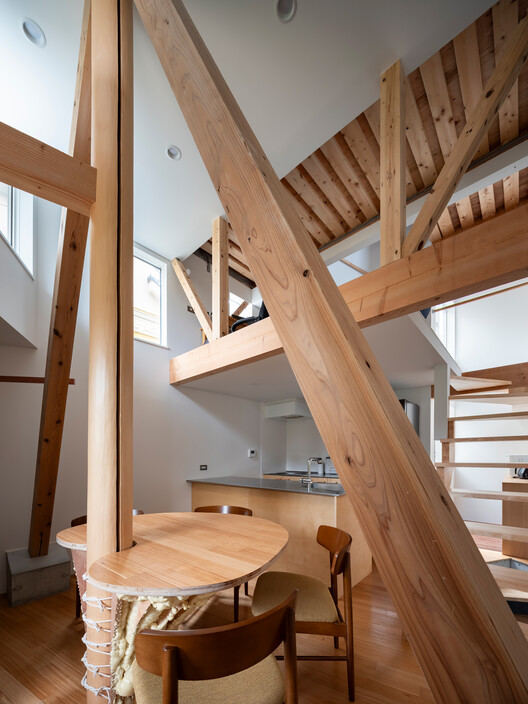
On the first floor, a sculptural fa ç ade wraps around a circular wooden column in the center of the interior, around which a dining table has been customized. There are high side windows facing north above this dining area, which open towards the greenway direction. Soft natural light shines through the windows, creating a quiet and warm public space.
在一楼,雕塑感十足的外立面包裹室内中央一根圆形原木立柱,围绕这根立柱定制了一张餐桌。这个用餐区上方设有朝北的高侧窗,窗户朝向绿道方向敞开,柔和的自然光透过窗户洒入,营造出一个静谧且充满温馨氛围的公共空间。
© Shota Hiyoshi
© Shota Hiyoshi
© Shota Hiyoshi
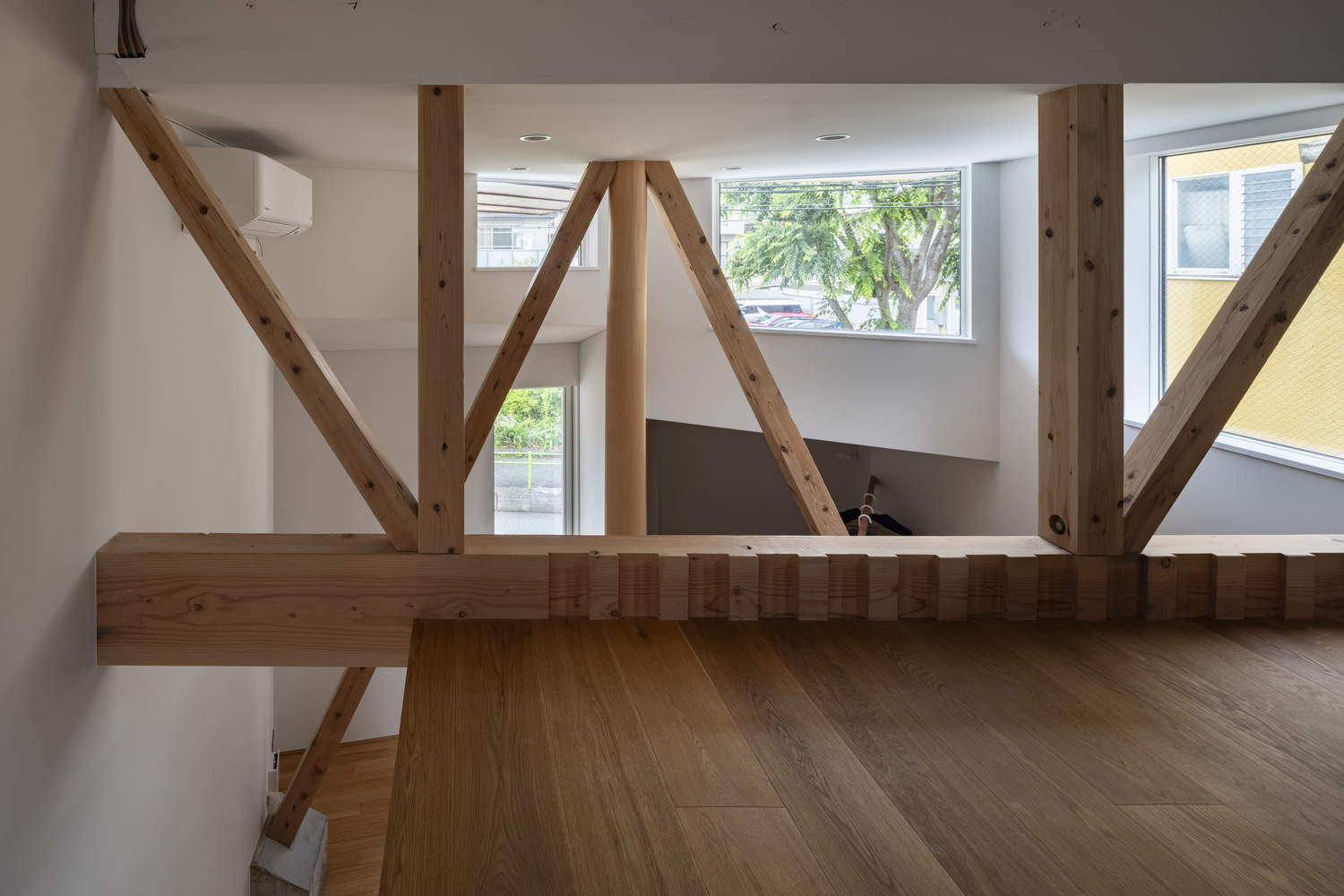
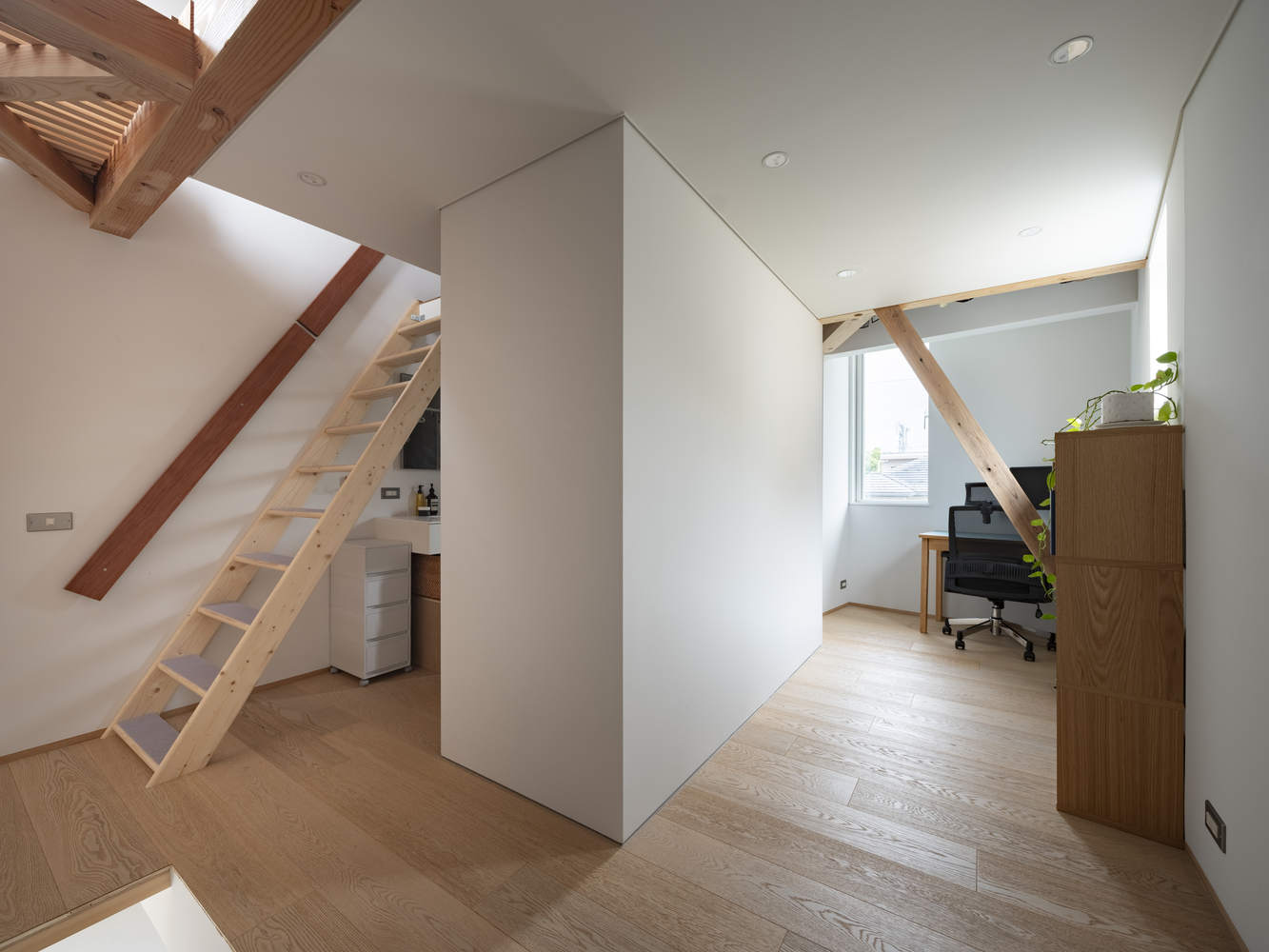
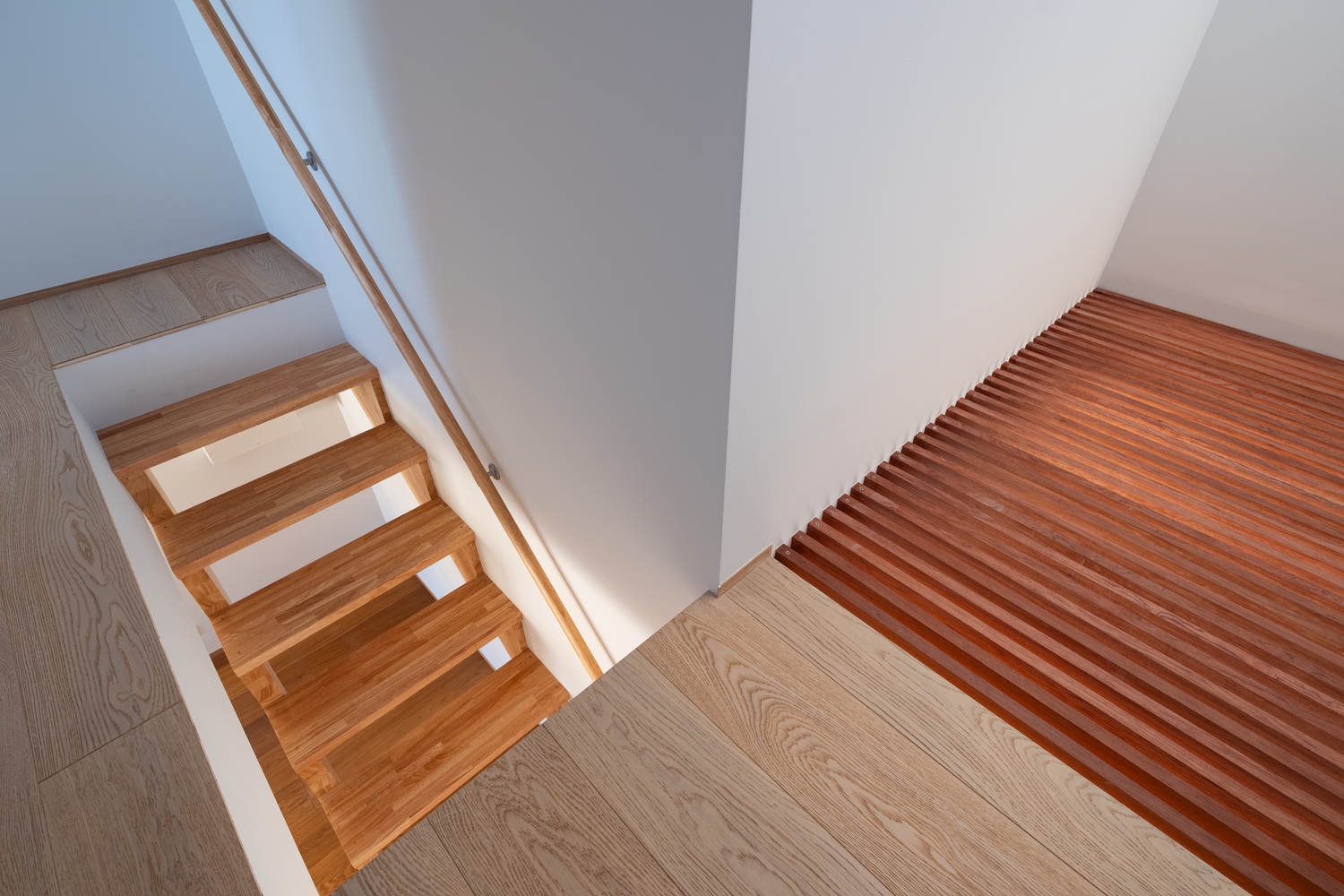
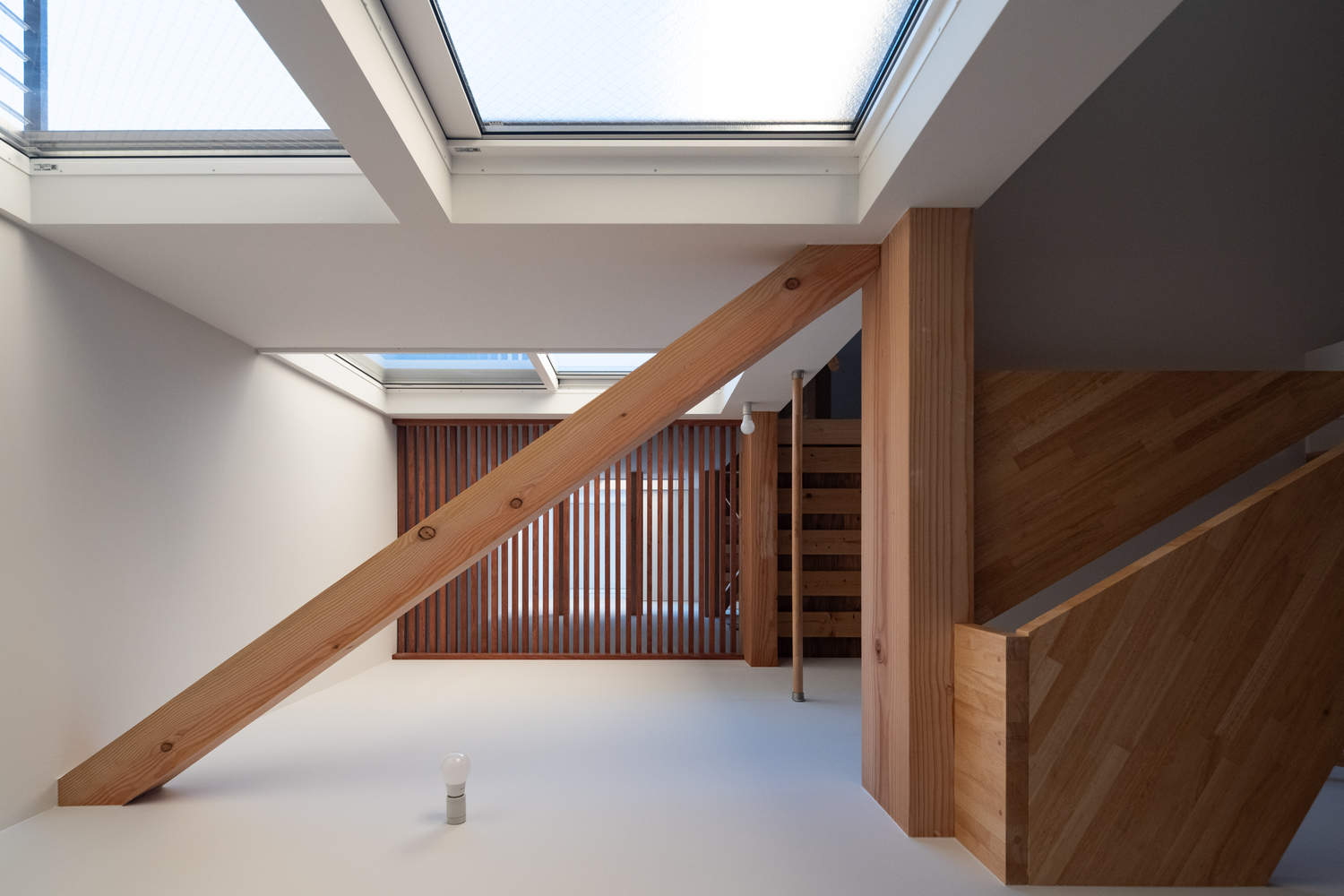
Private functional areas such as bathrooms and toilets are integrated on the second floor. The flat layout forms a circular flow around the bathroom located in the center, which ensures the flexibility of space use and facilitates future adjustments and renovations according to needs. Natural light is cleverly introduced, allowing the space to meet the needs of being used as an office or gallery without being limited by a single fixed functional plan.
浴室和卫生间等私密功能区域被整合在二楼。平面布局围绕位于中心的卫生间形成环形动线,这样的设计既保证了空间使用的灵活性,又便于未来根据需求进行调整改造。自然光被巧妙引入,使该空间既能满足作为办公室或画廊的使用需求,又不会因单一固定的功能规划而受到局限。
© Shota Hiyoshi
On the south side, there is a tower shaped vertical atrium that uses strip flooring to introduce sunlight into each floor of the house. Light seeps in from openings of different heights and directions, reflecting off a white surface to create a soft and atmospheric glow. This light characteristic that constantly changes with seasons, day and night, and weather conditions creates a delicate and ever-changing indoor space, creating a living environment that is both private and open.
南侧一座塔状垂直中庭,借助条状地板将日光引入房屋的每一层。光线从不同高度和方向的开口处渗入,经白色表面反射后,营造出柔和且富有氛围感的辉光。这种随季节、昼夜和天气变化而不断改变的光线特质,让室内空间充满细腻的变幻,营造出一个既私密又开阔的居住环境。
© Shota Hiyoshi