Pupnia House/Laurent Troost Architects+Hana Eto Gall Paisagismo
普普尼亚之家 / Laurent Troost Architectures + Hana Eto Gall Paisagismo
设计理念的精髓:卡萨·普普尼亚住宅最令人印象深刻的是其对自然环境的尊重与融合。建筑师巧妙地将景观设计置于核心地位,模糊了建筑与自然的界限。这种设计理念不仅体现在对普普尼亚棕榈树的完整保留,还体现在将热带植被引入建筑内部,创造出凉爽湿润的微气候。通过“桥式住宅”的结构设计,建筑底层空间被完全释放,与周边环境无缝融合,实现了持续的交叉通风。这种设计手法使得住宅本身仿佛是自然景观的一部分,而不是独立于环境之外的孤立存在,体现了设计师对可持续发展和生态友好的深刻理解。
空间与功能的创新:该项目在空间利用和功能布局上展现出独特的创新性。采用“桥式住宅”方案,将湿区和设备用房集中布置,为底层中央空间创造了开阔的自由区域,实现了建筑与景观的无缝融合。同时,梯形金属体量的设计,不仅遮挡了晨光,保证了卧室阳台的私密性,还通过与混凝土块的错位,强调了材料的独立性,提供了观赏邻地植被的视野。底层社交、服务与休闲区域的开放式布局,以及侧立面悬浮陶瓷砖遮阳板的设计,都体现了对自然通风和景观视野的极致追求,兼顾了功能性与美观性,实现了对现代生活方式的灵活回应。
可持续策略与材料的选择:卡萨·普普尼亚住宅在可持续策略和材料选择方面也体现了卓越的设计理念。项目优先采用低环境影响技术,避免土方工程,通过双坡屋顶设计、自动化灌溉系统、雨水收集与再利用系统,以及优先选用本地供应商和可持续方案,体现了对环境保护的责任感。此外,陶瓷砖在工地附近生产,涂料颜色与普普尼亚棕榈树相呼应,营造视觉和谐,增强了建筑、景观与亚马逊语境的融合。这些细节都彰显了设计师对可持续设计和本土文化价值的深刻理解,使得住宅不仅是居住空间,更成为与自然和谐共生的典范。
© Joana França
© Joana França
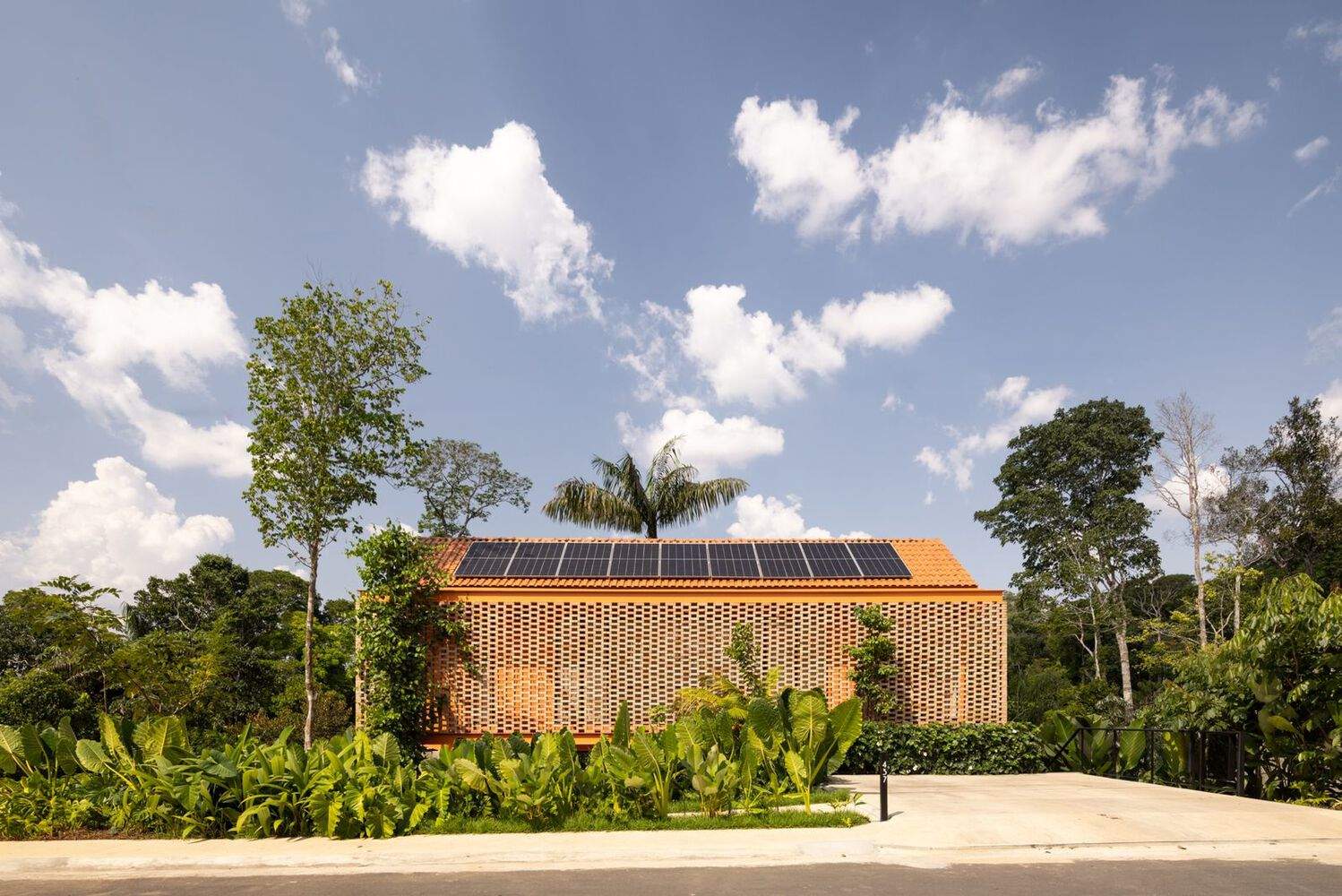
Laurent Troost Architects designed the Casa Pupunha residence located in an apartment community in western Manaus, while preserving existing greenery and creating compact and efficient housing. The residence is adjacent to a permanent environmental protection zone, and its landscape design was created by Hana Eto Gall through direct dialogue with the Amazon landscape. The name of the residence comes from the Pupnia palm tree in the center of the site (which was fully preserved during the construction process), as well as other plants surrounding the residence - they together form the core elements of the landscape and architectural concept.
在保留现有绿植并打造紧凑高效住宅的前提下,洛朗·特鲁斯特建筑事务所(Laurent Troost Architectures)设计了位于马瑙斯西部某公寓社区内的卡萨·普普尼亚住宅(Casa Pupunha)。该住宅毗邻永久性环境保护区,其景观设计由汉娜·伊藤·加尔(Hana Eto Gall)操刀,通过与亚马逊景观的直接对话构思而成。住宅名称源自场地中央的普普尼亚棕榈树(该树在施工过程中被完整保留),以及环绕住宅的其他植物 —— 它们共同构成了景观与建筑理念的核心元素。
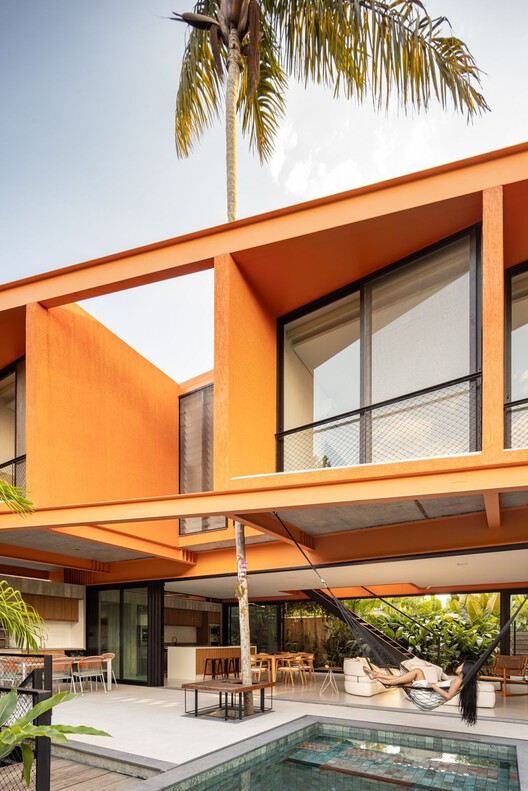
© Joana França
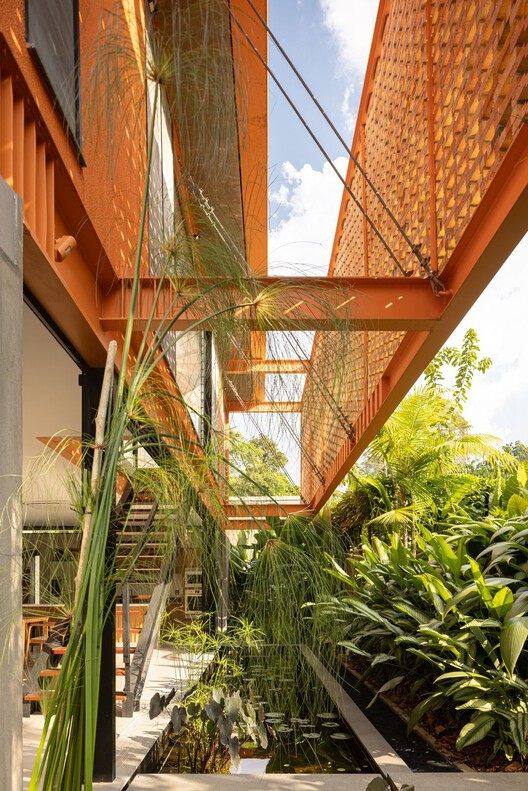
© Joana França
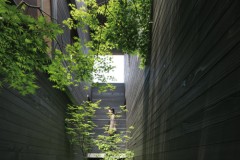
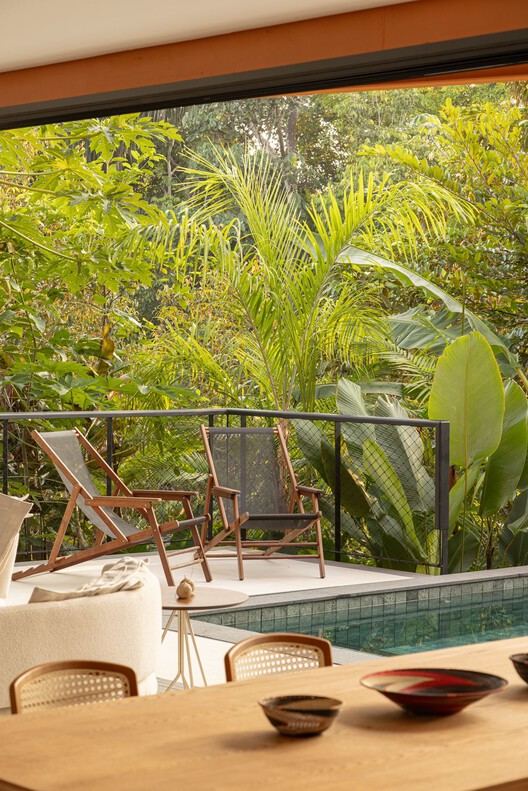
The design aims to make the garden the protagonist, blurring the boundary between natural vegetation and architecture. The experience of arriving at the residence is a sensory feast: visitors need to traverse a path surrounded by tropical vegetation, with large leaves, natural shadows, and dense textures creating a cool and humid microclimate. This immersion is not limited to the surrounding environment, but the vegetation extends into the interior of the building, growing along the internal channels and integrating into the daily lives of residents.
该设计旨在让花园成为主角,模糊自然植被与建筑之间的界限。抵达住宅的体验堪称一场感官盛宴:访客需穿越一条被热带植被环绕的路径,大片的叶片、自然的阴影与浓密的纹理共同营造出凉爽湿润的微气候。这种沉浸感不仅限于周边环境,植被更延伸至建筑内部,沿内部通道生长,融入居民的日常生活。
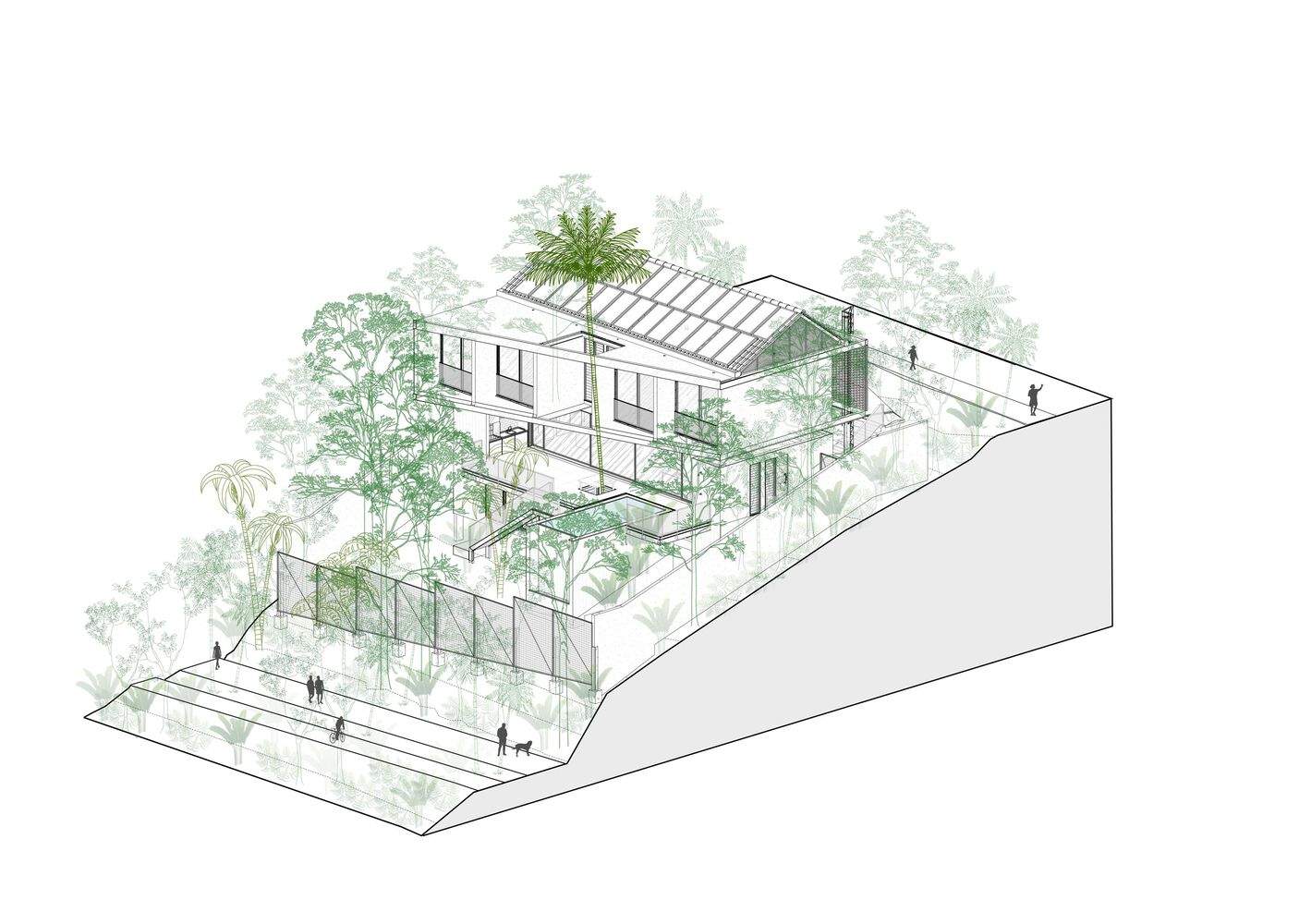
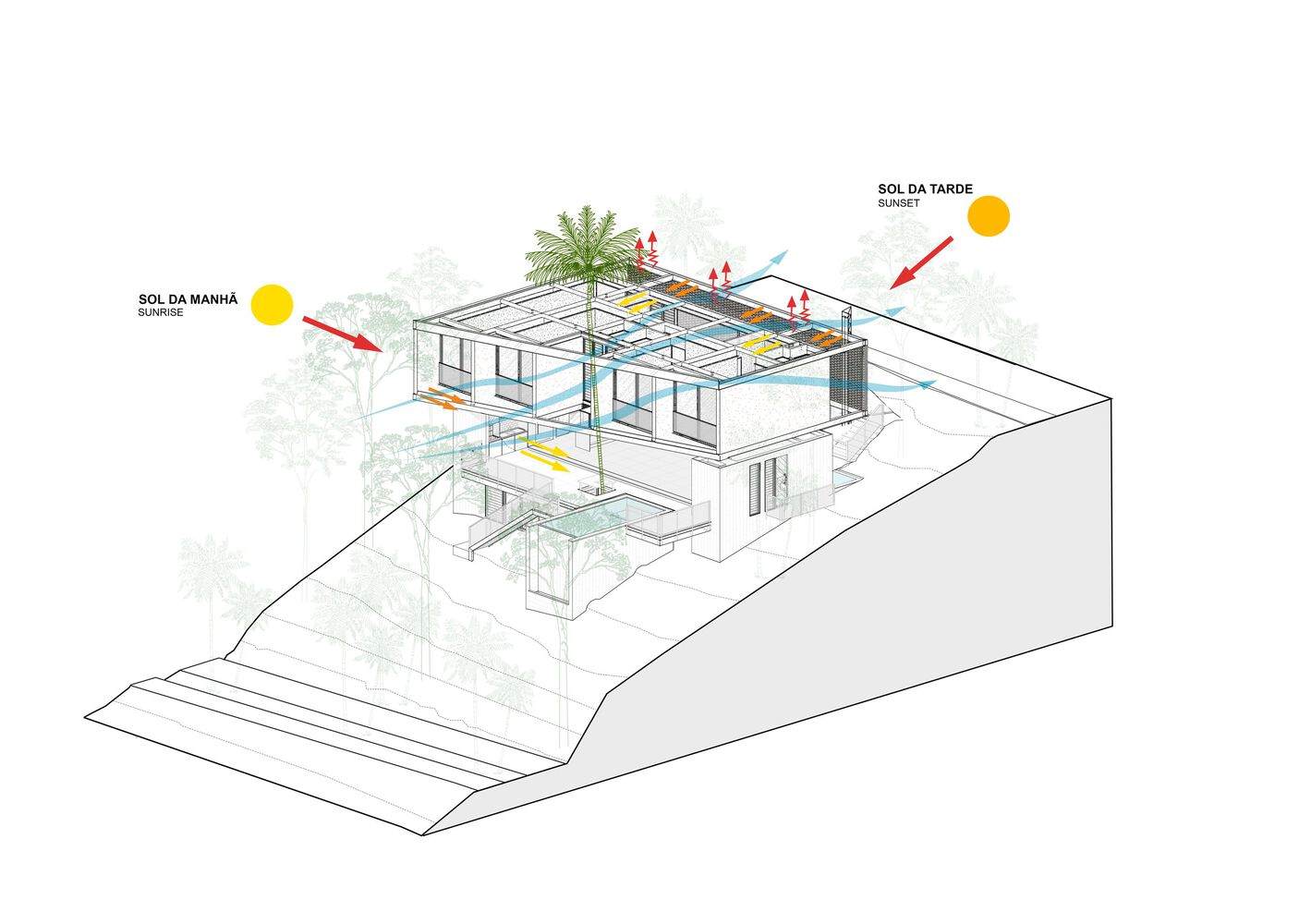
轴测分析图
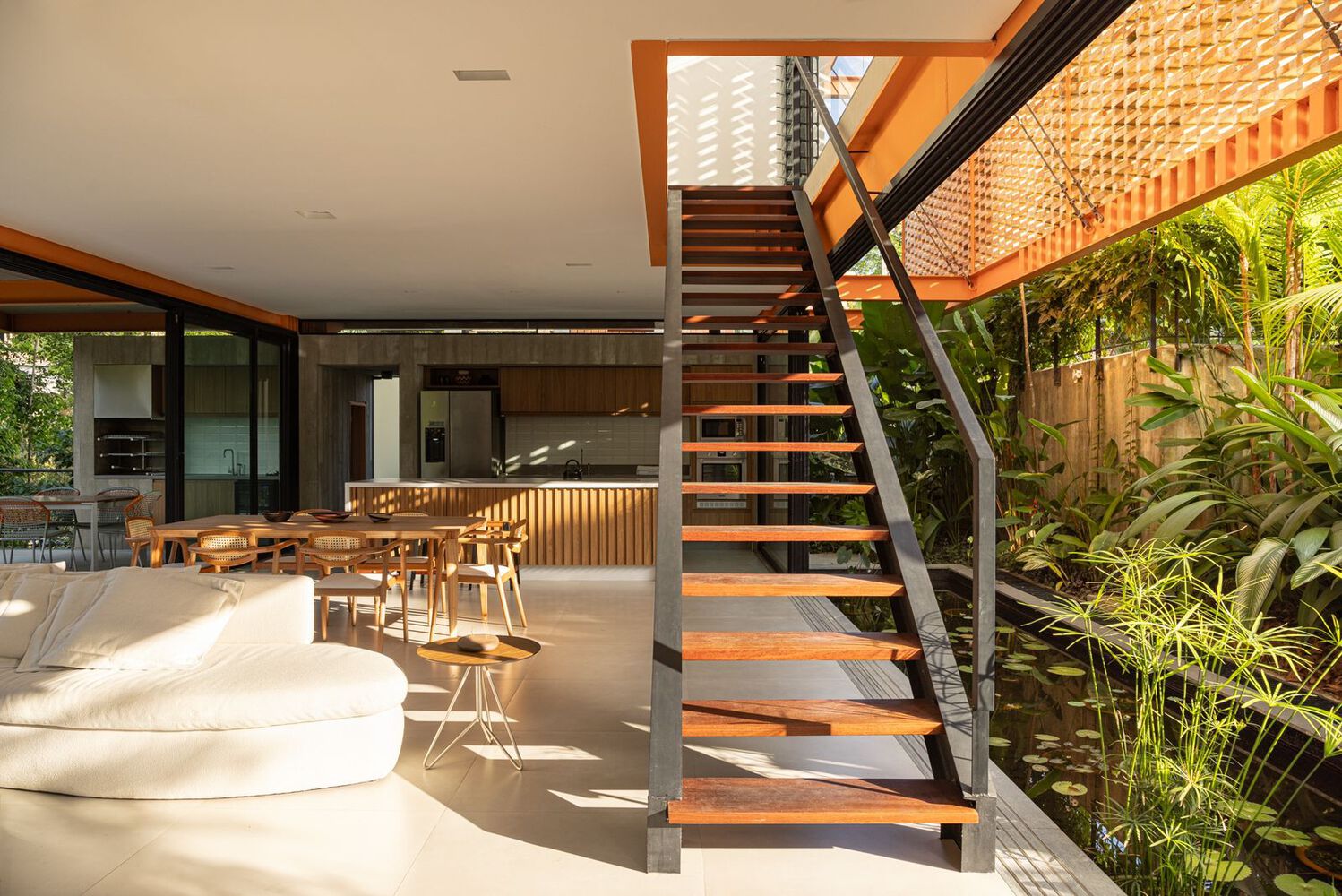
To meet the client's demand for preserving native vegetation and optimizing space, the project is being carried out on two plots of 250 square meters each. The structural design adopts the "bridge type residence" scheme, supported by reinforced concrete blocks on both sides, and the wet area and equipment rooms of the residence are centrally arranged. This strategy fully unleashes the central space at the bottom, creating an open and free zone that seamlessly integrates with the surrounding environment and achieves continuous cross ventilation.
为满足客户保留原生植被并优化空间的需求,项目在两块各 250 平方米的地块上展开。结构设计采用“桥式住宅”方案,由两侧钢筋混凝土块支撑,集中布置住宅的湿区与设备用房。这一策略使底层中央空间完全释放,形成一个开阔的自由区域,与周边环境无缝融合,并实现持续的交叉通风。
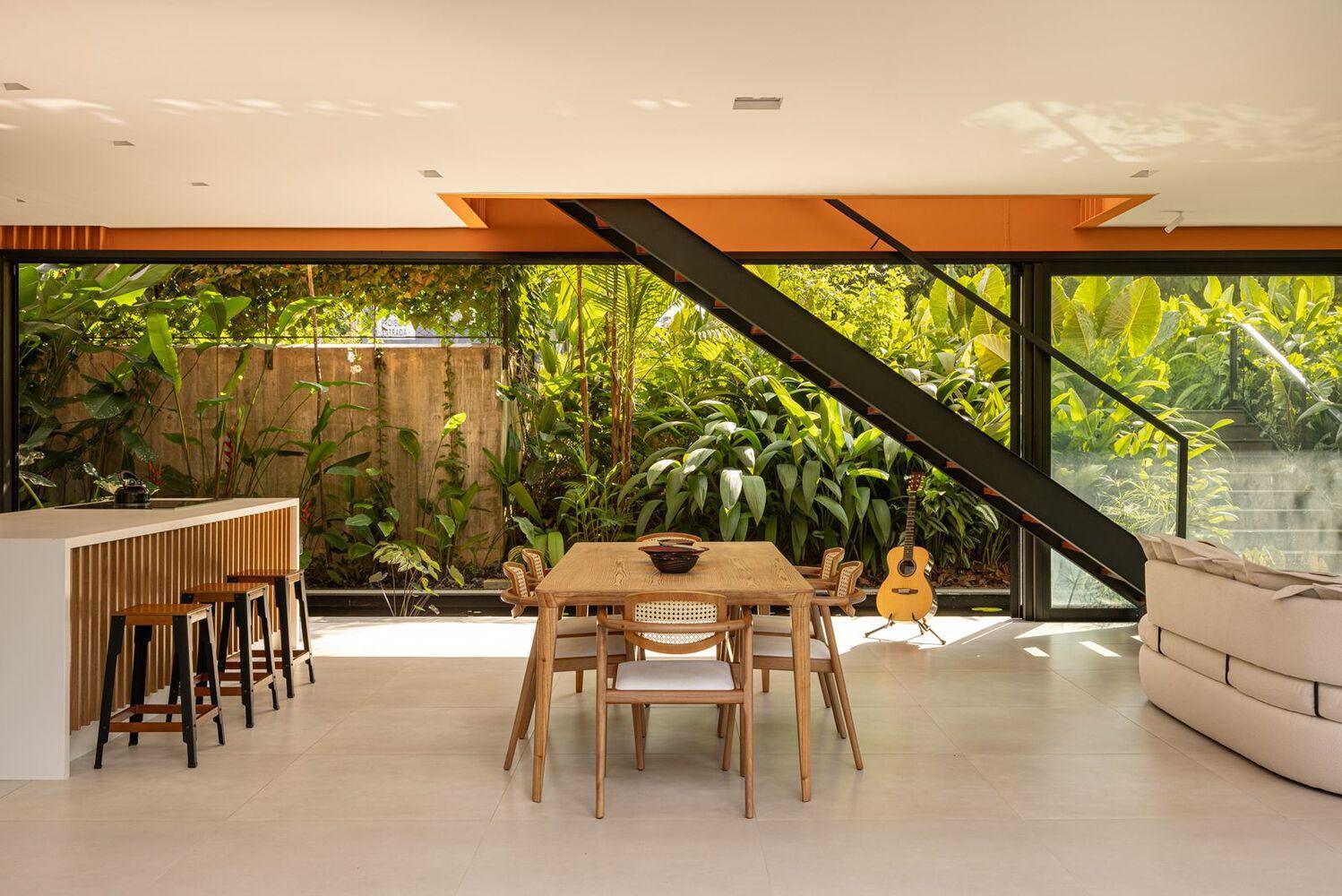
© Joana França
© Joana França
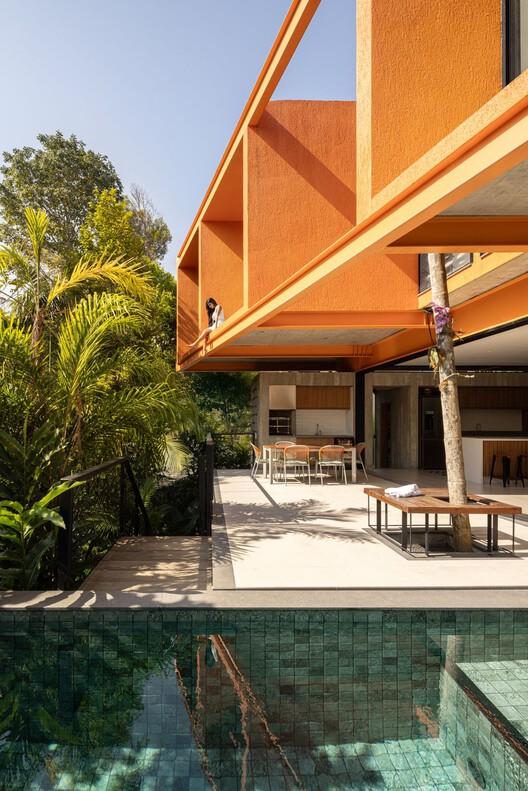
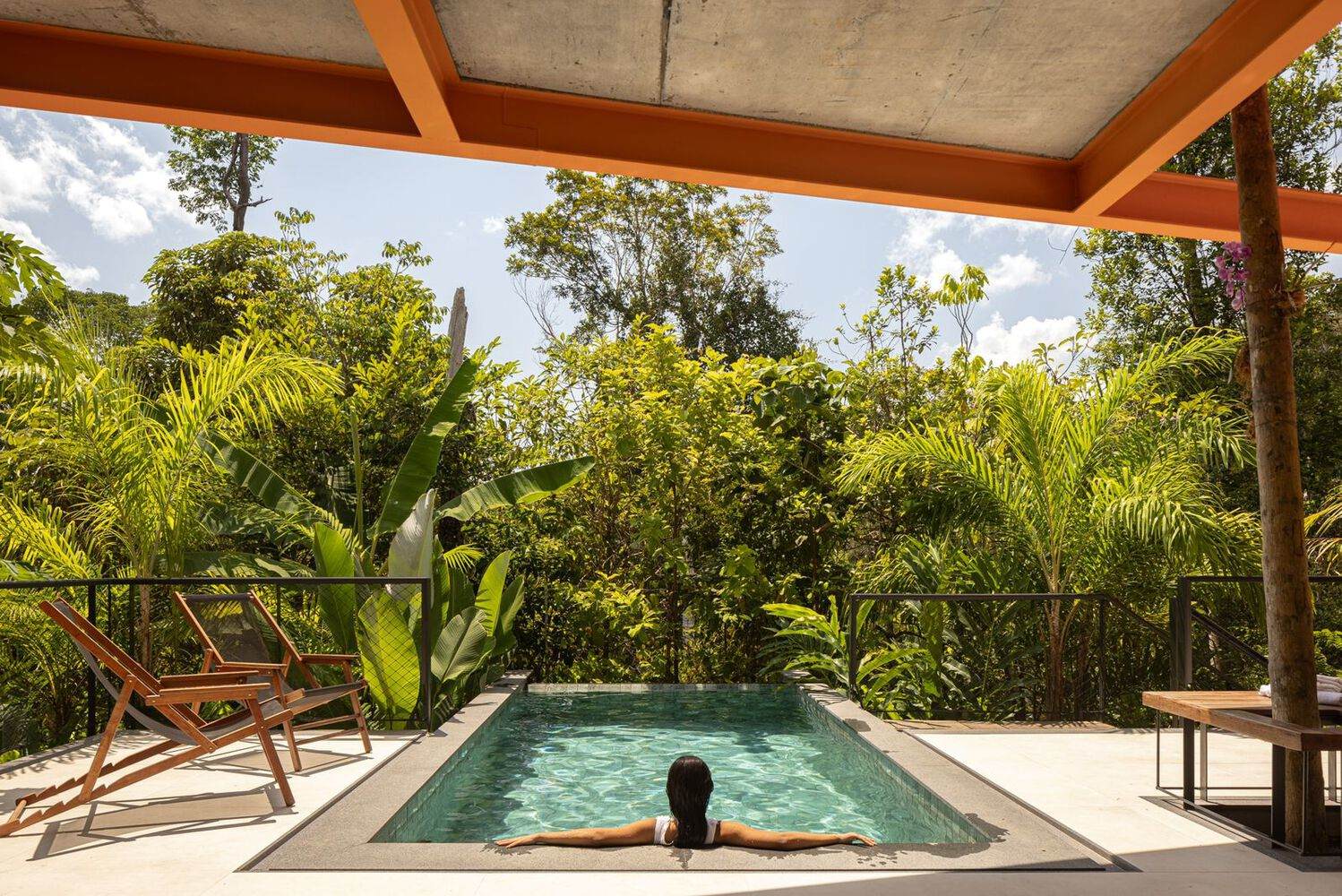
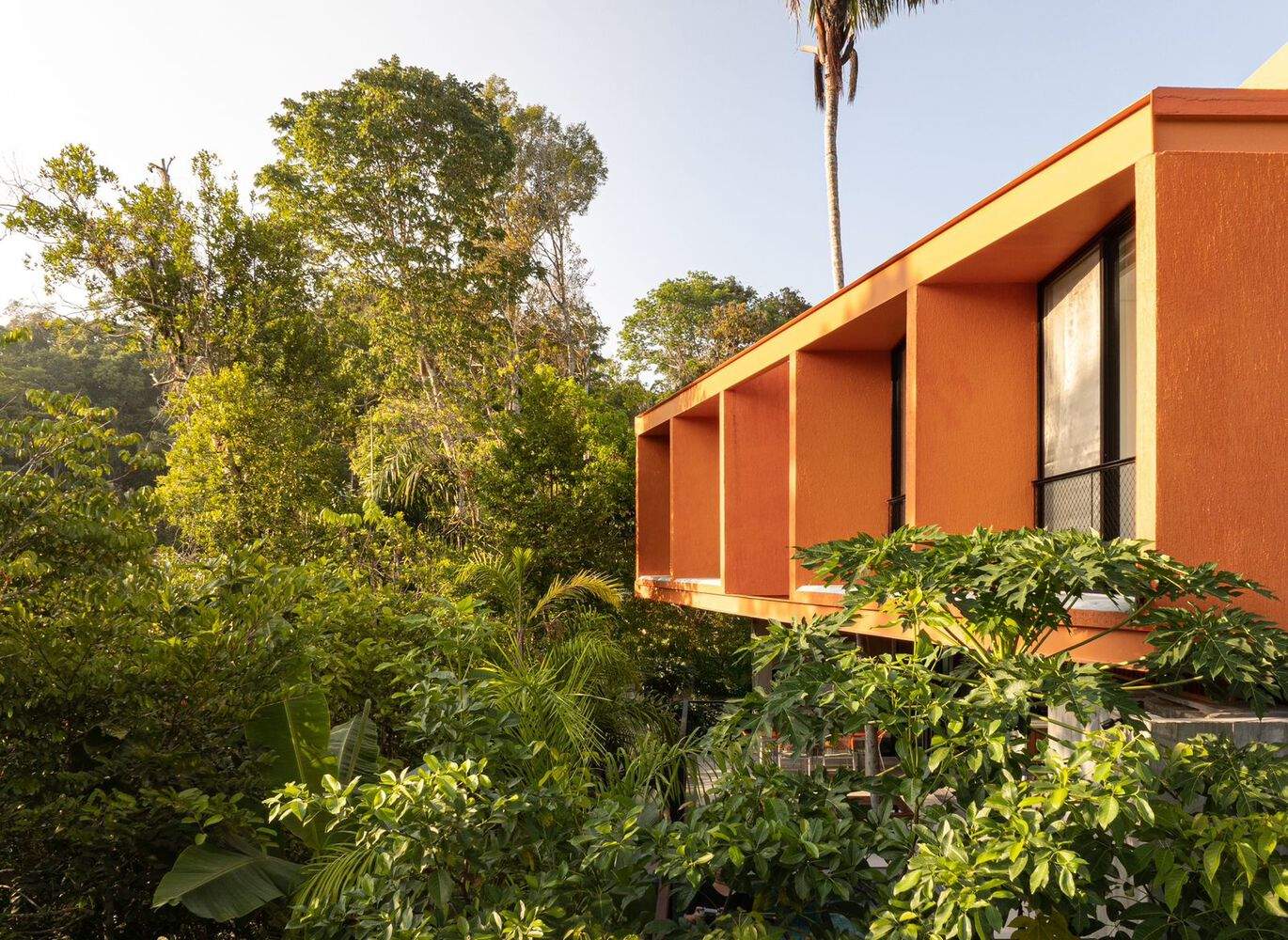
On top of the concrete block, there is a trapezoidal metal volume, and its sloping design facing the forest side forms a wider eave on the east facade, which not only blocks direct morning light but also ensures the privacy of the bedroom balcony. The metal structure is slightly offset from the concrete block, forming a gap between the horizontal beams, which highlights the independence of the materials and provides a view of the neighboring vegetation.
在混凝土块之上,是一个梯形金属体量,其面向森林一侧的倾斜设计在东立面形成更宽大的屋檐,既遮挡晨光直射,又确保卧室阳台的私密性。金属结构与混凝土块略微错开,在横梁间形成间隙,既凸显材料独立性,又提供观赏邻地植被的视野。
轴测分析图
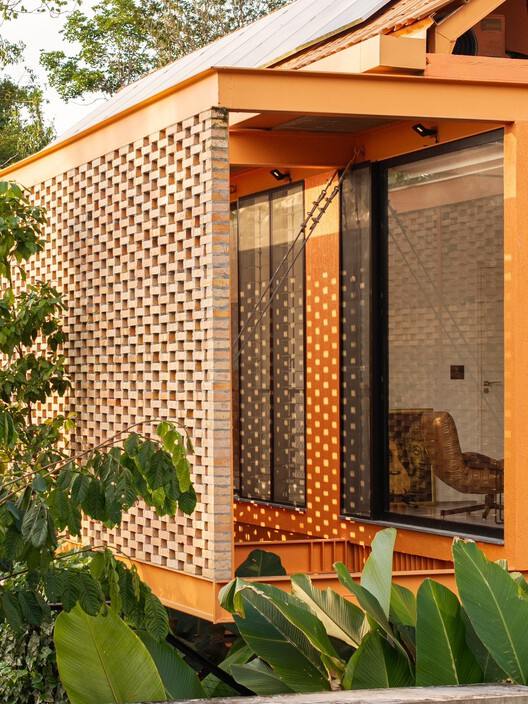
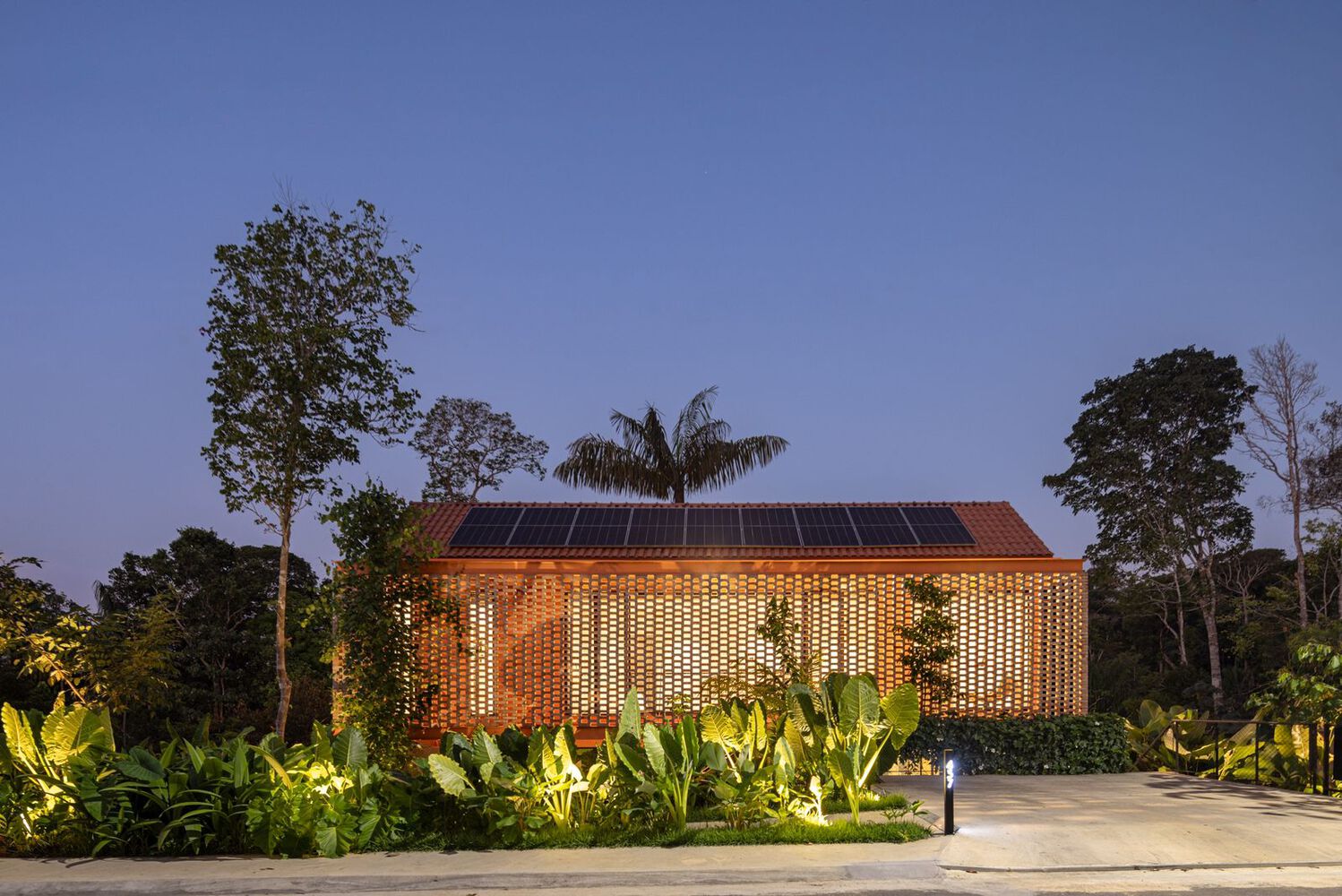
The ground floor is centrally arranged with social, service, and leisure areas, open to the front and back gardens, maximizing natural ventilation and landscape views. The side facade adopts a suspended wall made of handmade ceramic tiles as a sunshade to protect the bedroom corridor, library, bathroom, and master bedroom suite from direct afternoon sunlight, while introducing filtered light and continuous ventilation.
底层集中布置社交、服务与休闲区域,向前后花园开放,最大化自然通风与景观视野。侧立面采用手工陶瓷砖构成的悬浮墙作为遮阳板,保护卧室走廊、图书馆、浴室及主卧套房免受午后阳光直射,同时引入过滤光线与持续通风。
© Joana França
The roof adopts a double slope design, forming an air insulation layer to enhance thermal performance, while accommodating water tanks, photovoltaic panels, and rainwater collection and reuse systems. The project prioritizes the use of low environmental impact technologies to avoid any earthworks. The central Pupnia palm tree runs through the building, while other fruit trees and climbing plants are added to the landscape. The water feature in the front garden serves as a transitional element between public and private spaces.
屋顶采用双坡设计,形成空气隔热层以提升热工性能,同时容纳水箱、光伏板及雨水收集与再利用系统。项目优先采用低环境影响技术,避免任何土方工程。中央的普普尼亚棕榈树贯穿建筑,景观中补充其他果树与攀援植物,前花园的水景则作为公共与私密空间的过渡元素。
© Joana França
Even if there is no wall on the front side, the residence still maintains privacy through the garden and vertical elements on the facade - these elements also form part of the drainage system, allowing the living room to open up to the street without being completely exposed to pedestrian view. A parking platform is set up at the front end of the plot to protect vehicles from sun exposure, which is quite common in local buildings in Manaus.
即便前侧无围墙,住宅仍通过花园与立面垂直元素保持私密性 —— 这些元素同时构成排水系统的一部分,使客厅可向街道敞开而不完全暴露于行人视线。地块前端设置停车平台,保护车辆免受日晒,这一设计在马瑙斯当地建筑中颇为常见。
© Joana França
The project also incorporates family leisure facilities, such as a children's climbing wall installed on the side blocks. The residence was initially planned as a weekend residence, but gradually evolved into a family office, reflecting the new trends of contemporary life and the pursuit of a natural integrated lifestyle.
项目还融入家庭休闲设施,如在侧块上安装的儿童攀岩墙。住宅最初规划为周末居所,后逐渐演变为家庭办公室,反映当代生活新动态与对自然融合生活的追求。
Priority should be given to selecting local suppliers and sustainable solutions for material selection. Ceramic tiles are produced near the construction site, and the coating adopts a color tone that echoes the Pupnia palm trees, creating visual harmony and enhancing the integration of architecture, landscape, and Amazon context.
材料选择优先选用本地供应商与可持续方案。陶瓷砖在工地附近生产,涂料采用与普普尼亚棕榈树相呼应的色调,营造视觉和谐,强化建筑、景观与亚马逊语境的融合。
Through the implementation of automated irrigation systems and respect for terrain ecology, Casa Pupnia has strengthened the residential concept of "suspended above green plants". Plant selection prioritizes the use of native species adapted to the Amazon climate, such as taro, sea taro, crane orchid, banana tree, and palm family plants.
通过自动化灌溉系统与尊重地形生态的实施方式,卡萨·普普尼亚强化了“悬浮于绿植之上”的住宅理念。植物选择优先采用适应亚马逊气候的本土物种,如竹芋、海芋、鹤望兰、香蕉树及棕榈科植物。
© Joana França
项目保留了部分现有植被,同时引入具有生态与美学价值的新物种,以提升舒适度、私密性与生物多样性。
© Joana França