Hiwali School/pk_iNCEPTiON
Hiwali 学校 / pk_iNCEPTiON
设计理念的精髓:这个Hiwali学校项目在设计理念上体现出深刻的思考和创新。它巧妙地运用了路易斯·康的“TO and THROUGH”空间理论,强调建筑与环境的融合,以及人在空间中的体验。设计团队并没有将学校简单地视为一个封闭的盒子,而是将其打造为一个连续且互联的空间,让学习、生活与自然紧密结合。这种设计理念呼应了当地社区的需求,为孩子们创造了一个充满活力、激发探索欲望的学习环境。此外,项目的设计也充分考虑了当地的气候条件和地形特点,体现了设计师对环境的尊重和对可持续发展的关注。
空间设计的亮点:该项目在空间设计上展现出独特的创新和实用性。建筑采用U形布局,并结合对角线布置的模块化体块,既考虑了风向,又为未来的扩展预留了空间。室内高度的变化、日光通过缝隙的倾泻,以及半圆形庭院的设计,都营造出富有层次感和趣味性的空间体验。锯齿状台基的设计更是巧妙地将排水功能与学习、游戏空间结合,增加了建筑的多样性。整体而言,该设计充分考虑了儿童的尺度和活动需求,创造了灵活开放的学习环境,鼓励孩子们在其中自由探索、互动交流。这种设计也体现了对当地文化和生活方式的尊重。
可持续性和实用性:项目在材料选择和建造方式上体现了对可持续性和实用性的高度关注。承重砖墙体系的使用,既方便了施工,又降低了成本。轻薄的平屋顶设计,不仅改善了通风条件,还提供了绘画的载体,增加了建筑的趣味性。高起台基表面涂覆牛粪,体现了对当地材料的利用和对传统工艺的尊重,同时也为孩子们提供了舒适的坐卧体验。整体而言,该项目在设计中融入了环境友好理念,并充分考虑了当地的实际情况和资源限制,展现了卓越的设计智慧和对社区负责的态度。这种设计也体现了对当地社区的尊重和对教育事业的支持。
© Pranit Bora Studio
© Pranit Bora Studio
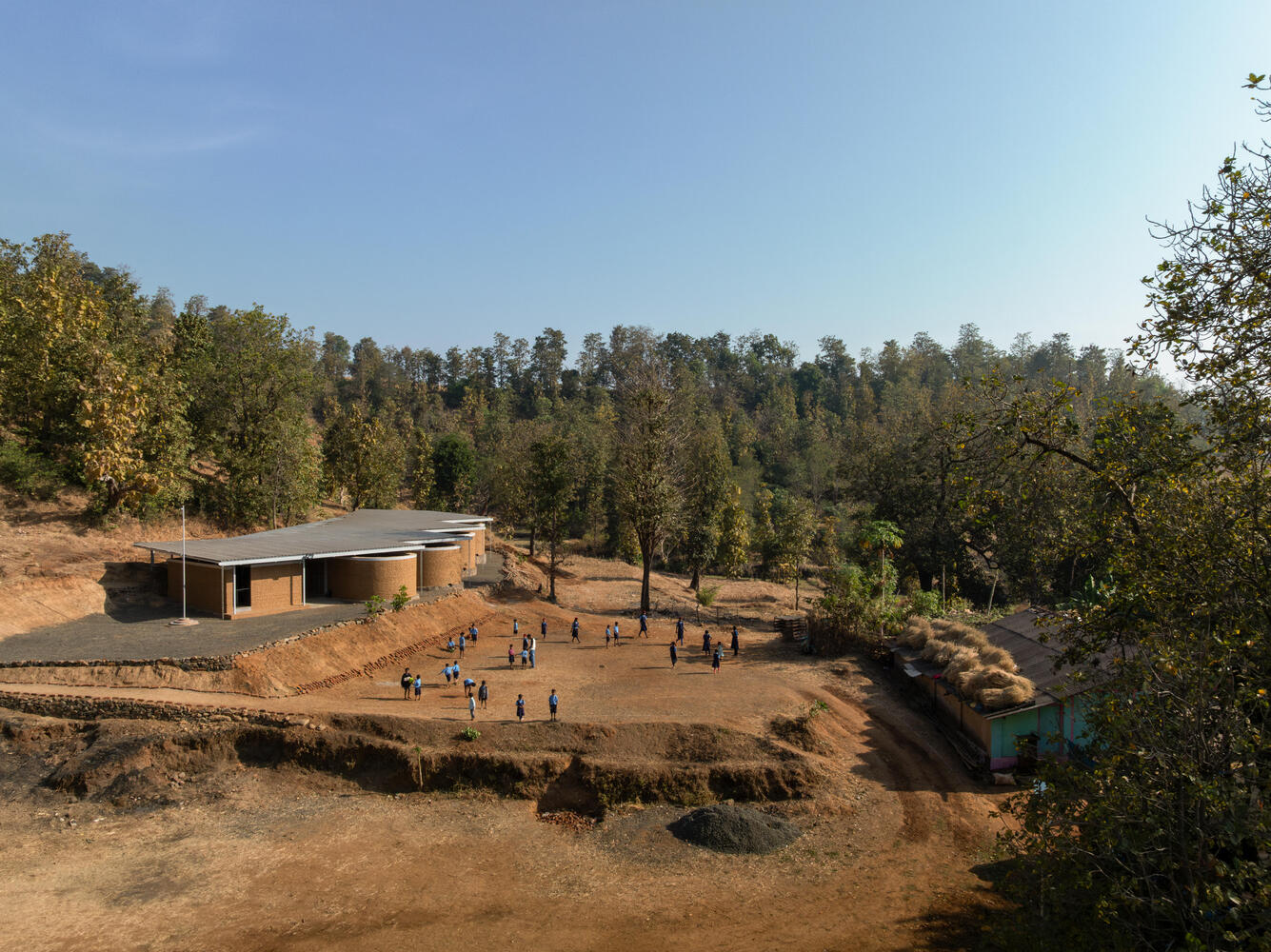
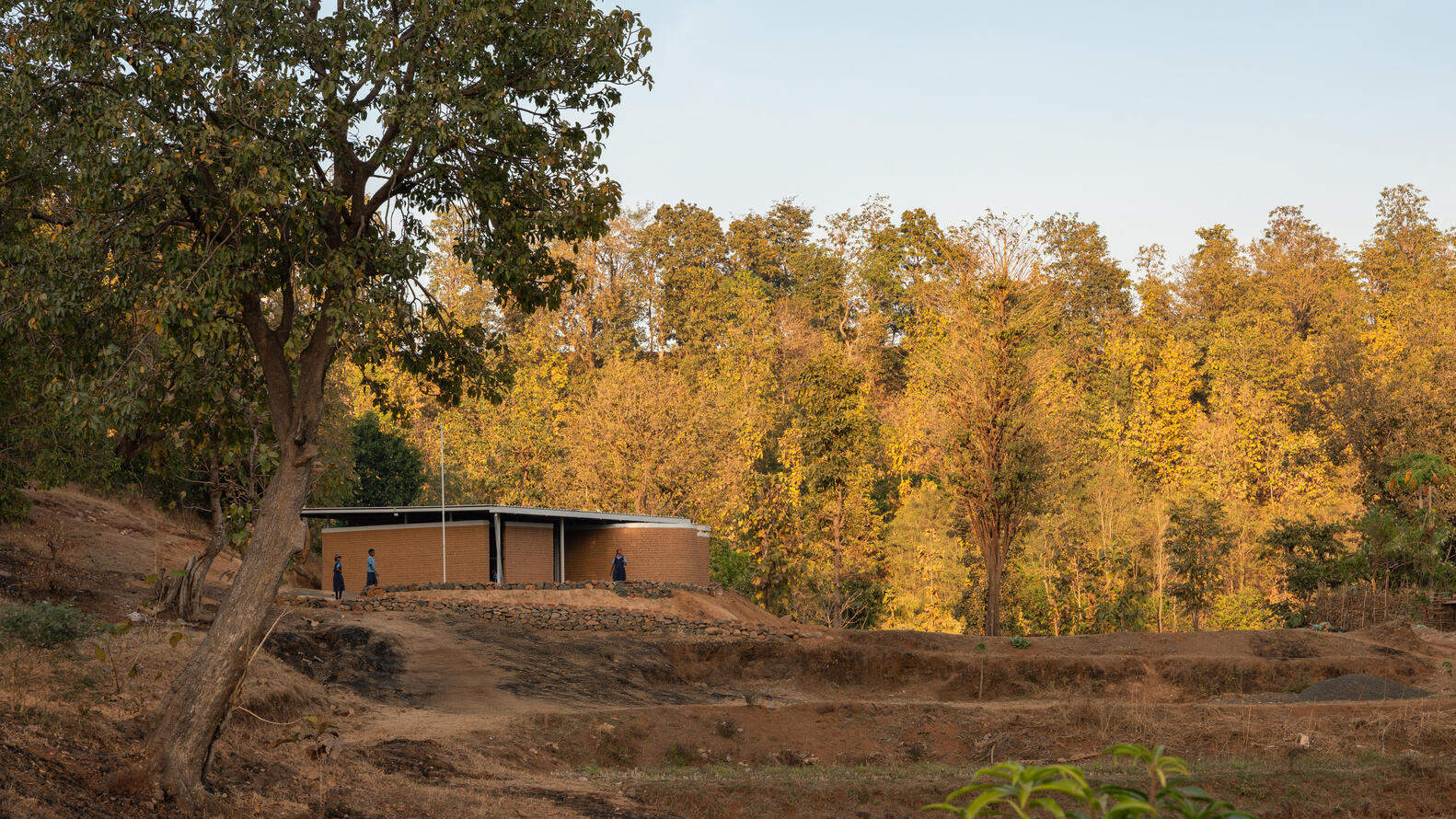
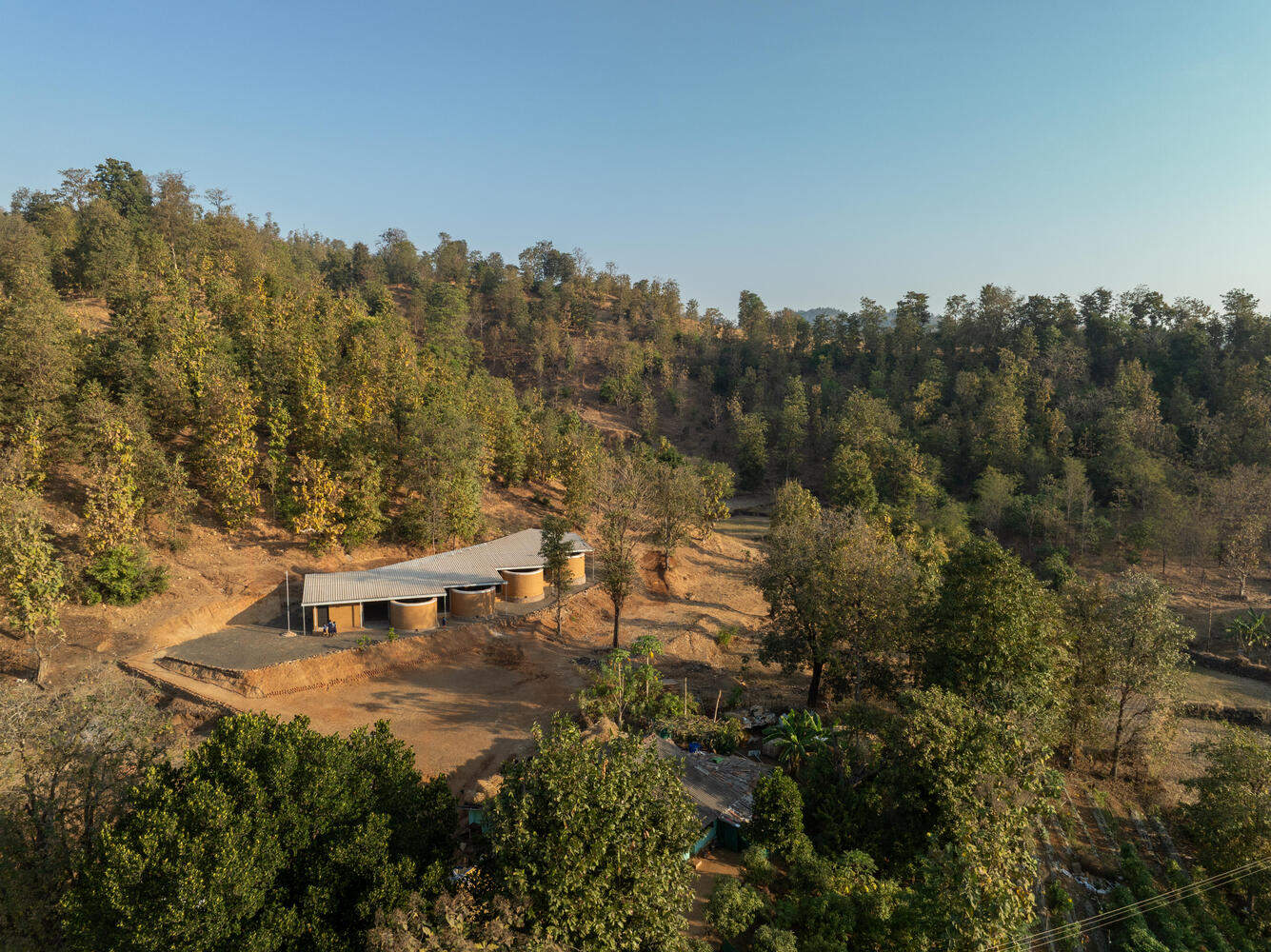
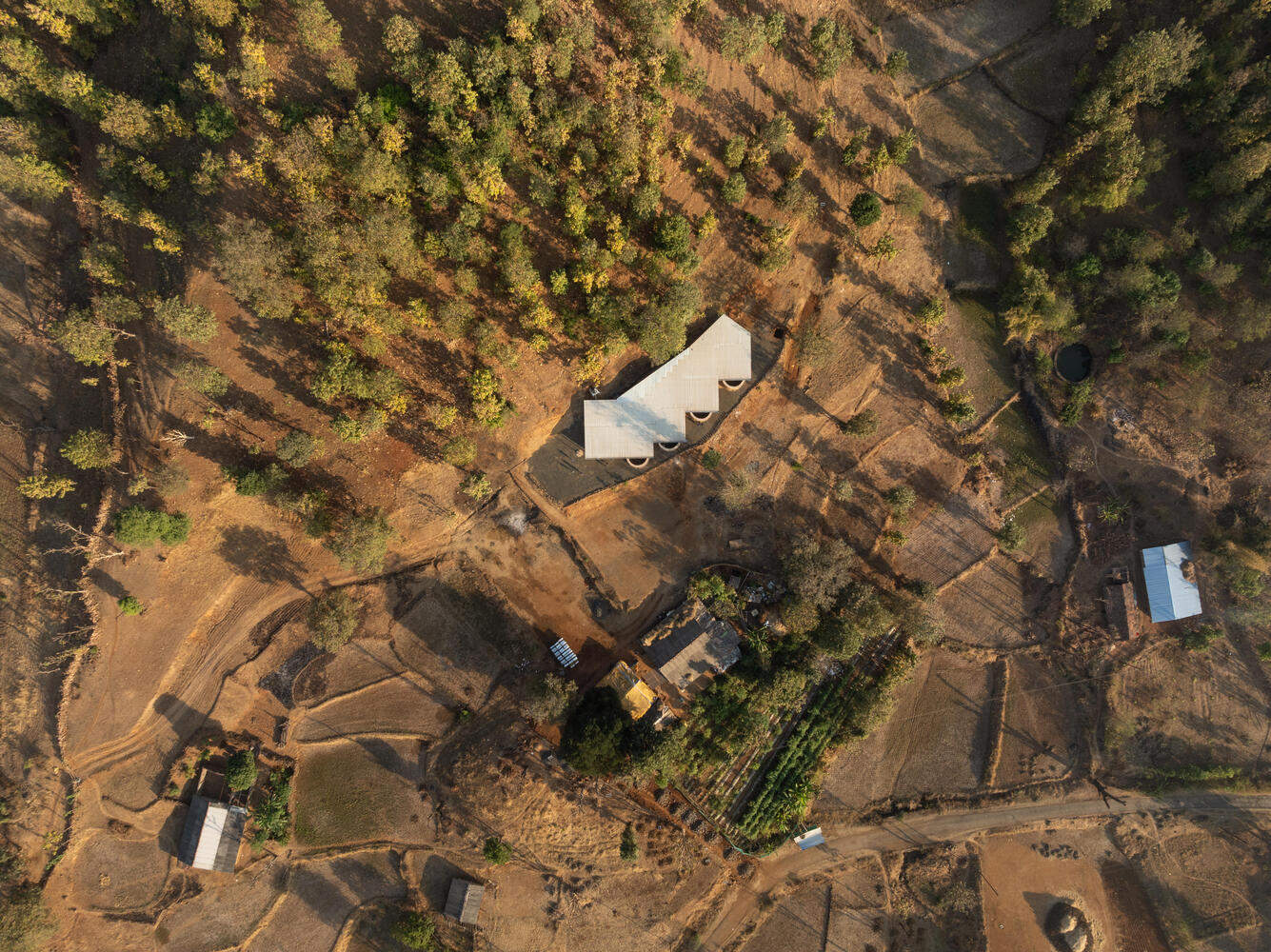
Hiwali is a small rural settlement located deep in the Satmara Mountains, with approximately 25 households and located about 70 kilometers from the city of Nasik. This is a remote community located in the hilly area of the West Gaozhi Mountains. The existing primary schools are still operating in temporary shelters. To improve educational conditions, Give Welfare Organization and Armstrong Robotics& Technologies has initiated the construction of a new school. The base is located at the highest point of the terraced fields and can be reached by walking about 50 feet from the village road. The plot is narrow and elongated, with mountains to the northwest and terraced slopes to the southeast.
希瓦利(Hiwali)是位于萨特马拉山脉深处的一个小型乡村聚落,约有 25 户农家,距离纳西克市约 70 公里。这里坐落于西高止山脉的丘陵地带,是一个偏远的社区。现有的小学仍在临时搭建的避难所内运作。为改善教育条件,Give Welfare Organization 与 Armstrong Robotics & Technologies 启动了新学校的建设。基地位于梯田的最高处,从村道徒步约 50 英尺方可到达。地块狭长,西北侧依山,东南侧为梯田坡地。
© Pranit Bora Studio
© Pranit Bora Studio
The uniqueness of the project lies not only in the environment, but also in the teacher Keshav Gavit. He is known for his innovative teaching methods, where students are able to write with both hands and memorize over 1100 multiplication tables. More than 70 children from surrounding villages study here every day. The school is open all year round, 10 hours a day, and combines basic education with life skills through group cooperation and activity-based teaching.
项目的特殊性不仅在于环境,还在于教师凯沙夫·加维特(Keshav Gavit)。他以创新的教学方式闻名,学生能够双手书写,并背诵超过 1100 个乘法表。每天有 70 余名来自周边村落的儿童在此学习。学校全年无休,每日开放 10 小时,以小组合作与活动教学的方式,将基础教育与生活技能结合。
Ground Floor Plan
Section
The design team was inspired by Louis Koon's theory of "TO and THOUGH space" in the preliminary research. This theory emphasizes the need to focus on "through" space, that is, how architecture integrates with the environment, and how people's experiences of walking and staying within it become meaningful, enjoyable, and inspiring.
设计团队在前期研究中受到路易斯·康提出的“通向与贯穿(TO and THROUGH)空间”理论启发。该理论强调应关注“贯穿”空间,即建筑如何与环境融合,以及人们在其中行走和停留的体验如何变得有意义、愉悦并富有启发性。
© Pranit Bora Studio
© Pranit Bora Studio
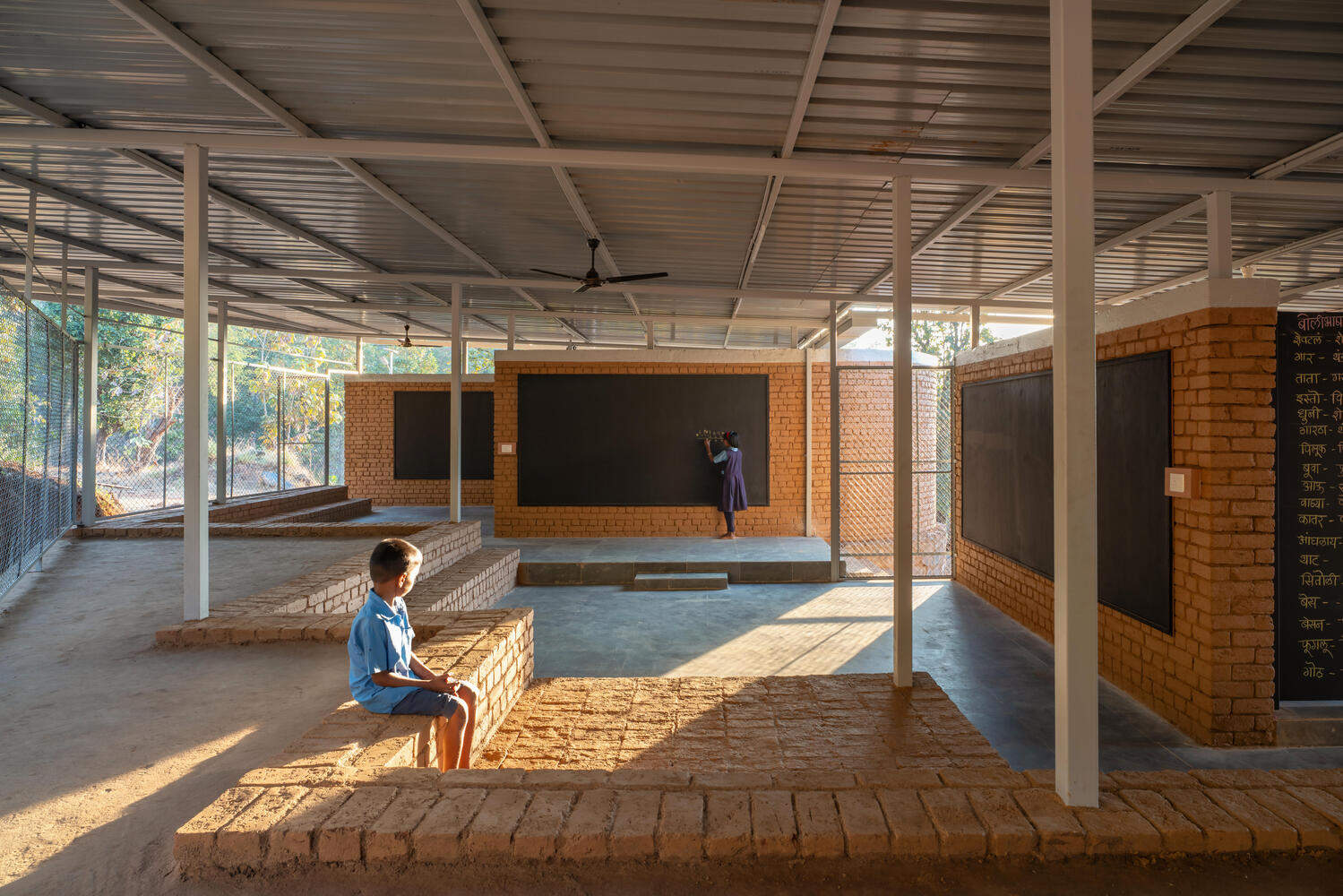
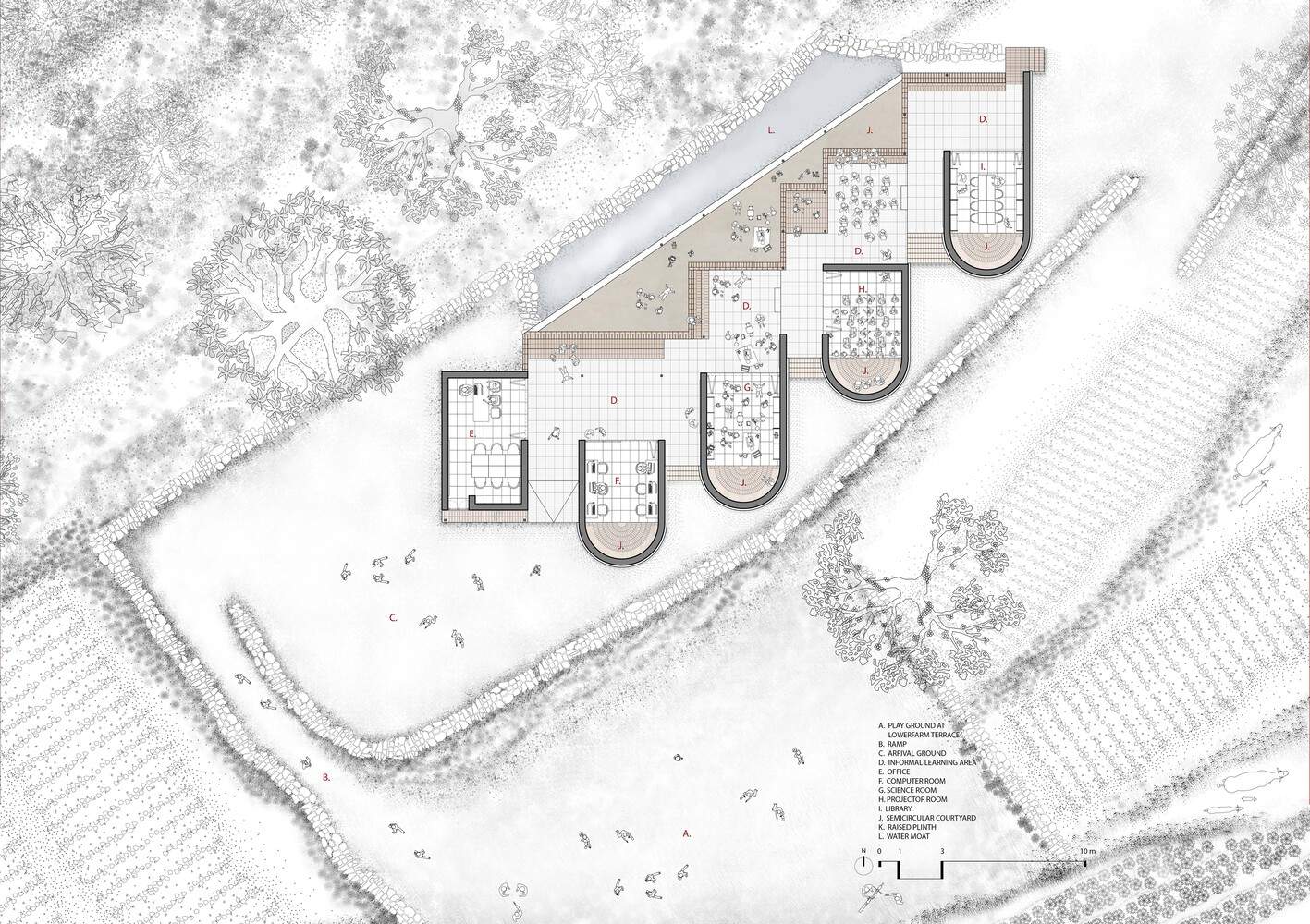
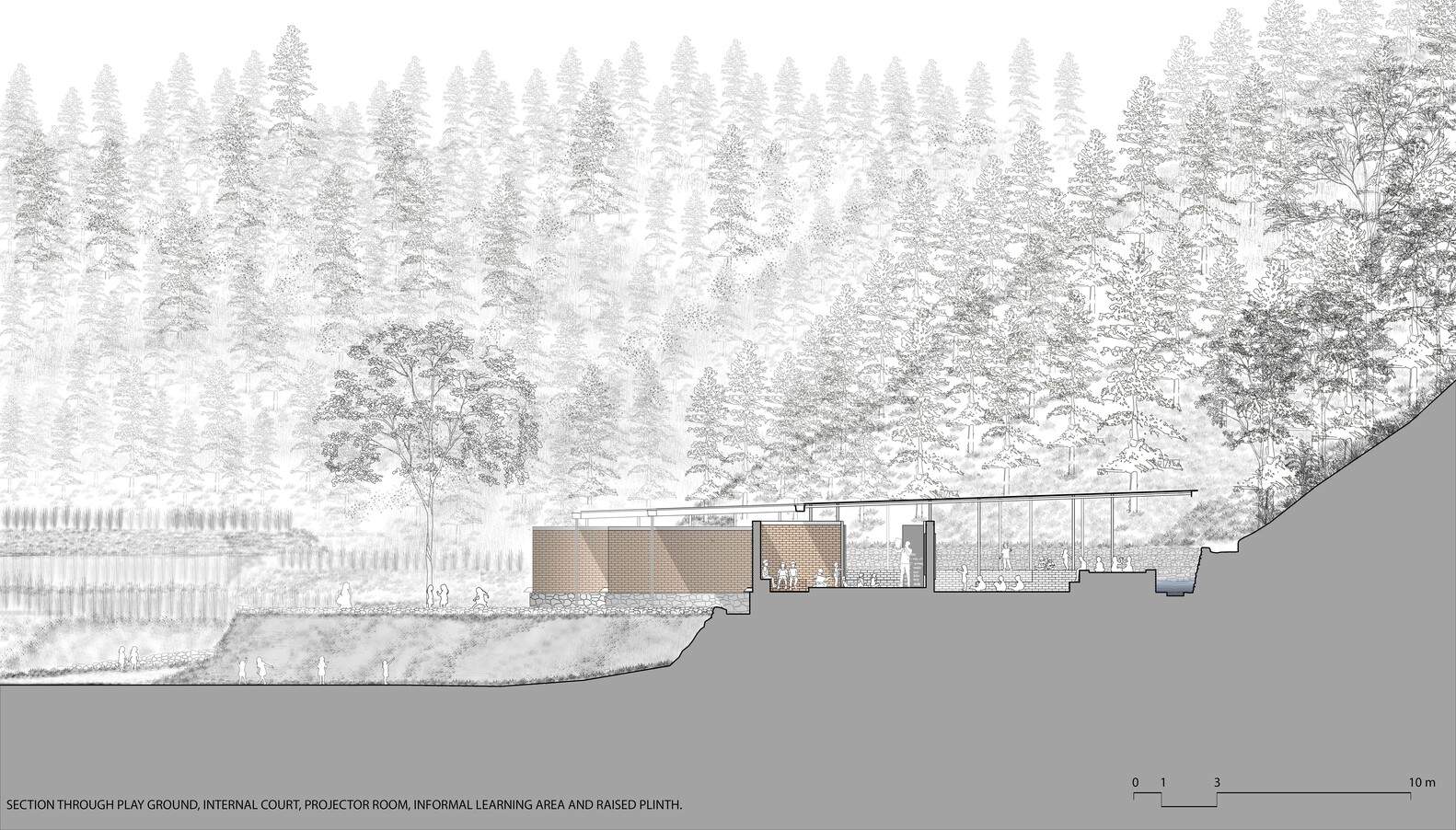
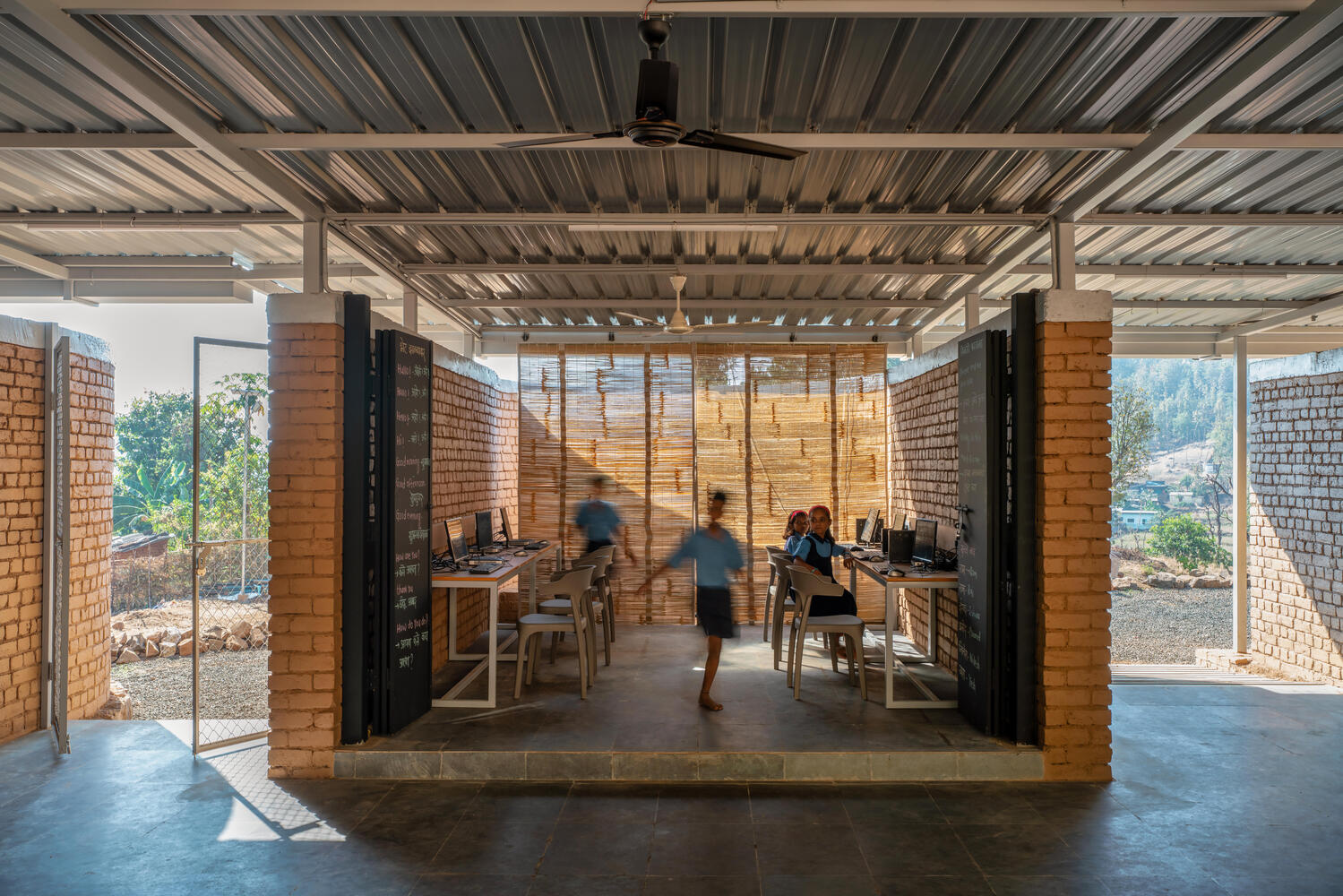
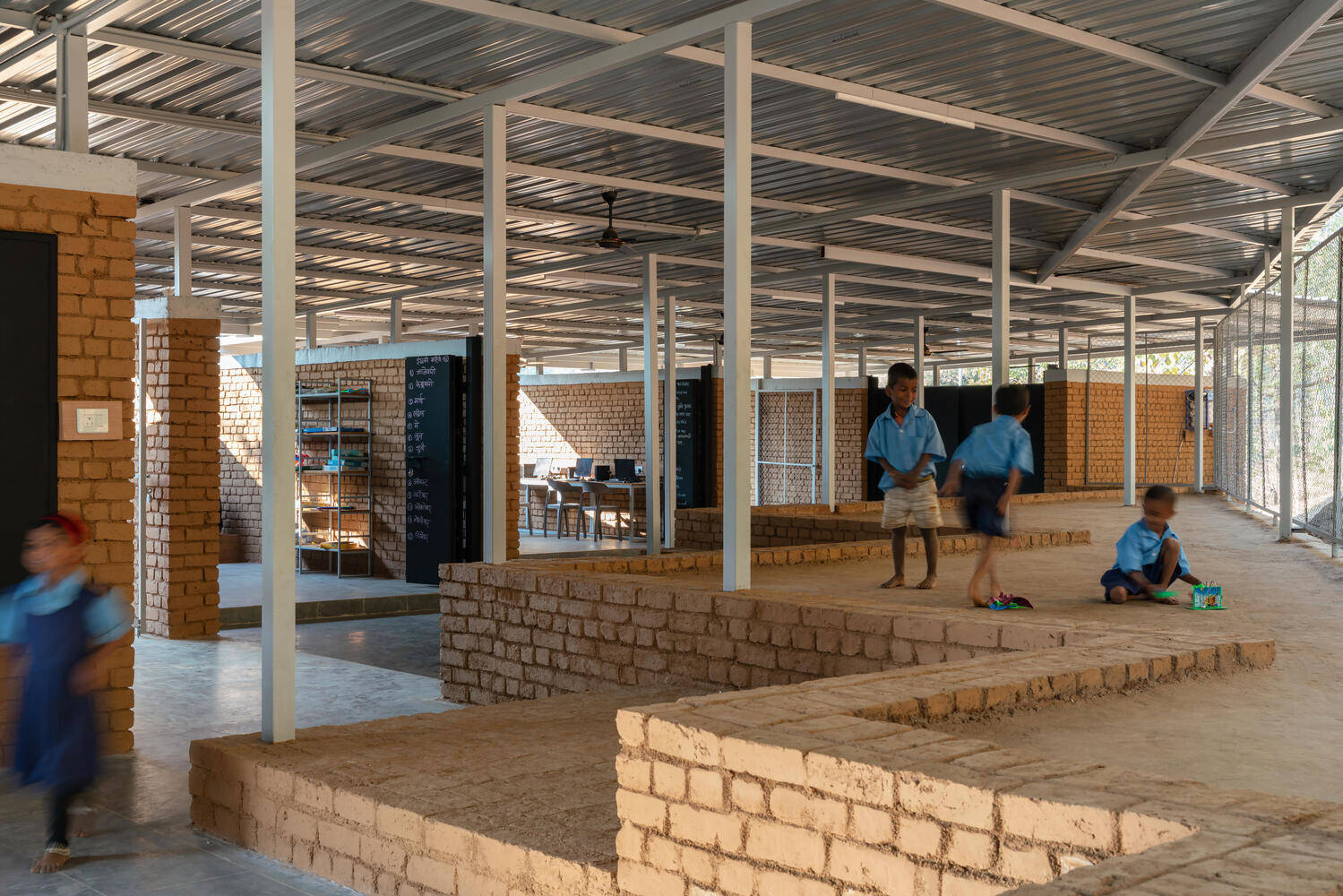
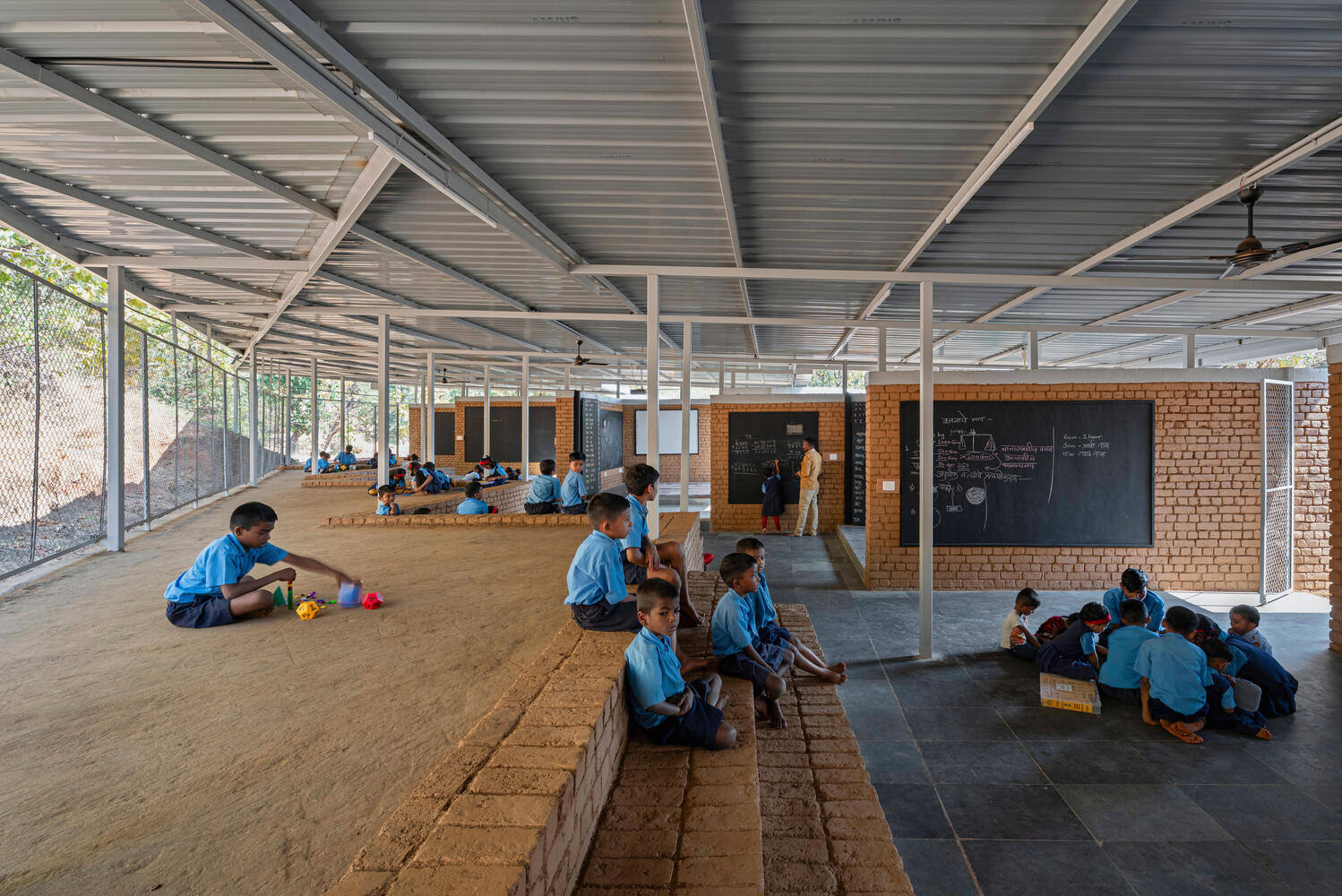
The design first involves setting up a water channel around the site to resist mountain runoff. Modular blocks such as offices, computer rooms, science rooms, projection rooms, and libraries are arranged diagonally, which not only conforms to the prevailing wind direction but also provides possibilities for future expansion towards the mountain direction. The overall volume is U-shaped, adopting a profile that conforms to aerodynamics to cope with windward environments. A serrated platform was designed between the canal and the block, which can not only drain rainwater but also form multiple nodes, transforming it into an indoor staircase theater suitable for learning and gaming.
设计首先在场地外围设置一道水渠,用以抵御山体径流。办公室、计算机室、科学室、放映室和图书馆等模块化体块以对角线布置,既顺应盛行风向,又为未来向山体方向扩展提供可能。整体呈 U 形体量,采用符合空气动力学的剖面,以应对迎风环境。在水渠与体块之间,设计了一条锯齿状台基,既能排导雨水,又形成多个节点,被转化为适合学习与游戏的室内阶梯剧场。
© Pranit Bora Studio
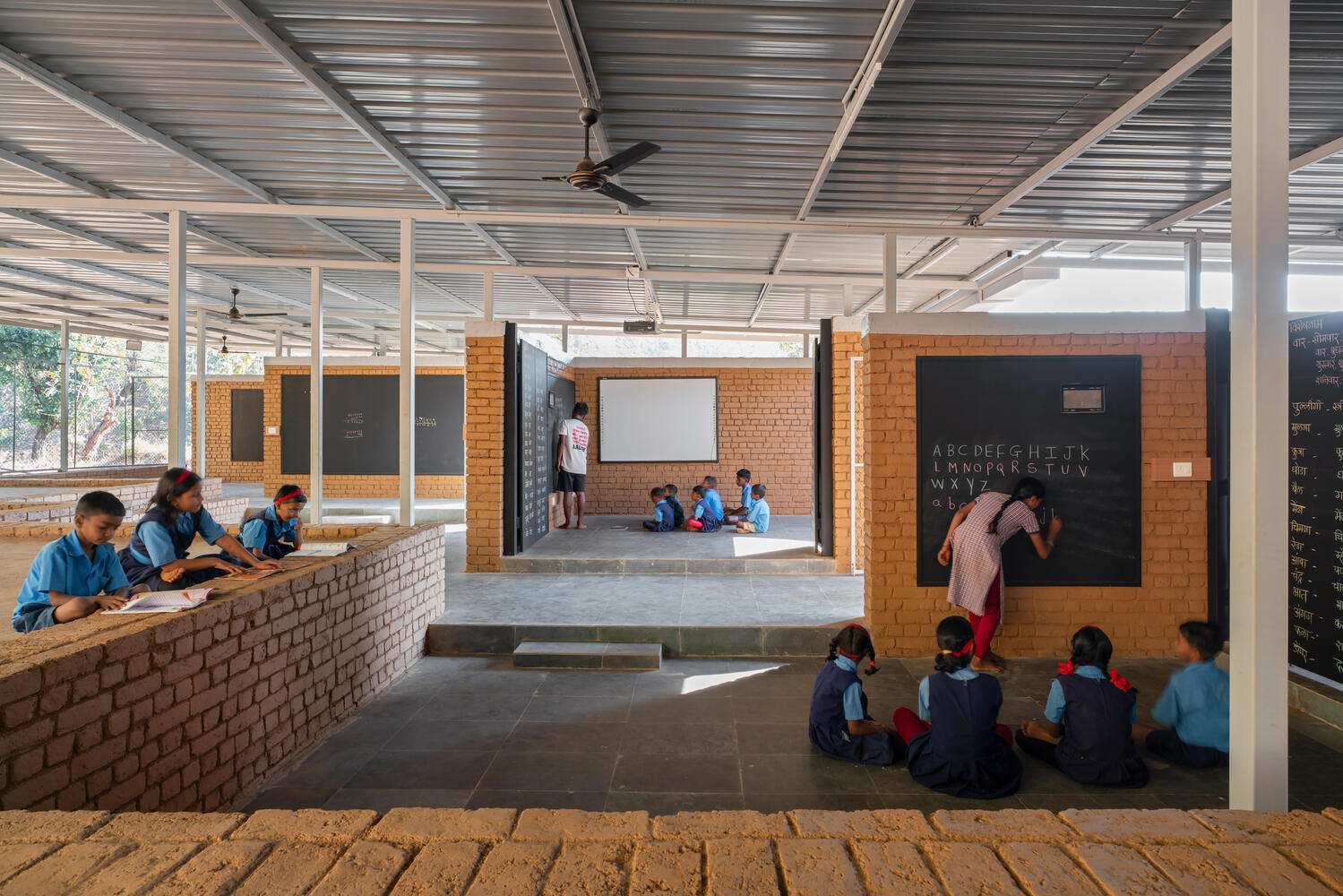
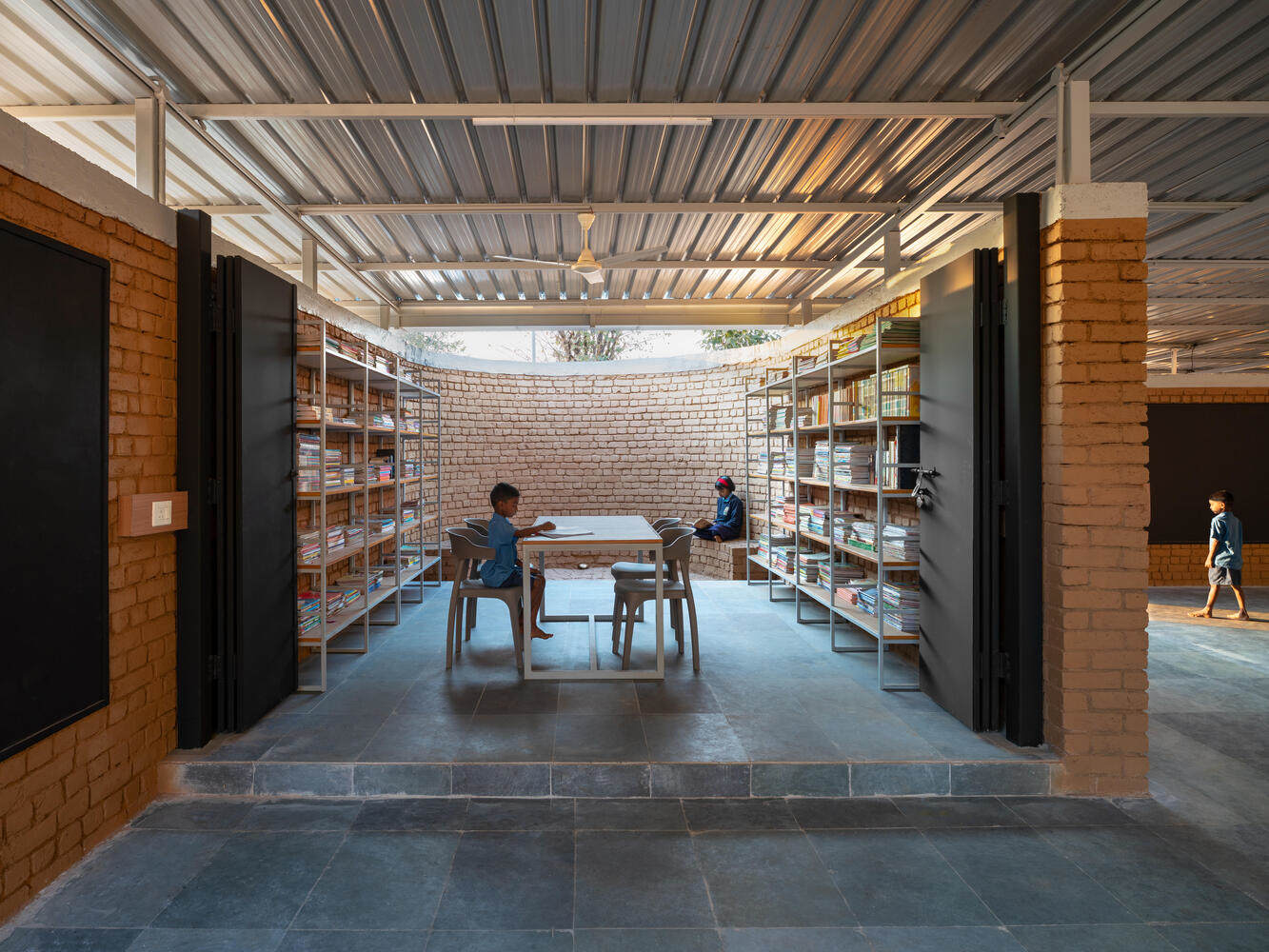
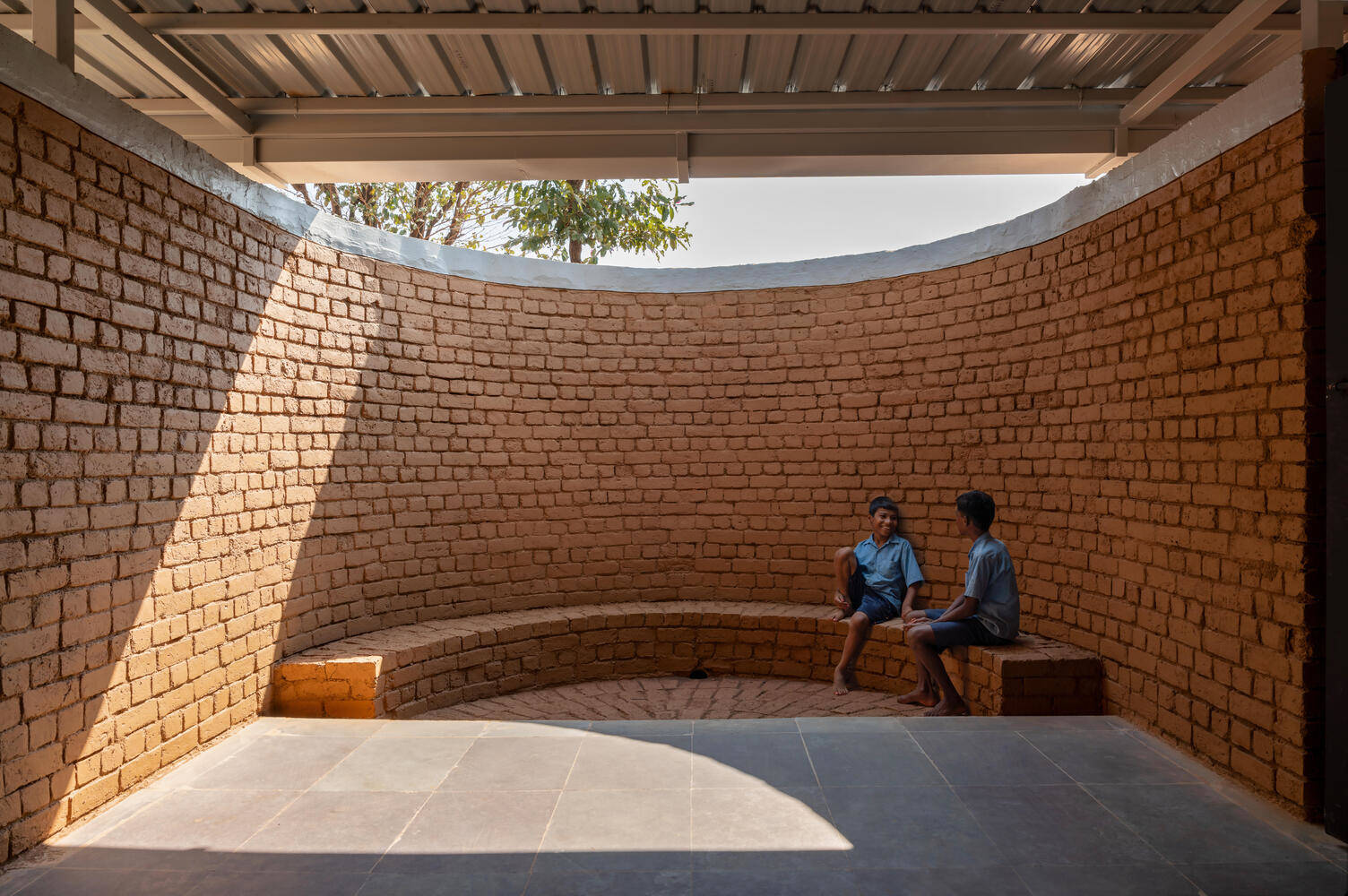
The foundation and sloping roof together shape the dynamic relationship of space. The indoor height varies between 1.5 and 2.5 meters, responding to the scale of children. Sunlight pours in through the gaps between the blocks, forming an informal communication area; Each functional room introduces natural light through a semi-circular courtyard, which is shaped by the cross-section of the roof.
台基与缓坡屋顶共同塑造了空间的动态关系。室内高度在 1.5 至 2.5 米之间变化,回应儿童的尺度。日光通过体块之间的缝隙洒入,形成非正式的交流区域;各功能房间则通过半圆形庭院引入自然光,其形态源于屋顶的剖面。
© Pranit Bora Studio
© Pranit Bora Studio
The school is envisioned as a continuous and interconnected space, with learning areas that are both open, flexible, and focused. Folding doors, wall blackboards, and locally laid stone floors can all serve as mediums for writing and display.
学校被设想为一个连续而互联的空间,学习区域既开放灵活,又具专注性。折叠门、墙面黑板以及当地石材铺设的地面均可作为书写与展示的媒介。
© Pranit Bora Studio
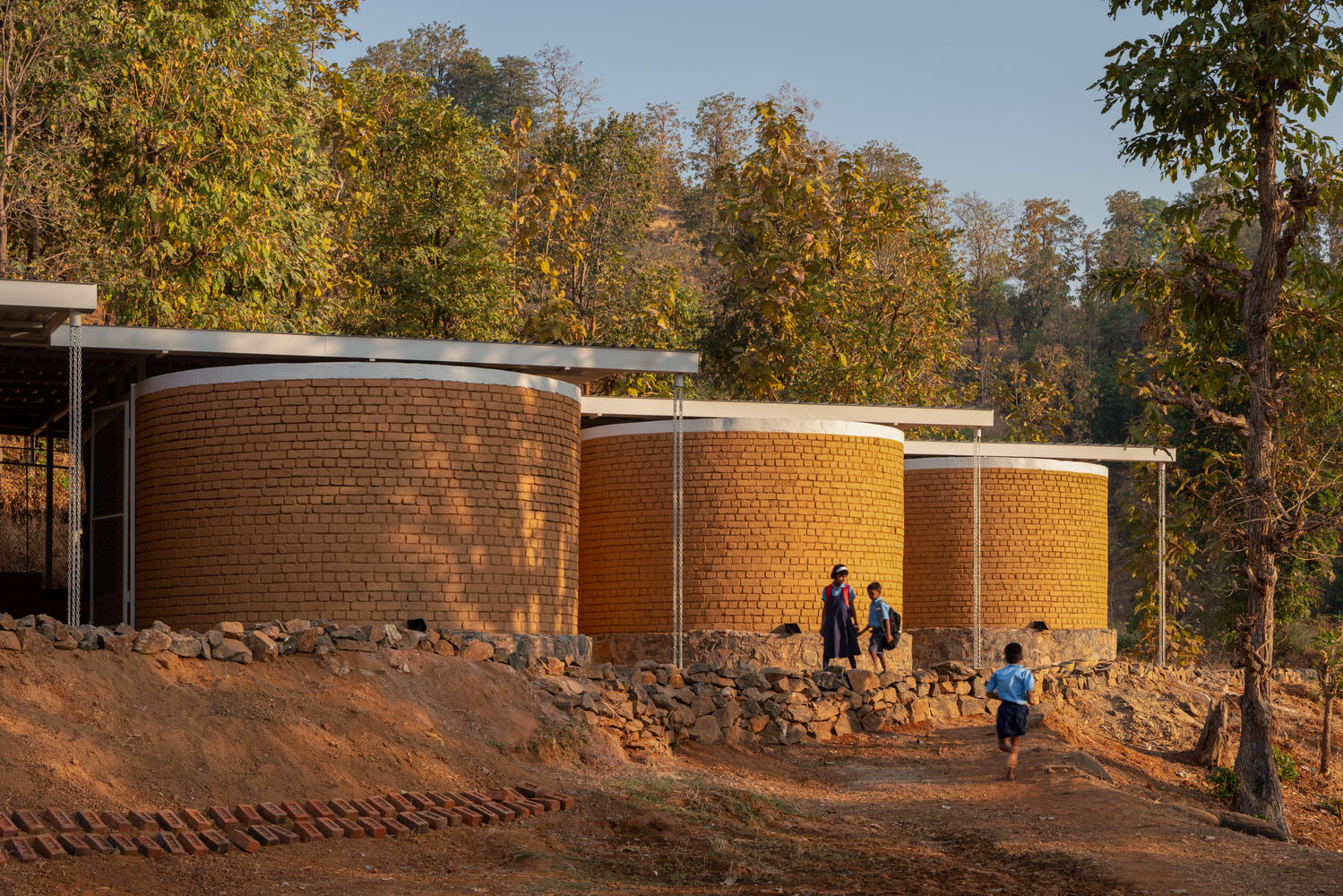
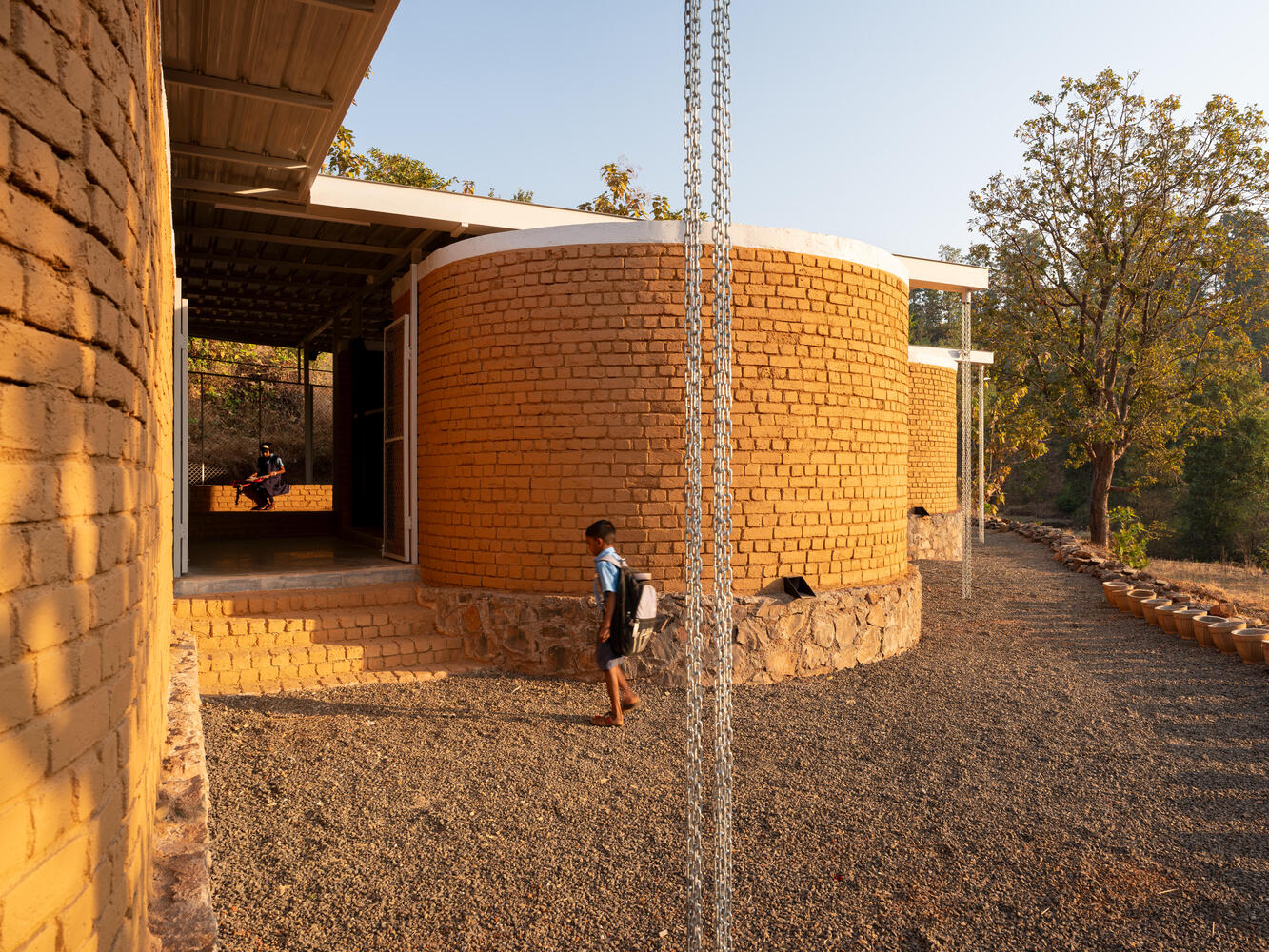
The building adopts a load-bearing brick wall system, which is convenient for installation and use. A lightweight flat roof is placed on top of it to improve ventilation conditions, while the bottom of the roof can serve as a medium for painting. The raised platform surface is coated with cow dung, providing a comfortable sitting and sleeping experience.
建筑采用承重砖墙体系,方便安装与使用。轻薄的平屋顶架于其上,改善通风条件,同时屋顶底面可作为绘画载体。高起的台基地面以牛粪抹面,提供舒适的坐卧体验。
© Pranit Bora Studio
© Pranit Bora Studio
This school belongs to both students and teachers. It provides children with diverse spatial scales, open learning spaces, and free exploration activity areas; Simultaneously providing teachers with interconnected and independent functional spaces to support diverse teaching methods. One teacher can independently manage the entire school. There are no fixed classrooms here, but multiple entrances and exits allow children to create their own "little world" where they can learn, grow, play, and establish connections with their environment, teachers, and peers.
这所学校既属于学生,也属于教师。它为孩子们提供多样的空间尺度、开放的学习场所和自由探索的活动区域;同时为教师提供互联又独立的功能空间,以支持多样化的教学方式。一位教师即可独立管理整所学校。这里没有固定的教室,而是通过多个出入口,让孩子们能够创造属于自己的“小世界”,在其中学习、成长、玩耍,并与环境、教师和伙伴建立联系。
© Pranit Bora Studio