Avinia Campus/Spacefield Studio
阿维尼亚校园 / Spacefiction studio
项目亮点:Avinia校园项目在设计理念上充分体现了对儿童身心发展的深刻理解。单层建筑的布局有效降低了尺度感,避免了压迫感,让孩子们更容易产生归属感。这种设计理念与项目所处的特殊背景相契合,即作为过渡性校园,其功能定位不仅是满足教育需求,更是为孩子们创造一个安全、舒适、充满乐趣的学习环境。 项目的核心在于创造一个“第三位老师”的环境,这体现在对自然光线、通风、以及内外空间的巧妙运用。从中央轴线的设计,到教室与庭院的无缝连接,再到材料的选择和细节的处理,无不体现着对儿童成长环境的关注与尊重。
设计精髓:该项目的精髓在于其对可持续性和循环利用的实践。项目大胆地采用废弃砖块构建庭院围墙,不仅降低了成本,更体现了对环境的尊重,以及对当地材料的巧妙运用。土墙和土色涂料的选择,将建筑与周围环境融为一体,创造出一种温暖、亲切的氛围。 此外,建筑师充分考虑了当地气候条件,通过屋顶通风设计和西侧缓冲空间的设置,有效应对了炎热天气带来的挑战。这种兼顾功能性、可持续性和美观性的设计,使得Avinia校园不仅仅是一个临时的教育场所,更是一个值得学习和借鉴的典范,展现了建筑师对细节的极致追求。
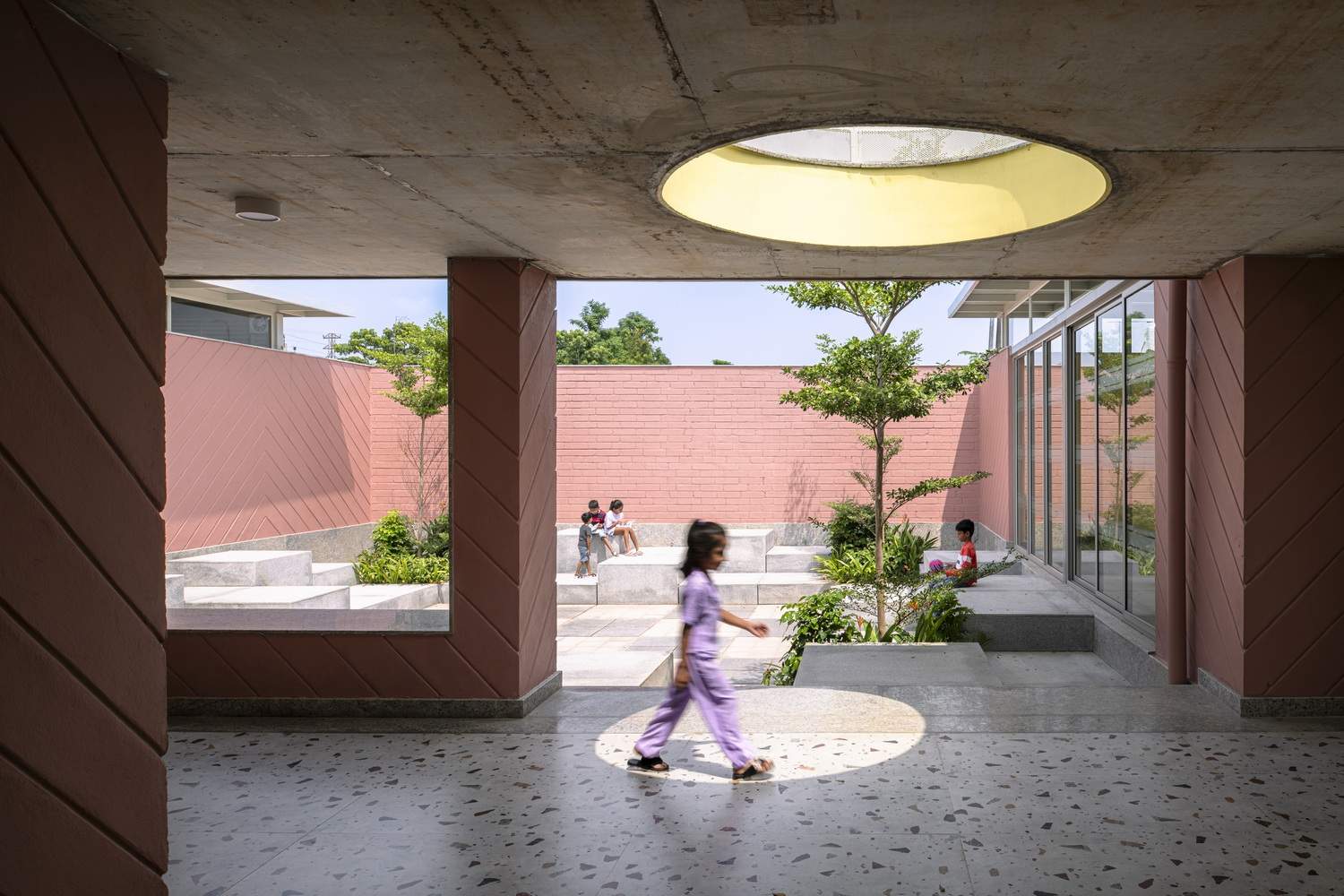
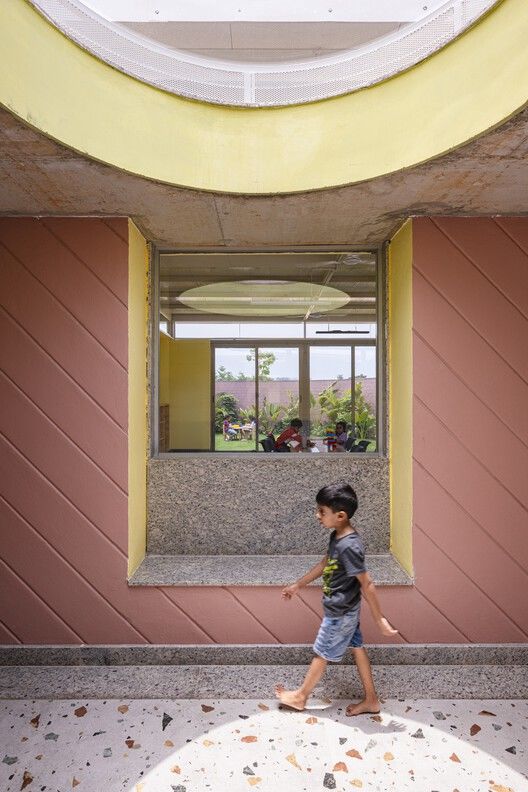
空间体验:Avinia校园的空间设计旨在激发孩子们的好奇心和创造力。教室与绿色庭院的直接连通,创造了一种开放、自由的学习氛围。孩子们可以自由地在室内外空间穿梭,进行各种活动。 中央轴线的特殊设计,通过设置座位和休息区,鼓励学生之间的互动交流,打破了传统校园的刻板印象。整个建筑空间充满了趣味性,无论是圆形天窗带来的光影变化,还是土墙围合的庭院,都为孩子们提供了丰富的感官体验。项目在有限的场地内,最大限度地利用空间,为孩子们创造了一个既安全又充满探索乐趣的学习环境,堪称典范之作。
© Vivek Eadara
© Vivek Eadara
Driven by large-scale office and residential projects, Hyderabad is rapidly expanding westward, and the city center is also rapidly changing. However, this rapid development speed exceeds the construction speed of supporting infrastructure, leading to a surge in demand for new facilities, especially in schools. Our client is an experienced builder who plans to build a large permanent school to meet this demand. Before the permanent campus is built, they need a transitional campus to enroll the first batch of students. These first batch of students will move in after the permanent new campus is built. After the transition is completed, this campus will be transformed into a flagship office building, showcasing the construction company's various projects in the local area.
在大型办公和住宅项目的推动下,海得拉巴(Hyderabad)正迅速向西扩张,城市中心也随之快速变迁。然而,这种迅猛的发展速度超出了配套基础设施的建设速度,导致对新设施的需求激增,尤其是学校。我们的客户是经验丰富的建筑商,他们计划建造一所大型永久性学校以满足这一需求。在永久性校园建成之前,他们需要一座过渡性校园来招收首批学生。这批首批学生将在永久性新校园建成后迁入其中。过渡完成后,这座校园将被改造成一座旗舰办公楼,展示该建筑公司在当地的各种建设项目。
© Vivek Eadara
© Vivek Eadara
© Vivek Eadara
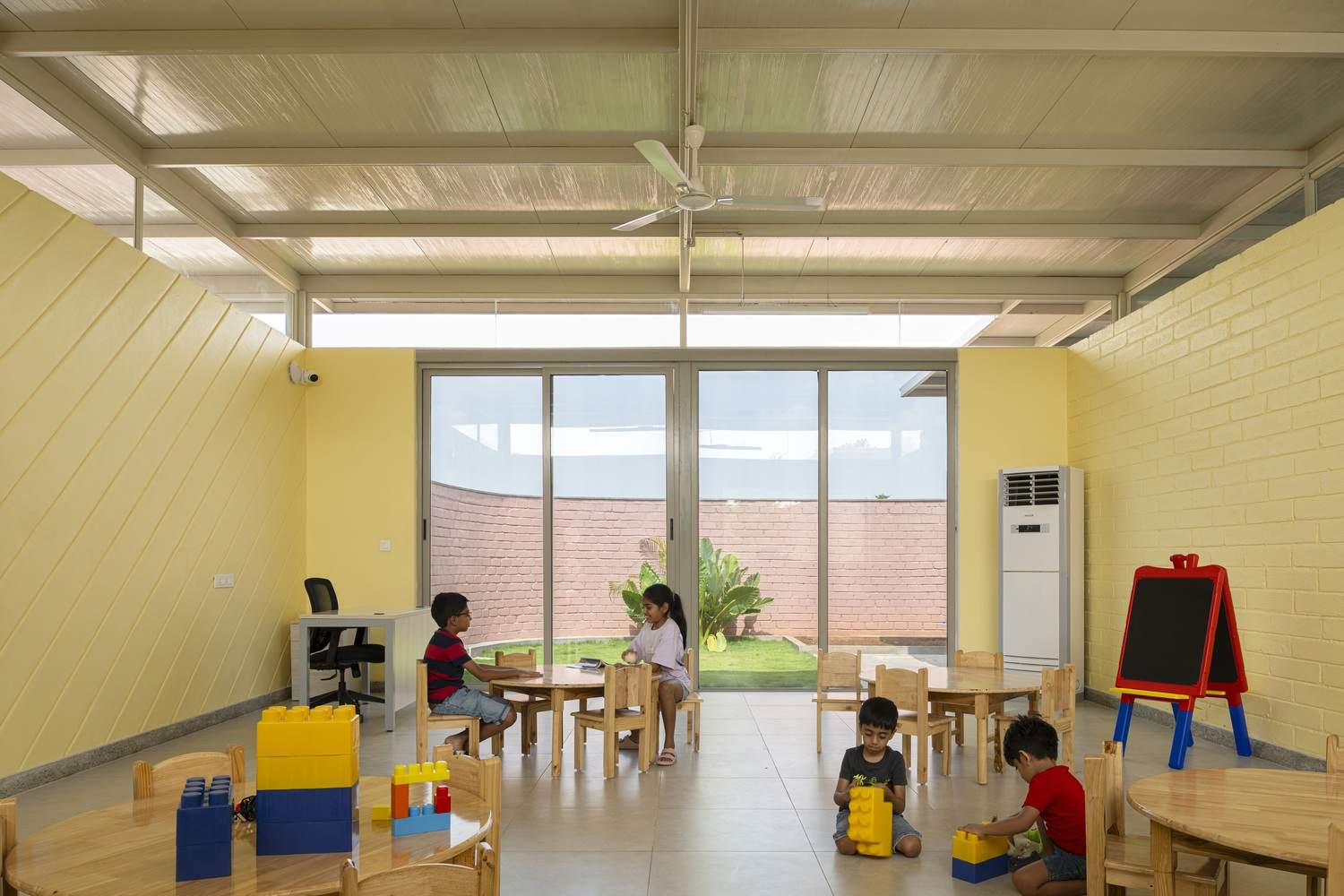
Research has shown that there is a close relationship between a child's well-being and their primary living environment (family, school, and community). Given that nearly half of children's awake time is spent in school, the physical environment in school plays a crucial role in their overall development. The students on this campus are between the ages of 3 and 8, so we decided early on to design the campus as a single story building. This design ensures that the building scale does not make young children feel oppressed and helps them develop a sense of belonging. Children need to feel like they are part of the school and the school belongs to them. In addition to educators and families, physical spaces also have the potential to influence children's learning content and methods.
研究表明,孩子的福祉与其主要生活环境(家庭、学校和社区)之间存在着紧密联系。鉴于孩子们近一半的清醒时间都在学校度过,因此,学校的物理环境对他们的全面发展起着至关重要的作用。这所校园的学生年龄在 3 至 8 岁之间,因此我们很早就决定将校园设计为单层建筑。这种设计确保了建筑规模不会让年幼的孩子感到压抑,有助于他们产生归属感。孩子们需要感到自己是学校的一员,学校也属于他们。除了教育工作者和家庭之外,物理空间也具有影响孩子学习内容和方式的潜力。
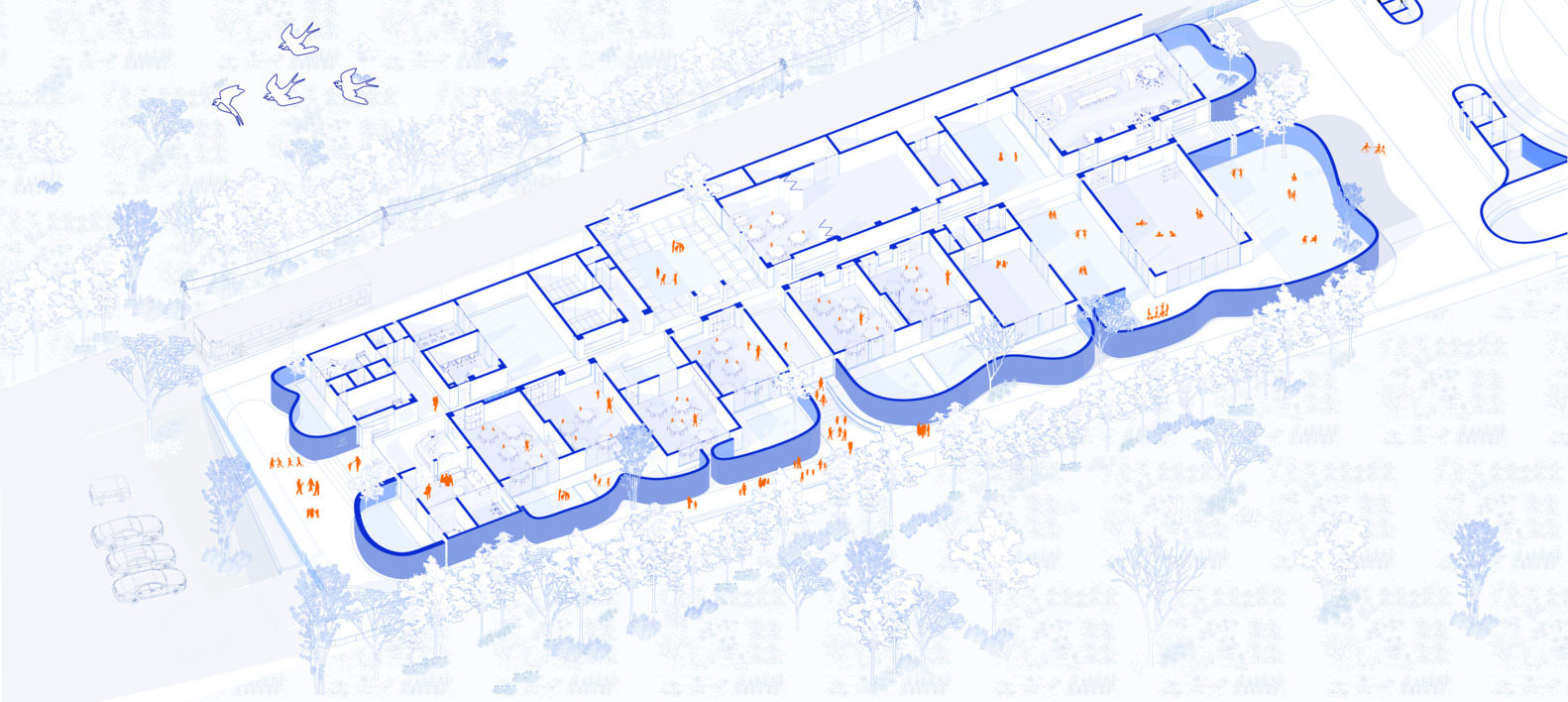
轴测图
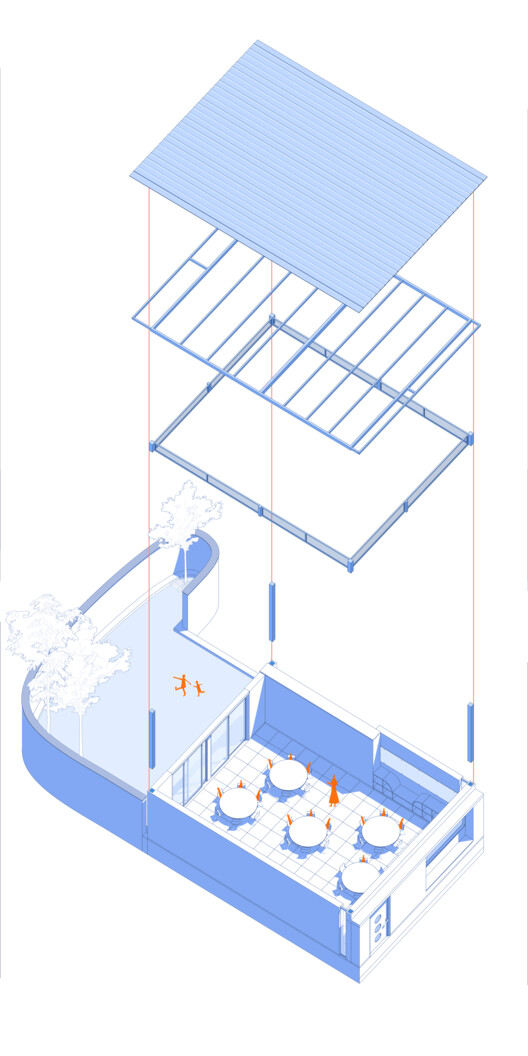
爆炸轴测图
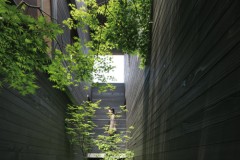
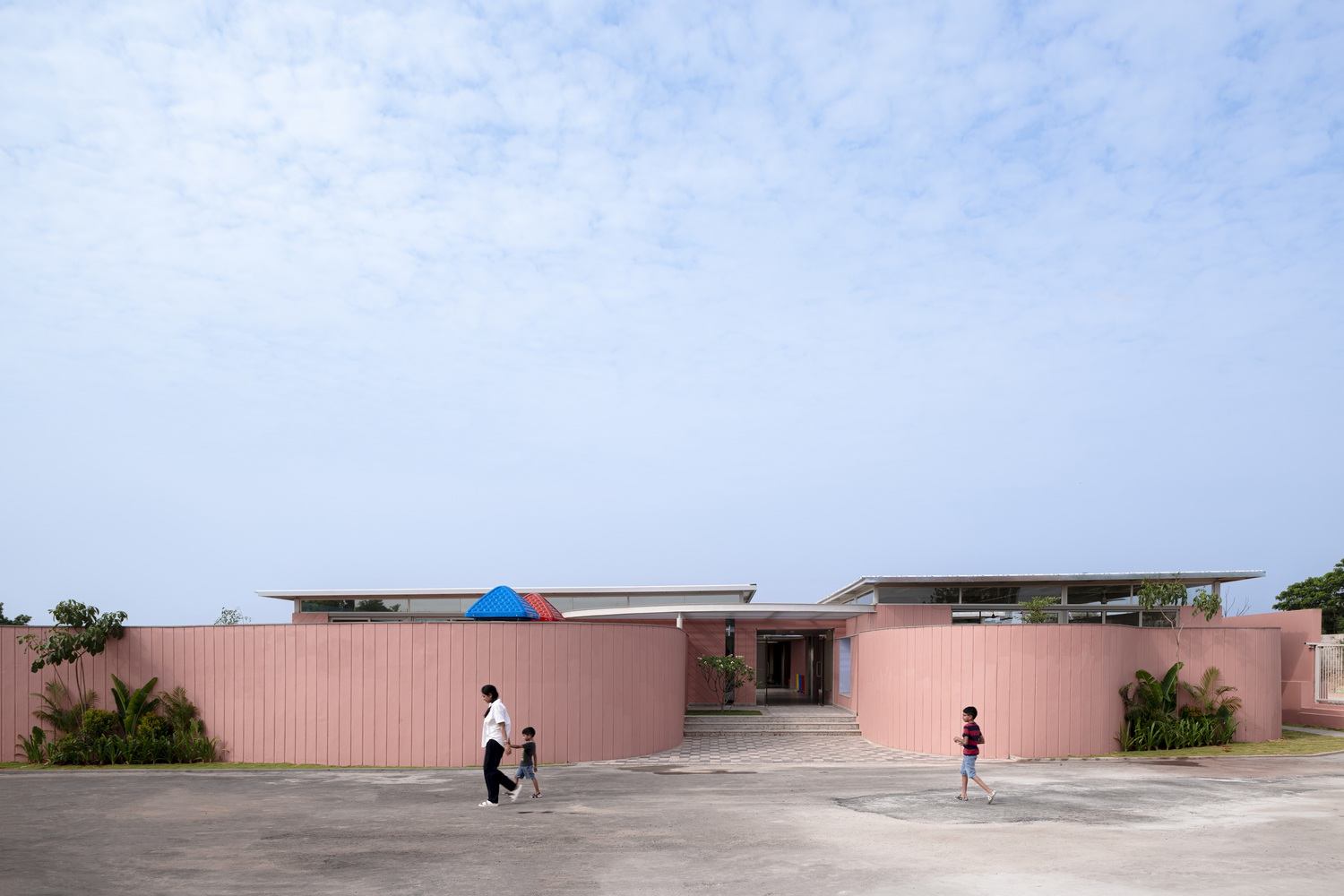
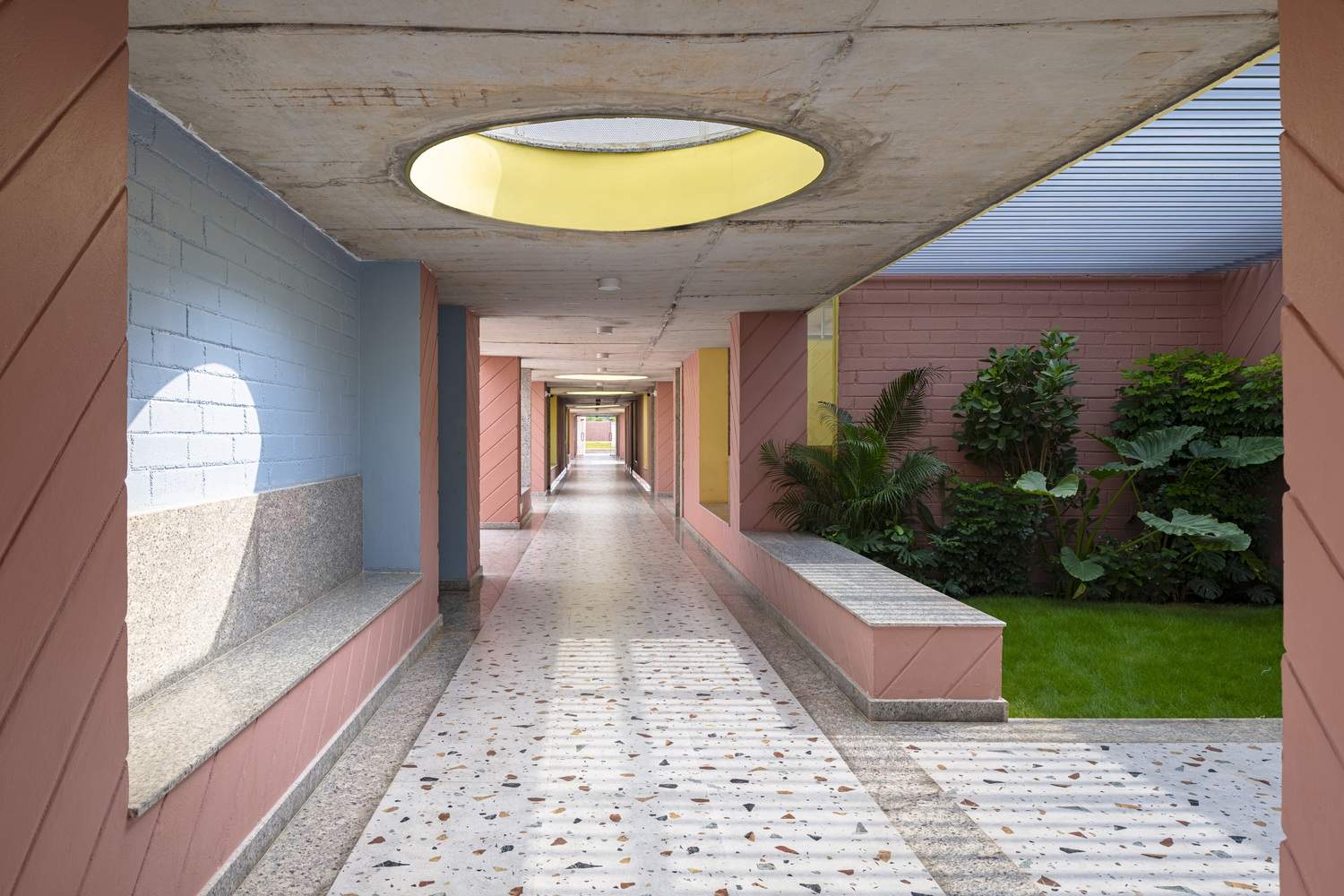
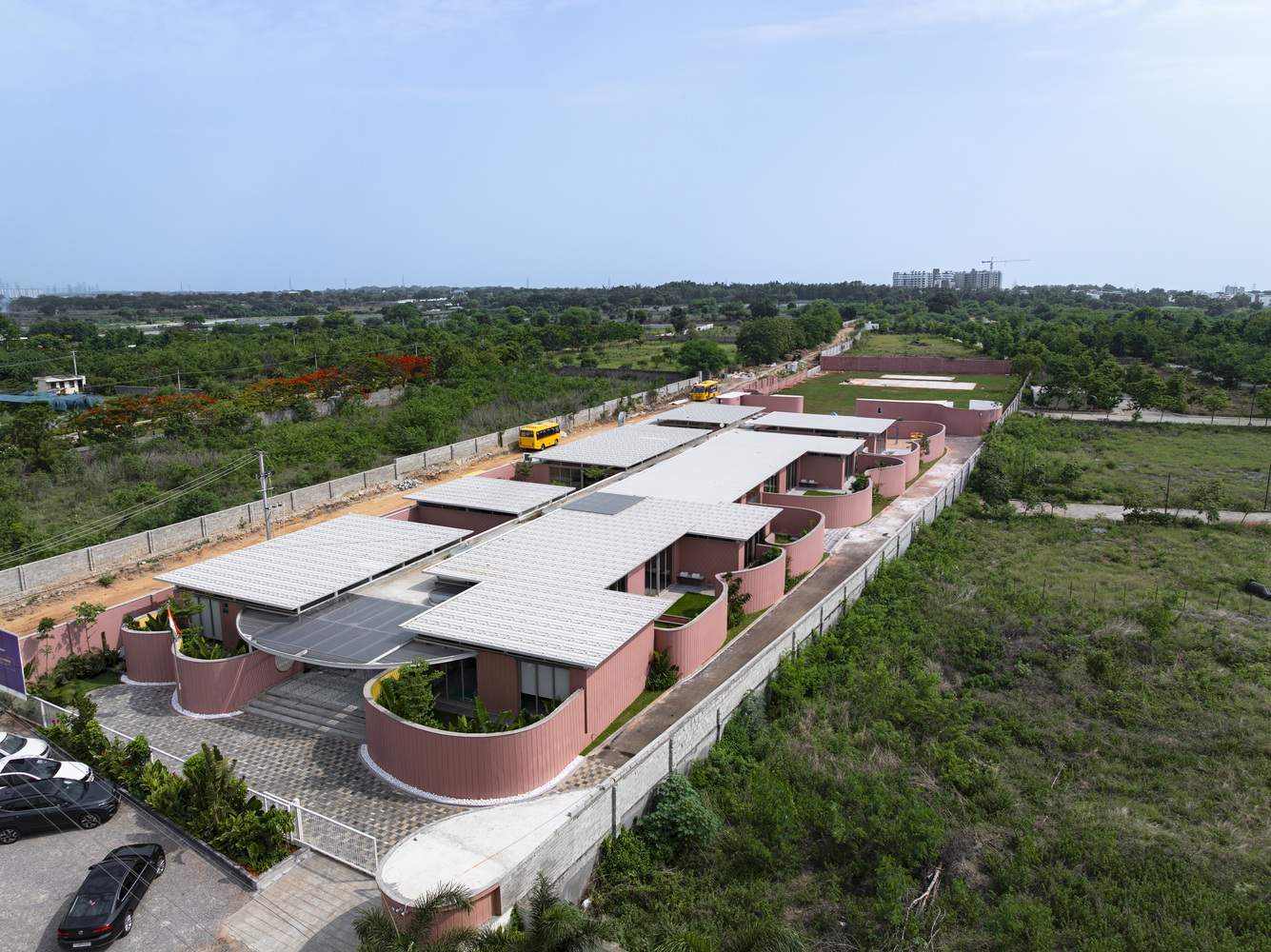
The school is located on a narrow 1.9-acre site running north-south, with a main road to the south and a small alley to the west. The northern half of the venue is a playground, while the school occupies the southern half. The architectural layout is based on a central linear axis - the only concrete structure in the building - with each room symmetrically distributed on both sides. This main axis is equipped with a circular skylight, dividing the school into east and west wings, and regularly opening to the courtyard.
学校坐落在一块南北走向、长达 1.9 英亩的狭长场地上,南边是一条主干道,西边是一条小巷。场地北半部分为操场,学校则占据南半部分。建筑布局以中央一条线性主轴 —— 这是建筑中唯一的混凝土结构 —— 为基准,两侧对称分布着各个房间。这条主轴上设有圆形天窗,将学校分为东西两翼,并定期向庭院开放。
© Vivek Eadara
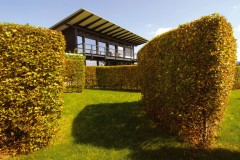
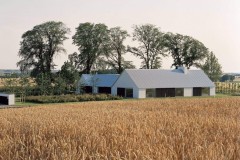
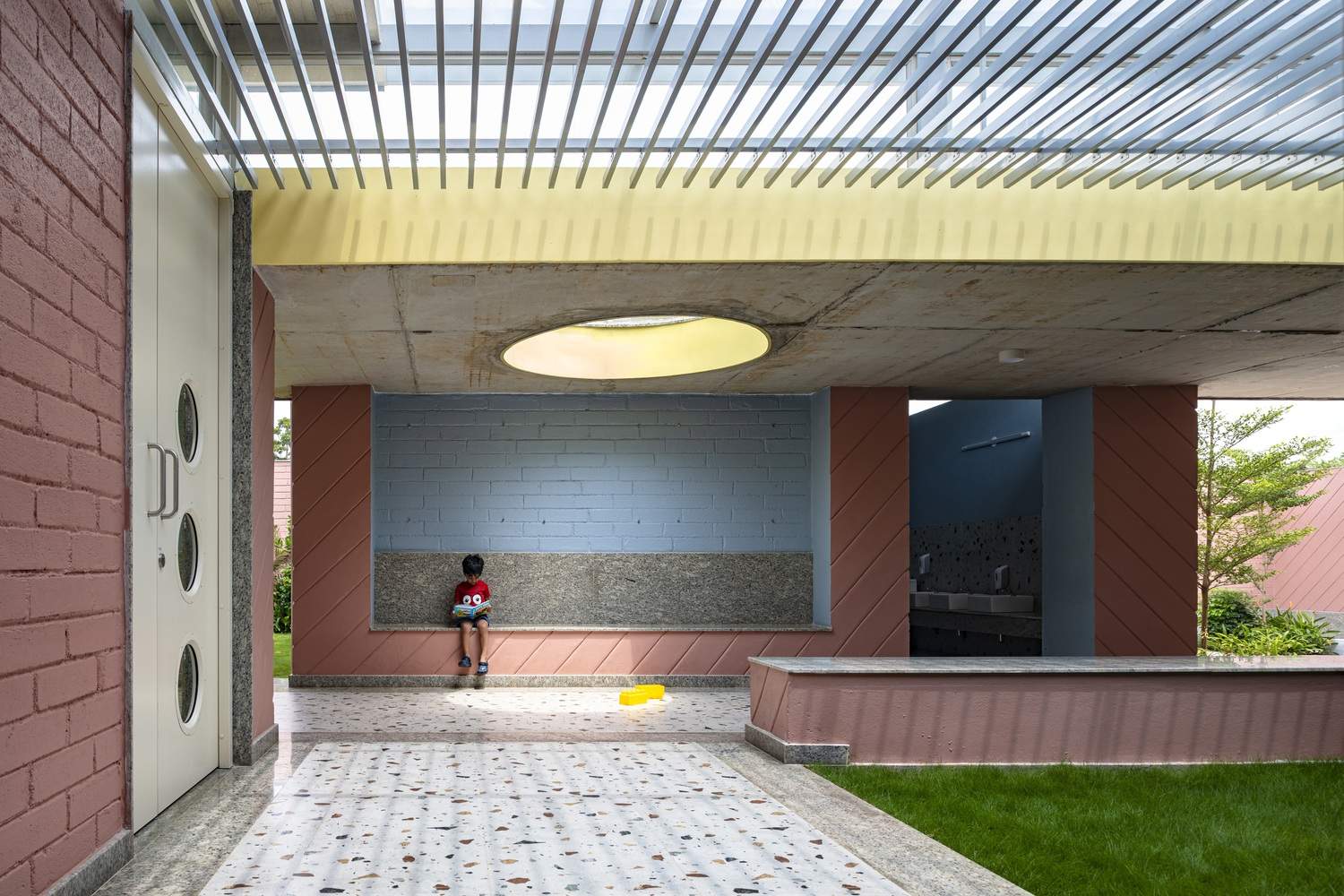
The room is constructed with a metal frame and sandwich panel roof. The roof is slightly raised to allow hot air to be expelled through ventilation openings, keeping the room cool. The buffer spaces such as kitchen, storage room, and bathroom are cleverly arranged on the west side to alleviate the scorching afternoon sun.
房间采用金属框架和夹芯板屋顶建造。屋顶略微抬高,以便热空气通过通风口排出,保持室内凉爽。厨房、储藏室和卫生间等缓冲空间被巧妙地布置在西侧,以减轻午后强烈阳光的炙烤。
© Vivek Eadara
© Vivek Eadara
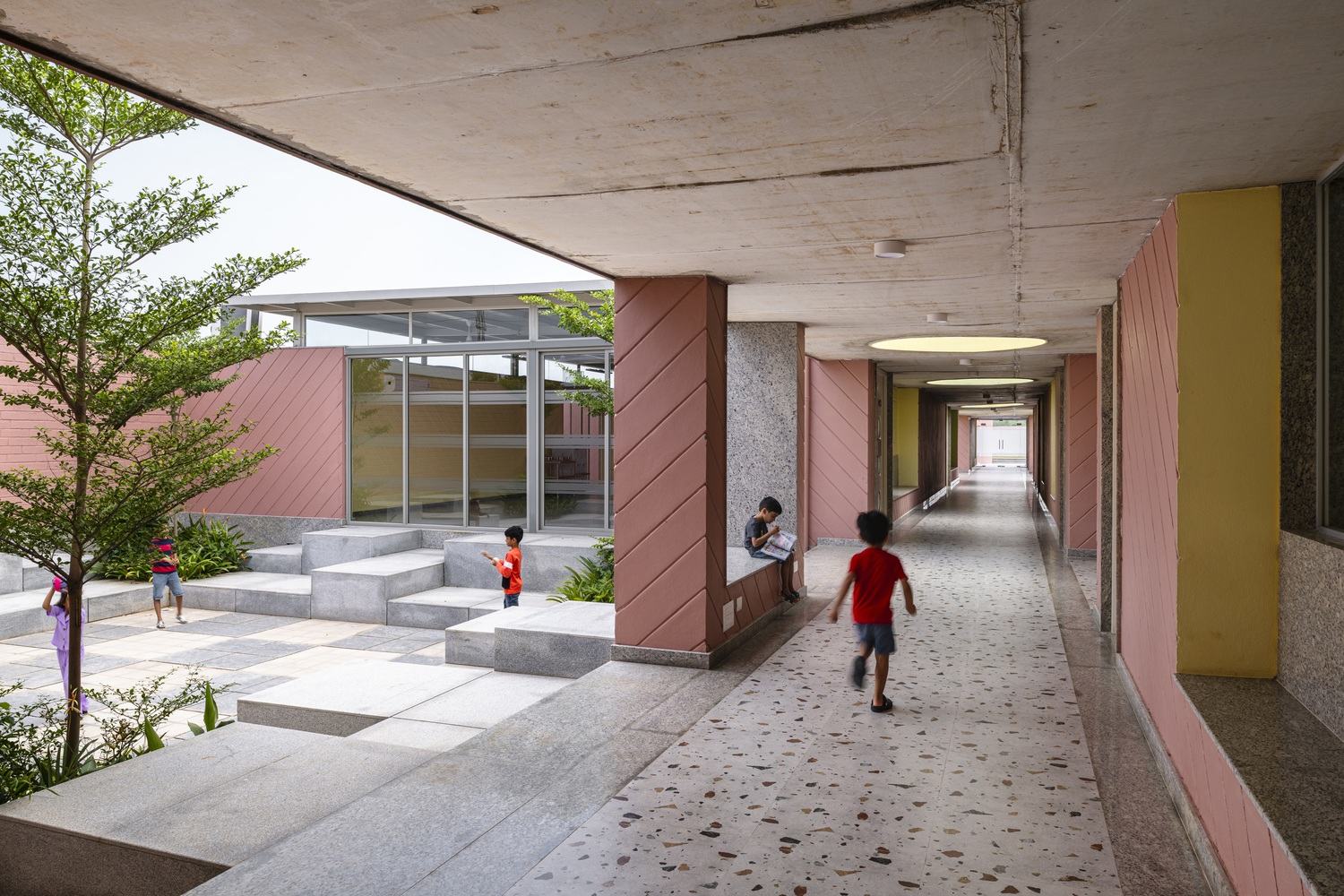
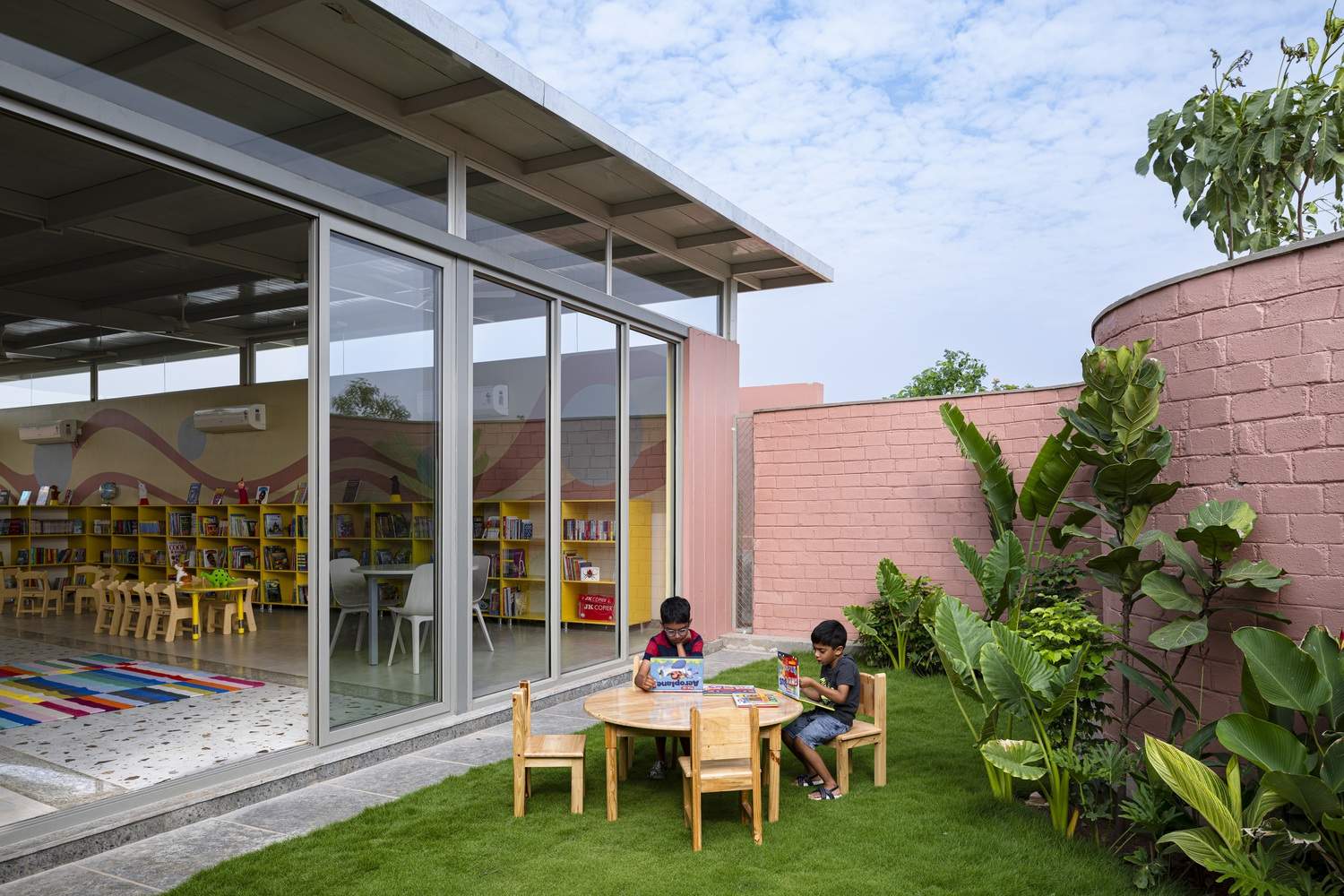
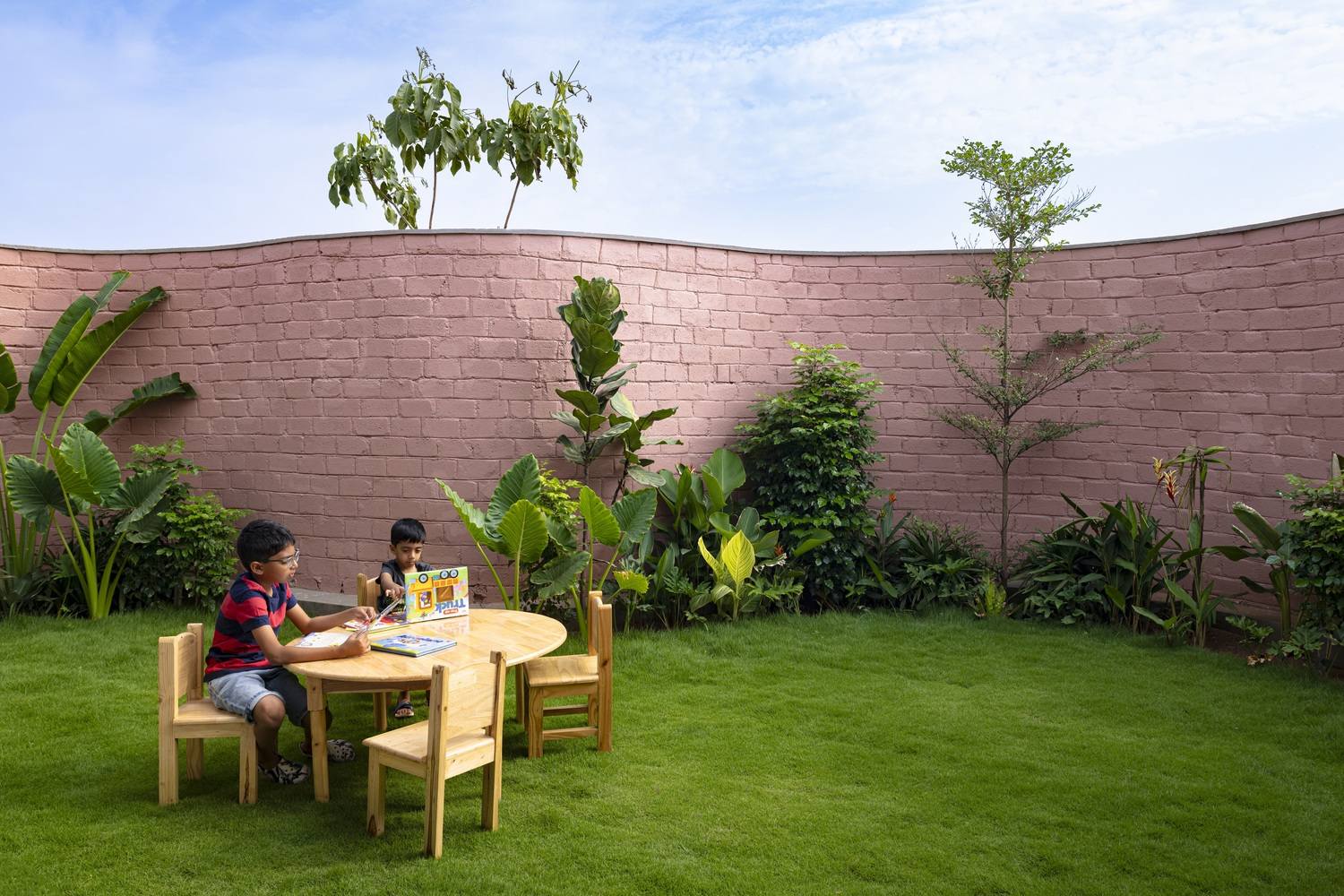
Our core design principle is to ensure that each classroom leads to a green courtyard, which is a direct extension of the classroom. These courtyards are surrounded by curved earthen walls, providing children with a protected natural learning and play space. Here, children can sit outdoors, grow vegetables, and interact with their peers. These earthen walls are made by reusing discarded bricks from other projects of the construction company, and are coated with earth colored paint on the surface.
我们的核心设计原则是确保每间教室都通向一个绿色庭院,这个庭院是教室的直接延伸。这些庭院由曲线形的土墙环绕,为孩子们提供了一个受保护的自然学习和玩耍空间。在这里,孩子们可以坐在户外、种植蔬菜,并与同伴互动。这些土墙由建筑商其他项目中的废弃砖块重新利用而成,表面涂有土色涂料。
© Vivek Eadara
The central axis is not just a corridor, it also has numerous seats and rest areas, encouraging spontaneous communication between students and teachers. The built environment is an important component of the curriculum, serving as the 'third teacher' to guide and inspire students' learning.
中央主轴不仅仅是一条走廊,它还设有众多座位和休息区,鼓励学生和教师之间进行自发的交流。建筑环境是课程的重要组成部分,它作为“第三位老师”,引导和激发学生的学习。
© Vivek Eadara