Anganwadi Childcare Center/Fahed+Architects
Anganwadi 儿童保育中心 / Fahed+Architects
设计理念的革新:建筑师Fahed+Architects设计的Anganwadi儿童保育中心,颠覆了印度传统儿童保育中心的刻板印象。项目选址于科钦市中心一个喧嚣的街角,以独特的“温和而激进”姿态回应了周遭环境。设计并非追求宏大或夸张,而是注重流动的空间体验,用弯曲的现浇混凝土外壳拥抱了场地限制,并将其转化为雕塑般的可能性。这种设计理念是对印度公共建筑的重新定义,为儿童提供了一个充满关怀、想象力和乐趣的学习环境,而非仅仅是功能性的“盒子”。
空间与细节的匠心:项目的亮点在于对空间和细节的精心雕琢。外立面采用白色花瓣状混凝土叶片,既是围墙,又是独特的建筑语言,营造出雕塑般的视觉效果,并巧妙地引入光线,柔化了建筑与街道的边界。内部空间的设计则延续了对儿童感官体验的关注,布局促进了直观的动线和自然的探索。通高的开口模糊了室内外界限,营造出通透宜人的氛围。色彩搭配柔和舒适,家具和角落的巧妙设计兼顾了娱乐与休息。每一个细节都体现了对儿童的尊重和关怀,营造了一个积极、友好的学习环境。
可持续与社会责任:除了美学和功能性,该项目还展现了对环境和社会责任的担当。建筑采用了被动式设计,减少了对人工照明的依赖,并利用太阳能电池板提供能源。本地采购的材料有助于降低碳足迹。此外,建筑的小占地面积和精心布局,在保护现有树木的同时,保证了良好的通风和采光。它不仅是一个儿童保育中心,更是一个尊重环境、服务社区、并赋予公共基础设施尊严的典范。项目向人们传递了“你很重要”的信息,彰显了建筑对社会的影响力。
© Nayan Krishna, Ram Naresh
© Nayan Krishna, Ram Naresh
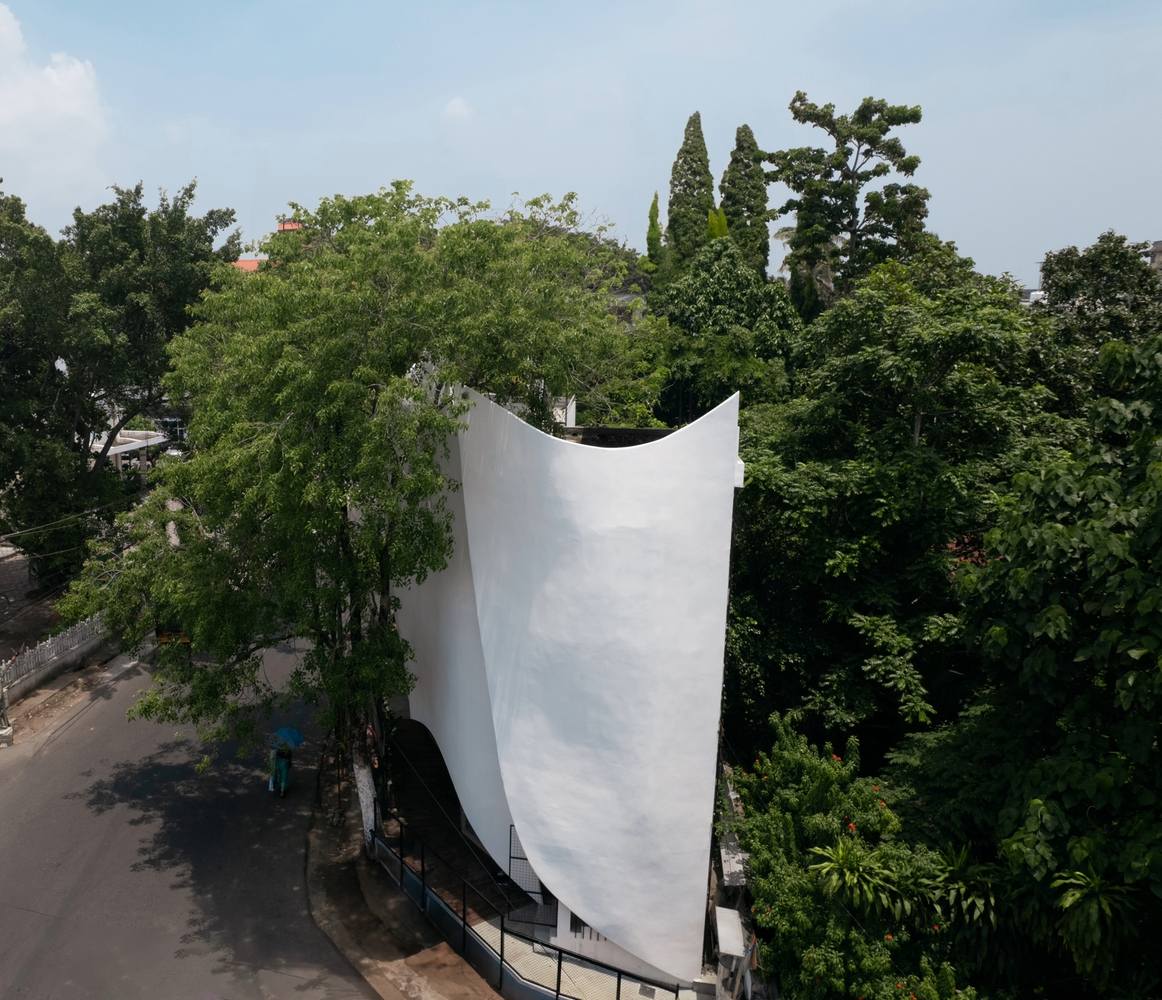
In the center of Kochin, on a chaotic street corner locally known as Cemetery Muku, a gentle architectural posture stands tall amidst the hustle and bustle - neither grand nor grandiose, but quiet and radical. This Anganwadi, designed by Fahed+Architects, reimagines a public building for early childhood care in India.
在科钦的中心,在一个当地称为墓地穆库的混乱街角,一个温和的建筑姿态在喧嚣中高耸而起——既不宏伟也不被宏伟化,而是安静而激进。这座由Fahed + Architects设计的Anganwadi重新构想了印度早期儿童保育的公共建筑。
On a chaotic street corner in the center of Cochin, known locally as Cemetery Mukku, a building rises in a gentle manner amidst the noise - it is neither grand nor exaggerated, but low-key and radical. The Anganwadi, designed by Fahed+Architects, reinterprets the concept of public buildings for early childhood care in India.
在科钦市中心一个被当地人称为穆库墓地(Cemetery Mukku)的混乱街角,一座建筑以温和的姿态在喧闹声中崛起--它既不宏伟,也不浮夸,却又低调而激进。由 Fahed + Architects 设计的这座 Anganwadi 重新诠释了印度幼儿保育公共建筑的概念。
© Nayan Krishna, Ram Naresh
The project is built on an irregular piece of land of only 76.4 square meters - a usually overlooked urban abandoned land, but the project did not compromise on it and responded with creativity. Design is not about imposing rigid geometric shapes, but about flow: a curved, cast-in-place concrete shell that embraces constraints and transforms them into sculptural possibilities.
该项目建在一块仅 76.4 平方米的不规则土地上——这是一块通常会被忽视的城市废弃土地,但该项目并没有因此而妥协,而是以创造力来回应。设计不是强加刚性的几何形状,而是流动的:一个弯曲的、现浇混凝土的外壳,拥抱约束并将其转化为雕塑的可能性。
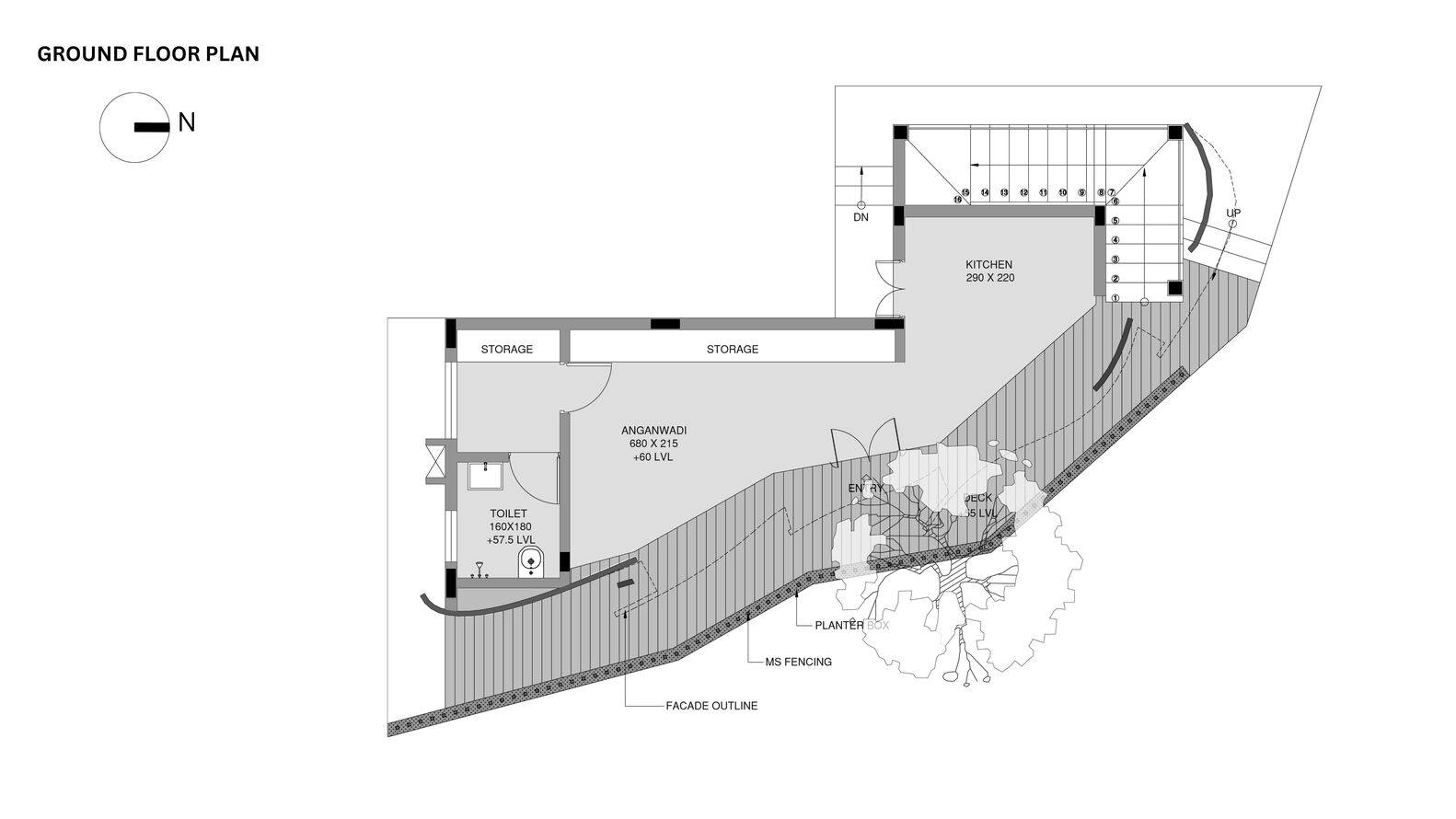
Ground Floor Plan
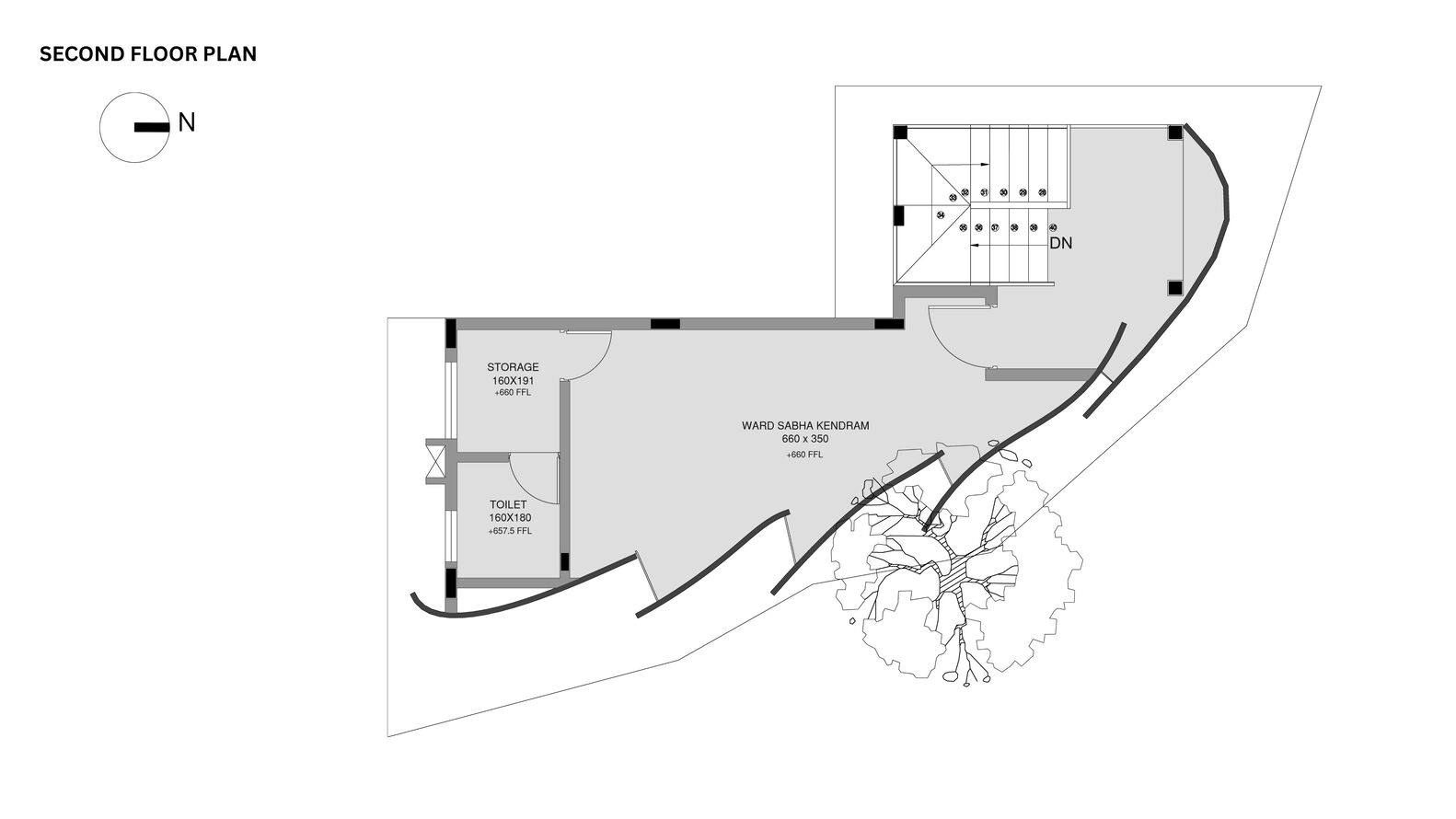
Second Floor Plan
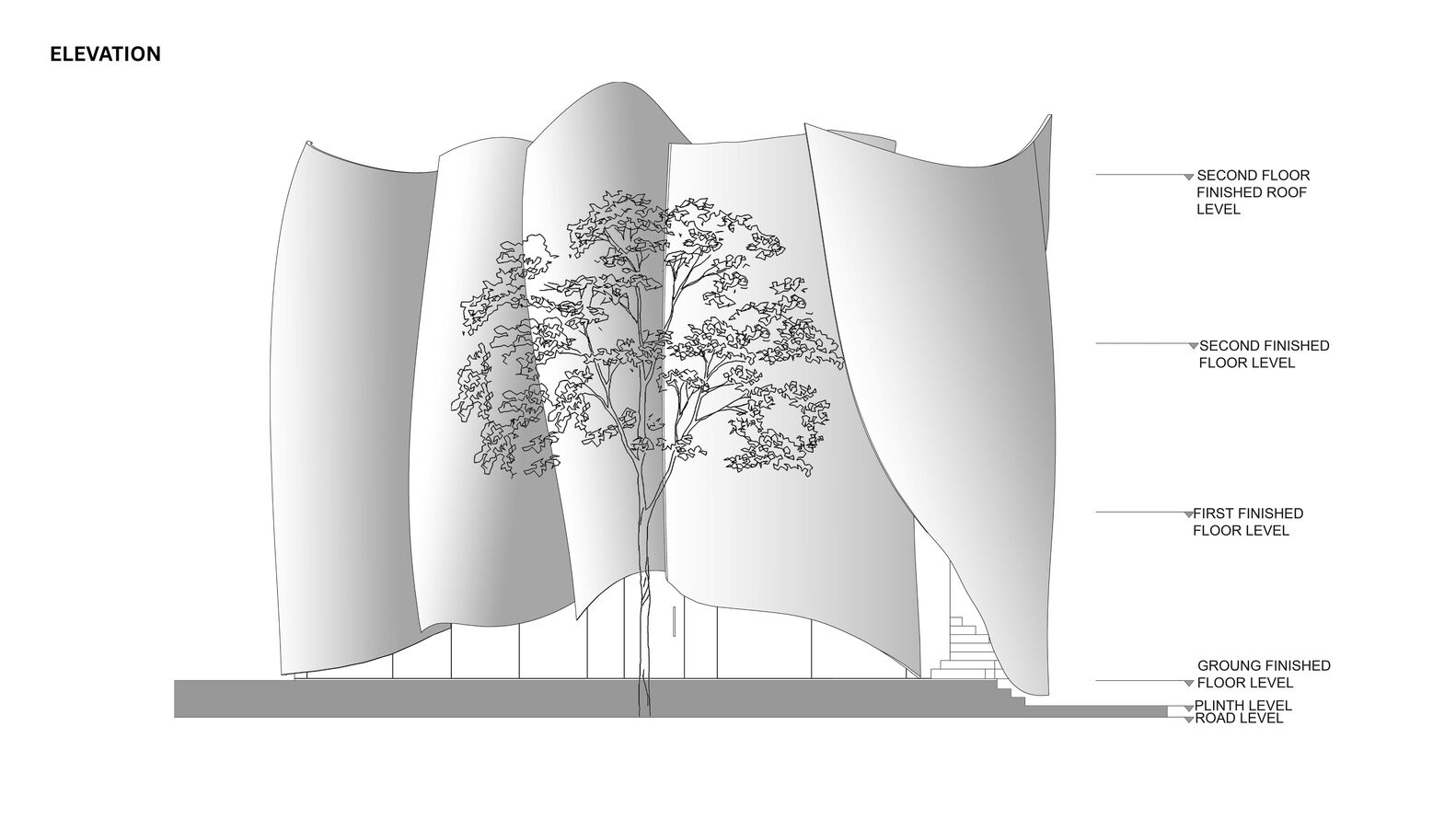
Elevation
This project challenges the utilitarian image of government childcare centers across India. Anganwadis has long played a crucial role in early childhood education, nutrition, and maternal health, and its traditional definition is determined by its function rather than design - often in uninspiring boxes. This project aims to reshape this narrative.
该项目挑战了印度各地政府儿童保育中心的功利形象。Anganwadis长期以来在学前教育、营养和孕产妇保健方面发挥着至关重要的作用,而传统的定义是由其功能而非设计决定的--往往是在毫无新意的盒子里。本项目旨在重塑这种叙事。
© Nayan Krishna, Ram Naresh
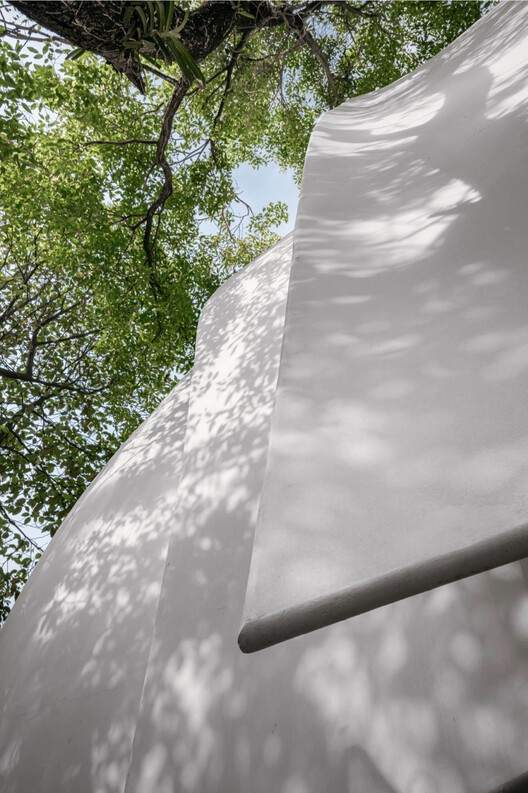
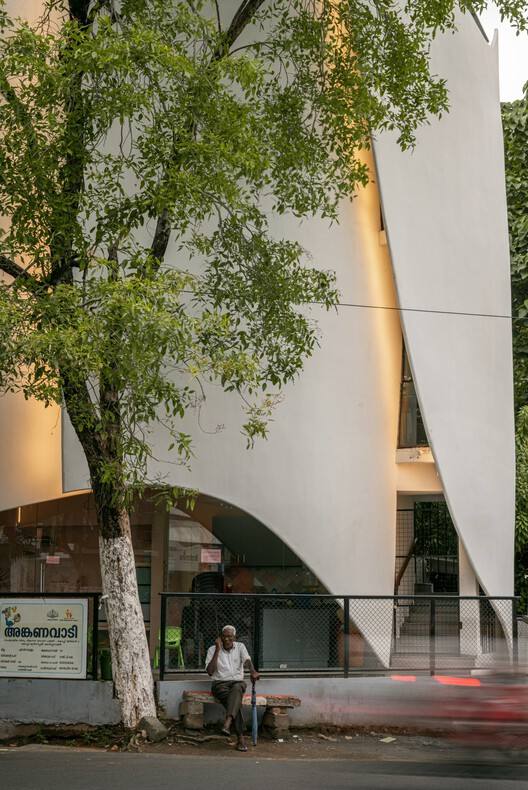
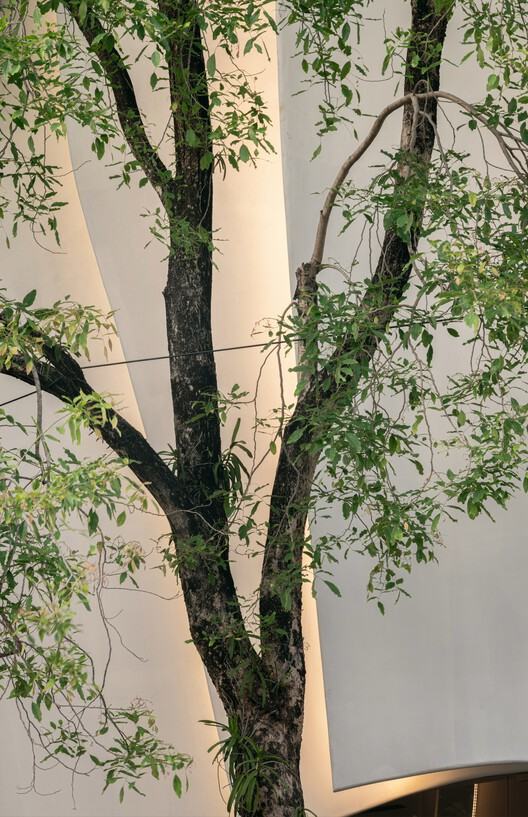
The white petal shaped concrete leaves on the exterior facade are both a fence and an expression. These leaves not only have a sculptural feel, but also attract light, soften the interface between buildings and streets, and surround the existing trees on the site. The use of curves not only coordinates scattered plots, but also adds warmth, rhythm, and personality to this originally inconspicuous corner of the city. At night, the folds glow softly under the embedded lighting, making the building a symbolic lighthouse of community care.
外立面的白色花瓣状混凝土叶片既是围墙,也是表达。这些叶片既有雕塑感,又能吸引光线,既能柔化建筑与街道的界面,又能环绕场地内现有的树木。曲线的运用不仅协调了零散的地块,还为这个原本不起眼的城市角落增添了温暖、韵律和个性。夜晚,褶皱在嵌入式照明的照耀下柔和发光,使建筑成为社区关怀的象征性灯塔。
© Nayan Krishna, Ram Naresh
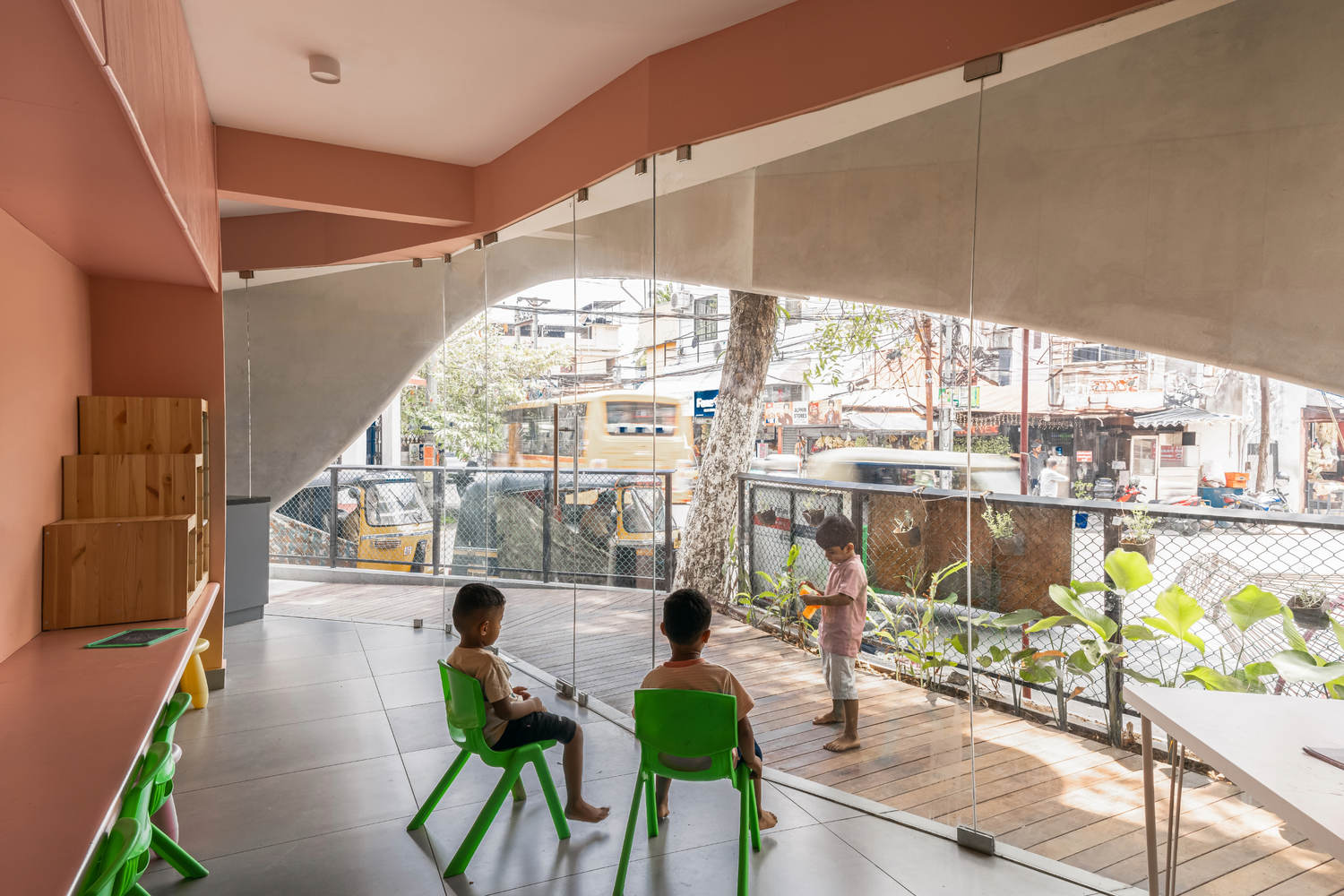
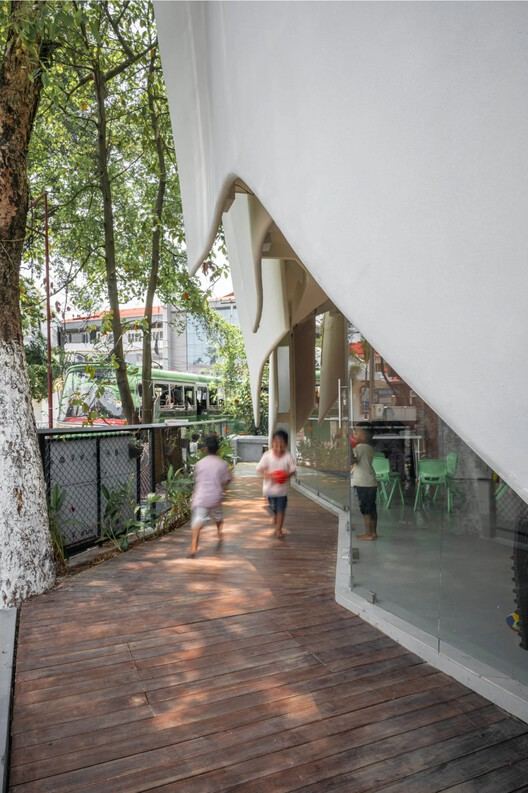
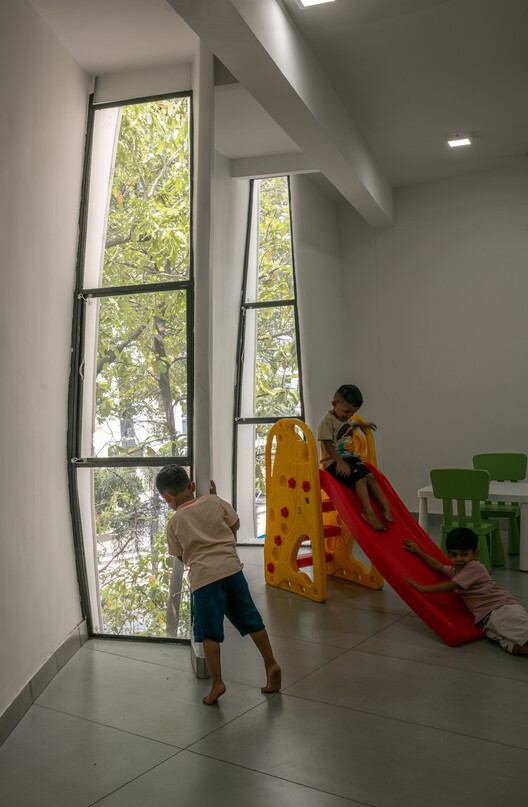
The interior of the building continues the pursuit of sensory experience. The layout of the volume promotes intuitive flow and natural exploration. The high opening blurs the boundary between indoors and outdoors, creating a transparent and pleasant space where light and imagination flow freely. The colors are soft and comfortable. Compact furniture and embedded corners create a space that combines entertainment and rest. From spatial flow to material matching, every design decision is based on the experience of children.
建筑内部延续了对感官的追求。体量的布局促进了直观的动线和自然的探索。通高的开口模糊了室内外的界限,营造出一个通透宜人的空间,光线和想象力在此自由流动。色彩柔和舒适。小巧的家具和嵌入式角落营造出兼具娱乐和休息的空间。从空间流动到材料搭配,每一个设计决策都以儿童的体验为出发点。
© Nayan Krishna, Ram Naresh
© Nayan Krishna, Ram Naresh
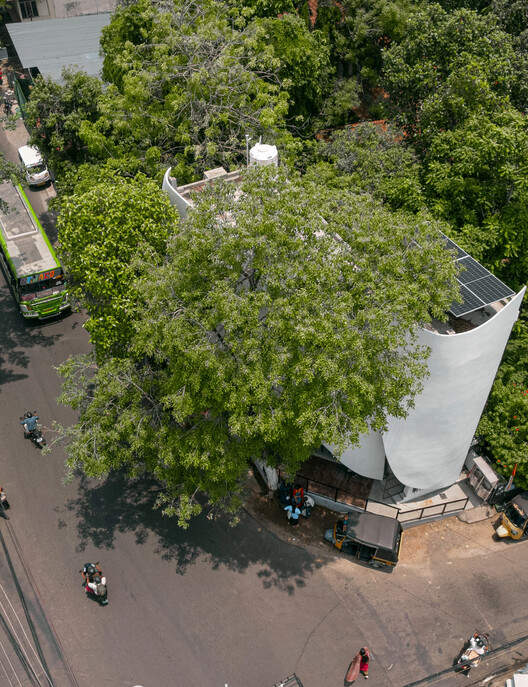
This preschool center not only responds quickly in form, but also fulfills its responsibilities and is reliable in function. The passive design strategy reduces reliance on artificial lighting. Solar panels meet the energy demand. Locally sourced materials can help reduce carbon footprint. The building has a small footprint and a reasonable layout, ensuring ventilation and lighting while protecting existing trees. In addition to serving as a childcare center, the building also represents a prototype of a new type of urban architecture - respecting the environment, serving the community, and endowing public infrastructure with dignity.
这座幼儿中心不仅在形式上响应迅速,在功能上也尽责可靠。被动式设计策略减少了对人工照明的依赖。太阳能电池板满足了能源需求。本地采购的材料有助于降低碳足迹。该建筑占地面积小,布局合理,在保护现有树木的同时,还能保证通风和采光。除了作为幼儿保育中心的功能外,该建筑还代表了一种新型城市建筑的原型——尊重环境、服务社区,并赋予公共基础设施尊严。
This Anganwadi is not only responsive in form, but also responsible in function. The passive design strategy reduces reliance on artificial lighting. Solar panels support energy demand. Locally sourced materials can help reduce carbon footprint. The small footprint and careful layout of the structure protect existing trees while allowing ventilation and natural light to enter. In addition to serving as an early childhood care center, this building also represents a prototype of a new type of civic architecture - a building that respects the background, serves the community, and brings dignity to public infrastructure.
这个Anganwadi不仅在形式上具有响应性,在功能上也负责任。被动设计策略减少了对人工照明的依赖。太阳能电池板支持能源需求。当地采购的材料有助于降低碳足迹。结构的小占地面积和精心的布局保护了现有的树木,同时允许通风和自然光的进入。除了作为早期儿童保育中心的功能外,这座建筑还代表了一种新型公民建筑的原型——一种尊重背景、服务社区并为公共基础设施带来尊严的建筑。
© Nayan Krishna, Ram Naresh
This is not just a structure, but also a quiet protest against the neglect of public buildings in India. It confirms that even the smallest plot of land can hold the greatest potential when designed with empathy, creativity, and intention in mind. This is a space for learning, laughter, nourishment, and nurturing. Most importantly, this is a place to convey a message to the youngest citizens of Kerala: You are important.
这不仅仅是一个结构,这个项目还是对印度公共建筑被忽视的安静抗议。它确认,即使是最小的地块,在设计由同理心、创造力和意图驱动时,也能蕴含最大的潜力。这是一个学习、欢笑、营养和呵护的空间。最重要的是,这里是一个向喀拉拉邦最年轻的公民传达信息的地方:你很重要。