Guha Multi functional Community/Realrich Architecture Workshop
Guha 多功能社区 / Realrich Architecture Workshop
© Lu’Luil Ma’nun
© Kie Arch
From the architect. The Guha multifunctional community includes the OMAH Library (Children's and Public Library), Realrich Architecture Studio, co working spaces, workshop halls, home education classrooms, and a residential building for architects with designer boarding apartments.
来自建筑师。Guha 多功能社区内设奥玛图书馆(OMAH Library,儿童及公共图书馆)、Realrich 建筑工作室、联合办公空间、工作坊大厅、家庭教育教室,以及一座供建筑师居住且设有设计师寄宿公寓的住宅。
© Kie Arch
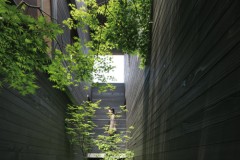
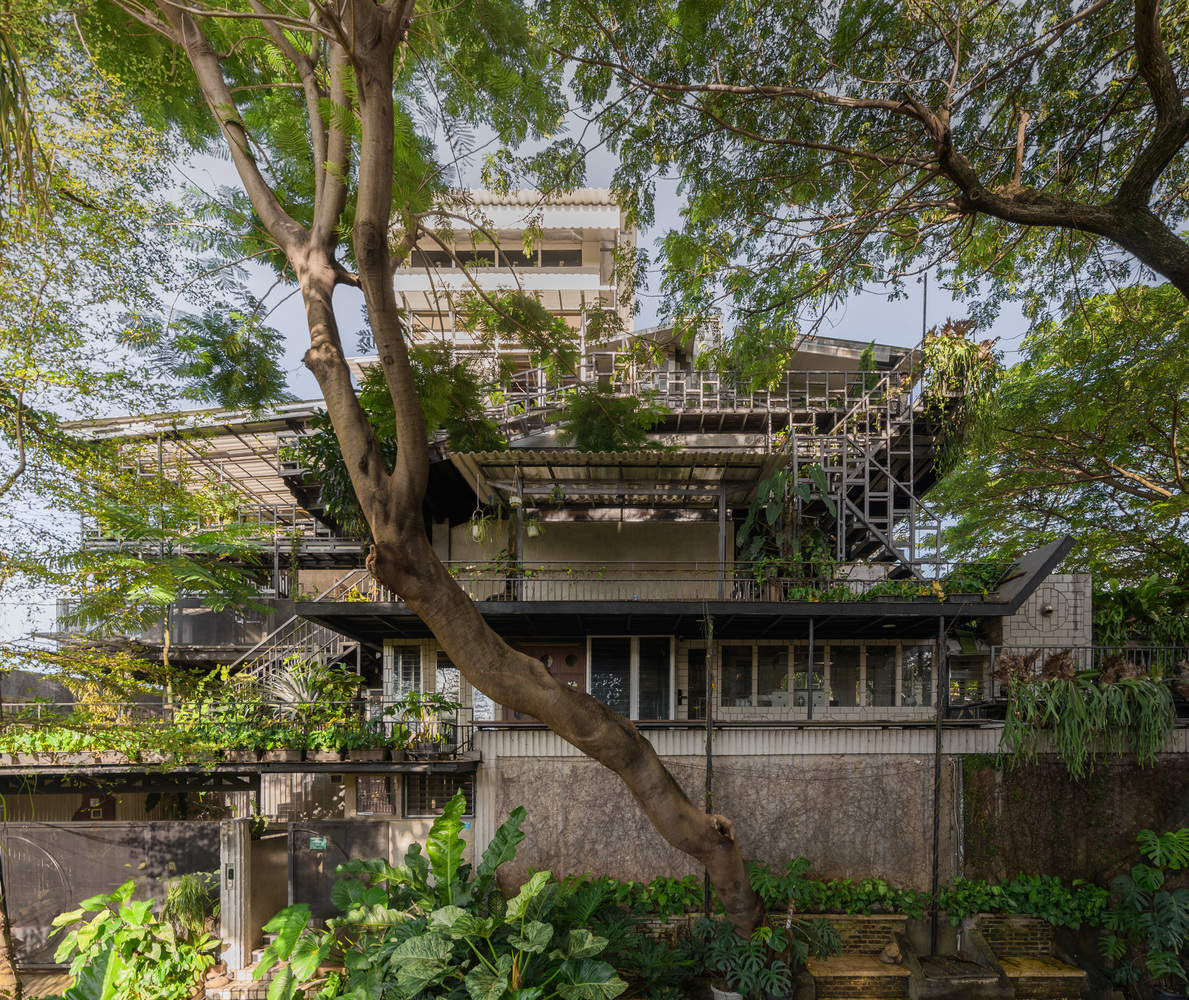
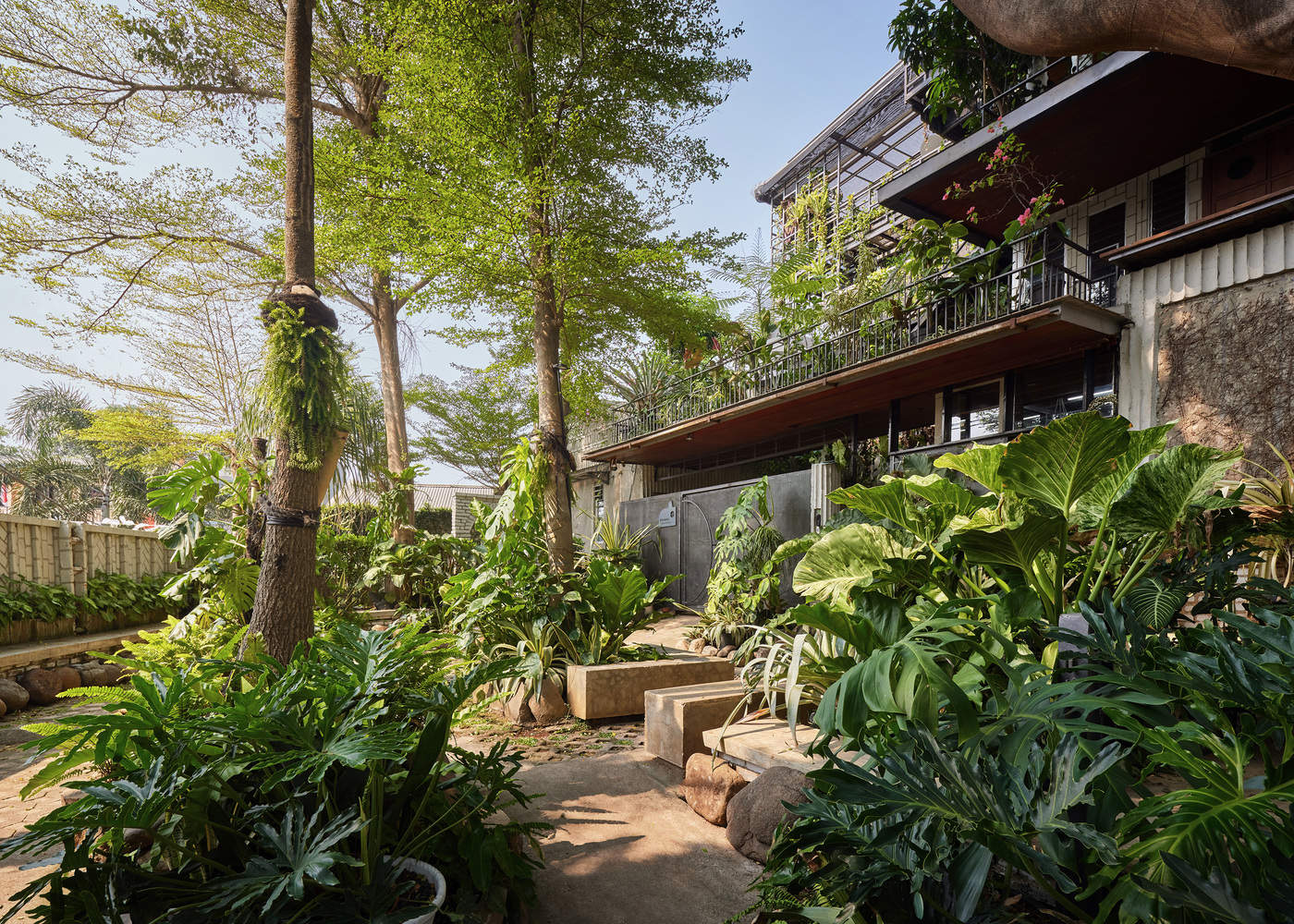
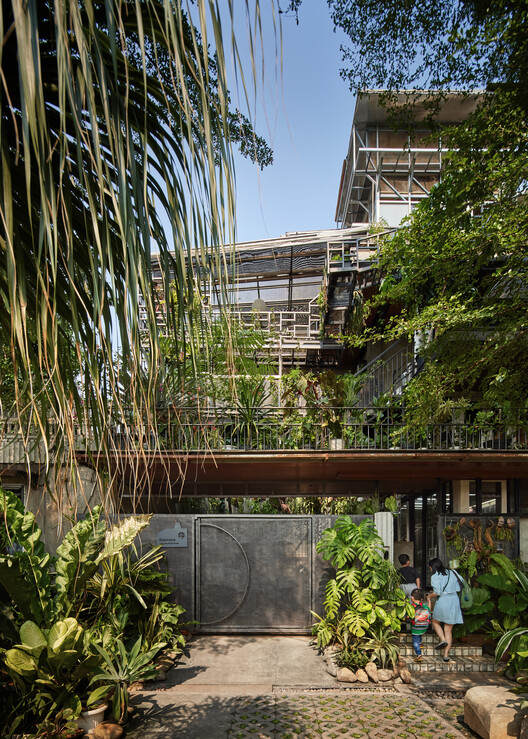
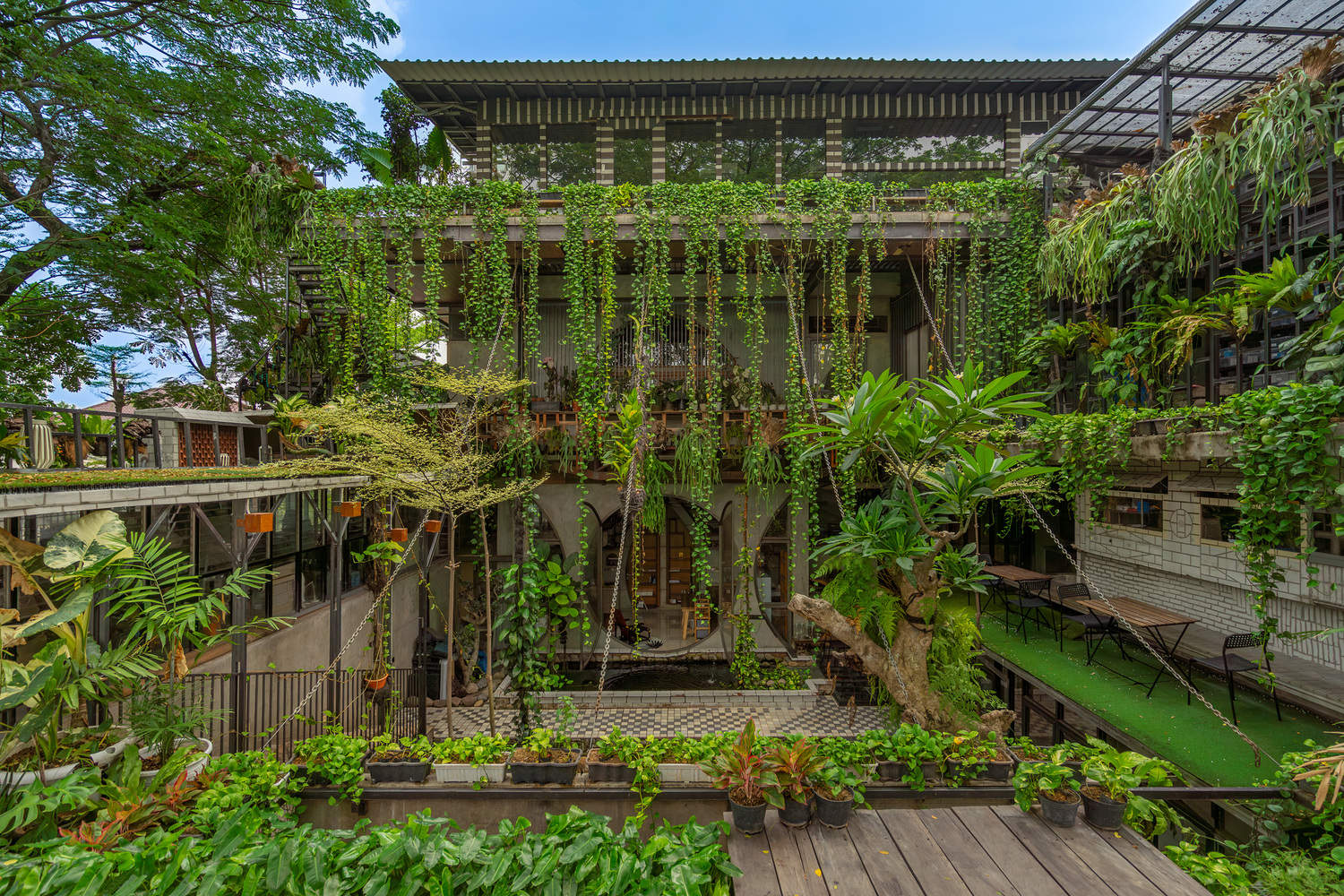
The project site is located at the intersection of formal and informal communities: to the north is Kampung Haji Brit village, with a narrow alley 1.5 meters wide in between; On the south side is a Mediterranean style gated community located in the Meruya area of Tangerang, with a road width of 6 meters. The design aims to provide shade for the pathways connecting enclosed community streets and village alleys by planting tropical plants, while preserving existing phoenix and rain trees.
项目选址位于正规社区与非正规社区的交汇处:北侧是哈吉布里特村(Kampung Haji Brit),其间有一条宽 1.5 米的狭窄小巷;南侧则是位于丹格朗(Tangerang)梅鲁亚(Meruya)地区的地中海风格封闭式社区,道路宽 6 米。设计通过种植热带植物,为连接封闭式社区街道与村庄小巷的步道提供遮荫,同时保留了现有的凤凰树和雨树。
© Lu’Luil Ma’nun
© Aryo Phramudhito
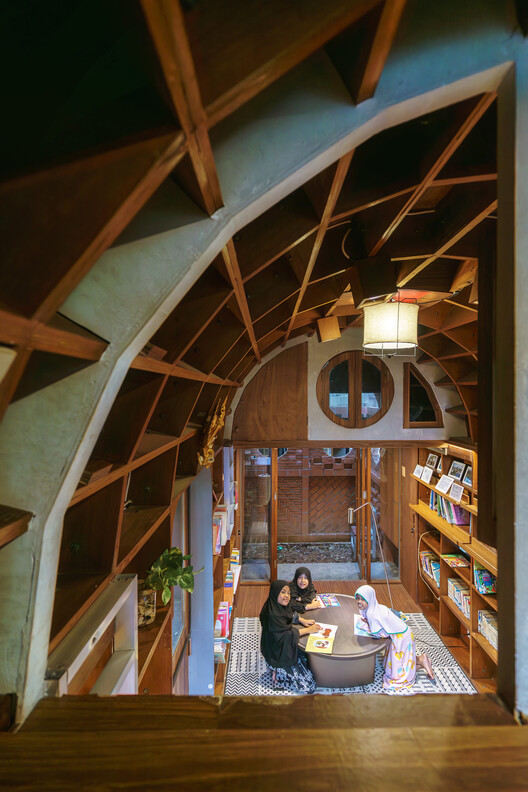
The children's library is located in the front of the venue, at the boundary space between formal and informal areas. The library is composed of modular wooden bookshelves measuring 200mm x 400mm x 600mm, which are combined into an arched structure to ensure stability. This wooden building was built in 2012 and has been relocated three times. The entrance is located on the west side and requires passing through a garden before entering the main area of the Guha multifunctional community. The library has become a shared space between two vastly different communities, where children can read, do homework, and play.
儿童图书馆位于场地前部,处于正规与非正规区域的交界空间。图书馆由尺寸为 200 毫米 × 400 毫米 × 600 毫米的模块化木质书架构成,这些书架组合成拱形结构以确保稳固性。这座木质建筑建于 2012 年,并已搬迁三次。其入口位于西侧,进入Guha 多功能社区主区域前需经过一处花园。该图书馆已成为两个截然不同社区之间的共享空间,孩子们可以在此阅读、做作业和玩耍。
一层平面图
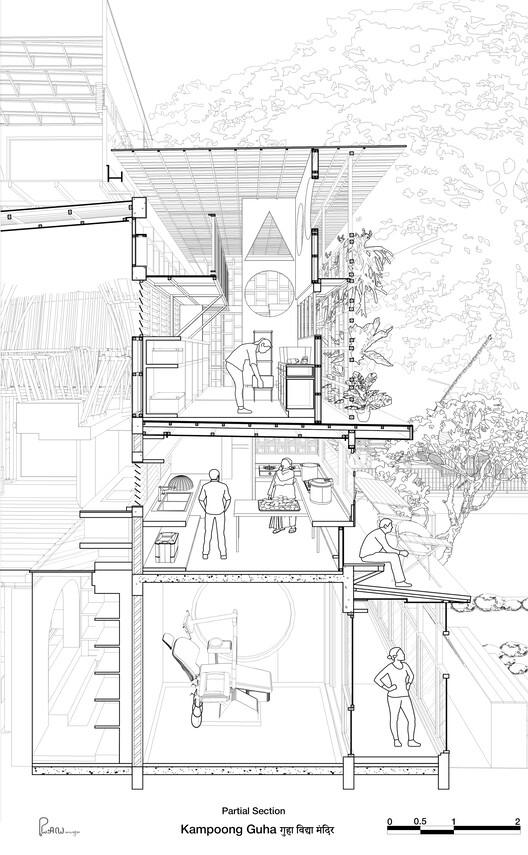
剖面图
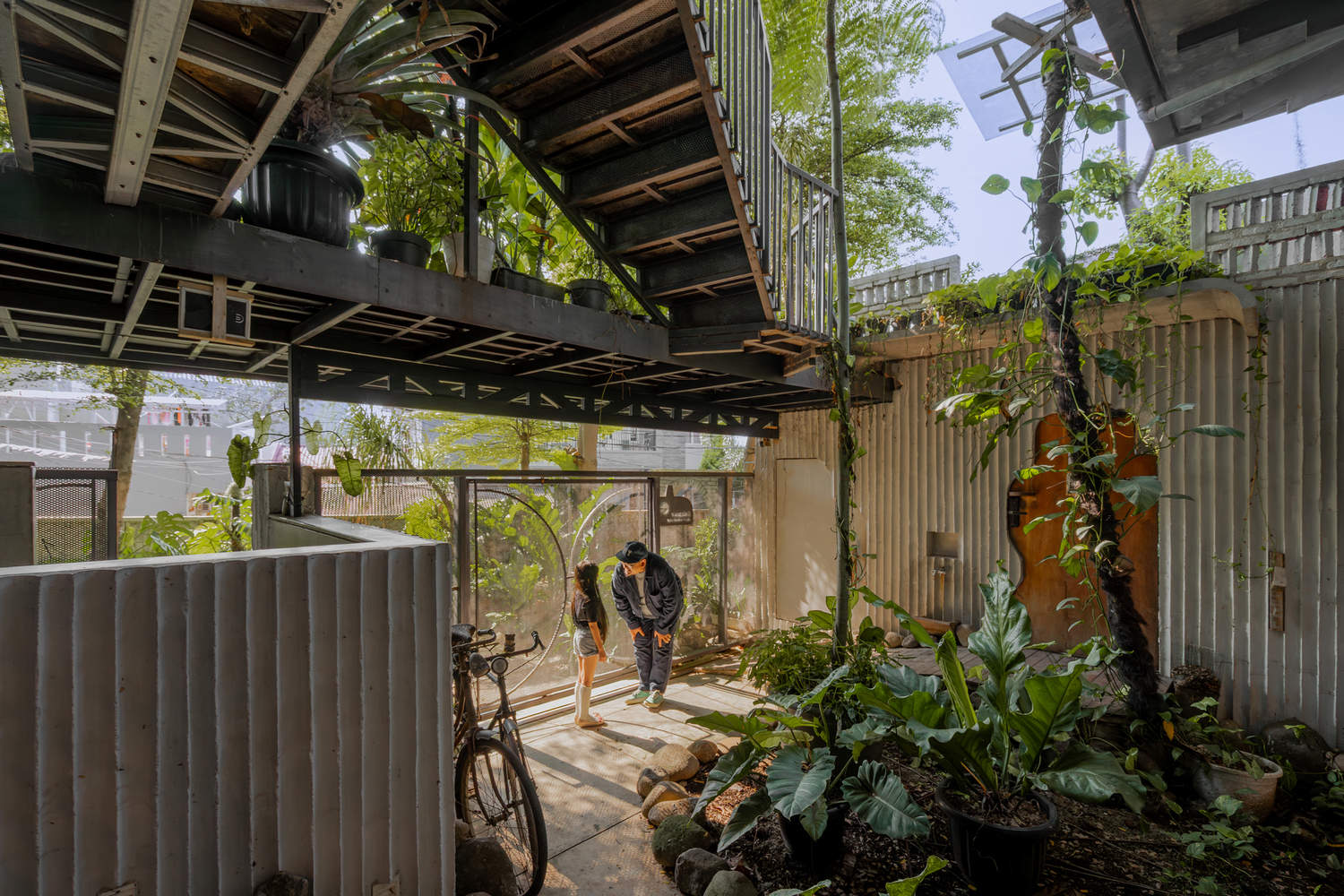
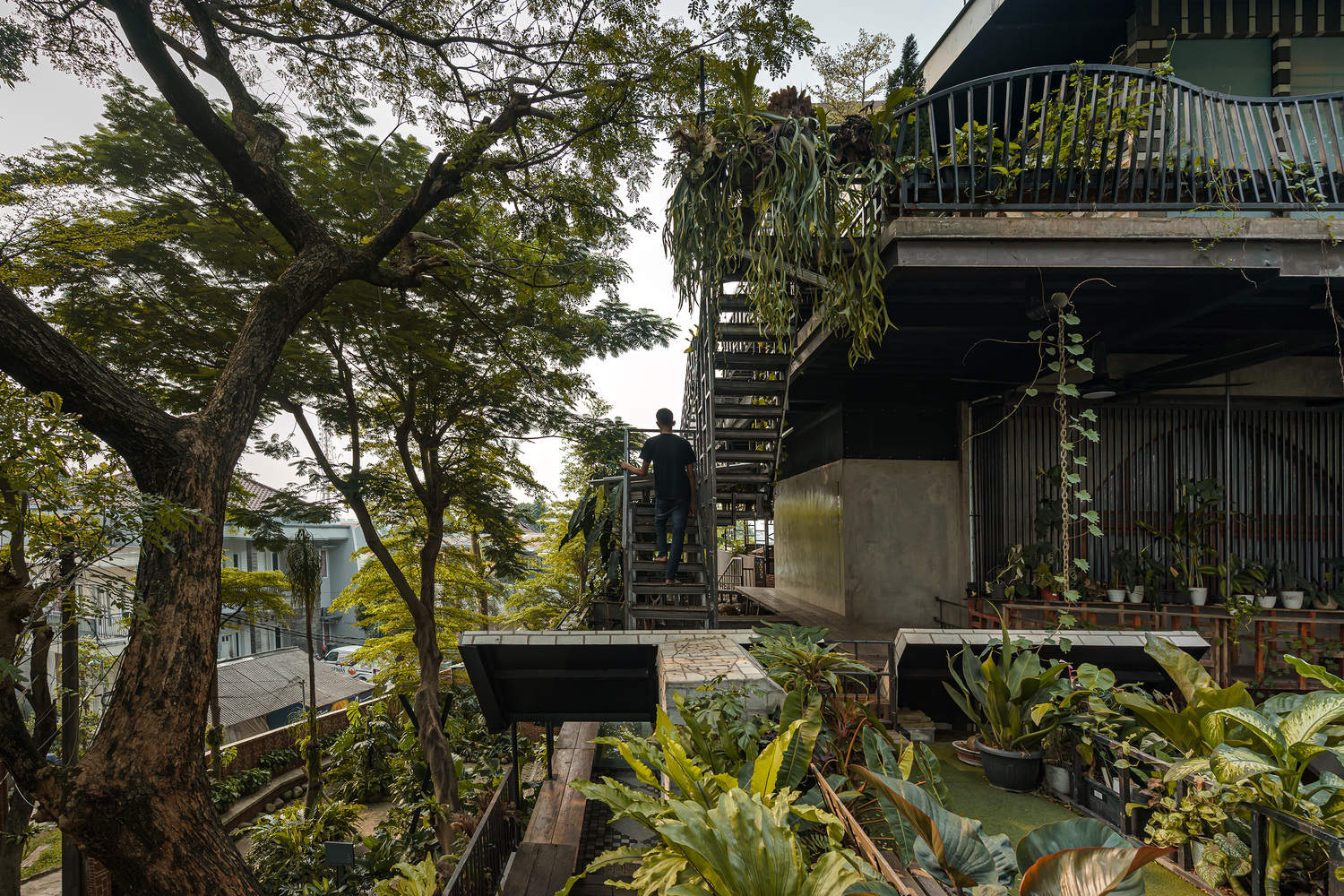
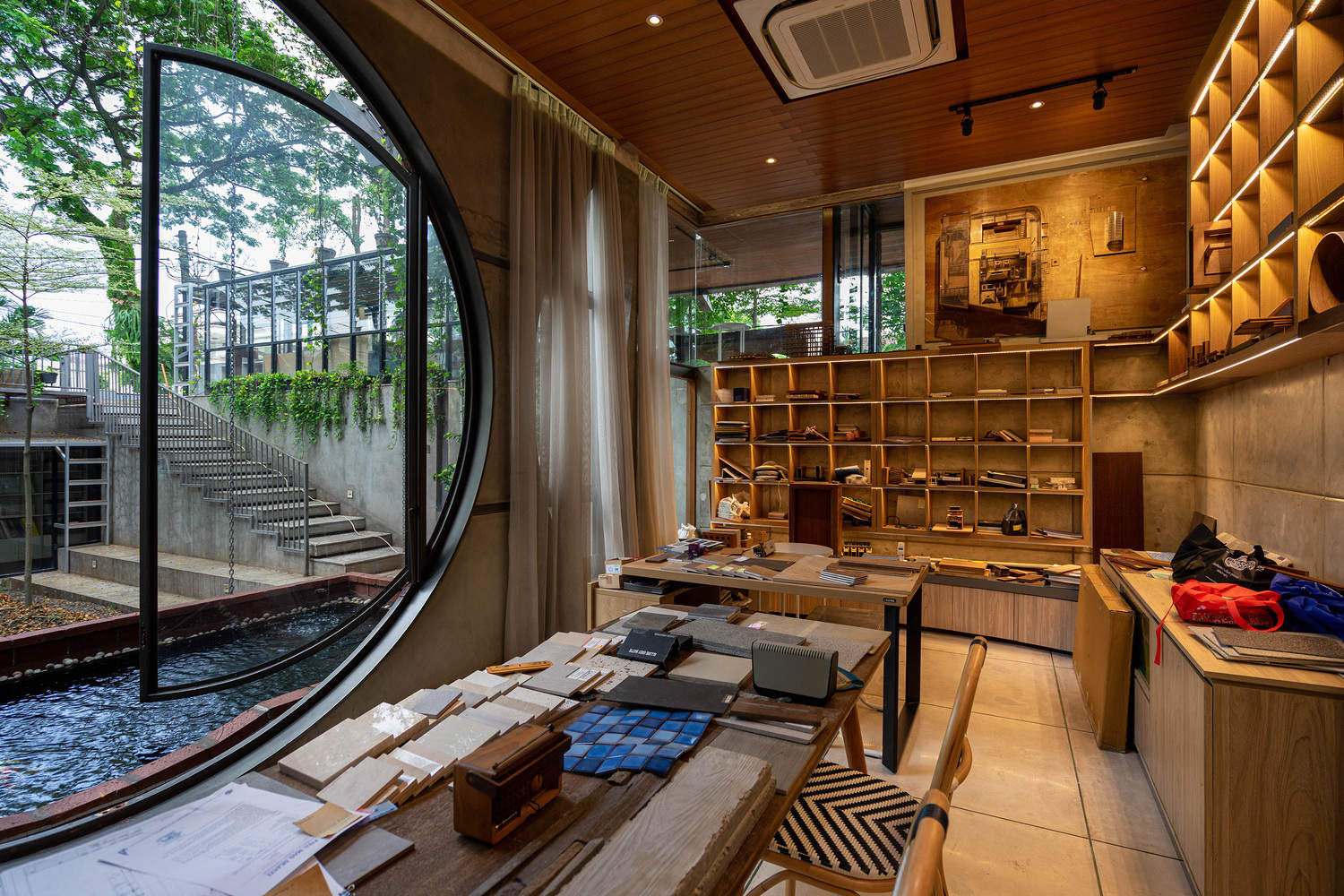
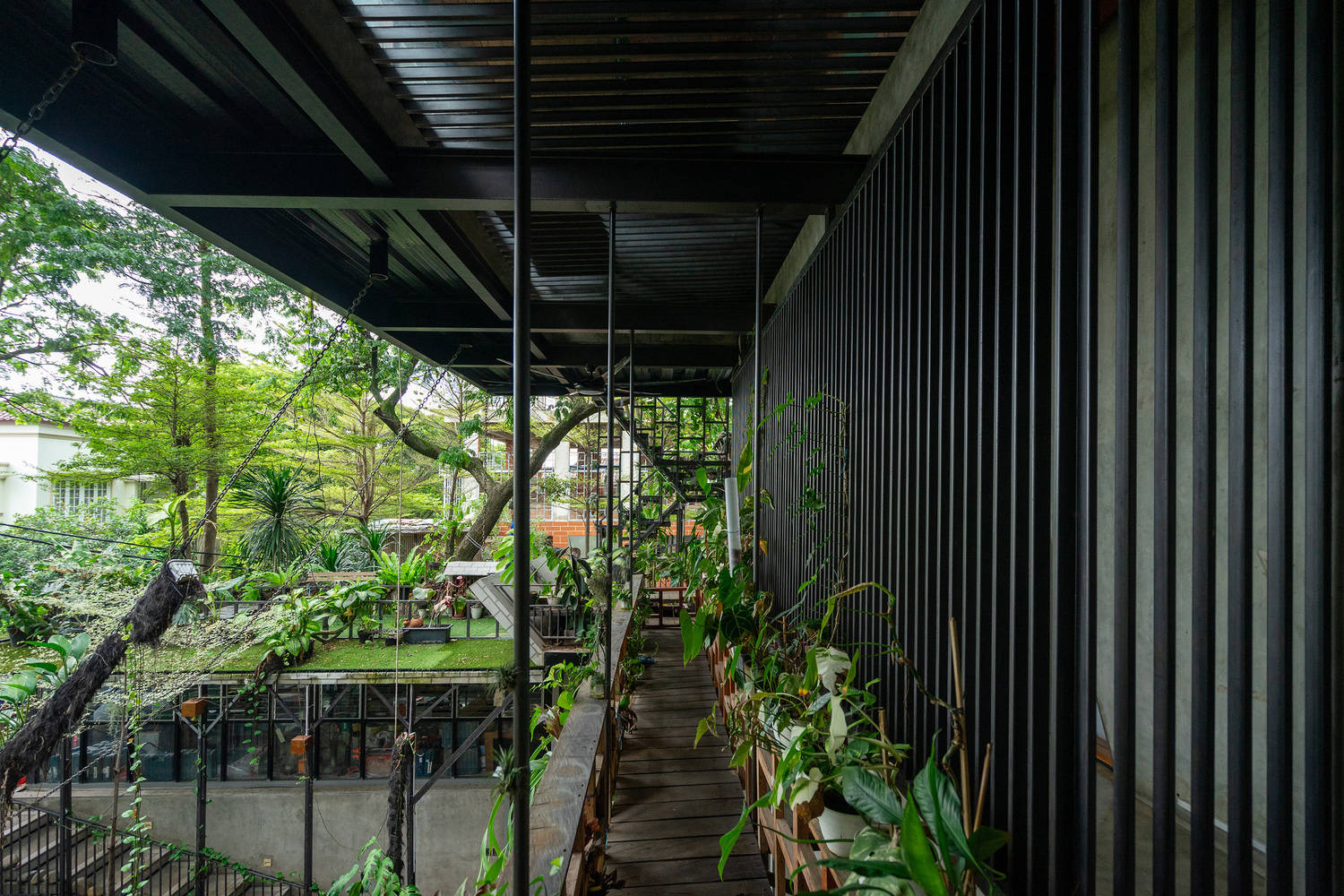
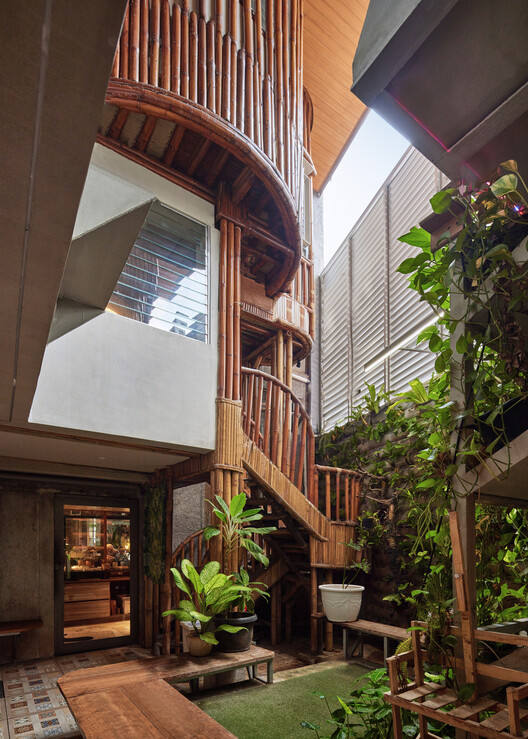
The architectural style of the Guha multifunctional community is like a complex village journey, combining the adaptive reuse of old buildings with various materials, including traditional low tech materials such as wood, bamboo, lightweight galvanized steel, and even recycled tiles, as well as high-tech industrial materials such as concrete, glass, gypsum, and steel. The result is a hybrid, chameleon style architecture where tradition and industrial systems complement each other. Through passive cooling strategies, the design provides deep eaves terraces and shading devices to block the strong sunlight in Jakarta from 10am to 3pm.
Guha 多功能社区的建筑风格宛如一场错综复杂的村庄之旅,将旧建筑的适应性再利用与多种材料相结合,既有低技术的传统材料(木材、竹子、轻型镀锌钢,甚至回收瓷砖),也有高技术的工业材料(混凝土、玻璃、石膏、钢材)。其结果是形成了一种混合型、“变色龙式”的建筑风格 —— 传统与工业体系在此交相辉映。通过被动式降温策略,设计提供了深挑檐露台和遮阳装置,以阻挡上午 10 点至下午 3 点间雅加达的强烈阳光。
© Aryo Phramudhito
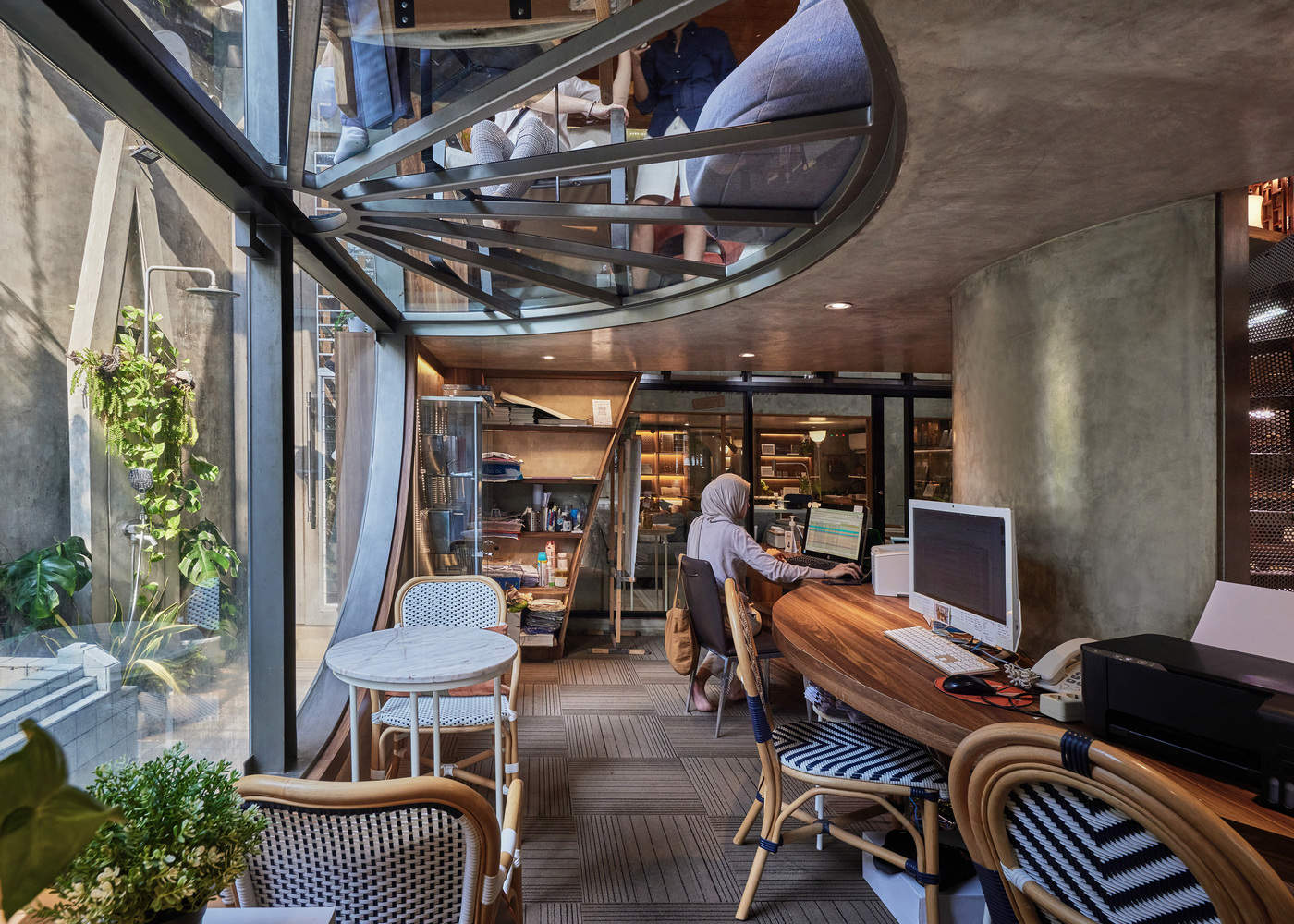
Upon arrival, visitors will be welcomed by a double layered high ceilinged foyer consisting of stacked concrete walls that serve as both an air convection device and a visual pathway to the surrounding Oma Library garden. The library is open daily for people to read, study, work, or relax. The museum features a shaded terrace, garden, and two basement levels. The basement is covered with glass and serves as the floor for the main library area, as well as the venue for informal courses and workshops.
抵达时,访客将受到一个双层挑高门厅的欢迎,该门厅由堆叠的混凝土墙构成,既可作为空气对流装置,也是通往环绕奥玛图书馆花园的视觉通道。图书馆每日开放,供人阅读、学习、工作或休闲。馆内设有遮荫露台、花园和两层地下室。地下室采用玻璃覆盖,作为主要藏书区的地板,同时也是非正式课程和工作坊的举办场所。
© Aryo Phramudhito
© Lu’Luil Ma’nun
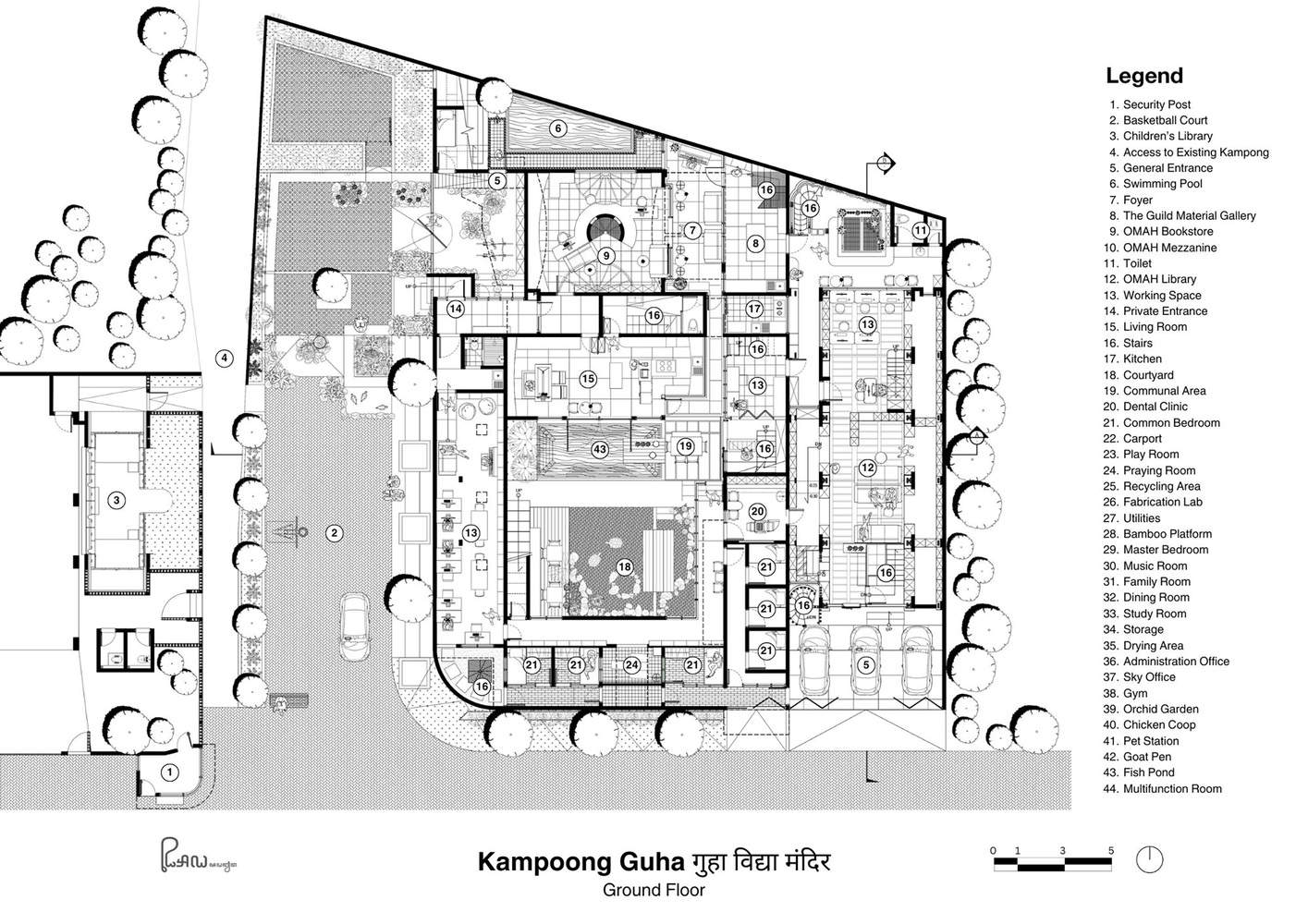
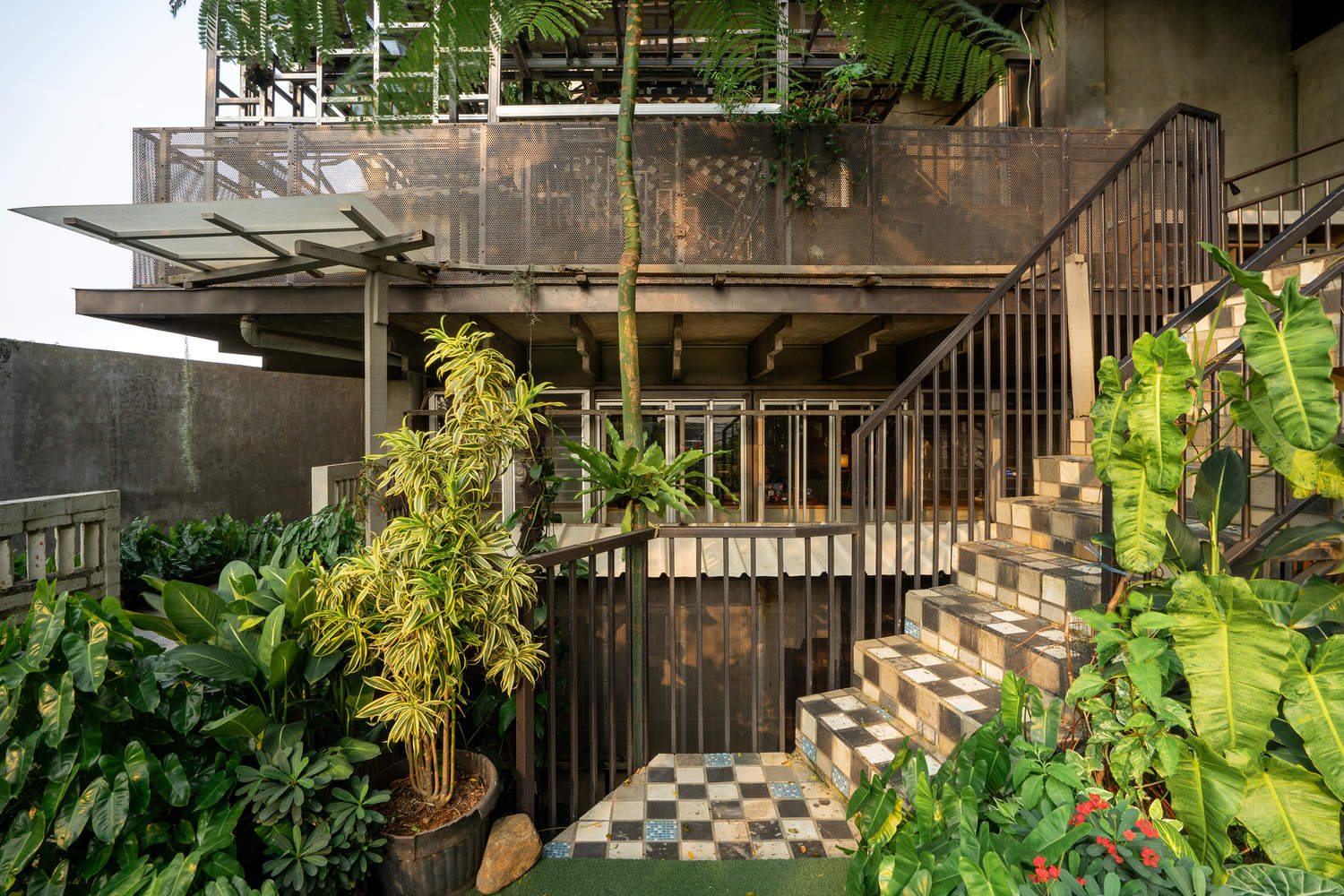
The spatial layout of the Guha multifunctional community is like a flexible maze, with each room having a maximum span of 4 meters and over 200 doors. The project has three main entrances: the public entrance of the Oma Library, the private entrance of the architect's residence on the west side, and the service entrance on the south side. The residential area includes family bedrooms, 12 student boarding rooms (including bunk beds), as well as spaces for gymnastics, art, and prayer.
Guha 多功能社区的空间布局犹如一个灵活的迷宫,每个房间的最大跨度为 4 米,拥有 200 多扇门。项目设有三个主要入口:奥玛图书馆的公共入口、西侧建筑师住宅的私人入口,以及南侧的服务入口。住宅区域包括家庭卧室、12 间学生寄宿房(包括上下铺类型),以及体操、艺术和祈祷空间。
© Aryo Phramudhito
© Kie Arch
A distinctive area is the Benteng Area located on the first floor, which is a 3-meter-15-meter corridor used as a shared workspace. The flow ultimately converges at the bamboo entrance hall on the east side, where there are public dining tables and a cafeteria.
一个特色区域是位于一层的“堡垒区”(Benteng Area),这是一条 3 米 × 15 米的走廊,作为共享联合办公空间使用。动线最终汇聚于东侧的竹制门厅,此处设有公共餐桌和食堂。
© Aryo Phramudhito
© Aryo Phramudhito
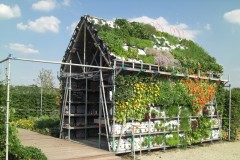
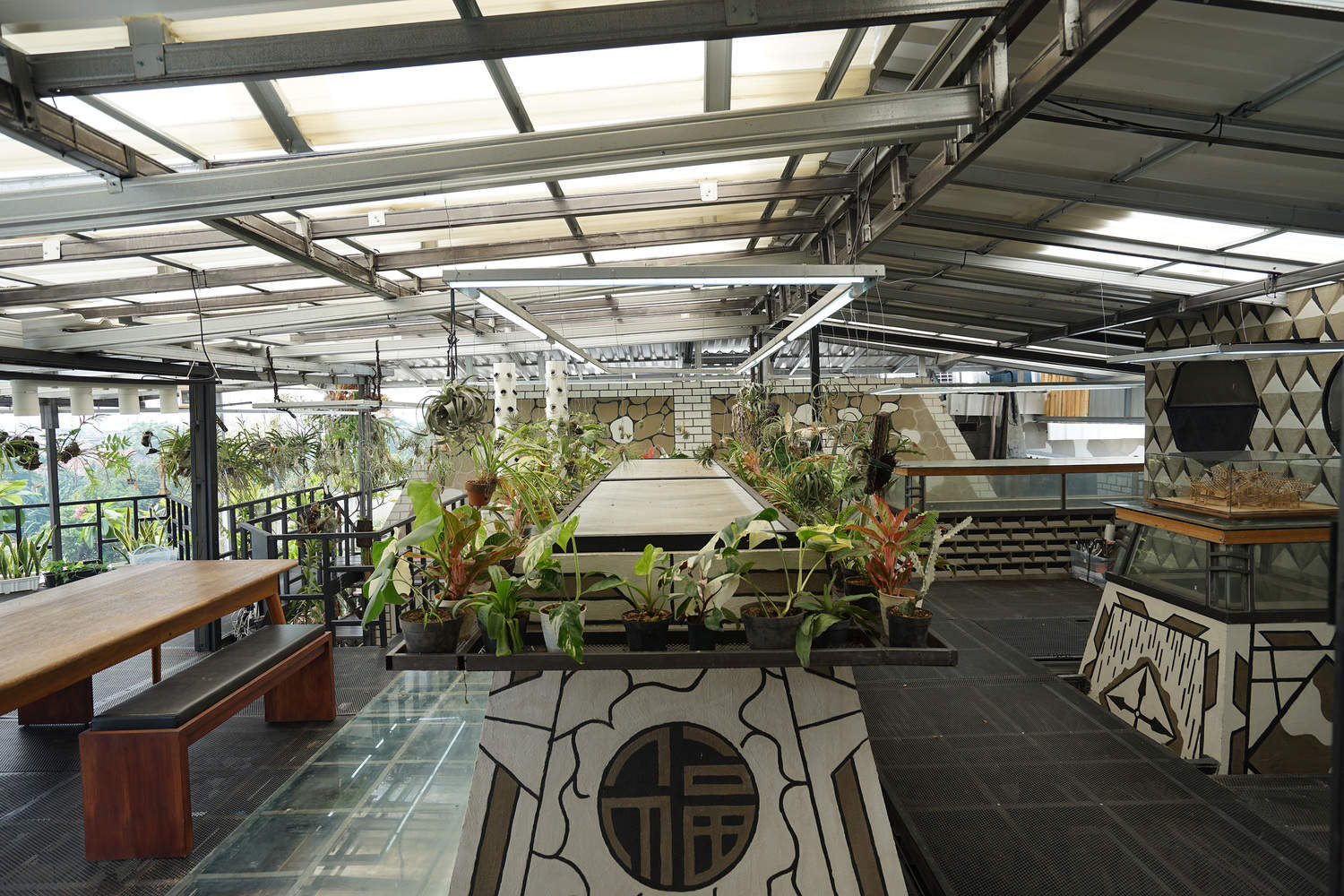
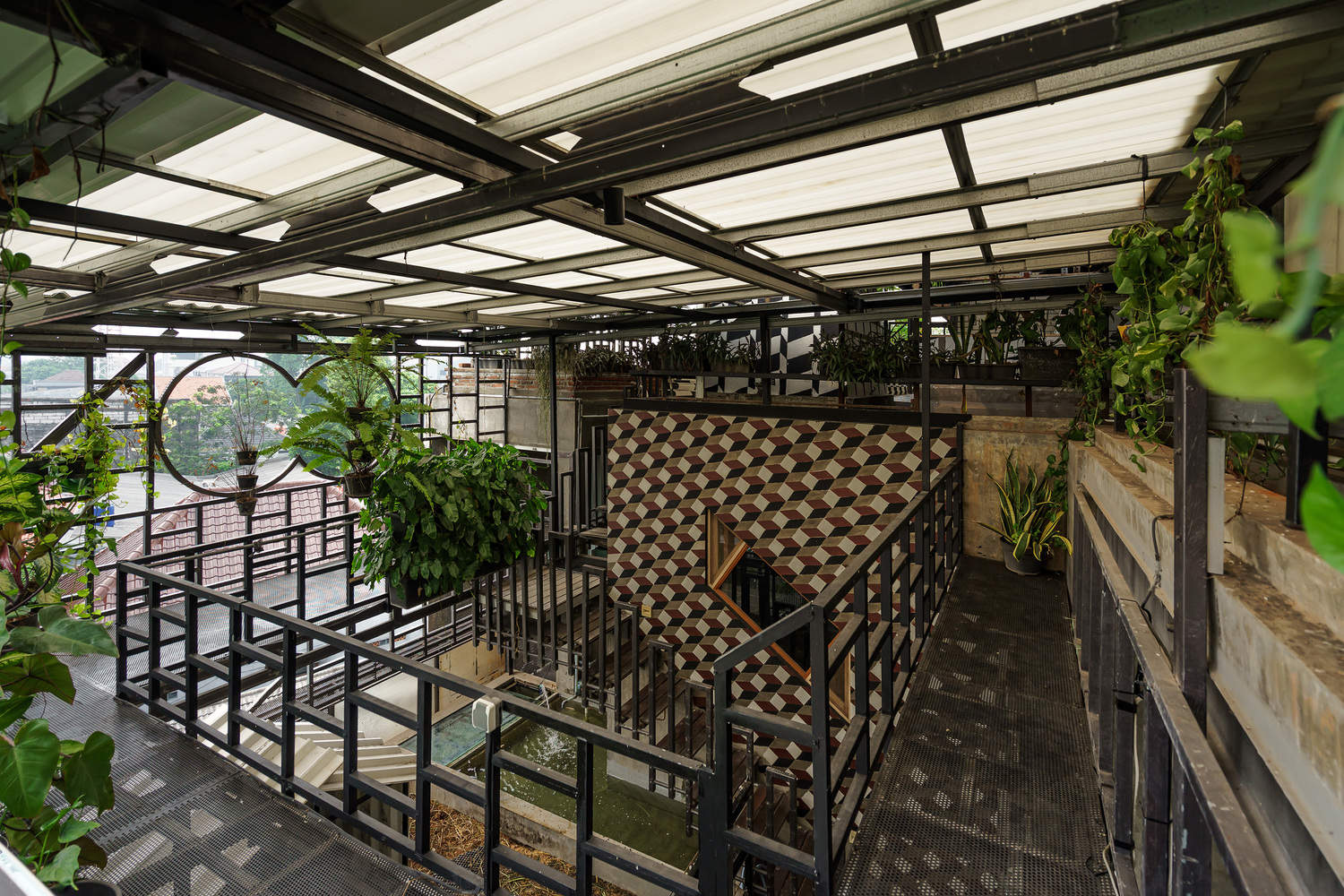
At the top of the building, the aerial office of Realrich Architecture Studio is suspended above the building - an open co working space with an orchid garden, overlooking the chicken coop and Jakarta skyline. In this sky landscape area, orchids are planted in a series of stepped gardens, and small animals such as goats, turtles, lizards, guinea pigs, and chickens are kept. This ecological cycle system realizes composting utilization - herbivores provide natural fertilizers for plants. Throughout the project, the scattered distribution of gardens formed multiple micro spaces, ultimately leading to an orchid and air plant garden on the roof. The green roof serves as insulation as part of the tropical climate experiment, keeping indoor temperatures below 30 ° C.
在建筑顶部,Realrich 建筑工作室的空中办公室悬浮于建筑之上 —— 这是一个开放式联合办公空间,设有兰花花园,可远眺鸡舍和雅加达天际线。在这片天空景观区域,一系列阶梯式花园中种植着兰花,并饲养着山羊、乌龟、蜥蜴、豚鼠和鸡等小动物。这一生态循环系统实现了堆肥利用 —— 食草动物为植物提供天然肥料。整个项目中,花园的零星分布形成了多个微型空间,最终通向屋顶的兰花和空气植物花园。绿色屋顶起到隔热作用,作为热带气候实验的一部分,使室内温度保持在 30°C 以下。
© Kie Arch
© Lu’Luil Ma’nun
In the end, the Guha multifunctional community served as a prototype model - a survival model - for the dense and sometimes dehumanized urban life of Jakarta, a major city in Indonesia, creating spaces that nourish home education and home libraries, and providing architectural solutions. It adapts to microclimate conditions and becomes an oasis for solving challenges such as efficiency, home office, studio, library, etc.
最终,Guha 多功能社区作为一个原型模型 —— 一个生存模型 —— 为印度尼西亚大城市雅加达密集且有时非人化的城市生活,创造了滋养家庭教育和家庭图书馆的空间,并提供了建筑解决方案。它适应微气候条件,成为一座解决效率、家庭办公、工作室、图书馆等挑战的绿洲。