Mil é dler Island Shared Apartments/Pivot coop é rated d'Architecture
米尔厄德勒岛共享公寓 / Pivot coopérative d'architecture
项目亮点与社会价值:米尔厄德勒岛共享公寓项目最令人瞩目的,是它所展现的强大社会责任感。项目由市民发起,旨在解决城市住房危机,体现了对社区居民的关怀。通过创建平价、非市场化的住房,项目不仅仅提供了居住空间,更提供了一种对抗投机性房地产市场的稳定力量。项目倡导可持续社区的理念,将住宅建设的重心回归到“打造宜居生活空间”的本质上,从而为城市发展注入了积极的社会价值,堪称对现有住房市场的一种有力补充和创新。
设计理念与建筑手法:该项目在设计上巧妙地融合了居民的需求与城市肌理。通过与未来居民的共同设计工作坊,项目团队深入了解并满足了居民的期待,构建了初步的社区归属感。建筑本身由两个相互咬合的体量构成,在尺度上与周边环境形成对话,既延续了住宅区的人性化尺度,又呼应了周边大学校园建筑的规模。这种组合方式借鉴了工业建筑的叠加逻辑,并大胆运用不同材料和建造技术,赋予了建筑独特的视觉效果和内在的文化联系,体现了建筑师对环境和历史文脉的深刻理解。
可持续性与技术创新:项目在可持续性方面表现出色,获得了LEED AQ认证。其亮点在于采用了生物气候策略,并通过最大化的交叉通风和地源热泵系统等技术,提升了居民的福祉。建筑外观设计也充分考虑了采光和隐私,金属外墙的折角设计不仅美观,还优化了建筑的朝向,最大限度地利用太阳能。此外,铜质表面的运用,在公共空间中形成视觉焦点,象征着社区的集体能量,并通过门廊向周边延伸,进一步强化了社区的凝聚力。这些细节都体现了建筑师对可持续发展和技术创新的高度重视。
© Annie Fafard
© Annie Fafard
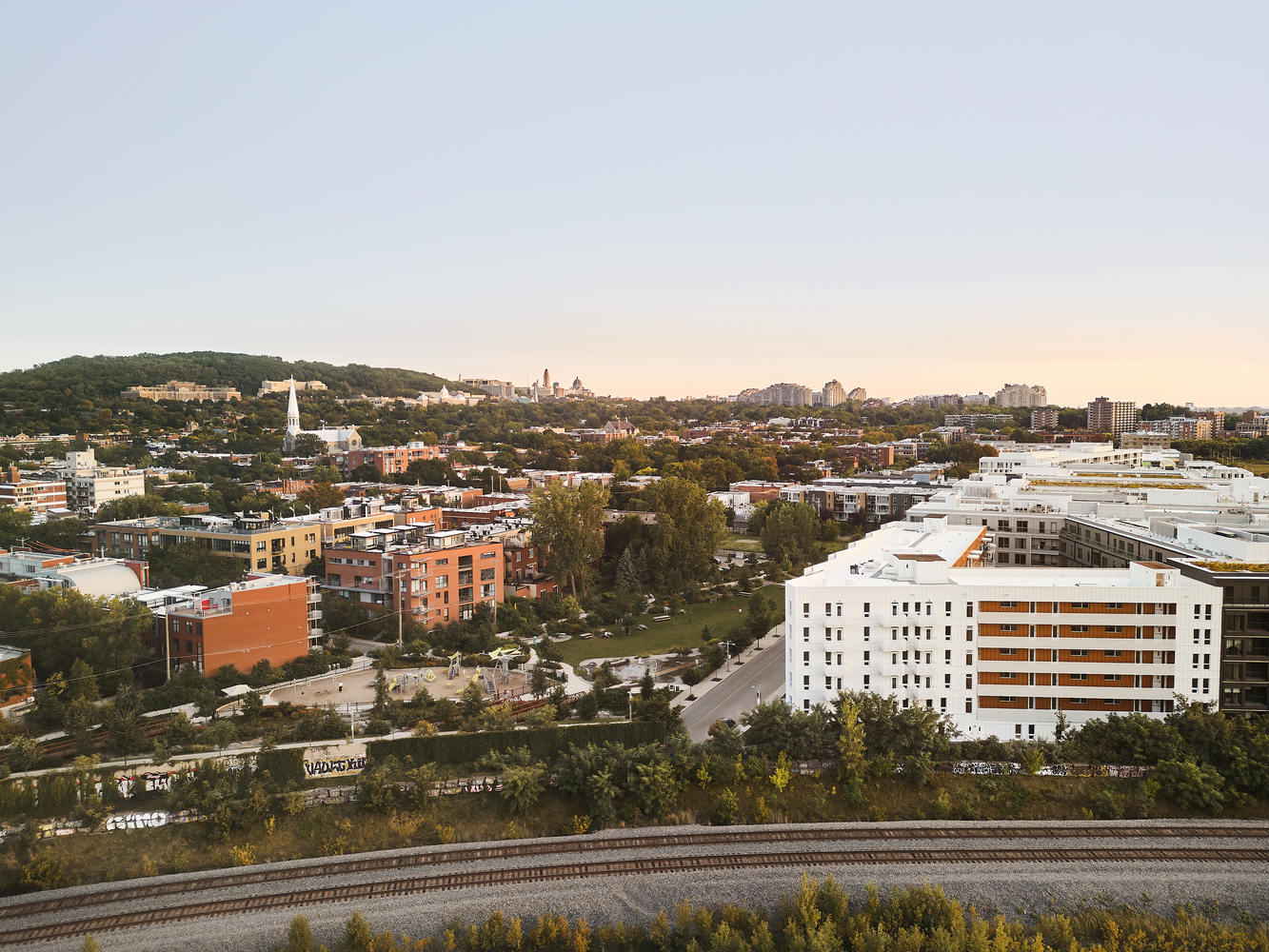
Coop Milieu de l 'Î le is a 91 unit intergenerational housing project located in a newly developed area of Montreal. This project was initiated by a group of enthusiastic citizens, aiming to alleviate the housing crisis in the city by creating affordable, non market housing.
米尔厄德勒岛共享公寓(Coop Milieu de l'Île)坐落于蒙特利尔一处新开发的区域,是一座拥有 91 个单元的代际共居住房项目。该项目由一群热心市民发起,旨在通过打造平价、非市场化住房,缓解城市的住房危机。
© Annie Fafard
© Annie Fafard
During the design process, the project team conducted a series of workshops with the founding members and future residents of the apartment. These collaborative design workshops not only helped clarify the priority needs and expectations of future residents, but also established a preliminary sense of community belonging.
设计过程中,项目团队与公寓的创始成员及未来居民开展了一系列工作坊。这些共同设计工作坊不仅帮助明确了未来居民的优先需求与期望,还初步构建起了社区归属感。
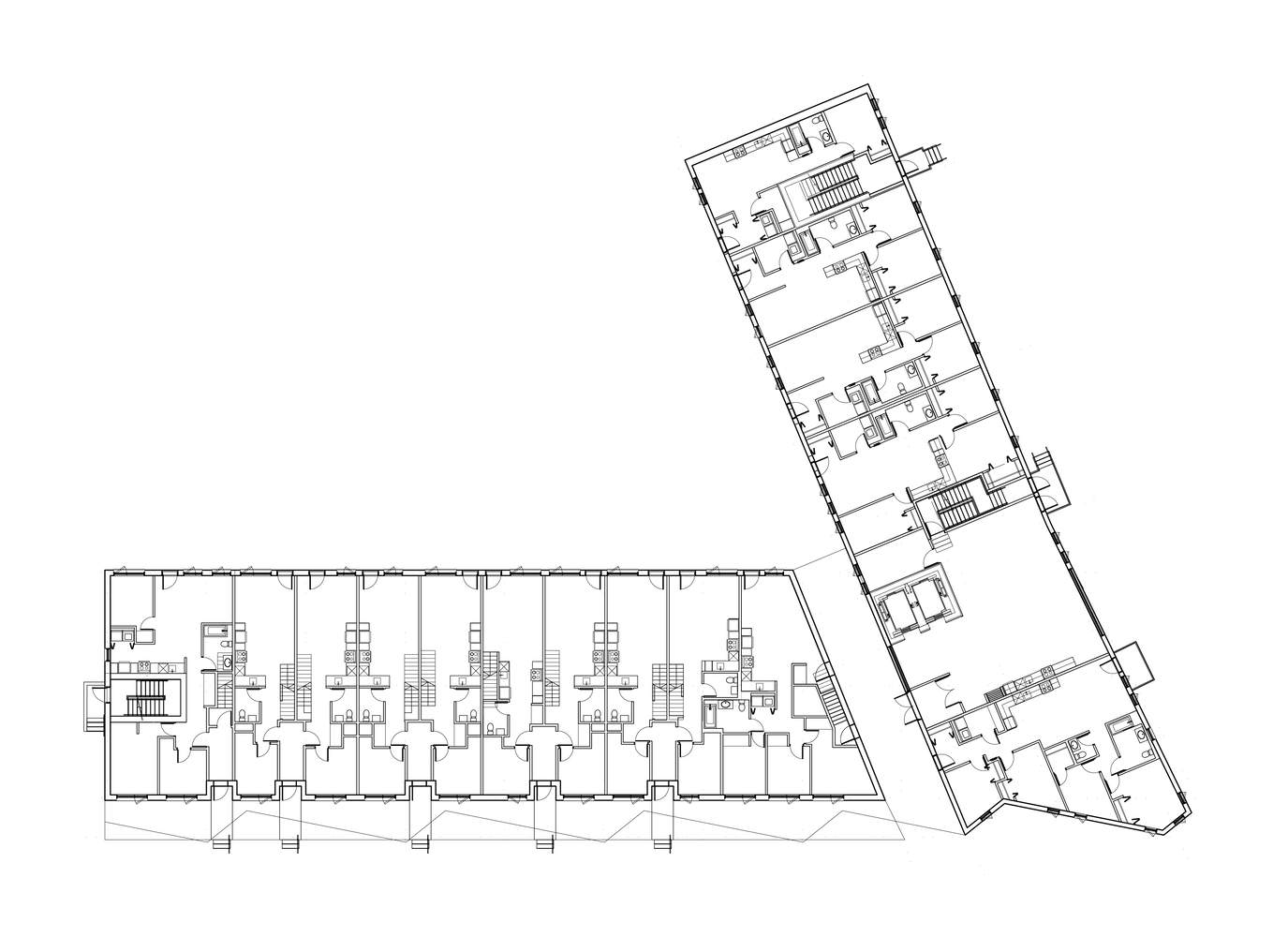
平面图
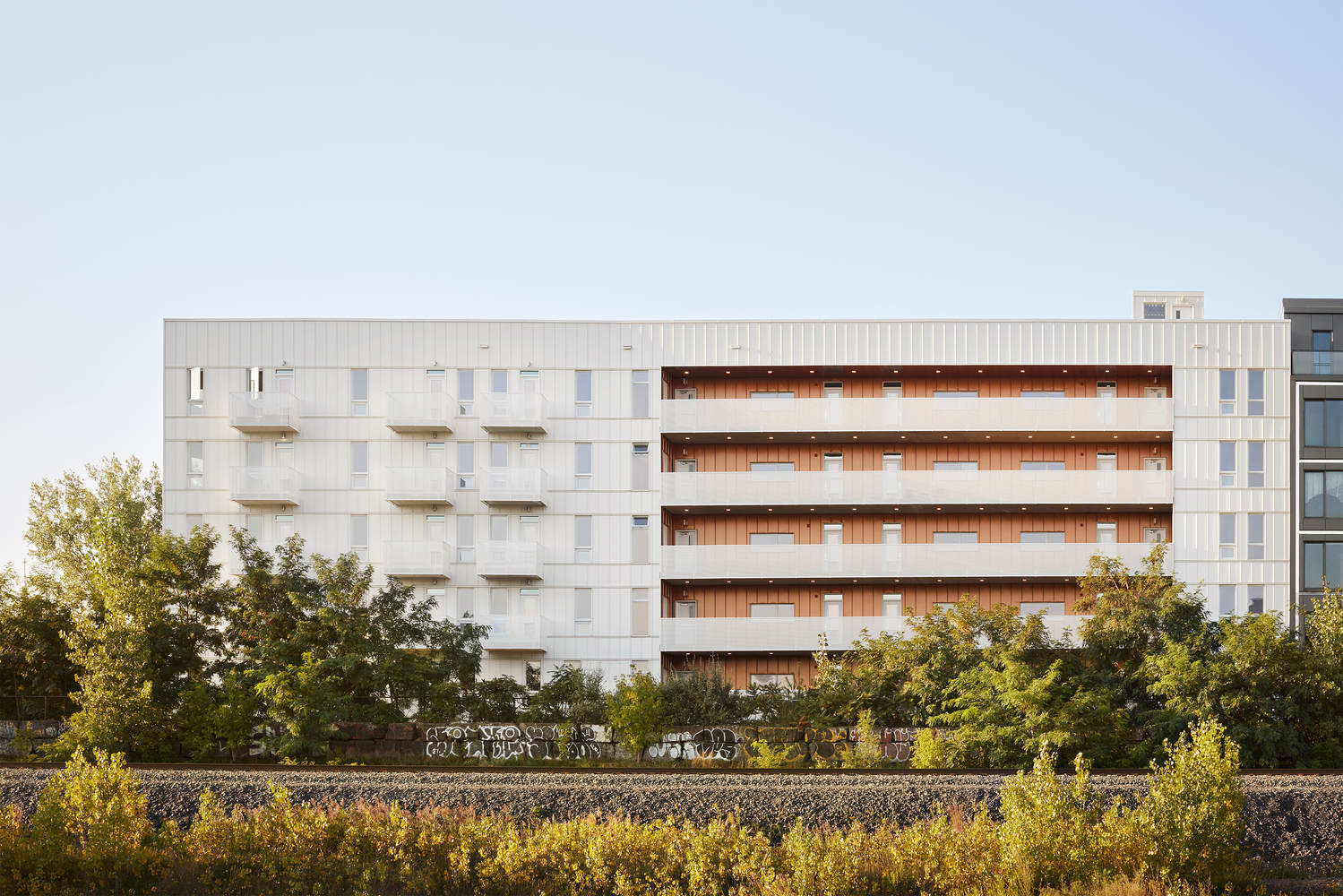
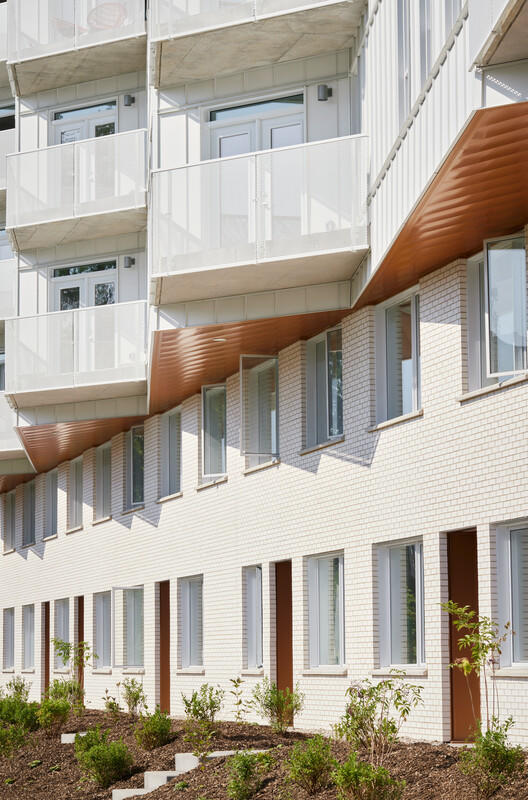
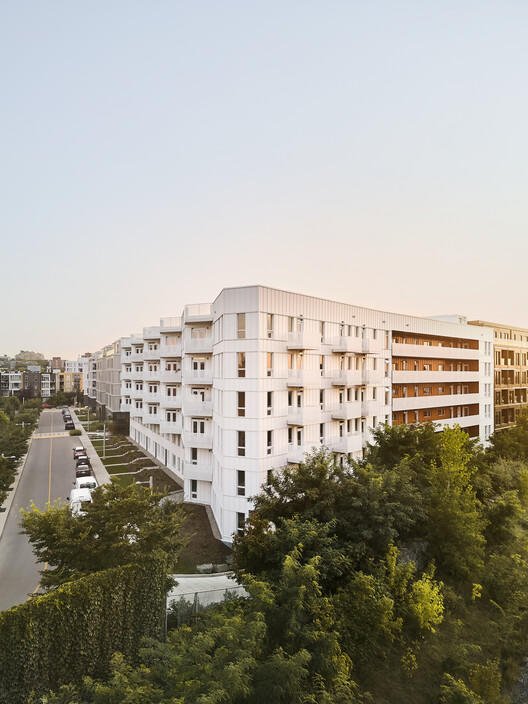
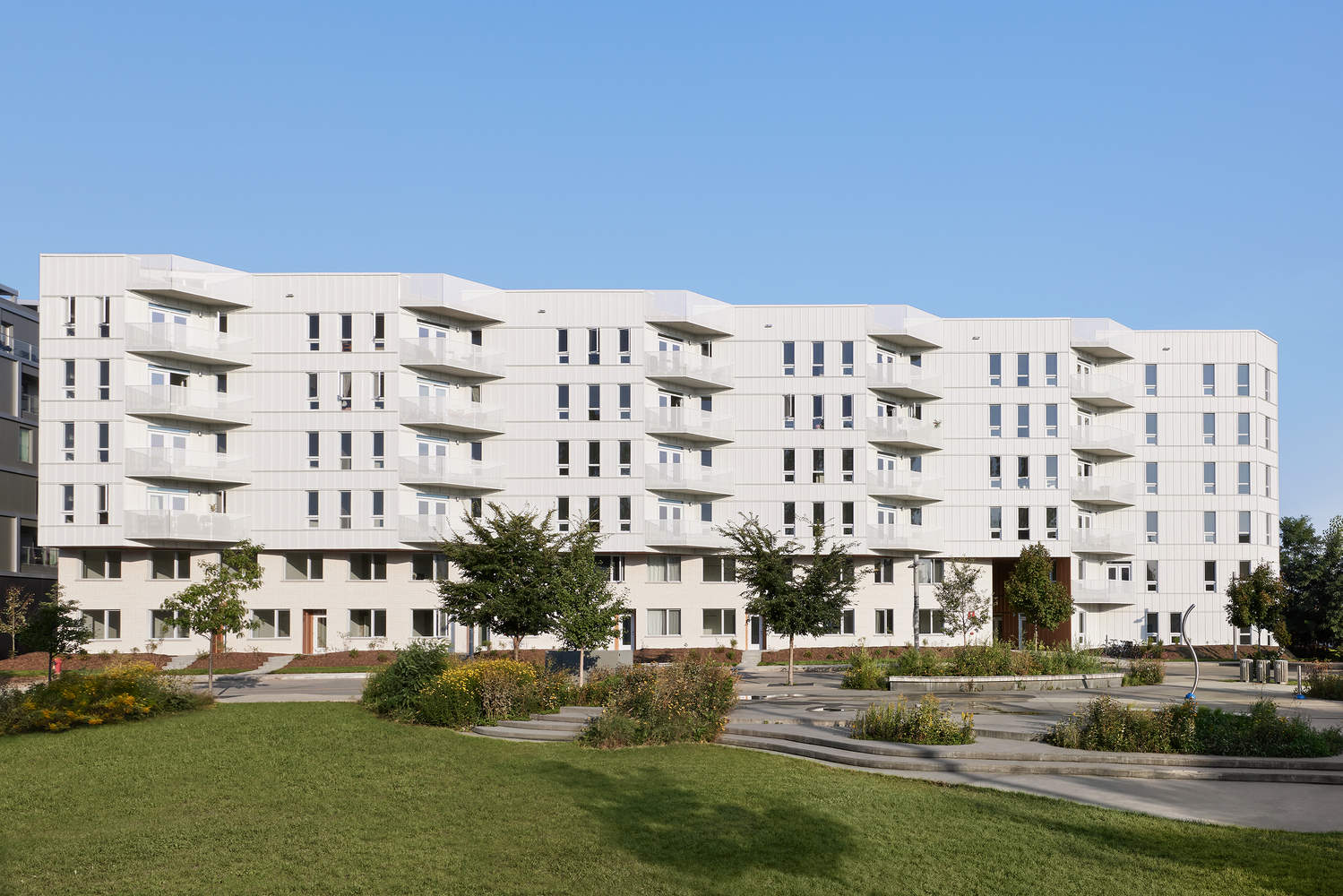
This project combines the residents' vision with architectural techniques that fit the urban texture, echoing the diverse scales of surrounding buildings. The project consists of two interlocking building volumes: a two-story brick family unit that continues the humanized scale of the surrounding residential area; And a six story white metal building corresponds to the scale of nearby university campus buildings. This combination method draws inspiration from the stacking logic formed by continuous expansion of surrounding industrial buildings, which often use different materials and construction techniques.
该项目将居民的愿景与契合城市肌理的建筑手法相结合,与周边建筑的多元尺度相呼应。项目由两个相互咬合的建筑体量构成:一个两层的砖砌家庭单元部分,延续了周边住宅区的人性化尺度;而一个六层的白色金属建筑部分,则呼应了邻近大学校园建筑的规模。这种组合方式借鉴了周边工业建筑通过连续扩建形成的叠加逻辑,这些工业建筑往往采用不同材料和建造技术。
© Annie Fafard
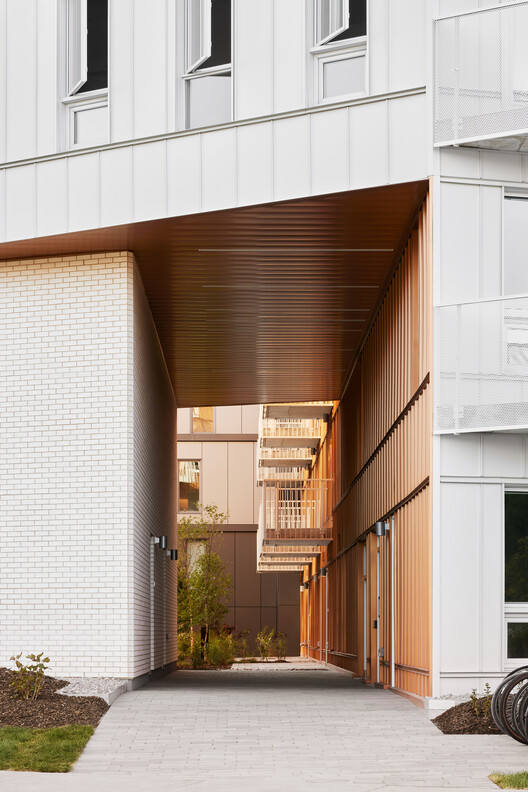
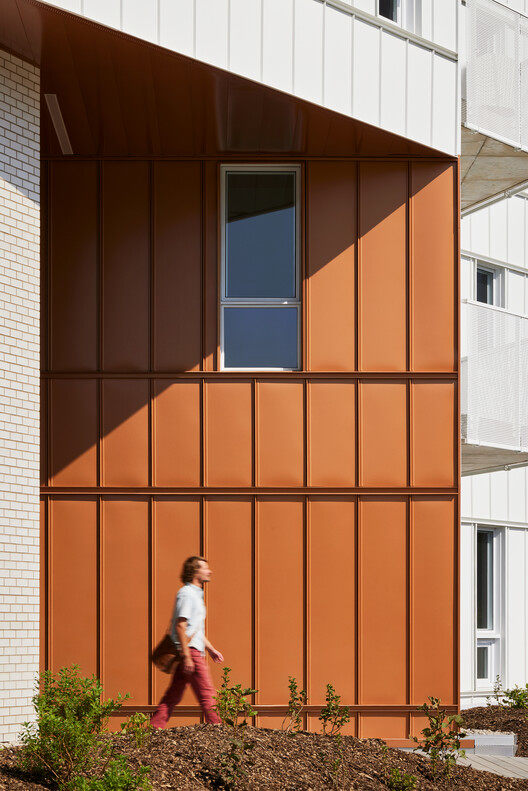
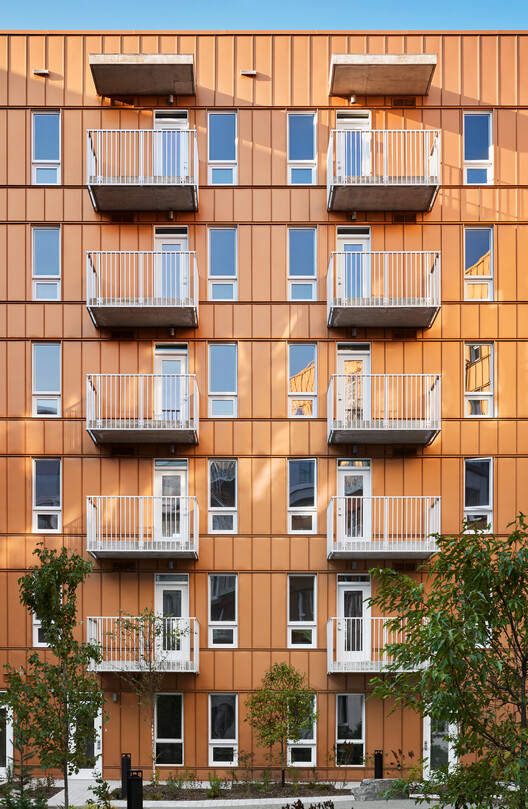
The carved metal exterior walls wrap around the balcony of the building, maximizing visibility and protecting privacy, while optimizing the orientation of the building to fully utilize solar energy. The resulting angled design evokes rhythmic industrial elements such as factory roofs and silos. The brick part seems to be an existing base from different eras, while the metal part was added later. In the core area of the project, when the building volume is excavated to form a public space, the copper surface is exposed. This symbol of collective energy in the shared apartment extends to the surrounding community through a porch.
雕琢的金属外墙包裹着建筑的阳台,既最大化视野,又保护隐私,同时优化了建筑的朝向以充分利用太阳能。由此形成的折角设计令人联想到富有韵律感的工业元素:工厂屋顶、筒仓。砖砌部分仿佛是来自不同时代的既有基座,而金属部分则是后来添加上去的。在项目核心区域,当建筑体量被挖空以形成公共空间时,铜质表面便显露出来。这一共享公寓集体能量的象征,通过一处门廊向周边社区延伸。
© Annie Fafard
© Annie Fafard
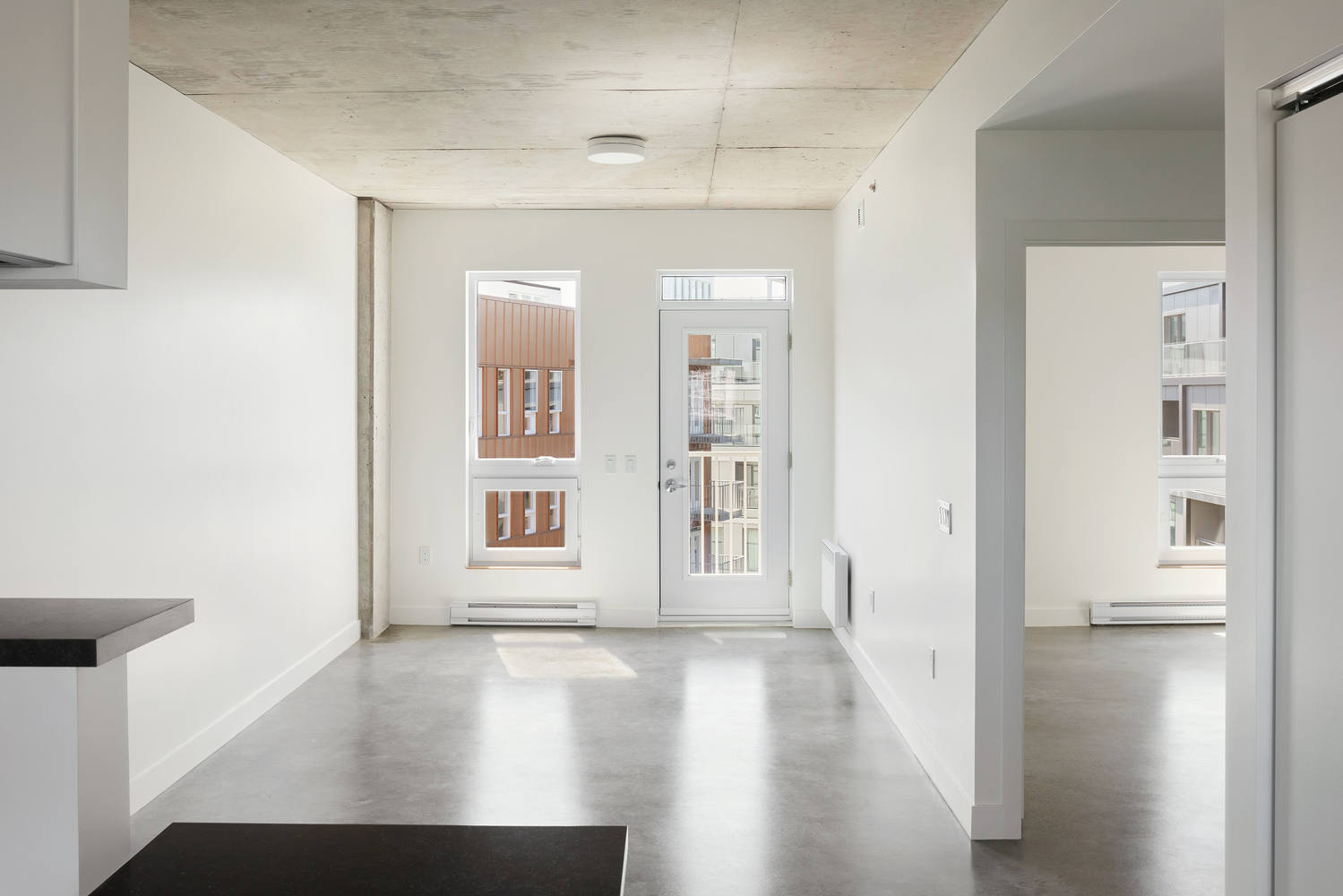
The Mil ü dler Island shared apartments are located in the heart of a community that has obtained LEED AQ certification, and their energy performance exceeds relevant standards. The project adopts a bioclimatic strategy to enhance the well-being of residents. The project achieved maximum cross ventilation and installed a Canadian style ground source heat pump system below the courtyard floor to preheat the building's air supply.
米尔厄德勒岛共享公寓位于获得 LEED AQ 认证的社区中心地带,其能源性能超越了相关标准。项目采用了生物气候策略,以提升居民的福祉。项目实现了最大程度的交叉通风,并在庭院地面下方安装了加拿大式地源热泵系统,用于预热建筑的空气供应。
© Annie Fafard
This project not only establishes a sustainable community, but also provides stability, becoming an antidote to the speculative real estate market that fuels the housing crisis. It returns residential construction to its fundamental purpose: to create livable living spaces.
该项目不仅建立了一个可持续的社区,还提供了稳定性,成为对抗助推住房危机的投机性房地产市场的解药。它将住宅建设回归其本质目的:打造宜居的生活空间。
© Annie Fafard