Gia Dinh House
Gia Dinh House
场地回应与空间策略: Gia Dinh House 巧妙地回应了其独特的场地条件。项目基地位于历史街区,面对倾斜的街道轴线,设计师巧妙地利用了这一特性,设计出富于变化的立面。这种对场地几何形状的敏感回应,不仅赋予了建筑独特的外观,也最大化地利用了空间。开放的底层和夹层设计,结合钢网门和栅栏门,创造了室内外空间的流畅过渡,模糊了传统建筑的边界,加强了与周围环境的互动。这种设计手法在有限的空间内,实现了视觉的延伸和功能的多样性,体现了对场地条件的深刻理解和创造性运用。
功能混合与社区营造: Gia Dinh House 的设计核心在于其多功能性和对社区氛围的营造。项目融合了独立居住空间、出租公寓以及灵活的共享区域,这种功能混合模式在满足业主居住需求的同时,也创造了额外的收入来源。更重要的是,它鼓励了居民之间的互动和交流,形成了一个共享共同兴趣、设施和工作空间的社区。中庭空间作为核心连接点,以及半公共的门厅设计,都强化了这种社区感。这种设计理念超越了传统的住宅概念,将建筑打造成一个充满活力和联系的居住共同体,体现了对未来城市居住模式的积极探索。
细部设计与可持续性: Gia Dinh House 在细节处理上展现了精湛的建筑技艺和对可持续发展的关注。电梯核心筒被巧妙地设计成雕塑般的元素,既是结构承重构件,又营造了视觉上的趣味性。后部的垂直花园和楼梯上方的百叶窗板,共同构成了自然的交叉通风系统,体现了对被动式设计的运用。这些细节不仅提升了建筑的美学价值,也提高了居住的舒适度,降低了能源消耗。这种设计理念将建筑的实用性、美观性和环保性完美结合,展现了建筑师对可持续设计和居住品质的深入思考和实践。
/ G+architects
© Quang Dam
© Quang Dam
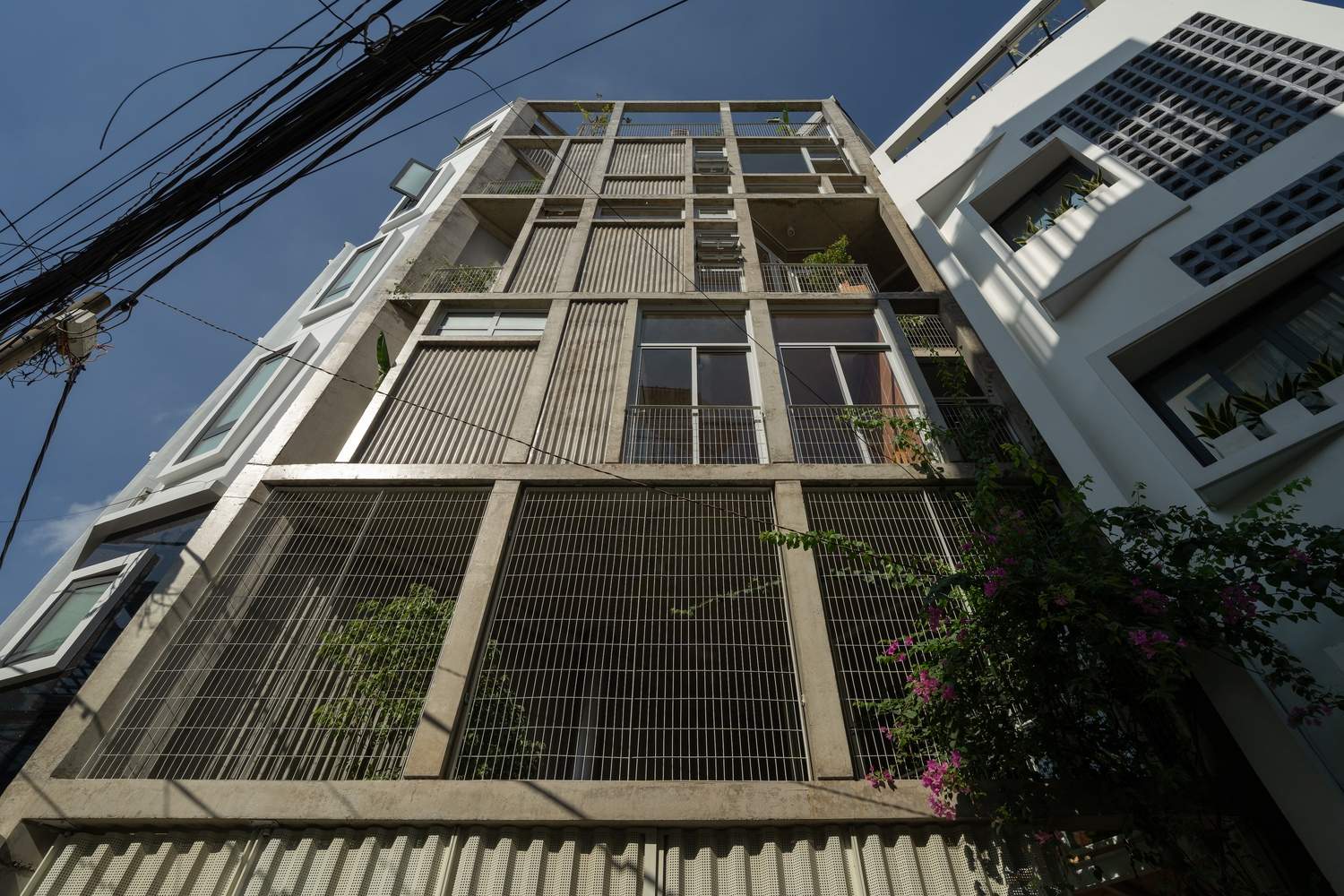
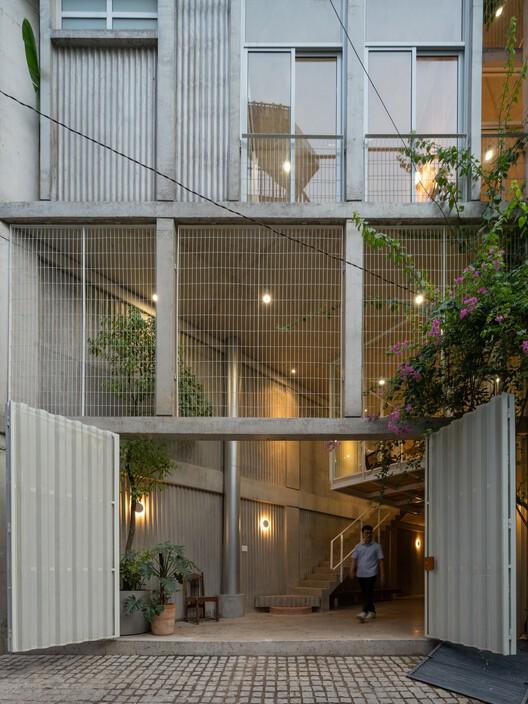
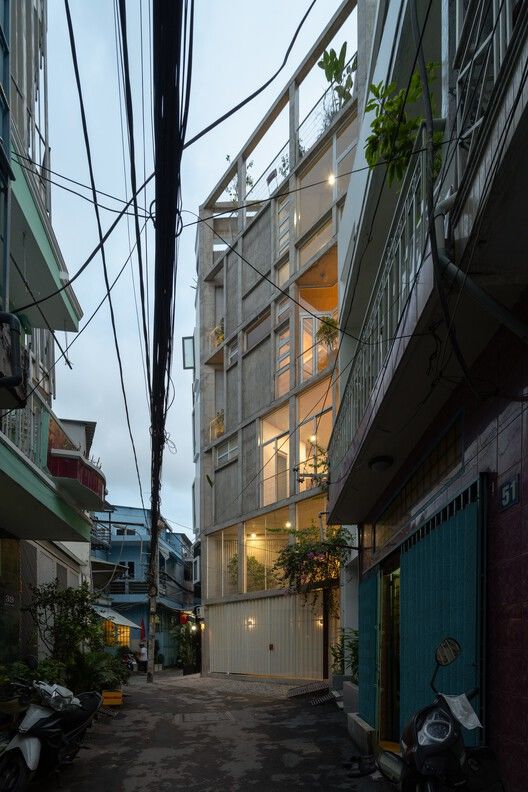
The project is located in a historic residential area that was once the center of Gia Dinh Province (now Gia Dinh District, Ho Chi Minh City). The house is located on a distinctive plot of land, with a slanted front facade design along the street axis.
该项目坐落于一个历史悠久的住宅区内,该区域曾是嘉定省(现胡志明市嘉定区)的中心地带。房屋坐落在一个特色鲜明的地块上,沿街道轴线呈斜切状的前立面设计。
© Quang Dam
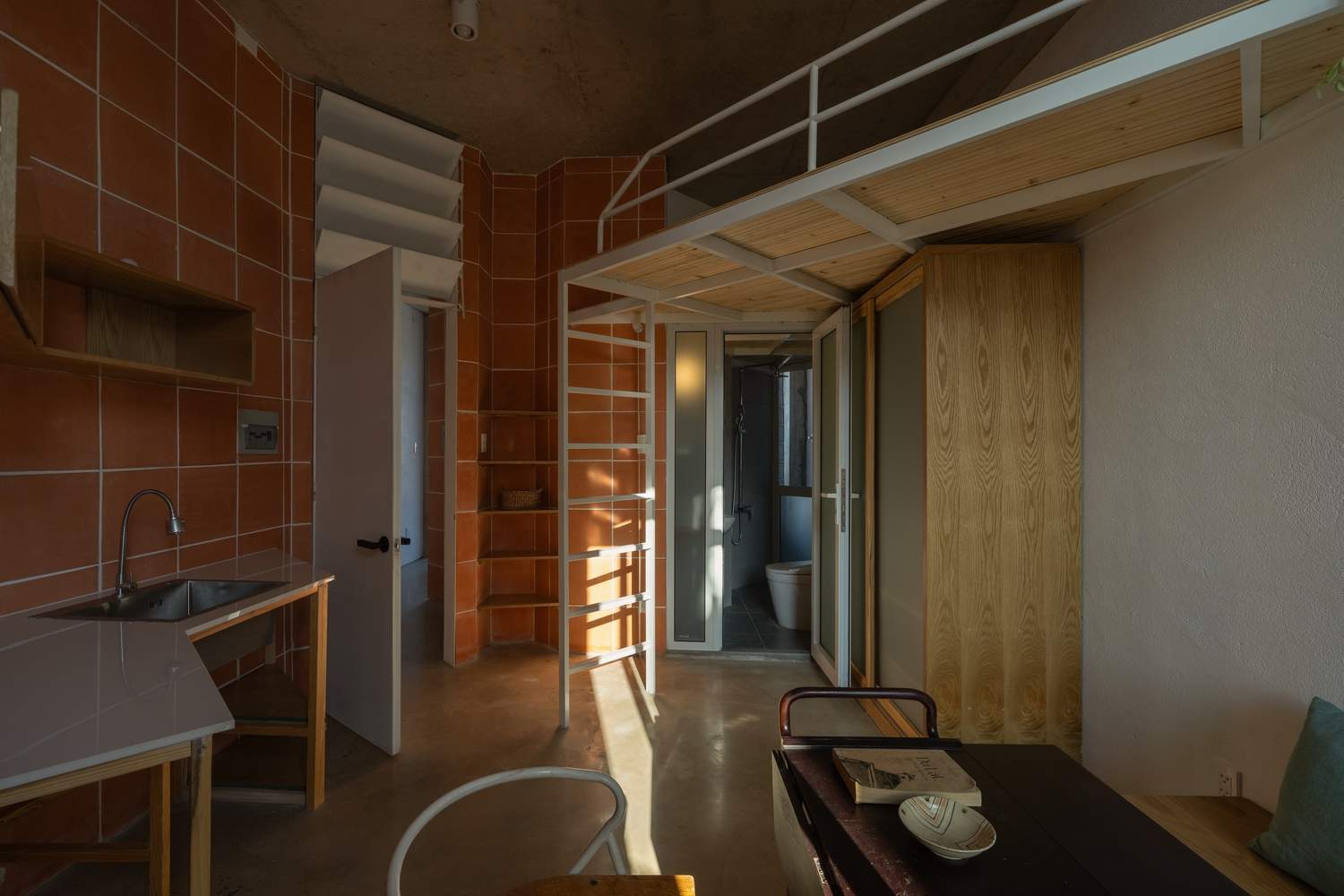
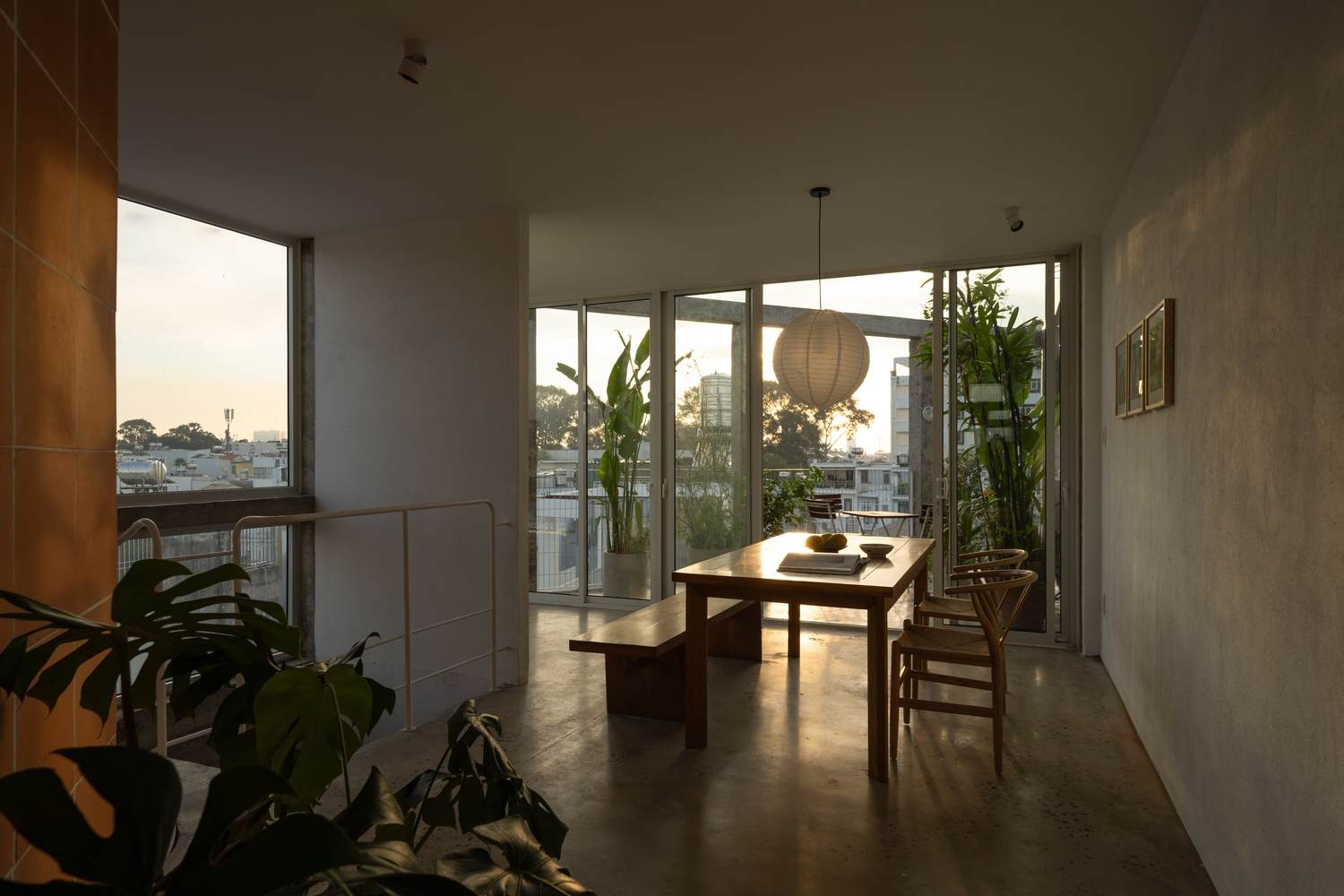
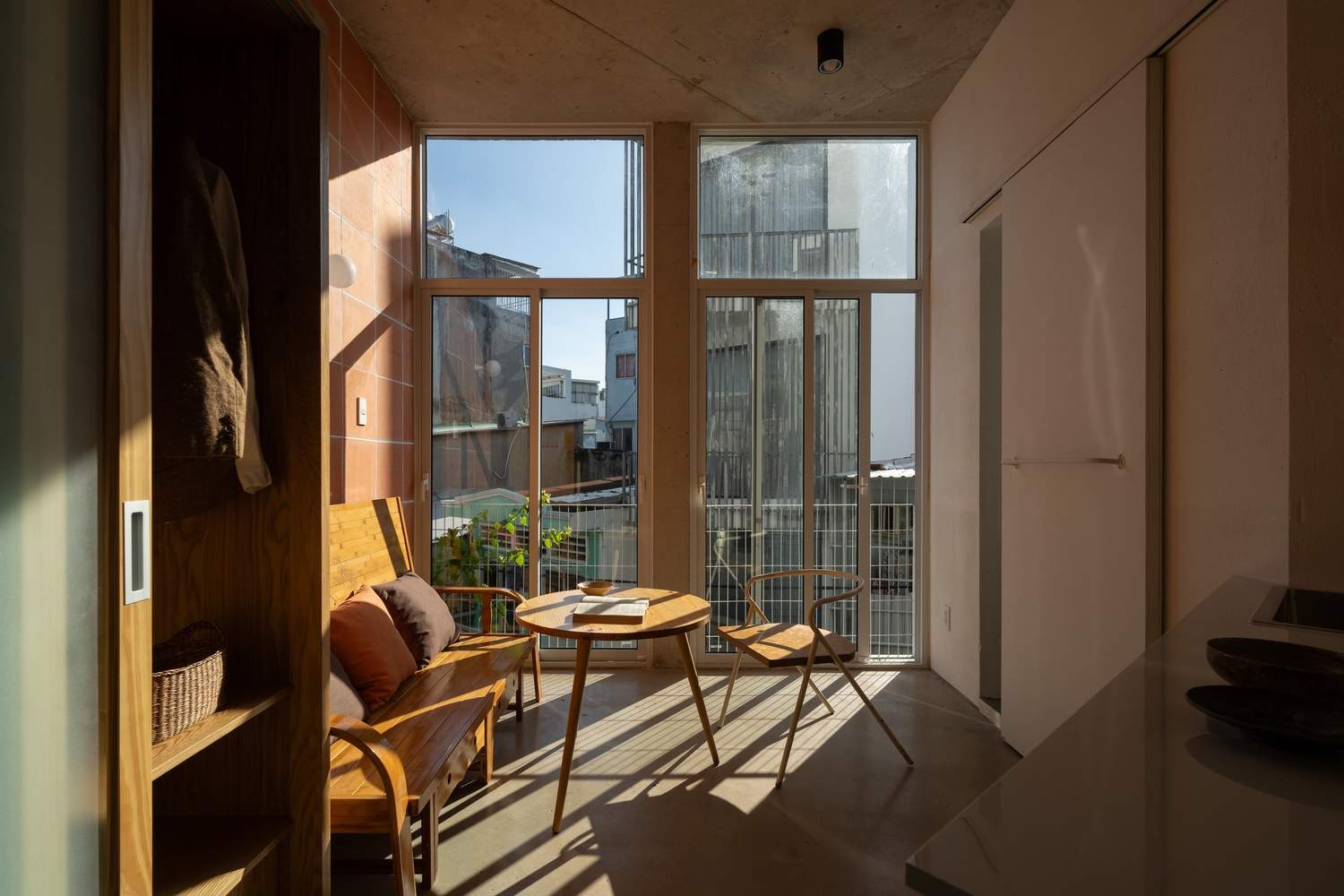
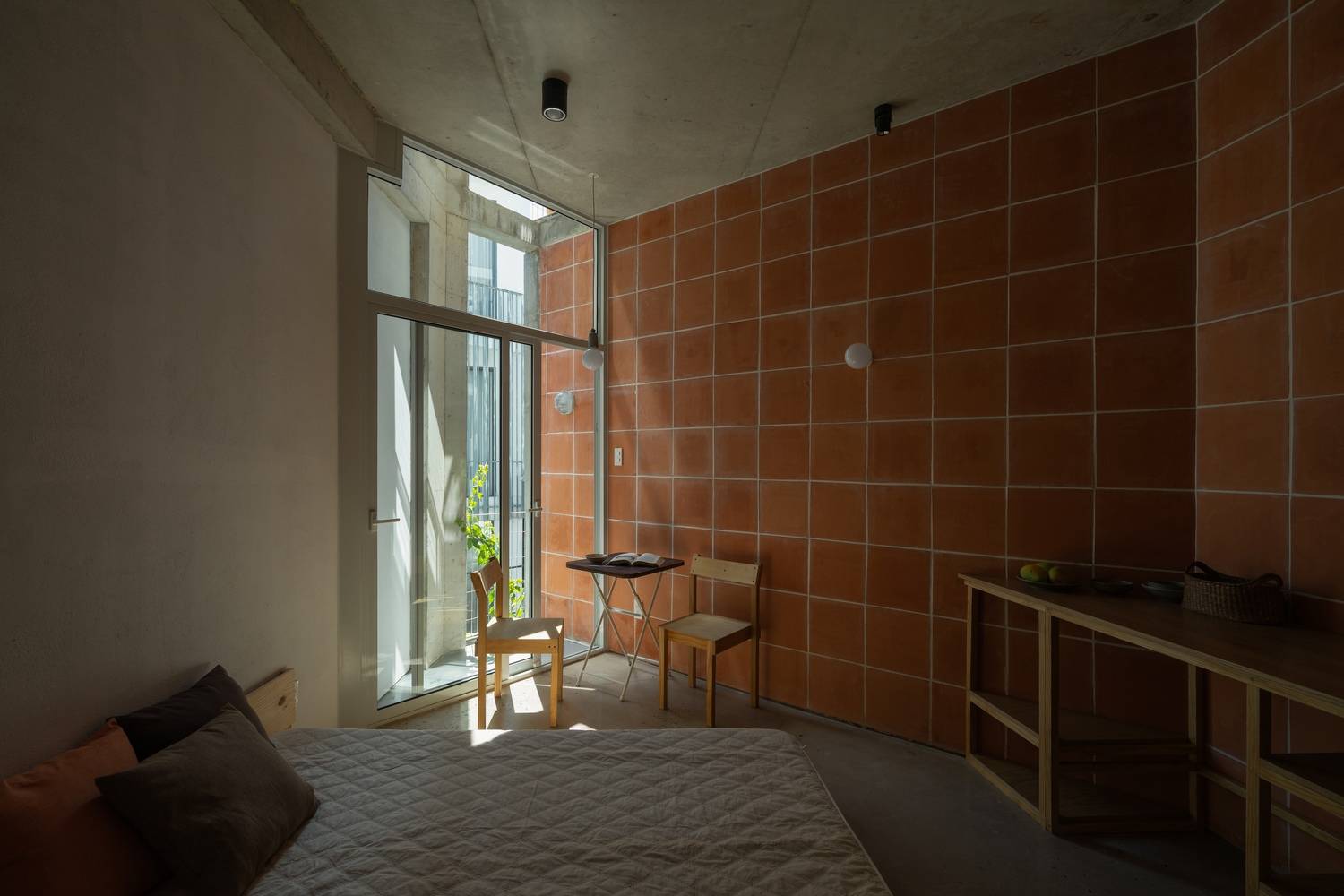
This project has diverse functions: it includes independent living spaces for families, rental apartments, and flexible areas that can be used as shared offices or cafes. Gia Dinh House is envisioned as a compact shared living model that provides homeowners with a comfortable living environment while generating income through renting apartments and offices. At the same time, it also creates a community composed of residents who share common interests, facilities, and workspaces.
该项目功能多样:既有一家人的独立生活空间,也有出租公寓,还有可作为共享办公室或咖啡馆的灵活区域。Gia Dinh House 被构想为一个紧凑的共享居住模式,既为业主提供舒适的居住环境,又通过出租公寓和办公室产生收入。同时,它还营造了一个由共享共同兴趣、设施和工作空间的居民组成的社区。
© Quang Dam
© Quang Dam
© Quang Dam
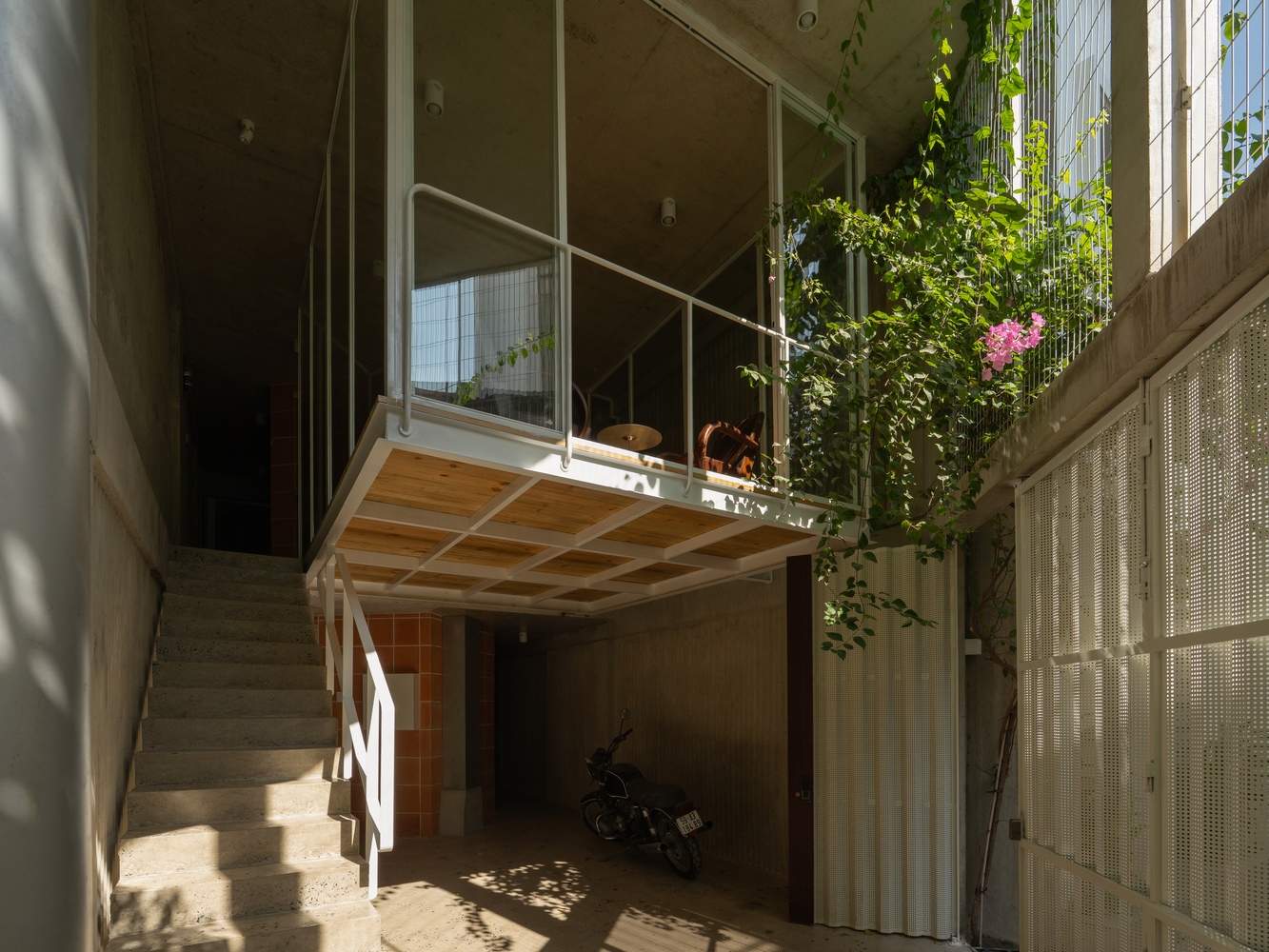
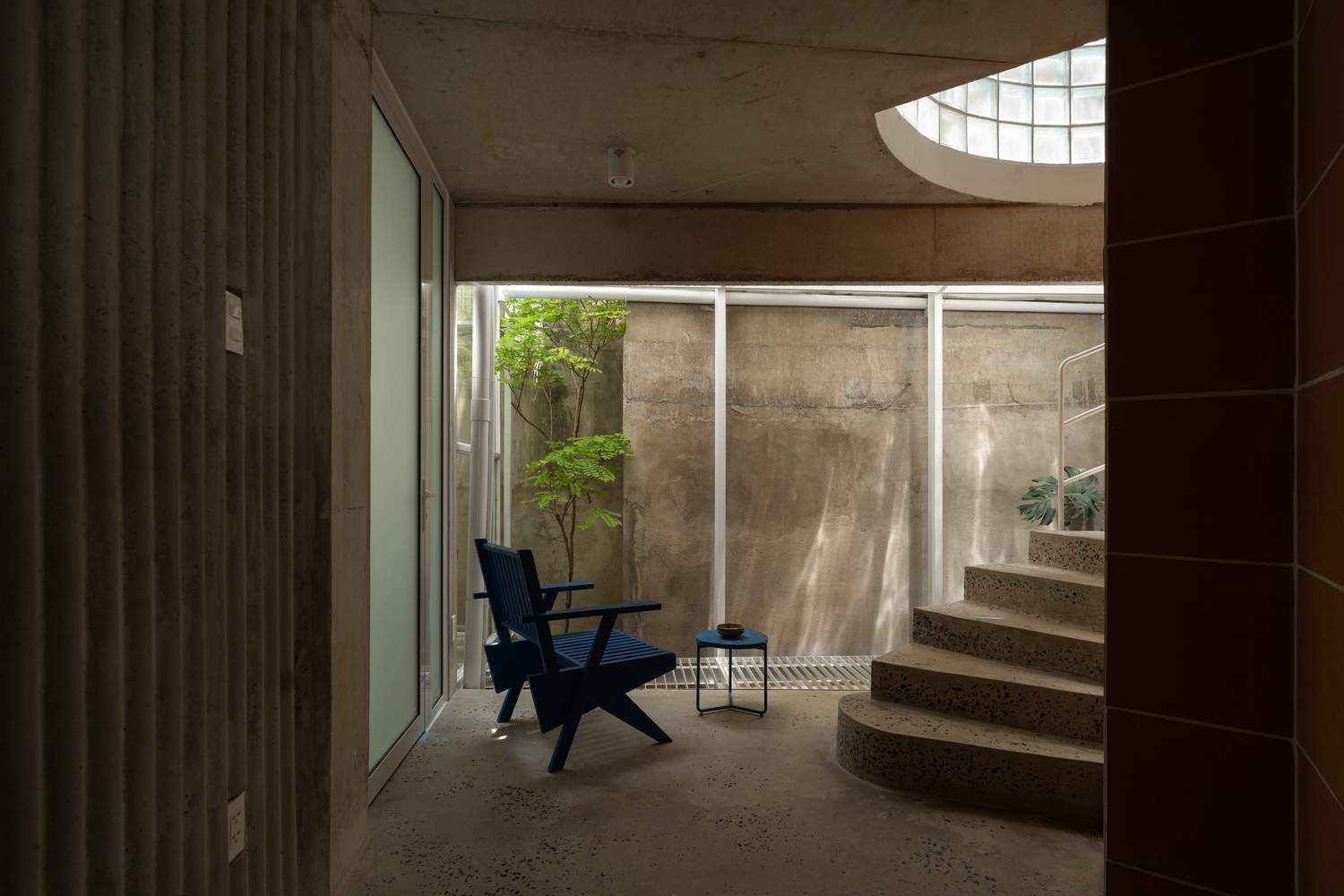
The bottom and mezzanine spaces remain open, with minimal partitions to achieve a seamless transition from the alleyway to the interior. Steel mesh doors and fence doors enhance the transparency of space and blur the boundaries between houses and alleys. The atrium space, as a transitional area between indoor and outdoor spaces, is designed as a flexible public space and serves as the main connection point for residents.
底层和夹层空间保持开放,设置最少隔断,实现从巷道到屋内的无缝过渡。钢网门和栅栏门增强了空间的通透性,模糊了房屋与巷道之间的界限。中庭空间作为室内外的过渡区域,被设计为一个灵活的公共空间,成为居民的主要连接点。
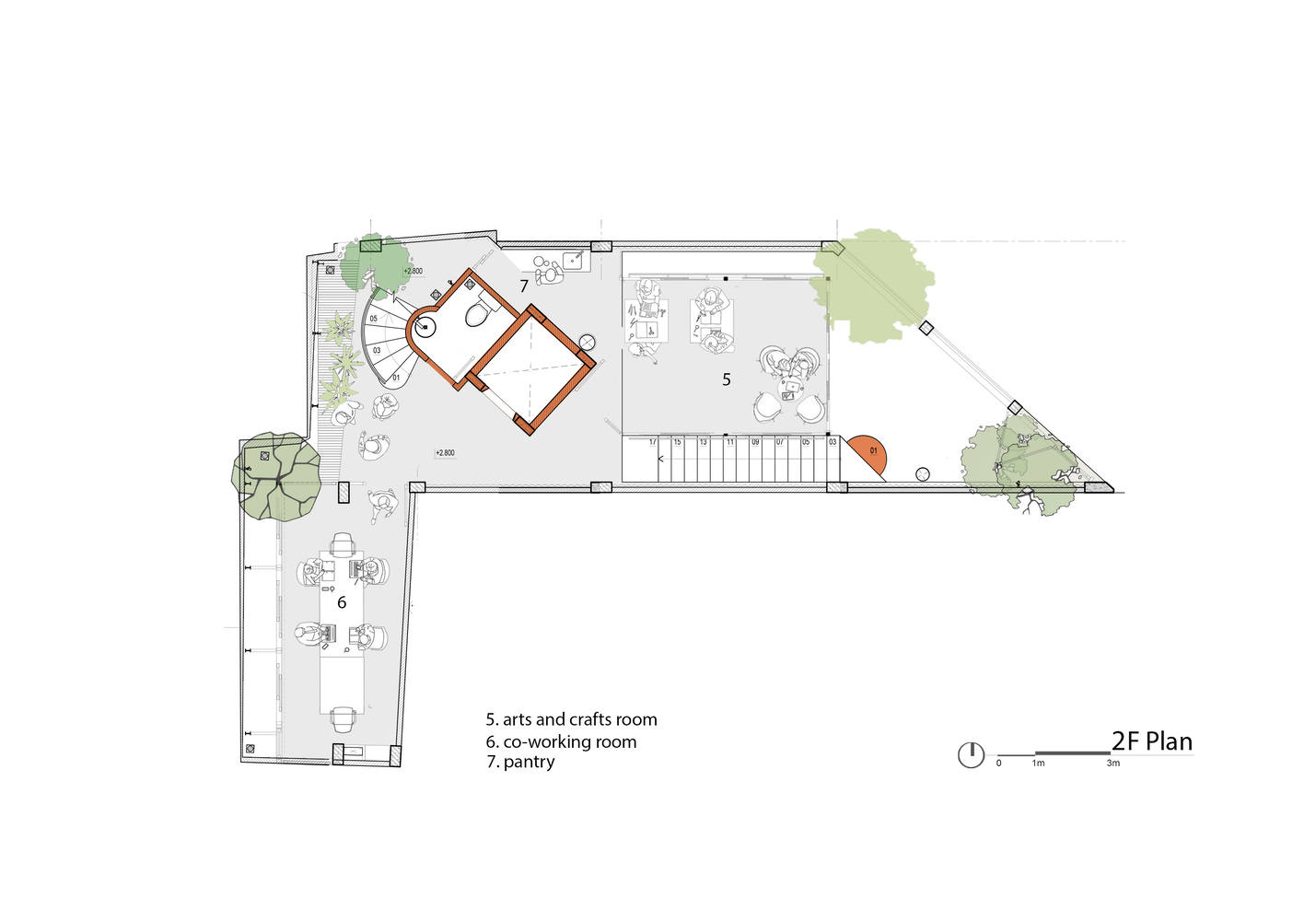
二层平面图
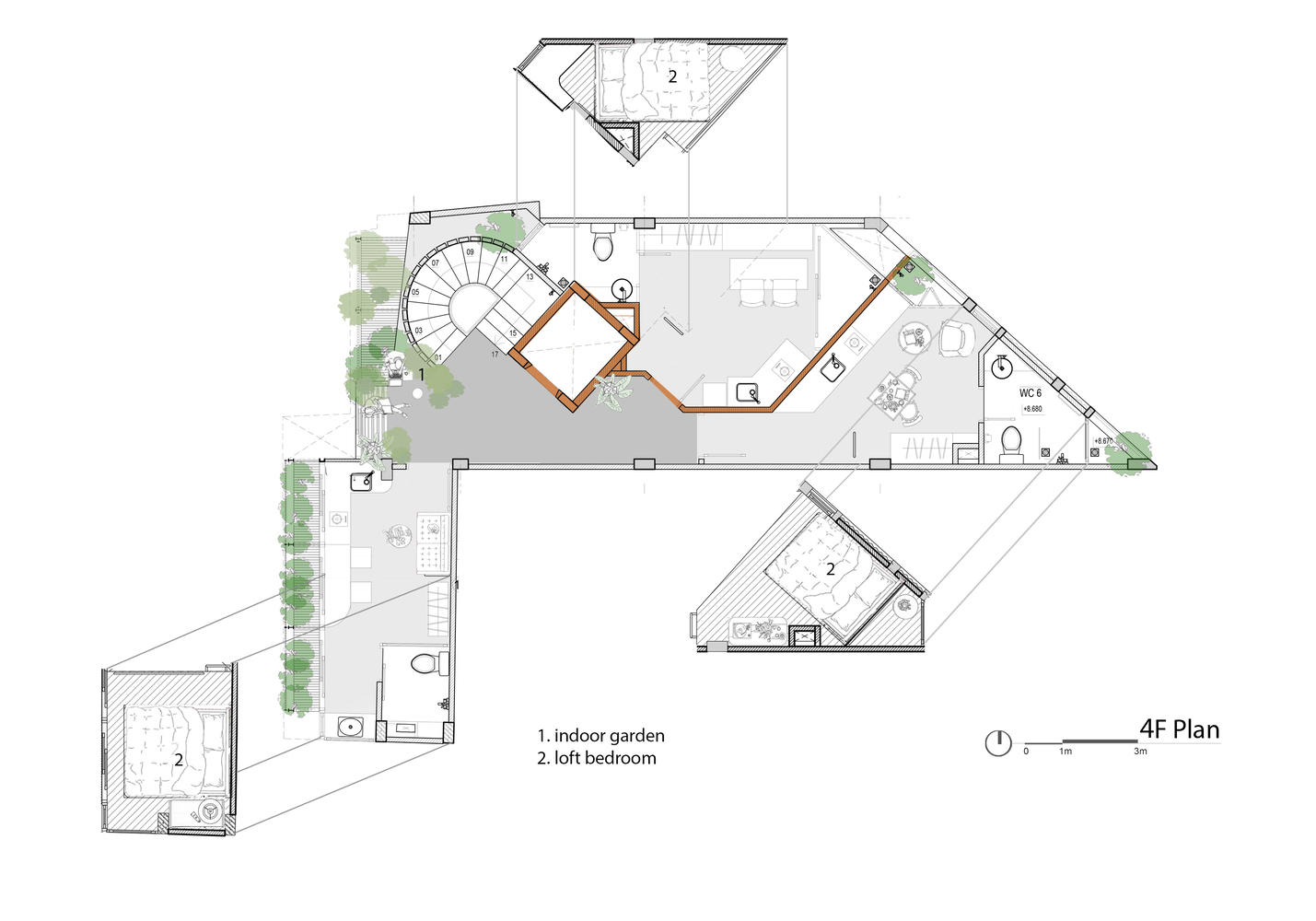
四层平面图
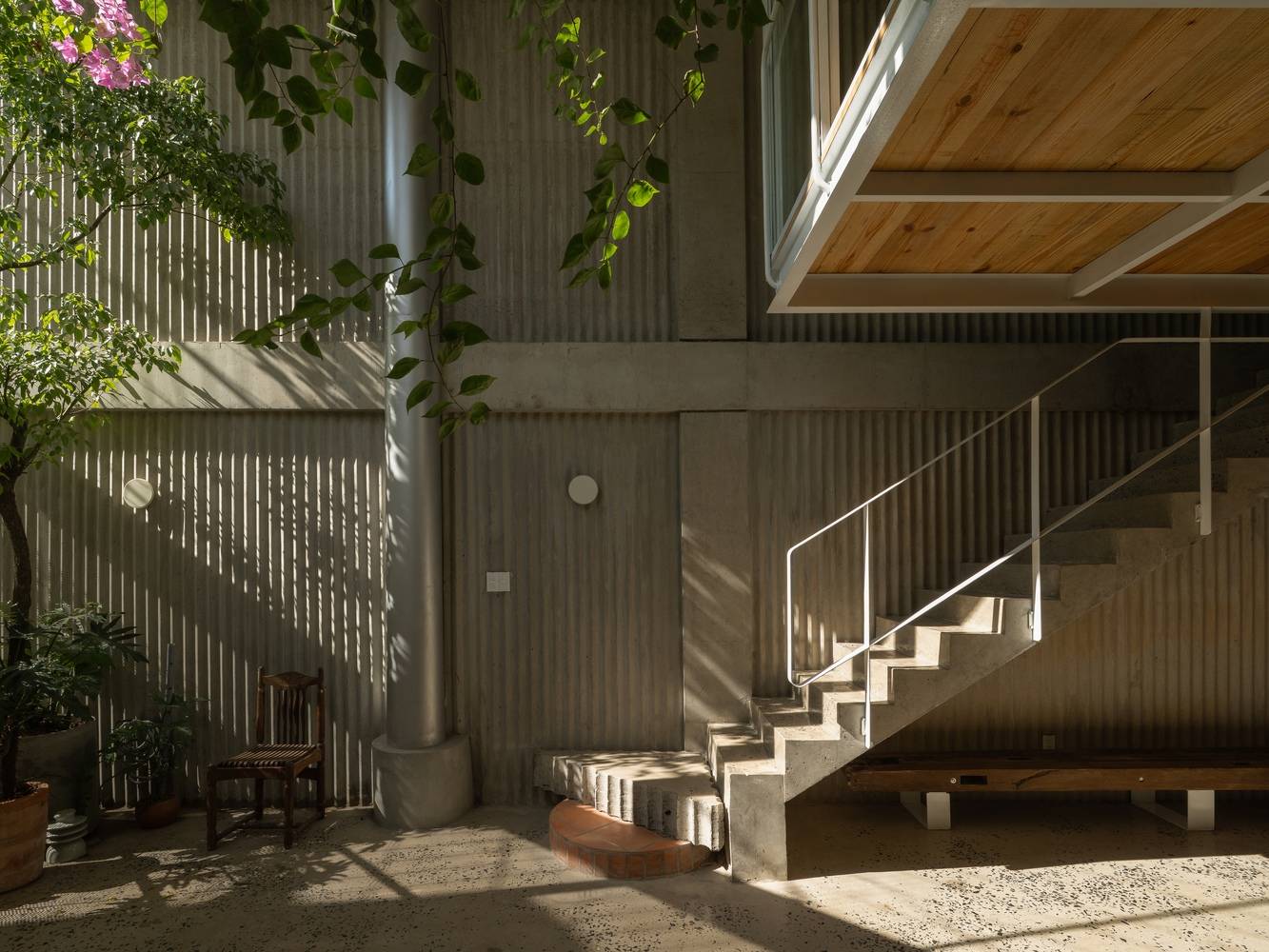
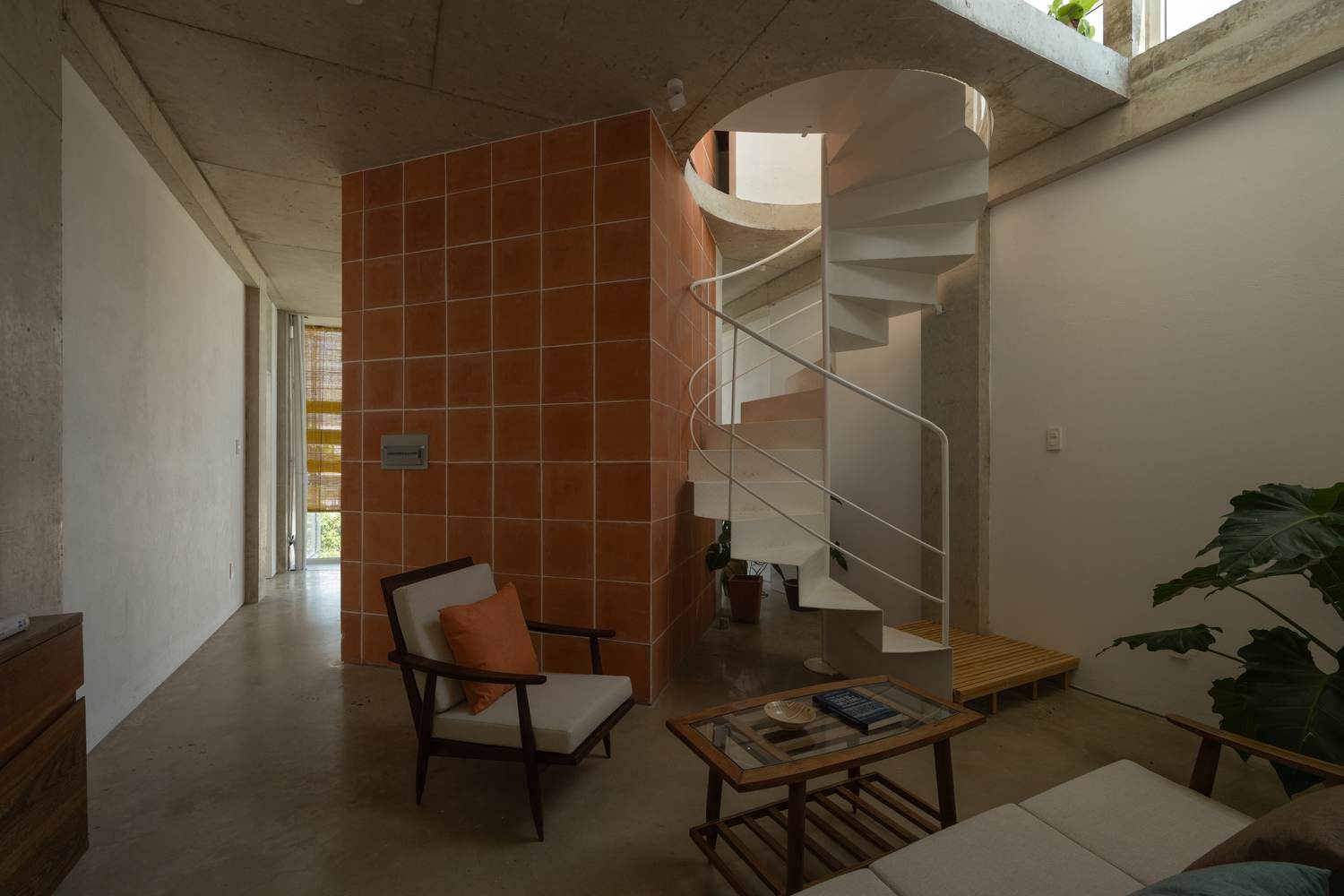
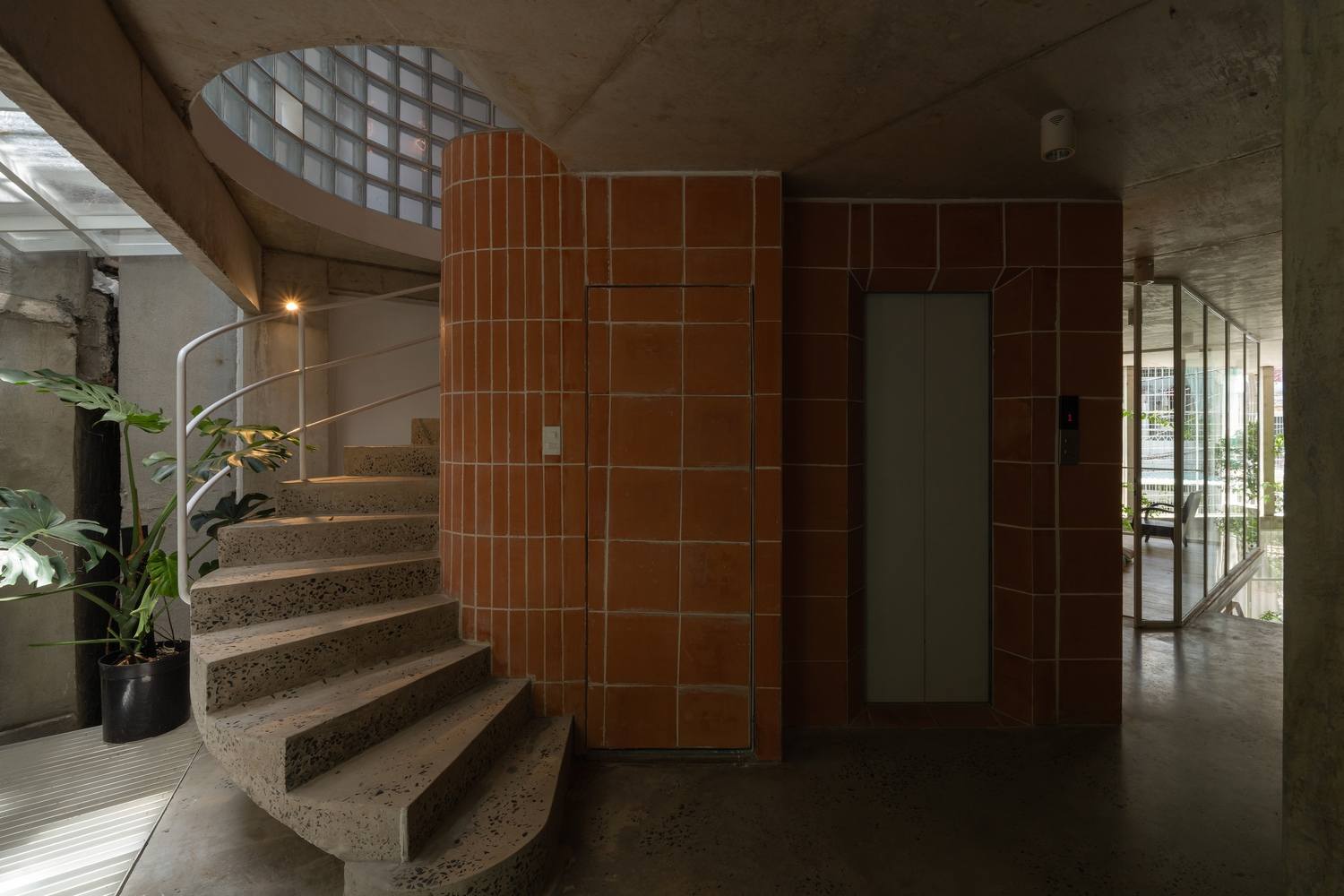
The elevator core tube is conceived as a sculptural element, seemingly suspended in the atrium, while also serving as a structural load-bearing component. The wall extending from the elevator shaft forms a triangular niche that can be used as an observation deck, bathroom, greenery corner, or vertical atrium.
电梯核心筒被构思为一个雕塑般的元素,看似悬浮于中庭之中,同时也作为结构承重构件。从电梯井延伸出的墙体形成了三角形壁龛,可用于作为观景凉台、卫生间、绿植角或垂直中庭。
© Quang Dam
© Quang Dam
© Quang Dam
© Quang Dam
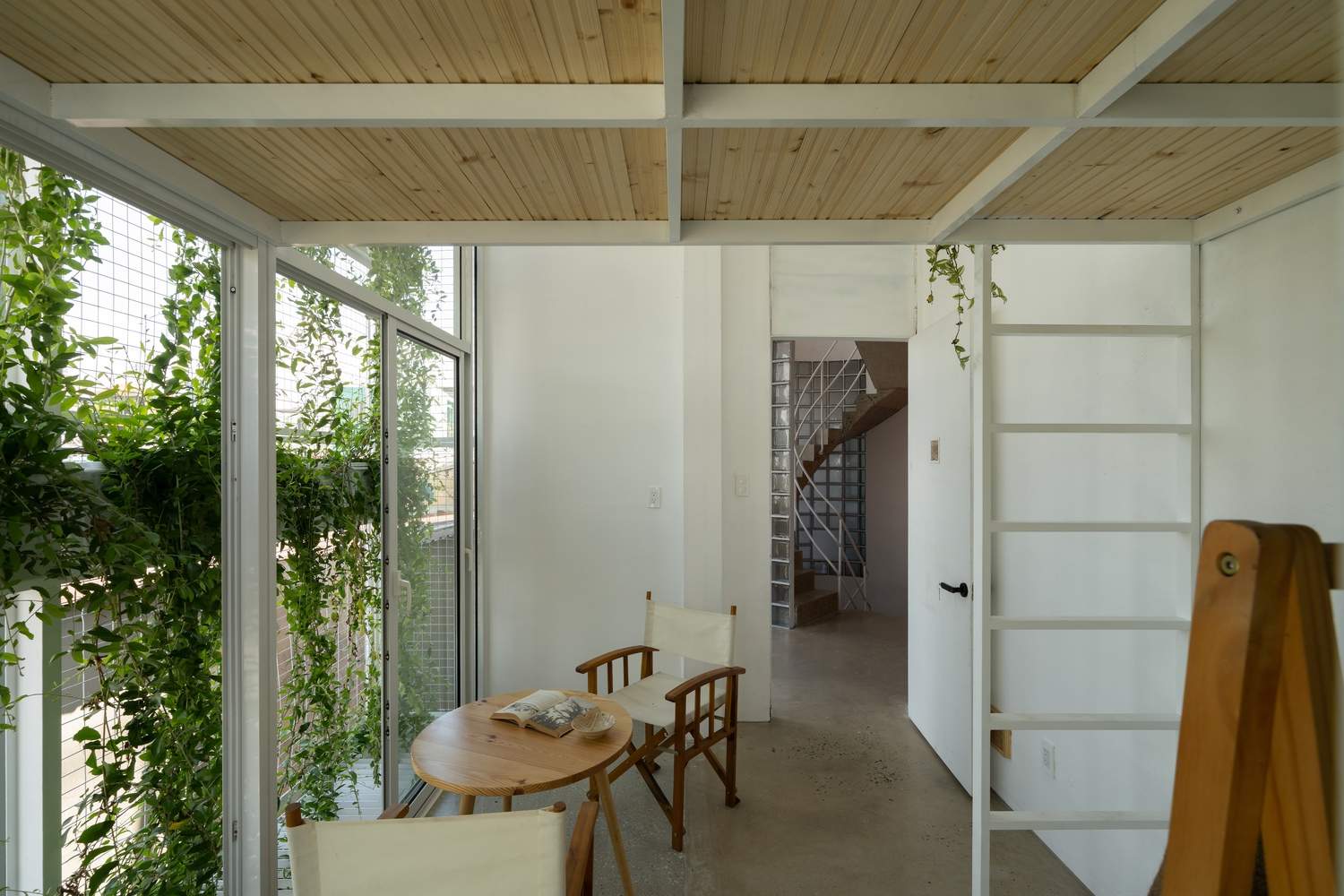
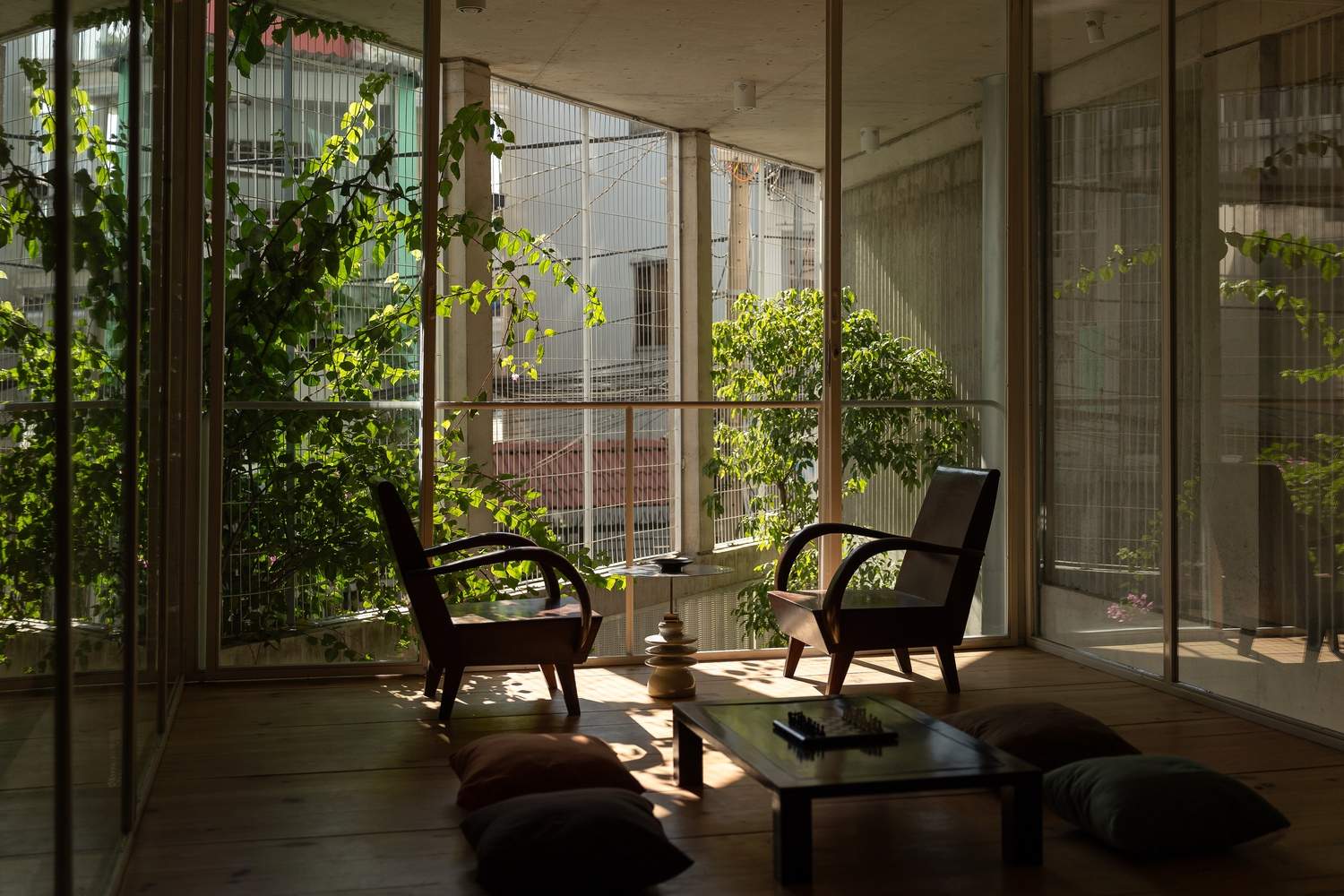
At the rear of the house, a vertical garden facing west provides shade, while coordinating with the louvers above the stairs and room doors to achieve natural cross ventilation from back to front. The floor entrance hall is designed as a semi public space, improving airflow and visual transparency, while also extending the apartment space into a garden between indoor and outdoor spaces, which can be used for receiving guests, reading, or other activities.
房屋后部,一个面向西方的垂直花园提供遮阳,同时与楼梯和房间门上方的百叶窗板配合,实现从后到前的自然交叉通风。楼层门厅设计为半公共空间,改善了气流和视觉通透性,同时也将公寓空间延伸至一个介于室内外的花园中,可用于接待客人、阅读或其他活动。
© Quang Dam
© Quang Dam
© Quang Dam
Gia Dinh House showcases how we tackle and solve the challenges of a sloping and irregular site, while continuing to explore 'living and sharing in urban housing' through the perspective of shared living. It harmoniously unifies the background, site geometry, and diverse functional requirements, creating a home that combines functionality, flexibility, and aesthetics - a place where residents can live, share, and connect.
Gia Dinh House 展示了我们如何应对并解决一个倾斜且不规则场地的挑战,同时通过共享居住的视角,继续探索“城市住宅中的生活与共享”。它将背景、场地几何形状和多样化的功能需求和谐统一,打造出一个功能、灵活性与美学兼具的家园 —— 一个居民可以生活、分享和连接的地方。
© Quang Dam