Dapur Naga Shared Kitchen and Dining Space/Bamboo U
达普尔·纳加共享厨房与用餐空间 / Bamboo U
© Bamboo U
© Bamboo U
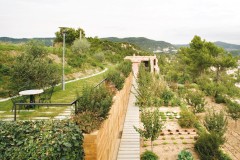
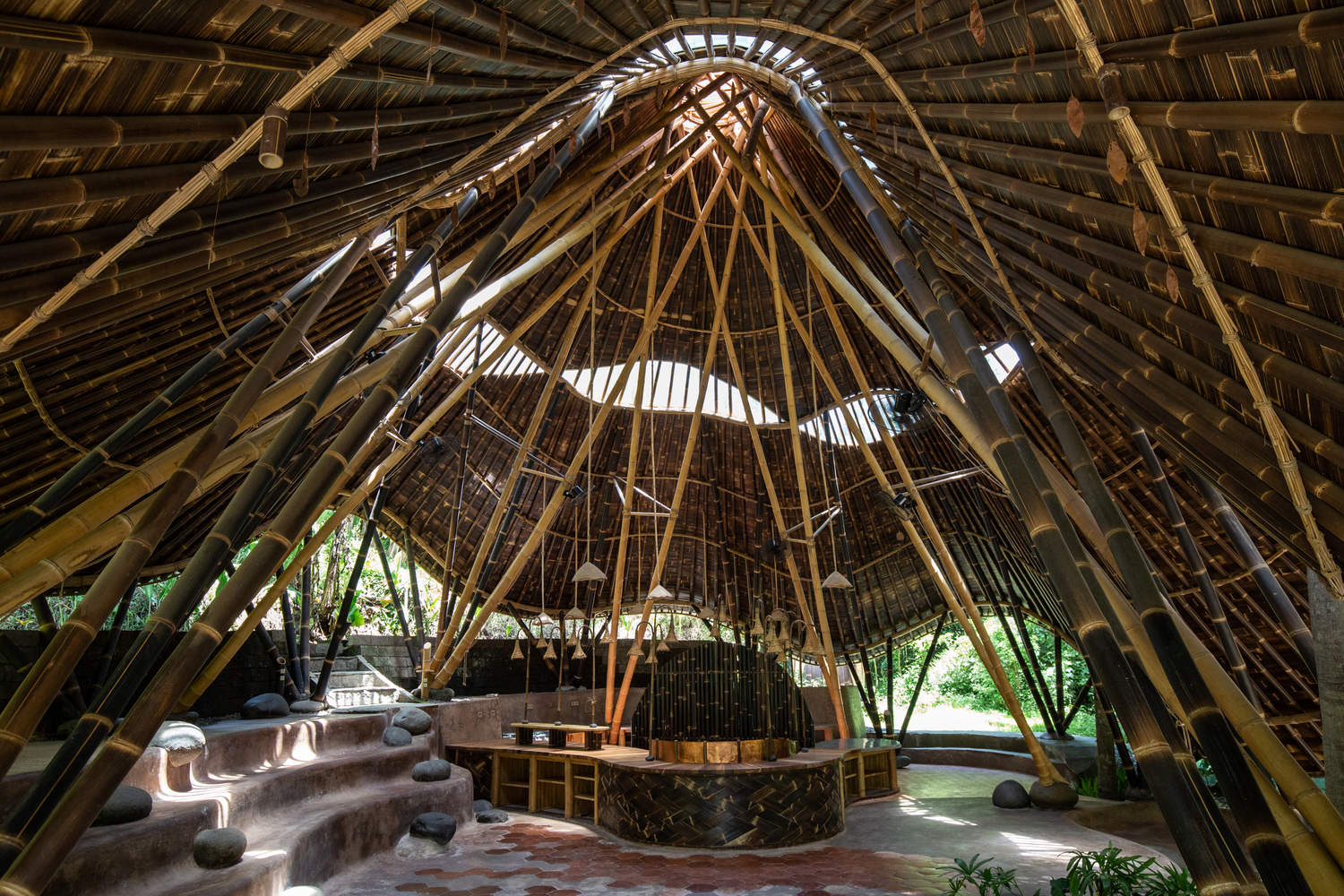
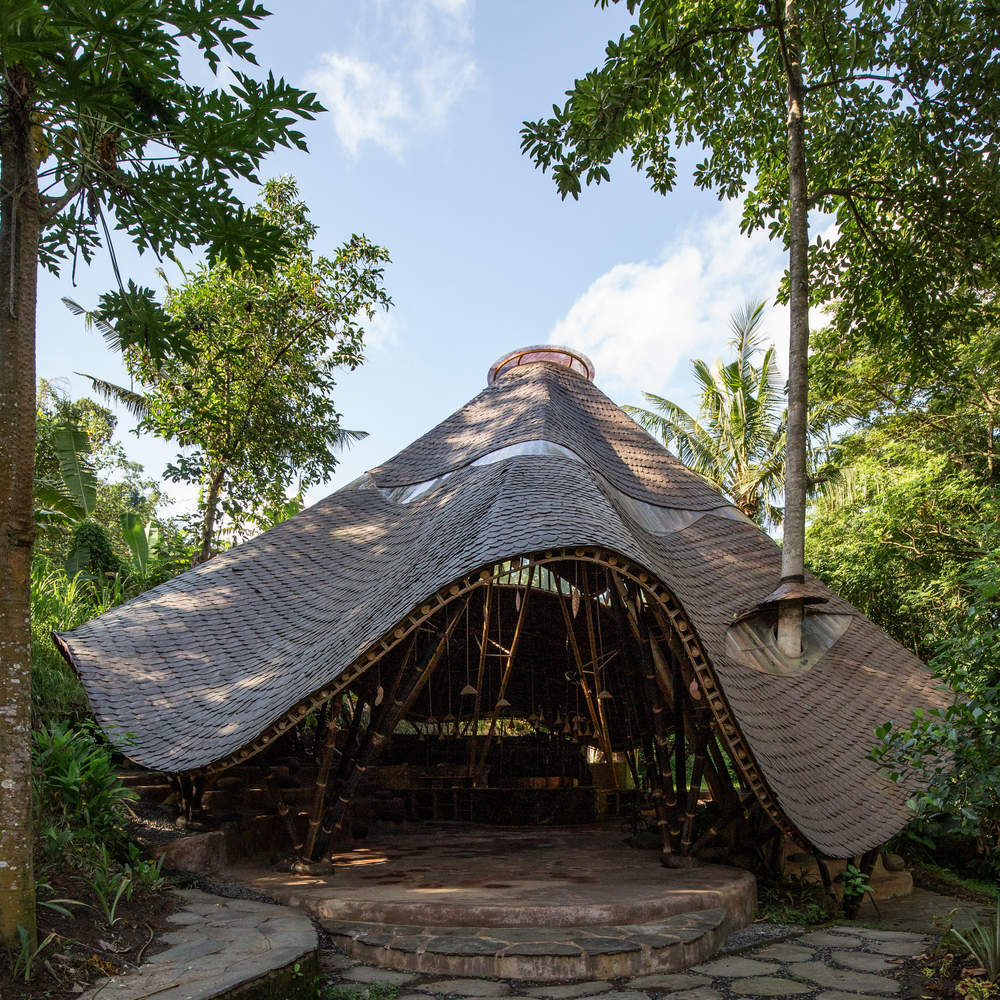
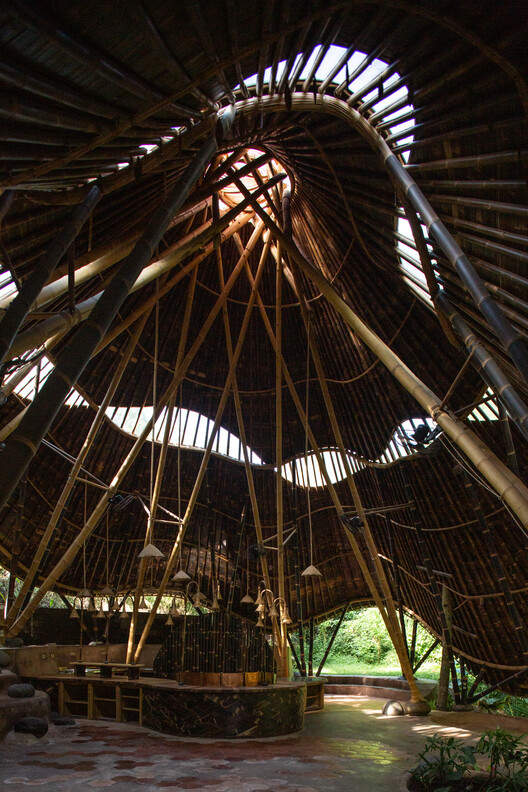
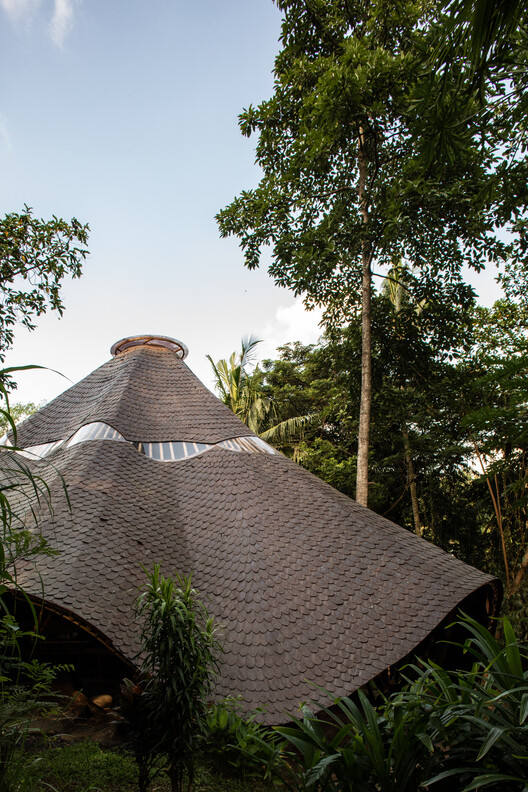
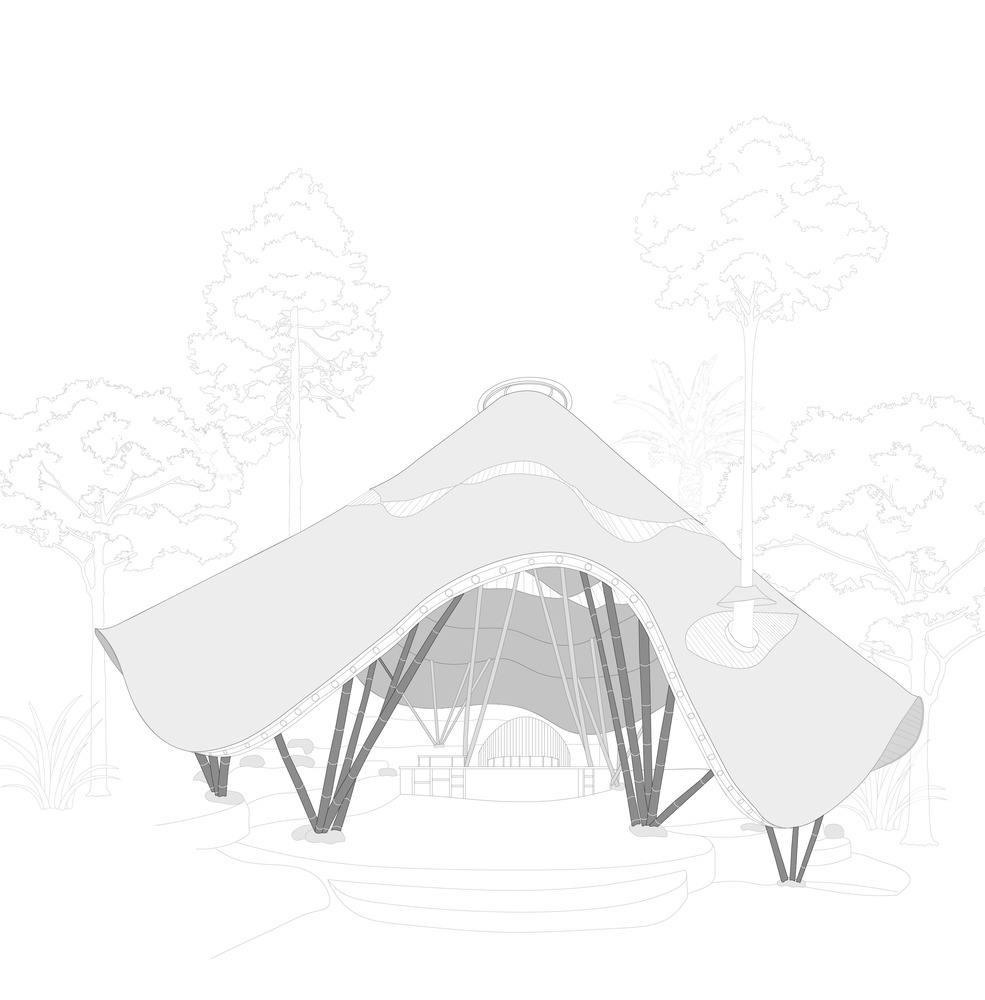
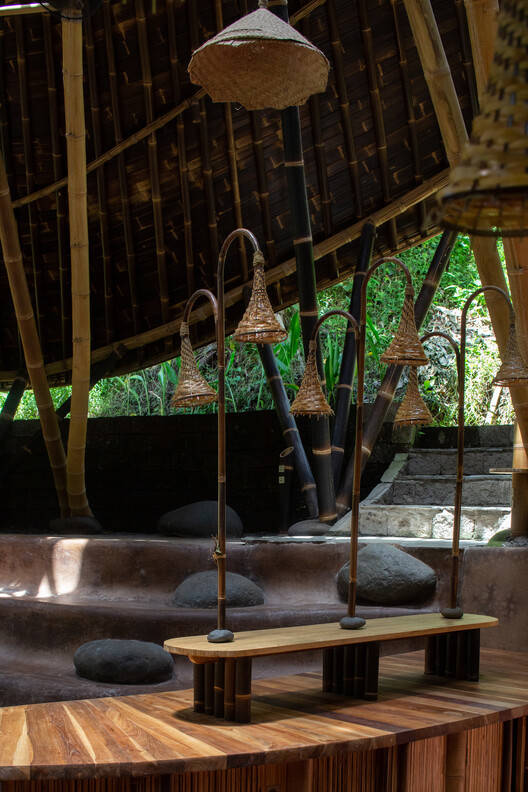
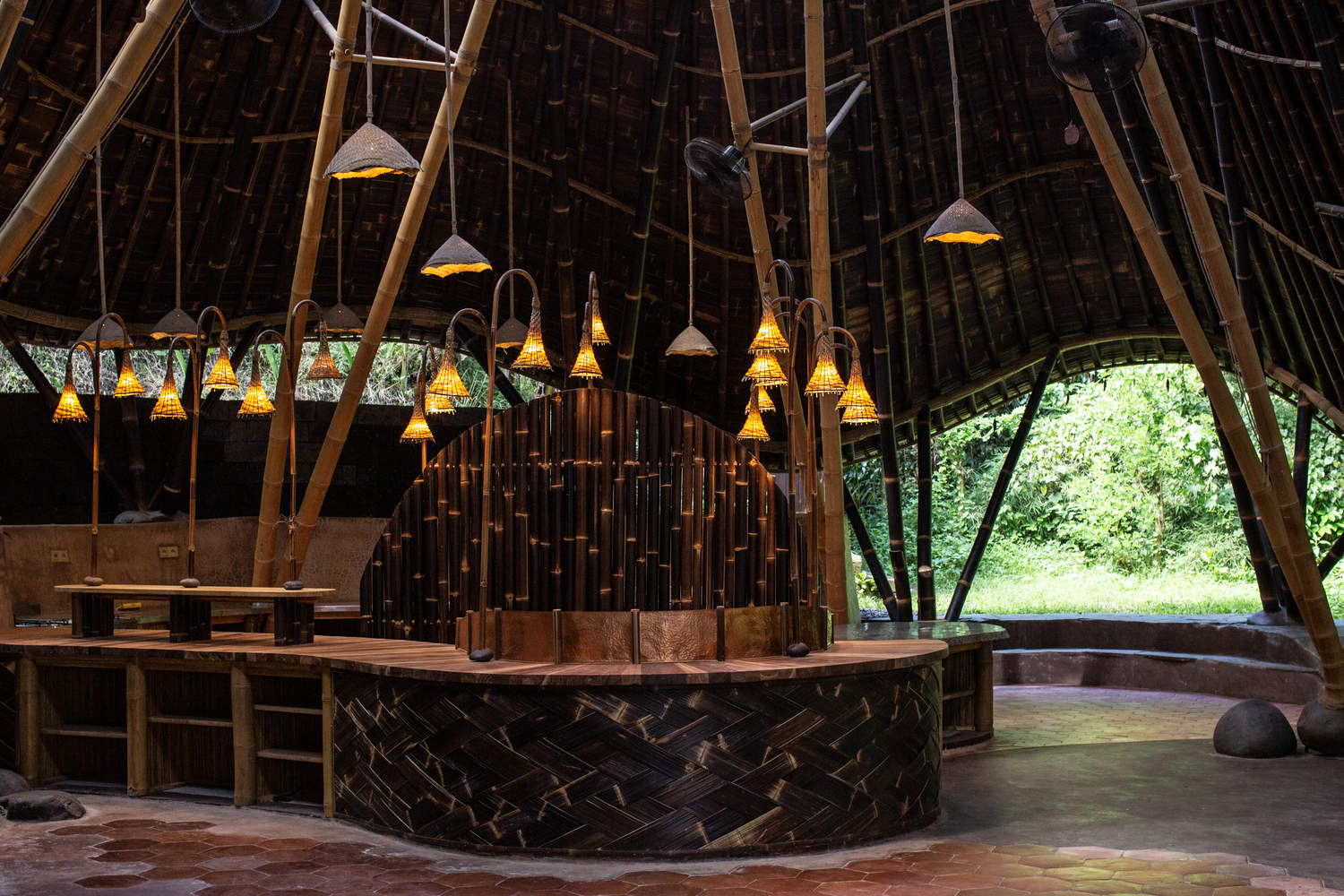
Dapur Naga is a bamboo architectural design experimental space located in the lush tropical environment of Bali. This unique building serves as both a public kitchen and a dining space, capable of accommodating over 50 people. The project site has a steep slope and three main height differences, while the owner has a desire for the design to seamlessly integrate with the natural environment. The main design concept of Dapur Naga is inspired by the elegant form of the rotating Sophie skirt, whose fluidity guides the development of the building's wavy roof. The roof is a hyperbolic surface, carefully crafted to capture charming landscapes while promoting natural ventilation. This organic form creates an open and charming space beneath the roof.
达普尔·纳加是一个位于巴厘岛郁郁葱葱的热带环境中的竹制建筑设计实验空间。这一独特的建筑既是一个公共厨房,也是一个用餐空间,能够容纳 50 多人。项目所在场地坡度较大,存在三个主要的高度差,同时业主有着希望设计能与自然环境无缝融合的诉求。达普尔·纳加的主要设计理念灵感来源于旋转的苏菲裙摆的优雅形态,其流动性引导了建筑波浪形屋顶的发展。屋顶是一个双曲面,精心打造以捕捉迷人景观,同时促进自然通风。这种有机形态在屋顶下创造了一个开放而迷人的空间。
© Bamboo U
平面图
© Bamboo U
© Bamboo U
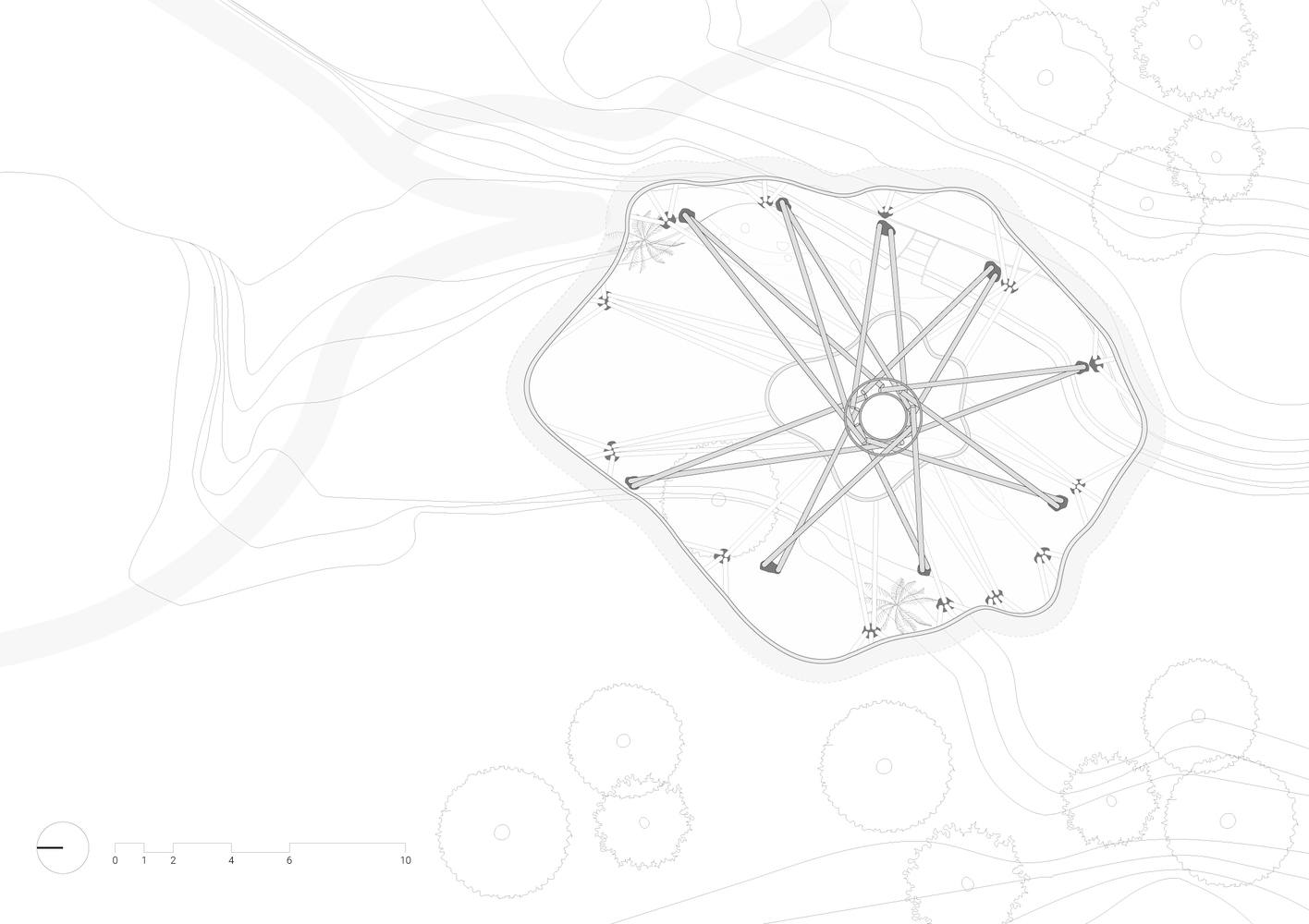
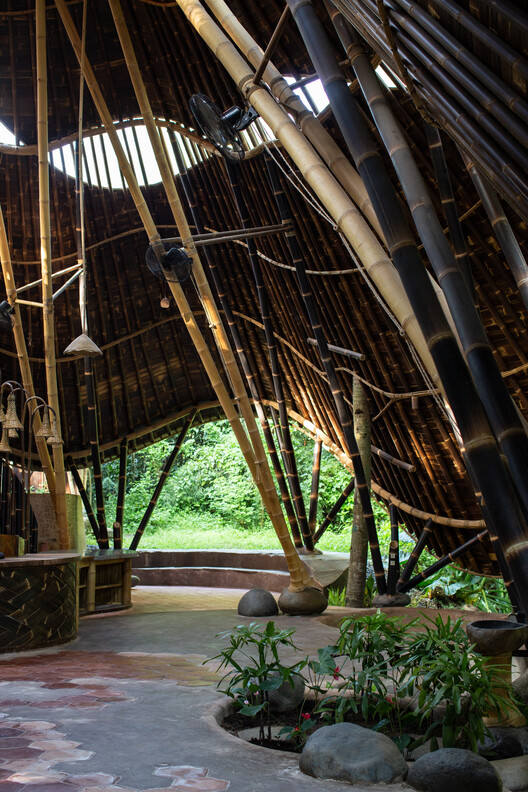
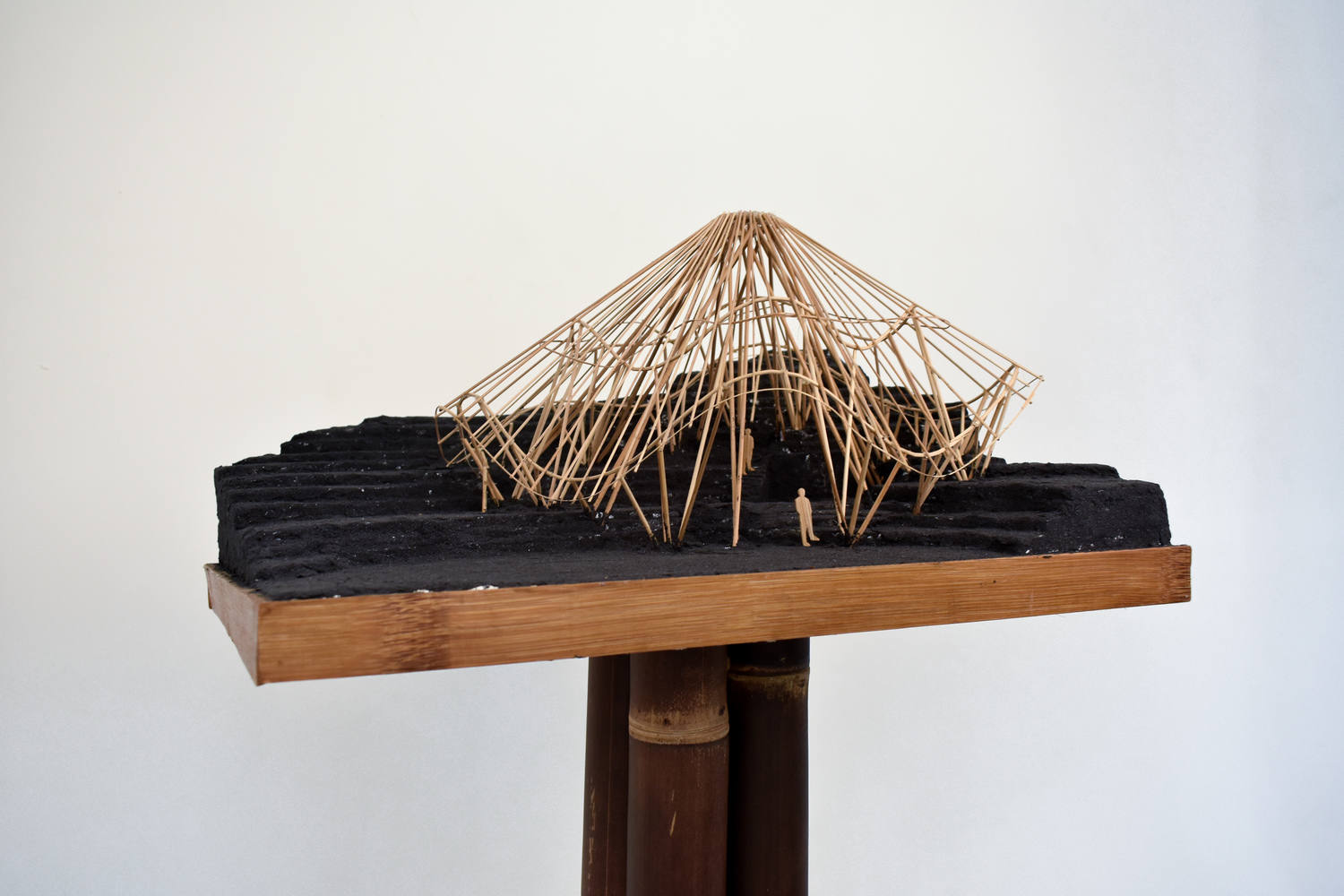
The roof of the building is supported by fan-shaped columns and Lidi bundles (structural bamboo beams) to ensure stability and maintain smooth curves. A central inverted tower - with a narrow neck and a wide base - supports the building. The tower itself spans across different floors and aligns with the natural contours of the site. These unique structural elements were first prototyped in a 1:1 ratio to test their performance and solve engineering challenges before proceeding with large-scale construction.
建筑的屋顶由扇形柱和利迪捆(结构竹梁)支撑,以确保稳定性并保持流畅的曲线。一座中央的互反式塔楼——具有狭窄的颈部和宽阔的基座——支撑着建筑。塔楼本身横跨不同的楼层,与场地的自然轮廓对齐。这些独特的结构元素首先在1:1的比例下进行了原型制作,以测试其性能并解决工程挑战,然后才进行大规模施工。
© Bamboo U
© Bamboo U
立面图
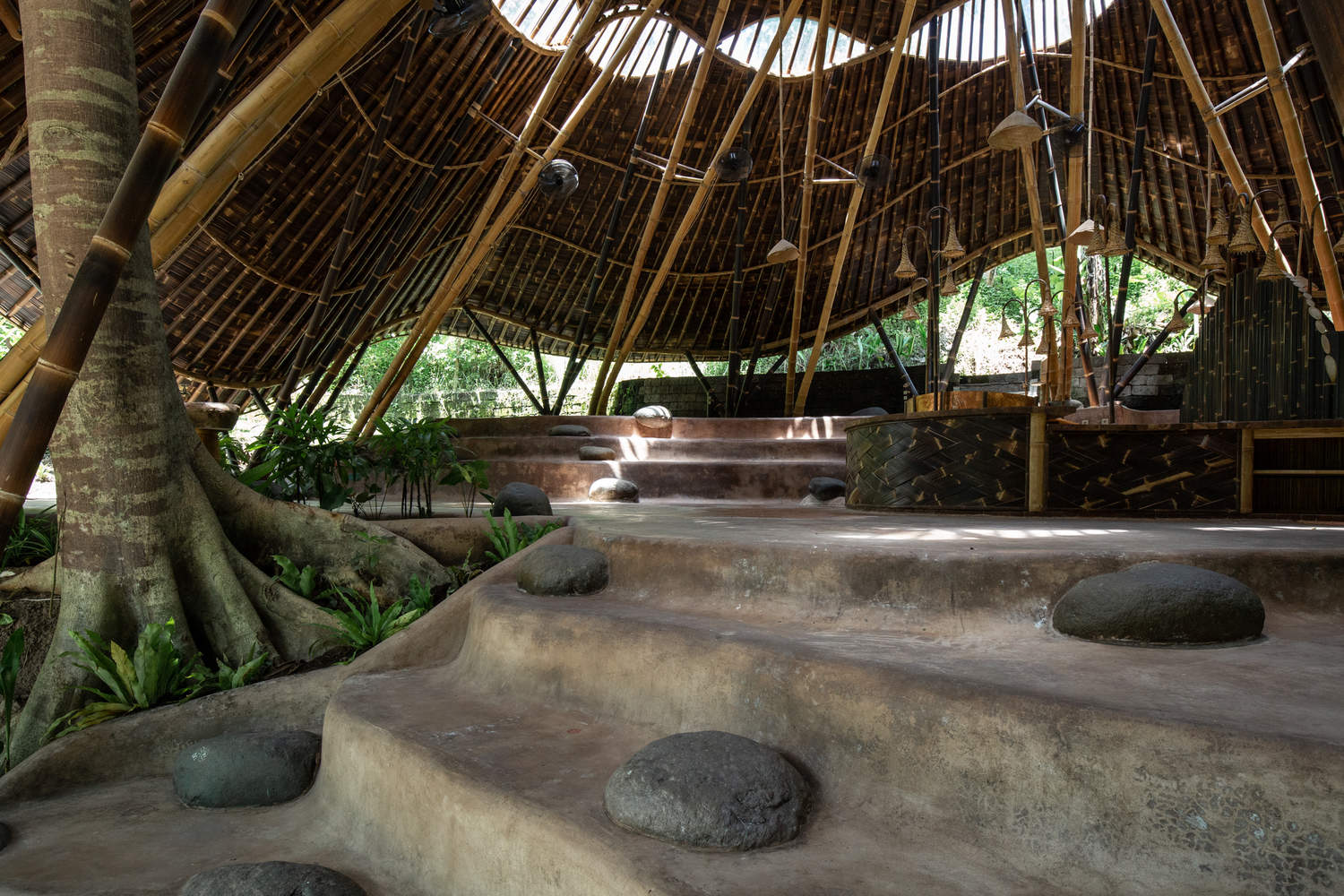
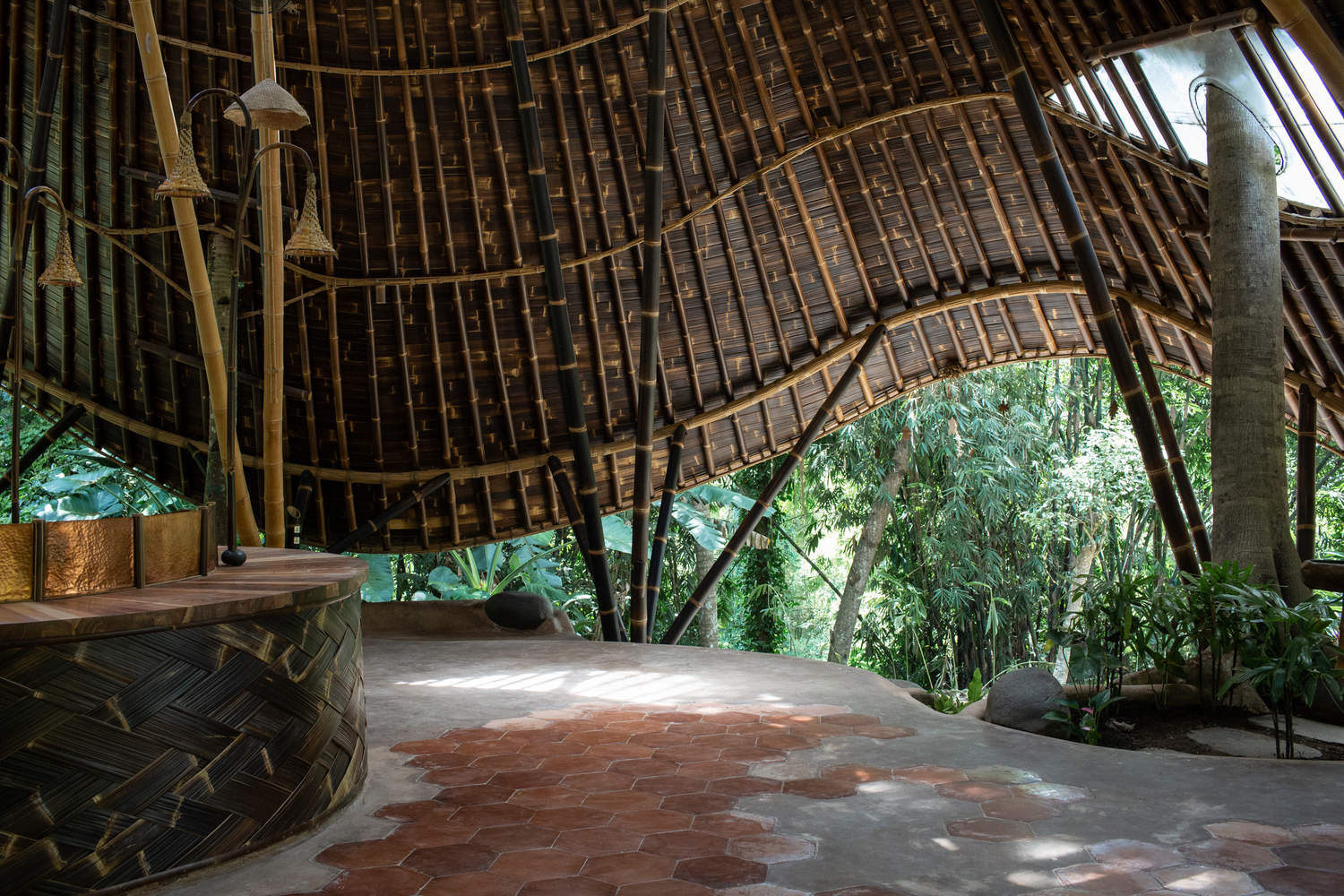
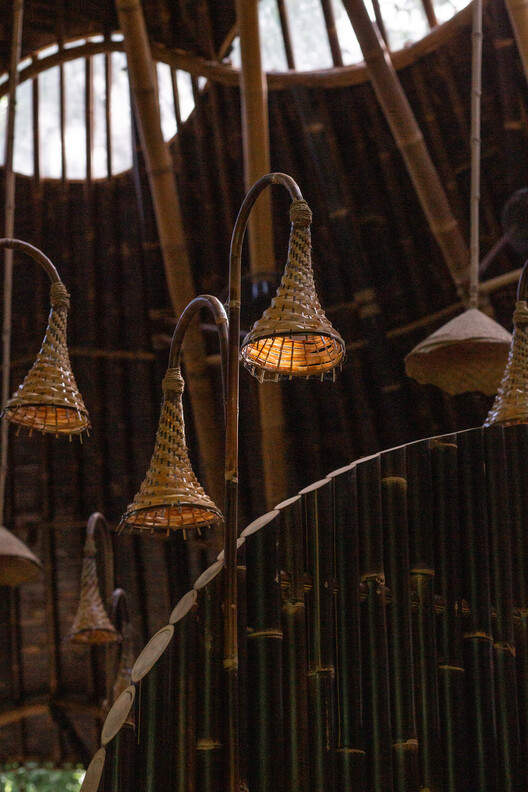
In order to protect the environment, the design cleverly preserves the existing trees on site. In addition, river stones were used in the foundation to create a natural integration of the building into the surrounding environment. The construction process involved collaboration with local craftsmen, and villagers handcrafted copper sheets that formed the striking curved roof of the building. Skylights made of transparent acrylic are embellished on the roof, allowing light to penetrate the space below and contribute to the harmonious integration of the building with the surrounding natural environment. This project combines various materials - lime, clay, Jimbaran, cement tiles, and clay tiles - to create a striking visual effect.
为了保护环境,设计巧妙地保留了现场现有的树木。此外,地基使用了河石,营造出建筑自然融入周围环境的感觉。施工过程涉及与当地工匠的合作,村民们手工制作了构成建筑引人注目的弯曲屋顶的铜片。由透明丙烯酸制成的天窗点缀在屋顶上,让光线穿透下面的空间,有助于建筑与周围自然环境的和谐融合。该项目结合了多种材料——石灰、烧粘土、金巴兰、水泥瓦和陶土瓦——以创造出引人注目的视觉效果。
© Bamboo U
© Bamboo U
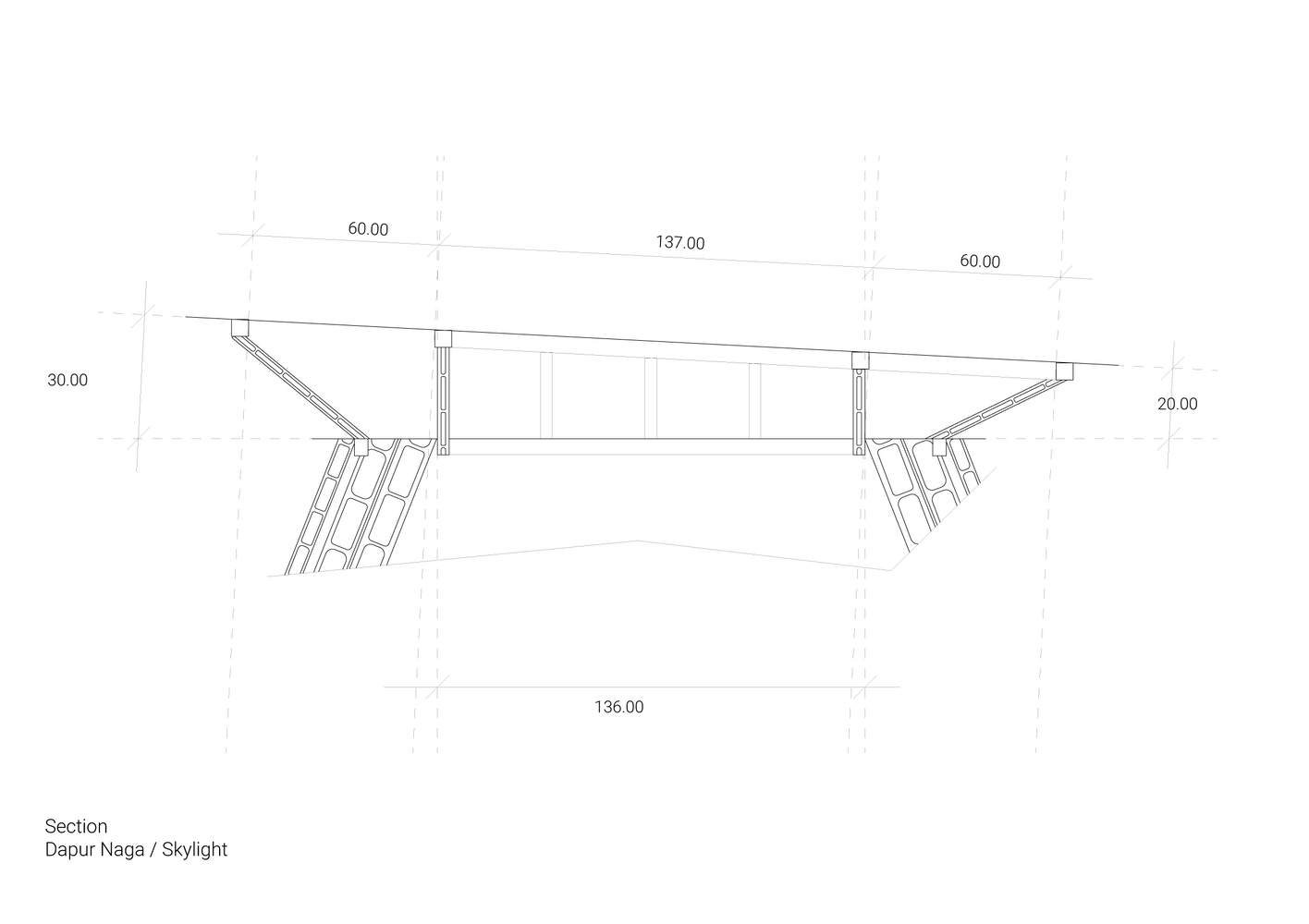
大样图
© Bamboo U
During the design and construction process, several courses offered by Bamboo University provide participants with practical experience in bamboo building techniques, from shaping roofs to installing skylights. This participatory process has become a key part of architectural evolution, adding an educational and community driven dimension to the project. Dapur Naga is a testament to sustainable architecture, pushing the boundaries of bamboo architecture while maintaining an intimate connection with the landscape. The ultimate result is a vibrant space that blends innovation, craftsmanship, and the beauty of natural materials.
在设计和施工过程中,竹子大学开设的几门课程为参与者提供了竹子建筑技术的实践经验,从塑造屋顶到安装天窗。这一参与性过程成为建筑演变的关键部分,为项目增添了教育和社区驱动的层面。达普尔·纳加是可持续建筑的证明,它推动了竹子建筑的边界,同时与景观保持着亲密的联系。最终结果是一个充满活力的空间,融合了创新、工艺和自然材料之美。
© Bamboo U