Zurich University Children's Hospital/Herzog&de Meuron
苏黎世大学儿童医院 / 赫尔佐格与德梅隆事务所
设计理念的创新性与人文关怀:新的苏黎世大学儿童医院在设计上展现了极高的创新性,尤其体现在对儿童友好型环境的构建。将“小镇”的概念融入急性护理医院,通过内部布局的街区化处理,营造了亲切、非正式的空间体验,这与传统医院冰冷的氛围形成了鲜明对比。这种设计旨在减轻病童的焦虑感,促进其身心健康。同时,屋顶病房的“小屋”设计,赋予了每个孩子独特的私人空间,鼓励家长参与护理,体现了对个体患者及其家庭的深刻关怀。此外,大量运用木质材料和绿色庭院,将自然元素融入室内,有助于创造一个更积极、治愈的环境,与传统医院的冷硬风格形成鲜明对比。
空间组织的巧妙与可持续性:项目在空间组织上体现出极高的专业水准。急性护理医院的中央主街设计,串联起各个功能区域,既提供了清晰的导向,又为建筑带来了丰富的空间体验。研究与教学设施的圆柱形中庭,则成为了促进交流的核心,周围环绕着研究实验室、教学场所等,促进了学术互动。这种布局不仅高效,也赋予了建筑活力。更值得称道的是,项目在可持续性方面做出的努力,通过SGNI铂金级认证,体现了对环境保护的承诺。大量运用轻质材料、种植大量树木、巨石的利用,以及对自然光的巧妙运用,都体现了对环境的尊重,也为患者和医护人员创造了更健康舒适的环境。
建筑语言的独特性与整体性:赫尔佐格与德梅隆事务所为该项目赋予了独特的建筑语言。急性护理医院的立面设计,通过三维混凝土结构与填充材料的差异化运用,创造了丰富的视觉效果和空间层次,并增强了建筑的可识别性。顶楼病房的退缩设计与小屋式的形态,更是突出了建筑的人性化关怀。研究与教学设施则以简洁的几何语言,与周围环境和谐共存。两座建筑虽然风格迥异,却在功能和视觉上形成了互补,共同构成了整体性极强的建筑群。这种统一的建筑语言,与景观设计的有机结合,提升了医院的整体品质,赋予了其超越医疗建筑的价值,使其成为一个融合了医疗、科研、自然与人文关怀的综合体。
© Herzog & de Meuron
© Herzog & de Meuron
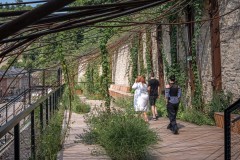
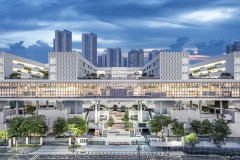
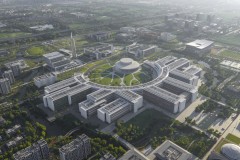
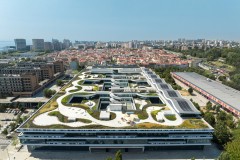
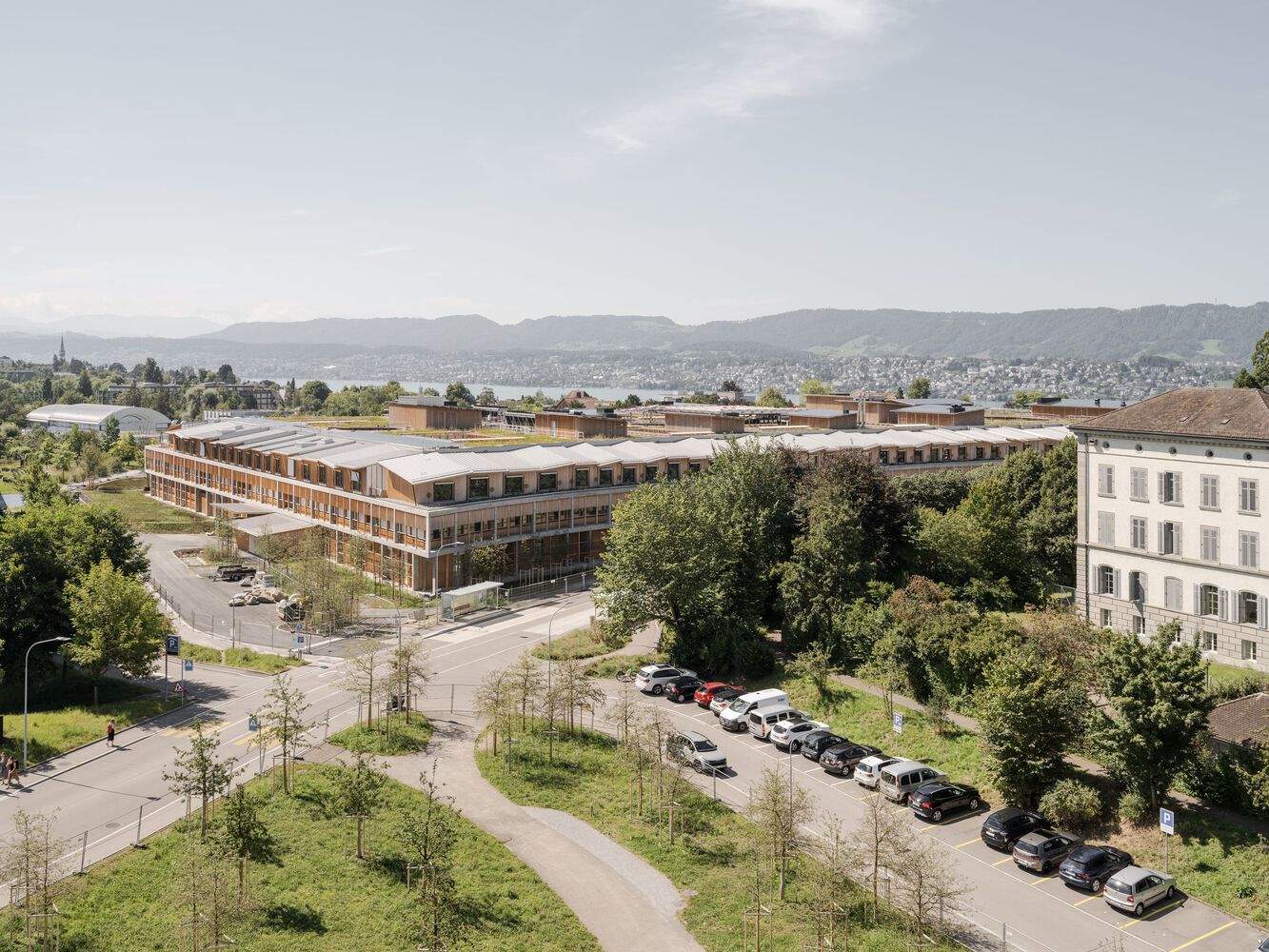
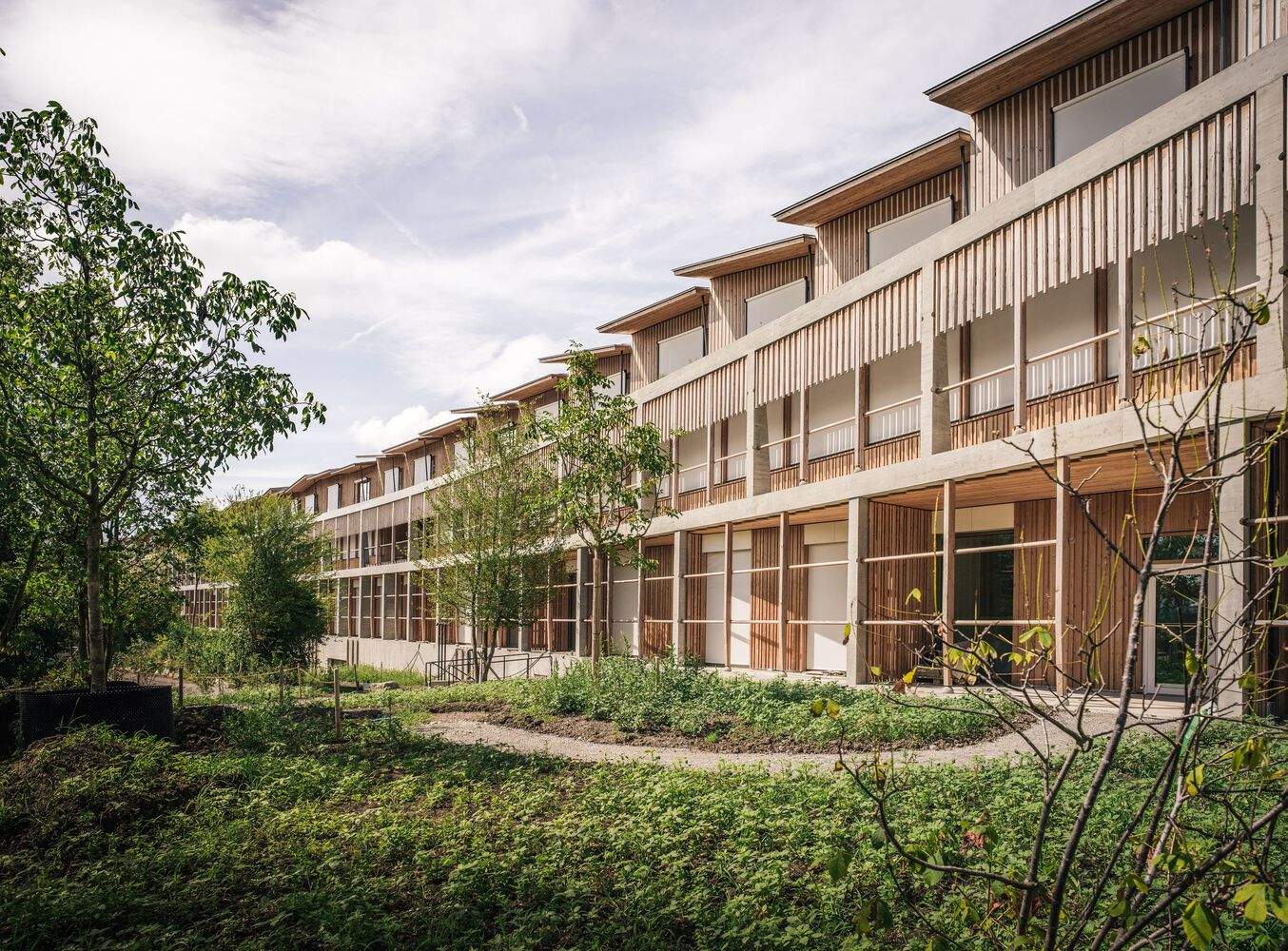
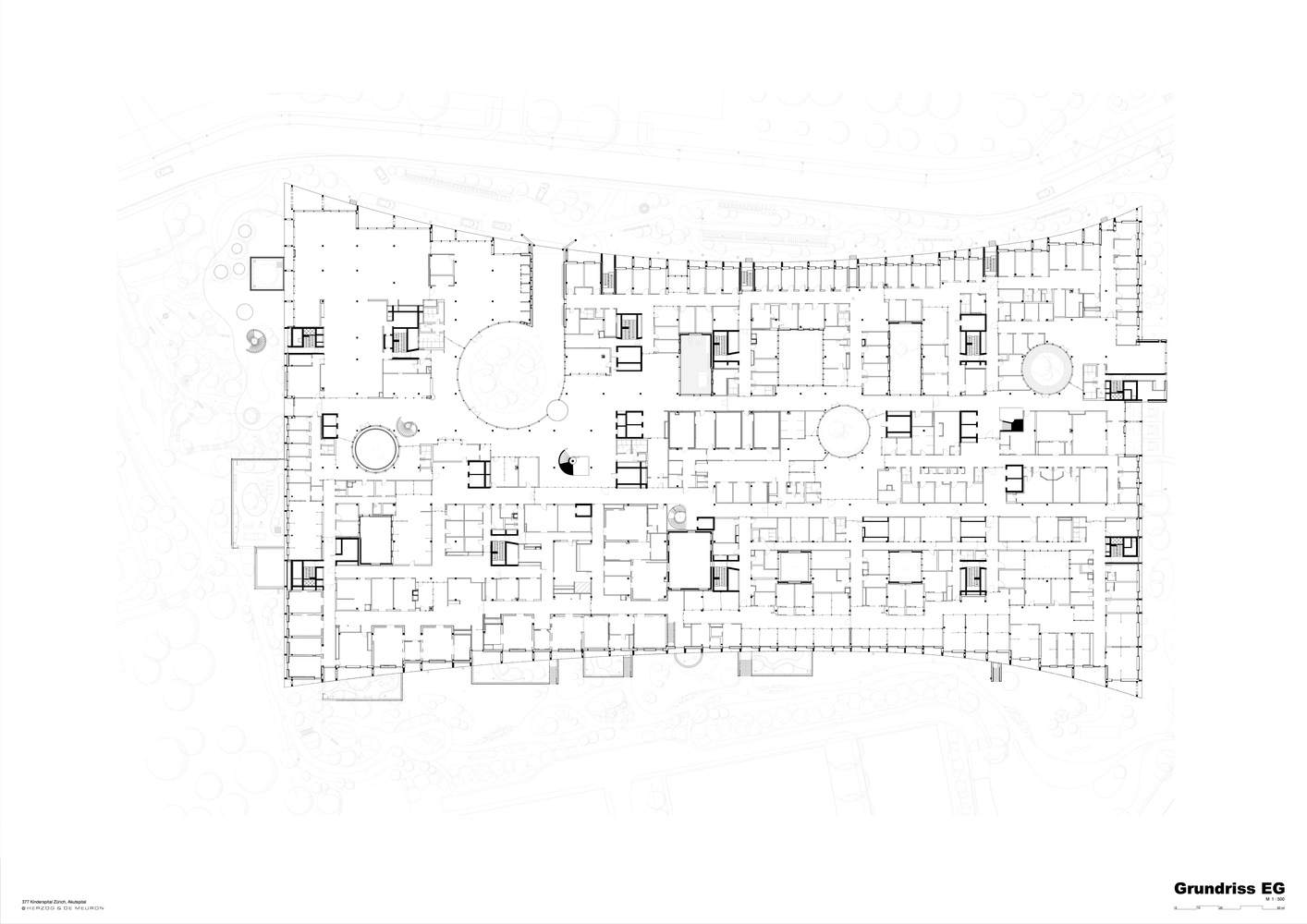
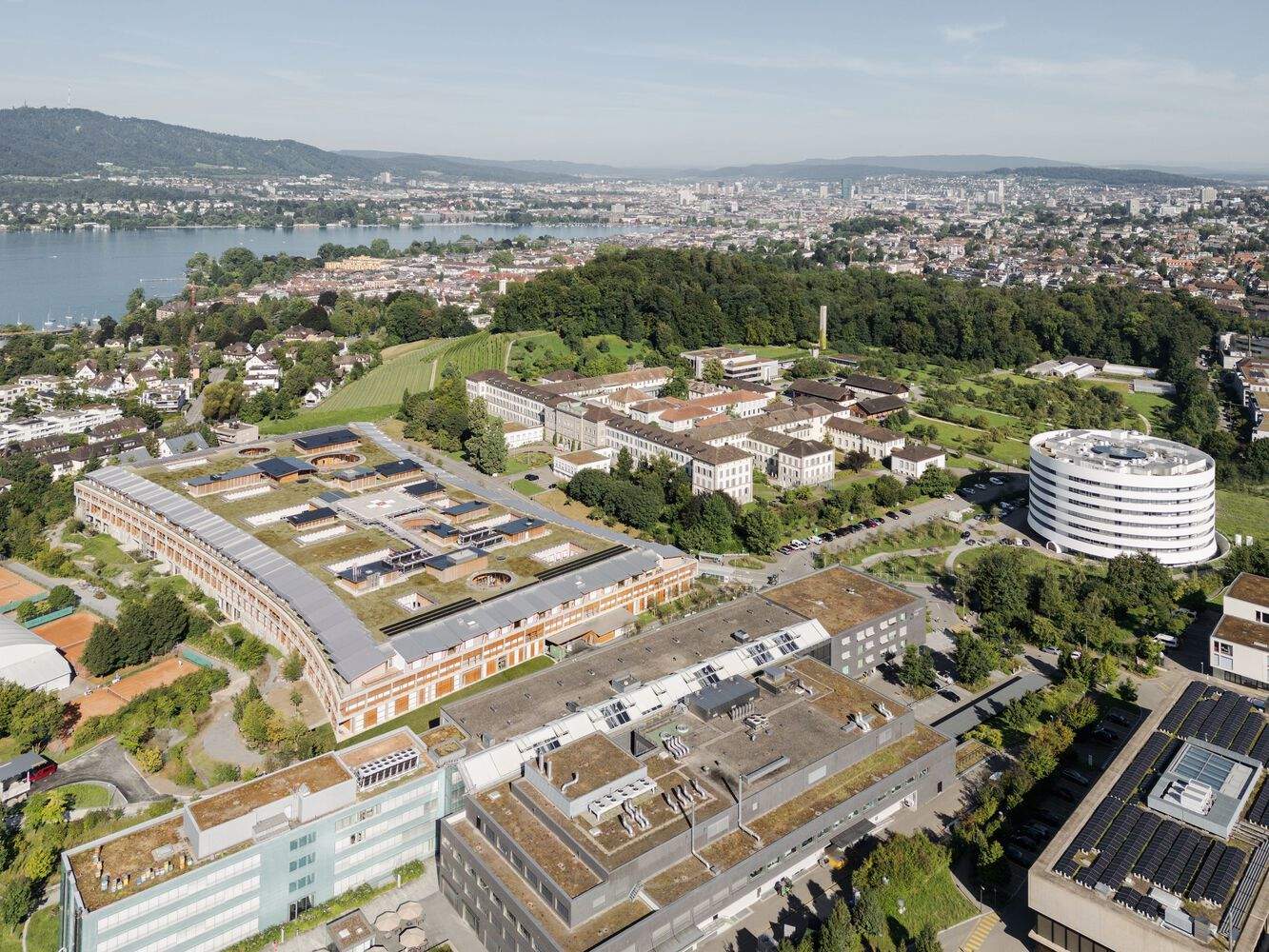
The new Children's Hospital of the University of Zurich is located in the Zurich Runge district, at the foot of a mountain called Burgh ö lzli. It is adjacent to other hospital buildings from different eras and is Switzerland's largest medical institution for children and adolescents. The hospital consists of two buildings: an acute care hospital and research and teaching facilities. The acute care hospital in the south is composed of a three-layer concrete frame, filled with complex wooden structures that blend seamlessly with the surrounding environment. Its internal layout is like a small town: each medical department is a block, with squares and connecting streets. Each floor of the three story building has a central main street that runs through green courtyards that provide directional guidance and direct natural light into the building. The wards on the roof are like independent cabins.
新的苏黎世大学儿童医院位于苏黎世-伦格区,坐落于名为布尔格霍尔兹利(Burghölzli)的山脚下。它毗邻来自不同时代的其他医院建筑,是瑞士最大的儿童和青少年医疗机构。医院由两栋建筑组成:急性护理医院和研究与教学设施。南部的急性护理医院由三层混凝土框架构成,内部填充了复杂的木质结构,与周围环境融为一体。其内部布局宛如一座小镇:各个医学科室就是街区,拥有广场和连接街道。三层楼的每一层都有一条中央主街,穿过各个提供方向指引并将自然光引入建筑的绿色庭院。屋顶上的病房就像是一间间独立的小屋。
© Herzog & de Meuron
急性护理医院一层平面图
© Herzog & de Meuron
© Herzog & de Meuron
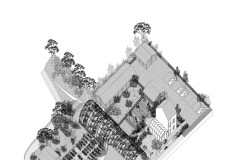
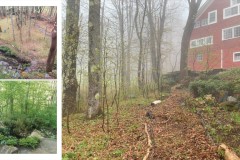
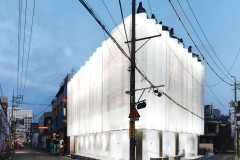
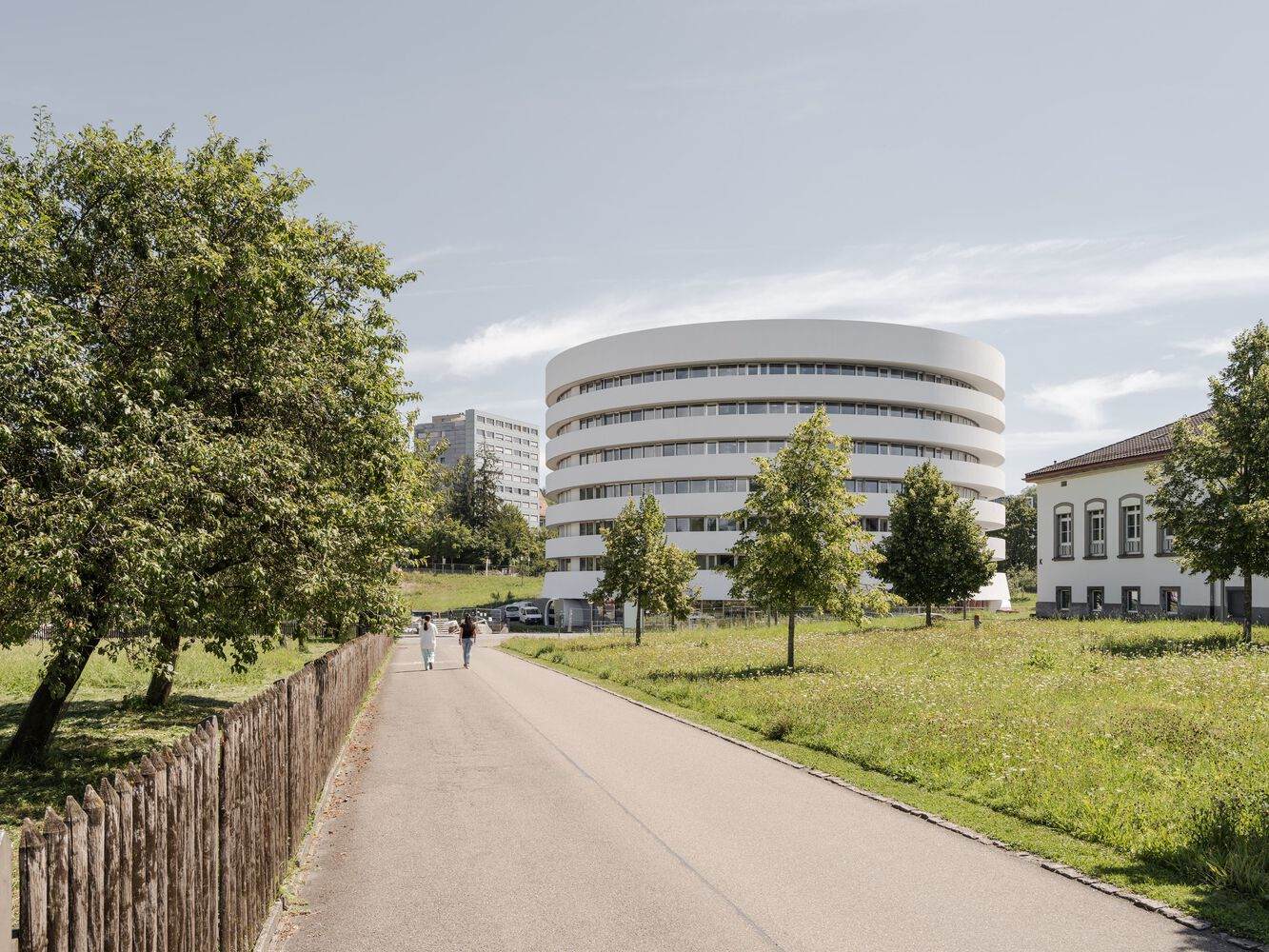
The teaching and research facilities are located in a white cylindrical building on the north side, with an open five story atrium in the center. The research field is laid out around this communication core. Below it, three lecture halls are embedded in the sloping terrain, surrounded by seminar rooms and student learning areas. The large-scale landscape design involved planting over 250 trees. In addition, there are also giant stones excavated from underground during the construction process inside and outside the building, telling the story of glaciers in the Ice Age. The inherent natural qualities possessed by the new architectural complex are crucial for transforming the hospital into a place conducive to rehabilitation. Both buildings have obtained the Platinum certification for building sustainability under the strict regulations of SGNI (Swiss Sustainable Building Council).
教学与研究设施位于北侧的一座白色圆柱形建筑中,中央设有一个开放的五层中庭。研究领域围绕这一交流核心进行布局。其下方,三座讲堂镶嵌在倾斜地形的地貌之中,周围环绕着研讨室和学生学习区。大规模的景观设计包括种植了250多棵树。此外,建筑内外还摆放着施工过程中从地下挖出的巨石,讲述着冰河时代的冰川故事。新建筑群所具备的“内在自然”特质,对于将医院打造成一个有利于康复的场所至关重要。这两座建筑均获得了SGNI(瑞士可持续建筑委员会)严格规定下的建筑可持续性铂金级认证。
© Herzog & de Meuron
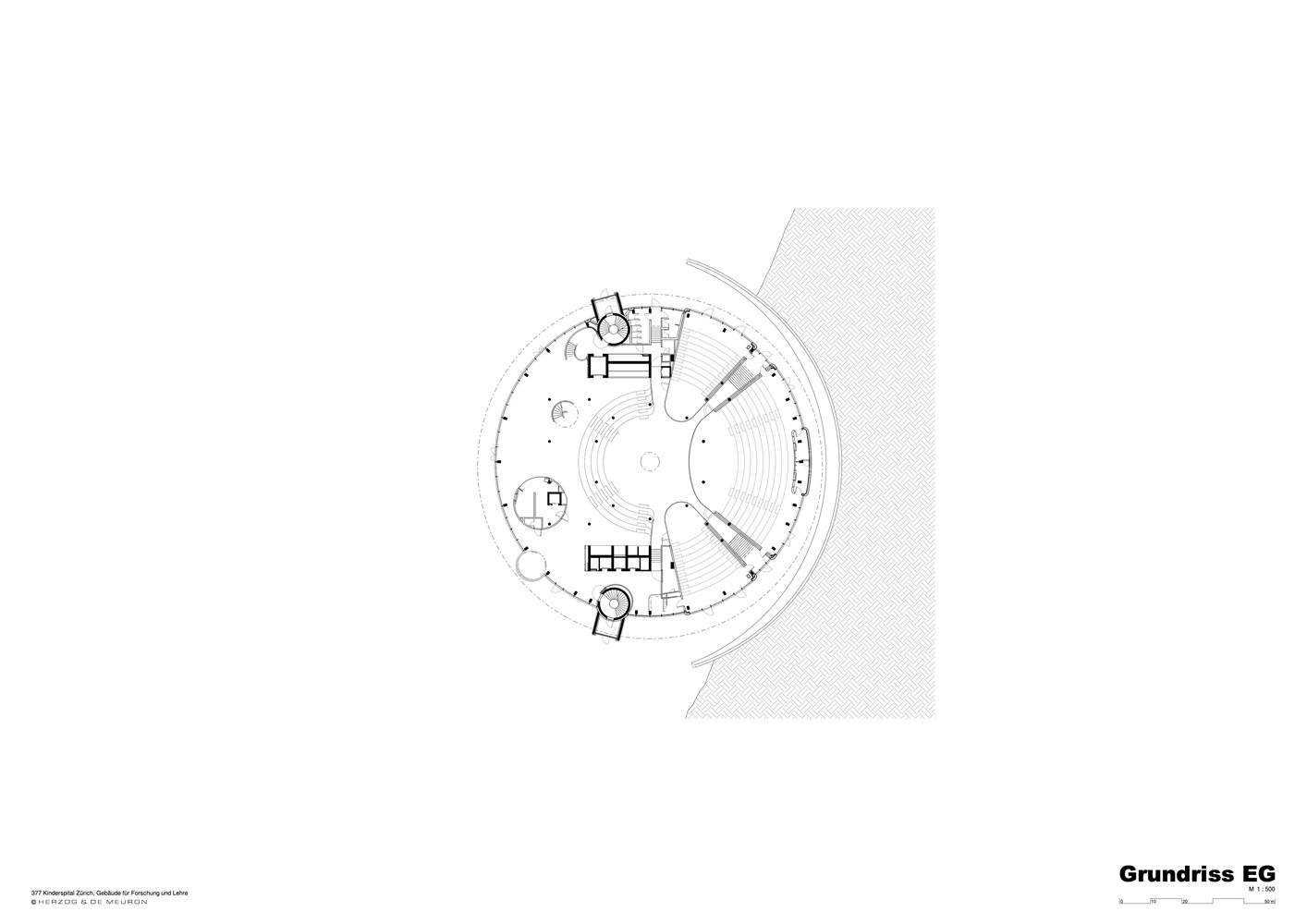
研究与教学设施一层平面图
© Herzog & de Meuron
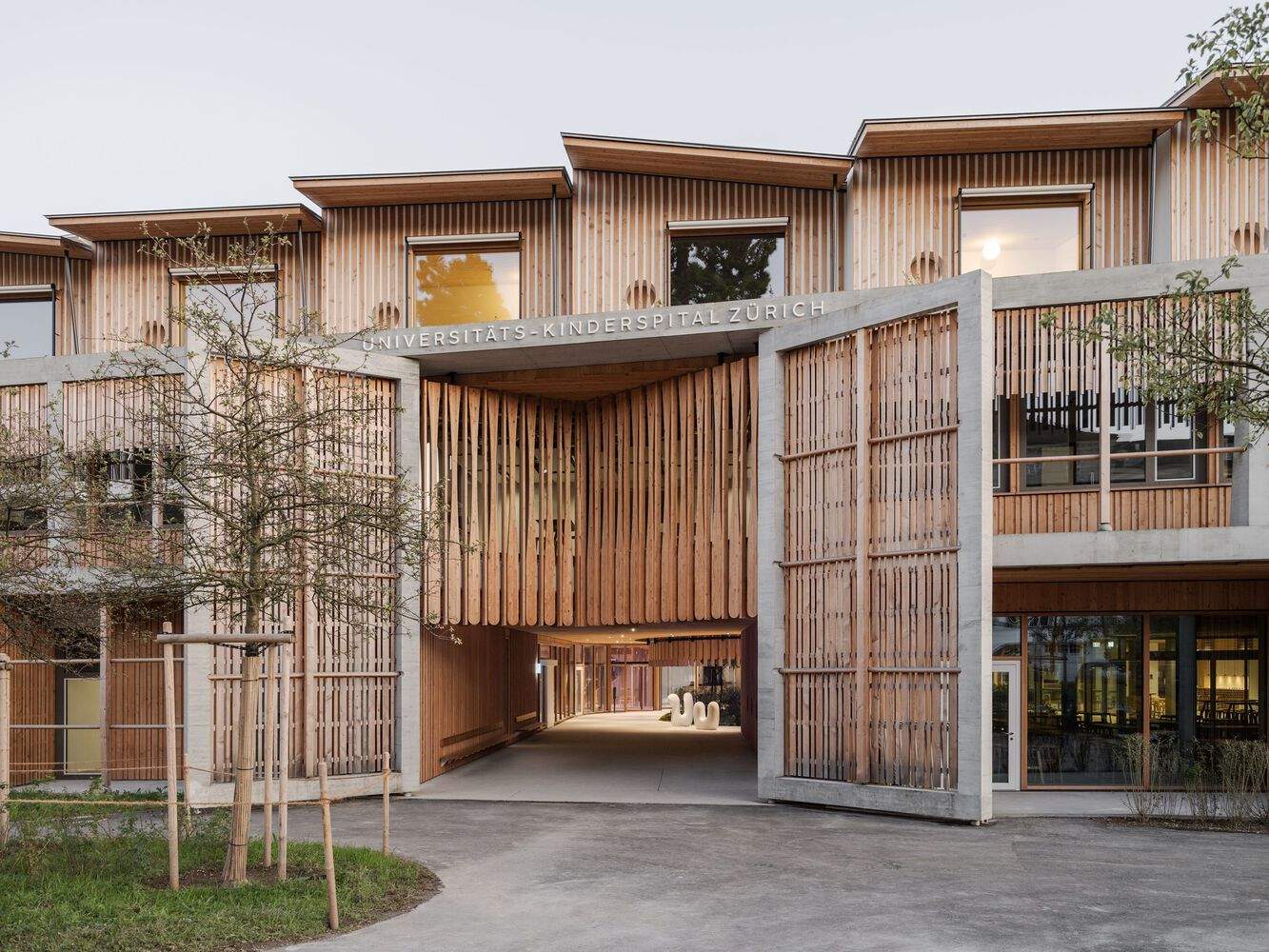
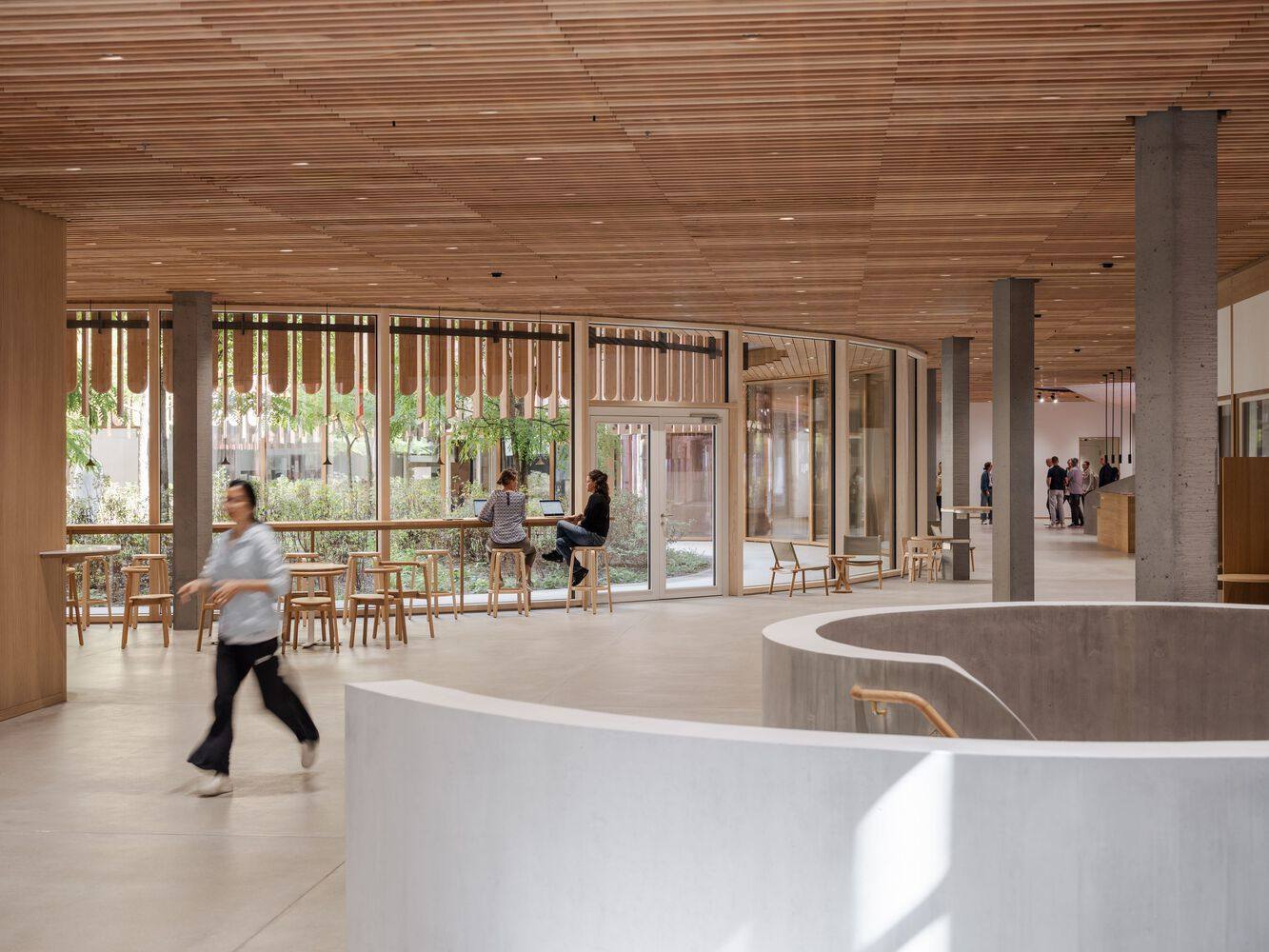
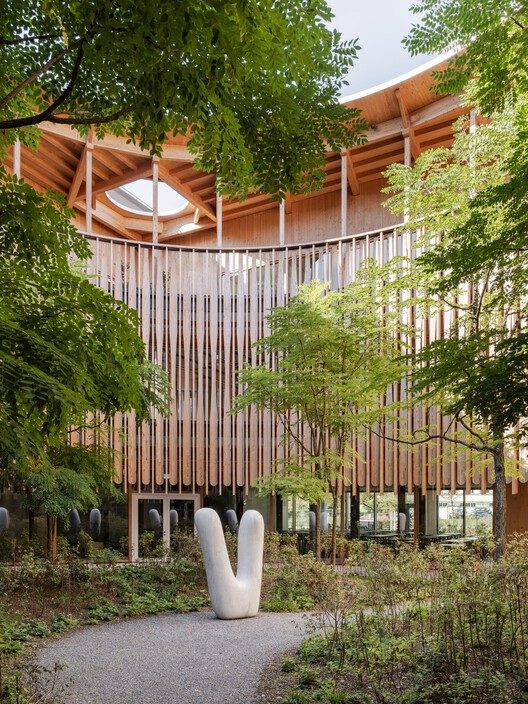
Acute Care Hospital - The new Children's Hospital is located in a residential area dotted with orchards. It is adjacent to the University Psychiatric Clinic (PUK), which is listed as a cultural relic protection building, with a wide entrance facing the gate of the historical building built in 1869. The concave design of the hospital facade creates a shared vestibule for these two institutions. The gate leads to a circular courtyard surrounded by green trees, and passing through the courtyard leads to the entrance of the hospital. The restaurant and the pathway leading to the treatment facilities below are adjacent to the entrance and have their own gardens. On the other side, the main street of the hospital leads to high usage areas for diagnosis and treatment, such as imaging diagnosis and day operating rooms. This central axis changes with the width of the courtyard and ultimately reaches the emergency room, which can also be accessed directly from the outside.
急性护理医院 - 新儿童医院位于一片点缀着果园的住宅区。它毗邻被列为文物保护建筑的大学精神病诊所(PUK),大门开阔,正对着1869年建成的历史建筑的大门。医院立面的凹进设计,为这两家机构创造了一个共享的前庭。大门通向一个绿树环绕的圆形庭院,穿过庭院即可进入医院入口。餐厅和通往下方治疗设施的通道毗邻入口,拥有各自的花园。在另一侧,医院的主街通往使用率较高的诊疗区域,如影像诊断和日间手术室。这条中央轴线随着庭院的宽窄变化而变化,最终抵达急诊室,急诊室也可直接从外部进入。
© Herzog & de Meuron
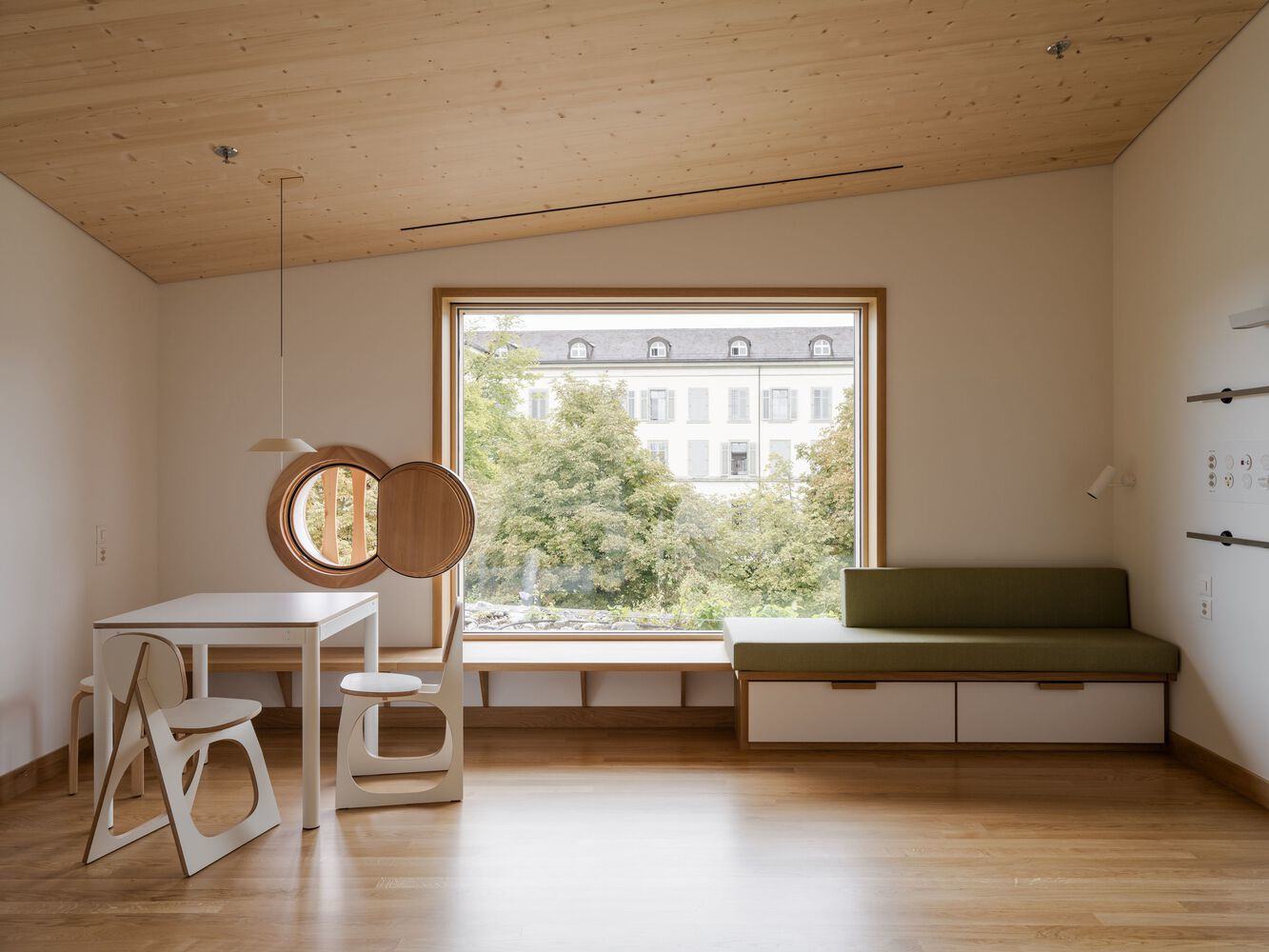
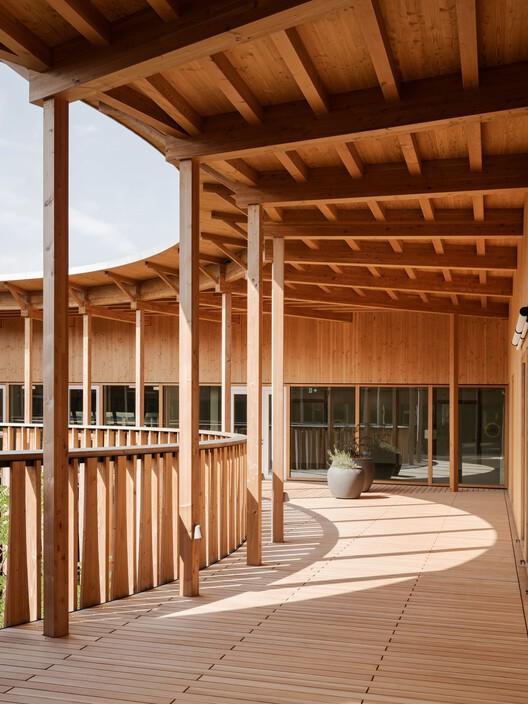
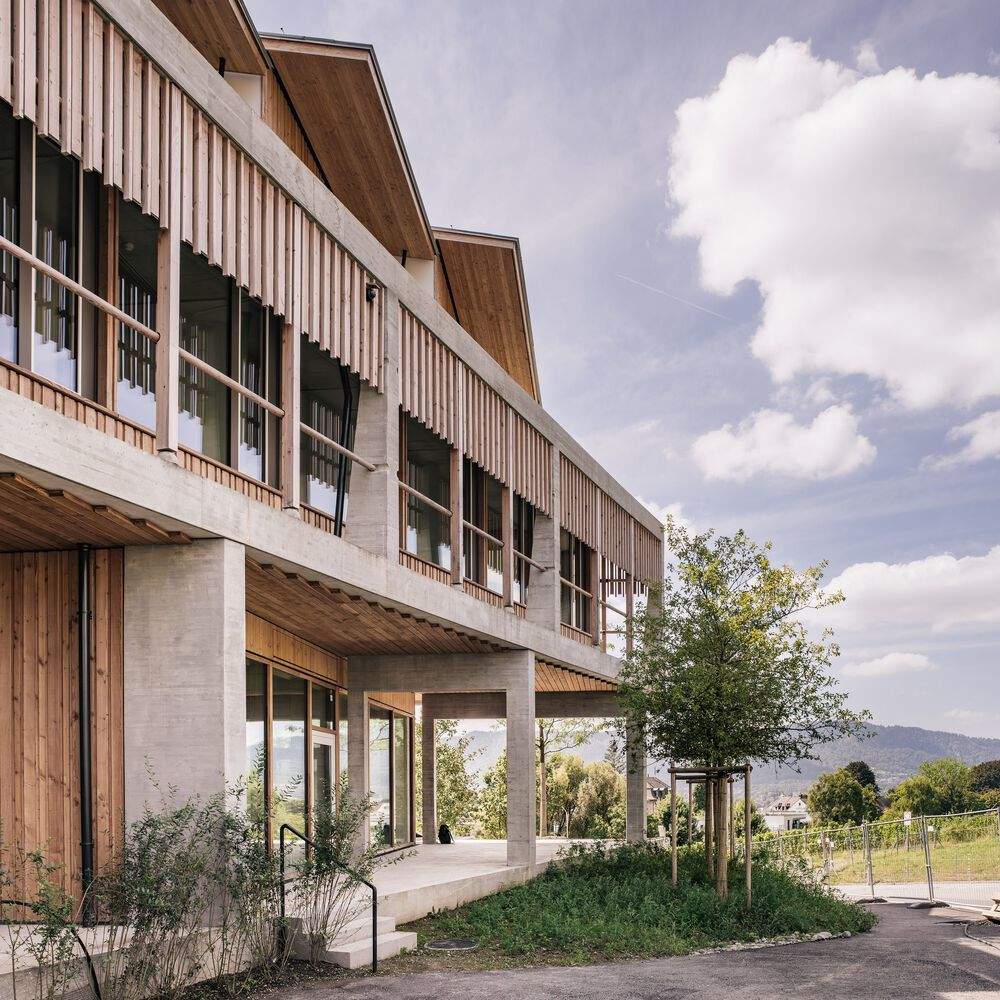
In the center of the second floor, there are additional service facilities on both sides of the main street, such as hospitals, schools, pharmacies, and other shared spaces. An external office environment surrounds this central area like a wreath, providing approximately 600 workspaces for medical and administrative personnel. The top floor is the quietest area of the hospital, reserved specifically for children and adolescents, as well as patients who are staying overnight or hospitalized for a long time. Each of the 114 wards is designed as a wooden hut with its own roof, providing private space, green outdoor views, and enough space for parents to spend the night with. There are four centers along the main street adjacent to the cottage, where children and teenagers can receive interdisciplinary treatment. The facade of the hospital is composed of a three-dimensional load-bearing concrete structure, which combines the first and second floors together. The depth of the facade and the filling material (which may be wood, glass, fabric, or vegetation) vary depending on the orientation and internal activity. Except for the concrete support structure and transportation core, the entire building is made of lightweight building materials. In this way, departments can adjust the size as needed: this uniquely shaped bungalow building ensures crucial flexibility within the hospital. The top floor with inpatient wards retreats backwards, showcasing a unique architectural language. The wards are arranged in a staggered manner, with varying degrees of roof inclination. These personalized and basic cabin shapes emphasize the uniqueness of each patient.
二楼中央,主街两侧设有额外服务设施,如医院学校、药房及其他共享空间。一个面向外部的办公环境像花环一样环绕着这一中心区域,为医疗和行政人员提供了约600个工作空间。顶楼是医院最安静的区域,专为儿童和青少年以及留宿或长期住院的病人保留。114间病房每间都设计成带有各自屋顶的木制小屋,提供私密空间、绿色户外视野以及足够的空间供父母陪夜。紧邻小屋的主街沿线设有四个中心,儿童和青少年可以在这里接受跨学科治疗。医院的立面由三维承重混凝土结构构成,将一楼和二楼结合在一起。立面的深度和填充物(可能是木材、玻璃、织物或植被)根据朝向和内部活动而有所不同。除混凝土支撑结构和交通核心外,整栋建筑都采用了轻质建筑材料。这样一来,各部门可以根据需要调整大小:这座形状独特的平房建筑确保了医院内部至关重要的灵活性。设有住院病房的顶楼向后退缩,展现出独特的建筑语言。病房错落有致,屋顶倾斜度各异。这些个性化、基本的小屋形状强调了每位患者的独特性。
© Herzog & de Meuron
© Herzog & de Meuron
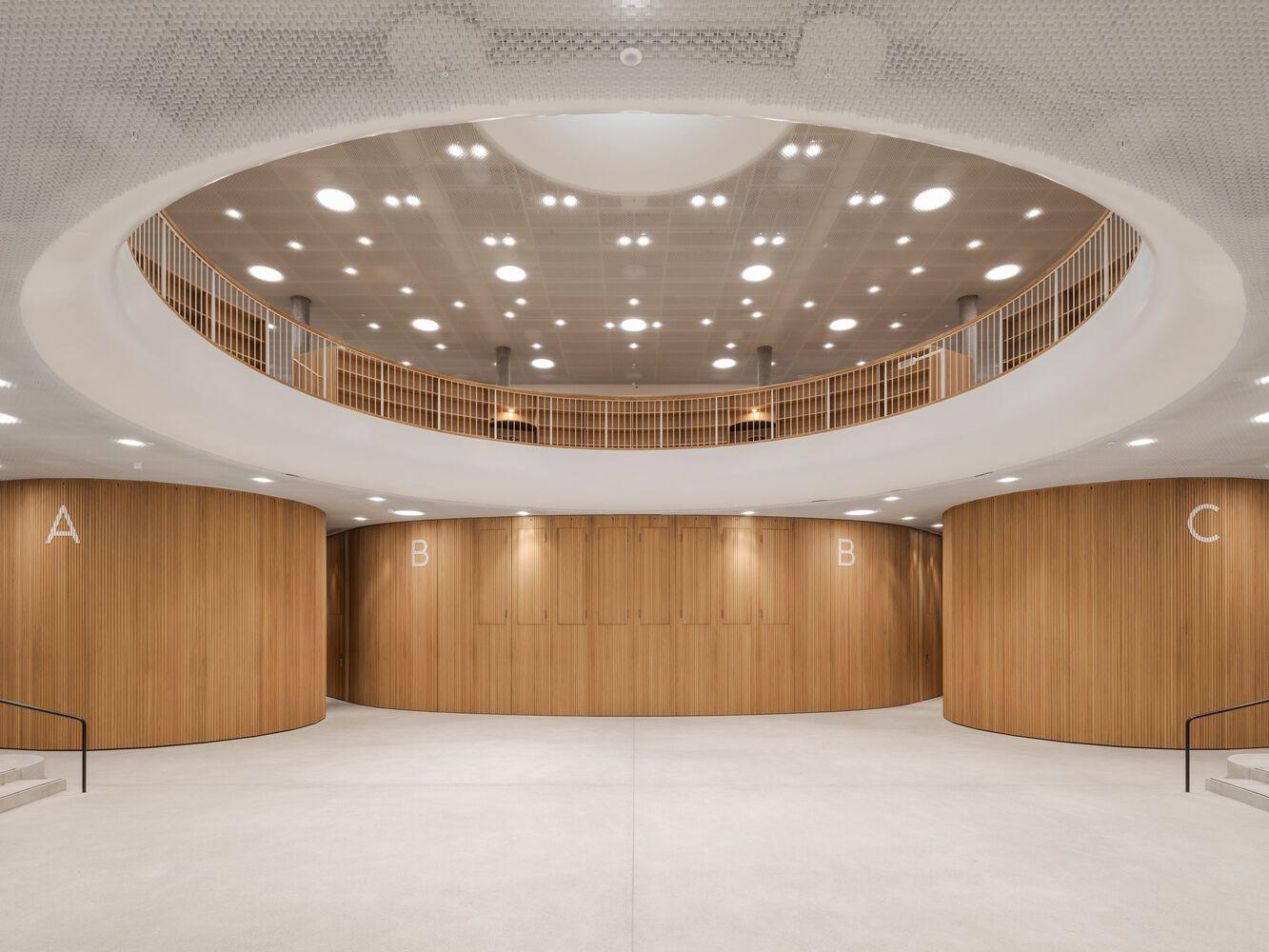
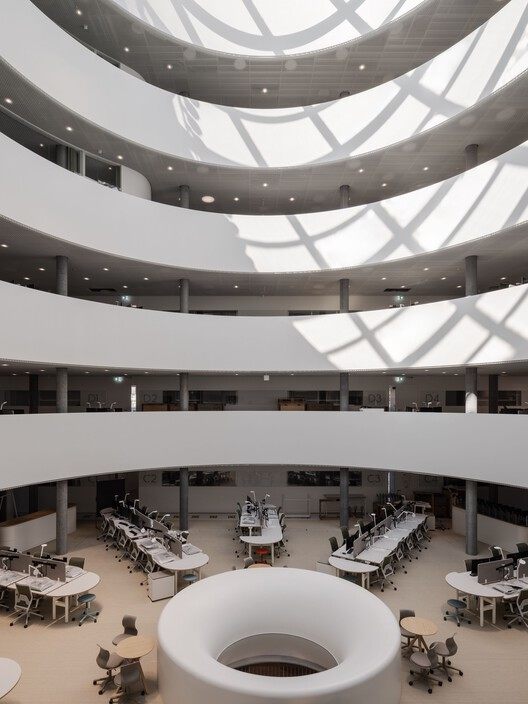
Research and Teaching Facilities- Within this cylindrical white building, research and teaching facilities are arranged around a central atrium, encouraging communication and collaboration among researchers. A teaching square unfolds below the atrium, directly echoing the surrounding landscape. Three lecture halls are built in accordance with the natural terrain slope. Natural light pours in from the outside, and thanks to movable partition walls, the lecture hall, lobby, and caf é can be reassembled into a large space. This creates a square with a central stage that can be used for special events and can accommodate 670 spectators. The gallery upstairs has open student workstations. The adjacent seminar rooms on the same floor have improved the available space for university teaching. On the fifth floor, there are research laboratories, diagnostic rooms, and supporting offices, providing a panoramic view of the surrounding scenery. Open workstations have been arranged around the atrium for the use of doctoral students and laboratory staff. From these workstations, one can simultaneously see multiple floors and the square below, which is connected to the atrium above through small circular holes (i.e. skylights) in the ceiling.
研究与教学设施 - 这座圆柱形的白色建筑内,研究与教学用房围绕着中央中庭布局,鼓励研究人员之间的交流与合作。一个用于教学的广场在中庭下方展开,与周围的景观直接呼应。三座讲堂顺应自然地形坡度而建。自然光从外部倾泻而入,得益于可移动的隔断墙,讲堂、大厅和咖啡馆可以重新组合成一个大型空间。这样便形成了一个中央设有舞台的广场,可用于举办特别活动,同时可容纳670名观众。楼上的画廊设有开放式的学生工位。同一楼层的相邻研讨室完善了大学教学的可用空间。五层楼上设有研究实验室、诊断室及配套的办公室,可一览无余地欣赏周围的景观。中庭周围安排了开放式工位,供博士生和实验室工作人员使用。从这些工位上,可以同时看到多层楼面以及下方的广场,而广场又通过天花板上的小圆孔(即天窗)与上方的中庭相连。
© Herzog & de Meuron
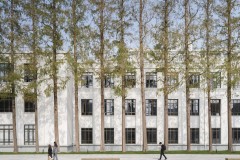
This research and teaching building stands within a carefully designed landscape, independent of an orchard, similar to the orchards in Burgh ö lzli's numerous gardens. The building itself adopts abstract and clear geometric language, and the materials used are simple. The selected balcony is equipped with towering white railings, making the building appear both stable and lightweight. Although the two facilities of the children's hospital have different styles, they complement each other. The research and teaching building is located on a hillside, with a circular design that directs the line of sight towards the lake surface. The emergency hospital, on the other hand, has a narrow horizontal shape that blends seamlessly with the flat landscape, offering a panoramic view of the mountains behind. Hospitals pay attention to the individual needs of each patient, which means not only focusing on the treatment process, but also on the well-being of patients' families and medical staff. The research and teaching building emphasizes communication and collaboration between scientists and students, which is a prerequisite for prospective research.
这座研究与教学楼矗立于精心设计的景观之中,独立于一片果园内,与布尔格霍尔兹利(Burghölzli)众多花园中的果园相仿。建筑本身采用抽象而清晰的几何语言,所用材料简约。挑出的阳台配有高耸的白色栏杆,使建筑显得既稳重又轻盈。儿童医院的两座设施虽风格迥异,却相辅相成。研究教学楼位于山坡上,其圆形设计将视线引向湖面。而急症医院则呈狭长水平状,与平坦的景观融为一体,从医院可眺望后方的山峦。医院关注每一位患者的个体需求,这意味着不仅要关注治疗过程,还要关注患者家属及医护人员的福祉。研究与教学楼则强调科学家与学生之间的交流与合作,这是前瞻性研究的先决条件。
© Herzog & de Meuron